Best Spots to Catch Kokanee at Flaming Gorge
Chasing Kokanee salmon at Flaming Gorge can feel like a real treasure hunt, can't it? One day the bite is hot, the next you're left scratching your head, wondering where those elusive silver flashes have gone. It's a massive body of water, and understanding the nuances of where and when to find these delicious fish is key to a successful outing. This guide is designed to cut through the confusion, offering you concrete strategies and pinpointing the best spots to catch Kokanee at Flaming Gorge, so you can spend less time guessing and more time reeling in your limit.
Understanding Kokanee Salmon Behavior at Flaming Gorge
Kokanee salmon are a unique and highly sought-after species in Flaming Gorge, offering a fantastic challenge to even seasoned anglers. But to consistently catch them, you first need to understand their patterns, which are largely dictated by water temperature, food sources, and their natural life cycle. These aren't your typical bottom-feeders; they're pelagic, meaning they roam the open water, often suspended at specific depths.
Kokanee Seasonal Movements and Depth Preferences
The behavior of Kokanee salmon changes dramatically throughout the year at Flaming Gorge, making seasonal awareness paramount. In spring, as the ice recedes and water temperatures begin to rise, Kokanee will often be found shallower, feeding actively in the upper water column. This is when they're transitioning from the deep winter haunts. As spring progresses into early summer, you might find them in depths ranging from 20 to 50 feet. They're still relatively active and chasing plankton blooms that are triggered by the warming water. This can be a fantastic time for consistent action, as they're not yet stressed by the intense heat of summer.
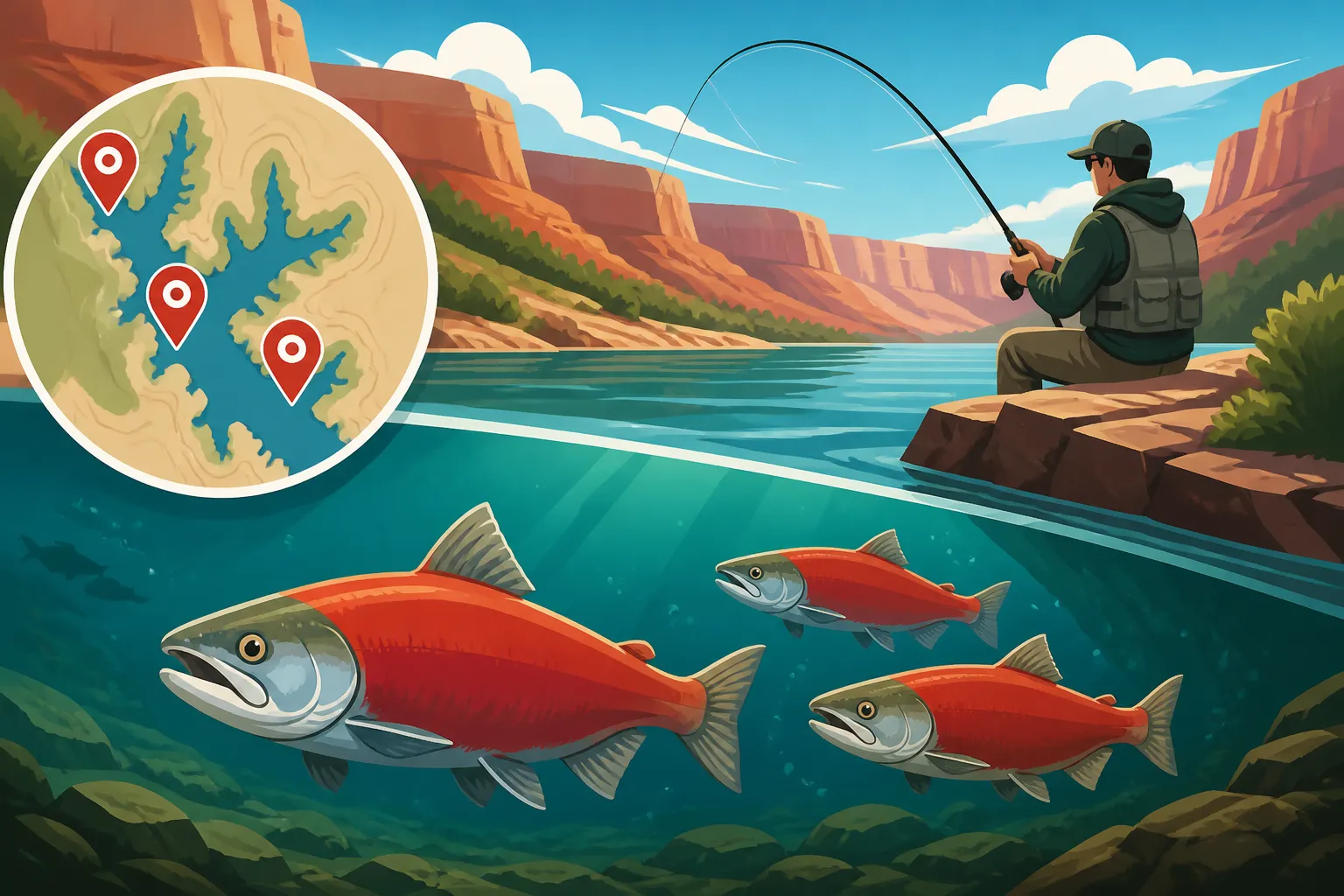
Come mid-summer, the game changes. Flaming Gorge develops a strong thermocline, a distinct layer where warm surface water meets cooler, deeper water. Kokanee absolutely love these cooler, oxygen-rich depths, often congregating just above or within the thermocline. You'll typically find them in the 40 to 80-foot range, sometimes even deeper on particularly hot days. This is when precision trolling with downriggers becomes absolutely critical. As autumn approaches and the water begins to cool again, Kokanee might spread out a bit more, but their focus soon shifts to spawning. They'll start to stage near tributary mouths and rocky shorelines, turning a brilliant red, though they are no longer feeding aggressively at this point. Understanding these shifts is vital, and a detailed look into the wider "Utah Fishing Season Dates and Limits" can further clarify prime times.
The Finicky Nature of Flaming Gorge Kokanee
Let's be honest, Kokanee can be incredibly frustrating. They're known for their light bites and their tendency to be exceptionally picky about lure color, size, and trolling speed. One day, pink and orange are hot, the next they won't touch anything but green or chartreuse. Their diet primarily consists of zooplankton, tiny aquatic organisms, which explains why they often ignore large, flashy lures designed for other species. Instead, they prefer small, subtle presentations that mimic their natural food source or a fleeing baitfish.
They also tend to school tightly, which means if you find one, you're likely to find many. However, if you're off by even a few feet in depth or a fraction of a mile per hour in speed, you might troll right through a massive school without a single strike. This is where experience, good electronics, and a willingness to experiment pay off. Don't be afraid to change out dodgers, try different squids, or even vary your trolling speed subtly until you hit on the magic combination. Sometimes, just a slight turn of the boat can trigger a bite as your lures change depth or speed momentarily.
Prime Fishing Zones for Kokanee at Flaming Gorge
Flaming Gorge is immense, stretching over 90 miles across the Utah-Wyoming border. Knowing where to focus your efforts is half the battle. While Kokanee can be found throughout the reservoir, certain bays and areas consistently produce better results due to their depth, structure, and proximity to current or feeding grounds.
Lucerne Bay and Cedar Springs Area
On the Utah side, Lucerne Bay is often cited as a perennial hotspot for Kokanee, and for good reason. Its varied depths, prominent points, and proximity to the main channel make it an excellent feeding ground. As you launch from Lucerne Valley Marina, you're immediately in prime territory. Early in the season, shallower trolling runs near the bay's entrance and along the northern shore can be productive. As summer heat sets in, the deeper waters just outside Lucerne Bay, especially heading towards the main channel, become more reliable. Look for humps and submerged structure on your fish finder, as Kokanee will often stage around these features.
Just south of Lucerne, the Cedar Springs area offers similar characteristics. The deep water here, combined with access to nutrient-rich currents, provides ideal conditions for Kokanee. Many anglers find success trolling in the open water between Lucerne and Cedar Springs, often targeting depths identified by their electronics. This stretch allows for long, uninterrupted trolling passes, which are often key to enticing these schooling fish. When considering the best strategies, revisiting a "Flaming Gorge Fishing Guide" can provide further insights into specific contours and structures in this region.
Sheep Creek Bay and Linwood Bay
Further south, Sheep Creek Bay is another fantastic option, particularly known for its consistent Kokanee populations. The bay features some deep channels and extensive open water, providing ample habitat. Similar to Lucerne, you'll want to adjust your depths based on the season. In spring and early summer, shallower troll runs along the bay's edges can produce, but as the water warms, heading out into the main body of the bay and focusing on the deeper sections becomes crucial. The confluence of Sheep Creek itself, even underwater, can create subtle current breaks or nutrient flows that attract plankton, and in turn, Kokanee.
Linwood Bay, located to the southeast, also holds its share of Kokanee. This area is characterized by its open water and deep sections. It's a great spot for those longer trolling passes, allowing you to cover significant water and search for schools. The key here, as with other open water areas, is to pay close attention to your sonar. Mark any fish you see, and if you get a strike, immediately turn around and make another pass through that same depth and area. These bays offer a good balance of easy access and productive water, making them popular choices for anglers targeting these specific salmon.
The Dam Area and Manila
While the areas closer to the dam are more famously known for trophy lake trout, the deep, cold waters near the Flaming Gorge Dam and the town of Manila also hold significant Kokanee populations, especially during the peak of summer. The constant cold water discharge from the dam creates a consistent cold-water refuge that Kokanee thrive in. This can be a reliable area when other parts of the lake become too warm for their comfort. However, fishing near the dam can present its own challenges, including strong currents and often very deep fish.
Anglers targeting Kokanee here will typically deploy downriggers to reach depths of 60 to 100 feet, sometimes even deeper. The key is to run your lures just above the fish you're marking. The vastness of the main channel here can make finding the schools a bit more challenging, but once located, the action can be intense. For anyone venturing into these deeper, more complex waters, especially if you're also hoping for some trophy lake trout, brushing up on "Utah Trolling Techniques for Lake Trout" might prove beneficial, as many of the principles for deploying downriggers effectively overlap.
Essential Gear and Techniques for Flaming Gorge Kokanee
Catching Kokanee at Flaming Gorge isn't just about finding the right spots; it's also about having the right tools and knowing how to use them. These fish require a specific approach, primarily revolving around precise depth control and presentation.
Precision Trolling with Downriggers
When it comes to Kokanee, especially after the spring spawn, downriggers are non-negotiable. These devices allow you to precisely control the depth of your lures, sending them down to where the fish are holding, often deep in the water column. A good downrigger setup involves a rod and reel with light line (8-12 lb test monofilament or fluorocarbon leader with braid main line), a downrigger ball, and a release clip. The light line allows for better action on your lures and makes the fight more enjoyable once a Kokanee is on the hook.
Typically, you'll be running multiple downriggers at different depths to "probe" the water column until you find where the fish are active. Many anglers run two or three lines per side of the boat, fanning them out both in depth and distance behind the boat to cover more water. Varying your leader length between your dodger/flasher and your lure can also make a difference. Some days, a short 10-inch leader is preferred; other days, a longer 24-inch leader might get more bites. For more detailed instructions on equipment, our guide on "Best Downriggers for Flaming Gorge Lake Trout" can offer some excellent insights on heavy-duty gear which can be adapted for Kokanee.
Lure Selection and Presentation
Kokanee are visually driven feeders, so lure choice is paramount. Small, flashy dodgers or flashers (like a Sep's Pro Dodger, Sling Blade, or Kokanee Killer) are often used to attract their attention, mimicking a school of baitfish. These are followed by a small lure or bait, typically a wedding ring spinner, a tiny hoochie squid, or a small spoon. The most popular colors tend to be variations of pink, orange, chartreuse, and sometimes even natural silver or blue. It's always a good idea to have a variety of colors and styles on hand, as their preference can change from day to day, even hour to hour.
Tipping your lure with bait is also a game-changer. Canned white shoepeg corn is by far the most popular choice for Kokanee. A few kernels on the hook can add scent and a slight visual attraction that often triggers a strike when fish are finicky. Some anglers will even soak their corn in commercially available attractants like Pautzke's Krill Juice or Mike's Lunker Lotion for an added edge. The retrieve speed is also critical. Kokanee typically prefer a slower troll, often between 0.8 and 1.5 miles per hour. Experimenting with your "What Trolling Speed Works Best for Kokanee Salmon?" can make a huge difference in your success rate.
Interpreting Your Electronics
Your fish finder is your best friend when targeting Kokanee. These schooling fish will show up as dense clouds or arcs on your screen. Don't just look for fish; look for baitfish as well. If you find concentrations of bait (which appear as smaller, often less defined clouds), the Kokanee are likely nearby. Pay close attention to the depth at which you're marking fish, and adjust your downriggers accordingly.
Many modern fish finders also show the thermocline, which is a crucial depth zone for Kokanee in warmer months. If your electronics have side-imaging or down-imaging, use them to scan for schools outside your immediate transducer cone. A good fish finder helps you stay on the fish, but equally important is understanding what your screen is telling you. Don't just blindly troll; actively search, adjust, and re-adjust based on the information your electronics provide. If you're looking to upgrade, consider our article on "Best Fish Finders for Utah Reservoirs" for models that excel in vast waters like Flaming Gorge.
Tips for Maximizing Your Kokanee Catch
Beyond the right spots and gear, several finer points can significantly boost your Kokanee harvest at Flaming Gorge. These involve paying attention to details, being flexible, and leveraging local knowledge.
Timing Your Attack and Weather Considerations
While Kokanee can be caught throughout the day, early mornings and late evenings often provide the best bite. During these low-light periods, Kokanee tend to be more active and can sometimes be found shallower, making them easier to target. However, don't dismiss midday, especially in deeper water during summer; consistent trolling can still produce. Weather also plays a role. Overcast days can sometimes keep Kokanee shallower for longer, while bright, sunny days usually push them deeper. Wind can make boat control challenging, but a light chop on the water can actually improve the bite by breaking up light penetration and creating movement that can attract fish.
It's also worth keeping an eye on local fishing reports and forums. Conditions at Flaming Gorge can change quickly, and what worked last week might not work today. Many anglers will also check the "Best Time of Year to Fish in Utah" guidelines to plan their trips around the most productive seasons for specific species, including Kokanee. Before you head out, checking reports from fellow anglers, sometimes found on platforms like FishingBooker, can give you a real-time advantage on recent hot lures and depths.
The Importance of Boat Control and Patterning
Consistent boat control is paramount for Kokanee trolling. Maintaining a precise speed and depth with your downriggers means your lures are in the strike zone for longer. Small turns can sometimes be advantageous, as the change in speed and depth of your lures on the inside and outside of the turn can trigger a hesitant fish to strike. If you get a bite, note your exact speed, depth, lure, and GPS coordinates. Then, immediately turn around and make another pass through that same area. Kokanee are schooling fish, so where there's one, there are often many.
Patterning is all about figuring out what the fish want on that specific day. This means experimenting with different lure colors, sizes, dodgers, leader lengths, and trolling speeds until you find the magic combination. Don't be afraid to switch things up if you're not getting bites. If your buddies in another boat are catching fish, don't be shy about asking what they're using and at what depth. We're all out there to have a good time and catch fish! For those considering a guided experience, platforms like FishingBooker offer a convenient way to compare options and read reviews, ensuring you pick a guide who truly knows the Best Spots to Catch Kokanee at Flaming Gorge.
Leveraging Local Knowledge and Guided Trips
While this guide provides a solid foundation, there's no substitute for local knowledge. Chat with bait shop owners, other anglers at the launch ramp, or consider hiring a fishing guide. Guides spend hundreds of days a year on the water and have an intimate understanding of current patterns, the best "Best Lures for a Utah Tackle Box" to use, and where the fish are holding. Many guides listed on FishingBooker have years of experience navigating the complexities of Flaming Gorge and can save you countless hours of trial and error.
Even if you don't book a full trip, a quick chat can often yield invaluable nuggets of information. They might mention recent stocking efforts, or how to "How to Tell When Kokanee Are Staging to Spawn" which affects their feeding patterns. Paying attention to what others are catching, what colors they're using, and where they're focused can provide clues. Flaming Gorge is a dynamic fishery, and staying informed is a key component of consistent success.
| Area / Bay | Optimal Season | Typical Depth (feet) | Key Features | Lure Colors Often Effective |
|---|---|---|---|---|
| Lucerne Bay | Spring, Summer | 20-80 | Varied depths, points, main channel proximity | Pink, Orange, Chartreuse |
| Cedar Springs | Spring, Summer | 30-90 | Deep water, open trolling lanes, currents | Green, Pink, Orange |
| Sheep Creek Bay | Spring, Summer | 25-70 | Deep channels, large open water | Orange, Pink, Silver |
| Linwood Bay | Summer | 40-100 | Open water, consistent depth | Chartreuse, Pink, Blue |
| Dam Area / Manila | Summer, Early Fall | 60-120 | Cold, deep water, currents | Bright Green, Pink, Gold |
Remember, always keep your catch fresh. Having a good "Best Cooler Size to Keep a Trout Limit Fresh" is essential, especially on hot summer days. For those who are passionate about conservation and understanding the ecosystem, research into "Why Flaming Gorge Kokanee Populations Are Declining" can offer a broader perspective on the health of this magnificent fishery.
Disclaimer
The information provided in this guide is for general informational purposes only. Fishing regulations, conditions, and fish behavior can change rapidly. Always consult the most current Utah Division of Wildlife Resources (DWR) regulations before fishing. Adhere to all licensing requirements, bag limits, and slot limits. Exercise caution and practice safe boating and fishing techniques.