Where to Downrig for Lake Trout at Bear Lake
The vast, cerulean waters of Bear Lake hold the promise of magnificent Lake Trout, often called Mackinaw, but figuring out how to consistently put your lure in front of these deep-dwelling giants can feel incredibly daunting. It's easy to get discouraged when you're staring at an expanse of water, wondering where to even begin, especially when trophy fish are on the line. This comprehensive guide is specifically designed to demystify the art of downrigging for Lake Trout at Bear Lake, pinpointing the most productive locations and refining your approach to increase your chances of a successful catch.
Understanding Bear Lake's Lake Trout Habitat
Bear Lake, famously known as the "Caribbean of the Rockies" for its vibrant blue hue, is a natural, deep-water lake shared by Utah and Idaho. It's an incredible fishery, but unlike many shallower reservoirs, its immense depth and crystal-clear water present unique challenges for anglers targeting Lake Trout. These fish are cold-water predators, thriving in the deeper, cooler sections of the lake, often orienting themselves around specific underwater structures and forage.
Why Lake Trout Go Deep in Bear Lake
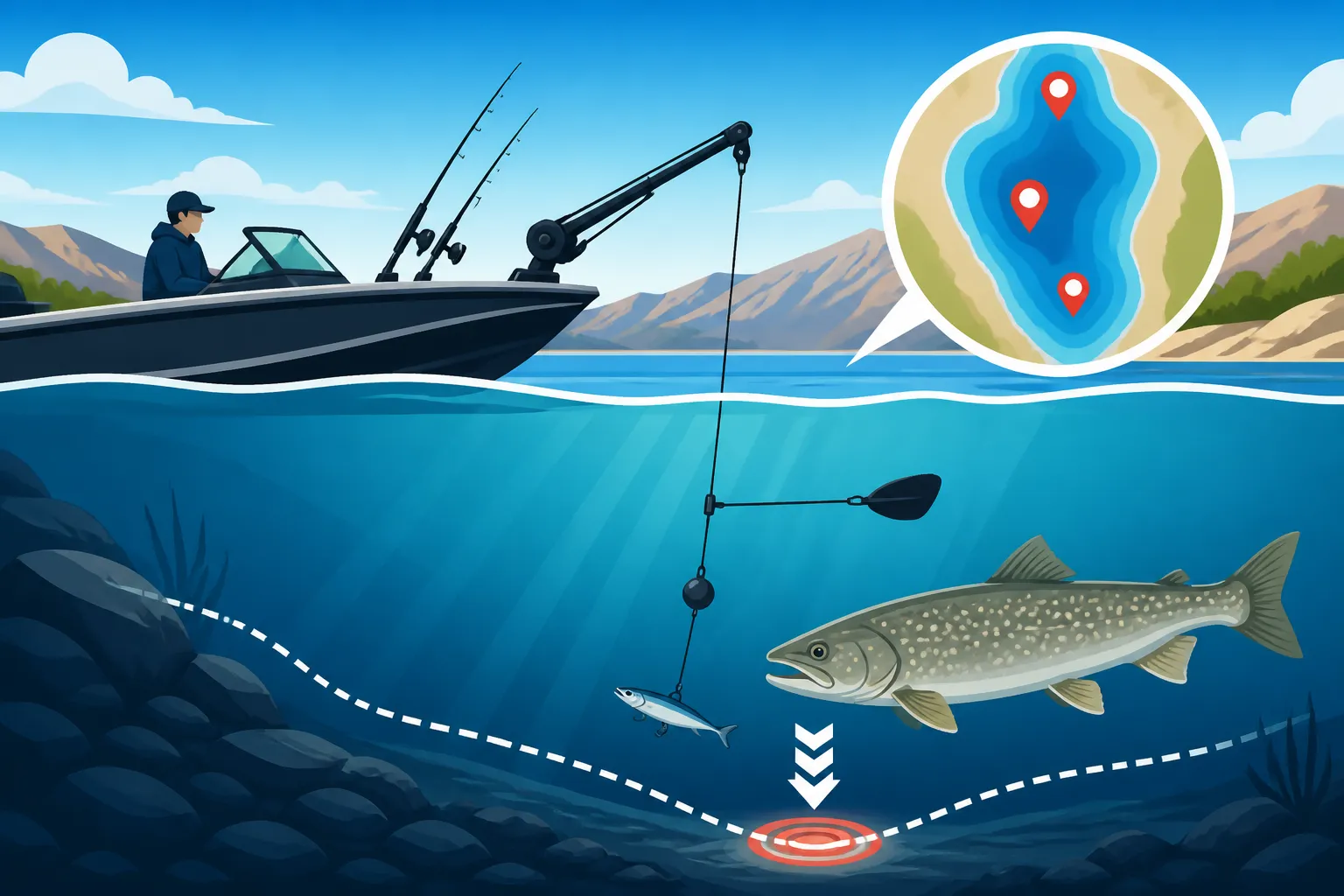
Lake Trout in Bear Lake are primarily driven by two factors: temperature and food. They prefer water temperatures in the low 50s Fahrenheit, which means they retreat to deeper zones as the surface warms throughout the spring and summer. During the winter, they might be found shallower under the ice, but as soon as the ice melts, they begin their migration to deeper, more stable thermal zones. Their main food source here is the Bonneville Cisco, a small, silvery fish unique to Bear Lake. Understanding the behavior and location of these baitfish is paramount, as Lake Trout will always be found where their food is. These cisco typically suspend in vast schools in the water column, often near underwater humps or drop-offs, making downrigging the ideal method to present your lure at the precise depth where the action is happening.
Key Underwater Structures
Bear Lake isn't just a giant bowl; it has some fantastic underwater features that act as natural fish magnets. Submerged humps, steep drop-offs from the shoreline, and the main lake basin's contour lines are crucial areas to explore. These structures provide ambush points and foraging grounds for Lake Trout. A good fish finder is your best friend here, helping you identify these hidden gems. As you learn to read a fish finder for Utah reservoirs, you'll start to see how these subtle changes in the bottom contour correlate with concentrations of baitfish and, consequently, hungry Lake Trout. Don't be afraid to study nautical charts or mapping apps before you even launch your boat; they can reveal the underwater topography that might not be obvious from the surface.
Prime Downrigging Locations at Bear Lake
When it comes to downrigging for Lake Trout at Bear Lake, precision and persistence are key. While Mackinaw can be found throughout the lake, certain areas consistently yield better results due to their depth, structure, and proximity to baitfish. Knowing where to focus your efforts will save you countless hours of unproductive trolling.
The Central Basin and Deep Drop-offs
The central basin of Bear Lake is, without a doubt, a primary target for downrigging. This is where the lake reaches its maximum depths, often exceeding 200 feet, providing the stable, cold environment Lake Trout crave during warmer months. Look for areas where the depth plunges rapidly from shallower flats, creating distinct ledges and shelves. These are natural highways and holding patterns for cruising Lake Trout. Concentrate your downrigging efforts along these contour lines, typically at depths ranging from 60 to 120 feet, though this can vary depending on the season and time of day. Sometimes, even deeper, down to 150 feet, can be productive, especially for larger, more elusive fish. You'll often find that the fish suspend a fair distance off the bottom in these deeper zones, following the cisco schools. Using a good sonar system to mark these suspended bait balls and the fish feeding on them is absolutely critical.
Northern and Southern Ends Near Shoreline Structure
While the central basin is a staple, don't overlook the northern and southern ends of the lake, especially where submerged points or ledges extend from the shoreline. For instance, areas near the state park marinas, or deeper water adjacent to places like Cisco Beach, can be productive. These areas often have more subtle depth changes but can hold good numbers of fish, particularly during transitional periods like spring and fall. Access points like those found at the Bear Lake Marina Fishing Access can be great starting points for your downrigging adventure. When downrigging closer to shore, be mindful of boat traffic and submerged hazards. It's not uncommon to find smaller Lake Trout in slightly shallower water (30-50 feet) in these areas, especially early in the season or late in the fall when water temperatures are more uniform.
Targeting Specific Humps and Bumps
Beyond the major contour lines, Bear Lake has several significant underwater humps and smaller bumps that act as magnets for Lake Trout. Identifying these isolated structures and trolling over and around them with your downriggers can be incredibly effective. Fish will often stage on the sides or near the tops of these humps, waiting to ambush passing baitfish. These locations require careful boat control and a keen eye on your fish finder to stay on target. When you find a productive hump, make multiple passes from different directions, varying your depth slightly on each pass until you identify the strike zone. Sometimes, merely running your lures over the hump, rather than around it, can trigger strikes from fish waiting on top. Many experienced anglers, some of whom offer guided trips you can find through services like FishingBooker, specialize in these specific structural spots.
Essential Downrigging Strategies for Bear Lake Mackinaw
Downrigging for Bear Lake Lake Trout isn't just about dropping a cannonball to a certain depth; it's a nuanced technique that involves careful consideration of tackle, lure presentation, boat speed, and constant adaptation. Mastering these elements will significantly improve your success rate.
Optimal Depths and Spreads
Determining the optimal depth is probably the most critical aspect of downrigging at Bear Lake. Lake Trout are highly depth-sensitive, and being even a few feet off can mean the difference between a hot bite and an empty boat. As mentioned, 60-120 feet is a common range, but always let your fish finder be your guide. Look for baitfish schools and active fish marks. If you're marking fish at 85 feet, set your downriggers precisely at that depth or slightly above or below to test the waters.
For spreads, running multiple downriggers at different depths can help you dial in the productive zone faster. A common setup involves two downriggers, with one set 10-15 feet deeper than the other. This allows you to cover a broader vertical range. Some anglers run additional lines off planer boards for shallower targets or use lead core lines, but for true deep-water Mackinaw, downriggers are paramount. You can also experiment with horizontal spread by varying the length of line from your release clip to your lure. This can help prevent tangles and allow lures to cover slightly different paths.
| Depth Range (Feet) | Season | Typical Target | Lure Presentation | Notes |
|---|---|---|---|---|
| 30-60 | Early Spring | Cruising Fish | Spoons, smaller dodgers/flies | Often shallower post-ice off |
| 60-100 | Late Spring/Fall | Active Feeders | Large spoons, squids, plugs | Primary feeding depth, baitfish often here |
| 80-120 | Summer/Winter | Deep Holdovers | Big spoons, tubes, cut bait | Thermal refuge, larger fish often deeper |
| 120+ | Peak Summer | Trophy Hunters | Heavy jigs, live bait, large plugs | Targeting inactive, large fish in cold water |
Lure Selection and Presentation
Lake Trout in Bear Lake are often chasing Bonneville Cisco, so your lures should mimic these baitfish in size, shape, and action. Large spoons are a perennial favorite, with colors like silver, blue/silver, white, and chartreuse often producing. Brands like Luhr-Jensen, Mack's Lure, and Northport Nailer make excellent trolling spoons. Trolling flies or squids behind a dodger or flasher can also be incredibly effective, especially in clear water. The dodger creates attraction and imparts a lifelike swimming motion to the fly.
Don't forget the power of plugs and stickbaits, particularly those designed for deep trolling. These often have a wider wobble and profile that can entice a strike from a wary Mackinaw. For really deep fish, especially those marked close to the bottom, large tubes or even cut bait presented on a three-way swivel can be irresistible. Consider the size of your lure – trophy Lake Trout often prefer a larger meal, so don't be afraid to go big. You'll also want to make sure your fishing line for Utah trout is strong enough to handle a potential trophy.
Trolling Speed and Boat Control
Your trolling speed plays a significant role in how your lure performs and how enticing it is to a Lake Trout. Generally, a slower speed (1.5-2.5 mph) is effective for Lake Trout, but it's crucial to experiment. The goal is to make your lure "swim" naturally. Watch your rod tip to ensure your lure has the right action. If it's just dragging, speed up; if it's spinning erratically, slow down.
Boat control is critical, especially when targeting specific structures. Using a GPS-enabled trolling motor can help you maintain a precise course and speed, even in windy conditions. When you get a bite, mark the exact location on your GPS. Lake Trout are often found in schools or concentrated in specific spots, so returning to a productive area is always a good strategy. A good understanding of the Best Boats for Utah Reservoir Fishing will also help, as stability and maneuverability are key. Some anglers even prefer booking a guided trip, which can be easily arranged through platforms like FishingBooker, to learn these nuances from a local expert without the initial gear investment.
Seasonal Downrigging Adjustments for Bear Lake
The behavior of Lake Trout in Bear Lake shifts dramatically with the seasons, driven primarily by water temperature and the spawning cycles of their prey. Adapting your downrigging approach to these seasonal changes is crucial for consistent success. You'll want to be familiar with the Utah Fishing Season Dates and Limits before you head out.
Spring: Post-Ice Off Opportunities
As the ice recedes from Bear Lake, usually in April or early May, the Lake Trout begin to spread out from their winter haunts. Water temperatures are still quite cold throughout the water column, meaning fish can be found in a broader range of depths, often shallower than in summer. This can be a fantastic time for downrigging, as the fish are often actively feeding after a long winter.
During early spring, focus your downriggers in depths from 30 to 60 feet, often concentrating on areas adjacent to major drop-offs and shelves where baitfish might be congregating. As the season progresses and surface temperatures slowly rise, the Lake Trout will gradually push deeper. Pay close attention to surface water temperature and your fish finder; you'll notice a thermocline starting to form, and the fish will typically be just above, in, or just below it. This is a time when understanding What Depth Do Lake Trout Hold at in Winter can give you a clue as to their starting points before they move deeper.
Summer: Deep Water Dominance
Summer at Bear Lake means one thing for Lake Trout: go deep. As the surface waters warm considerably, these cold-water predators will seek refuge in the lake's cooler, oxygen-rich depths. This is prime time for deep downrigging, often targeting depths from 80 to 120 feet, and sometimes even deeper during heatwaves.
Focus your efforts on the main lake basin and the deepest sections of the lake's prominent points and humps. Lake Trout will often suspend in the water column at these depths, following schools of Bonneville Cisco. Your fish finder becomes your most valuable tool during summer, as visually locating bait balls and active fish before deploying your downriggers will dramatically increase your hook-ups. Troll slowly and methodically, varying your speed and making subtle turns to impart different actions to your lures. Remember, the Best Time of Year for Trophy Trout in Utah often aligns with these deeper summer patterns, as larger fish tend to prefer the stability of deeper water.
Fall: Transitional Feeding Frenzy
Autumn can be a truly spectacular time for Lake Trout fishing at Bear Lake. As the surface waters begin to cool and the lake undergoes its annual "turnover," oxygen and temperatures become more uniform throughout the water column. This can cause Lake Trout to move shallower and become incredibly active feeders as they prepare for winter.
During early fall, you might still find fish quite deep, but as the season progresses, start exploring shallower depths, from 40 to 80 feet. Areas near rocky points and submerged structures that were too warm in summer can become highly productive again. The fish are often aggressive, making them more willing to strike a variety of lures. This is an excellent time to experiment with different lure colors and sizes, as the fish are actively chasing bait. Always be sure to review the latest Utah Fishing Regulations Explained, as fall can sometimes bring specific restrictions or changes.
Gear Considerations for Bear Lake Downrigging
Having the right equipment is non-negotiable for successful downrigging at Bear Lake. From your boat to your specific downriggers and tackle, each piece plays a vital role in your ability to target and land these impressive fish.
The Right Boat and Electronics
For downrigging at Bear Lake, a stable boat is essential. You'll be spending hours trolling, and the lake can get surprisingly choppy, especially when the wind picks up. A V-hull boat or a larger multi-species boat provides the necessary stability. When considering the Best Boats for Utah Reservoir Fishing, look for one with ample deck space for your downriggers and rod holders.
Electronics are your eyes underwater. A high-quality fish finder with a strong transducer capable of reading deep water is paramount. Look for units that offer clear target separation and detailed contour mapping. GPS functionality is also crucial for marking hot spots, tracking your trolling path, and navigating safely. Many modern fish finders integrate GPS, making them incredibly versatile. You'll want to invest in a unit that can handle the depths of Bear Lake effectively.
Downriggers and Rods
When it comes to the downriggers themselves, electric models are a godsend, especially when fishing deep for extended periods. Brands like Scotty and Cannon offer reliable electric downriggers that can handle the heavy weights needed for Bear Lake. While Best Downriggers for Flaming Gorge Lake Trout might be a good starting point for research, the principles apply here: look for robust construction, reliable retrieve speed, and accurate depth counters. Manual downriggers can work, but the constant cranking from deep water will tire you out quickly.
For rods, you need a setup that can handle the strain of a heavy cannonball and the power of a large Lake Trout. Downrigger rods are typically medium-heavy to heavy action, between 7 and 10 feet long, with a soft tip to absorb shock and a strong backbone to fight fish. Pair these with conventional reels spooled with 20-30 lb monofilament or braid, ensuring you have enough line capacity for deep runs. A strong main line is crucial, especially when you consider potential snags or a hard-fighting trophy. Don't forget to secure your Utah Fishing License Guide before you hit the water, as it's required for all anglers.
Disclaimer
Please note that fishing conditions, regulations, and fish behavior can change rapidly. Always consult the latest Utah Division of Wildlife Resources (UDWR) regulations before any fishing trip. This guide provides general information and recommendations, and personal safety should always be your top priority on the water.