How to Catch Trophy Lake Trout in Deep Summer Water
Catching trophy lake trout in Utah's vast, deep reservoirs during the scorching summer months can feel like trying to find a needle in a haystack – they vanish into the cold, dark depths, making them incredibly elusive. It's a common frustration for even seasoned anglers, but with the right understanding of their summer behavior and specialized techniques, you can turn those challenging days into unforgettable trophy moments. This comprehensive guide will walk you through the precise strategies, essential gear, and tactical insights you'll need to successfully target and land those giant Mackinaw from deep summer waters.
Understanding Summer Lake Trout Behavior
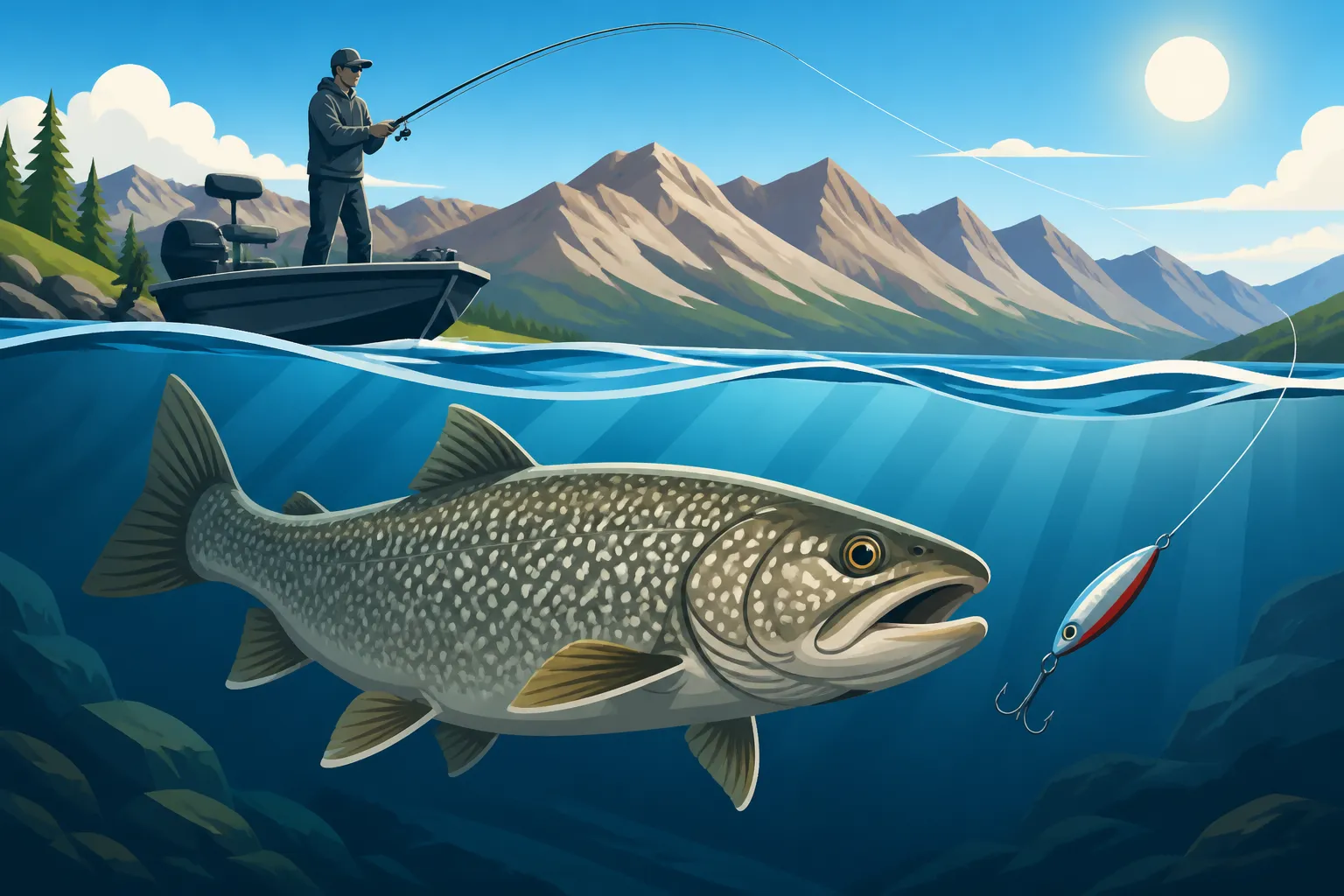
When the surface waters of Utah's big reservoirs heat up in the summer, lake trout, often called Mackinaw here, don't just disappear; they simply retreat to their preferred cool, oxygen-rich environments. This deep-water migration is key to understanding where and how to find them.
Why Lake Trout Seek Deeper Water in Summer
As summer progresses, the sun warms the upper layers of the water column, creating a distinct thermal stratification. This means you have warmer water on top, a transitional layer called the thermocline, and colder water below. Lake trout, being cold-water species, are highly sensitive to these temperature changes. They're constantly seeking out that ideal zone, typically where water temperatures hover between 45 and 55 degrees Fahrenheit. This temperature band is often found much deeper in the water column during July, August, and early September.
Beyond temperature, oxygen levels also play a role. While the deeper water is cold, it must also be oxygenated enough to support life. Thankfully, Utah's primary lake trout fisheries, like the vast Flaming Gorge Reservoir, are deep enough to maintain excellent oxygen levels in their cold bottom waters. The lake trout also follow their primary food sources, like kokanee salmon or burbot, which also seek deeper, cooler waters as summer progresses. This combination of thermal comfort and abundant prey dictates their summer haunts. You might be surprised to learn that it's not uncommon to find them suspended 60, 80, or even over 100 feet deep in these conditions. If you're wondering, "How Deep Do Lake Trout Live in Summer?", the answer is, very deep!
Locating Prime Deepwater Lake Trout Habitat
Simply knowing that lake trout go deep isn't enough; you need to know where deep. Summer lake trout will gravitate towards specific structures that offer both thermal refuge and ambush points for baitfish. Think of them as underwater predators that prefer to operate from the shadows. Look for substantial underwater features such as sunken islands, vast rock shelves, steep drop-offs, and deep points that extend far into the main lake basin. These are the equivalent of prime hunting grounds in their deep-water world.
Your sonar unit becomes your absolute best friend here. Don't just motor around hoping to see fish; actively interpret what your fish finder is showing you. Look for hard bottom returns indicating rocky structure, distinct thermocline lines, and most importantly, schools of baitfish. Where you find schools of kokanee or other forage fish suspended at a specific depth, you can bet that the Mackinaw won't be far behind, lurking below or on the edges of these bait balls. Often, the bigger, more experienced trophy lake trout will position themselves slightly deeper than the main bait schools, waiting for an easy meal. Trolling along these contours, rather than just in open water, drastically increases your chances of encountering a true lunker.
Essential Gear for Deepwater Mackinaw
Tackling deep-water lake trout isn't like casting for rainbows in a community pond. It requires specialized equipment designed to get your lures down to where the fish are and to handle the powerful fight of a truly large fish from significant depths. Skimping on gear here is a recipe for frustration and lost fish.
Rods, Reels, and Line for Deep Trolling
For deep-water lake trout, you'll want a stout trolling rod, typically 7 to 9 feet long, with a medium-heavy to heavy action. These rods need enough backbone to handle the weight of downriggers and large lures, plus the immense strain of fighting a trophy-sized fish. Paired with this, a reliable line counter reel is absolutely non-negotiable. Brands like Daiwa Accudepth or Okuma Cold Water are popular choices, as they allow you to precisely deploy your lure to the exact depth where fish are being marked on your sonar or where you’ve had previous success. This precision is paramount when fish are holding in a narrow depth band.
For line, start with a strong braided mainline, often 30 to 50 lb test, spooled generously on your reel. Braid has minimal stretch, which is crucial for detecting subtle bites at extreme depths and for a solid hookset. To this, you'll attach a fluorocarbon leader, usually 15 to 30 lb test and anywhere from 10 to 30 feet long. Fluorocarbon is nearly invisible underwater, providing a stealthy presentation that can make a difference for wary trophy fish. Many anglers find great deals on quality braided line and fluorocarbon leaders on Amazon, which often has a wide selection to choose from for various fishing needs.
The Critical Role of Downriggers and Sonar
Downriggers are the absolute game-changers for deep-water lake trout. These specialized devices allow you to precisely control the depth of your lure, dropping it exactly to where the fish are holding, then releasing the line when a fish strikes. Manual downriggers are perfectly effective, but electric models offer push-button convenience, which is a blessing when constantly adjusting depths or reeling up for re-sets. You'll need heavy downrigger balls, typically 10 to 12 pounds, to minimize blowback from current and boat speed, ensuring your lure stays at the desired depth.
Your fish finder is the other indispensable piece of electronics. Modern units with side imaging and down imaging, such as those from Humminbird Helix or Lowrance HDS series, give you an incredible view of the underwater world. You’ll be able to see not only the bottom contour but also schools of baitfish, individual large fish (often appearing as thick, distinct arches), and even your downrigger balls and lures if you're tuned in correctly. Learning to interpret these readouts effectively is a skill that will dramatically increase your success. It’s not just about seeing fish; it’s about understanding the entire aquatic environment, from the thermocline to the structure below.
Lures and Bait that Tempt Trophy Lake Trout
When it comes to lures for deep summer Mackinaw, you generally want larger presentations that mimic their primary food sources. Big spoons, often 4 to 6 inches long, are a staple. Popular colors vary, but silver, blue, green, and chartreuse patterns are often effective, especially those with reflective tape. Think about lures like the Luhr-Jensen J-Plug or the Northern King NK series spoons. These spoons have a great fluttering action that imitates injured baitfish.
Another highly effective option is a large tube jig, often 6 to 10 inches in length, fished under a downrigger or heavy jigging spoon. White, chartreuse, and clear with glitter are excellent colors. For an added attraction, many anglers tip their tubes or spoons with a piece of cut bait, such as sucker meat or a piece of a trolled kokanee. The scent trail can be irresistible to a lethargic lake trout. Swimbaits, especially those that mimic kokanee, can also be deadly when fished on a heavy lead head or behind a dodger. You'll find a wide array of these specialized lures and bait rigs available on Amazon, ready to be shipped directly to your door for your next Utah fishing adventure.
Mastering Deep Trolling Techniques
Having the right gear is only half the battle; knowing how to use it effectively is what truly separates successful trophy hunters from those who just burn fuel. Deep trolling for lake trout is a precision game, requiring patience and attention to detail.
Precision Depth Targeting with Downriggers
The golden rule of deep-water lake trout fishing is "fish where the fish are." Your downriggers allow you to do exactly that. Once you mark fish on your sonar at a specific depth, say 85 feet, you need to set your downrigger ball to that depth, or slightly above, to put your lure right in their strike zone. Many experienced anglers will run multiple lines at varying depths – perhaps one at 80 feet, another at 90 feet, and even a third at 100 feet – to cover the entire depth band where fish are active. You can even "stack" lines on a single downrigger, using a second release clip above the main one, to present two lures at different depths from one downrigger, effectively maximizing your spread.
Experiment with different lead lengths from your downrigger release to your lure. Sometimes, a short 10-foot lead works best, keeping your lure close to the ball. Other times, a longer 50-foot lead, allowing the lure more freedom to swim naturally, can be more effective. The angle of your downrigger cable in the water (known as blowback) will also influence your actual lure depth, so pay attention to how your boat speed and lure size affect this. Using a GPS with mapping features, like those found on many fish finders, allows you to mark successful depths and precise locations, creating a mental or digital map of productive summer Mackinaw spots.
The Art of Trolling Speed and Pattern
Trolling speed is a critical factor for deep lake trout, as it affects the action of your lure. Generally, a slower speed, often between 1.5 to 2.5 miles per hour, is effective. However, it's crucial to experiment. Sometimes, a slight increase or decrease in speed can trigger a bite when nothing else will. Your lure's specific design will dictate its optimal speed; some spoons have a wider wobble at slower speeds, while others need a bit more pace to get their intended action.
Don't just troll in straight lines. Incorporate subtle S-turns and wider sweeping turns into your trolling pattern. These changes in direction cause your lures to speed up and slow down, creating an erratic, irresistible action that often provokes a strike. When a lure on the inside of a turn slows and dips, and a lure on the outside speeds up and rises, it mimics natural baitfish behavior. Many big lake trout are caught on the turns, so make them intentional. When fishing specific structures, troll along contour lines, keeping your boat over the productive zone. This is where your GPS mapping and sonar truly shine, allowing you to stay "on the fish."
Interpreting Your Electronics for Success
Your fish finder is your window into the deep-water world. Learn to distinguish between baitfish schools (often appearing as dense clouds or clusters of small arches) and larger individual fish (thicker, more defined arches). Pay attention to the depth at which you're marking these fish. If you see a cluster of bait at 80 feet and a big arch just below it at 85 feet, that's your cue to adjust your downriggers. Don’t be afraid to experiment with your sonar settings, adjusting sensitivity and gain to get the clearest picture of what’s happening beneath your boat.
Remember that lake trout often hug the bottom or relate very closely to structure. If your sonar shows a sharp drop-off or a rocky ledge, make sure your lures are running parallel to and just above that structure. Over time, you'll develop an intuition for interpreting your electronics, learning to trust what you see and making real-time adjustments that lead to more fish in the net. Keep an eye on the water temperature readout on your fish finder as well; it can help confirm if you're in that optimal temperature range that trophy lake trout prefer.
Targeted Strategies for Utah's Top Lake Trout Fisheries
While the general principles of deep-water lake trout fishing apply across the board, each of Utah’s premier trophy fisheries has its own nuances and prime locations worth knowing.
Flaming Gorge Reservoir Tactics for Giants
Flaming Gorge is undeniably Utah's capital for trophy lake trout, boasting the state record Mackinaw. Targeting these giants in the summer requires immense patience and persistence. Focus your efforts on the vast, deep expanses of the main channel, particularly areas with extensive underwater structure such as those found near Linwood Bay, Sheep Creek, or off the main dam area. The depths can range from 80 to well over 150 feet, especially in mid-summer. Learning "Where to Fish for Trophy Lake Trout at Flaming Gorge" often involves studying detailed bathymetric maps.
When trolling Flaming Gorge, don't be afraid to use truly large spoons and swimbaits, sometimes up to 8 or even 10 inches, often tipped with a generous piece of cut bait. These fish are looking for a substantial meal. The kokanee salmon population in Flaming Gorge forms a significant part of the lake trout's diet, so lures that imitate kokanee are highly effective. You might also want to explore "How to Downrig for Lake Trout" with multiple lines, as these extensive deep waters require broad coverage. Keep a close eye on your electronics for bait balls, which are often the key indicator of actively feeding lake trout nearby. This reservoir also holds many state fishing records, a testament to its trophy potential.
Bear Lake Considerations for Lake Trout
Bear Lake is more famously known for its unique cutthroat trout and Bonneville cisco, but it does hold a population of lake trout. However, targeting trophy lake trout here in the summer is a different ballgame than Flaming Gorge. The lake trout in Bear Lake tend to be less abundant and generally smaller on average compared to Flaming Gorge. That's not to say a trophy isn't possible, but your efforts will likely be more focused on other species.
If you are specifically targeting Mackinaw in Bear Lake during summer, you'll still need to go deep, likely in the 60-100 foot range, focusing on the main basin drop-offs and structure. Large spoons or tube jigs, often tipped with cisco or sucker meat, would be your best bet. However, many anglers find that the excellent cutthroat fishing or the winter cisco run offer more consistent action. If you're looking for consistent trophy lake trout action, your efforts are much better spent at Flaming Gorge. Nonetheless, knowing the distinct species in each body of water helps inform your strategy.
Here's a quick comparison of common deep-water lake trout lures and their applications:
| Lure Type | Description & Action | Typical Depth Range (Summer) | Target Species | Best Conditions | Notes |
|---|---|---|---|---|---|
| Spoons | Fluttering, wobbling action imitating injured baitfish | 60-150+ feet | Lake Trout | Open water, trolling at varied speeds | Larger sizes (4-6"+) often tipped with cut bait |
| Tube Jigs | Soft plastic tube, can be tipped with bait | 60-150+ feet | Lake Trout | Trolling, vertical jigging (if actively marked) | Slow presentation, scent attraction is key |
| Swimbaits | Realistic baitfish imitation, natural swimming action | 60-120 feet | Lake Trout | Trolling, can be worked slowly | Often rigged with heavy jig heads or behind dodgers |
| Dodgers/Flasher | Attractor that creates flash and vibration | Any depth | Lake Trout | Paired with a lure or fly | Creates attraction, especially in stained or low-light conditions |
| Cut Bait Rigs | Scented bait (sucker, cisco) on a harness | 80-150+ feet | Lake Trout | Slow trolling, targeting deep, lethargic fish | Highly effective for trophy fish, strong scent trail |
Remember, successful trophy lake trout fishing in deep summer waters is a journey of continuous learning and adaptation. Embrace the challenge, pay attention to the details, and leverage your technology. With persistence, those massive Mackinaw are well within your reach.
Disclaimer
The information provided in this guide is for general informational purposes only and is not intended as legal advice. Fishing regulations, license requirements, and catch limits in Utah can change frequently. Always consult the most current Utah Division of Wildlife Resources (UDWR) official regulations before heading out on any fishing trip. Adherence to all local, state, and federal laws is the responsibility of the angler.