Bonneville Cutthroat Trout Identification
It's incredibly frustrating when you're out on a beautiful Utah stream or lake, you land a gorgeous trout, and then you're left scratching your head, wondering exactly what species it is. This is especially true when it comes to the native Bonneville Cutthroat Trout, a truly special fish that can sometimes be tricky to distinguish from its introduced cousins. This guide is here to unravel that mystery, providing you with all the details you need to confidently identify the Bonneville Cutthroat, understand its unique characteristics, and appreciate its place in Utah's rich fishing heritage.
The Enduring Legacy of the Bonneville Cutthroat Trout
Before we dive into the nitty-gritty of scales and fins, it's important to understand why the Bonneville Cutthroat Trout holds such a special place in Utah's aquatic ecosystems and in the hearts of local anglers. This isn't just another fish; it's a living piece of history, intrinsically linked to the very landscape of our state. Its story is one of resilience, challenge, and ongoing conservation, making accurate identification not just a fun angling skill, but a vital part of its future.
A Native Treasure of the Beehive State
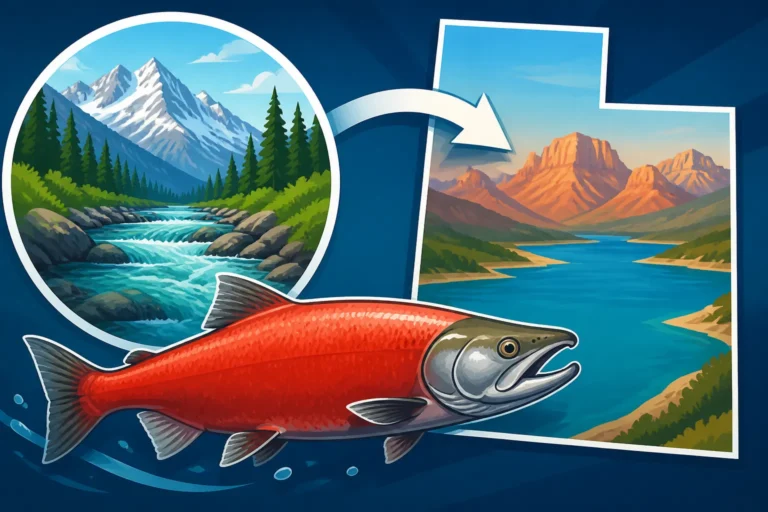
The Bonneville Cutthroat Trout (Oncorhynchus clarkii utah) is Utah's state fish for a very good reason: it's truly native to the historic Bonneville Basin. Imagine a time before modern dams and extensive stocking, a time when these vibrant fish thrived in the ancient Lake Bonneville and its tributary streams. They adapted over millennia to Utah's unique and often harsh conditions, evolving distinct characteristics that set them apart. Finding one in its native habitat, whether it's a high mountain stream or a reconnected lowland river, feels like shaking hands with the past. It’s a connection to a wilder Utah, a testament to the enduring power of nature in our backyard.
Their survival story is fascinating, navigating through periods of intense drought, geological change, and the introduction of other fish species that often competed for resources or even hybridized with them. These challenges led to significant declines in their populations, but dedicated conservation efforts have brought them back from the brink in many areas. Their presence signifies a healthy, functioning ecosystem, and knowing how to identify them helps every angler contribute to their continued recovery by following specific regulations designed to protect them.
The Historical Landscape of Their Domain
Historically, the range of the Bonneville Cutthroat was vast, encompassing nearly all of what we now call the Bonneville Basin. This included the waters that fed into the ancient Lake Bonneville, which at its peak covered much of western Utah, eastern Nevada, and southern Idaho. As the massive lake receded and fragmented over thousands of years, the cutthroat populations became isolated in remaining lakes and tributary streams. This isolation led to local adaptations and, in some cases, distinct genetic lineages. The Provo River, Bear River, and tributaries feeding into Utah Lake were once teeming with these fish.
Human settlement and development, particularly in the last 150 years, dramatically altered this landscape. Diversion of water for agriculture, the construction of dams that blocked spawning migrations, and the widespread stocking of non-native trout species—especially Rainbow Trout and Brown Trout—pushed the Bonneville Cutthroat into smaller, more isolated pockets of suitable habitat. Many of these remaining strongholds were in high-elevation, remote streams, acting as genetic refugia. Understanding this historical context helps us appreciate the delicate balance that exists today and why every effort to conserve these fish, including careful identification and adherence to regulations, is so crucial.
Unmistakable Marks: Key Identification Features
When you're trying to figure out if that fish on your line is a Bonneville Cutthroat or something else, you need to know what physical characteristics to look for. While there can be some variation depending on the specific water body and diet, there are several key features that, when viewed together, paint a clear picture. These aren't just subtle differences; they are the genetic hallmarks that define this unique native trout.
The Signature "Cutthroat Slash"
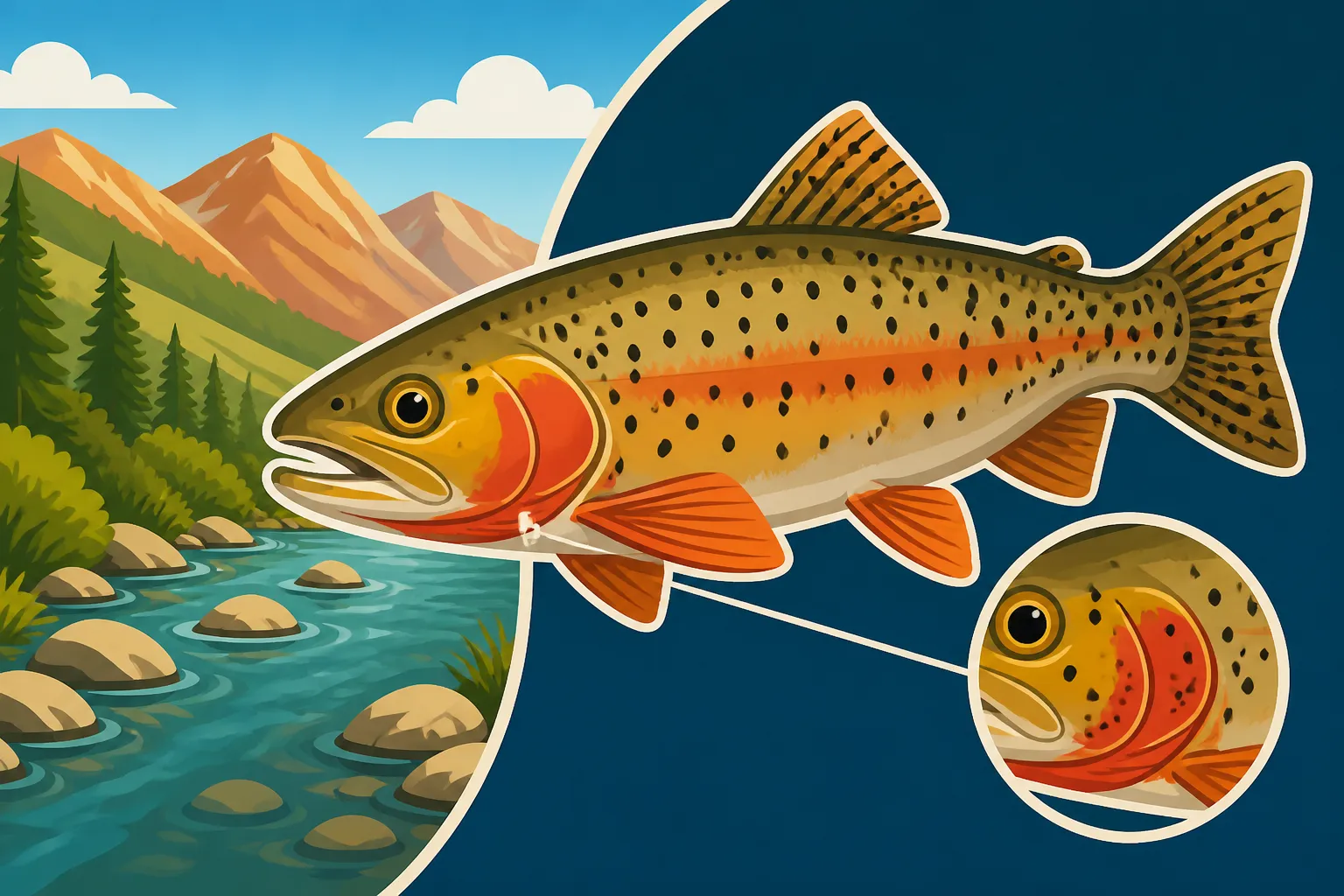
Perhaps the most iconic and eponymous feature of any cutthroat trout, including the Bonneville, is the distinctive "cutthroat slash" found under the jaw. This is a bright red, orange, or sometimes yellow streak that appears in the fleshy folds beneath the lower jaw. It literally looks like someone has drawn a vibrant mark there. The intensity of this slash can vary; it might be quite vivid on a spawning male in full color, or a bit more subdued on a juvenile or a fish in different water conditions. However, it is almost always present to some degree.
This isn't just a pretty mark; it's a crucial identifier. Rainbow Trout, for example, might have some pink or red on their gill plates, but they will never have this specific, defined slash under the jaw. Similarly, Brown Trout lack this feature entirely. It’s the first thing many experienced anglers look for when trying to identify a cutthroat. While some other cutthroat subspecies also share this feature, the overall combination of other markings will help narrow it down to the Bonneville. Always check for this key indicator, even if it means carefully lifting the fish's jaw a bit (while keeping it in the water, of course, for its safety!).
Spotting Patterns and Body Coloration
Bonneville Cutthroat Trout typically display a body coloration that ranges from olive-green to brassy yellow on their backs, fading into a lighter, often silvery or yellowish-white belly. The sides can often have a beautiful pinkish or reddish tint, especially during spawning season or in highly oxygenated waters. However, it's their spots that are often the most telling feature. Bonneville Cutthroats generally have small, distinct black spots that are more concentrated towards the tail end of the body and less so towards the head. These spots are usually round and fairly evenly distributed on the upper half of the body and tail fin, becoming sparser or even absent on the lower sides and belly.
Contrast this with a Rainbow Trout, which often has spots that are much more evenly distributed across its entire body, including its lower sides, and typically has a prominent red or pink lateral band. Brown Trout, on the other hand, have larger, darker spots mixed with red or orange spots that often have a light halo, and they tend to be concentrated more on the front half of the body. The specific size, distribution, and concentration of spots are critical clues. It's not just that they have spots, but where those spots are densest and how they appear.
Fin Characteristics and Mouth Structure
Beyond the colors and spots, pay close attention to the fins and the overall mouth shape. Bonneville Cutthroat Trout typically have fins that are well-formed and can sometimes have a yellowish or reddish tint, particularly on their pectoral, pelvic, and anal fins. Their caudal fin (tail) is usually squared off or very slightly forked, rather than deeply forked like a Lake Trout or extremely squared like some heavily stocked Rainbows. Look at the adipose fin as well; while not unique to cutthroat, its presence confirms it's a true trout or salmon species.
The mouth structure is another important identifier. Bonneville Cutthroats typically have a relatively small mouth that does not extend far beyond the back of the eye, unlike a Brown Trout whose mouth often extends well past the eye. Additionally, a key characteristic common to all cutthroat species is the presence of basibranchial teeth (also called hyoid teeth). These are small, sharp teeth located on the floor of the mouth, between the gill arches. While you usually don't need to get that up close to identify a fish in the field, knowing about these teeth adds another layer to their scientific identification. For practical purposes, observing the mouth size relative to the eye is often sufficient.
Separating the Bonneville from Its Cousins
Identifying a Bonneville Cutthroat isn't just about knowing what it is, but also knowing what it isn't. In many Utah waters, Bonnevilles coexist with—or have been historically replaced by—other trout species. These can often look similar at a quick glance, especially to an untrained eye. Understanding the subtle yet crucial differences is paramount, not only for satisfying your curiosity but also because regulations, such as Utah Daily Bag and Possession Limits, can vary significantly between species.
Bonneville Cutthroat vs. Rainbow Trout
This is perhaps the most common identification challenge anglers face in Utah. Both species can have silvery bodies and black spots, and they often inhabit the same waters, especially in areas that have been heavily stocked with Rainbow Trout. However, several key distinctions will help you tell them apart.
The absolute first thing to look for, as mentioned, is the "cutthroat slash." Rainbow Trout simply do not have this distinct red or orange mark under their jaw. If you see it, you're looking at a cutthroat. Secondly, examine the spotting pattern. Rainbow Trout tend to have smaller, more numerous spots that are evenly distributed over their entire body, including the head, gill covers, and lower sides. They also characteristically have a broad, iridescent pink or red stripe running along their lateral line, which is often very prominent. Bonneville Cutthroats, while they can have some pinkish hues, generally lack this distinct, bright lateral band, and their spots are typically more concentrated towards the tail. Their heads also tend to be less heavily spotted than a Rainbow. If you catch a fish with a vivid pink stripe and spots everywhere, it's almost certainly a Rainbow. A good reference image on your phone or a small field guide from Amazon can be incredibly helpful for a side-by-side comparison in real-time.
| Feature | Bonneville Cutthroat Trout | Rainbow Trout |
|---|---|---|
| Cutthroat Slash | Distinct red/orange/yellow mark under jaw, usually prominent | Absent |
| Lateral Band | Generally absent or a subdued pinkish hue | Prominent, iridescent pink/red stripe along the side |
| Spotting Pattern | Smaller, distinct black spots, concentrated towards tail | Smaller, numerous spots, evenly distributed over body, head, fins |
| Head Spotting | Less heavily spotted | Often heavily spotted on head and gill covers |
| Mouth Size | Relatively small, typically not extending beyond back of eye | Medium, usually not extending far past the eye, but varies |
Telling Them Apart from Brown and Tiger Trout
Brown Trout (Salmo trutta) are another common non-native species in Utah, particularly in rivers and larger reservoirs. They are generally easier to distinguish than Rainbows, but can still cause confusion. The primary difference is the spot pattern: Brown Trout have larger, fewer, and darker spots than cutthroat, and critically, many of their spots are surrounded by a pale halo and may be red or orange, especially on their sides. They also lack the cutthroat slash, and their mouths are noticeably larger, often extending well past the back of the eye. Brown Trout also tend to have a more elongated, torpedo-shaped body.
Tiger Trout, a sterile hybrid of Brown Trout and Brook Trout, have a very distinctive vermiculated or "maze-like" pattern on their bodies, which is usually quite striking and immediately sets them apart from the spotted cutthroat. They also lack the cutthroat slash and often have a more aggressive, predatory appearance. If you see a fish with swirling, intricate patterns instead of distinct spots, it's likely a Tiger Trout. While fascinating to catch, they are often stocked for sport and do not share the same native status or conservation concerns as the Bonneville Cutthroat.
Differentiating from Other Cutthroat Subspecies
Utah is home to several populations of cutthroat trout, and distinguishing between them can be the trickiest part, even for seasoned anglers. For example, the Bear Lake Cutthroat Trout are a unique and important population of Bonneville Cutthroat found primarily in Bear Lake and its tributaries, and they can grow quite large. Genetically, they are Bonneville Cutthroats, but their specific characteristics can be influenced by their unique environment. In other parts of Utah, particularly in northern and western drainages, there can be overlaps or areas where different subspecies were historically found, though pure Bonneville genetics are what conservationists are primarily focused on.
The main challenge comes with identifying pure Bonneville Cutthroat from cutthroat that may have hybridized with Rainbow Trout, creating "cutbows." These hybrids often exhibit a mix of characteristics, such as a faint cutthroat slash combined with more extensive rainbow-like spotting or a lateral band. This is where identification becomes truly challenging and often requires genetic testing for definitive answers. In the field, if you see a very strong cutthroat slash and the spot pattern is primarily concentrated towards the tail with less spotting on the head and lower body, you're likely looking at a pure or very nearly pure Bonneville. If there's any doubt, and especially if you're in a designated native cutthroat restoration water, it's always best to err on the side of caution and treat the fish as a native cutthroat for conservation purposes. Knowledge of Utah Trout Species Guide can further assist here.
Where to Find Them: Habitat and Geographic Cues
Knowing the physical characteristics of the Bonneville Cutthroat is only half the battle. The other crucial piece of the puzzle is understanding where they live. Their habitat preferences and geographic distribution often provide critical clues to their identity. If you catch a cutthroat in a remote, high-elevation stream within their historic range, the chances of it being a Bonneville are much higher than if you catch a similar-looking fish in a heavily stocked community pond.
Preferred Waters and Elevation
Bonneville Cutthroat Trout are primarily found in cold, clean, well-oxygenated waters. This often means mountain streams and rivers, as well as some high-elevation lakes. They prefer areas with good riparian cover (trees and shrubs along the banks) that provide shade and help keep water temperatures cool. They also need a healthy stream bottom composed of gravel and cobble for spawning. You'll often find them holding in pools, runs, and undercuts, especially where there's structure like submerged logs or rocks providing shelter.
While they once thrived in larger, lower-elevation rivers and lakes, many of these habitats have been altered, leading to warmer water temperatures and increased competition from non-native species. As a result, many of the remaining pure Bonneville Cutthroat populations are found in higher elevations, often requiring a hike to access. Think about the tributary streams in the Uinta Mountains, the Tushar Mountains, or other ranges within the historic Bonneville Basin. If you're fishing a small, pristine mountain creek and catch a cutthroat, it's a strong indicator you might have a Bonneville on your hands. Conversely, if you're pulling fish out of a warm, urban pond, it's far less likely to be a pure native cutthroat, even if it has some similar markings.
Geographic Strongholds and Restoration Efforts
Conservation efforts have focused on identifying and protecting remaining populations of genetically pure Bonneville Cutthroat and restoring them to their historic habitats. This means certain areas are specifically managed for these native fish. For instance, specific streams in the Uinta Mountains have been designated for Bonneville Cutthroat restoration, with efforts to remove non-native trout and reintroduce pure Bonneville strains. Similarly, streams in the Bear River drainage and within the larger Bonneville Basin continue to be critical strongholds.
Anglers can play a vital role by knowing which waters are managed for native cutthroat. The Utah Division of Wildlife Resources (DWR) often provides maps and information on these specific waters. If you're fishing a stream that is known to be a Bonneville Cutthroat restoration project area, you should assume any cutthroat you catch is a Bonneville and treat it with the appropriate care and follow all specific regulations. It's often recommended to carry a small, waterproof field guide or even a laminated printout from the DWR website (easily storable in a tackle box or chest pack, often available on Amazon) to confirm the species while streamside. Understanding the local management goals for a particular water body is often your best first step in identification. For more details on specific populations, you can check out Bonneville Cutthroat Trout Identification.
Why Identification Matters: Conservation and Angler Responsibility
It might seem like a lot of trouble to learn the nuances of fish identification, especially when you're just trying to enjoy a day on the water. However, for a species like the Bonneville Cutthroat Trout, accurate identification goes beyond personal curiosity. It directly impacts their survival and the health of Utah's aquatic ecosystems. Every angler has a role to play, and understanding the "why" behind the rules makes us better stewards of our natural resources.
The Role of Anglers in Conservation
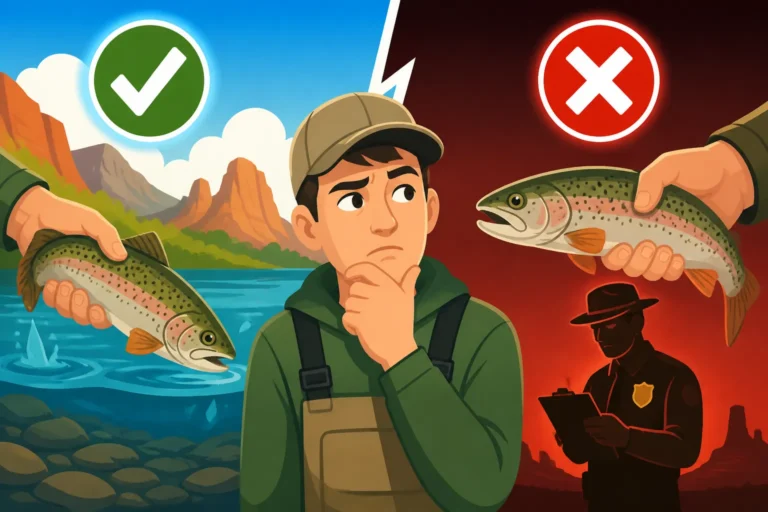
Anglers are often the first line of defense for Utah's fisheries. We spend countless hours on the water, observing changes, and interacting directly with fish populations. When you can correctly identify a Bonneville Cutthroat, you empower yourself to make responsible decisions. For example, in many native cutthroat restoration waters, specific regulations are in place to protect these fish. This might include catch-and-release only, artificial lures and flies only, or very restrictive harvest limits. If you can't tell a Bonneville from a Rainbow, you might inadvertently keep a native fish that should have been released, or conversely, release a non-native fish that wildlife managers encourage you to harvest.
Your actions, however small, contribute to the larger conservation narrative. By practicing proper handling techniques for native fish—keeping them wet, minimizing handling time, and using barbless hooks—you significantly increase their survival rates upon release. Sharing your knowledge with other anglers also helps spread awareness and fosters a community that values and protects these unique fish. It’s about being part of the solution, not unknowingly part of the problem.
Regulatory Implications and Catch Limits
One of the most immediate and tangible reasons for accurate identification is adherence to fishing regulations. Utah Fishing Regulations Explained clearly outline specific rules for different species in different waters. In many areas designated for Bonneville Cutthroat restoration, regulations are designed to minimize harm to the native population and promote their recovery. This often means that all Bonneville Cutthroat caught must be immediately released, or specific size and bag limits are enforced that differ from those for Rainbow or Brown Trout.
For instance, certain waters might have a "zero retention" rule for Bonneville Cutthroat, meaning you must release every one you catch, while allowing harvest of other trout species. Ignoring these rules due to misidentification can lead to legal penalties, including fines for Utah Fishing License Penalties for Violations. Beyond the legal ramifications, it undermines critical conservation efforts. The DWR sets these regulations based on scientific data and population health, and our compliance as anglers is essential for those strategies to succeed. Always check the current fishing proclamation for the specific water you are fishing before you head out. It's like having a map to follow; you wouldn't go hiking without knowing your trail, and you shouldn't fish without knowing the rules for the fish you might encounter.
Practical Tips for Field Identification
Even with all the knowledge in the world, identifying fish in the field, especially under varying light conditions or when a fish is wiggling, can be a challenge. But with a few practical tips and the right mindset, you can significantly improve your chances of making a confident identification every time. It’s about being prepared and taking a moment to observe carefully.
Best Practices for Quick Visual Cues
When you land a fish that you suspect might be a Bonneville Cutthroat, the first rule is to keep it in the water as much as possible. This minimizes stress and maximizes its chances of survival if it needs to be released. Gently cradle the fish in the net or your wet hands while you observe. Start with the most obvious features:
- Check for the "Slash": Immediately look under the lower jaw for the red, orange, or yellow mark. This is the single most defining feature of any cutthroat. If it's there, you're at least looking at a cutthroat.
- Observe Spotting Pattern: Look at the distribution of spots. Are they small and concentrated mostly towards the tail, becoming sparser or absent towards the head and lower body? Or are they numerous and spread everywhere, including the head and gill plates (more like a Rainbow)? Are they large with halos (more like a Brown)?
- Note Body Coloration: While variable, Bonneville Cutthroats generally lack the strong, iridescent lateral band of a Rainbow. Their overall color might be more subtle, with a brassy or olive back fading to lighter sides, possibly with a pinkish flush.
- Mouth Size: Does the mouth extend far beyond the eye (Brown Trout) or is it relatively small (Cutthroat/Rainbow)?
Taking a quick, clear photo (while keeping the fish wet and in the water if possible) can also be invaluable for later review or to share with an expert if you're still unsure. Remember, a quick glance might deceive you; take a moment to really look at the combination of features.
Essential Gear for Enhanced Identification
While your eyes are your primary tools, a few pieces of gear can make field identification much easier and more precise.
- Polarized Sunglasses: These are a game-changer. They cut glare off the water, allowing you to see the fish more clearly, even when it's still partially submerged. This can help you spot the cutthroat slash or distinct spot patterns that might otherwise be hidden.
- Small, Waterproof Field Guide: Many excellent, compact fish identification guides are available. Look for one specific to Utah or Western trout. Keeping it in your pack or vest, even a laminated card, allows for quick comparisons right there on the stream bank. You can find several good options on Amazon.
- Measuring Tape/Ruler: While not directly for species identification, this is crucial for determining if a fish meets legal size limits, especially if different species have different regulations.
- Barbless Hooks: These aren't for identification but are absolutely essential for ethical catch-and-release, especially for sensitive native species like the Bonneville Cutthroat. They make it easier to unhook the fish quickly and with less damage, increasing its chances of survival.
- Camera Phone: As mentioned, a quick photo can be a great reference. Just ensure you prioritize the fish's welfare over getting the perfect shot.
Being well-equipped means you're not just ready to catch fish, but also ready to respect and protect them. This comprehensive understanding of Bonneville Cutthroat Trout identification not only enriches your fishing experience but also makes you a more responsible and informed angler, contributing directly to the health of Utah's unique fisheries.
Disclaimer
This article is for general informational purposes only and does not constitute professional advice. Laws, prices and regulations vary by location and change over time. Consult a qualified professional for guidance on your specific situation.