The Utah State Record Yellow Perch
It's a dream many anglers share: the thrill of reeling in a fish big enough to make history, to etch your name into the record books. For those who appreciate the humble yet feisty yellow perch in Utah, the quest for a state record is a journey of skill, patience, and a deep understanding of these often-underestimated fish. This comprehensive guide will dive into the fascinating world of the Utah state record yellow perch, exploring the legendary catch, what it takes to certify a record, and how you, too, can pursue these impressive panfish in the Beehive State.
Understanding the Utah State Record Yellow Perch
Catching a state record fish isn't just about luck; it's a testament to dedication, knowledge, and sometimes, being in the right place at the right time. For yellow perch, a species often overlooked in favor of flashier game fish, the state record represents the pinnacle of what these vibrant, schooling fish can achieve in Utah's diverse waters. It speaks to the health of certain fisheries and the potential for any angler to make an extraordinary catch.
The Current Record Holder: The Legend of the Catch
While specific angler names and exact dates of every state record can sometimes fade into the annals of local lore or require precise departmental records, the story of Utah's state record yellow perch is a consistent point of pride. This phenomenal fish weighed in at 2 pounds, 10 ounces, a truly remarkable size for a species that many casual anglers typically encounter in the half-pound range. Imagine the feeling of that tug on your line, expecting a respectable panfish, only to pull up a perch of such colossal proportions! Catches like these highlight the hidden potential in many of our reservoirs and lakes, often surprising even seasoned anglers who target other species.
This kind of catch doesn't just happen. It's often the result of years spent on the water, understanding fish patterns, and meticulously choosing tackle and bait. The angler who lands such a fish typically has an intimate knowledge of their chosen waterbody, or simply incredible fortune paired with readiness. It serves as an inspiration that even a common fish species can grow to truly legendary sizes under the right conditions, reminding us to always be prepared for that once-in-a-lifetime bite.
What Makes a Record Fish "Official"?
It's one thing to catch a massive fish, but it's another entirely to have it officially recognized as a state record. The process for certifying a record fish in Utah, as managed by the Division of Wildlife Resources (DWR), is quite rigorous to ensure fairness and accuracy. It’s not just about snapping a quick photo and sharing it on social media. First and foremost, the fish must be weighed on a certified scale, usually at a grocery store, marina, or other commercial establishment that regularly calibrates its scales. This eliminates any doubt about the accuracy of the weight. You'll also need a witness to the weighing process, someone who can corroborate the details of your catch.
Beyond the weight, critical information like the date, time, and specific body of water where the fish was caught are required. You’ll also need to identify the species correctly, which for yellow perch is generally straightforward but important for DWR verification. Submitting photographs, especially those showing the fish clearly and in relation to some form of measurement, can be very helpful, although the weight is the primary determinant for record status. The DWR has specific forms that need to be filled out and submitted, and they might even request to examine the fish itself (or a portion of it) if there's any question about species identification or other details. It's a comprehensive procedure designed to maintain the integrity of Utah's fishing records.
Why Yellow Perch Records Matter to Anglers
You might think that chasing a record yellow perch sounds a bit niche, especially when there are trophy trout and monster lake trout to pursue. But for many anglers, the pursuit of a record yellow perch is incredibly significant. First, it brings attention to a species that is not only abundant and fun to catch but also delicious to eat. Perch are often underestimated, seen as simply bait stealers or small fry. A state record catch helps elevate their status, inspiring more anglers to appreciate and target them. It highlights that the potential for truly impressive panfish exists right here in our local waters.
Secondly, the existence of such a record points to healthy ecosystems where these fish can thrive and grow to exceptional sizes. It suggests good forage bases, suitable habitat, and a balance within the fishery. For conservationists and fisheries managers, record fish provide valuable data points about the health and productivity of specific waterbodies. For the everyday angler, it’s a source of pride and a challenge. It gives you a benchmark, something to aspire to beyond just filling a cooler. It fosters a sense of community among those who love panfishing, sparking conversations about techniques, locations, and the sheer joy of a big bite.
Tracking Down Your Own Trophy Yellow Perch in Utah
If the idea of chasing a record-sized yellow perch has sparked a fire in your angling soul, then you're in for a treat. While it takes dedication and a keen understanding of their habits, Utah offers some fantastic opportunities to land a truly impressive perch. It's about combining knowledge of specific waters with the right techniques and gear.
Top Utah Waters Known for Large Perch
Utah is home to several excellent yellow perch fisheries, and some stand out when it comes to the potential for larger, trophy-sized specimens. Waters like Willard Bay, Pineview Reservoir, Deer Creek Reservoir, and Scofield Reservoir are frequently mentioned among anglers for their robust perch populations, including those elusive bigger fish. Each of these waters has unique characteristics that contribute to the growth of large perch. For instance, some reservoirs might have abundant forage like shiners or young kokanee, allowing perch to pack on the pounds. Others might offer vast expanses of ideal habitat, like submerged weed beds or rocky structures, where perch can feed and grow undisturbed.
It's not just about population size; it's about the conditions that foster growth. Lakes with a healthy balance of prey and predator, along with stable water levels and good water quality, often produce larger fish. When researching where to go, look for local fishing reports that specifically mention perch size, not just numbers. Sometimes, a lesser-known bay or an area with specific submerged structure can hold a localized population of bigger fish. Remember that perch are schooling fish, so when you find one, you often find many, and if you find a big one, its companions might also be impressive. You can also gain more insights by checking out Where Yellow Perch Live in Utah for general distribution patterns.
Seasonal Strategies for Perch Fishing
Yellow perch behavior, and thus the best fishing strategies, changes significantly with the seasons. Understanding these shifts is key to targeting larger fish.
Ice Fishing: Without a doubt, winter ice fishing is often the most productive time for catching trophy yellow perch in Utah. When the ice forms, perch tend to congregate in deeper basins or near prominent underwater structures. Their metabolism slows, but they still feed, and they become more concentrated, making them easier to locate with a fish finder. Jigging small spoons, Rapalas, or ice jigs tipped with a mealworm, wax worm, or a small piece of perch eye can be incredibly effective. The stillness of the water and the vertical presentation often provoke bites from larger, less active fish. Make sure to consult resources like How to Catch Perch Through the Ice in Utah for detailed techniques.
Open Water (Spring/Summer/Fall): During open water seasons, perch can be found in various depths. In spring, after ice-off, they might be shallower, moving to spawn. As summer progresses, they'll often retreat to cooler, deeper water, especially during the heat of the day, congregating around submerged structure or weed lines. Trolling with small crankbaits, casting jigs, or fishing with slip bobbers and live bait (like worms or minnows) are effective methods. In the fall, as water temperatures drop, perch become more active and will feed aggressively to bulk up for winter, often moving back into shallower feeding flats during certain times of the day. Using a good fish finder to locate schools in deeper water is paramount for success, especially on larger reservoirs.
The Right Gear for Pursuing Large Perch
While yellow perch don't typically require heavy-duty gear, targeting larger individuals demands a refined setup that balances sensitivity with enough backbone to handle a strong fight. A light to medium-light action spinning rod, typically 5 to 6.5 feet long, is ideal. This length provides good casting distance while maintaining sensitivity for detecting subtle bites. Pair this with a small, lightweight spinning reel in the 500 to 1000 size range, spooled with 4-6 pound test monofilament or fluorocarbon line. Many anglers opt for braided line (6-8 lb test) for its sensitivity, adding a 4-6 pound fluorocarbon leader for stealth.
When it comes to lures and bait, versatility is your friend. Small jigging spoons (like Swedish Pimples or Kastmasters), ice jigs, blade baits, and small soft plastics (grubs or minnow imitations) are all effective. Tipping jigs with live bait such as wax worms, mealworms, or small minnows often increases success, especially for larger, more finicky fish. For open water, slip bobber rigs with a small hook and a worm or minnow are deadly when perch are cruising weed lines or structure. You can find a fantastic array of these specialized perch jigs, sensitive ice rods, and even highly effective fish finders on Amazon, often at competitive prices. For organizing your arsenal, a dedicated Best Tackle Box Organizer for a Trout Angler can easily be adapted to keep your perch tackle neat and accessible. Don't forget a pair of long-nosed pliers for hook removal, as perch can swallow baits deeply, and a good small landing net to safely bring in those potential record breakers.
Yellow Perch in Utah: Biology and Behavior
To consistently catch larger yellow perch, it's incredibly helpful to understand their basic biology and how they behave in Utah's diverse aquatic environments. Knowing what they look like, what they eat, and how they grow gives you a significant edge in finding and catching them.
Identifying Yellow Perch: Key Features
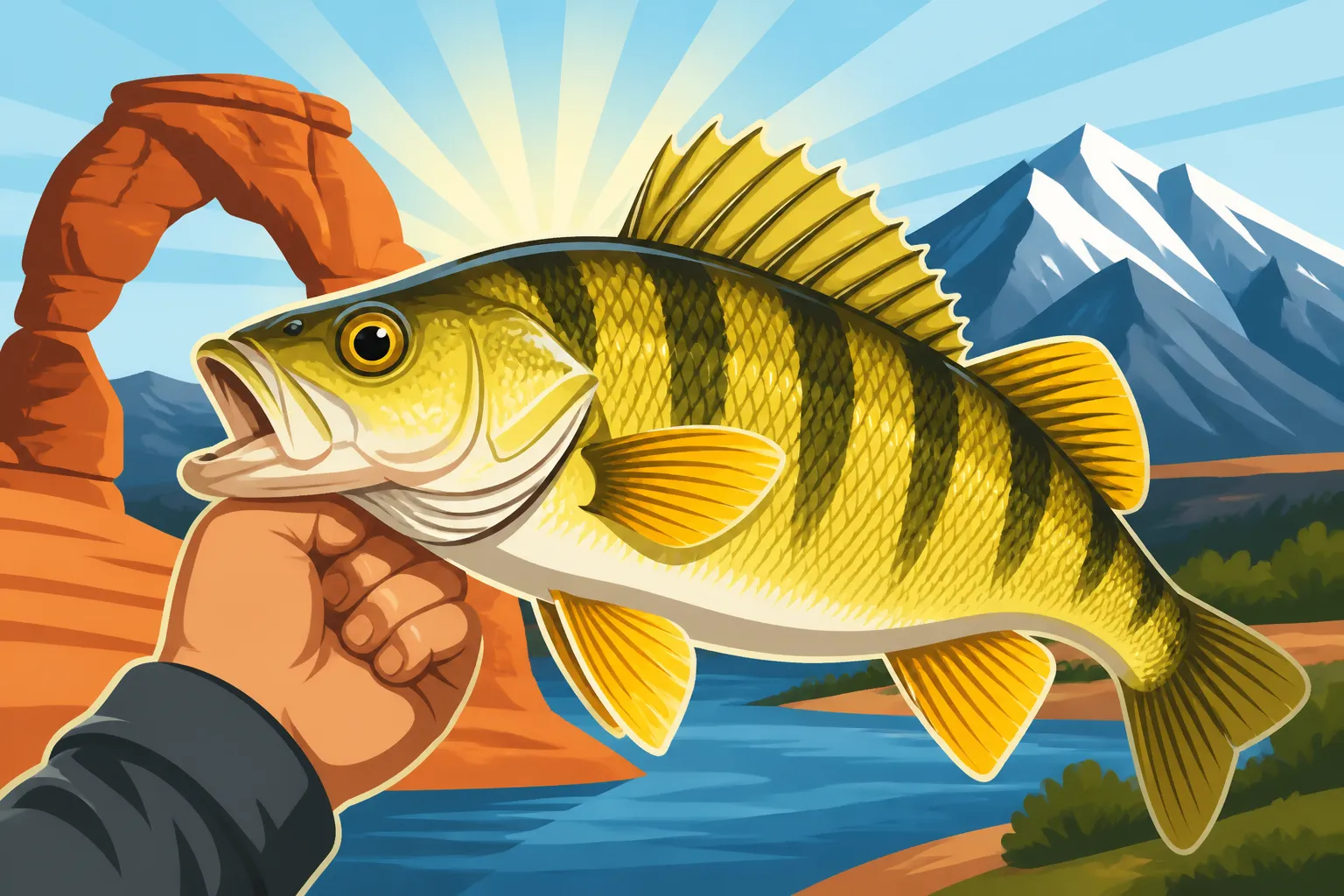
Yellow perch (Perca flavescens) are one of Utah's most recognizable panfish species, known for their distinct appearance. They typically have a golden-yellow body, marked by 6 to 8 dark, vertical bars that extend from their back to below the lateral line. Their fins are often tinged with orange or red, especially the lower fins (pelvic, anal, and caudal), which adds to their vibrant appearance. They have two dorsal fins; the first is spiny and the second is soft-rayed. Their body is somewhat elongated and compressed, and they have a slightly humped back.
Distinguishing yellow perch from other panfish like bluegill or crappie is generally easy due to their unique color pattern and body shape. Bluegill, for example, are typically rounder and have a prominent black spot on their gill flap, while crappie are silver and have a more disc-shaped body. Understanding these key identification features is important not just for fishing regulations (which often have species-specific limits) but also for appreciating the diversity of fish you encounter. For more general information about this species, you can check out Yellow Perch in Utah Waters.
Yellow Perch Diet and Habitat Preferences
Yellow perch are opportunistic predators, and their diet plays a crucial role in their growth and overall size. Young perch primarily feed on zooplankton and aquatic insects. As they grow larger, their diet expands to include a wider range of food sources, such as insect larvae, worms, leeches, crayfish, and even smaller fish, including the fry of other species (and sometimes their own!). This shift to a more piscivorous (fish-eating) diet is often what allows them to reach trophy sizes. Waters with an abundant supply of these larger food items, particularly small baitfish, tend to produce bigger perch.
Habitat-wise, yellow perch are quite adaptable but show a strong preference for areas with submerged vegetation, woody debris, or rocky structures. These areas provide both cover from predators and ambush points for their prey. They are often found in relatively shallow to moderate depths, especially along the edges of weed beds, submerged humps, or drop-offs. While they prefer cooler water temperatures, they can tolerate a wide range, moving to deeper, cooler areas during the peak of summer heat. Understanding these preferences helps anglers pinpoint where the biggest perch are likely to be hiding and feeding.
Growth Rates and Factors Influencing Size
The growth rate of yellow perch varies significantly depending on the specific water body and environmental conditions. In ideal conditions with abundant food, moderate water temperatures, and healthy population densities, yellow perch can reach a respectable size within a few years. However, to grow to the 2-pound plus range, like the Utah state record, they typically need several years, often five to eight years or even more. They are a relatively slow-growing fish compared to some other species, which makes a true trophy perch all the more impressive.
Several factors influence their size.
- Food Availability: This is perhaps the most critical factor. Waters with a rich supply of zooplankton for young perch and plenty of small fish for adults will produce larger, healthier fish.
- Water Temperature: Consistent, moderate water temperatures allow for steady growth, while extreme highs or lows can slow their metabolism and growth.
- Population Density: In waters with overcrowded perch populations, competition for food can be fierce, leading to stunted growth. Fisheries management often aims to maintain a balanced population to ensure healthy growth rates.
- Genetics: While less understood for individual fish, genetic factors can play a role in the maximum potential size a fish can reach.
All these elements combine to influence the Yellow Perch Size in Utah in any given water, creating the potential for those truly massive fish that become state records.
Preserving the Legacy: Catch-and-Release for Trophy Perch
Catching a potential state record yellow perch is an incredible accomplishment. But with that comes the responsibility of handling such a magnificent fish properly, whether you choose to keep it for the record or release it to fight another day and perhaps spawn more trophy fish. Responsible angling ensures that the thrill of chasing big perch continues for future generations.
Handling Large Perch for Release
If your goal is to release that monster perch, perhaps after a quick photo, proper handling is absolutely crucial for its survival. Larger fish, especially, can be more susceptible to stress and injury. Here are some key tips:
- Wet Hands: Always wet your hands before touching the fish. Dry hands can remove the protective slime layer (mucus) from the fish's skin, making it vulnerable to infection.
- Minimize Air Exposure: Keep the fish in the water as much as possible. If you must remove it for a photo, do so quickly, holding it horizontally to support its body weight. A fish out of water for too long struggles to breathe and can suffer organ damage.
- Support the Body: Never hold a large fish vertically by the jaw or tail without supporting its body. This can cause severe internal damage, especially to the spine and internal organs, and lead to delayed mortality. Cradle it gently, supporting its belly.
- Gentle Hook Removal: Use a pair of needle-nose pliers or a dehooking tool to quickly and gently remove the hook. If the fish is deeply hooked and removal would cause significant damage, it's sometimes better to cut the line as close to the hook as possible.
- Revive If Necessary: If the fish seems lethargic before release, gently hold it upright in the water, facing into any current, and move it back and forth to force water over its gills until it swims away strongly.
Following these practices ensures that your impressive catch has the best chance of survival and can potentially grow even larger or spawn more trophy perch.
Documenting Your Potential Record Catch
If you're lucky enough to hook into a yellow perch that you suspect might be a state record, documenting it properly is paramount. As discussed, the DWR requires a certified weight and a witness. This means that if you intend to keep the fish for record consideration, you need to head straight to the nearest certified scale immediately after the catch.
Before you go, though, if you decide to photograph your fish, take several clear photos from different angles. Include a photo showing the fish next to a measuring device (a ruler or tape measure) to accurately record its length. While length isn't the primary record determinant, it's great supplementary data. Consider using a bump board or measuring tape like those available on Amazon, which can help ensure accuracy and consistency. A quick measurement of the girth can also be useful for descriptive purposes.
Remember, the emphasis is on promptness and accuracy. Don't let the fish sit in a cooler for hours before weighing, as this can lead to weight loss due to dehydration. Be prepared with the DWR contact information or website to understand the most current submission process and required paperwork. This meticulous approach ensures that if you do break a record, your claim will be undisputed.
The Future of Perch Fishing in Utah
The health of Utah's yellow perch populations, and the potential for future state record fish, relies heavily on thoughtful management and responsible angling practices. The DWR continually monitors fish populations and implements regulations designed to maintain healthy fisheries, balancing angler opportunity with conservation needs. This might involve stocking programs, specific bag limits, or even special regulations on certain waters. Anglers play a vital role in this future. By adhering to regulations, practicing responsible catch-and-release (especially for larger, breeding-stock fish), and reporting any unusual observations or concerns to the DWR, we all contribute to the sustainability of this valuable fishery.
Conservation efforts are often driven by understanding the entire ecosystem, from the smallest invertebrates to the largest fish. The thrill of chasing a potential state record yellow perch is part of a larger picture of appreciating our natural resources and striving to protect them. Every time an angler respectfully releases a large perch or celebrates a record-breaking catch, it adds to the legacy of fishing in Utah, inspiring the next generation of anglers to get out on the water and perhaps, one day, pursue The Utah State Record Yellow Perch themselves.
| Utah Waters Known for Quality Yellow Perch | Primary Habitat Features | Best Fishing Season | Typical Forage Base (Adults) |
|---|---|---|---|
| Willard Bay | Shallow, weedy flats, submerged structures | Ice Fishing, Spring/Fall | Shad, small fish, crustaceans |
| Pineview Reservoir | Weed beds, rocky points, deep channels | Ice Fishing, Summer | Minnows, insect larvae, zooplankton |
| Deer Creek Reservoir | Submerged structure, transition zones | Ice Fishing, Spring/Fall | Minnows, aquatic insects |
| Scofield Reservoir | Weed lines, deeper flats | Ice Fishing, Summer | Minnows, scuds, insect larvae |
Disclaimer
This article is for general informational purposes only and does not constitute professional advice. Laws, prices and regulations vary by location and change over time. Consult a qualified professional for guidance on your specific situation.