Best Downriggers for Flaming Gorge Lake Trout
Chasing after those elusive, monstrous Lake Trout (often called Mackinaw) in the vast, deep waters of Flaming Gorge Reservoir can be one of the most rewarding — and challenging — fishing experiences Utah has to offer. If you've ever tried to target these deep-dwelling giants, you know the frustration of trying to get your lure down to 60, 80, or even 100 feet where they often lurk. This guide is all about equipping you with the knowledge to choose and use the best downriggers, turning those deep-water challenges into successful trophy catches.
Understanding Downriggers and Why They're Essential for Flaming Gorge
When you envision fishing, you might think of casting from shore, fly fishing a river, or even jigging from a boat. But when it comes to consistently catching trophy Lake Trout in a reservoir like Flaming Gorge, you're entering a whole different ballgame. These fish aren't hanging out in the shallows; they prefer the dark, cold, oxygen-rich depths, and getting your lure down to their strike zone is where traditional methods often fall short.
The Deep-Water Challenge of Flaming Gorge
Flaming Gorge is a truly massive body of water, famous for its dramatic red cliffs and incredible depth. We're talking about areas that plunge hundreds of feet, and the Lake Trout that call it home often patrol specific thermoclines or structures far below the surface. Simply tying on a heavy sinker usually isn't enough because you lose control over your lure's exact depth, and the natural action of your presentation can be severely hampered. Imagine trying to present a small spoon or a minnow imitation 75 feet down with just a lead weight – it's going to tumble unnaturally, and the fish, being the smart predators they are, will likely ignore it. The sheer pressure and distance make every twitch of the rod feel like nothing, and knowing if you're even in the right depth becomes a constant guessing game.
How Downriggers Solve the Depth Puzzle
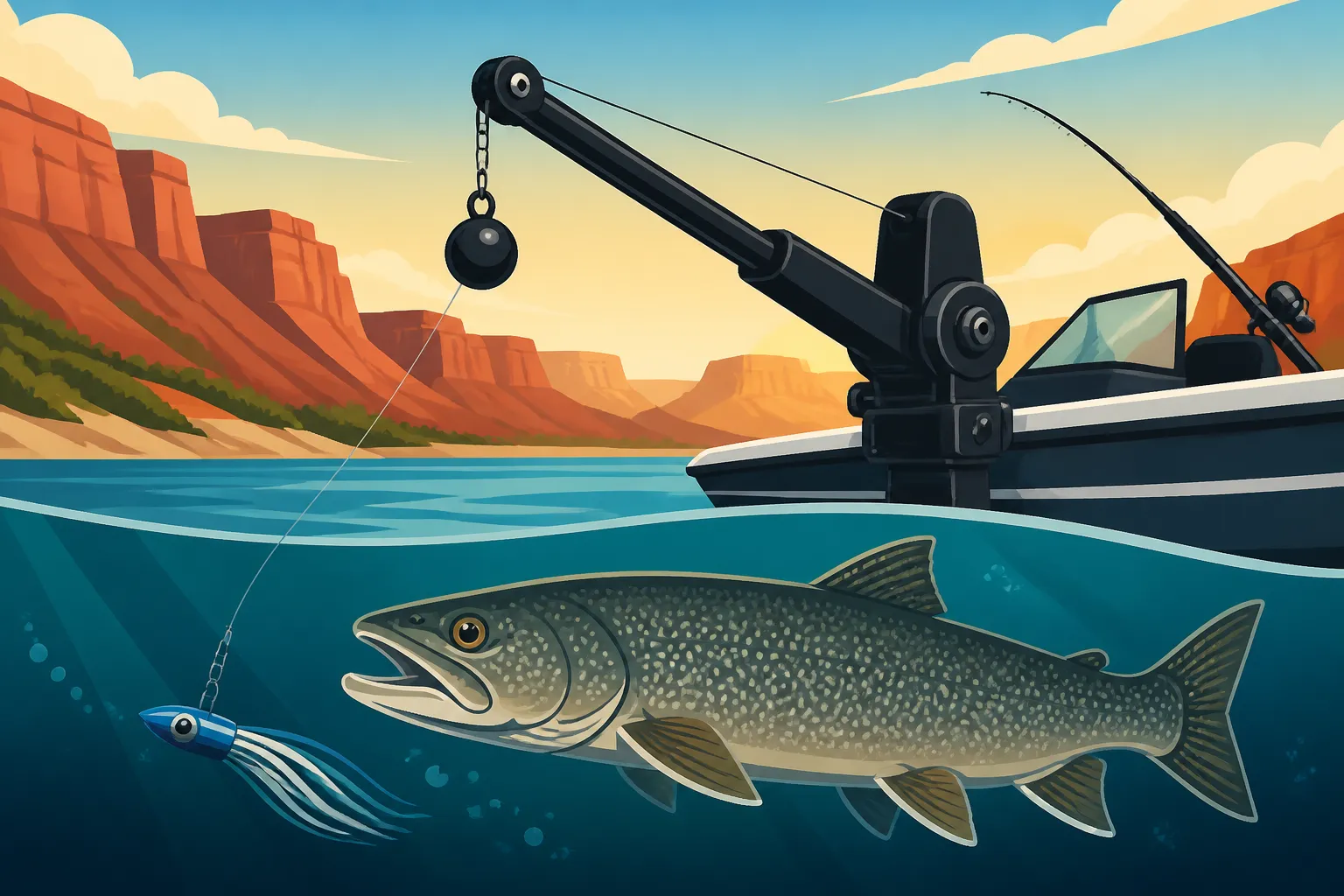
This is precisely where downriggers become absolutely indispensable. Think of a downrigger as a precision depth control system for your fishing line. It uses a heavy weight (a "downrigger ball") attached to a cable, which you can lower to an exact depth. Your fishing line, with its lure, is then attached to this cable via a release clip. The beauty of this system is that your lure can run free, without any heavy weights on your main line, allowing it to exhibit its natural action and appeal to those wary Lake Trout. Once a fish strikes, the line pops free from the clip, and you're fighting the fish directly, without the added drag of the downrigger ball. It's a game-changer for targeting fish suspended at specific depths, and in a place like Flaming Gorge, where Lake Trout can be at 40 feet one day and 90 feet the next, that precision is everything. This technique is absolutely crucial for Utah Trolling Techniques for Lake Trout and mastering it will dramatically increase your success.
Key Features to Look For in a Downrigger
Choosing a downrigger isn't just about picking the first one you see; it’s about matching the tool to the task, and deep-water trolling for Lake Trout at Flaming Gorge is a demanding task. There are several critical features that differentiate models and impact their effectiveness and ease of use. Investing in the right downrigger setup will save you a lot of headaches and help you land those trophy fish.
Manual vs. Electric Downriggers
This is often the first big decision you'll make.
- Manual Downriggers: These are hand-cranked, much like a traditional fishing reel, to lower and retrieve the downrigger ball. They are generally less expensive, simpler in design, and don't require any electrical hookups. For anglers on a budget or those who don't plan to troll extensively, a good manual downrigger can be perfectly adequate. They're also great for smaller boats where electrical systems might be limited. However, constantly cranking up a heavy ball from significant depths can be a real workout, especially if you're checking your lines often or re-setting after a strike. Imagine reeling up a 10-pound ball from 100 feet several times an hour – your arms will definitely feel it!
- Electric Downriggers: These are powered by your boat's 12-volt system and retrieve the downrigger ball at the push of a button. While they come with a higher price tag and require proper wiring, the convenience they offer is unparalleled. For serious Lake Trout anglers who spend long days on Flaming Gorge, or those running multiple downriggers, electric models are almost a necessity. They allow for quick depth adjustments, effortless retrieval after a fish hits, and less fatigue, which means more energy for actually fighting fish. Many also come with advanced features like auto-stop at the surface, which prevents the ball from hitting your boat, or even depth cycling functions.
Boom Length and Swivel Bases
The boom is the arm that extends out from the downrigger base, and its length is more important than you might initially think.
- Boom Length: A longer boom (typically 36-60 inches) helps spread your lines out, preventing tangles, especially when running multiple downriggers or making turns. This is particularly valuable on larger boats or when targeting widespread fish. For instance, if you're using a single downrigger on a smaller craft, a shorter boom might suffice. However, on a larger vessel or when running two downriggers off the stern, longer booms are key to keeping your lines from crossing, which is a common frustration when trying to cover water for those Flaming Gorge Lake Trout.
- Swivel Bases: These allow you to rotate the downrigger unit 360 degrees. This might seem like a small detail, but it makes a huge difference in usability. It simplifies deploying and retrieving the downrigger ball, makes it easier to set your lines, and can be crucial for clearing props or other gear. Imagine trying to load your line into a release clip without being able to swing the downrigger out from the boat – it’s awkward and can lead to dropped balls or tangled lines. Most quality downriggers designed for serious fishing will either come with a swivel base or have it as an easily added accessory.
Retrieval Speed and Weight Capacity
These features speak directly to performance and durability.
- Retrieval Speed: For electric models, how quickly the downrigger retrieves the ball from the depths is a major factor in efficiency. Faster retrieval speeds mean less downtime between fish, quicker depth changes, and more time with your lures in the strike zone. If you’re fishing 80-100 feet down, a downrigger that can bring up a 10-pound ball quickly is a definite advantage over one that creeps along. This is especially true when you're hitting a "hot" zone and want to get your line back down immediately after a catch or a missed strike.
- Weight Capacity: This refers to the maximum weight of the downrigger ball the unit can handle effectively. While 8-12 pound balls are common for deep-water trolling, some anglers prefer heavier balls (e.g., 15 pounds) in strong currents or when running very fast to maintain vertical presentation. Ensure the downrigger you choose is rated for the ball weight you intend to use. Overloading a downrigger can lead to premature wear and failure. How Deep Should You Set a Downrigger for Flaming Gorge Lake Trout? often dictates heavier balls to maintain that precise depth.
Popular Downrigger Types and Brands for Lake Trout
When you're serious about deep-water fishing for Lake Trout, especially in a place like Flaming Gorge, you'll quickly realize that downriggers aren't a one-size-fits-all product. Different types offer varying levels of convenience, power, and precision. You'll find a range of options, from robust manual models to sophisticated electric units, and recognizing the strengths of each will help you make the best choice for your fishing style and budget. You can often find a wide selection of these devices, from basic models to advanced units, at stores like Bass Pro Shops or even online through retailers like Amazon.
Manual Downriggers: Simplicity and Reliability
Manual downriggers are the workhorses of the downrigger world. They are often less expensive, incredibly reliable due to fewer moving parts, and don't require any electrical hookups, making them perfect for smaller boats or those who prefer a straightforward approach. Brands like Scotty and Cannon offer excellent manual options that are durable and get the job done.
- Scotty Depthpower Manual Downriggers: These are renowned for their robust construction and ease of use. Many come with a powerful, fast-retrieve crank and a comfortable handle. They are often a top choice for anglers who want reliability without the complexity or cost of electric models. For example, a Scotty manual downrigger might feature a simple clamp-on mount, making installation and removal quick and easy for different fishing trips or boats. While they require manual effort, their mechanical simplicity means less can go wrong, which is a huge plus when you're out on the water far from any repair shop. They are truly built to withstand the rigors of consistent use.
- Cannon Uni-Troll Manual Downriggers: Cannon also has strong contenders in the manual market, offering models that are known for their smooth operation and thoughtful design. Their manual downriggers often incorporate features like a clutch system that allows for controlled descent of the downrigger ball, preventing free-spooling. This control is crucial when you’re trying to hit an exact depth without overshooting. For many anglers, the feeling of direct control that a manual downrigger provides is part of the appeal. It keeps you more engaged in the process and can be a very satisfying way to fish, even if it requires a bit more elbow grease.
Electric Downriggers: Power and Precision
For those who spend countless hours trolling the depths of Flaming Gorge for trophy Lake Trout, electric downriggers are often the preferred choice. They offer immense convenience, speed, and advanced features that can significantly enhance your fishing experience.
- Cannon Digi-Troll and Mag Series: Cannon is a big player in the electric downrigger market, with their Digi-Troll and Mag series being particularly popular. These models boast impressive retrieval speeds, durable construction, and often include advanced features like digital depth displays, positive ion control (which some anglers believe attracts fish), and integrated line counters. The Cannon Optimum series even connects to your fish finder and other boat electronics, allowing for highly integrated control and data logging. Imagine being able to program specific depths, adjust fall rates, and even cycle depths automatically while you focus on steering and watching your sonar for Flaming Gorge Trophy Lake Trout Spots. This kind of precision can be invaluable in a place where fish can be holding to very specific contours or thermoclines.
- Scotty Strongarm and Propack Electric Downriggers: Scotty also offers a range of high-quality electric downriggers known for their powerful motors and robust build. Models like the Scotty 1106 Propack and the 2106 Depthpower are workhorses, featuring strong booms, efficient retrieval, and reliable performance. Many Scotty electric downriggers prioritize durability and straightforward operation while still offering essential features like auto-stop and adjustable retrieve speeds. Their design often focuses on being user-friendly, allowing anglers to quickly learn the controls and spend more time fishing. These units are built to stand up to the challenging conditions you often encounter on large, deep reservoirs.
Advanced Features: Line Counters and Auto-Stop
Beyond the basic manual or electric operation, certain features can significantly improve your downrigger's utility.
- Line Counters: Almost all electric downriggers, and many higher-end manual models, come with a built-in line counter. This feature is absolutely vital for precise depth control. It allows you to know exactly how much cable you've deployed, ensuring you can consistently return to the fish-holding depths you've identified on your fish finder. Without a reliable line counter, hitting a specific depth consistently becomes a frustrating guessing game. When you find that magical depth where the Lake Trout are biting, a precise line counter lets you replicate that success run after run.
- Auto-Stop: This feature, primarily found on electric downriggers, automatically stops the downrigger ball when it reaches the surface. This prevents the ball from hitting your boat, potentially causing damage or tangles, and frees you up from having to manually stop the motor every time. It's a small convenience that adds up, especially when you're constantly deploying and retrieving lines during an active bite. Some electric units also offer "short stop" features, which stop the ball a few feet below the surface, keeping it ready for quick redeployment.
- Positive Ion Control (PIC): This is a unique feature on some Cannon downriggers. It's designed to create a small electrical field around the downrigger ball, which Cannon claims mimics the natural electrical impulses of baitfish, making your presentation more attractive to game fish. While its effectiveness is debated among anglers, it's an interesting technology that some swear by for an added edge, particularly when fish are finicky.
When considering where to purchase your downrigger, both Bass Pro Shops and Amazon offer extensive selections. Bass Pro Shops provides the advantage of seeing the units in person and often has staff who can offer advice, while Amazon provides a vast array of models and competitive pricing, often with detailed customer reviews that can help guide your decision. No matter where you shop, ensure you research the specific model's reputation for durability and customer support.
Setting Up Your Downrigger System for Flaming Gorge Success
Getting the right downrigger is only half the battle; knowing how to properly set it up on your boat and integrate it into your fishing strategy for Flaming Gorge Lake Trout is where the real magic happens. A well-installed and correctly rigged downrigger system works seamlessly, allowing you to focus on finding fish and enjoying the fight, rather than wrestling with your gear.
Mounting and Placement on Your Boat
The first crucial step is deciding where to install your downriggers. Most boats will mount them towards the stern, typically on the gunwales or transom.
- Location, Location, Location: You want the downriggers placed where they are easily accessible for setting lines, retrieving, and making adjustments, but also where they won't interfere with your outboard motor, prop, or other fishing activities. On many fishing boats, this means mounting them on sturdy tracks or fixed bases on either side of the transom, or slightly forward on the gunwales. For smaller boats, a single downrigger might be centered or offset to one side.
- Secure Mounting: Flaming Gorge can get choppy, and you'll be deploying heavy weights, so secure mounting is non-negotiable. Use heavy-duty, reinforced mounting plates or track systems. Ensure the mounting bolts go through a solid part of your boat's hull or transom, often requiring backing plates to distribute the stress. A wobbly downrigger is not only inefficient but also a safety hazard. If you plan on running multiple lines, consider a track system that allows you to easily adjust the position of your downriggers or even add rod holders, creating a highly customizable fishing platform. Best Boat Setup for Trolling at Flaming Gorge delves deeper into these considerations.
- Electrical Connections (for electric downriggers): If you've opted for electric downriggers, ensure a dedicated, fused power source is run directly from your boat's battery, using appropriate gauge wiring. Skimping on wiring can lead to performance issues or even damage your downrigger. Always double-check polarity and use marine-grade connectors to resist corrosion.
Choosing the Right Downrigger Ball and Release Clip
These two components are the business end of your downrigger system.
- Downrigger Balls: The weight of your downrigger ball depends on factors like depth, trolling speed, and current. For most Flaming Gorge Lake Trout applications, a 10-pound or 12-pound ball is a good starting point. Heavier balls (e.g., 15 pounds) can help maintain a more vertical presentation at faster trolling speeds or in strong subsurface currents, but they also put more strain on your downrigger and require more effort to retrieve (if manual). There are various shapes too – cannonball, pancake, and shark fin – each designed to reduce blowback (the angle at which the cable trails behind the boat). Pancake or shark fin shapes tend to perform better in terms of reducing blowback, especially when you're trying to keep your lure as close to vertical as possible.
- Release Clips: This is where your fishing line connects to the downrigger cable. The goal is for the clip to hold your line securely until a fish strikes, then release smoothly. There are various types:
- Stacker Releases: These allow you to run multiple lines off a single downrigger ball, with each line at a different depth. They're fantastic for covering more water and experimenting with different presentations.
- Adjustable Tension Releases: Most clips offer adjustable tension, which is key. You want it tight enough to hold your lure without premature releases, but loose enough for a fish to trip it. Experiment with different settings – a heavy lure or a fast troll will require more tension, while a light presentation or slow troll might need less. Many anglers carry a variety of clips with different tension ranges to adapt to changing conditions. Often you'll find quality clips sold separately or included with good downriggers from brands like Scotty and Cannon, both easily found at Bass Pro Shops or on Amazon.
Rigging Your Rods and Lures with a Downrigger
This is where your downrigger, rod, reel, and lure all come together to create an effective fishing system.
- Rod and Reel Setup: Use sturdy rods designed for trolling, with enough backbone to handle both the pull of the downrigger and the fight of a large Lake Trout. A medium-heavy action rod, around 7-8 feet in length, is often ideal. Pair it with a reliable baitcasting reel spooled with strong monofilament or braided line (15-30 lb test is common). Remember, your main line doesn't have a heavy weight on it, so you're fighting the fish directly, which allows for lighter, more sporting tackle once the line releases from the clip.
- Leader Material: Consider using a fluorocarbon leader (10-20 lb test) for stealth, especially in the clear waters of Flaming Gorge. The length of your leader will vary, but 6-10 feet is a common starting point, giving your lure plenty of natural action away from the downrigger ball.
- Lure Selection: Lake Trout in Flaming Gorge respond well to a variety of lures, including large spoons, stickbaits, tube jigs, and plastic swimbaits, often fished with a dodger or flasher in front to add attraction. The key is to choose lures that have good action at your desired trolling speed and depth. Experiment with colors and sizes, as what works one day might not work the next. Pay attention to local baitfish, like kokanee salmon or chub, and try to "match the hatch" with your lure choice. For more on this, check out Flaming Gorge Trophy Lake Trout Spots.
- Setting Your Lure and Clip: Once your lure is deployed a short distance behind the boat, open your bail and attach your main line to the downrigger release clip. The clip then attaches to the downrigger cable. Carefully lower the downrigger ball to your desired depth, watching your line counter. After the ball is at depth, take up any slack on your rod and ensure there's a nice bend in the rod tip – this indicates the lure is tracking correctly and will provide a visual cue when a fish strikes and the line releases from the clip. The amount of "slack" you take up, or how much bend is in your rod, is known as "rod load" and is crucial for proper clip release. Too much, and a small fish might not trip it; too little, and the clip might release prematurely.
Downrigger Techniques for Targeting Flaming Gorge Lake Trout
Once your downriggers are installed and your lines are rigged, the real art of deep-water trolling begins. Catching those wary Lake Trout in Flaming Gorge requires more than just dropping a lure to depth; it involves strategic planning, constant adjustments, and a keen understanding of fish behavior. This is where your investment in good downriggers, from brands like Scotty or Cannon, really pays off, giving you the control needed to outsmart the fish.
Reading Your Electronics and Targeting Depths
Your fish finder is your best friend when downrigger fishing. It’s your window into the underwater world of Flaming Gorge.
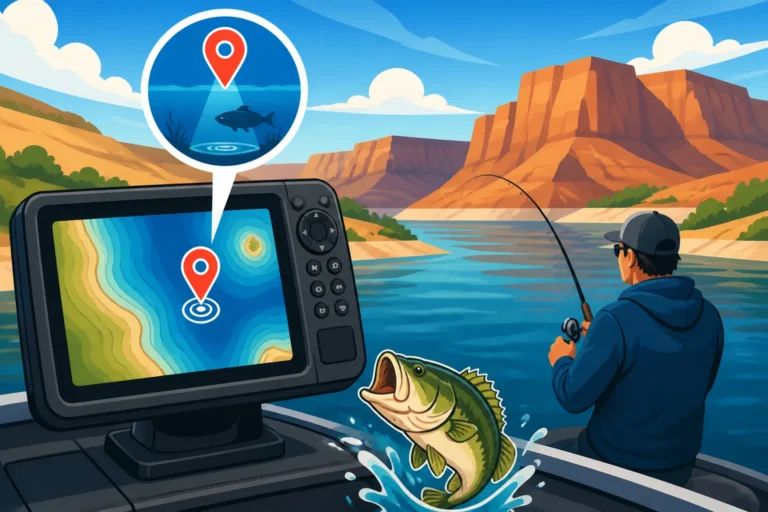
- Interpreting Sonar: Pay close attention to baitfish schools, thermoclines, and any large arches that indicate Lake Trout. These fish often relate to structure like submerged points, humps, or the edge of deep channels. They might also suspend in the water column, often just above or within a thermocline where baitfish congregate. Your fish finder will show you exactly where these fish are holding, giving you the target depth for your downrigger balls. Remember, Lake Trout are cold-water fish, so during warmer months, they'll be deeper. Consider pairing your downrigger setup with a quality fish finder, as explored in Best Fish Finders for Utah Reservoirs.
- Adjusting Depths: Don't be afraid to experiment! If you're not getting bites at one depth, adjust your downrigger up or down by 5-10 feet. Sometimes a slight change makes all the difference. Keep a mental note or even log the depths where you get strikes. If you're running multiple downriggers, set them at slightly different depths to cover more of the water column until you find the sweet spot.
- Speed and Blowback: Trolling speed directly impacts how much your downrigger cable "blows back" behind the boat. Faster speeds mean more blowback, making your lure shallower than the reading on your downrigger. Use a dedicated speed-at-depth sensor or learn to compensate. Most Lake Trout trolling speeds range from 1.5 to 3.0 mph, but it's important to experiment. Some modern downriggers have internal sensors that can estimate blowback, giving you a more accurate depth reading. This is critical for knowing How Deep Should You Set a Downrigger for Flaming Gorge Lake Trout?.
Managing Multiple Lines and Spacing
Running multiple lines efficiently is key to covering more water and increasing your chances of a strike.
- Staggering Depths: If you're running two downriggers, set them at different depths. For example, one at 60 feet and another at 75 feet. This helps you quickly identify the preferred depth of the fish. If you have the ability to run more lines (check Utah Fishing Regulations Explained for specifics on legal limits), you can also run flat lines or planer boards to cover surface and mid-depth ranges.
- Horizontal Spacing: Use the boom length and swivel bases to spread your downrigger lines out horizontally. This prevents tangles, especially when making turns or when fish are being reeled in. Anglers often deploy one downrigger straight back and angle the other out to the side. You can also vary the length of your leader (the distance from the downrigger release clip to your lure) to give even more horizontal separation.
- The "S" Turn Technique: Instead of trolling in a perfectly straight line, try making gradual S-turns. As you turn, your lures on the inside of the turn will drop slightly, and those on the outside will rise. This change in depth and speed can often trigger strikes from following fish that might be hesitant to hit a lure moving at a constant speed and depth. Many experienced Lake Trout anglers find that a lot of their strikes occur during these turns.
Adjusting for Fish Behavior and Water Conditions
Lake Trout, like all fish, are influenced by their environment. Being able to adapt your downrigger strategy is crucial for consistent success.
- Time of Day and Season: Early morning and late evening often provide the best bites, but Lake Trout can be caught throughout the day in deep water. In spring and fall, they might be shallower, while in the heat of summer, they'll retreat to the deepest, coldest parts of the reservoir. Your depths will change dramatically throughout the year, so always consult your fish finder and adjust accordingly. Don't assume the depth you caught them at last month will be the same today.
- Weather and Light Conditions: Overcast days or low light conditions can sometimes bring Lake Trout shallower or make them more aggressive. Bright, sunny days often push them deeper. Also, consider lure color. On cloudy days or in deep, dark water, brighter or fluorescent colors might be more visible. On clear, sunny days, more natural or subdued patterns might be better.
- Baitfish Activity: Pay attention to where the baitfish are. If your sonar shows schools of kokanee or chub at a certain depth, that's likely where the Lake Trout are feeding. Try to present your lure just above, in the middle of, or just below these baitfish schools. Mimicking injured baitfish through erratic lure action or subtle speed changes can also be very effective. This requires constant monitoring of your fish finder and willingness to adjust your depths and lures. For more about the species in the area, check out Utah Lake Trout Mackinaw Guide.
Maintenance and Care for Your Downriggers
Your downriggers, whether manual or electric, are precision pieces of equipment that operate in a harsh, corrosive environment. Just like any valuable fishing gear, they need regular care and maintenance to ensure they perform reliably trip after trip. Neglecting them can lead to frustrating malfunctions and costly repairs, especially when you're counting on them to get your lure into the deep, dark habitat of Flaming Gorge's trophy Lake Trout.
Post-Trip Cleaning and Storage
The saltwater-like conditions of Flaming Gorge, with its dissolved minerals, can be surprisingly tough on gear. Proper cleaning after each outing is paramount.
- Rinse Thoroughly: As soon as you're off the water, give your downriggers a good rinse with fresh water. Focus on all moving parts, the cable, the release clips, and the mounting system. This helps remove any salt residue, dirt, and microscopic debris that can cause corrosion or wear. Don't just hose them down quickly; take a few minutes to ensure every component gets a good rinse.
- Lubricate Moving Parts: After rinsing and drying, apply a light, marine-grade lubricant or corrosion inhibitor to all moving parts. This includes the crank handle shaft (for manual models), the retrieve motor shaft (for electric models), pivot points on the boom, and any other exposed metal parts. A silicone-based spray or a thin coat of marine grease works well. This lubrication prevents seizing and keeps everything operating smoothly.
- Inspect and Store: Take a moment to visually inspect the downrigger cable for any fraying or kinks. Check the condition of your release clips and the downrigger ball for any damage. Store your downriggers in a protected area, ideally out of direct sunlight and extreme temperatures, especially if they are detachable. If you have a boat cover, ensure the downriggers are covered as well to protect them from the elements when the boat is not in use. Some anglers even remove their downriggers and store them indoors during the off-season to prolong their life. For extended storage or winterization, follow the manufacturer's specific guidelines, which might involve disconnecting batteries and more thorough lubrication.
Routine Checks and Minor Repairs
Beyond basic cleaning, a schedule of routine checks can catch minor issues before they become major problems out on the water.
- Cable Inspection and Replacement: Your downrigger cable is under constant tension and friction. Regularly inspect it for signs of wear, fraying, or kinking. Even small nicks can weaken the cable significantly. If you spot any damage, replace the cable immediately. It’s a small expense compared to losing a valuable downrigger ball or, worse, a trophy fish and your downrigger system due to a broken cable. Many anglers choose to replace their cables annually as a preventative measure, especially those who fish frequently in places like Flaming Gorge.
- Electrical Connections (for electric models): For electric downriggers, regularly check all electrical connections. Ensure they are clean, tight, and free of corrosion. Look for any exposed wires or cracked insulation. Corrosion on terminals can lead to power loss and affect performance. A small wire brush and some dielectric grease can go a long way in keeping your connections pristine.
- Clutch and Drag System (for manual models): If you have a manual downrigger with a clutch or drag system (which allows for controlled descent of the ball), periodically check its operation. Ensure it engages smoothly and holds the ball securely at depth without slipping. Adjustments may be needed over time to maintain proper tension.
- Boom and Base Integrity: Periodically check the bolts and fasteners that secure your downrigger to your boat. Vibrations and constant use can cause them to loosen. Ensure the boom swivels freely (if on a swivel base) and locks securely into position. Any signs of cracking or bending in the boom or mounting base should be addressed immediately to prevent failure.
- Release Clip Functionality: Your release clips are critical. Test their tension periodically to ensure they are releasing properly. Clean any dirt or debris from the gripping surfaces. If a clip consistently releases too early or fails to release, it's time to replace it. A faulty release clip is one of the most common causes of frustration and lost fish when downrigger fishing.
Taking these steps to care for your downriggers will not only extend their lifespan but also ensure they are always ready to perform when you're out chasing those monster Lake Trout in the depths of Flaming Gorge. Think of it as an investment in your future fishing success. You don't want to be battling a huge fish only to have your gear fail because of preventable neglect.
| Feature | Manual Downrigger | Electric Downrigger |
|---|---|---|
| Cost | Lower initial investment | Higher initial investment |
| Power Source | Hand-cranked | 12-volt boat battery |
| Retrieval Speed | Slower, dependent on angler effort | Faster, consistent, and effortless |
| Convenience | Requires physical effort to operate | Push-button operation, minimal effort |
| Maintenance | Simpler, fewer electrical components | More complex, requires electrical checks |
| Best For | Budget-conscious, smaller boats, less frequent use | Serious anglers, larger boats, frequent use, multiple lines |
| Common Brands | Scotty, Cannon | Cannon, Scotty |
| Advanced Features | Less common, basic depth counter | Digital depth, auto-stop, depth cycling, integrated electronics |
Disclaimer
This article is for general informational purposes only and does not constitute professional advice. Laws, prices and regulations vary by location and change over time. Consult a qualified professional for guidance on your specific situation.