Best Fish Finders for Utah Reservoirs
It's a frustrating reality for any angler hitting Utah's magnificent reservoirs: these vast expanses of water, from the deep canyons of Lake Powell to the expansive flats of Utah Lake, can feel like an endless mystery. You're out there, rods bent, lines in the water, but where are the fish? This guide is here to solve that very problem by walking you through everything you need to know about choosing and using the best fish finders for Utah reservoirs, transforming your fishing trips from a hopeful guess into a strategic hunt.
Why a Fish Finder is a Game Changer for Utah Reservoir Anglers
Beyond Guesswork: Precision Fishing on Large Bodies of Water
Imagine pulling up to a reservoir like Flaming Gorge, its sheer size stretching for miles, or staring across the massive surface of Bear Lake. Without any insight into what's happening beneath the surface, you're essentially playing a game of chance. You might troll for hours, making passes that feel right, but without knowing if there's anything down there. A fish finder changes that entirely. It gives you the ability to "see" underwater, turning those blind casts and hopeful trolls into targeted efforts based on real-time data.
This precision is invaluable, especially when you're trying to locate species that might be spread out or holding in specific zones. Instead of relying solely on historical knowledge or popular fishing reports, you can actively search, scan, and pinpoint exactly where the fish are holding at that moment. This means less wasted time and fuel, and a much higher likelihood of getting your line in front of active fish, making every trip more productive and enjoyable. It empowers you to adapt to changing conditions and find the fish, rather than waiting for them to find you.
The psychological impact shouldn't be underestimated either. There's a certain confidence that comes with knowing you're fishing a productive area, seeing those fish arches on the screen, or identifying bait balls. It transforms the fishing experience from a passive wait into an active pursuit, where you're constantly learning and adapting based on the insights your fish finder provides.
Uncovering Hidden Underwater Worlds: Structure and Cover
Utah's reservoirs aren't just big bowls of water; they're dynamic underwater landscapes sculpted by ancient rivers, geological forces, and sometimes, human construction. Beneath the surface, there could be submerged river channels, rock piles, sudden drop-offs, humps, old roadbeds, or even standing timber. These underwater structures are critical fish habitat, providing shelter, ambush points for predators, and areas where baitfish congregate. From the surface, these features are completely invisible.
A quality fish finder acts like your personal underwater cartographer, revealing these hidden havens. You can identify the precise contours of a submerged point, locate a patch of deep-water weeds, or even spot the remnants of an old fence line that's now a magnet for bass. Understanding this submerged topography is paramount, whether you're trying to drift a worm along a thermocline or drop a jig precisely onto a rocky ledge where walleye are known to lurk.
Being able to "read" the bottom and identify these fish-holding structures is a skill that vastly improves your angling success. It allows you to present your lure exactly where the fish are most likely to be feeding or resting. For more specific tactics on how to leverage this, check out our guide on How to Fish Structure With a Fish Finder in Utah. This ability to see and target structure reduces random casting and replaces it with informed, calculated presentations.
Pinpointing Fish and Schools in Deep and Dispersed Populations
Many of Utah's most sought-after species, like lake trout in Flaming Gorge, Kokanee salmon in Strawberry Reservoir, or striped bass in Lake Powell, often inhabit deep water or suspend in the open water column, making them incredibly difficult to locate without specialized equipment. These fish aren't always hugging the bottom or hiding in shallow cover; they follow baitfish or seek out specific temperature and oxygen zones that can be dozens, or even hundreds, of feet down.
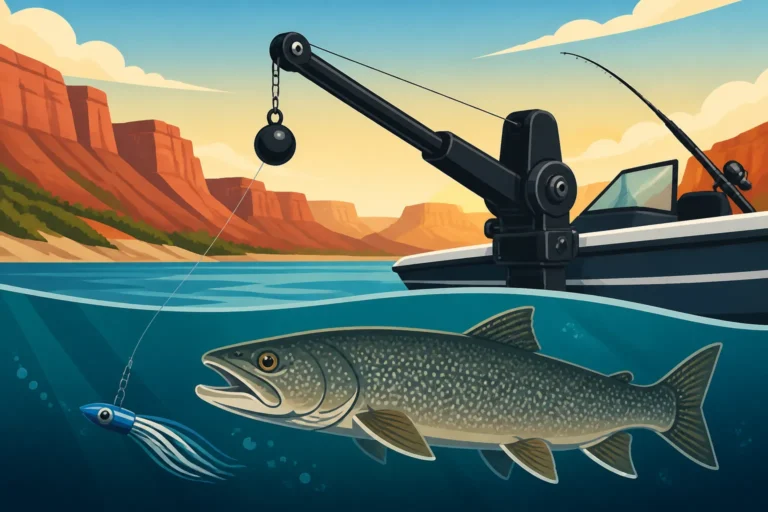
A capable fish finder is your only real way to consistently find these deep-dwelling or suspended fish. It can clearly display individual fish arches, identify dense schools of baitfish, and even distinguish between different sizes of fish. This capability allows you to precisely adjust your lure depth, your trolling speed, or your casting distance to put your presentation directly in the strike zone. If you see a school of Kokanee suspended at 40 feet, you know exactly where to set your downriggers.
Furthermore, fish finders allow you to track the movement of these schools in real-time. You can see if they're moving shallower, deeper, or scattering, giving you immediate feedback on whether your presentation is working or needs adjustment. This dynamic understanding of fish behavior in deep, open water is what separates consistently successful anglers from those who are just hoping for a bite.
Demystifying Fish Finder Technology: Core Concepts for Anglers
Sonar Frequencies and Their Applications
At its heart, a fish finder uses sonar (Sound Navigation and Ranging) to paint a picture of the underwater world. It sends sound waves into the water and listens for the echoes. The frequency of these sound waves is a critical factor in what you see on your screen. Think of it like a light beam: different frequencies have different properties.
High frequencies, typically around 200 kHz, are like a focused spotlight. They provide incredibly detailed images, excellent target separation (meaning you can distinguish individual fish even if they're close together), and work wonderfully in shallower water or for identifying fish directly beneath your boat. However, these high-frequency waves don't penetrate deep water very effectively and have a narrower cone angle, meaning they scan a smaller area. They're great for seeing a precise picture of what's right under you, but less so for broad scanning.
Low frequencies, usually around 50 kHz, are more like a wide floodlight. They penetrate much deeper, making them ideal for exploring the profound depths of Utah's larger reservoirs like Lake Powell or Flaming Gorge. They also have a wider cone angle, allowing you to scan a broader area for fish and structure. The trade-off is less detail and target separation compared to high frequencies; a school of fish might appear as a blob rather than individual fish. Many modern units offer dual-frequency capabilities, letting you switch between or even simultaneously use both for a more comprehensive view, combining deep penetration with detailed shallow-water imaging.
Transducer Types and Mounting Options
The transducer is the unsung hero of your fish finder system, essentially acting as its eyes and ears. It's the component that emits the sonar waves and then listens for the returning echoes. The type of transducer and its mounting location are paramount to getting clear, accurate readings.
The most common type is the transom-mount transducer, which attaches to the stern of your boat. These are popular because they're relatively easy to install and offer good performance for most boats. However, proper placement is key to avoid turbulent water, which can create signal interference. Thru-hull transducers are drilled directly into the bottom of the boat, offering the cleanest water flow and best performance, especially at high speeds, but they require a permanent hole in your hull and are best left to professional installation. In-hull transducers (or "shoot-thru-hull") are a compromise; they mount inside the hull, shooting signals through the fiberglass, which protects them but can result in some signal loss.
For anglers using trolling motors, a trolling motor transducer integrates directly into the motor's housing, providing an unobstructed view and allowing you to aim your sonar precisely where your motor is pointed. And for the growing number of kayak, float tube, and small boat anglers, portable transducers are a godsend. These often use suction cups or clamps to attach to the vessel and can be easily moved, making them incredibly versatile for different craft or rental boats. Understanding the pros and cons of each type is crucial for choosing the right setup for your specific fishing adventures on Utah's waters.
Display Screens: Size, Resolution, and Color
Once your transducer sends and receives the sonar signals, the display screen is where all that complex data is translated into an image you can understand. The quality of this display significantly impacts your ability to interpret what's happening beneath your boat.
Screen size is often the first thing people consider, and for good reason. A larger screen simply provides more real estate to view data, which is especially important if you plan to use split-screen views—showing 2D sonar, Down Imaging, Side Imaging, and a GPS map all at once. Trying to interpret all that information on a tiny screen can be a real headache. Larger screens make it easier to see subtle details, identify small fish, and clearly distinguish structure.
Resolution, measured in pixels, determines the sharpness and clarity of the image. A higher-resolution screen will show more detail, with crisper fish arches and more defined outlines of underwater structure. It's the difference between a blurry photograph and a high-definition image; more pixels mean a more accurate and easier-to-read representation. While older units might have had grayscale displays, modern fish finders almost universally feature color screens. Color displays are far superior for distinguishing different types of echoes (e.g., hard bottom vs. soft bottom, fish vs. structure) using varying color palettes, making the underwater world much more intuitive to understand at a glance.
Essential Features for Utah Reservoir Domination
Down Imaging and Side Imaging: A Photographic View
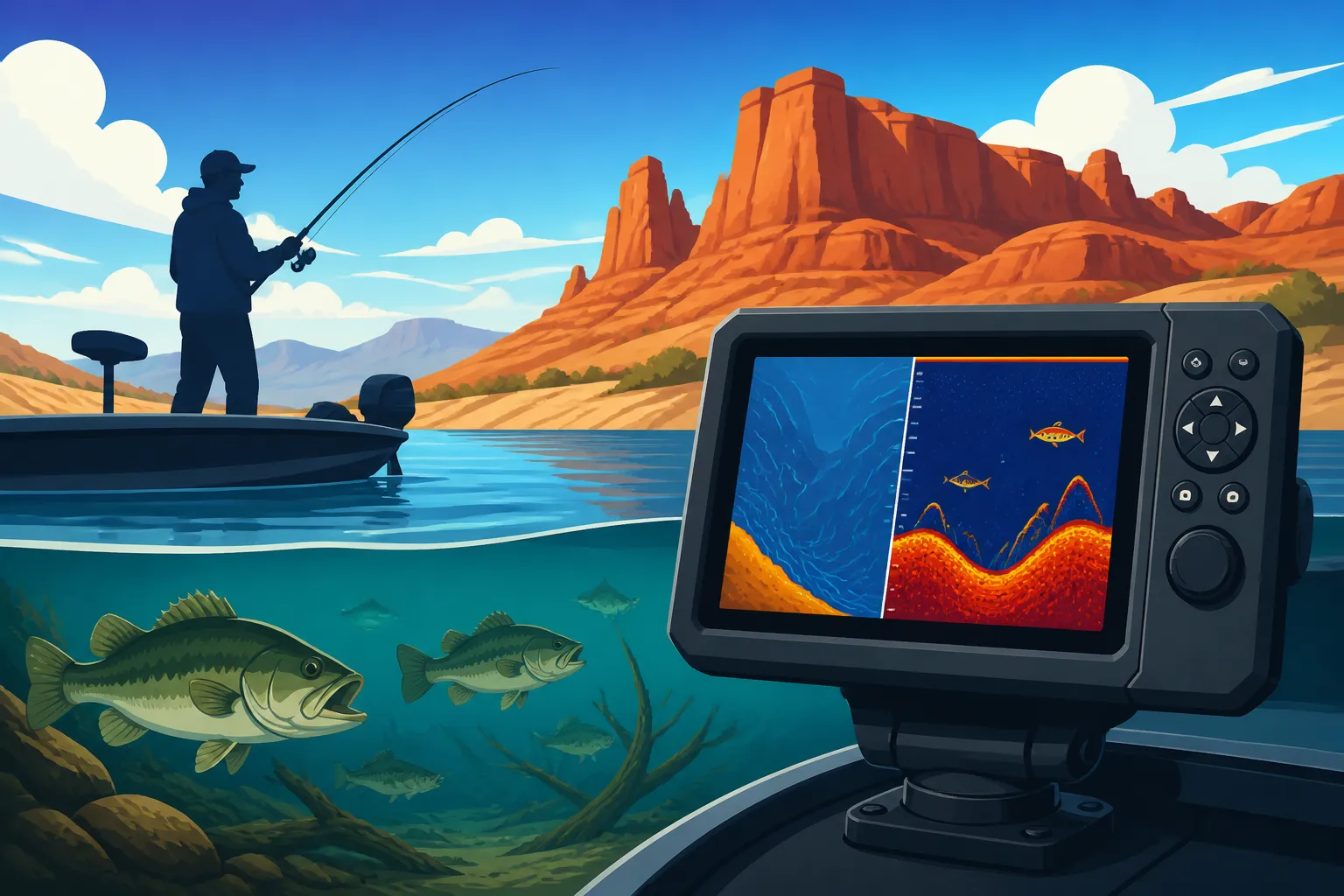
Traditional 2D sonar gives you a great vertical slice of the water directly beneath your boat, showing fish arches and bottom contours. However, Down Imaging (often called DownVu by Garmin, DownScan by Lowrance, or Down Imaging by Humminbird) and Side Imaging (SideVu, StructureScan, or Side Imaging) take your underwater vision to an entirely new level. They don't just show you "arches"; they provide photographic-quality images of what's beneath and to the sides of your vessel.
Down Imaging works by sending a very thin, high-frequency beam directly downwards, creating a picture that's so detailed you can often distinguish between individual branches on a submerged tree, rock piles, or even tire tracks on the bottom. It excels at identifying exactly what kind of structure fish are holding on to, rather than just knowing something is there. It removes much of the guesswork from interpreting standard 2D sonar.
Side Imaging is perhaps the most revolutionary feature for covering large, complex reservoirs. It sends sonar beams out horizontally, covering vast areas to the left and right of your boat—often up to several hundred feet on each side. This allows you to quickly scan for structure, weed lines, drop-offs, and schools of fish without having to drive directly over them. Imagine trolling along a main lake point at Lake Powell and seeing a school of stripers sitting 100 feet off to your left, or finding a submerged rock reef at Flaming Gorge without ever passing directly overhead. For deep, expansive waters, Do You Need Side Imaging to Find Fish at Flaming Gorge? is a testament to its value in finding those elusive trophy fish and hidden hotspots quickly and efficiently.
Integrated GPS and Chartplotter Functionality
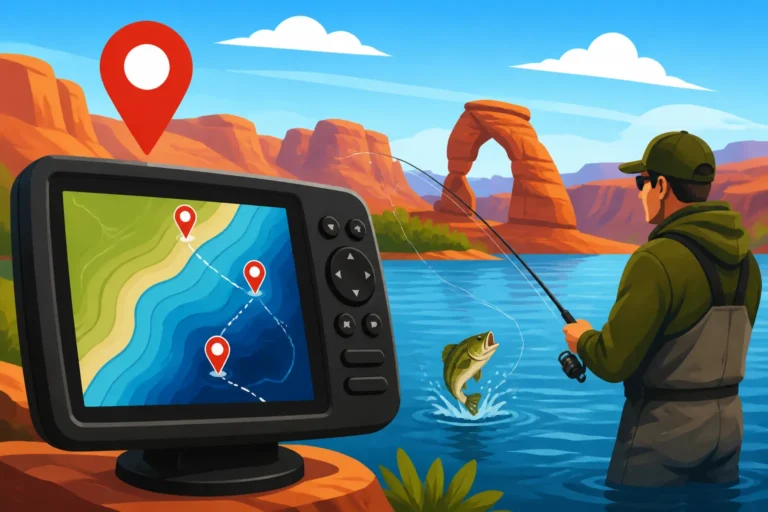
In the vastness of Utah's reservoirs, a built-in GPS with chartplotter capabilities is no longer a luxury; it's a fundamental tool for safety and success. Beyond simply showing your boat's current location, this feature allows you to navigate confidently and precisely.
The ability to mark waypoints is perhaps one of its most powerful uses. Catch a fish in a specific spot? Mark it. See a promising piece of structure on your sonar? Mark it. Locate a dense school of baitfish? Mark it. These waypoints become your personal map of productive fishing grounds, allowing you to return to those exact coordinates days, weeks, or even seasons later. This is invaluable for consistently hitting the same hot spots where fish are known to congregate. You'll never again wonder "was it this cove or the next one over?"
Furthermore, chartplotters often come pre-loaded with detailed lake maps, showing contour lines, depths, navigation aids, and even access points. These maps are crucial for understanding the underwater topography, finding specific depth ranges for trolling, and planning safe routes. For large lakes, having a reliable GPS ensures you can always find your way back to the ramp, especially in low light or foggy conditions. Best GPS Unit for Marking Fishing Spots on a Reservoir offers a deeper dive into making the most of this feature for strategic fishing and efficient navigation.
CHIRP Sonar: Clarity and Target Separation
CHIRP, which stands for Compressed High-Intensity Radiated Pulse, represents a significant leap forward in sonar technology compared to traditional single-frequency sonar. Instead of sending out a single "ping" at a fixed frequency, CHIRP sonar transmits a continuous sweep of frequencies, from low to high, and then processes the returning echoes across that entire spectrum.
The result is a dramatic improvement in both clarity and target separation. Think of it this way: a traditional sonar ping is like hitting a bell with a hammer – you get one tone. CHIRP is like hitting an entire xylophone, providing a much richer set of information. This allows the fish finder to more accurately identify individual fish, even when they're tightly schooled or holding very close to structure. You'll see distinct fish arches where traditional sonar might just show a blurry blob.
CHIRP also excels at providing clear images at greater depths and significantly reduces noise and clutter on the screen, giving you a much cleaner and more accurate picture of the underwater environment. For serious anglers targeting specific species or wanting to distinguish baitfish from larger predators, CHIRP technology offers an undeniable advantage. It elevates your understanding of the underwater environment, helping you make more informed decisions about your lure presentation and fishing location.
Portability and Power Options for Different Vessels
While many anglers envision a large console-mounted unit in a bass boat, the reality of Utah fishing is far more diverse. From kayaks exploring quiet coves to float tubes drifting high mountain lakes, the need for flexible fish finder solutions is real. This is where portability and varied power options come into play.
Many excellent fish finders are designed to be compact and lightweight, making them easy to transport and quick to set up. These portable units are perfect for those who fish from multiple boats, rental boats, or smaller craft where a permanent installation isn't feasible or desired. They often come with specialized mounting options, like suction-cup transducers or clamp-on systems, that allow for quick attachment and removal.
Powering these portable units is usually handled by small, rechargeable battery packs, typically 12V lead-acid or increasingly, lighter lithium-ion batteries. This makes them ideal for a full day of fishing on a kayak or float tube without needing a complex boat electrical system. While they might have smaller screens and fewer advanced features than their permanently mounted counterparts, modern portable fish finders still offer impressive sonar capabilities. If you're frequently fishing from a kayak, knowing about Battery Setup to Power a Fish Finder on a Kayak is crucial for maximizing your time on the water. Choosing the right form factor and power solution ensures that every angler, regardless of their preferred vessel, can benefit from fish finder technology.
Top Fish Finder Models and Their Strengths for Utah Waters
Entry-Level Options for the Casual Angler
Starting out with a fish finder doesn't have to mean a massive investment. For the casual angler who might hit the local community pond or a smaller reservoir a few times a year, there are excellent entry-level options that provide a significant advantage over fishing blind. These units typically focus on reliable 2D sonar, sometimes with basic Down Imaging, and often come with intuitive, user-friendly interfaces.
Models like the Garmin Striker Vivid 4cv or the Humminbird PiranhaMax series are fantastic starting points. They offer crisp, clear sonar readings, showing you fish arches, depth, and basic bottom contours. While they may not have all the bells and whistles of higher-end units, they are more than capable of helping you locate schools of stocked rainbow trout in places like Highland Glen Pond or identifying drop-offs at Deer Creek Reservoir. They are robust, easy to operate, and provide all the fundamental information you need to start finding more fish.
These units are particularly great for teaching kids or introducing new anglers to the benefits of technology in fishing. Their simplicity means less time fiddling with settings and more time fishing. You can often find these reliable entry-level models at competitive prices from major retailers like Bass Pro Shops or by browsing the selections available on Amazon, making them an accessible entry point into the world of fish finding.
Mid-Range Performers for Serious Hobbyists
For the angler who spends significant time on Utah's waters and wants a more robust feature set without venturing into professional-grade equipment, mid-range fish finders hit the sweet spot. These units typically combine powerful CHIRP 2D sonar with integrated Down Imaging and often Side Imaging, plus a full-featured GPS chartplotter.
Consider models like the Lowrance Hook Reveal series, the Humminbird Helix 7, or the Garmin ECHOMAP UHD 63cv. These units boast larger, higher-resolution color screens that make interpreting complex sonar data much easier. With these, you're not just seeing fish; you're seeing them in relation to detailed structure, allowing for more precise presentations. They are perfect for targeting walleye on the sprawling flats of Utah Lake, hunting for smallmouth bass in the rocky coves of Flaming Gorge, or accurately dropping a jig onto suspended kokanee salmon at Strawberry Reservoir.
The added GPS functionality on these mid-range units often includes pre-loaded lake maps and allows for extensive waypoint management, making it easy to mark and revisit productive areas. This blend of advanced sonar, detailed mapping, and enhanced user experience provides a significant boost in capability for serious recreational anglers looking to consistently catch more fish across Utah's diverse fisheries.
High-End Units for the Dedicated Trophy Hunter
For the angler whose quest involves chasing Utah's biggest fish – be it a monster lake trout from Flaming Gorge, a trophy tiger muskie from Pineview Reservoir, or elusive giant striped bass at Lake Powell – a high-end fish finder is an indispensable piece of equipment. These units represent the pinnacle of marine electronics, offering unparalleled clarity, detail, and integration.
Think of devices like the Garmin ECHOMAP Ultra series, the Humminbird Solix or Apex, or the Lowrance HDS Live. These flagships pack every available technology: high-frequency CHIRP sonar, incredibly clear Down and Side Imaging with extended ranges, ultra-large, high-definition multi-touch screens, and highly detailed chartplotters with premium mapping options. They often integrate seamlessly with other boat systems, such as trolling motors with advanced spot-lock features, allowing for ultimate boat control and precise bait placement.
While they represent a significant investment, these high-end units provide the competitive edge needed to consistently find and stay on the biggest, smartest fish in Utah's premier trophy waters. The ability to distinguish a single large fish from a school of bait, precisely map subtle bottom transitions, or scan hundreds of feet to the side for hidden structure is what makes the difference when targeting wary giants. For tactics like those covered in Utah Trolling Techniques for Lake Trout, these advanced fish finders are virtually a requirement.
Mastering Your Fish Finder: Tips for Utah Anglers
Interpreting Sonar Readings Accurately: Beyond the Arches
When you first look at a fish finder screen, it can seem like a chaotic mess of colors and lines. But learning to accurately interpret those readings is where the real magic happens. It's not just about seeing "fish arches"; it's about understanding what those arches, colors, and patterns are telling you about the underwater environment.
A strong, thick, well-defined arch typically indicates a larger fish directly beneath your transducer. Smaller, thinner arches might be smaller fish, or fish swimming on the edge of your sonar cone. Pay close attention to how these arches are positioned relative to the bottom or structure. Are they suspended mid-water? Are they hugging the bottom? Are they clustered tightly, indicating a school, or are they solitary marks? Dense, irregular blobs or clouds often signify baitfish, which are critical indicators of where predator fish might be.
Understanding the bottom is equally important. A hard, rocky bottom will often display as a thick, intense line, while a soft, muddy bottom will appear thinner and less defined. Learning to differentiate between these takes practice, but it's crucial for targeting species that prefer specific substrates. The depth at which you see fish, combined with water temperature readings (if your unit provides them), can also help you understand their behavior. For a comprehensive breakdown, our guide How to Read a Fish Finder for Utah Reservoirs delves much deeper into these interpretation skills.
Leveraging GPS for Strategic Fishing and Navigation
Your fish finder's integrated GPS is much more than just a navigation tool to get you back to the boat ramp. It's a strategic weapon for consistent fishing success on Utah's sprawling reservoirs. Learning to leverage its full potential will significantly improve your efficiency and ability to revisit productive areas.
Every time you catch a fish, see a promising school of bait, or identify a unique piece of underwater structure (a submerged humps, a sharp ledge, a brush pile), mark it as a waypoint. Over time, these waypoints will build into a personal "hot spot" map of your favorite waters, allowing you to return to those exact coordinates with pinpoint accuracy. This eliminates guesswork and ensures you're putting your lures where you know fish have been active.
Beyond marking spots, use the GPS to establish trolling patterns or drift lines. You can create routes that follow specific depth contours, which is incredibly effective for targeting species like Kokanee salmon or trolling for walleye. Tracking your boat's speed and direction also helps you maintain optimal lure presentation. In unfamiliar waters or during adverse weather, your GPS is also a vital safety tool, ensuring you always know your position and can navigate back safely, even if visibility drops.
Adjusting Settings for Optimal Performance in Varied Conditions
Thinking that one set of fish finder settings will work for every Utah reservoir, every depth, and every species is a common mistake. Just like you adjust your lures and retrieve speeds, you need to adjust your fish finder's settings for optimal performance in diverse conditions.
The sensitivity setting is one of the most critical. Too low, and you'll miss fish and structure; too high, and your screen will be cluttered with noise and false readings. In deep water, you might need to slightly decrease sensitivity to get a clearer picture. In shallow, weedy areas, you'll need to fine-tune it to differentiate fish from vegetation. Depth range should also be adjusted to match the water you're fishing – setting it too deep for shallow water wastes resolution.
Switching between sonar frequencies can also be beneficial. Use higher frequencies for detailed views in shallower water or for target separation, and lower frequencies for deeper penetration and wider coverage. Experiment with different color palettes; some anglers find certain color schemes make it easier to differentiate between fish, bait, and bottom composition. Factors like boat speed, water clarity, and even bottom hardness can influence readings, so don't be afraid to tinker. Regularly experimenting with your settings and understanding what each adjustment does will unlock the full potential of your device and give you the clearest possible view of the underwater world.
Installation, Maintenance, and Troubleshooting Your Unit
Proper Transducer Placement and Wiring: The Foundation of Accuracy
The best fish finder in the world is only as good as its transducer installation. A poorly placed or incorrectly wired transducer can lead to frustratingly inaccurate, intermittent, or even completely absent readings, rendering your expensive unit useless. This isn't a step to rush or cut corners on.
For transom-mount transducers, which are common on many Utah fishing boats, it's crucial that the transducer face is in clean, undisturbed water flow. It should be mounted low enough to remain submerged when the boat is on plane, but high enough to avoid damage from impacts or when trailering. Placing it too close to the propeller, strakes, or other hull irregularities can cause turbulent water, resulting in "noisy" or broken readings on your screen. The angle is also important; it should be parallel to the water's surface to ensure the sonar beam shoots straight down.
Wiring needs equal attention. All electrical connections should be secure, free from corrosion, and protected from the elements. Ensure the power cable is routed away from sources of electrical interference, such as engine wiring or other electronics, which can cause screen clutter. Proper grounding is also essential. If you're unsure, consulting a professional marine electronics installer or your boat dealer is a wise investment to ensure peak performance from the start.
Software Updates and General Care: Keeping Your Unit Prime
Like almost any modern electronic device, fish finders benefit greatly from regular software updates. Manufacturers frequently release new firmware that can improve sonar performance, add new features (like expanded map details or new display options), enhance GPS accuracy, or resolve bugs that might affect your unit's operation. Neglecting these updates means your fish finder might not be performing at its peak.
Make it a habit to periodically check the manufacturer's website (e.g., Garmin, Lowrance, Humminbird) for available updates. The process usually involves downloading a file to an SD card, which you then insert into your unit. Always follow the manufacturer's specific instructions carefully to avoid any issues. This simple step ensures you're getting the most out of your investment and benefiting from the latest technological advancements.
Beyond software, general physical care is crucial for longevity. After each outing, especially in saltwater (though most Utah reservoirs are freshwater, grime still builds up), wipe down your screen and unit with a soft, damp cloth to remove water spots, dirt, and fish slime. Avoid harsh chemicals that can damage the screen coating. Inspect your transducer for any marine growth or damage, which can impede sonar signals. When storing your boat, use a protective cover for the display unit to shield it from direct sunlight and extreme temperatures, both of which can shorten its lifespan. Proper care ensures your fish finder is always ready for action.
Common Issues and Quick Fixes: When Things Go Wrong
Even the most reliable fish finders can occasionally act up, and it's incredibly frustrating when your valuable electronics decide to go on strike during a prime fishing day. Knowing some common issues and quick troubleshooting steps can often save your trip.
One of the most frequent problems is a loss of depth reading or a blank sonar screen. This often points to a power issue. First, check all your power connections – are they tight? Is there any corrosion? Is your battery charged and delivering sufficient voltage? A loose wire or low battery is a surprisingly common culprit. Another possibility is a dirty or damaged transducer; marine growth, a ding from hitting bottom, or even a build-up of slime can interfere with the sonar signal. Clean the transducer face thoroughly.
Fuzzy screens or excessive clutter can indicate interference. This might be electrical interference from other boat electronics, or simply the sensitivity setting being too high for current conditions. Try reducing the sensitivity or adjusting noise rejection settings. If you're getting erratic readings while moving at high speeds, it could be transducer placement causing turbulent water. If the problem persists after basic checks, consult your unit's owner's manual for specific troubleshooting guides. Sometimes, a simple restart of the unit is all it takes to clear a temporary glitch.
Tailoring Your Fish Finder Choice to Your Utah Fishing Style
Power Boaters and Trollers: Speed, Depth, and Wide Coverage
If your primary mode of fishing involves a power boat, especially for covering large distances and trolling expansive waters like Flaming Gorge, Lake Powell, or Bear Lake, your fish finder needs are distinct. You'll want a robust, permanently mounted unit designed for speed, deep-water performance, and comprehensive coverage.
Look for models that feature powerful CHIRP sonar, offering superior target separation and clarity at depth. Excellent Down Imaging and particularly Side Imaging capabilities are crucial for quickly scanning vast areas to locate bait balls, submerged structure, and schools of fish without having to drive directly over them. A large, high-resolution display is paramount, allowing you to comfortably view multiple sonar types (2D, DI, SI) alongside your GPS chartplotter, especially useful when executing precise Utah Trolling Techniques for Lake Trout.
Integration with your boat's other electronics is also a major plus. Many high-end fish finders can link up with compatible Minn Kota or MotorGuide trolling motors, enabling advanced features like spot-lock (to hold your boat precisely over a waypoint) or following pre-programmed routes. This creates a seamless fishing system that maximizes your efficiency on the water. When considering Best Boats for Utah Reservoir Fishing, these powerful fish finder systems are often a core component of the electronics package.
Kayakers and Float Tubers: Portability and Battery Life
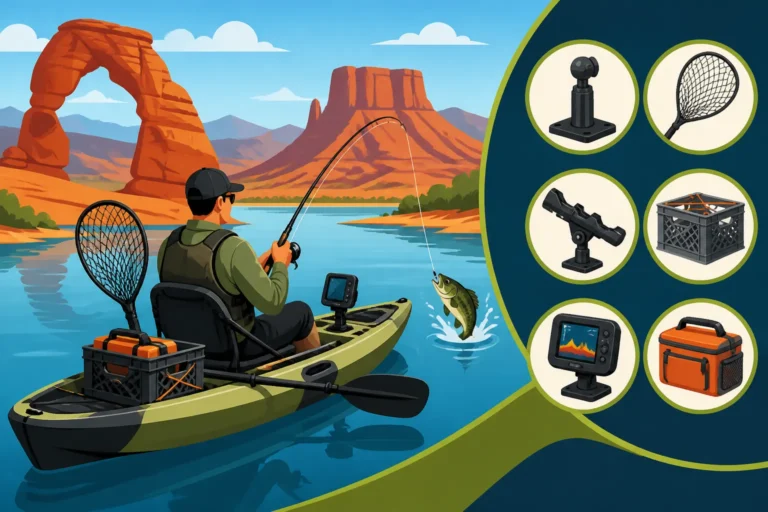
The quiet, stealthy approach of kayak and float tube fishing is increasingly popular on Utah's smaller reservoirs, rivers, and high mountain lakes. For these anglers, portability, ease of use, and efficient battery life are far more important than raw power or massive screens. You need a fish finder that can go where you go, without weighing you down or requiring complex installation.
Look for compact, lightweight units with smaller, but still clear, color screens. Models like the Garmin Striker Vivid 4cv, Lowrance Hook Reveal 5 SplitShot, or even some of the smaller Humminbird Helix units are excellent choices. Many come as "portable kits" with their own carrying case, battery, and suction-cup transducer, making them incredibly versatile. These are perfect for strapping onto your kayak for a day at Jordanelle Reservoir or clamping onto your float tube for targeting trout at Pineview.
Battery life is a critical consideration since you won't be tapping into a large boat's electrical system. Choose a unit known for its efficiency or invest in a high-capacity, lightweight battery (lithium-ion options are excellent). While you might sacrifice some of the high-end features like expansive Side Imaging, modern portable units still offer impressive 2D and Down Imaging capabilities that will significantly improve your ability to locate fish and structure. Our Utah Kayak Fishing Gear Guide often highlights such portable units as essential tools.
Ice Anglers: Precision and Durability for Frozen Lakes
While this guide focuses on "reservoirs," it's important to remember that many of Utah's reservoirs become prime ice fishing destinations in winter. Ice fishing presents its own unique challenges, and specialized fish finders are invaluable for success on the hard water.
For ice fishing, many anglers prefer traditional flasher units, like those from Vexilar or Marcum. These provide real-time, instantaneous readings directly under your ice hole, showing your jig and any fish that approach it with incredible clarity and no screen lag. This real-time feedback is crucial for detecting subtle bites and adjusting your presentation on the fly. Other anglers opt for small, portable LCD fish finders that offer a historical view of what's passed under the transducer, allowing for a broader understanding of fish movement.
Regardless of type, look for units designed to withstand cold temperatures and offer excellent target separation, enabling you to clearly differentiate your small ice jig from the fish you're targeting. Many ice fishing-specific units come in rugged, portable carrying cases with specialized ice transducers and long-lasting batteries. For a more detailed look into this specialized gear, our Best Fish Finders for Ice Fishing in Utah guide is an excellent resource, ensuring you're well-equipped for those chilly but rewarding days on the ice.
Budget Considerations: Getting the Most Bang for Your Buck
Fish finders, like most marine electronics, span a wide price range, from a couple hundred dollars to several thousand. Before diving in, it’s essential to set a realistic budget and prioritize the features that truly matter for your specific fishing style in Utah. Don't feel pressured to buy the most expensive unit if you're a casual angler.
Start by clearly defining your "must-have" features. Do you absolutely need GPS for navigation and marking waypoints? Is Down Imaging critical for your type of fishing? Can you live without Side Imaging, or is it a game-changer for the waters you frequent? Often, stepping up just one model tier within a brand's lineup can unlock significant capabilities for a relatively small price increase, offering excellent value.
Also, remember to factor in potential accessory costs. You might need a specific mounting bracket, an additional battery, or a premium mapping card, all of which can add to the total investment. Comparing prices and features across different brands and models is always a good idea. Major retailers like Bass Pro Shops often have knowledgeable staff who can help you compare units, and online platforms like Amazon provide a vast selection with user reviews that can be incredibly helpful in guiding your decision toward the best fish finder for your Utah reservoir adventures.
Disclaimer
This article is for general informational purposes only and does not constitute professional advice. Laws, prices and regulations vary by location and change over time. Consult a qualified professional for guidance on your specific situation.