Best Trolling Motors for Utah Reservoirs
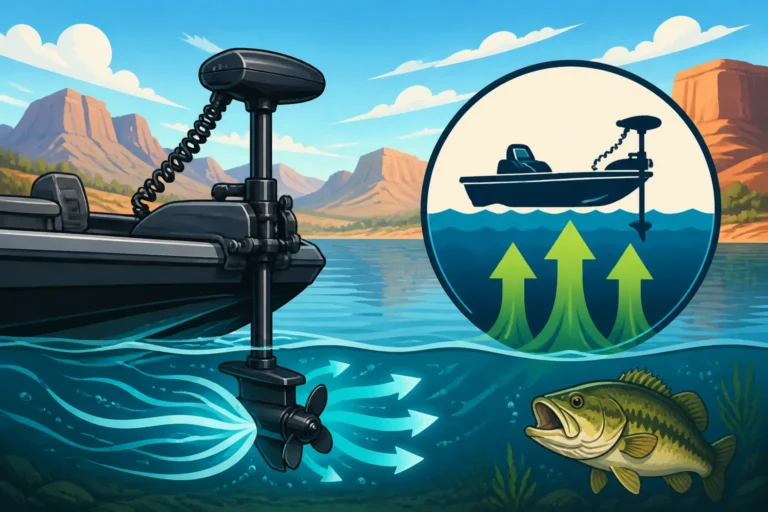
Oh, the wind on a big Utah reservoir can be a real challenge, can't it? One minute you're perfectly positioned over a promising rock pile, and the next, a gust hits, and you're drifting half a mile downwind, pulling your lure right out of the strike zone. It's frustrating when you spend so much time finding the fish, only to lose your spot. This guide is all about helping you understand and choose the best trolling motor to keep your boat exactly where it needs to be, giving you the control and stealth you need to fish effectively on Utah's expansive waters.
Understanding Your Needs: The Foundation for Choosing a Trolling Motor
Picking the right trolling motor isn't just about grabbing the most powerful one on the shelf. It's deeply personal, tied to your specific boat, your favorite fishing spots, and how you like to fish. Think of it like choosing the right fly rod for the Provo River – you wouldn't use a heavy saltwater setup for tiny dry flies, right? The same goes for trolling motors.
Boat Size and Type Matters Immensely
First things first: what kind of boat are you running? A sleek, lightweight aluminum jon boat that you launch at your local community pond is going to have vastly different needs than a hefty fiberglass deep-V hull designed for tackling the big chop on Strawberry Reservoir or the vast expanses of Flaming Gorge. The size and weight of your boat, fully loaded with all your gear, gas, and passengers, is the primary factor in determining the thrust you’ll need from your motor.
If you’re running a smaller, lighter craft, say a 14-foot aluminum utility boat, a modest 55-pound thrust motor might be perfectly adequate. It’ll give you good control for slowly navigating coves or holding your position in light breezes. However, if you're piloting a 20-foot bass boat or a large multi-species aluminum boat that weighs upwards of 2,000 pounds even before you add your fishing buddies and a cooler full of snacks, you'll need significantly more power. Trying to push a heavy boat with an underpowered motor is like trying to reel in a trophy lake trout with ultralight gear – it's just not going to work, and you'll drain your batteries in no time fighting against the wind or current. Always consider your boat's fully loaded weight when making this critical decision. When thinking about Best Boats for Utah Reservoir Fishing, the trolling motor you choose is just as important as the boat itself for optimal performance.
Freshwater vs. Saltwater: Why It's Crucial in Utah
This might seem like a no-brainer for those of us fishing Utah's beautiful, landlocked reservoirs, but it's a common point of confusion for new anglers. Trolling motors are specifically designed for either freshwater or saltwater environments. The key difference lies in the corrosion protection built into the motor's components. Saltwater motors feature enhanced seals, corrosion-resistant paints, and sometimes different metal alloys to withstand the harsh, corrosive effects of saltwater.
Since all of Utah's fishing waters – from the Uinta Mountain high lakes to the expansive Lake Powell – are freshwater, you absolutely want a freshwater trolling motor. Investing in a saltwater-specific motor for Utah fishing would be an unnecessary expense, as those motors typically cost more due to their specialized construction. More importantly, using a freshwater motor in saltwater would quickly lead to corrosion and failure, but the reverse is simply overkill. Stick with freshwater models; they are perfectly suited for the conditions you'll encounter on any Utah reservoir or river.
Your Primary Fishing Style and Target Species
How you fish and what you're trying to catch heavily influences the features you'll prioritize in a trolling motor. Are you an avid bass angler who spends hours meticulously working every piece of cover in a shallow cove? Or are you focused on trolling the open water for kokanee salmon at Rockport Reservoir or pursuing big lake trout at Flaming Gorge?
For bass anglers, precision is key. You'll want a motor that can hold your boat in a specific spot, even against a light breeze, allowing you to cast repeatedly at a submerged log or rock pile. Quiet operation is also crucial, as bass can be easily spooked by prop noise. On the other hand, if you're primarily trolling, features like autopilot or cruise control become incredibly valuable, allowing you to maintain a consistent speed and heading without constant manual adjustment. Targeting trout in still waters might require a quieter motor for stealth, while jigging for walleye on Utah Lake calls for a motor that can keep you precisely over a school of fish even in choppy conditions. Thinking about Best Lures for Utah Smallmouth Bass or Best Tackle for Utah Trout isn't complete without considering how a trolling motor can put you in the best position to use them effectively.
Key Trolling Motor Features You Can't Ignore
Once you've assessed your basic needs, it's time to dive into the technical specifications and features that will make the biggest difference on the water. These aren't just fancy add-ons; they're the core components that determine a motor's performance and suitability for Utah's diverse fishing environments.
Thrust and Shaft Length: Getting the Right Power and Reach
Choosing the right amount of thrust is arguably the most critical decision. Thrust is measured in pounds and essentially tells you how much pushing power the motor has. A good rule of thumb is to have at least 2 pounds of thrust for every 100 pounds of your boat's fully loaded weight. So, if your boat, gear, and passengers weigh in at 2,000 pounds, you're looking at a minimum of 40 pounds of thrust. However, for Utah's larger, often windy reservoirs like Willard Bay or Bear Lake, it's often wise to err on the side of more power, especially if you plan on fishing in adverse conditions. You'd rather have too much thrust and not need it, than too little and constantly be fighting the elements. For a detailed look into this, check out Trolling Motor Thrust Needed for a Utah Reservoir Boat.
| Boat Length (Approx.) | Fully Loaded Weight (Approx.) | Minimum Recommended Thrust | Typical Voltage System |
|---|---|---|---|
| 14-16 ft | 1,000 – 1,500 lbs | 30-45 lbs | 12V |
| 17-18 ft | 1,500 – 2,000 lbs | 45-60 lbs | 12V or 24V |
| 19-21 ft | 2,000 – 3,000 lbs | 60-80 lbs | 24V |
| 22 ft+ | 3,000 – 4,000+ lbs | 80-112+ lbs | 24V or 36V |
Shaft length is another often-overlooked but crucial factor. The shaft needs to be long enough to keep the propeller submerged at all times, even in choppy water. If your prop frequently breaks the surface, you'll lose thrust, make a lot of noise, and put undue strain on your motor. A common method to estimate is to measure from the bow (or transom) where the motor will be mounted down to the waterline, then add 10-20 inches to that measurement for bow mounts, or 10-15 inches for transom mounts. For instance, fishing a reservoir like Deer Creek, which can get surprisingly rough, you'll want ample shaft length to avoid your prop cavitating in the waves. A good starting point for most bow-mount boats on Utah's bigger reservoirs is often a 52-inch or 60-inch shaft, though larger boats might require even longer.
Mounting Options: Bow Mount vs. Transom Mount
The choice between a bow-mount and a transom-mount trolling motor significantly impacts your boat control and fishing experience.
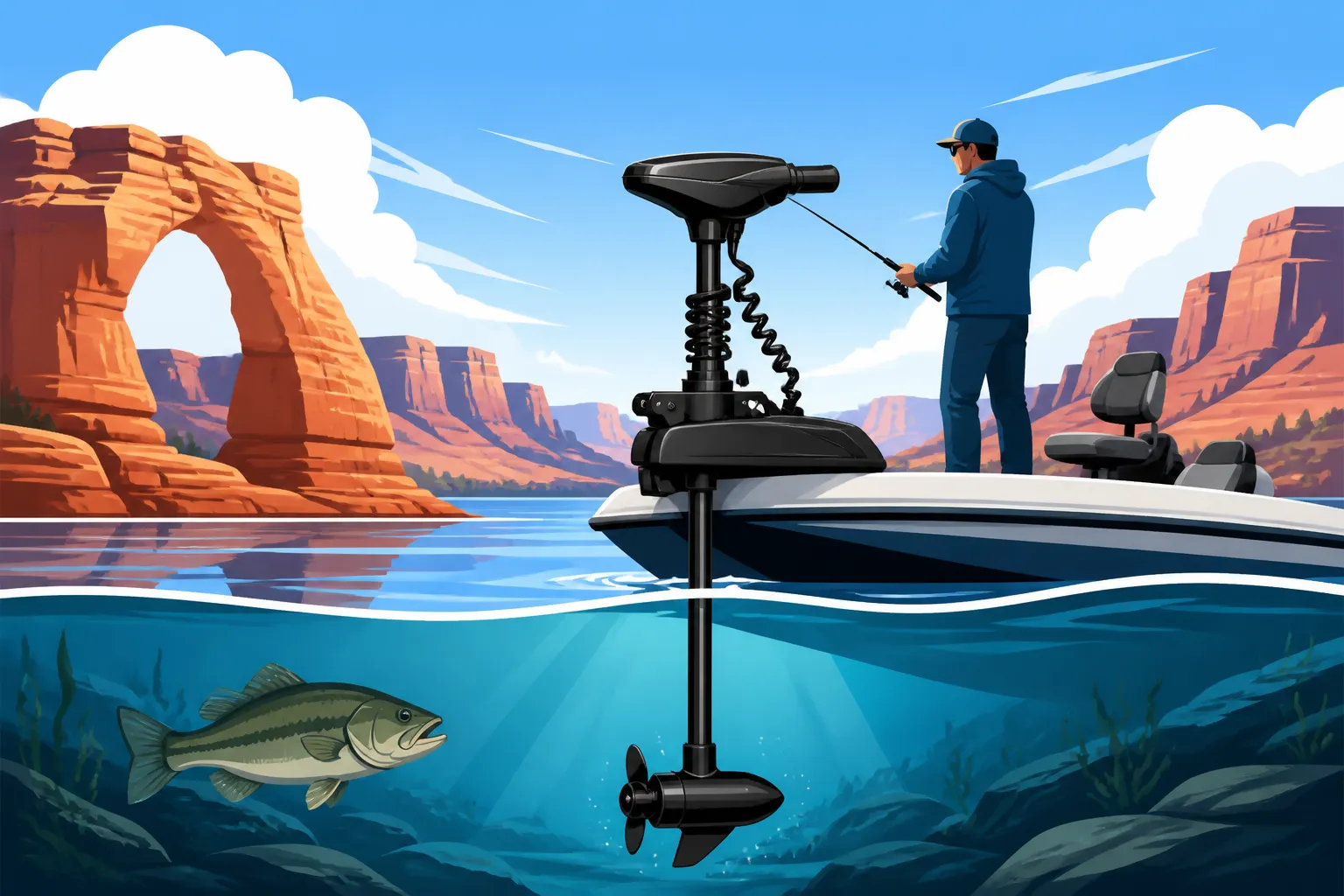
Bow-mount motors are typically the preferred choice for serious anglers, especially on larger boats and reservoirs. Mounted on the front of the boat, they pull the boat through the water, offering incredibly precise steering and maneuverability. This "pull" action makes it much easier to hold a straight line, navigate through tight spots, and combat wind or current. Most bow-mounts are operated by a foot pedal, freeing up your hands for casting and reeling, or by a remote control. If you're planning to spend your days chasing smallmouth bass in the rocky coves of Flaming Gorge or patiently jigging for walleye, a bow-mount will give you the control you crave. They're usually more robust and come with more advanced features like GPS anchoring.
Transom-mount motors, on the other hand, attach to the stern (back) of your boat, similar to an outboard engine. They push the boat, which can make steering a bit less intuitive, especially in windy conditions. However, they shine in their simplicity, portability, and lower cost. They are often a great choice for smaller boats like canoes, kayaks (though dedicated kayak motors exist), or jon boats, or as a secondary "kicker" motor for larger vessels. They're typically operated by a tiller handle. If you're mostly fishing smaller, calmer waters like community ponds or using a smaller craft where space is at a premium, a transom-mount motor might be perfectly sufficient for your needs.
Power Source: 12V, 24V, or 36V Systems
The power system of your trolling motor directly correlates with its thrust and how many batteries you'll need.
- 12-Volt Systems: These are the simplest and typically power motors with thrust ratings up to about 55 pounds. They require a single 12-volt deep-cycle marine battery. This setup is common for smaller boats and anglers who don't need extended run times or extreme power. It's a great choice for a day trip to a local pond or a small reservoir like Mantua.
- 24-Volt Systems: If you're stepping up to motors with 70 to 80 pounds of thrust, you'll need a 24-volt system. This requires two 12-volt deep-cycle batteries wired in series. This significantly increases your run time and power, making it suitable for medium to larger boats fishing on reservoirs like Jordanelle or Scofield, where you might encounter more wind and need to cover more water.
- 36-Volt Systems: For the most powerful trolling motors, offering 100 to 112+ pounds of thrust, a 36-volt system is necessary. This setup demands three 12-volt deep-cycle batteries wired in series. This is the choice for large bass boats, multi-species boats, or those fishing massive reservoirs like Lake Powell or Flaming Gorge for extended periods and in demanding conditions. The increased power means you can fight strong winds and currents more effectively, and the extra batteries provide exceptional endurance.
Regardless of the voltage, always use high-quality deep-cycle marine batteries specifically designed for trolling motor use. Automotive starting batteries are not designed for the sustained, deep discharge cycles required by trolling motors and will fail prematurely.
Advanced Technologies That Enhance Your Fishing Experience
Modern trolling motors are packed with incredible technology that can literally transform your fishing day. These features go beyond simply moving your boat; they provide precise control, navigation, and even integrate with your other electronics.
GPS Integration and Spot-Lock/Anchor Mode
This is arguably the most revolutionary feature in modern trolling motors, and it's an absolute game-changer for fishing on Utah's reservoirs. Imagine you find a promising drop-off at Starvation Reservoir, a schooling walleye boil at Utah Lake, or a subtle current break on the Green River. With a GPS-enabled trolling motor equipped with a "Spot-Lock" or "Anchor Mode" feature, you simply press a button, and the motor uses GPS coordinates to automatically hold your boat in that exact position. It compensates for wind, current, and waves, keeping you precisely where you want to be.
This technology completely frees you from constantly repositioning your boat with a foot pedal or tiller. You can focus entirely on casting, fighting fish, or re-tying knots. It's incredibly useful for jigging, casting to specific structure, or even just taking a break without drifting away. On a day where How Wind Affects Fishing on Utah Reservoirs is a constant battle, Spot-Lock becomes your best friend, saving your arms and your sanity. Brands like Minn Kota with their i-Pilot and MotorGuide with their Pinpoint GPS offer these phenomenal capabilities, making them worth every penny for serious Utah anglers.
Built-in Transducers and Sonar Integration
Clutter on the bow of a boat can be a real headache. Wires, transducers, and mounting brackets can get in the way of fishing. Many modern trolling motors solve this by incorporating a sonar transducer directly into the lower unit of the motor. This means fewer cables to run, a cleaner setup, and a transducer that's always perfectly aligned and submerged.
These built-in transducers are often compatible with popular fish finder brands like Humminbird, Lowrance, and Garmin, allowing you to plug your motor directly into your display unit. This gives you a clear, unobstructed view of the bottom and fish targets right where you need it most. It's incredibly convenient for locating structure, seeing fish under your boat, and understanding depth contours without having to deal with an external transducer cable dangling off the side of your motor. This seamless integration enhances your ability to effectively use features like those described in How to Read a Fish Finder for Utah Reservoirs. Always double-check compatibility with your specific fish finder model before purchasing a motor with a built-in transducer.
Autopilot and Course-Lock Features
For anglers who spend a lot of time trolling, especially for species like kokanee salmon or lake trout in the open waters of larger reservoirs, autopilot and course-lock features are invaluable. These systems allow you to set a specific heading or track a pre-recorded path, and the trolling motor will automatically steer the boat to maintain that course.
Imagine you're targeting kokanee at Jordanelle Reservoir, running a specific depth contour. With autopilot, you can simply set your course, and the motor will keep your boat moving in that direction, adjusting for wind and waves. This frees you up to manage multiple fishing lines, adjust your downriggers, or simply enjoy the scenery. It reduces fatigue and allows for far more consistent trolling presentations, which can be critical for triggering bites from finicky fish. It's a massive advantage when practicing Utah Trolling Techniques for Lake Trout or trying to master How to Troll for Kokanee in Utah. Some systems even allow you to create and save routes, making it easy to re-run productive trolling passes.
Top Brands and Where to Find Them
When it comes to trolling motors, a couple of brands dominate the market with good reason: they've consistently delivered innovation, reliability, and powerful performance.
Minn Kota: A Long-Standing Favorite
Minn Kota is a name synonymous with trolling motors, and for good reason. They have been at the forefront of innovation for decades, offering a wide range of motors known for their durability, quiet operation, and advanced features. Their i-Pilot and i-Pilot Link systems, with their Spot-Lock GPS anchoring, are legendary among anglers. Imagine holding your boat perfectly still off a point at Deer Creek Reservoir, casting repeatedly into a productive zone without ever touching a pedal – that’s the magic of Spot-Lock.
Popular models like the Ulterra feature auto-deploy and auto-stow, meaning you don't even have to bend down to deploy or retrieve your motor. The Terrova series is a workhorse, offering robust performance and excellent GPS capabilities at a slightly lower price point. For those who prefer a cable-steer motor with rugged durability, the Fortrex is a go-to choice. Minn Kota motors are widely available, and you can often find a great selection at major retailers like Bass Pro Shops, where you can see the different models and features firsthand. They also have a strong reputation for customer service and parts availability, which is a big plus when you're making a significant investment in your fishing gear.
MotorGuide: Strong Contender for Power and Performance
MotorGuide is another powerhouse in the trolling motor world, offering competitive models with excellent features and robust construction. Their Pinpoint GPS technology is a direct competitor to Minn Kota's i-Pilot, providing equally impressive accuracy for anchor mode and precise boat control. Many anglers swear by MotorGuide for their responsiveness and overall power output.
Models like the Xi5 and the newer Tour Pro series are highly regarded. The Tour Pro, in particular, has gained a reputation for its incredibly durable build and responsive cable steering, making it a favorite among tournament anglers who demand uncompromising performance. MotorGuide also offers integrated sonar options, allowing for seamless connection to various fish finders. While perhaps not as ubiquitous in every sporting goods store as Minn Kota, MotorGuide products are readily available online through retailers like Amazon, offering competitive pricing and convenient delivery. Checking out options from both brands can help you find the perfect fit for your specific fishing needs and budget.
Other Noteworthy Options and Considerations
While Minn Kota and MotorGuide dominate the high-end market, there are other brands and considerations worth noting, especially if you're on a tighter budget or have very specific needs. Some anglers might look at offerings from brands like Garmin or Lowrance, which are primarily known for their electronics but have also ventured into the trolling motor space, often with strong integration with their own chartplotters and sonar systems. These integrated systems can be incredibly powerful if you're already committed to a particular electronics brand.
For those just starting out or with smaller boats, there are often more budget-friendly options available, particularly in transom-mount models or less feature-rich bow-mounts. While these might not have all the bells and whistles like Spot-Lock, they can still provide reliable propulsion and boat control for basic needs. When considering any motor, always check the warranty offered by the manufacturer and investigate the availability of service centers or parts. A good warranty and accessible support can save you a lot of headaches down the road. Remember, choosing the right trolling motor is an investment in your fishing success, so don't be afraid to take your time and do your research.
Installation, Maintenance, and Maximizing Your Investment
A top-of-the-line trolling motor is only as good as its installation and how well you maintain it. Proper care ensures longevity and consistent performance, letting you focus on catching fish rather than troubleshooting equipment.
Professional Installation vs. DIY: What to Expect
Installing a trolling motor, especially a bow-mount system with GPS and integrated sonar, can be a bit more involved than just bolting it to the deck. For a 12-volt system, a DIY installation might be manageable if you're comfortable with basic wiring and have the right tools. You'll need to mount the motor securely, run power cables to your battery, and potentially install a circuit breaker.
However, for 24-volt or 36-volt systems, which require wiring multiple batteries in series and often integrate with your boat's other electronics, professional installation is highly recommended. Dealing with higher voltage systems requires a solid understanding of marine electrical principles to ensure safety and prevent damage to your equipment. A professional installer can ensure proper wiring, fuse protection, and correct battery connections, reducing the risk of electrical issues on the water. They can also seamlessly integrate your trolling motor's sonar with your existing fish finder units and ensure all features, like Spot-Lock and autopilot, are working correctly. This peace of mind is often well worth the cost, especially if you're not an experienced marine electrician. You want your Utah Fishing Gear Guide to be focused on fishing, not fixing.
Essential Maintenance for Longevity
Like any piece of marine equipment, your trolling motor thrives on regular maintenance. After each use, especially if you've been in silty or weedy waters, give the motor's lower unit and propeller a good rinse with fresh water to remove any debris. Regularly inspect the propeller for nicks, dents, or fishing line wrapped around the shaft, which can damage seals and lead to water intrusion. It's a good idea to remove the prop periodically and clean any debris that might be hidden behind it.
Pay attention to your battery terminals. Keep them clean and free of corrosion, and ensure all connections are tight. If you're using lead-acid batteries, check the water levels in the cells regularly and top up with distilled water if needed. For motors with foot pedals, keep the cable and moving parts clean and lubricated. The shaft should also be wiped down and free of grime. Proper care will extend the life of your motor significantly, allowing it to perform flawlessly season after season, whether you're battling the elements on Lake Powell or navigating the Green River. This kind of attention helps keep your boat in compliance, especially when considering things like Utah Aquatic Invasive Species Inspection Stations where clean equipment is key.
Battery Setup and Charging Best Practices
Your trolling motor is only as good as the batteries powering it. Always use deep-cycle marine batteries, designed to provide a steady draw of power over a long period. Avoid using starting batteries, as they are meant for short, high-amp bursts and will quickly degrade with continuous trolling motor use.
For 12V, 24V, or 36V systems, ensure your batteries are properly wired in series (positive of one battery to negative of the next) to achieve the correct voltage. Use heavy-gauge marine-grade wiring for all connections to minimize resistance and maximize power delivery.
When it comes to charging, an on-board marine charger is a fantastic investment. These chargers are specifically designed to safely and efficiently charge multiple deep-cycle batteries, often with smart charging features that prevent overcharging and extend battery life. After each fishing trip, connect your batteries to the charger. Never leave batteries discharged for extended periods, as this can lead to sulfation and permanent damage. For winter storage, ensure your batteries are fully charged and stored in a cool, dry place. If using lead-acid batteries, periodically check their charge level during the off-season. A little attention to your battery setup will ensure you have reliable power every time you hit the water. This dedication to power management is crucial for all boat electronics, including those detailed in Battery Setup to Power a Fish Finder on a Kayak. Also, remember to review Utah Boating and Fishing Rules for any specific regulations regarding battery safety on the water.
Disclaimer
This article is for general informational purposes only and does not constitute professional advice. Laws, prices and regulations vary by location and change over time. Consult a qualified professional for guidance on your specific situation.