Do You Need Ice Cleats for Walking on Utah Ice?
The thought of slipping and falling on slick ice is enough to make anyone nervous, especially when you're bundled up in winter gear, carrying an auger, and dragging a sled full of fishing equipment. Utah's ice fishing season brings exhilarating opportunities, but it also presents genuine safety challenges. This guide will explore whether ice cleats are a necessity for your winter angling adventures on Utah's frozen lakes and reservoirs, helping you make informed decisions to stay safe on the ice.
The Harsh Reality of Utah Ice: Why Traction is Non-Negotiable
When you're out on the ice, whether it's at Strawberry Reservoir, Willard Bay, or a high Uinta lake, the surface beneath your feet is rarely uniformly smooth. What looks like a pristine sheet of ice from a distance can quickly become a minefield of slick, unpredictable surfaces. Ignoring the potential for a slip or fall isn't just optimistic; it can be downright dangerous and can seriously impact your enjoyment and even your health.
Beyond the Smooth Surface: Hidden Dangers on the Ice
Many anglers picture a perfectly smooth, clear ice surface when they think about ice fishing, but that's often far from reality here in Utah. Our unique climate means conditions can change rapidly. You might start your day walking on a nice, firm, snow-covered surface, only to find that a few hours of sun or wind have exposed treacherous glare ice underneath. Imagine this scenario: you're walking across a seemingly flat, snow-dusted area to your favorite fishing spot. Suddenly, a gust of wind blows the snow away, revealing a patch of slick, clear ice formed by melted snow that refroze overnight. Without proper traction, your feet could be out from under you before you even realize what's happening.
Then there's the dreaded "slush-refreeze." This happens when warmer daytime temperatures create a layer of slush on top of the solid ice, which then freezes into an uneven, bumpy, and incredibly slippery surface as temperatures drop. These subtle variations in ice texture are almost impossible to spot from afar, making every step a potential risk. Even a thin layer of powdery snow can conceal a deadly slick surface beneath, creating a false sense of security. Prioritizing safety is paramount in ice fishing, and understanding these hidden dangers is the first step. You can never be too careful when it comes to How to Check Ice Thickness Safely Before Ice Fishing or even just walking on it.
The Unseen Costs of a Fall: Injuries and Ruined Trips
A fall on the ice isn't just embarrassing; it can lead to serious injuries that can ruin your entire ice fishing season, or worse. We're talking about everything from twisted ankles and sprained wrists to more severe fractures, dislocations, or even concussions if you hit your head. Picture yourself taking a tumble while carrying an ice auger or a bucket full of gear. Not only could you get hurt, but your equipment could be damaged, turning a relaxing day on the ice into an expensive trip to the emergency room and the gear repair shop.
Beyond the physical pain and potential medical bills, there's the inconvenience and the loss of precious fishing time. No one wants to spend their hard-earned day off recovering from a fall instead of reeling in fish. Even if you don't sustain a major injury, a minor slip can shake your confidence and make you hesitant to move around freely, limiting your ability to explore different spots or respond quickly to a bite. It really takes the fun out of the experience when you're constantly worried about stability. Learning What to Do If You Fall Through Utah Ice While Fishing is critical, but preventing a fall in the first place is always the better option.
Understanding Ice Cleats: Your Winter Grip Solution
Given the real and present dangers of slippery ice, it's worth taking a serious look at ice cleats as a solution. These aren't just for extreme mountaineers; they've become a staple for many savvy ice anglers who understand the value of reliable traction.
What Exactly Are Ice Cleats and How Do They Work?
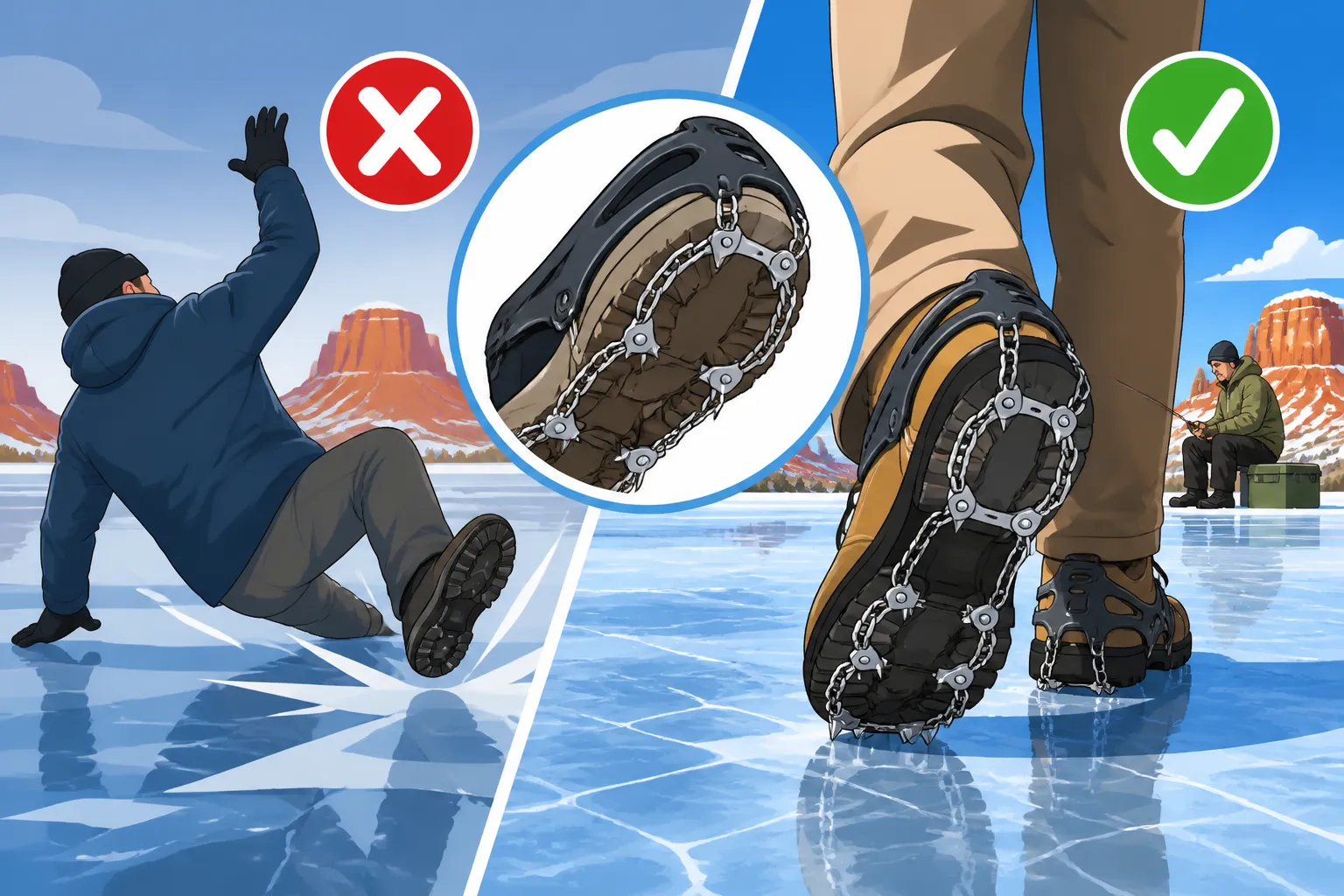
At their core, ice cleats are devices designed to provide enhanced grip on icy surfaces. Think of them as snow chains for your boots. They typically consist of a flexible rubber or silicone harness that slips over your existing footwear, coupled with a series of traction elements underneath. These elements can vary widely:
- Coils: Some models use a series of tightly wound steel coils that provide a multitude of small biting edges. These are generally less aggressive but offer good all-around traction for walking on mixed snow and ice.
- Studs: Many popular designs feature small, hardened steel or carbide studs strategically placed on the sole. These studs are excellent at digging into ice and packed snow, providing superior grip.
- Spikes: For the most extreme conditions, some cleats incorporate larger, more aggressive steel spikes, similar to those found on mountaineering crampons. These offer maximum bite but can be less comfortable for extended walking on varied surfaces.
The magic of ice cleats lies in their ability to concentrate your weight onto these small, sharp traction points, allowing them to penetrate the slippery surface and provide a stable platform. Without them, your smooth boot soles just glide right over the ice, offering virtually no friction.
Different Types of Ice Cleats for Different Anglers and Conditions
Just like there's a range of fishing lures for different fish and conditions, there's a variety of ice cleats to suit various needs and ice types. Choosing the right one can make a big difference in your comfort and safety.
-
Coil-Style Traction Devices: These are often the most affordable and lightweight option, like those made by Yaktrax. They're fantastic for general walking on icy sidewalks or light snow-covered ice. They provide a good amount of surface area contact with the coils, offering decent grip without being overly aggressive. If you're primarily fishing on relatively flat, lightly dusted ice, or just need a bit of extra security for short walks from the car to your shanty, these can be a great choice. They're easy to slip on and off and don't feel too cumbersome. However, they might struggle on really slick, clear glare ice or steep inclines.
-
Studded or Spiked Cleats: When you need serious grip, especially on pure glare ice or deep, crusty snow, studded cleats are your best friend. Brands like STABILicers or Kahtoola offer models with durable steel studs or small spikes that really dig in. These are often made with more robust rubber or elastomer frames that fit snugly over your boots. If you're venturing onto large, open reservoirs where wind can sweep away snow to expose vast sheets of ice, or if you're carrying heavy gear like your Best Ice Augers for Utah Ice Fishing, the aggressive bite of studded cleats offers peace of mind. They come in various configurations, from those covering the entire sole to more compact designs that focus traction on the ball and heel of your foot. You can find a good selection of these at outdoor retailers like Bass Pro Shops or even browse options on Amazon.
-
Full Sole vs. Toe/Heel Cleats: Some cleats cover the entire sole of your boot, providing comprehensive grip. Others focus only on the toe and heel sections. Full-sole coverage generally offers maximum stability, which is often preferred for ice fishing where you might be standing for long periods or walking across varied terrain. Toe/heel designs can be lighter and less bulky but might not offer the same level of confidence on extremely challenging surfaces.
Here's a quick comparison of common ice cleat types:
| Cleat Type | Traction Elements | Best For | Pros | Cons |
|---|---|---|---|---|
| Coil-Style | Steel Coils | Light ice, packed snow, general walking | Lightweight, flexible, easy to store, affordable | Less aggressive bite on glare ice, can wear out faster |
| Studded/Spiked | Steel Studs/Spikes | Glare ice, crusty snow, mixed conditions | Excellent grip, highly durable, reliable on slick surfaces | Can be heavier, more expensive, less comfortable on bare ground |
| Full Sole | Coils/Studs | Comprehensive coverage for stability | Maximum grip across the entire foot, good for standing | Can feel bulkier, may pick up snow/ice more easily |
| Toe/Heel Only | Coils/Studs | Lighter use, easy on/off, less bulky | Compact, convenient, good for occasional slick spots | Less overall stability, not ideal for very challenging conditions |
When you're out ice fishing, especially if you're exploring different Strawberry Reservoir Ice Fishing Spots or navigating varying snow depths, having the right traction is absolutely crucial for both safety and enjoyment.
Making the Decision: When Are Ice Cleats a Must-Have in Utah?
So, do you need ice cleats for walking on Utah ice? While there might not be a legal mandate (like needing a Utah Fishing License Guide), the practical answer for serious ice anglers is almost always yes. There are specific conditions and personal considerations that push them from a "nice-to-have" to an absolute "must-have."
Scenario 1: Glare Ice, Freezing Rain, and Windy Days
These are the conditions where ice cleats aren't just recommended, they're essential. Imagine waking up to find that overnight freezing rain has coated everything in a clear, slick glaze. Or perhaps a warm spell has melted the surface snow on a large reservoir like Starvation or Deer Creek, and a sudden cold snap has turned it into a massive, reflective sheet of ice. Walking on this kind of "glare ice" without proper traction is akin to walking on greased glass—it's incredibly dangerous, and a fall is almost inevitable.
Utah's winter weather can be quite dynamic. A strong wind can sweep loose snow off the ice, exposing super slick surfaces, especially on larger, open bodies of water. If you plan to be out on days where these conditions are present or predicted, don't even think about stepping onto the ice without a good pair of studded ice cleats. This is where your safety literally depends on the bite those cleats provide. It's also important to have How to Layer Clothing for a Utah Winter Fishing Trip to protect yourself from the wind and cold in such conditions.
Scenario 2: Varying Snow and Ice Conditions, Uneven Terrain
Even if you don't face pure glare ice, Utah's frozen landscapes often present a complex mix of snow, slush, and ice. You might encounter powdery snow in one area, then walk into a patch of crunchy, refrozen boot tracks from previous anglers, followed by an area where slush has frozen into an uneven, rippled surface. These varying textures are incredibly hard to walk on safely without traction. Each step becomes a gamble.
Think about navigating drifts on a windy day, where compacted snow might be hiding slick ice underneath. Or if you're fishing high-altitude lakes in the Uinta Mountains, where conditions can shift dramatically throughout the day due to sun exposure and wind. A seemingly harmless patch of deep snow could be covering an uneven, frozen landscape, ready to twist an ankle. This is where the versatility of good ice cleats comes in handy, providing consistent grip through all these transitions. They give you the confidence to move around, check tip-ups, or explore different spots without constantly fearing a slip. Knowing How to Stay Warm Ice Fishing in Utah is important, but staying upright is just as critical for a successful trip.
Considering Your Personal Mobility and Comfort Level
Beyond the external ice conditions, your own physical capabilities and comfort level play a huge role in whether you need ice cleats. Are you in peak physical condition, or do you have any old injuries that make you more susceptible to a fall? Are you carrying a heavy portable ice shelter, an auger, or a bucket full of fish? The added weight and awkwardness of gear can dramatically increase your risk of losing balance.
Consider how much peace of mind you value. For many anglers, the slight inconvenience of wearing cleats is a small price to pay for the ability to walk confidently and safely across the ice. It allows you to focus on the fishing, the camaraderie, and the beauty of the winter landscape, rather than constantly staring at your feet, worrying about the next step. If you're planning a full day out, maybe using a Best Ice Fishing Shelters for Utah Winters, you'll be on your feet a lot, and that's when cleats truly earn their keep. Even if the ice seems "okay," having that extra grip can prevent a minor stumble from becoming a major incident. It's often the unexpected patch of black ice that gets you, not the obvious slick spots.
Choosing and Using Your Ice Cleats Wisely
Once you've decided that ice cleats are a smart investment for your Utah ice fishing adventures, the next step is choosing the right pair and knowing how to use and care for them properly. This will ensure they perform when you need them most and last for many seasons to come.
Key Features to Look for When Buying Ice Cleats
Not all ice cleats are created equal, and a little research can go a long way in finding a pair that meets your needs. Here are some key features to consider:
- Durability of Traction Elements: Look for cleats with hardened steel, tungsten carbide, or other durable materials for the studs or spikes. Softer metals will wear down quickly, especially if you walk on any pavement or rocky shorelines. Stainless steel coils are also a good sign of quality.
- Quality of the Rubber/Elastomer Harness: The material that stretches over your boot needs to be robust, yet flexible, even in freezing temperatures. Cheap rubber can crack or become brittle, leading to the cleats breaking or slipping off your boots. Brands like STABILicers and Kahtoola are known for their strong, cold-weather-resistant materials.
- Ease of On and Off: You'll want cleats that are easy to stretch over your winter boots, especially with cold hands or gloves on. Some designs have pull tabs or specific shapes that make this process smoother. Trying them on with your actual ice fishing boots (like your Best Boots for Standing on Ice All Day) is a great idea before purchasing.
- Secure Fit: Once on, the cleats should fit snugly over your boots without slipping or twisting. A loose fit means less effective traction and a greater chance of them coming off while you're walking.
- Packability and Weight: While not the primary concern, consider how easily they pack into your sled or bucket when not in use. Lighter, more compact designs are generally more convenient, especially if you're hiking into a spot.
- Aggressiveness of Traction: Match the aggressiveness of the cleats to the conditions you most frequently encounter. If you're always on glare ice, go for aggressive spikes. If it's mostly packed snow and occasional ice, coils might suffice. You can find a wide range of options, comparing different designs and features, whether you're shopping at a specialty store like Bass Pro Shops or browsing the extensive selection on Amazon.
Best Practices for Wearing and Maintaining Your Cleats
Having the best cleats won't do you any good if you don't use them correctly or care for them. Follow these best practices to ensure safety and longevity:
- Put Them On Before You Hit the Ice: This seems obvious, but many people wait until they've already taken a few shaky steps. Put your cleats on while still on solid ground, whether it's the truck bed, a gravel parking lot, or the snowy shoreline. This ensures you have traction from your very first step onto the slippery stuff.
- Remove Them on Non-Ice Surfaces: Avoid walking on pavement, concrete, or rocky terrain with your cleats on. Not only can this damage the traction elements (dulling studs or bending coils), but it can also be slippery on hard, smooth surfaces that the cleats can't penetrate. Take them off once you're back on solid, non-icy ground.
- Clean and Dry After Each Use: Especially if you've been walking through slush or salty areas (if applicable), rinse your cleats with fresh water. Then, ensure they are thoroughly air-dried before storing them. This prevents rust on metal components and prolongs the life of the rubber.
- Inspect for Wear and Tear: Before each outing, quickly check your cleats. Are any studs missing or severely worn? Is the rubber harness cracked or stretched out? Replace them if they show significant signs of degradation, as compromised cleats won't provide reliable traction.
- Proper Storage: Store your cleats in a cool, dry place away from direct sunlight, which can degrade rubber over time. Many come with a small mesh bag, which is perfect for keeping them together and allowing them to breathe.
By choosing the right pair of ice cleats and treating them with care, you're not just buying a piece of gear; you're investing in your safety and ensuring that your Utah ice fishing trips are enjoyable, productive, and accident-free. You'll have one less thing to worry about, allowing you to focus on the joy of the catch and the beauty of the frozen landscape, perhaps even adhering to the Utah Ice Fishing Regulations with newfound confidence in your footing.
Ultimately, while no rule mandates ice cleats for fishing on Utah ice, the seasoned angler knows they are an indispensable piece of safety equipment. The unpredictable nature of ice, combined with the risks of injury and ruined trips, strongly argues for their use. Invest in a good pair, use them wisely, and enjoy the confidence of sure footing on your next frozen adventure.
Disclaimer
This article is for general informational purposes only and does not constitute professional advice. Laws, prices and regulations vary by location and change over time. Consult a qualified professional for guidance on your specific situation.