Portable Heaters Safe to Use Inside an Ice Shelter
There's nothing quite like the crisp air and serene quiet of a Utah winter day out on the ice, waiting for that tell-tale tug on your line. But let's be real, even the most dedicated angler hits a point where the biting cold can become unbearable, driving you off the lake long before you're ready. Huddling inside an ice shelter offers a much-needed respite, but many folks wrestle with the question of how to stay truly warm without inviting danger into their cozy space. This guide is all about navigating the world of portable heaters, helping you understand which ones are genuinely safe to use inside your ice shelter and, more importantly, how to use them without putting yourself or your fishing buddies at risk.
Understanding the Risks: Why Heater Safety is Paramount
Before we even dive into specific heater models, it's absolutely crucial to understand why safety is such a big deal when you're talking about a portable heater in a small, enclosed space like an ice shelter. It's not just about comfort; it's about life and limb. Many anglers, especially those new to ice fishing, might not fully grasp the potential dangers lurking with improper heater use.
Carbon Monoxide Poisoning: The Silent Killer
This is the big one, folks. Carbon monoxide (CO) is an invisible, odorless, and tasteless gas produced when fuels like propane or natural gas don't burn completely. In the open air, it dissipates quickly, but in a confined space like an ice shelter, it can build up to dangerous levels incredibly fast. The scary part? You won't know it's happening until it's too late. Symptoms often mimic the flu: headache, dizziness, nausea, fatigue. You might just think you're getting cold or tired from a long day of fishing, when in reality, your body is being starved of oxygen.
Think about it: you're out on the ice, maybe a bit dehydrated, perhaps a little tired. Your judgment might already be slightly impaired. If CO starts to build up, those subtle symptoms can easily be missed or attributed to other things. It's not a risk you can take lightly, which is why proper heater selection and vigilance are non-negotiable. Even with the best intentions, a momentary lapse in judgment or a faulty piece of equipment can turn a peaceful day into an emergency.
Fire Hazards and Burns
Beyond the unseen threat of carbon monoxide, there are very real, very visible dangers like fire and burns. Most portable heaters run on propane, which is a highly flammable fuel. A leak in a hose, an improperly connected tank, or even a heater placed too close to combustible materials inside your shelter can quickly escalate into a dangerous fire. Ice shelters, especially older canvas or nylon models, are often made of synthetic fabrics that can ignite and spread flames with alarming speed.
Consider the layout of your shelter. Do you have fishing line, tackle bags, extra clothing, or a sleeping bag too close to the heater? What about the floor of your shelter? If you're using a heater that produces radiant heat, it can get incredibly hot to the touch and also heat the area directly around it. Accidental contact with a hot surface can cause severe burns, and if the heater tips over onto a flammable surface, you've got a major problem on your hands. This is why features like tip-over switches are so important, and why you need to be mindful of everything around your heater at all times.
Oxygen Depletion in Small Spaces
While carbon monoxide gets a lot of the spotlight (rightfully so!), another less discussed but equally important danger in small, enclosed ice shelters is oxygen depletion. Combustion heaters, by their very nature, consume oxygen as they burn fuel. In a perfectly sealed shelter, this means that as the heater warms your space, it's also slowly reducing the amount of breathable oxygen available to you.
Now, most modern ice shelters aren't perfectly airtight, which helps a bit, but they're designed to keep the warmth in and the wind out. This means air exchange is limited. While an oxygen depletion sensor (ODS) in a heater is a fantastic safety feature that will shut off the unit if oxygen levels drop too low, it's still a fallback, not a primary safety measure. You never want to rely solely on the ODS. Proper ventilation is always the first line of defense against both CO buildup and oxygen depletion, ensuring a continuous supply of fresh air into your shelter.
Types of Portable Heaters Safe for Ice Shelters
Alright, now that we've covered the "why," let's get into the "what." Not all portable heaters are created equal, especially when it comes to safely warming an ice shelter. You need specific features and types that are designed for indoor use.
Propane Heaters with Oxygen Depletion Sensors (ODS)
When ice anglers talk about safe, portable heaters, they're almost always referring to specific propane models equipped with an Oxygen Depletion Sensor (ODS). These are the undisputed champions for ice shelters because they are designed with safety in mind for enclosed spaces.
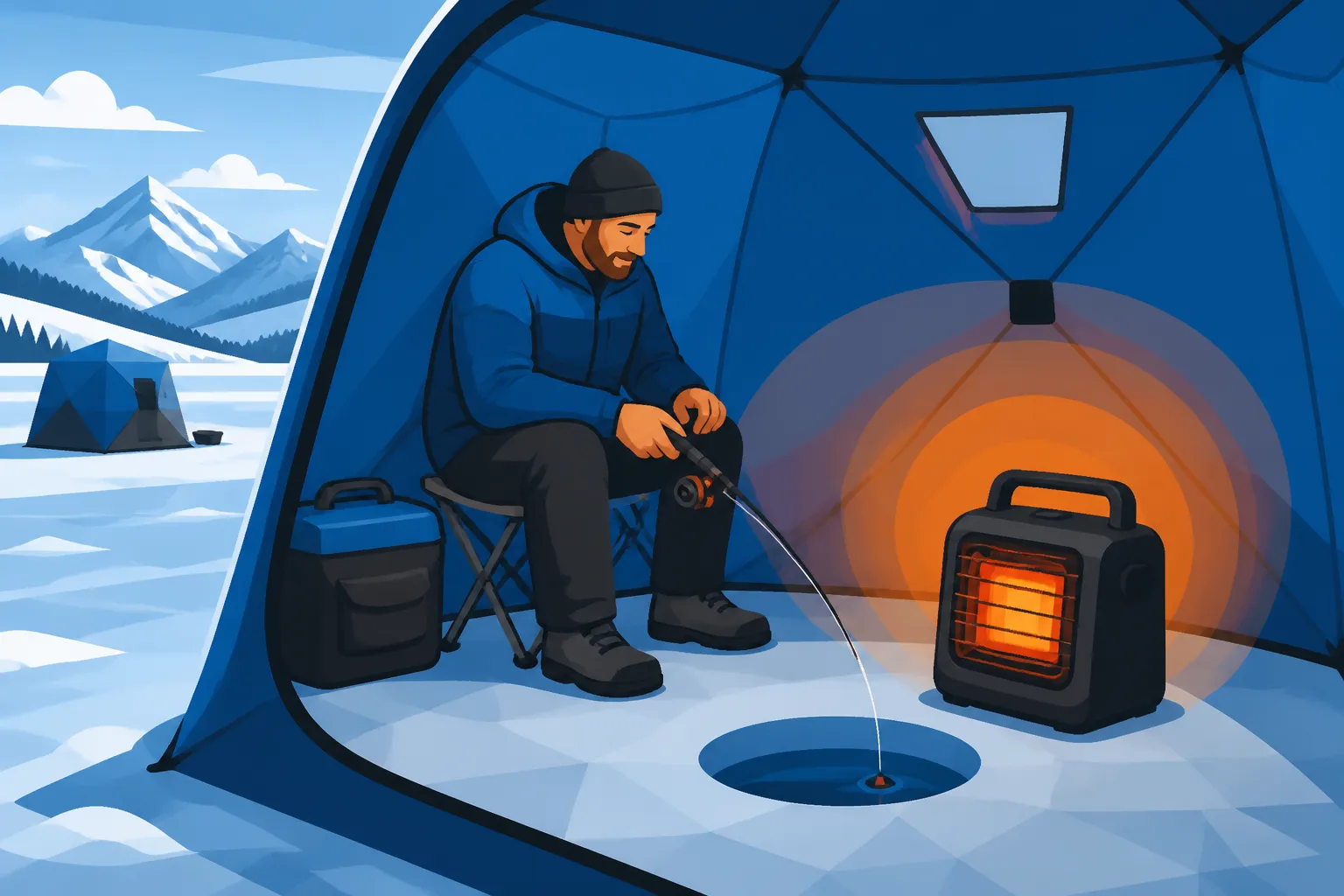
The most popular and trusted name in this category is often Mr. Heater. Their "Buddy" series (Buddy, Big Buddy, and Little Buddy) are practically standard issue for ice fishing enthusiasts. These units are specifically rated for indoor use and incorporate several critical safety features:
- Oxygen Depletion Sensor (ODS): This is the game-changer. If the oxygen level in your shelter drops to a dangerous threshold, the ODS automatically shuts off the heater. It's a lifesaver, quite literally.
- Tip-Over Safety Switch: If the heater gets knocked over, it automatically shuts off the gas supply, preventing a potential fire. This is especially important in a cramped, gear-filled ice shelter where a misplaced foot or an excited fish fight could easily send a heater tumbling.
- Low-Oxygen Pilot Light: Some models use a pilot light that is designed to burn efficiently at slightly reduced oxygen levels but will still shut down if conditions become truly unsafe.
These heaters typically come in two main types:
- Catalytic Heaters: These use a flameless catalytic combustion process to generate heat. They tend to be very fuel-efficient and produce a very consistent, gentle warmth. Because there's no open flame, they're often considered a very safe option.
- Radiant Heaters: These heaters have a visible flame that heats a ceramic plate, which then radiates heat into the space. They often provide a more intense, direct heat, which can be great for quickly warming up a cold shelter. While they have an open flame, the ODS and tip-over switches make them safe for indoor use, provided proper ventilation is maintained.
When considering a propane heater for your ice shelter, always look for explicit labeling that states it's safe for indoor use, and always prioritize models with an ODS. Many can run off small 1 lb propane cylinders, perfect for a short trip, or be connected to a larger 20 lb tank (like those used for a BBQ) with an adapter hose for extended warmth. You can often find a great selection of these heaters and their accessories at sporting goods stores or online retailers like Amazon and Bass Pro Shops.
Electric Heaters (with caveats)
Electric heaters can be safe, but they introduce a whole different set of challenges and limitations for ice fishing. The primary hurdle is power. Unlike your home where you just plug into an outlet, out on the ice, you're looking at either a portable generator or a large, heavy battery bank with an inverter.
- Portable Generators: While a generator can power an electric heater, it needs to be placed outside the ice shelter due to the carbon monoxide exhaust. This means dealing with extension cords, the noise of the generator, and potentially battling the elements to keep the generator running. This setup is often cumbersome and less common for typical ice fishing, though some elaborate setups might utilize them.
- Battery Banks and Inverters: Modern lithium battery banks have come a long way, but to power an electric heater that puts out significant warmth (measured in watts), you'll need a seriously powerful and expensive setup. Most smaller, personal electric heaters (like those that plug into a car's cigarette lighter) offer minimal heat output and won't make a dent in a cold ice shelter. For an electric heater to be effective, it often draws too much power for typical portable battery solutions to sustain for more than a very short period.
So, while electric heaters themselves don't produce carbon monoxide and can be safe, the logistics of powering them adequately for an ice shelter often make them impractical or too costly for most anglers. They might be a niche solution for very specific, high-tech ice fishing setups, but for the average person looking for warmth, propane with ODS is usually the way to go.
Heater Features to Look For
When you're out shopping for a heater, beyond just the fuel type, keep these crucial features in mind:
- Oxygen Depletion Sensor (ODS): We've talked about this a lot, but it bears repeating: it's non-negotiable for indoor propane heaters. It's your primary automatic safety cutoff.
- Tip-Over Safety Switch: Another critical feature that automatically shuts off the fuel supply if the heater is accidentally knocked over. This helps prevent fires and propane leaks.
- BTU Output Appropriate for Shelter Size: Heaters are rated in BTUs (British Thermal Units). You need a heater that's powerful enough to warm your space but not so overpowered that it consumes oxygen too rapidly or makes the shelter uncomfortably hot. A smaller "Little Buddy" might be perfect for a one-person pop-up, while a "Big Buddy" would be better for a larger hub-style shelter. Matching the heater's output to the volume of your shelter is key for both comfort and safety.
- Automatic Shut-Off for High Temperature: Some heaters also have a thermostat or a high-temperature safety shut-off, which prevents the unit from overheating itself or the immediate surroundings.
- Enclosed Flame (for radiant models): While radiant heaters have an open flame, look for models where the flame is well-protected behind a grate or ceramic element to prevent accidental contact or ignition of loose clothing.
- Sturdy Base and Carrying Handle: You'll be moving this heater around, often on slippery ice. A stable base prevents accidental tip-overs, and a good carrying handle makes transport easier and safer, especially when the unit might still be warm.
Remember, even with all these safety features, a heater is only as safe as its user. You are the ultimate safety control, and understanding how to properly operate and maintain your heater is paramount.
Essential Safety Practices When Using a Heater in Your Ice Shelter
Having a safe heater is only half the battle. Knowing how to use it safely is just as important. Think of these as your personal rules for a warm, worry-free day on the hard water. Even a perfectly safe heater can become dangerous if these basic practices aren't followed.
Ventilation is Non-Negotiable
This is perhaps the single most important safety practice, no matter how many safety features your heater boasts. Even if your propane heater has an ODS that will shut off if oxygen levels get too low, you should always provide adequate ventilation. The ODS is a failsafe, not a substitute for proper airflow.
Imagine your ice shelter, typically designed to keep the warmth in. If it's sealed up tight, you're trapping everything in there – including carbon monoxide and depleted oxygen. The simplest and most effective way to prevent this is to crack a window or zipper on your ice shelter. Even a small opening, just an inch or two, can make a significant difference. You're creating an exchange of air, letting fresh oxygen in and allowing any harmful gases to escape. It might feel counter-intuitive to open a window when you're trying to stay warm, but a slightly cooler, safe shelter is infinitely better than a perfectly warm, dangerous one. Don't skip this step.
Proper Placement and Clearance
Where you put your heater inside the shelter is critical. It's not just about what looks convenient; it's about minimizing risks.
- Keep it Clear: Ensure your heater is placed on a stable, level surface, away from anything flammable. This means keeping it a safe distance from the shelter walls, sleeping bags, clothing, fishing tackle bags, and especially any propane tanks (other than the one actively connected to the heater, which should still be stable).
- Elevate If Possible: If you're using a small heater that connects directly to a 1 lb propane bottle, you might consider placing it on a small, stable platform or milk crate to elevate it slightly off the ice. This helps prevent melting ice directly beneath the heater and keeps it away from any standing water that might accumulate.
- Traffic Lanes: Think about the flow of traffic in your shelter. Place the heater out of the main walking paths to prevent accidental bumps or tip-overs. If you have kids or pets, ensure it's in a spot they can't easily reach or knock over.
- Ventilation Path: Position the heater so that its heat output isn't directly blocked and so that air can circulate around it. Don't put it right in front of your vent opening; you want the warm air to circulate, not escape directly.
Carbon Monoxide Detectors: Your Lifeline
Even with an ODS-equipped heater and proper ventilation, a portable carbon monoxide detector is an absolute must-have. Think of it as an affordable insurance policy for your life. An ODS might fail, or an issue completely unrelated to the heater (like a small leak in a propane line) could cause CO to build up.
A dedicated CO detector provides an independent layer of safety. These battery-powered units are readily available at hardware stores or online, including from retailers like Bass Pro Shops or Amazon. Choose one designed for RVs or camping, as they are typically more robust for portable use. Place it near where you'll be spending most of your time in the shelter, but not directly next to the heater's exhaust, as that could give a false reading. Regularly check its batteries and test it before each trip. This small device could literally save your life and the lives of anyone else in your shelter.
Fuel Management and Storage
Propane is generally safe, but mishandling it can lead to dangerous situations.
- Check for Leaks: Before attaching any propane tank or hose, always do a quick check for leaks. A simple method is to spray a soapy water solution on connections after tightening them. If you see bubbles, you have a leak. Tighten or replace the connection.
- Tank Placement: While the small 1 lb propane cylinders can be attached directly to the heater inside the shelter, larger 20 lb tanks should ideally be kept outside the shelter if possible, connected by a long hose designed for outdoor use. This minimizes the risk of a large propane leak inside your confined space. If you must have a larger tank inside (e.g., in a hard-sided portable shelter with a dedicated bay), ensure it's secure, regularly inspected for damage, and well-ventilated.
- Refueling: Never refuel or change propane tanks inside the shelter. Do this outdoors in the fresh air.
- Storage: Store extra propane tanks outside the shelter, upright, and in a well-ventilated area away from any heat sources. Never store them in your vehicle's passenger compartment for extended periods, especially in direct sunlight.
By adhering to these safety practices, you drastically reduce the risks associated with using a portable heater and ensure your focus remains on catching those fish, not on worrying about your well-being. Keeping these points in mind is part of being a responsible ice angler and contributes to a safe Utah Ice Fishing Guide for everyone.
Choosing the Right Heater for Your Utah Ice Fishing Adventures
Selecting the perfect heater involves balancing warmth, safety features, portability, and your specific fishing style. Utah's diverse ice fishing environments, from high-altitude lakes that freeze solid to vast reservoirs with shifting ice, mean your needs might vary. A tiny shelter on a remote high-Uinta lake has different requirements than a large permanent shack on Strawberry Reservoir Ice Fishing Spots.
Factors to Consider: Shelter Size, Temperature, and Duration
The "right" heater really depends on your specific setup and expectations.
- Shelter Size and Type: This is probably the most significant factor.
- Small Pop-Up or Flip-Over (1-2 people): A smaller heater like a Mr. Heater Little Buddy or a single-burner compact radiant heater (around 3,800-4,000 BTUs) is often more than enough. These shelters are small, so they retain heat well, and you don't need a huge BTU output. These are great for someone who moves frequently or fishes alone.
- Medium Hub or Cabin Style (2-4 people): For these larger spaces, you'll likely want something like a Mr. Heater Buddy or even a Big Buddy (9,000-18,000 BTUs). These shelters have more cubic feet of air to heat, and multiple people generate more moisture, so a bit more power helps keep it comfortable.
- Large Permanent or Wheelhouse Shelters: If you're in a truly massive setup, you might be looking at a Mr. Heater Big Buddy or even multiple heaters. These larger shelters often have more dedicated ventilation and can handle higher BTU outputs.
- Outside Temperature: Utah winters can range from mild (for ice fishing) 20-degree days to frigid sub-zero nights. On those truly bitter days, you'll naturally need more BTU power to maintain a comfortable temperature inside. If you plan on fishing when the temperatures are consistently below zero, factor that into your BTU decision. You can How to Stay Warm Ice Fishing in Utah by layering clothing, but a heater is crucial for prolonged comfort.
- Duration of Your Trip: Are you just heading out for a couple of hours in the morning? A 1 lb propane bottle might suffice with a smaller heater. Planning an all-day or even overnight trip? You'll definitely want the option to connect to a larger 20 lb propane tank. Consider how much propane you'll burn through and plan your fuel supply accordingly. Remember that you need a safe place to store extra propane, ideally outside the shelter, which ties back into our earlier discussion on fuel management.
Portability and Ease of Use
Ice fishing often involves moving your gear across potentially tricky terrain. How Thick Does Utah Ice Need to Be Before You Can Fish On It? and How to Check Ice Thickness Safely Before Ice Fishing are critical considerations for safe travel. The weight and bulk of your heater should align with how you transport your gear.
- Weight and Size: If you're primarily dragging a sled by hand or plan to hike to remote spots in the Uintas, a lighter, more compact heater is a huge advantage. The smaller Buddy models are very portable. If you're using an ATV or snowmobile to get to your spot, you have more flexibility for heavier, more powerful units.
- Ignitor Type: Most modern portable heaters come with a push-button piezo ignition, which is incredibly convenient and reliable. Trying to light a heater with a match or lighter with cold, gloved hands inside a dark shelter is not fun, or particularly safe.
- Fuel Connection: Check if the heater comes with the necessary fittings for both 1 lb cylinders and larger propane tanks. Many require an optional adapter hose for the larger tanks, which is a worthwhile investment for longer trips. Ensure the hose is cold-weather rated and sufficiently long to keep your main propane tank outside the shelter if desired.
Cost and Fuel Efficiency
Like any piece of fishing gear, cost is a consideration, but safety should never be compromised for a cheaper price tag.
- Initial Purchase Price: Safe, indoor-rated portable propane heaters are generally very affordable. The Mr. Heater Buddy series, for example, offers excellent value for the safety features and warmth they provide. You can compare prices online and at various retailers.
- Propane Consumption: Heaters consume propane at different rates depending on their BTU output and the setting you use. A 4,000 BTU heater will burn through a 1 lb cylinder slower than an 18,000 BTU Big Buddy. Factor in the cost of propane when budgeting for your trips. For frequent anglers, investing in a larger refillable 20 lb tank and an adapter hose will be more cost-effective than constantly buying 1 lb cylinders. You can often find propane refills at gas stations, hardware stores, or through sporting goods chains like Bass Pro Shops. Many anglers will buy their tanks and accessories from Amazon for convenience.
| Heater Type/Model | Typical BTU Range | Fuel Source | Key Safety Features | Ideal Use Case | Pros | Cons |
|---|---|---|---|---|---|---|
| Mr. Heater Little Buddy | 3,800 BTU | Propane | ODS, Tip-Over Switch | Small 1-person shelters, personal warmth | Very portable, efficient, simple, low cost | Limited heating area, small fuel capacity |
| Mr. Heater Buddy | 4,000-9,000 BTU | Propane | ODS, Tip-Over Switch | 1-2 person shelters, good versatility | Good balance of power & portability | Uses 1lb bottles quickly on high |
| Mr. Heater Big Buddy | 4,000-18,000 BTU | Propane | ODS, Tip-Over Switch | 2-4 person shelters, larger permanent shacks | High heat output, warms larger spaces fast | Heavier, larger, consumes more propane |
| Other Catalytic Heaters | Varies (low to mid) | Propane | ODS, Tip-Over Switch (usually) | Small to medium shelters, quiet operation | Flameless, very efficient, gentle heat | Slower to warm up, less intense radiant heat |
| Portable Electric Heaters | Varies (low to high) | Electricity | Overheat protection, tip-over (often) | Permanent shacks with generator/shore power | No CO risk (if power source is external) | Requires heavy generator/battery, complex |
Ultimately, the best heater is the one that keeps you safely warm, fits your budget, and suits your specific ice fishing style. Take the time to research, prioritize safety features, and ensure you understand how to use your chosen heater responsibly. With the right knowledge and gear, you can enjoy those beautiful, frosty days on Utah's frozen lakes and reservoirs without shivering or worrying. Maybe you'll even learn How to Auger Through Utah Ice Safely to reach that perfect spot! And remember, staying warm is a combination of gear and good practice, like How to Layer Clothing for a Utah Winter Fishing Trip and having a reliable shelter from Best Ice Fishing Shelters for Utah Winters.
Disclaimer
This article is for general informational purposes only and does not constitute professional advice. Laws, prices and regulations vary by location and change over time. Consult a qualified professional for guidance on your specific situation.