How to Layer Clothing for a Utah Winter Fishing Trip
Few things are as exhilarating as a crisp winter morning on a Utah lake or river, but few things are as miserable as being unprepared for the cold. The biting wind, the sudden snow squalls, and the inevitable chill that creeps into your bones can quickly turn a hopeful fishing trip into a shiver-filled retreat. This guide is all about equipping you with the knowledge to layer your clothing effectively, ensuring you stay warm, dry, and comfortable, letting you focus on the fish, not the frostbite.
Why Layering is Non-Negotiable for Utah Winter Fishing
Winter fishing in Utah isn't for the faint of heart, but it offers some incredible opportunities for solitude and trophy fish if you're dressed correctly. You might be breaking ice on a high-mountain lake one day or fishing a tailwater river in a relatively mild canyon the next. The key to enjoying these diverse experiences, and indeed, surviving them comfortably, is understanding and implementing a proper layering system. It's not just about piling on clothes; it's about smart choices that allow your body to regulate its temperature dynamically.
Understanding Utah's Winter Climate Challenges
Utah's winter weather can be incredibly unpredictable and, frankly, quite harsh. You might start your morning with clear skies and a gentle breeze, only to have a blizzard roll in by lunchtime. Temperatures can fluctuate wildly, from single digits or even below zero in the high country, to relatively mild days in lower elevations. Crucially, wind chill can make even a moderate temperature feel utterly frigid, stripping away your body heat at an alarming rate. Then there's the snow, sleet, or freezing rain that can dampen spirits and gear alike, not to mention the hidden danger of getting wet from sweat during exertion.
Imagine hiking across a snow-covered field to your favorite ice fishing spot. You're working up a sweat, your body generating heat. If that sweat stays on your skin, it will quickly turn cold once you stop moving, rapidly dropping your core temperature. Or picture yourself sitting on a bucket, jigging for an hour in a steady breeze. Without proper wind protection, you'll be shivering in no time. These aren't just minor discomforts; they are real threats to your safety and enjoyment. Effective layering combats these challenges by allowing you to adapt to changing conditions and activity levels, making your Utah Ice Fishing Guide experience much more pleasant.
The Science Behind Effective Layering
The concept of layering for cold weather isn't just an old wives' tale; it's rooted in basic physics and physiology. Each layer plays a specific role, working in concert to create a microclimate around your body. The "onion" principle is exactly what you're aiming for: multiple thin layers are far more effective than one or two thick ones. This is because air gets trapped between each layer, and still air is an excellent insulator. When you move, these trapped air pockets maintain warmth. When you need to cool down, you simply shed a layer, releasing some of that trapped heat.
Beyond insulation, the right materials in each layer manage moisture—your body's worst enemy in cold weather. Sweat, even a little, will conduct heat away from your body 25 times faster than dry air. This is why material choice is paramount. Cotton, for instance, absorbs moisture and holds it against your skin, quickly making you cold and clammy. Synthetic fabrics and wool, on the other hand, are designed to wick moisture away, ensuring that your skin stays dry and you remain warm. This thoughtful approach allows you to adjust your clothing to match both the external conditions and your internal activity level, giving you the flexibility to enjoy a full day out on the water, no matter what Utah's winter throws at you.
The Essential Three-Layer System for Anglers
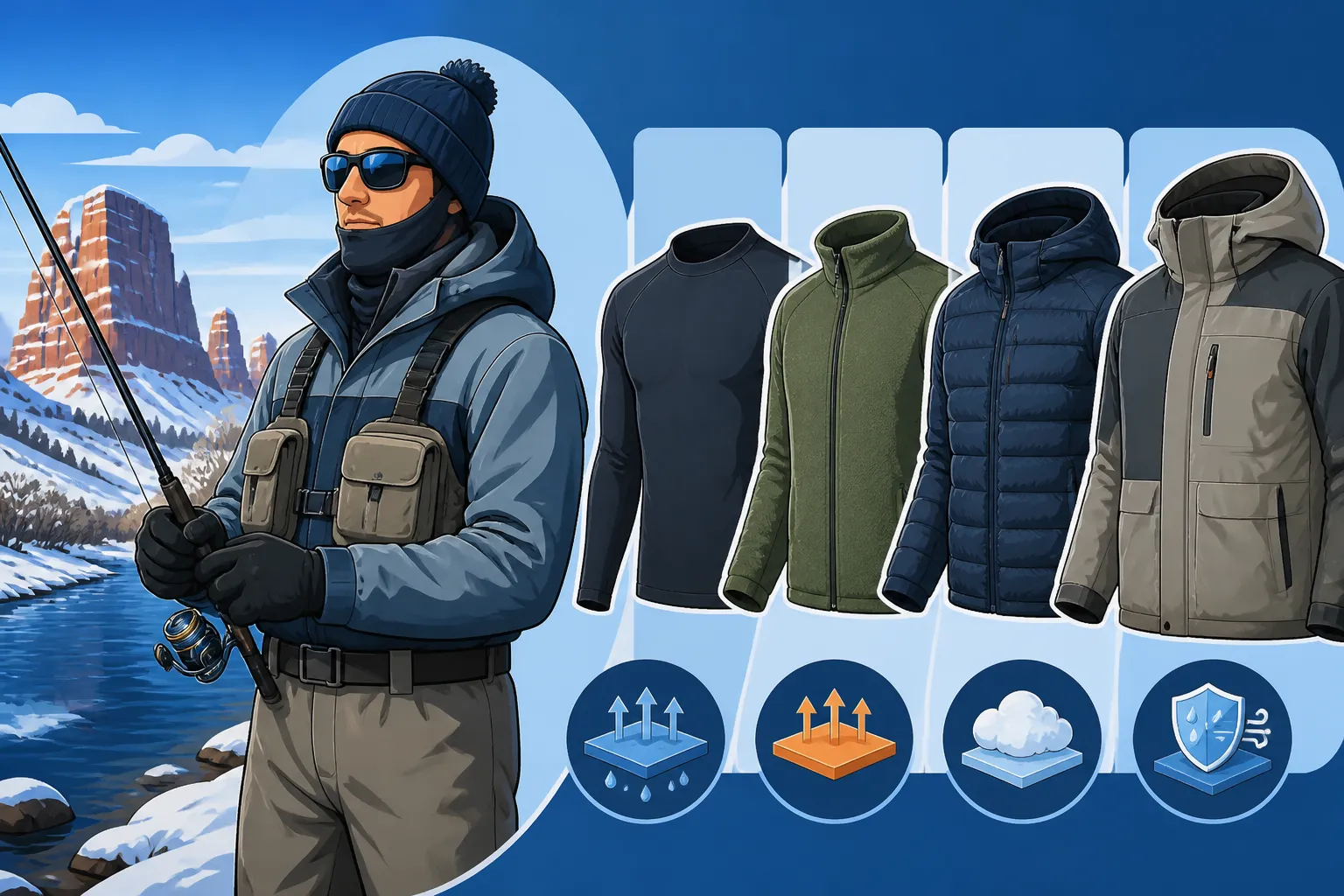
When it comes to staying warm and dry while fishing in Utah's winter, a robust three-layer system is your absolute best friend. Think of it as building your personal climate control system, each layer having a distinct and critical job. If you miss one component or choose the wrong material, the entire system can fail, leaving you shivering at best, and at worst, in a potentially dangerous situation. This isn't just about comfort; it's about preparedness for a truly wild environment.
The Base Layer: Moisture Wicking is Key
Your base layer is the foundation of your winter fishing wardrobe, and its primary job is to manage moisture. Even in freezing temperatures, you'll sweat – whether it's from the exertion of setting up your gear, trekking to a secluded fishing spot, or even just reeling in a stubborn fish. If that sweat sits on your skin, it will quickly cool down and make you feel clammy and cold, no matter how many heavy outer layers you have on. This is where the magic of moisture-wicking fabrics comes into play.
When selecting a base layer, you're generally looking at two main material categories: synthetic fabrics (like polyester or polypropylene) or natural fibers (primarily Merino wool). Synthetics are fantastic at quickly pulling moisture away from your skin and drying rapidly. They're often durable and can be a more budget-friendly option. On the other hand, Merino wool offers incredible warmth-to-weight ratio, excellent moisture-wicking properties, and the added benefit of being naturally odor-resistant, which is a big plus on multi-day trips or if you're prone to sweating. Unlike traditional wool, Merino is exceptionally soft and non-itchy against the skin. For fit, you want your base layer to be snug, almost like a second skin, to ensure maximum contact for effective wicking, but not so tight that it restricts your movement. Forget the old cotton long johns; they are a recipe for discomfort in Utah's winter environment. You can find a wide variety of quality base layers on Amazon that will serve you well.
The Mid-Layer: Insulation and Warmth
Once your base layer is efficiently moving moisture away from your skin, your mid-layer steps up to provide the crucial insulation that traps your body heat. This is where the bulk of your warmth comes from, acting like a warm, cozy blanket that allows you to maintain a comfortable core temperature even when the outside air is brutally cold. Without a good mid-layer, you'll feel the chill almost immediately, especially when your activity level drops and you're sitting still, focused on your fishing line.
Fleece is a popular and excellent choice for mid-layers. It's lightweight, breathable, and retains much of its insulating properties even when damp, which is a huge advantage. You can find fleece in various weights, from thin micro-fleece to thick, heavy options, allowing you to customize your warmth level. Another superb option is a down or synthetic puffy jacket or vest. Down offers superior warmth-to-weight and compressibility, making it easy to pack, but it loses its insulating power when wet. Synthetic insulated jackets mimic down's loft and retain warmth even if they get damp, making them a very practical choice for potentially wet winter conditions. The thickness of your mid-layer should be chosen based on the expected temperatures for your outing. On milder days, a lighter fleece might suffice, but for truly frigid Utah ice fishing, you might opt for a thicker fleece or even layer a thin fleece under a puffy vest. This versatility is what makes the layering system so effective for keeping you warm.
The Outer Layer: Protection from the Elements
Your outer layer, often called a shell, is your shield against Utah's harsh winter environment. Its primary function is to block wind, repel snow, sleet, or freezing rain, and protect your inner layers from getting wet. This layer doesn't necessarily provide much warmth on its own, but it is absolutely critical for retaining the heat generated by your body and trapped by your mid-layers. Without a reliable outer shell, a sudden gust of wind can instantly cut through your insulation, and a snow flurry can soak your mid-layers, leading to rapid heat loss and extreme discomfort.
When choosing an outer layer for winter fishing, look for something that is both waterproof and breathable. Materials like Gore-Tex or similar proprietary waterproof/breathable membranes are excellent because they prevent external moisture from getting in while allowing internal moisture (vaporized sweat) to escape. This breathability is vital to prevent that clammy feeling that comes from trapped moisture. Features to prioritize include a good hood that can be cinched down to protect your head and face, adjustable cuffs to seal out cold air and moisture, and waterproof zippers to prevent leaks. Pockets that are easily accessible even with gloves on are also a bonus. A good outer shell, like a high-quality fishing jacket, ensures that you can brave the elements, whether you're battling a fierce crosswind on Flaming Gorge or enduring a gentle snowfall on the Provo River. This final protective layer is what allows your entire system to work, keeping you dry and comfortable during your Best Time of Year to Fish in Utah winter adventures.
Beyond the Core: Protecting Extremities and Head
While the three-layer system for your torso is paramount, neglecting your extremities and head is a common mistake that can lead to significant discomfort and even unsafe conditions. Your hands, feet, and head are crucial points of heat loss, and keeping them warm and dry is just as important as protecting your core. Many an angler has cut a fantastic fishing trip short because of numb fingers or icy toes, demonstrating that your outer layers are only as good as the protection they offer everywhere else.
Hands and Feet: Often Overlooked, Always Crucial
It's astonishing how quickly cold hands can make even simple tasks, like tying a knot or re-baiting a hook, feel utterly impossible. Your hands are constantly exposed, wet, and working, making them highly susceptible to the cold. Similarly, your feet are on the ground, often in direct contact with cold surfaces like ice or snow, and they are critical for maintaining balance and mobility. Properly protecting these areas will make a huge difference in your overall comfort and endurance on the water.
For hands, a layered approach works best here too. Start with a thin pair of moisture-wicking liner gloves, perhaps made of synthetic material or thin Merino wool. These provide a basic layer of warmth and can be worn while performing delicate tasks. Over these, wear a pair of insulated, waterproof gloves or mittens. Mittens generally offer more warmth than gloves because your fingers share warmth. Look for options with good grip, articulated fingers (if gloves), and wrist closures to keep snow out. For feet, avoid cotton socks at all costs! Opt for thick wool or synthetic blend socks designed for cold weather. On extremely cold days, some anglers successfully layer two pairs of non-cotton socks – a thin wicking liner sock under a thicker insulated sock – but make sure your boots aren't so tight that they restrict circulation. Your boots themselves should be fully waterproof, well-insulated, and offer good traction for icy surfaces. When looking for Best Boots for Standing on Ice All Day, make sure they are rated for temperatures well below what you expect to encounter. Investing in proper Best Gloves for Ice Fishing in Utah will allow you to continue fishing when others are heading for the truck.
Head and Neck: The Heat Loss Highway
Did you know that you can lose a significant amount of body heat through your head? It's often one of the first places anglers neglect, but keeping your head warm is essential for overall body temperature regulation. A cold head can lead to headaches, brain freeze, and a general feeling of being unwell, draining your energy much faster than you'd expect.
A warm, insulated hat is a non-negotiable item for any winter fishing trip. A simple wool or fleece beanie is usually a great start. For colder conditions or windy days, consider a balaclava that covers your entire head, face, and neck, leaving only your eyes exposed. Many good winter fishing jackets also feature an insulated hood that can be pulled up over your hat for an extra layer of protection against wind and snow. Don't forget your neck! A neck gaiter made of fleece or wool can be pulled up over your mouth and nose to protect against biting winds and provide critical warmth. It's much more versatile than a traditional scarf and can be easily adjusted or pulled down if you start to feel too warm. Protecting this "heat loss highway" ensures that your body expends less energy trying to stay warm, leaving you more comfortable and focused on your next bite. These are small additions to your Utah Fishing Gear Guide that make a big impact.
Practical Tips for Assembling Your Winter Fishing Wardrobe
Building the perfect winter fishing wardrobe isn't just about buying the right gear; it's also about knowing how to use it effectively and making smart choices before you even leave the house. A little forethought and practical experience go a long way in ensuring your comfort and safety when you're out on Utah's frozen lakes or brisk rivers.
Testing Your Gear and Adjusting on the Fly
The best way to truly understand how your layering system performs is to test it out. Don't wait for your first multi-day ice fishing trip to Strawberry Reservoir Ice Fishing Spots to discover that your boots aren't warm enough or your jacket isn't as waterproof as you thought. Take shorter trips, even just to a local community pond on a cold day, and pay attention to how your body feels. Are you sweating excessively while hiking to your spot? Are you shivering once you sit down? These observations are crucial.
Always pack an extra layer or two, even if you think you won't need them. Conditions can change rapidly in Utah, and it's always better to have too many layers than not enough. The golden rule is: "Be bold, start cold." When you first head out, especially if you'll be moving and generating heat, you should feel a little cool. This prevents you from sweating excessively, which as we know, is the enemy of warmth. As you settle into fishing, or as the temperature drops, you can easily add a layer. Conversely, if the sun comes out or you're working hard drilling holes with your Best Ice Augers for Utah Ice Fishing, shed a layer before you get soaked in sweat. Adjusting your clothing on the fly is the true art of layering; it allows you to maintain a stable, comfortable body temperature throughout your entire fishing session.
Avoiding Cotton and Staying Dry
We've touched on this, but it bears repeating: cotton kills in cold weather. While that sounds dramatic, it's a stark reminder of how dangerous cotton can be when wet and cold. Cotton absorbs moisture like a sponge, and once it's wet, it loses all its insulating properties. Whether it's from sweat or precipitation, wet cotton against your skin will actively draw heat away from your body, rapidly increasing your risk of hypothermia. This is why all your layers, from your base layer to your socks, should be made of wool (especially Merino) or synthetic fabrics.
Beyond material choice, actively work to stay dry. This means having a quality waterproof outer shell, but it also means being mindful of your actions. If it's snowing heavily, brush snow off your clothes before it melts and soaks in. If you're drilling holes, consider taking off your outer jacket to avoid overheating and sweating. If you get splashed by water when handling a fish, dry yourself off quickly. And here's a crucial tip: always, always have a completely dry set of clothes waiting in your vehicle for the drive home. Even if you've done everything right, there's nothing quite as satisfying as peeling off your damp fishing clothes and pulling on warm, dry garments for the journey back, especially after a successful day on the ice or river. How to Stay Warm Ice Fishing in Utah starts with staying dry.
Investing in Quality: It Pays Off
While it might be tempting to opt for cheaper, less specialized clothing, when it comes to winter fishing in Utah, investing in quality gear truly pays dividends. High-quality outdoor clothing is designed with specific performance characteristics in mind: superior moisture-wicking, effective insulation, durable waterproofing, and ergonomic design for active use. These aren't just buzzwords; they translate directly into greater comfort, better protection, and ultimately, a more enjoyable and safer fishing experience.
Think about it this way: a cheap, non-breathable rain jacket might keep precipitation out, but if it traps all your sweat inside, you'll still end up cold and wet. A poorly insulated boot might save you a few dollars upfront, but if your feet are numb an hour into your trip, you've wasted your time and risked your health. Reputable outdoor brands often put years of research and development into their products, using advanced materials and construction techniques. While these might come with a higher price tag, they offer longevity, superior performance, and peace of mind. You can find a vast selection of these high-performance items, from various brands, on platforms like Amazon, allowing you to compare options and read reviews to make an informed decision. View quality winter fishing apparel as an investment in your comfort, your safety, and your ability to truly appreciate the unique beauty of Utah Fishing Season Dates and Limits during the colder months.
| Layer Type | Purpose | Common Materials | Key Features |
|---|---|---|---|
| Base | Wicks moisture from skin | Merino wool, Synthetic (Poly) | Snug fit, seamless construction, lightweight |
| Mid | Insulates, traps body heat | Fleece, Down, Synthetic Puffy | Variable thickness, breathable, compressible |
| Outer | Protects from wind & water | Gore-Tex, Proprietary membranes | Waterproof, windproof, breathable, hood, sealed seams |
| Extremities | Maintains hand/foot warmth | Wool/Synthetic socks, Insulated/waterproof gloves/mittens | Good grip, warmth rating, moisture control |
| Head/Neck | Reduces heat loss, protects face | Wool/Fleece beanie, Balaclava, Neck gaiter | Full coverage, comfortable fit, breathability |
Disclaimer
This article is for general informational purposes only and does not constitute professional advice. Laws, prices and regulations vary by location and change over time. Consult a qualified professional for guidance on your specific situation.