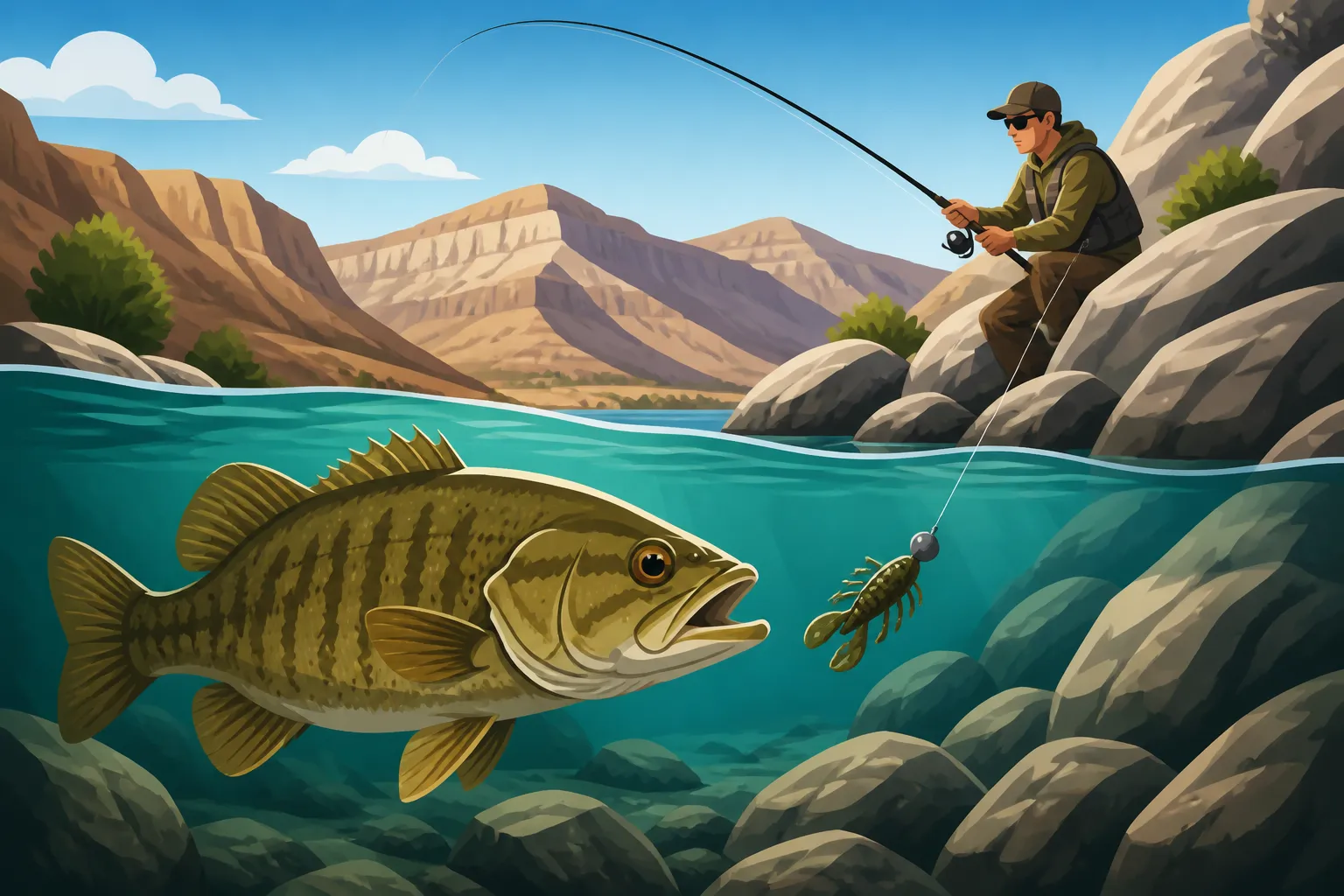
How to Catch Smallmouth Bass in Rocky Coves
Trying to dial in on smallmouth bass can sometimes feel like a game of hide-and-seek, especially when they're tucked away in rocky coves. You know they're there, darting between boulders and ambushing prey, but getting your lure in front of them and coaxing a strike is a whole different ballgame. It's a common frustration for many anglers, myself included, figuring out the best approach to these elusive, hard-fighting fish in their preferred rocky haunts. This guide is all about unraveling the mystery of catching smallmouth bass in rocky coves, offering practical tips and techniques specific to the unique challenges and rewards of fishing Utah's fantastic smallmouth waters.
The Allure of Rocky Coves for Smallmouth Bass
Smallmouth bass are undeniably drawn to rocky coves like magnets. These areas provide everything a smallmouth needs to thrive: shelter, ambush points, and an abundance of food. Understanding why they prefer these specific habitats is the first step toward consistently finding and catching them.
Why Smallmouth Thrive in Rocky Habitats
Imagine yourself as a smallmouth bass. What do you look for? Protection from predators, places to hide while waiting for an unsuspecting minnow or crayfish, and structure to break up currents. Rocky coves deliver all of this in spades. The irregular contours of rocks, from large boulders to jagged ledges and loose chunk rock, create countless nooks and crannies where smallmouth can stage. They love to sit just out of sight, ready to dart out and ambush any prey that swims by. This makes rocky points, submerged rock piles, and transitions from rock to sand or gravel particularly productive.
In Utah, reservoirs like Flaming Gorge and Deer Creek Reservoir are absolute goldmines for smallmouth bass precisely because of their extensive rocky shorelines and underwater structures. These areas aren't just about cover; they're also prime foraging grounds. Crayfish, a favorite meal of smallmouth, burrow and scuttle among the rocks, and various baitfish species often school up near these protective structures. The thermal mass of rocks can also influence water temperature, creating subtle but important differences that attract baitfish and, consequently, the bass that feed on them. Anglers often make the mistake of fishing open water, but the real action in these Utah reservoirs is almost always tied to some form of rock.
Seasonal Patterns and Behavior in Coves
Smallmouth bass behavior in rocky coves isn't static; it changes dramatically with the seasons, influenced heavily by water temperature and their spawning cycle. Missing the mark on their seasonal movements is a surefire way to come back empty-handed, a common source of frustration for even experienced anglers.
In spring, as water temperatures rise into the 40s and 50s, smallmouth move into shallower rocky coves to spawn. They'll be found around rocky points, gravel beds, and protected pockets within the coves. This is when they're most accessible from shore and can be quite aggressive, often defending their nests. You'll find them concentrating in depths from 5 to 15 feet.
During the summer months, when the water warms significantly, smallmouth often retreat to deeper, cooler sections of the coves. They'll relate to submerged rock piles, ledges, and steep drop-offs, especially those that offer shade during the brightest parts of the day. Early mornings and late evenings might see them push into shallower areas to feed, but during midday, they'll be deeper, sometimes 20-40 feet or more. Fishing during a Utah afternoon thunderstorm can even trigger a bite as the light changes and temperatures briefly drop.
As fall approaches and water temperatures begin to drop again, smallmouth enter a feeding frenzy. They're trying to pack on weight for the upcoming winter. This is arguably one of the best times of year to catch trophy smallmouth in rocky coves. They'll often be found transitioning between depths, actively chasing baitfish in both shallow and deeper rocky structures, sometimes concentrating in large schools. Understanding these shifts, and knowing how to fish deep structure for smallmouth in fall, is crucial for consistent success.
Gearing Up for Rocky Cove Smallmouth Success
Having the right gear makes a world of difference when you're battling feisty smallmouth in snag-prone rocky coves. It's not just about what catches fish, but also about what stands up to the abuse of rocks and the powerful runs of a smallmouth.
Rod, Reel, and Line for the Fight
For smallmouth bass in rocky coves, you generally want versatile setups that can handle both delicate presentations and strong hooksets. A medium-light to medium-power spinning rod, typically 6'6" to 7' in length, is excellent for finesse techniques like drop-shotting or Ned rigging. Pair this with a 2500-3000 series spinning reel spooled with 6-10 lb fluorocarbon line, or a 10-15 lb braided main line with a fluorocarbon leader. Fluorocarbon is incredibly sensitive and nearly invisible underwater, which is often key when targeting wary smallmouth. If you prefer baitcasting, a medium to medium-heavy rod around 7' is ideal for throwing crankbaits, jigs, and larger soft plastics, especially around heavier cover. For these, a low-profile baitcasting reel with a fast retrieve ratio and 12-17 lb fluorocarbon or braided line will serve you well. You can find a fantastic selection of these rods, reels, and lines on Amazon, often with great reviews from other bass anglers.
When it comes to line, the abrasion resistance is paramount in rocky environments. Nothing is more frustrating than a break-off on a good fish because your line rubbed against a sharp rock. Fluorocarbon offers excellent abrasion resistance, but a braided line with a strong fluorocarbon leader (tied with an FG knot or similar strong knot) gives you the best of both worlds: casting distance and sensitivity from the braid, and stealth and abrasion resistance from the fluorocarbon. Remember, smallmouth are powerful fighters, and you need a setup that can handle their sudden dives and head shakes.
Lure Selection to Conquer the Rocks
Choosing the right lure for rocky coves means selecting baits that imitate their natural prey while also being relatively snag-resistant. Losing lures to rocks is a universal angler frustration, so thinking about retrieval angles and lure design is crucial. When considering what to use, knowing the best lures for Utah smallmouth bass is a great starting point.
Jigs: Football jigs (1/4 to 1/2 oz) are absolutely killer in rocky coves. Their unique head design helps them crawl over and around rocks with fewer snags than traditional round-head jigs. Tip them with a small craw-style trailer for added bulk and action. Slowly dragging and hopping these along the bottom mimics a crayfish perfectly. Arkie-style jigs with weed guards can also be effective when targeting denser rock piles.
Crankbaits: Squarebill crankbaits are a smallmouth angler's best friend in rocky areas. Their square lip helps deflect off rocks, reducing snags and creating an erratic action that often triggers reaction strikes. Look for models that dive to the depth where you expect the fish to be. For deeper coves, a deep-diving crankbait that "mines" the bottom can be incredibly effective. Color choices often depend on water clarity, but natural crawfish patterns, browns, and greens are always solid bets.
Soft Plastics: The versatility of soft plastics in rocky coves is unmatched.
- Tubes: These mimic crayfish or baitfish fleeing into cover. Rigged on an internal jig head, they spiral down and often get inhaled as they hit the bottom.
- Grubs: Single-tail grubs rigged on a small ball head jig can be deadly when retrieved with a steady slow roll or hopped along the bottom.
- Ned Rigs: A finesse technique gaining immense popularity, the Ned rig uses a small mushroom head jig paired with a short, buoyant worm. It stands upright on the bottom, enticing even the most finicky smallmouth. This technique is especially effective when fish are pressured or the bite is tough.
- Drop Shot Rigs: If you really want to present a bait directly in the fish's face above snaggy bottom, knowing how to fish a drop shot rig for Utah bass is invaluable. It keeps your bait suspended just above the rocks, making it an irresistible target.
- Creature Baits: Texas-rigged creature baits or small craws can be pitched into tight rocky pockets with minimal snags, providing a tempting meal for bass hiding deep in the cover.
When selecting lures, always consider the depth of the cove and the specific structure you're targeting. Having a variety of colors and sizes on hand, which you can easily stock up on through retailers like Amazon, will allow you to adapt to changing conditions and fish preferences.
| Lure Type | Best Application in Rocky Coves | Pros | Cons |
|---|---|---|---|
| Football Jigs | Crawling over broken rock, deep ledges | Mimics crayfish, good snag resistance | Can still get hung up in crevices |
| Squarebill Crankbaits | Bumping off shallow to medium depth rocks | Excellent reaction strikes, deflects well | Not suitable for very deep water |
| Ned Rigs | Finesse presentations, tough bites, open rocks | Very subtle, stands upright, highly effective | Light tackle needed, prone to snagging in deep gaps |
| Drop Shot Rigs | Suspending bait above snags, vertical fishing | Direct presentation, versatile | Slower fishing, requires specific rigging |
| Tubes | Mimics crayfish, fleeing baitfish, pitching cover | Natural fall, good for casting and vertical | Can get hung on sharp rock edges |
| Texas-Rigged Creature Baits | Pitching into heavy cover, dense rock piles | Highly snag resistant, versatile | Less natural action without weight change |
Mastering Techniques for Rocky Cove Smallmouth
Successfully catching smallmouth in rocky coves requires a blend of finesse and aggressive tactics, coupled with an understanding of how to read the water and use your equipment effectively.
Finesse Tactics for Tricky Bass
Sometimes, smallmouth require a more subtle approach, especially when they're pressured, the water is clear, or they're just not actively chasing. This is where finesse techniques truly shine.
The Ned rig is a prime example of finesse fishing that excels in rocky coves. You'll want to cast it near rocky points, along ledges, or into the mouth of a cove. Let it sink to the bottom, then barely move it. I mean barely. Drag it a few inches, let it sit, shake your rod tip subtly, then drag it again. The buoyant plastic stands straight up, giving it an irresistible, lifelike quiver. Bites often feel like a slight "tick" or simply a spongy weight on your line. It can be incredibly frustrating when you know fish are there but won't commit to anything fast-moving, and the Ned rig is often the answer.
The drop shot rig is another phenomenal finesse tool. As mentioned, knowing how to fish a drop shot rig for Utah bass allows you to present a soft plastic bait right in the strike zone, suspended above the snaggy bottom. This is particularly effective when you've identified fish on your sonar holding at a specific depth near vertical rock walls or submerged boulders. Cast it out, let the weight hit bottom, then simply hold your rod tip steady with slight twitches. The bait will dance enticingly without moving your weight, minimizing snags while maximizing appeal. Detecting bites is critical here; sometimes it's a subtle tap, other times just slack in the line.
Finally, shaky head jigs with worms or small creature baits offer a slightly more robust finesse option. The weighted head allows for a steady retrieve while the worm wiggles and shakes. Drag it slowly over and around rocks, pausing occasionally. This technique excels in rocky transitions and moderately deep coves where you need a little more weight to maintain bottom contact. The key to all these finesse tactics is patience and paying close attention to your line for any unusual movement or feel.
Aggressive Approaches: Cranking and Jigging
When smallmouth are active, aggressive tactics can cover water quickly and trigger powerful reaction strikes. This is often the case during key feeding windows, like early mornings, late evenings, or during the fall "feed bag" period.
Crankbaiting is a fantastic way to target smallmouth in rocky coves, especially with squarebills. The trick is to literally bang them off the rocks. Cast your squarebill parallel to a rocky bank or point, or perpendicular to a submerged rock pile. When the lure makes contact with a rock, it deflects erratically, mimicking a fleeing baitfish or crawfish. This sudden change in direction and speed is often what triggers an instinctive strike from an ambushing smallmouth. Vary your retrieve speed and depth, trying to keep the lure bumping off structure as much as possible. It feels counterintuitive to purposefully hit rocks, but trust me, it's what makes these lures so effective for smallmouth.
Football jigs are also excellent for aggressive jigging. While they can be fished slowly, they can also be worked more actively. Cast to a rocky point or ledge, let it sink, then aggressively hop or drag it along the bottom. The heavier football head maintains better contact with the bottom in deeper water and can be worked effectively over varied rock sizes. You can also swim a jig, especially a lighter one, near the surface or mid-water column if you see active baitfish. The goal is to imitate a crawfish scuttling across the rocks or a baitfish darting through cover. Experiment with different colors and retrieve speeds until you find what the fish are reacting to.
Leveraging Technology: Sonar and Mapping
In today's angling world, ignoring advancements in fish finders and mapping technology would be a huge disservice, especially when targeting specific structures like rocky coves. Knowing how to read a fish finder for Utah reservoirs can dramatically improve your success rate.
Modern sonar units (especially those with side imaging or down imaging) allow you to literally "see" the underwater landscape. Instead of blindly casting, you can idle through a cove, mapping out every rock pile, every ledge, and every depth change. This helps you identify the prime ambush points where smallmouth are likely to be holding. Look for changes in bottom composition, areas with scattered rock near a drop-off, or distinct rock formations.
Once you've located promising structure, use your 2D sonar to pinpoint fish holding tight to it. Smallmouth will often appear as arches or distinct marks right on the bottom contour. Pay attention to the depth at which these fish are holding, as this will inform your lure selection and presentation. Don't just look for fish; look for baitfish schools, as smallmouth are never far from their next meal. Many anglers, myself included, will mark these key spots on their GPS with a waypoint to return to later, or to ensure they are making precise casts. Understanding these nuances of your electronics, combined with a good topographical map of the reservoir, gives you a significant advantage in breaking down a complex rocky cove.
Premier Rocky Cove Smallmouth Fishing in Utah
Utah boasts some incredible smallmouth bass fisheries, and knowing where to focus your efforts can make your trip much more successful.
Spotlight on Utah's Top Smallmouth Coves
When you think of smallmouth in Utah, a few places immediately come to mind due to their abundant rocky structures and healthy smallmouth populations.
Flaming Gorge Reservoir stands out as a premier destination for smallmouth. Its vast expanse is dotted with countless rocky coves, steep ledges, and sheer rock walls. The smallmouth here grow to impressive sizes, with the possibility of catching true trophy fish. Key areas to explore include the numerous coves and rocky points on both the Utah and Wyoming sides of the reservoir. Focus on areas where the rocks transition to deeper water or where a prominent point extends into the main channel. Areas like Buckboard Crossing, Lucerne Valley, and the larger side coves along the main channel are known producers. Anglers often discuss the best places to find Flaming Gorge smallmouth bass coves due to their sheer numbers and productivity. The Smallmouth Bass Size at Flaming Gorge can be truly impressive, making it a bucket-list destination for many.
Deer Creek Reservoir near Provo offers excellent smallmouth fishing, particularly along its riprap sections and rocky banks. While not as deep or sprawling as Flaming Gorge, Deer Creek provides consistent action, especially during the spring and fall. Look for submerged rock piles and rocky points that extend into the main body of the lake. The coves on the east side, and near the dam, are often productive. Easy access makes it a popular spot for those looking for Deer Creek Reservoir fishing access close to the Wasatch Front.
Jordanelle Reservoir is another fantastic option. With its clear waters and abundant rocky shorelines, it holds a strong population of smallmouth. The coves and points on the north and east sides of the reservoir are particularly good, especially where rocky outcroppings meet deeper water. Consider areas around the Hailstone and Rock Cliff recreation sites. Like Deer Creek, Jordanelle Reservoir fishing spots offer great opportunities for smallmouth.
When exploring these waters, don't be afraid to try different coves. What works one day might not the next, and factors like boat traffic, wind, and sunlight can all influence which coves are most active.
Adapting to Conditions and Ethical Angling
Fishing rocky coves for smallmouth isn't just about knowing the spots and the lures; it's also about adapting to the ever-changing conditions that Utah's weather and water present. It's truly frustrating when you have a plan, only for the fish to have a different one!
Water clarity and temperature are huge factors. In clear water, a more subtle approach with natural colors and lighter lines often works best. If the water is stained, brighter colors or lures that create more vibration might be necessary. Pay attention to how water temperature affects Utah trout fishing, as similar principles apply to bass, influencing their depth and activity levels. If the water is cold, fish will be slower and often deeper; if it's warm, they might be more aggressive and shallower during low light.
Wind and boat pressure can also impact success. Wind can be your friend, creating a current that positions baitfish and makes it harder for bass to detect your presence. However, too much wind can make boat control difficult, especially in tight coves. On pressured lakes, early mornings or late evenings can often yield better results, as the fish are less disturbed. Sometimes, the best strategy is to adjust technique when fish aren't biting, perhaps by switching from aggressive reaction baits to a slow, methodical finesse presentation.
Finally, practicing ethical angling is paramount. Smallmouth bass are a valuable resource, and responsible catch-and-release practices ensure healthy populations for future generations. Handle fish carefully, minimize their time out of water, and use appropriate tools for hook removal. Be mindful of invasive species rules, especially when moving between different reservoirs. By understanding the fish, their environment, and adapting your approach, you'll not only increase your chances of success but also contribute to the long-term health of Utah's incredible smallmouth bass fisheries.
Disclaimer
Please note that fishing regulations in Utah can change. Always consult the latest Utah Division of Wildlife Resources (DWR) fishing guide for current rules, bag limits, and licensing requirements before heading out on the water. This guide provides general information and recommendations, and it is the angler's responsibility to adhere to all applicable laws and regulations. While we strive for accuracy, individual results may vary.