What Retrieve Speed Works Best for Smallmouth Bass in Cold Water?
When those crisp mornings hit or the first real bite of winter sets in, many of us Utah anglers find ourselves facing a classic dilemma: smallmouth bass that suddenly seem to have vanished, or, if we find them, they're just not biting. It's incredibly frustrating when your usual fast and aggressive tactics suddenly fail. This guide is here to walk you through exactly why smallmouth bass become so lethargic in cold water and, more importantly, what retrieve speed and presentation tactics will coax those finicky fish into striking, even when the thermometer drops.
Understanding Smallmouth Behavior in Chilly Utah Waters
The first step to catching smallmouth bass in cold water is to truly understand what's happening beneath the surface. It's not that the fish are gone; it's that their entire world has slowed down, and your approach needs to mirror that change. Forget the high-energy chases of summer – cold water smallmouth are all about conserving energy.
The Metabolism Slowdown
Just like us, fish are creatures of their environment, and cold blood means their body temperature is dictated by the water around them. When the water temperature drops below, say, 50-55 degrees Fahrenheit, a smallmouth bass's metabolism begins to slow significantly. This isn't just a minor adjustment; it's a fundamental shift in how they live. Their digestion slows, their need for oxygen decreases, and, crucially for us anglers, their energy levels plummet.
Imagine trying to sprint a marathon in thick mud – that's kind of how a smallmouth feels chasing a fast-moving lure in cold water. They're simply not equipped to expend that much energy for a meal that might not even be worth the effort. This is why those fast retrieves that worked so well in July suddenly get ignored. They're still hungry, but they're looking for an easy, low-energy meal. You can learn more about specific smallmouth behaviors in our comprehensive Utah Smallmouth Bass Guide.
Where Smallmouth Relocate
With their metabolism slowing, smallmouth bass also change their preferred hangouts. During colder periods, they tend to move from shallow, rocky points and flats to deeper, more stable water. Think about it: the deeper water maintains a more consistent temperature, providing a slight reprieve from rapid surface temperature fluctuations. They'll often school up in these deeper areas, seeking out substantial structure like ledges, rock piles, drop-offs, and submerged timber.
For instance, at Flaming Gorge Reservoir, you might find them congregating in 30-60 feet of water near steep canyon walls or deep points, whereas in summer they'd be cruising much shallower. Similarly, at Deer Creek Reservoir, smallmouth will often pull off the main lake points and settle into deeper channel swings or near the dam face as temperatures drop. These aren't just random spots; they're thermal refuges where the fish can conserve energy without being exposed to extreme cold or sudden temperature shifts. Understanding these deep-water havens is crucial to even finding them before you can worry about your retrieve speed.
The Art of the Slow and Steady Retrieve
Once you've located those sluggish smallmouth, the real work begins: presenting your lure in a way that appeals to their low-energy state. This is where the "slow and steady" mantra truly comes into play. It's not just about reeling slowly; it's about a deliberate, patient, and often nuanced presentation that mimics an easy, irresistible meal.
Why Slower is Often Better
A slower retrieve in cold water works because it directly caters to the smallmouth's reduced metabolism and energy reserves. When a lure moves slowly, it appears less threatening and requires minimal effort from the bass to intercept. They're not looking for a chase; they're looking for a snack that's practically handed to them. A slow-moving jig, a suspending jerkbait hanging motionless, or a crankbait gently bumping along the bottom all signal "easy meal" to a cold-blooded predator conserving its energy.
Contrast this with the aggressive, fast retrieves often employed in warmer months, which trigger an instinctual chase response. In cold water, that same fast retrieve might just look like too much work, or even be perceived as a threat that the bass would rather avoid. You're trying to elicit a reaction strike or a feeding response, and in cold water, that reaction comes from an "opportunistic" rather than an "aggressive" mindset. This holds true for many species, and you can see how water temperature impacts fishing for various species in resources like How Water Temperature Affects Utah Trout Fishing, where similar principles apply.
Techniques for a Controlled Slow Retrieve
Achieving a truly effective slow retrieve isn't just about cranking your reel handle at half speed. It involves specific techniques tailored to different lure types, often incorporating pauses, subtle movements, and long periods of inactivity that feel counterintuitive to many anglers.
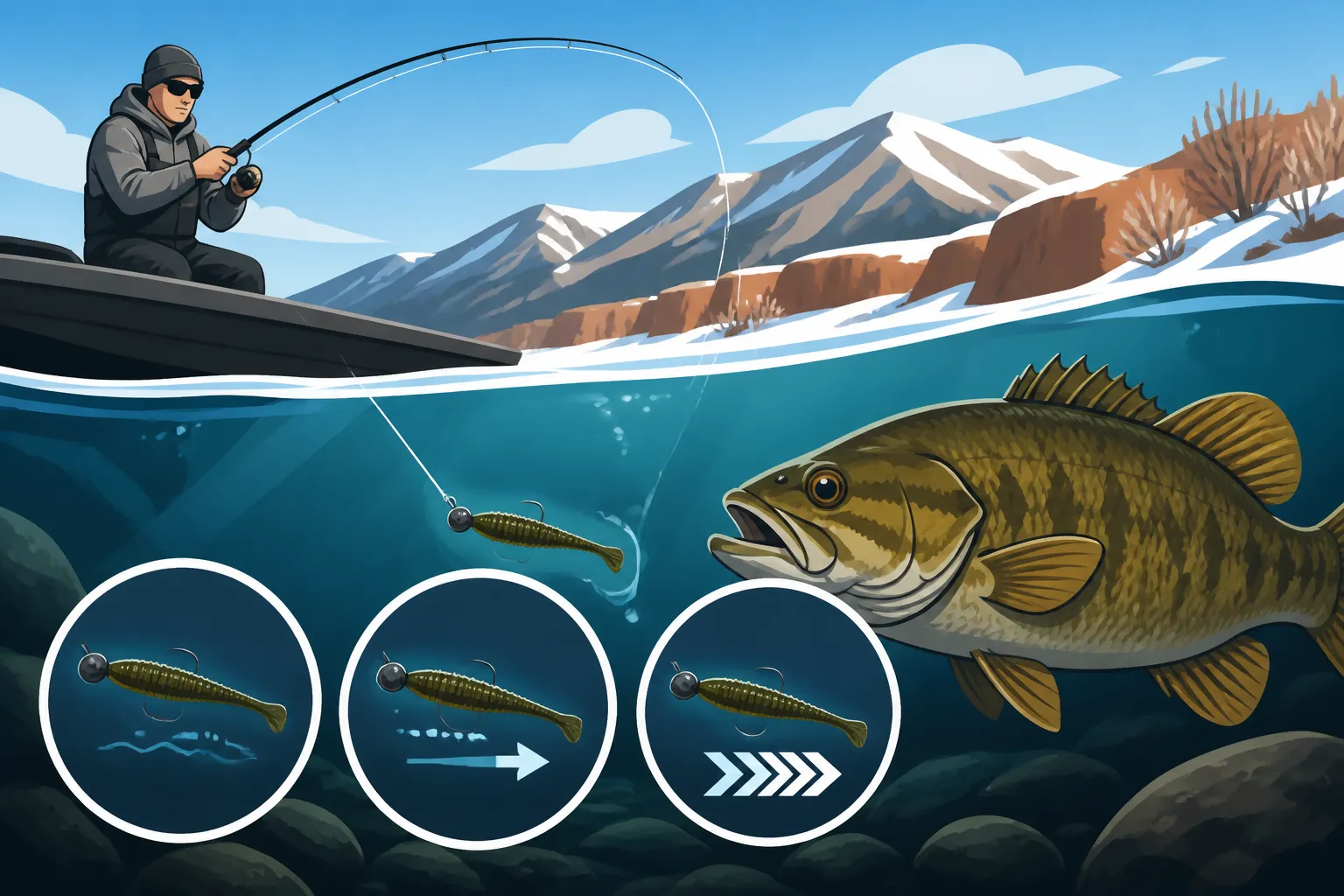
When using a jig, for instance, a "slow retrieve" often means letting it sink to the bottom, then dragging it gently, barely lifting it an inch or two off the bottom, and letting it settle again. The key is the pause – sometimes as long as 10-20 seconds – allowing the jig's skirt or soft plastic trailer to subtly undulate, mimicking a wounded or dying baitfish. You're not bouncing it aggressively; you're coaxing it.
For suspending jerkbaits, the technique is even more about the pause. A typical retrieve might involve a couple of sharp twitches to get the lure to dive and dart, followed by an extended pause. We're talking 5, 10, even 15 seconds of the lure just hanging there, perfectly still, right in the fish's face. Many of the most effective cold-water jerkbaits are designed specifically for this suspending action, and you can find a great selection of high-quality suspending jerkbaits on Amazon that are perfect for this technique. The fish often strike on the pause, when the bait is doing absolutely nothing.
Crankbaits, too, can be effective with a slow retrieve, particularly those designed to dive deep. The goal here is often a "slow roll" – retrieve just fast enough to get the bait wobbling and digging into the bottom, making intermittent contact with rocks or structure. This contact can often trigger a reaction strike from a sluggish bass. The slower movement also gives the fish more time to react to the subtle vibrations and flash of the lure without needing to chase it down. Remember, patience is your most potent weapon in these conditions.
Top Lures and Their Cold-Water Presentation Strategies
Matching the right lure to the right retrieve speed is paramount when targeting cold-water smallmouth. While many lures can catch bass year-round, some truly excel in chilly conditions because their design naturally lends itself to a slow, deliberate presentation.
Jig and Soft Plastic Combos
Jigs, especially football head jigs paired with soft plastic trailers like tubes, grubs, or creature baits, are absolute workhorses for cold-water smallmouth. The weight of the jig allows it to reach those deeper holding areas where the bass congregate, and the soft plastic provides a lifelike profile with subtle action.
The retrieve for these combos is all about mimicking bottom-dwelling prey or a vulnerable crawfish. Cast out and let the jig sink all the way to the bottom. Then, use a slow, controlled "drag and hop" motion. This means dragging the jig along the bottom for a few feet, then gently lifting your rod tip to make it hop a foot or two, allowing it to fall back to the bottom on a semi-slack line. The fall is often when the strike occurs, as the jig's skirt and trailer flair, looking like a natural creature. Don't be afraid of long pauses here – 5 to 10 seconds is not uncommon, especially when fishing around prime structure at places like Flaming Gorge or Jordanelle Reservoir. Many anglers check out Amazon for various jig and soft plastic combos, ensuring they have a good range of colors and sizes for different water clarities.
Suspending Jerkbaits
If there's one lure that screams "cold water smallmouth," it's the suspending jerkbait. These hard-bodied baits are designed to dive to a certain depth and then, crucially, stay suspended in the water column when you pause your retrieve. This "hang time" is what drives cold-water bass absolutely wild.
A typical retrieve involves casting the jerkbait out, reeling it down to its target depth with a few quick turns of the handle, then giving it two or three sharp twitches with your rod tip pointed down. This makes the lure dart erratically like a fleeing baitfish. After the twitches, immediately pause. This isn't a quick pause; this is a serious, deliberate pause of 5 to 15 seconds, sometimes even longer if the water is exceptionally cold. The lure just sits there, vulnerable, slowly moving its tail due to water currents. The bass, often just watching, can't resist. Experiment with pause lengths; sometimes a longer pause is key. For brands, many anglers swear by models from Rapala, Lucky Craft, or Megabass, all readily available on Amazon.
Blade Baits and Underspins
Blade baits and underspins offer different presentations but are both effective when smallmouth are hugging the bottom or suspended in deeper water. Blade baits are metal lures that vibrate intensely on a lift, then flutter enticingly on the fall. Underspins are essentially jig heads with a small spinner blade attached beneath, offering flash and vibration.
For blade baits, a lift-and-drop retrieve is usually best. Let the bait sink to the bottom. Then, lift your rod tip sharply (but not too aggressively) to make the blade bait vibrate and move upwards a few feet. Immediately drop your rod tip, allowing the lure to helicopter or flutter back down on a slack line. Strikes often come as the lure falls. This mimics a dying baitfish.
Underspins, on the other hand, are often best fished with a slow, steady retrieve, just fast enough to get the blade spinning. They create a subtle flash and vibration that can entice a lethargic bass without requiring them to chase aggressively. You can also incorporate slight lifts and drops, or subtle twitches. These lures are particularly effective when smallmouth are slightly more active but still prefer a slow, consistent presentation. Many anglers stock up on blade baits and underspins from Amazon before winter fishing, ensuring they have a variety of weights and blade colors.
Here's a quick reference for optimal retrieve speeds and techniques for cold-water smallmouth bass:
| Lure Type | Ideal Retrieve Speed/Action | Key Technique Focus | Optimal Water Temp Range (F) |
|---|---|---|---|
| Jig & Soft Plastic | Slow drag, subtle hop | Long pauses (5-15 seconds) | 40-55 |
| Suspending Jerkbait | Twitch-twitch-pause | Extended pauses (5-15+ seconds) | 40-55 |
| Crankbait (Deep Dive) | Slow roll, bottom contact | Steady wobble, deflection | 45-58 |
| Blade Bait | Lift and fall (flutter) | Strikes on the fall | 40-55 |
| Underspin | Slow, steady retrieve | Subtle flash and vibration | 45-58 |
Fine-Tuning Your Retrieve: Reading the Bass and the Conditions
Even with the best lures and general strategies, cold-water smallmouth fishing demands constant adaptation. What worked yesterday might not work today, and what works in one cove might not work in another, even on the same body of water like Utah Lake for catfish or smallmouth. The smallmouth will tell you what they want, but you have to be listening.
Reading the Conditions
Several factors influence how smallmouth will react to your retrieve, even in cold water. Water temperature, while generally cold, can vary by a few degrees even within a reservoir, and those slight differences can be critical. On a sunny day, south-facing coves or shallower rocky flats might warm up just enough to make bass slightly more active, allowing for a marginally faster retrieve or shorter pauses. On cloudy, overcast days, or after a cold front, they'll likely be even more sluggish, demanding the slowest, most patient presentation possible. You can explore how specific weather patterns affect fishing in our Best Time of Day to Fish in Summer Heat in Utah guide, which, while focused on heat, highlights the importance of environmental factors.
Another critical condition to observe is depth. Smallmouth in 20 feet of water might react differently than those hunkered down in 50 feet. Fish in deeper water are often less affected by surface conditions but might also be even more lethargic due to colder, more stable temperatures. Pay attention to your fish finder to understand where the fish are holding in the water column and adjust your lure depth and retrieve accordingly.
Subtle Adjustments Make a Difference
The biggest mistake many anglers make is sticking to one retrieve speed or technique when it's not producing. Cold-water smallmouth fishing is a game of subtle adjustments. If you're not getting bites, don't immediately change your lure; try changing your retrieve first.
Start with an extremely slow retrieve and long pauses. If after several casts you're not getting any attention, try shortening your pauses slightly. Add a subtle twitch to your jig's fall. Increase your retrieve speed just a fraction of a turn on the reel handle. Sometimes, the difference between no bites and a consistent bite is just a 2-second difference in your pause or a slightly more aggressive twitch.
Keep a mental note of what triggers a bite. Was it a longer pause? A sharper twitch? Contact with the bottom? Replicate that action. If you're fishing a specific structure, like a rock pile in Jordanelle Reservoir, make sure your lure spends as much time as possible in that strike zone, employing those subtle adjustments. This iterative process of experimentation and fine-tuning is what separates successful cold-water smallmouth anglers from those who go home empty-handed. Remember that understanding the habits of bass can be greatly enhanced by learning How to Catch Smallmouth Bass in Rocky Coves in different seasons, as their feeding zones shift.
Disclaimer
Fishing conditions and regulations in Utah can change frequently. Always consult the latest Utah Division of Wildlife Resources (DWR) fishing guide and regulations before heading out. The information provided in this article is for general guidance and informational purposes only.