Are Boat Inspections Mandatory Before Leaving Lake Powell?
Steaming away from Lake Powell after an incredible fishing trip or a fun-filled family vacation, there's often one nagging question that pops into every boater's mind: "Do I really need to stop for a boat inspection?" The frustration is real; after a long day on the water, the last thing you want is another delay. But when it comes to Lake Powell, the rules around aquatic invasive species (AIS) inspections are not just a suggestion – they're a critical part of protecting Utah's precious waterways, and understanding them is key to a smooth departure. This guide will cut through the confusion and explain exactly why these inspections are mandatory and what you need to know.
Understanding Utah's Aquatic Invasive Species Program
Utah takes the threat of aquatic invasive species, particularly quagga and zebra mussels, incredibly seriously, and for good reason. These tiny creatures might seem harmless, but their impact on an ecosystem and infrastructure is nothing short of catastrophic. It's not just about fishing; it's about water delivery systems, hydropower, and the entire aquatic food web.
Why AIS Inspections are Critical
Imagine tiny, fingernail-sized mussels attaching themselves to every available surface underwater. That's the reality of quagga and zebra mussels. They filter massive amounts of water, stripping it of plankton, which is the base of the food chain for native fish and other aquatic life. This impacts everything from the smallest insect larvae to the trophy sport fish we all love to pursue. Beyond the ecological devastation, these mussels clog pipes, attach to boat hulls, damage engines, and accumulate on docks, leading to millions of dollars in maintenance and repairs for water facilities and private boat owners alike.
The state's aggressive AIS program, including mandatory inspections, is our frontline defense against this ecological and economic disaster. It's a collective effort, and every angler and boater plays a vital role. Without these measures, a single contaminated boat could introduce mussels into a pristine waterbody, changing it forever. You can dive deeper into the overarching requirements by checking out our guide on Utah Aquatic Invasive Species Rules for Anglers.
The Role of Lake Powell in AIS Management
Lake Powell holds a unique and challenging position within Utah's AIS management strategy because it's currently the largest waterbody in Utah known to be infested with quagga mussels. This isn't just a concern for Lake Powell itself; it makes the reservoir a potential launching pad for these invasive species to spread to other, currently clean, waters across Utah and neighboring states. For years, the Utah Division of Wildlife Resources (UDWR) and National Park Service have been battling this infestation, deploying various strategies, but the mussels are persistent.
Because Lake Powell is ground zero, the regulations for leaving it are far more stringent than for non-infested waters. This isn't to punish boaters but to safeguard the health of every other lake and river that isn't yet infested. The fight against quagga mussels at Lake Powell is a continuous, uphill battle, and every inspection, every decontamination, is a crucial step in preventing further spread. Understanding why Lake Powell has different rules is key to appreciating the efforts involved; our article on Why Does Lake Powell Have Different Dry Time Rules Than Other Utah Lakes? explains this in more detail.
Mandatory Boat Inspections: The Rules for Lake Powell
When you're leaving the spectacular canyons and shimmering waters of Lake Powell, the rules regarding your boat are distinct and non-negotiable. It's not just about good practice; it's about legal compliance.
The "Pull, Drain, Dry" Mandate and Its Exceptions
For most of Utah's waterways that are not infested with quagga or zebra mussels, the general guideline is to "Pull, Drain, and Dry" your vessel. This means after you remove your boat from the water, you should pull all weeds from the propeller and hull, drain all water from the bilge, live wells, ballast tanks, and engine, and then allow the boat to thoroughly dry for a specified period before launching into another waterbody. This dry time is crucial because it kills off any microscopic larvae (veligers) that might be clinging to your boat.
However, Lake Powell is the big exception to this general rule. Since Lake Powell is infested with quagga mussels, the "Pull, Drain, Dry" approach alone isn't considered sufficient to guarantee complete eradication of mussels or veligers, especially for boats that have been in the water for extended periods or are traveling to another waterbody within a short timeframe. Therefore, all boats and watercraft (including kayaks and paddleboards, as discussed in Do Kayaks and Paddleboards Need AIS Inspections in Utah?) leaving Lake Powell are subject to mandatory inspection by authorized personnel. This inspection isn't based on how long your boat has been dry; it's a requirement simply because you were in an infested water. This also applies to any watercraft coming from other infested waters outside of Utah.
What Happens During a Lake Powell Boat Inspection
So, you've packed up, trailered your boat, and you're heading out from Lake Powell. What can you expect at an inspection station? First, you'll be directed to a designated inspection point. This is typically staffed by Utah Division of Wildlife Resources (UDWR) or National Park Service personnel. The process generally involves several steps:
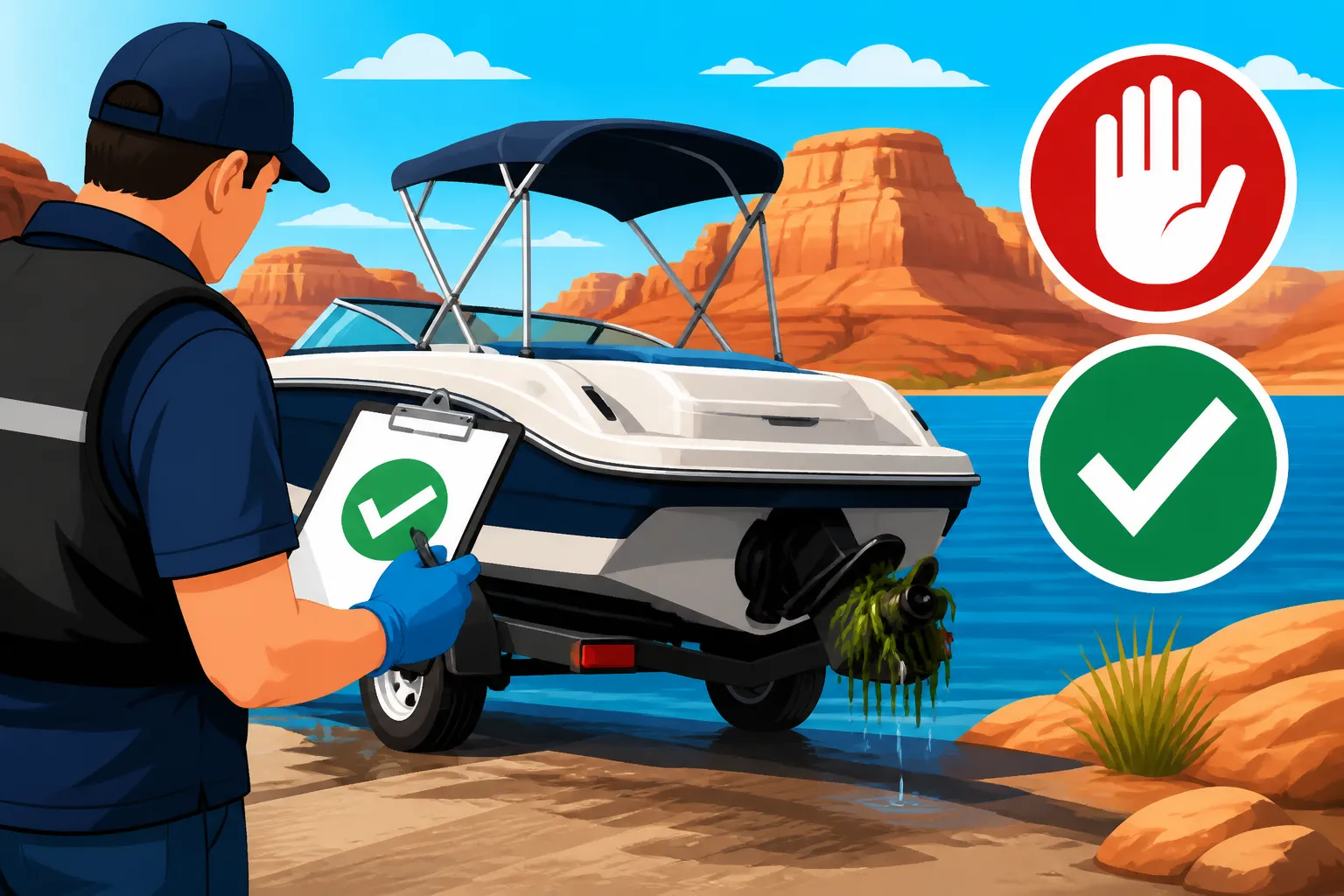
- Visual Inspection: Officers will conduct a thorough visual check of your boat, looking for any signs of mussels attached to the hull, transom, engine, outdrive, and any other exposed surfaces. They'll also check your anchor, lines, and any fishing gear that might have contacted the water.
- Drainage Check: They'll confirm that all drain plugs are removed and that all water has been drained from your bilge, live wells, ballast tanks, and any other water-holding compartments. This is a crucial step as even a small amount of standing water can harbor veligers.
- Questioning: You'll be asked about your time on Lake Powell, how long your boat was in the water, and where you plan to launch next. These questions help the inspectors assess the risk level and determine if a decontamination is necessary.
- Seal Application (if applicable): In some cases, if your boat meets certain dry time criteria and isn't heading to another water immediately, the inspector might place a seal on your boat to indicate it has been inspected and to deter re-launching without proper clearance. However, for Lake Powell, due to the infestation, seals are often part of a more extensive decontamination protocol rather than a standalone pass.
The primary goal is to ensure that no quagga mussels or their larvae hitch a ride on your boat to another, uninfested lake. These inspections are not designed to be inconvenient but to serve as a vital checkpoint in the ongoing battle against invasive species.
Navigating the Inspection Process and What to Expect
Knowing the rules is one thing, but actually navigating the process after a long weekend on Lake Powell can still feel a bit daunting. Planning ahead can make all the difference, transforming a potential hassle into a quick, routine stop.
Locating Inspection Stations and Operating Hours
Inspection stations are strategically located at all major exit points from Lake Powell. For instance, if you're leaving the Wahweap or Antelope Point areas near Page, Arizona, you'll typically encounter inspection stations on highways leading away from the lake. Similarly, if you're departing from Bullfrog or Halls Crossing, there will be stations on the roads you take. It's vital to remember that these aren't always open 24/7. Their operating hours can vary by season, day of the week, and staffing levels.
Before you even launch at Lake Powell, it's a really smart idea to check the current operating schedules for the inspection stations you plan to use. You can often find this information on the Utah Division of Wildlife Resources (UDWR) website or the National Park Service Glen Canyon National Recreation Area website. Missing an open inspection station can lead to significant delays and potential legal issues down the road. You can also find a general list of Utah Aquatic Invasive Species Inspection Station Locations across the state, but always confirm for Lake Powell specifically.
Here's a simplified overview of what to expect based on your destination:
| Destination for Your Boat After Lake Powell | Inspection Requirement | Potential Outcome at Station |
|---|---|---|
| Any other Utah waterbody | Mandatory inspection & decontamination if deemed necessary by inspector, regardless of dry time. You must stop. | If mussels are found or dry time is insufficient for your next launch, a hot water decontamination will be performed. Boat may be tagged and sealed. |
| Out-of-state waterbody | Mandatory inspection upon exiting Glen Canyon NRA. While Utah can't force decontamination for out-of-state travel, passing through an inspection station is still required, and decontamination may be strongly advised or required by your destination state's regulations. | Inspection will be performed. If mussels are present, a decontamination will be offered/recommended. Be prepared for regulations in your next state. |
| Long-term storage/winterization | Mandatory inspection upon exiting Glen Canyon NRA. The inspector will ensure the boat is clean, drained, and dry for storage. Decontamination may be required if mussels are found, but likely less stringent "dry time" requirements if not re-launching soon. | Inspector will verify proper "Pull, Drain, Dry" practices. Decontamination might be necessary if mussels are present. No seal or dry time protocols needed if boat is going into indefinite storage. |
Decontamination: When It's Necessary and What It Entails
If, during your inspection, live quagga mussels or viable veligers are found, or if your boat hasn't met the required dry time (especially if you're heading to another waterbody within a short window), a full decontamination will be necessary. This isn't just a rinse-off; it's a professional service designed to kill and remove any invasive species.
- Hot Water Pressure Wash: The most common method involves a high-pressure wash with very hot water (typically 120-140 degrees Fahrenheit or hotter, depending on the boat material and specific needs). This hot water effectively kills mussels and veligers, even those hidden in crevices or internal systems. The boat's hull, engine, bilge, and all water-holding compartments are thoroughly flushed and cleaned.
- Chemical Flush (less common for recreational boats): In some specialized cases, or for certain internal systems, a chemical flush might be used, though this is less common for standard recreational boat decontaminations at public stations.
- Why the Hot Water? The extreme heat is critical because it denatures proteins in the mussels and veligers, effectively killing them. Simple drying might not kill all organisms, especially if they are in standing water or damp areas.
- Cost: Generally, if a decontamination is performed at an authorized UDWR or National Park Service inspection station, the service is provided free of charge to the boater. The state and federal agencies absorb these costs as part of their AIS prevention efforts. However, if you opt for a private decontamination service (which might be an option if stations are closed or you need a quicker turnaround), you would incur a fee. Our article on Utah Quagga Mussel Decontamination Cost provides more context on this.
- Time Involved: A decontamination can take anywhere from 30 minutes to several hours, depending on the size and complexity of your boat and the extent of the infestation. Factor this time into your travel plans, especially if you have a tight schedule. It's a small price to pay to protect our environment.
Avoiding Penalties and Ensuring Compliance
Nobody wants to deal with fines or legal trouble after a relaxing trip. Understanding the rules and taking proactive steps can ensure a smooth and compliant departure from Lake Powell.
Penalties for Non-Compliance
Let's be blunt: attempting to bypass a mandatory inspection or launching an uninspected, contaminated boat into another waterbody in Utah carries serious consequences. The state views AIS violations as a significant threat to its natural resources, and penalties reflect that. If you're caught fishing without a license, for example, there are fines, but failing to comply with AIS rules can be far more severe.
- Fines: Monetary fines can range from hundreds to thousands of dollars, depending on the severity of the violation and whether it's a first offense or repeat infraction. These aren't just minor tickets; they can be substantial.
- Impoundment: Your boat or watercraft could be impounded, meaning it's seized by law enforcement until the issue is resolved and fines are paid. This adds significant cost and logistical headaches.
- Misdemeanor Charges: In some cases, violations can lead to misdemeanor charges, potentially resulting in court appearances, further fines, and even jail time for severe or repeat offenses.
- Criminal Record: A conviction for an AIS violation could result in a criminal record, which can impact future employment, travel, and other aspects of your life.
It's clear that the state is not messing around. These penalties underscore the critical importance of Utah's AIS program. You can learn more about general consequences in our Utah Fishing License Penalties for Violations guide, many of which can apply to AIS violations as well.
Best Practices for Anglers Leaving Lake Powell
To make your departure from Lake Powell as easy as possible and ensure you're fully compliant, here are some best practices to follow:
- Clean Your Boat While Still Wet: Before you even pull your boat out of the water, take a moment to clean off any visible mud, plants, or debris. This is much easier when everything is still wet. A simple scrub brush and bucket can be found at local marinas or sporting goods stores like those found on Amazon.
- Pull Your Drain Plugs IMMEDIATELY: As soon as your boat is out of the water and on the trailer, pull all drain plugs. This includes the main bilge plug, live well plugs, and any ballast tank plugs. Let all water drain out. Remember, it's illegal to transport a boat with drain plugs in while on a public highway in Utah.
- Inspect All Gear: Don't forget your fishing poles, nets, anchors, ropes, and anything else that went into the water. Visually inspect them for any clinging vegetation or organisms.
- Dry, Dry, Dry (as much as possible): While inspections are mandatory, starting the drying process early is always a good idea. Open all compartments, prop up cushions, and let the air circulate. This can reduce the time needed at an inspection station if any residual drying is required.
- Know Your Next Destination: Be prepared to tell the inspector where you're headed next. If it's another waterbody, they'll want to ensure all necessary steps have been taken to prevent spread.
- Locate Inspection Stations: Know where the inspection stations are and their operating hours before you leave. Factor this stop into your travel time.
- Be Patient and Cooperative: The inspectors are doing a vital job. Be polite, answer their questions truthfully, and cooperate fully with the inspection process. Their goal is to protect Utah's waters, not to ruin your day.
- Understand Dry Time Rules: While not a substitute for inspection, understanding the recommended Utah Dry Time Rules After Leaving Lake Powell for different types of watercraft can help you prepare mentally for what an inspector might ask or recommend. The longer your boat can dry, the better, even if a physical inspection is still required.
By adopting these practices, you're not just avoiding penalties; you're becoming a responsible steward of Utah's incredible aquatic resources. Ensuring your boat is clean, drained, and dry, and passing through the required inspection, is a small but powerful way to help preserve the fishing and boating experiences for generations to come. This also aligns with broader Utah Boating and Fishing Rules aimed at conservation.
Disclaimer
The information provided in this guide is for general informational purposes only and is subject to change. While we strive to provide accurate and up-to-date information, fishing regulations and aquatic invasive species protocols can be updated by the Utah Division of Wildlife Resources (UDWR) and other governing agencies. Always consult the official Utah Fishing Guidebook, the UDWR website, or directly contact the UDWR for the most current and specific regulations before planning your fishing trip or departing from any waterbody, especially Lake Powell.