How to Set the Hook on a Soft Bite From Trout
There’s nothing quite as frustrating as feeling that subtle, almost imperceptible "tick" on your line, wondering if it was a fish or just a snag, only to reel in an empty hook. Those soft bites from trout can be incredibly elusive, leaving many anglers scratching their heads and missing out on potential catches. This comprehensive guide will help you understand why trout often bite so gently and, more importantly, teach you the nuanced techniques to detect those whispers and set your hook effectively, turning those "maybes" into landed fish.
Understanding the Elusive Soft Trout Bite: Why It Happens
Trout are fascinating creatures, and their feeding habits are influenced by a myriad of factors. Unlike some more aggressive fish species, trout often exhibit a cautious, almost shy approach to taking a bait or lure, leading to what we anglers commonly refer to as a "soft bite." Understanding the underlying reasons for this behavior is the first step in learning how to overcome it.
The Trout's Cautious Nature and Mouth Anatomy
Imagine yourself in a crystal-clear mountain stream, like a section of the Green River below Flaming Gorge Dam, or a serene, high-altitude lake in the Uinta Mountains. In these environments, trout are often on high alert, constantly wary of predators. Their survival instincts tell them to be cautious. When they approach a potential meal, they might "test" it, nibble at it, or mouth it gently before fully committing. This is especially true for larger, more experienced trout that have learned to avoid danger. You'll rarely get an aggressive smash-and-grab from a wary old brown trout.
Furthermore, the anatomy of a trout's mouth plays a significant role. Trout generally have relatively small, soft mouths compared to, say, a largemouth bass or a northern pike. When they take bait or a fly, they might suck it in rather than strike it hard. A smaller trout, in particular, will have an even more delicate take, making it feel like nothing more than a faint twitch. Recognizing the difference between a smaller fish's natural nibble and a more confident, albeit still subtle, take from a larger trout often comes with experience. Knowing your target species, such as identifying a Bonneville Cutthroat Trout, can also inform your expectations for bite aggressiveness.
Environmental Factors and Presentation Style
The environment where you're fishing can dramatically affect how a trout bites. Cold water, common in Utah's reservoirs during early spring or late fall, or certainly when ice fishing at Strawberry Reservoir, significantly slows down a trout's metabolism. They become sluggish and less inclined to expend a lot of energy on a powerful strike. Instead, they might casually suck in an offering, leading to an incredibly soft bite. During these colder periods, patience becomes your greatest virtue.
Similarly, fishing pressure can turn even naturally aggressive trout into finicky eaters. Waters that see a lot of angler activity, such as many of the community ponds or easily accessible spots near Salt Lake City, often hold trout that have learned to be exceptionally wary. They've seen countless lures and baits, felt hooks, and become experts at discerning what's safe and what isn't. Your presentation style also contributes. If you're using light lines, small baits, or meticulously presenting a fly with a slow, natural drift, the trout's take will often mirror that subtlety. Sometimes, the soft bite is simply a reflection of the natural and delicate way you've offered your bait.
Detecting the Whisper: Reading Subtle Indications of a Bite
So, how do you pick up on these almost imperceptible bites? It truly becomes an exercise in heightened senses and intuition. It's about tuning out distractions and focusing intently on the signals your line, rod, and indicators are sending you. It requires patience and a keen eye, transforming fishing from a passive waiting game into an active observation.
The Zen of Line Watching: Your Primary Indicator
For many anglers, especially those using spinning gear or casting lures, watching your line is arguably the most crucial method for detecting soft bites. It's an art form, really, and it often provides the first, earliest indication that a trout is interested. You're not looking for a dramatic pull that screams "fish on!" Instead, you're looking for anomalies.
Keep your eyes glued to where your line enters the water, or even the section of line just above the surface. What are you looking for? A slight twitch, a sudden bit of slack when there shouldn't be, a subtle pause in its natural drift, or the line slowly moving sideways against the current or wind. It's often so faint that a momentary lapse in concentration can cause you to miss it entirely. Think of it like watching a spider's web for the smallest tremor – any unnatural movement is a clue. This technique is particularly effective with sensitive fishing line for Utah trout. High-visibility monofilament or braided lines can make these subtle movements easier to spot, especially in varying light conditions. Wearing a good pair of polarized sunglasses can also cut through glare and significantly enhance your ability to see what your line is doing under the surface.
Feeling the Faint Tap: Rod Sensitivity and Grip
Your fishing rod isn't just a tool for casting; it's an extension of your sensory system. The right rod, combined with a sensitive grip, can transmit even the faintest of bites directly to your hand. To maximize this, hold your rod lightly but firmly, allowing vibrations to travel up the blank. Avoid a death grip, which can dampen sensitivity.
When a trout takes your offering softly, it might feel like a barely-there "tick" or a subtle "tap." Sometimes, it's not even a tap, but rather a sudden, spongy resistance that wasn't there a moment before. Experienced anglers describe it as feeling a "tiny electric current" or a "mosquito landing on your line." The key is to distinguish these subtle feelings from the natural bumps and scrapes of your bait or lure on the bottom or against structure. Rods with a fast action and sensitive graphite tips are excellent for this, as they transmit vibrations more effectively than slower, more parabolic rods. If you're looking to upgrade, our guide on the Best Fishing Rods for Utah Anglers offers some great options for maximizing sensitivity.
Bobber and Indicator Signals: More Than Just a Dunk
For those fishing with a bobber or a fly fishing indicator, a soft trout bite isn't always the dramatic, instantaneous dunk that every angler dreams of. Often, it's far more nuanced. Instead of a full submergence, your bobber might simply pause its drift for a second, wobble slightly, lie flat on the water's surface, or even just slowly drag under. These minute changes in behavior are screaming "fish!" if you know how to interpret them.
Think about fishing a small pond with PowerBait. A trout might mouth the bait, causing the bobber to dip just an inch or two and then pop back up. That's your cue! For fly anglers, especially when nymphing, the indicator is everything. A slight hesitation, an unnatural acceleration, or a tiny twitch of your yarn or foam indicator could signal a trout inhaling your fly. It's not always a violent pull; sometimes, it's the most subtle deviation from the natural current that tips you off. Developing your ability to read these subtle cues is paramount for success, especially in clear, pressured waters where trout are extra wary.
The Art of the Gentle Strike: Setting the Hook on Soft Bites
Once you've detected that elusive soft bite, the next critical step is to set the hook effectively without ripping the bait away from the trout's mouth. This often requires a different approach than the aggressive "power strike" you might use for other species. It's a finesse game, a dance of timing and delicate pressure.
The "Sweep" vs. the "Jerk": Timing and Motion
When you feel a soft bite, your natural instinct might be to react with an immediate, hard jerk of the rod. Resist this urge! A violent jerk is often too quick; it can pull the bait or lure right out of a trout's mouth before they've had a chance to fully take it. Trout, especially smaller ones, can be surprisingly adept at spitting out a foreign object.
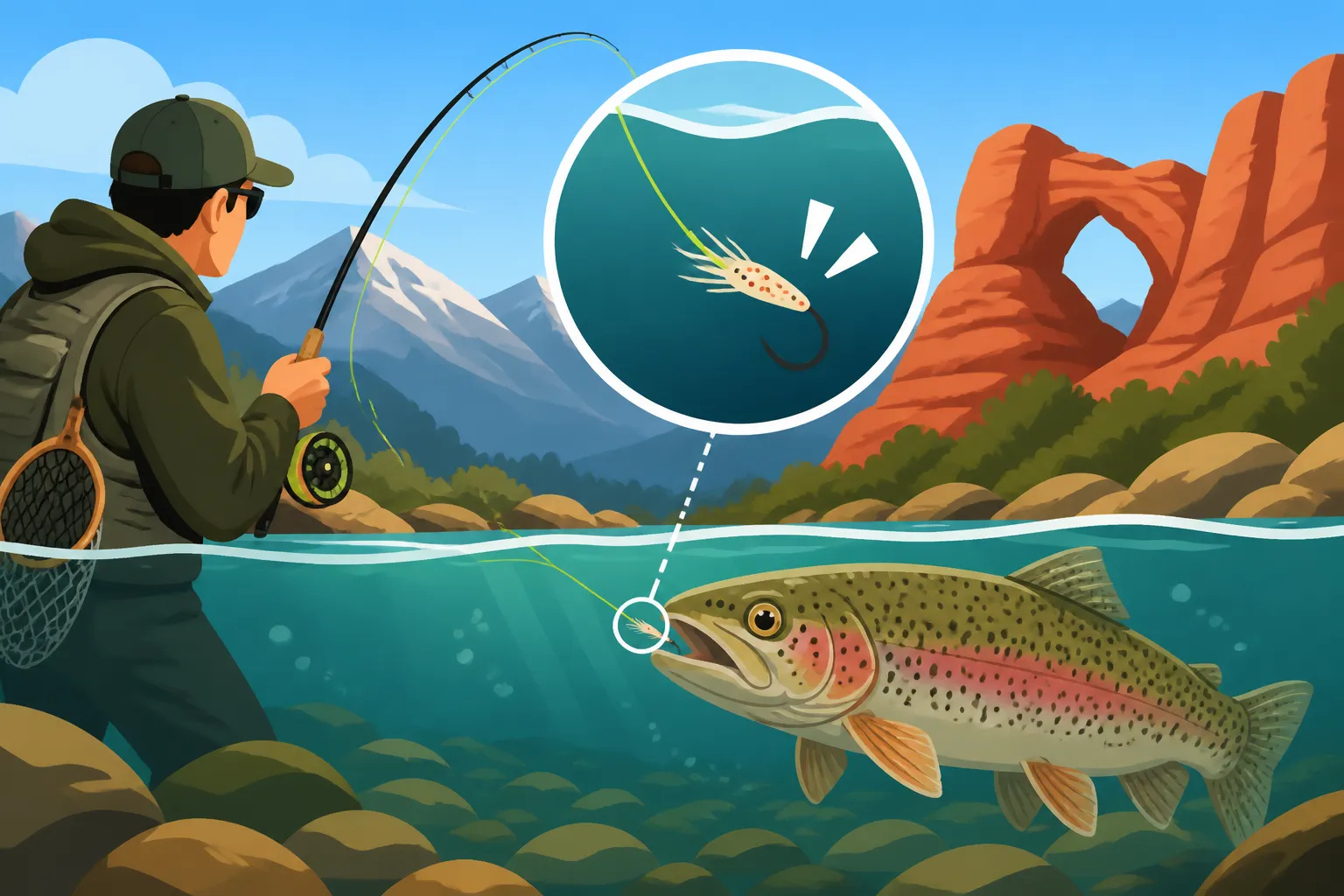
Instead of a harsh jerk, master the "sweep." This involves a smooth, controlled, upward and slightly sideways motion of your rod, starting from a low position (often with the rod tip near the water) and ending in an overhead arc. The sweep allows the trout a fraction more time to ingest the bait, and the continuous motion helps the hook slide smoothly into the corner of its mouth. Think of it less as a strike and more as gradually applying pressure until the hook finds purchase. You want to feel sustained, consistent pressure before completing your sweep. Sometimes, after a faint tap, giving the trout a one- or two-second "count" before gently sweeping can dramatically increase your hook-up ratio. It allows them that extra moment to commit.
Keeping Tension: The Foundation of a Successful Set
Maintaining consistent, light tension on your line is absolutely fundamental when dealing with soft trout bites. Too much slack, and you lose all connection to what the fish is doing. You won't feel the bite, and even if you see your line move, you won't be able to generate enough force for a hook set. Imagine trying to push a string – it's impossible. A slack line is a lost opportunity.
On the other hand, too much tension can also be detrimental. If your line is taut as a banjo string, a cautious trout might feel the resistance and immediately drop the bait. The goal is a delicate balance: just enough tension to feel the subtle nudges and movements, but not so much that you spook the fish. This often means holding your rod tip relatively low, perhaps pointed towards the water, and reeling in any excess slack without moving your bait. This slight arc in your line gives you a buffer to both detect the bite and then efficiently execute your sweep. When the bite comes, that sustained tension helps you know it's time to set.
Specific Scenarios: Bait, Lures, and Flies
The ideal hook set can vary slightly depending on your chosen fishing method. Each approach presents unique challenges and opportunities for detecting those soft bites.
When bait fishing with something like PowerBait, worms, or corn, trout often "mouth" the offering for a moment before fully swallowing it. This is where patience truly pays off. If you feel a light tap or see your line twitch, don't set immediately. Give the trout a moment to actually take the bait deeper into its mouth. Sometimes, a slow, gentle pull is the best indicator the fish has it. Then, initiate your smooth, upward sweep. This patient approach is especially effective when using smaller hooks, like those recommended in our guide on What Size Hook Should You Use for Utah Stocked Trout?.
For lure fishing with jigs, spinners, or spoons, a soft bite can sometimes feel like you've bumped a rock or snagged a weed. This is where your sensitivity and intuition become paramount. If you feel anything out of the ordinary—a sudden pause in the lure's vibration, a light tick, or unusual resistance—hesitate for a split second to confirm, then deliver a quick, firm, but controlled sweep of the rod. Our guide on How to Rig a Jig for Utah Trout provides more details on effective jigging techniques for trout, which are often prone to soft bites.
Fly fishing, particularly with nymphs or dries, relies heavily on indicator watching or feeling the subtle "take." For nymphing, any unnatural movement of your indicator—a hesitation, a drag, or a slight dip—is your cue. Raise your rod tip smoothly and firmly to set the hook. With dry flies, a trout might just sip the fly gently, leaving a faint ripple rather than a splashy rise. Again, a gentle, upward lift of the rod is usually all that's needed to secure the hook. Our comprehensive Utah Fly Fishing Guide delves deeper into these nuanced techniques.
Fine-Tuning Your Approach: Gear and Technique Adjustments
Sometimes, the difference between hooking a soft biter and missing it entirely comes down to refining your gear and developing an instinctive feel for the subtle indications. A few strategic adjustments can significantly improve your success rate on Utah's trout waters.
Optimizing Your Rod and Line for Sensitivity
Choosing the right rod is paramount for feeling those light bites. For trout, especially when targeting those notorious soft biters, you want a rod that acts like an antenna. Look for medium-light to light action spinning rods, ideally made of graphite or a graphite composite. Graphite excels at transmitting even the faintest vibrations from your line to your hand. A fast action tip will be particularly sensitive, flexing easily at the slightest touch, while the stronger backbone of the rod provides the power needed for a solid hook set. Investing in a good quality rod can be a game-changer; our article on the Best Fishing Rods for Utah Anglers has some excellent recommendations tailored for Utah conditions.
Your fishing line is the direct link to the fish, and its properties greatly influence your ability to detect soft bites. Consider using a high-quality monofilament line for its stretch, which can act as a shock absorber for light takes, or a braided line for its unparalleled sensitivity and lack of stretch. Many anglers opt for a braided main line with a fluorocarbon leader. Braid provides instant feedback on the lightest tap, while fluorocarbon is nearly invisible underwater, crucial for wary trout, and its low stretch helps transmit bites. Keeping your line clean and free of twists also ensures maximum sensitivity. For more in-depth advice, check out our guide on the Best Fishing Line for Utah Trout.
Hook Selection and Sharpening: It's All in the Point
This might sound obvious, but a sharp hook is absolutely critical for setting the hook on a soft bite. A dull hook will simply slide out of a trout's mouth, or fail to penetrate the cartilage, leading to frustrating misses. Before every fishing trip, and even periodically throughout the day, check your hooks for sharpness. You can do this by lightly dragging the point across your thumbnail; if it bites into the nail, it's sharp. If it slides, it's dull and needs sharpening.
You can find excellent hook sharpeners on Amazon or at any local tackle shop. Carrying a small, reliable sharpener is a habit every serious trout angler should cultivate. Beyond sharpness, consider your hook size. For soft-biting trout, especially when using small baits or delicate presentations, smaller hooks are generally more effective. They are easier for the trout to ingest fully, increasing the chances of a good hook set. Additionally, for bait fishing, circle hooks can be a fantastic option. When a fish takes the bait and turns, a circle hook is designed to rotate and lodge itself in the corner of the mouth, often resulting in a self-setting action and reducing the likelihood of gut-hooking.
Practice Makes Perfect: Developing Your Intuition
Ultimately, the ability to consistently detect and set the hook on soft trout bites is a skill developed through practice and experience. The more time you spend on the water, the more attuned you'll become to the subtle differences between a fish biting and environmental factors like current, wind, or your bait bumping the bottom. There's no substitute for time spent fishing, whether you're exploring the Provo River for brown trout or seeking out the Best Fishing Spots for Beginners in Utah.
Don't be afraid to experiment. Try different retrieves, vary your rod tip position, and pay close attention to what each "feel" on your line corresponds to. You'll make mistakes; you'll strike too early, or too late, or miss a bite entirely. That's part of the learning process. The best advice is to err on the side of caution: if you suspect it might be a bite, give it a gentle sweep. The worst that happens is you pull your bait back and re-cast. Over time, you'll develop an intuitive sense, almost a sixth sense, that tells you exactly when to respond to those subtle whispers from the depths.
| Bite Type / Indication | Detection Method | Hook Set Technique | Notes |
|---|---|---|---|
| Faint Line Twitch/Pause | Visual (line watching) | Gentle, upward sweep | Don't yank; let the fish turn. |
| Subtle Rod Tip Tap | Feel (rod sensitivity) | Quick, firm sweep | Follow through, maintain tension. |
| Bobber Dip/Drift | Visual (indicator watching) | Smooth, deliberate lift | Give a second for the fish to commit. |
| Spongy Resistance | Feel (constant tension) | Sustained, upward pressure | Ensure the hook is buried. |
Disclaimer
This article is for general informational purposes only and does not constitute professional advice. Laws, prices and regulations vary by location and change over time. Consult a qualified professional for guidance on your specific situation.