What Documents Prove a Service-Connected Disability for a Utah Veteran License?
Trying to navigate the paperwork required to prove a service-connected disability for a Utah veteran fishing license can feel like an uphill battle, especially when you've already given so much for our country. It's frustrating to know there are benefits available but then face a mountain of bureaucracy just to access them. This comprehensive guide is here to cut through that confusion, clearly outlining the exact documents and processes you'll need to successfully secure your discounted Utah fishing license.
Understanding Utah's Veteran Fishing License Benefits
Utah truly values its veterans, and offering a special fishing license for those with service-connected disabilities is one tangible way the state expresses that gratitude. This isn't just about a small discount; it's about making outdoor recreation more accessible and acknowledging the sacrifices made by our servicemen and women. Many veterans find solace and healing in the quiet beauty of Utah's waters, and this license helps ensure that opportunity is within reach.
Who Qualifies for the Disabled Veteran License
To be eligible for Utah's disabled veteran fishing license, the Utah Division of Wildlife Resources (UDWR) has specific criteria. First and foremost, you must be a resident of Utah. This is a critical distinction, as the program is primarily designed to benefit those who call our beautiful state home. Beyond residency, the key requirement revolves around your disability status: you must have a service-connected disability rating of at least 20% as determined by the U.S. Department of Veterans Affairs (VA). This isn't just any disability; it must be a direct result of your military service. The percentage is important, as a lower rating, unfortunately, doesn't qualify for this specific benefit, even if it's service-connected. Understanding these initial hurdles can save a lot of time and potential heartache later in the application process. For a broader look at who might qualify for various reductions, check out our guide on Utah Fishing License Exemptions and Discounts.
The Specific Advantages of This License
The most immediate and obvious advantage of securing this license is the significant cost reduction. A full-price annual fishing license in Utah can be a meaningful expense, particularly for those on a fixed income or with tight budgets. The disabled veteran license slashes this cost dramatically, often to a nominal fee or even free in some cases, depending on specific legislative changes and the individual's disability rating. This financial relief means more money in your pocket, which you can then put towards essential fishing gear, like a new rod, reel, or even a good pair of waders. Beyond the financial aspect, there's a profound sense of recognition and respect that comes with carrying this license. It’s a small but meaningful way the state acknowledges your service and sacrifice, enabling you to enjoy the tranquility and challenge of fishing across Utah's diverse waters, from the high Uinta Lakes to the warm waters of Utah Lake. This benefit is a cornerstone of the state's support for veterans, making it easier to enjoy one of Utah's most cherished pastimes. You can find more details about the general costs in our article on Utah Resident Fishing License Cost.
Essential Documents for Proving Service-Connected Disability
This is where many veterans can get tripped up, and it’s completely understandable. Government documentation can be confusing, and you want to make sure you have exactly what's needed to avoid delays. The Utah DWR is quite clear on what they accept, and having the right paperwork from the outset is crucial for a smooth application.
Official VA Documentation
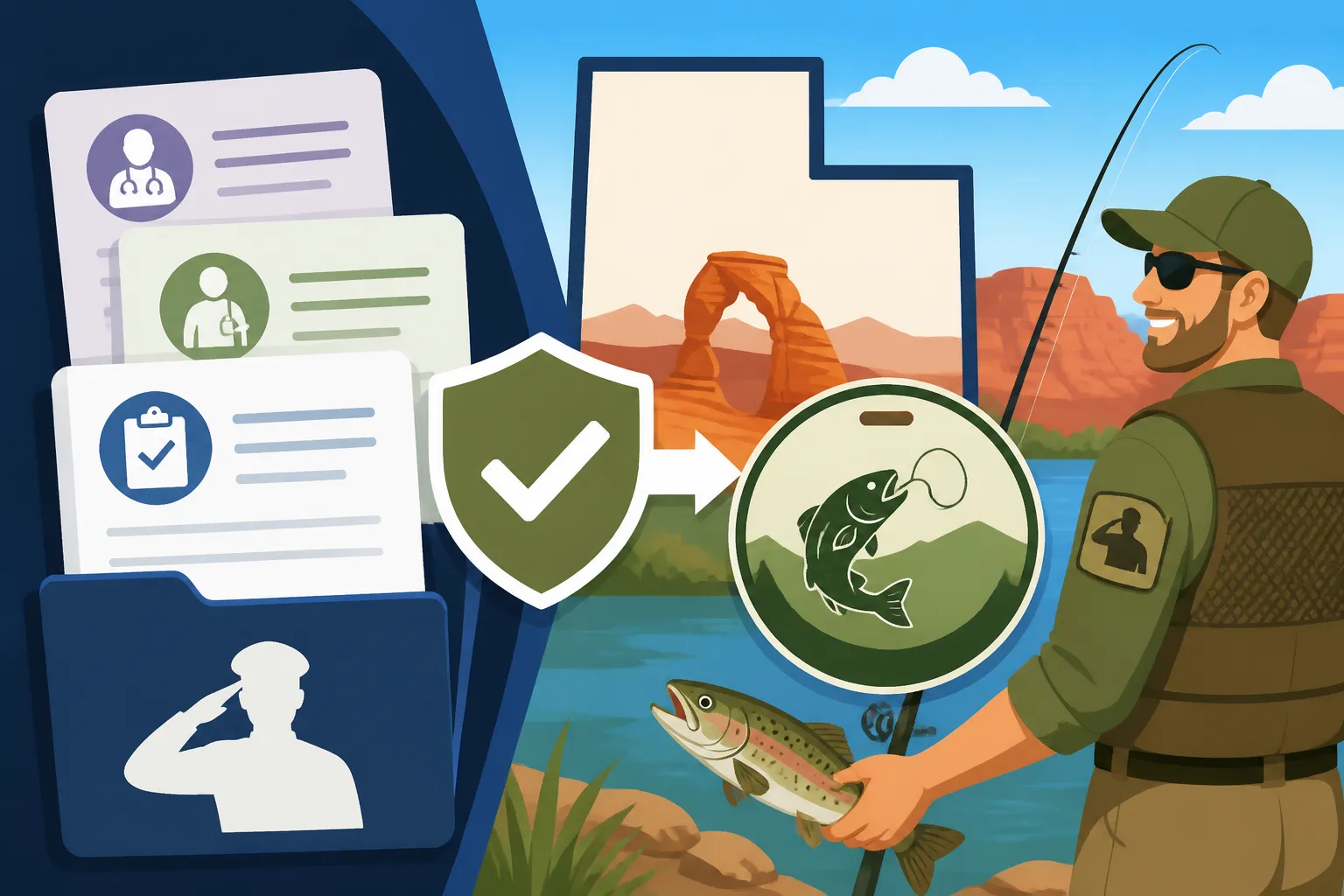
The gold standard for proving your service-connected disability is an official letter or document from the U.S. Department of Veterans Affairs (VA). This isn't just any piece of mail from the VA; it specifically needs to state your service-connected disability rating and the percentage of that rating. This document, often referred to as a "VA award letter" or "disability compensation letter," is what the UDWR will rely on. It typically includes:
- Your Name and VA File Number: Essential for identification.
- Effective Date of Your Disability: Shows when the disability status began.
- The Specific Disability/Disabilities: Lists the conditions for which you are compensated.
- Your Overall Combined Service-Connected Disability Percentage: This is the most critical piece of information. Remember, Utah requires at least 20% to qualify for the special fishing license.
When you're submitting this, make sure it's a clear, legible copy. Whether you're applying in person or submitting electronically, the clarity of this document is paramount. Think of it as your official badge of eligibility. If you've been managing your VA benefits online, you can often download these letters directly from the VA.gov website, ensuring you have the most current version. Always double-check that the percentage is clearly visible.
Other Acceptable Forms of Proof
While the official VA award letter is by far the preferred and most straightforward method, sometimes veterans might have alternative documentation or need supplemental proof. The Utah DWR primarily focuses on that direct VA letter, but in certain unique circumstances, other forms might be considered on a case-by-case basis. These could include:
- A "Summary of Benefits" Letter: This might be obtained from your local VA office or through the VA's eBenefits portal. While it might not be as detailed as a full award letter, it often contains the necessary disability percentage.
- Official Military Medical Records: In very rare instances, if a VA letter isn't immediately available and a temporary solution is needed, detailed military medical records explicitly linking a condition to service and indicating a disability rating might be reviewed. However, this is significantly more complex and usually requires direct consultation with the UDWR or a VA representative to ensure it meets their specific criteria. It's not the usual path, and generally, the UDWR will direct you back to getting the official VA letter.
It's always best to prepare the primary VA award letter. If you have any doubts, calling your local Utah DWR office or the main DWR customer service line before you apply can save you a lot of hassle. They can clarify exactly what they need based on your specific situation. Don't be afraid to ask questions; they're there to help you.
What the VA Rating Means
For those unfamiliar with the Veterans Affairs disability rating system, it can seem a bit opaque. Essentially, your VA disability rating is a percentage that reflects the severity of your service-connected conditions and how they impact your overall health and ability to function in civilian life. This percentage isn't just a number; it directly correlates to the level of benefits you receive from the VA, including monthly compensation.
When the Utah DWR specifies a "20% service-connected disability" as the threshold for the veteran fishing license, they are directly referencing this VA-determined percentage. This means that if your combined service-connected disability rating from the VA is, for example, 10% or 15%, you unfortunately won't meet the eligibility requirement for this specific license, even though you have a service-connected disability. The higher the percentage, the more severe the VA recognizes the impact of your service-connected conditions. It's a system designed to quantify the effect of military service on a veteran's health, and in this case, it's used as the benchmark for a state benefit.
The Application Process and What to Expect
Once you've gathered all your essential documentation, the next step is the actual application. This process has been streamlined over the years to make it as accessible as possible for veterans. However, knowing the various channels for submission and potential snags can make a world of difference.
Where to Submit Your Documentation
Utah provides several convenient ways to apply for or renew your fishing license, including special veteran licenses. The most common methods are:
- Online: This is often the quickest and easiest method for many. The Utah Division of Wildlife Resources (DWR) website offers a portal where you can purchase licenses. For a disabled veteran license, you'll likely need to upload a digital copy of your VA disability letter during the application process or have it on file with the DWR from a previous application. The DWR has made significant strides in their digital services, allowing for a much smoother experience. Detailed instructions for this can be found in our guide on the Utah Fishing License Online Purchase Process.
- In-Person at a DWR Office or License Agent: If you prefer a face-to-face interaction or need immediate assistance, you can visit any DWR office or one of their many authorized license agents located across the state. This is particularly helpful if you have questions about your documents or need clarification. Bringing your physical VA letter, along with proof of Utah residency (like a driver's license), will ensure a smooth transaction. You can find locations to purchase your license in person by looking at our article on Where to Buy a Utah Fishing License in Person.
- By Mail: For those who prefer traditional mail, you can often download the application form from the DWR website, fill it out, attach a copy of your VA disability letter, and mail it in. Be sure to use certified mail for important documents to ensure delivery confirmation. While this method can take longer, it's a reliable option for those without easy access to online services or physical locations.
No matter which method you choose, having your documents ready and knowing the requirements beforehand will significantly expedite the process.
Common Pitfalls and How to Avoid Them
Even with all the right information, things can sometimes go awry. Here are some common issues veterans encounter when applying for their fishing license and how to steer clear of them:
- Outdated VA Letter: Your disability rating typically doesn't change, but sometimes the date on your letter can be old. While the DWR isn't looking for a brand-new letter every year, having one that is reasonably current (within the last few years) can prevent questions. If your old letter is faded or hard to read, get a new one from the VA.
- Incomplete Information: Make sure every field on the application form is filled out accurately. A missing signature, address, or phone number can lead to delays.
- Incorrect Disability Percentage: As mentioned, the 20% threshold is firm. Double-check your VA letter to ensure your combined service-connected disability meets or exceeds this.
- Residency Issues: This license is for Utah residents. If your ID or other documents don't clearly establish your Utah residency, you might face questions. Ensure your Utah driver's license or state ID is up-to-date.
- Lack of Clarity in Documents: If your scanned or copied VA letter is blurry, too dark, or too light, the DWR might not be able to verify the crucial information. Make sure copies are clear and easy to read. Investing in a decent home scanner, or using a service that scans documents, can be really helpful. A portable document scanner available on Amazon can be a great tool for keeping clear digital records of important paperwork.
By being meticulous and double-checking everything before submission, you can significantly reduce the chances of a hiccup and get your license faster. Remember, the DWR staff want to help you, but they can only process applications that meet all the stated requirements.
Ensuring Your Documentation is Always Ready
Life happens, and sometimes paperwork gets misplaced or damaged. For veterans, keeping essential documents organized and accessible isn't just good practice; it's a way to ensure continued access to benefits like your fishing license without unnecessary stress.
Keeping Digital and Physical Copies
In today's world, having both digital and physical copies of your important VA documents is a smart move.
- Digital Copies: Scan your official VA award letter (and any other pertinent disability documents) and save them in a secure, easily accessible location. This could be on a cloud storage service (like Google Drive or Dropbox, secured with strong passwords), an external hard drive, or even a secure USB drive. Having digital copies means you can quickly email them if needed for online applications or print new physical copies if your originals are lost. I personally keep a dedicated folder on my computer for all important documents, and it's backed up regularly. You might even find some robust document management software on Amazon that helps organize and secure your digital files.
- Physical Copies: Keep your original VA letter in a safe place, like a fireproof box or a secure filing cabinet. Additionally, it's wise to have a working copy in a binder or folder that you can easily grab when heading to a DWR office or for other administrative tasks. Having a dedicated binder, perhaps one you pick up from Amazon, specifically for veteran benefits paperwork can be incredibly useful. Make sure these copies are clear and legible.
The goal here is redundancy and ease of access. You don't want to be scrambling to find a crucial document when you're ready to hit the water. This also applies to things like your Utah Fishing License Renewal Guide, ensuring you know when to get new paperwork submitted.
Understanding Renewal Requirements
A common question is whether you need to re-submit your disability documentation every time you renew your fishing license. Generally, once the Utah DWR has verified your service-connected disability status and percentage, it's typically recorded in their system. This often means that for subsequent annual renewals of the same type of license, you might not need to submit the VA letter again, assuming your residency status hasn't changed.
However, it's always prudent to be prepared. If there's a significant lapse in your license purchases, or if DWR updates their system or policies, they might request re-verification. Also, if you move out of state and then return, your residency will need to be re-established, and they might ask for all documentation again. The best practice is to always have a copy of your VA letter readily available, even if you don't expect to need it. This ensures you're never caught off guard and can smoothly transition into another year of enjoying Utah's incredible fishing opportunities. Keeping abreast of any changes in the Utah Fishing License Age Requirements or other regulations is also a good habit.
Summary of Required Documentation for Utah Disabled Veteran Fishing License
To help you keep track, here's a quick overview of the key documents and criteria for securing your Utah Disabled Veteran Fishing License:
| Requirement | Essential Documentation | Key Details |
|---|---|---|
| Utah Residency | Valid Utah Driver's License or State ID | Must show current Utah address. |
| Service-Connected Disability Proof | Official VA Award Letter / Disability Compensation Letter | Must explicitly state service-connected disability and percentage. |
| Minimum Disability Rating | Stated within VA document | Must be 20% or higher combined service-connected disability. |
| Personal Identification | Driver's License, State ID, or other photo ID | To verify your identity. |
This table serves as a quick reference, but always remember to refer to the comprehensive details provided in this guide to fully understand each requirement.
Disclaimer
The information provided in this guide is intended for general informational purposes only and does not constitute legal advice. While we strive to provide accurate and up-to-date information, regulations regarding fishing licenses and veteran benefits are subject to change by the Utah Division of Wildlife Resources (DWR) and the U.S. Department of Veterans Affairs (VA). It is always recommended to directly consult the official Utah DWR website, contact their customer service, or reach out to a VA representative for the most current and specific requirements pertaining to your individual situation.