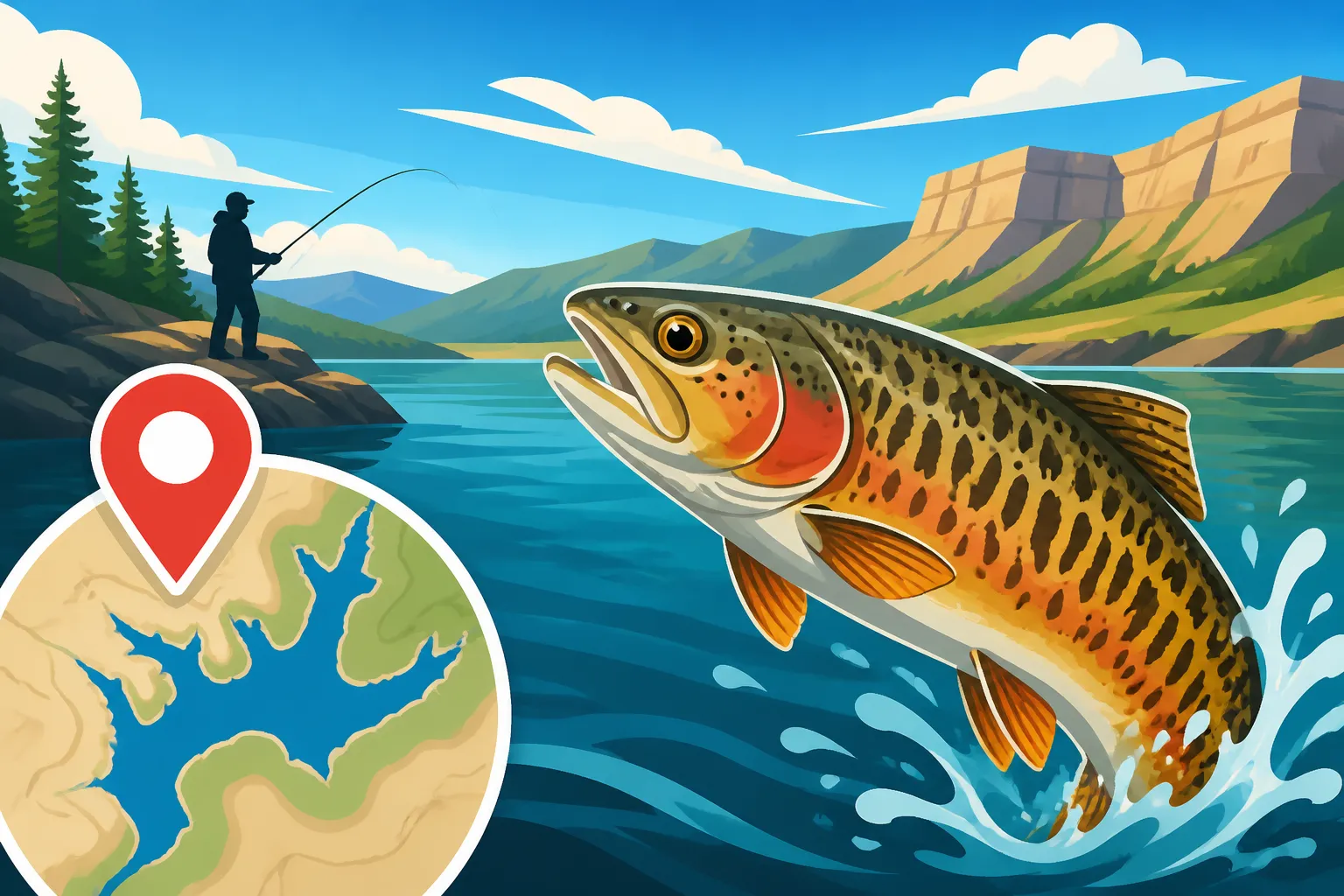
Where to Catch Tiger Trout at Scofield Reservoir
It’s a truly unique feeling to know a specific fish species, like the elusive tiger trout, calls a certain lake home, yet feel completely lost when you actually get there. Scofield Reservoir is notorious for its fantastic tiger trout, but trying to figure out exactly where to cast your line to find these beautiful, hard-fighting fish can be downright frustrating. This guide is here to cut through the guesswork, helping you pinpoint the best spots and strategies to land those distinctive tiger trout at Scofield.
The Allure of Scofield Reservoir's Tiger Trout
Scofield Reservoir, nestled high in the Wasatch Mountains of central Utah, is a jewel for anglers, particularly those chasing the distinctive tiger trout. These aren't your run-of-the-mill hatchery rainbows; tiger trout are a sterile hybrid of brown trout and brook trout, prized for their aggressive strikes, challenging fights, and striking vermiculated patterns. But what makes Scofield such a prime habitat for them, and why do they thrive here more than in other waters?
Understanding Scofield's Unique Ecosystem
Scofield Reservoir isn't just a pretty lake; its ecosystem is perfectly suited to support a healthy population of tiger trout. The reservoir is fed by several small mountain streams, providing a consistent influx of cold, oxygen-rich water that trout species absolutely adore. This steady supply of cool water, even during the warmer summer months, keeps the water temperatures within the ideal range for trout metabolism and comfort. Additionally, the reservoir's varied bottom structure, which includes submerged channels, rock piles, and weed beds, offers ample hiding spots and ambush points for predatory fish like the tiger trout. These elements combine to create a robust and dynamic environment where these hybrids can grow to impressive sizes, offering a truly rewarding angling experience.
Moreover, the forage base at Scofield is rich and diverse, contributing significantly to the health and growth of its trout populations. The reservoir is home to scuds, insect larvae, and smaller baitfish, providing a constant food source for tiger trout. This abundance of natural prey means the fish are well-fed, energetic, and often more aggressive when presented with an enticing lure or bait. Understanding these underlying ecological factors helps us appreciate why Scofield is such a hotspot and provides clues on where to focus our fishing efforts – essentially, where the food and comfortable temperatures converge.
Why Tiger Trout Thrive in These Waters
Tiger trout, being a hybrid, often exhibit a trait known as "hybrid vigor," which means they can be more robust, grow faster, and be more aggressive than either of their parent species. At Scofield, this vigor is amplified by the ideal conditions. The Utah Division of Wildlife Resources (UDWR) actively manages Scofield as a trophy trout fishery, and part of that management includes stocking tiger trout specifically because of their predatory nature and ability to grow large while helping control populations of less desirable fish, such as Utah chubs. Their aggressive feeding habits make them excellent sport fish, readily hitting a variety of presentations.
Their territorial nature, inherited from their brown trout lineage, means they often hold close to structure. This isn't just about hiding; it's about setting up an ambush point for unsuspecting prey. The numerous rocky points, submerged brush, and drop-offs throughout Scofield provide countless opportunities for tiger trout to establish their hunting grounds. Plus, since they are sterile, they put all their energy into growth rather than reproduction, which is another reason why Scofield often produces impressive catches. This active management and natural advantage make Scofield a premier destination for anyone hoping to tangle with a powerful Utah trout species. You'll find that knowing about these stocking efforts and the general characteristics of the fish can really inform your approach to Scofield Reservoir Fishing Guide strategies.
Pinpointing Prime Tiger Trout Haunts at Scofield
Now that we know why Scofield is so good for tiger trout, let's talk about the where. While these fish can be found throughout the reservoir, certain areas consistently produce better results due to depth, structure, and food availability. Whether you're casting from shore, dropping lines from a boat, or braving the winter ice, having a plan for your specific fishing spots can make all the difference.
Shoreline Access and Strategic Casting
For many anglers, especially those new to Scofield or without a boat, shore fishing is the primary way to access the water. Thankfully, Scofield offers some excellent shoreline opportunities for tiger trout. One of the most productive areas for shore anglers is often near the dam and the spillway. The deep water accessible from the banks here, combined with current generated by the spillway (when active), can draw trout in. Anglers casting spoons, spinners, or bait (like PowerBait or worms) often find success here. The rocky banks and submerged structure also provide cover for fish.
Another fantastic shoreline spot is along the north shore, particularly near the camping areas and public access points. Here, the reservoir offers a mix of gradual slopes and steeper drop-offs, allowing shore anglers to reach deeper water with longer casts. During low light conditions, such as early morning or late evening, tiger trout will often cruise these shallower areas in search of food. Look for any irregularities in the shoreline, like points, small coves, or areas with submerged vegetation, as these are natural holding patterns for predatory fish. Even simple shore-based tactics can yield great results if you focus on these key structural elements.
| Shoreline Spot | Key Features | Best Techniques | Peak Season/Time | Notes |
|---|---|---|---|---|
| Dam/Spillway Area | Deep water, rocky banks, potential current | Spoons, spinners, PowerBait | Spring, Fall; Early AM/Late PM | Can be crowded. Good for bait and lure casting. |
| North Shore Access | Varied depth, weed beds, camping areas | Spoons, soft plastics, bait | Spring, Summer evenings, Fall | Look for points and submerged structure. |
| Inlet Area | Moving water, river mouth, shallow flats | Fly fishing, small spinners, worms | Spring, Fall, Ice-off | Can be muddy after rain. Excellent for early season. |
| Fish Creek Area | Submerged timber, weed lines, deeper pockets | Trolling (boat), jigs (shore) | Summer (deep), Ice Fishing | Requires a bit more effort to reach from shore. |
Boat-Based Strategies for Deeper Waters
For those with a boat, Scofield Reservoir truly opens up, offering access to prime tiger trout habitat that's out of reach for shore anglers. The beauty of boat fishing is the ability to target the deeper, cooler water that tiger trout retreat to during warmer months. Trolling is a highly effective method here, especially if you're targeting larger fish. Focus your trolling passes over known structural elements like underwater humps, old creek channels, and significant drop-offs. Using downriggers or lead core line to get your lures (like J-Plugs, Rapalas, or spoons) down to depths of 20-40 feet can be incredibly productive. You're trying to mimic baitfish, so varying your speed and lure color until you find what the fish are reacting to is key.
Vertical jigging is another fantastic boat-based technique, particularly when you've located schools of fish on your fish finder. Look for tiger trout holding close to the bottom along shelves or near submerged structure. Heavy spoons, tube jigs, or soft plastics can be dropped down and jigged aggressively to draw strikes. Some of the most productive areas for boat anglers include the main body of the reservoir, especially the deeper channels that snake through the center, and the areas where the old riverbeds run. Scouting these areas with a good fish finder is crucial. If you're looking for guidance, sometimes local experts listed on platforms like FishingBooker can offer specific GPS coordinates for current hotspots. Don't be afraid to explore different depths until you find where the fish are actively feeding.
Navigating Scofield for Ice Fishing Success
When winter arrives and Scofield freezes over, a whole new world of tiger trout fishing opportunities emerges. Ice fishing at Scofield is incredibly popular, and for good reason—the tiger trout remain active and aggressive under the ice. Key areas for ice fishing mirror the open-water hotspots: the dam area and the north shore often see the most activity and provide reliable access. Anglers here use a variety of techniques, from dead sticking a minnow or Gulp! PowerBait off the bottom to actively jigging small spoons, Rapalas, or tube jigs.
One crucial tip for ice fishing Scofield is to drill a series of holes and move frequently until you locate active fish. Don't be afraid to experiment with different depths, starting shallow (5-10 feet) and moving deeper (up to 30-40 feet) until you find where the fish are holding. Using a flasher or fish finder designed for ice fishing, like those from Humminbird or Vexilar, can drastically improve your success rate by showing you fish movements and lure presentations in real-time. Also, remember to consult the latest Utah Ice Fishing Regulations Explained before you head out, as rules for things like hole spacing or shanty limits can change. The first ice and late ice periods are often the most productive, as fish are typically more active and feed closer to shore.
Mastering Techniques for Scofield's Tiger Trout
Catching tiger trout at Scofield isn't just about showing up; it's about understanding their behavior and presenting your offerings in a way they can't resist. These fish are predators, and while they can be caught on traditional bait, they often respond incredibly well to active presentations.
The Right Lures and Baits to Entice Bites
When it comes to tiger trout, versatility in your bait and lure selection is a huge asset. For bait anglers, classic options like nightcrawlers, mealworms, and scented PowerBait in various colors (chartreuse, rainbow, or white often do well) are consistently effective. Rigging these baits off the bottom with a sliding sinker or suspended under a bobber can cover different depths and presentations. Consider using a marshmallow or a small piece of PowerBait to float your hook just above the bottom, keeping it visible and away from debris.
For those who prefer artificial lures, Scofield's tiger trout are often suckers for flash and erratic action. Spoons, such as Kastmasters, Daredevils, or Gibbs Crocodiles in silver, gold, or brass finishes, can be incredibly effective when cast and retrieved with varying speeds and pauses. Spinners, like Panther Martins, Mepps, or Rooster Tails, especially those with bright blades and dark bodies, also consistently draw strikes. Don't overlook small crankbaits or jerkbaits that imitate baitfish; these can be deadly when trolled or retrieved along drop-offs. Soft plastics rigged on jig heads, mimicking scuds or small minnows, can also be highly productive, especially when jigged near structure or slowly retrieved. Remember, if you're thinking about adding to your collection, Best Lures for Utah Smallmouth Bass might also offer some crossover options, as predatory fish often share similar preferences.
Adapting to Seasonal Patterns and Times of Day
Tiger trout activity at Scofield is heavily influenced by the seasons and time of day, so adapting your approach is crucial. In spring (post-ice-off) and fall, tiger trout are often found in shallower water, aggressively feeding as water temperatures are in their preferred range. These are prime times for both shore and boat anglers to target them with a variety of lures and baits. Early mornings and late evenings are typically the most productive, as the fish move into shallower areas to hunt.
During the summer months, as surface water temperatures rise, tiger trout will retreat to deeper, cooler sections of the reservoir. This is when boat anglers with trolling setups or those adept at vertical jigging in 20-40 feet of water will find the most success. Focus on the thermocline (the layer where warm and cold water meet) or near structure in these deeper zones. Early morning before the sun gets high can still be productive closer to shore for a short window. For detailed insights on seasonal shifts, our guide on the Best Time of Year to Fish in Utah offers broader context that applies well to Scofield. And of course, in winter, the ice fishing season thrives, as mentioned, with fish still actively feeding but requiring specific techniques to locate and entice them through the ice.
Essential Gear and Responsible Angling Practices
Having the right equipment and adhering to responsible angling practices are paramount for a successful and enjoyable tiger trout fishing trip to Scofield Reservoir. It’s not just about catching fish; it’s about ensuring the health of the fishery and the safety of everyone enjoying the outdoors.
Recommended Rods, Reels, and Line
For general-purpose tiger trout fishing at Scofield, a medium-light to medium action spinning rod, 6 to 7 feet in length, is a versatile choice. This setup provides enough backbone to cast lures a good distance and handle a fighting tiger trout, while still being sensitive enough to detect subtle bites. Pair this with a reliable spinning reel in the 1000-3000 size range, spooled with 4-8 pound test monofilament or fluorocarbon line. Monofilament offers a good balance of strength and stretch, while fluorocarbon provides excellent abrasion resistance and is virtually invisible underwater, which can be an advantage in Scofield's clearer sections. For those venturing into ice fishing, a specific ice fishing rod with a sensitive tip is a must, paired with a small spinning reel and 4-6 pound ice fishing line.
If you’re planning on trolling from a boat, a slightly heavier action rod, perhaps a medium-heavy with a longer length (7-9 feet), will be more suitable for handling heavier lures and resisting the drag of downriggers or lead core. Matching this with a larger spinning or conventional reel capable of holding more line will give you the capacity needed for deep-water presentations. Always ensure your drag is set correctly to prevent line breaks when a powerful tiger trout makes a run. This attention to detail in your gear setup will not only increase your chances of success but also make the fight more enjoyable.
Key Tackle Box Additions and Safety Considerations
Beyond rods and reels, a well-stocked tackle box for Scofield should include a variety of items to cover different situations. Don't forget an assortment of hooks (sizes 6-10), swivels, and sinkers (split shot, bell, or sliding weights). A good pair of pliers or forceps for hook removal is essential for safe handling and quick release, especially if you're practicing catch and release. A landing net with rubberized mesh is also highly recommended to minimize harm to the fish. Sunscreen, a hat, polarized sunglasses (which help you see fish and structure beneath the surface), and plenty of water are non-negotiable for any day out on the water.
Safety on and around Scofield Reservoir can't be overstated. If boating, always wear a life jacket, ensure your boat is equipped with all required safety gear, and check weather conditions before heading out. When ice fishing, never go alone, check ice thickness frequently, and carry ice picks and a rope for emergencies. It’s also wise to inform someone of your fishing plans and expected return time. Knowing the Utah Boating and Fishing Rules and having the right safety gear means you can focus on the fishing, confident that you're prepared for whatever the day brings.
Respecting Regulations and the Environment
Fishing at Scofield, like any other body of water in Utah, requires adherence to specific regulations designed to protect the fishery and ensure sustainable angling for future generations. Before you even cast a line, make sure you have a valid Utah Fishing License Guide. It's easy to get caught up in the excitement, but overlooking this basic requirement can lead to hefty fines. Beyond the license, familiarize yourself with the current Utah Fishing Regulations Explained, paying close attention to specific rules for Scofield Reservoir regarding bag limits, size restrictions for tiger trout, and any tackle restrictions that might be in place. These regulations can change annually, so always consult the latest Utah Fishing Season Dates and Limits handbook from the UDWR.
Practicing responsible angling also extends to how you interact with the environment. Pack out everything you pack in, dispose of fishing line properly (it's a hazard to wildlife), and avoid disturbing nesting birds or other animals along the shoreline. If you’re using live bait, be aware of Utah Bait Fish Rules for Live Bait to prevent the introduction of invasive species. By being a thoughtful and ethical angler, you contribute to keeping Scofield Reservoir a pristine and productive fishing destination for years to come.
Disclaimer
The information provided in this guide is for general informational purposes only and is subject to change. Fishing conditions, regulations, and fish populations can vary. Always consult the latest official Utah Division of Wildlife Resources (UDWR) regulations and local advisories before planning your fishing trip. Safety should always be your top priority when recreating outdoors.