When Do Utah Trout Spawn?
Ever wonder why those big, beautiful trout seem to vanish from their favorite spots at certain times of the year, or why they suddenly become incredibly aggressive? More often than not, it's tied directly to their spawning cycle. Knowing when Utah trout spawn is more than just a fun fact; it's absolutely crucial for responsible angling, ethical practices, and frankly, for increasing your chances of a successful catch. This guide will unpack the fascinating world of trout spawning in Utah, helping you understand the timing for different species and how to adjust your approach.
Understanding the Trout Spawning Cycle in Utah
Trout, like many fish, have a very specific biological clock that tells them when it's time to reproduce. This annual ritual is driven by ancient instincts, ensuring the continuation of their species. For us anglers, understanding this cycle is like having a secret decoder ring for fish behavior – it explains so much of what we observe on the water, from sudden bursts of activity to periods where fish seem to disappear entirely.
Why Spawning Season Matters to Anglers
First and foremost, spawning season significantly alters trout behavior. Think about it: when humans are focused on something as important as starting a family, their daily routines change dramatically, right? Fish are no different. They become preoccupied with finding mates, defending territory, building redds (their nests), and laying or fertilizing eggs. This intense focus often means they're less interested in feeding, or their feeding patterns shift dramatically.
Beyond just how they bite, it's also a major ethical consideration. Spawning fish are vulnerable. They're often in shallow, exposed areas, making them easier to catch. However, repeatedly catching and disturbing fish on their redds can negatively impact their reproductive success, which ultimately harms the fishery we all love. Many anglers choose to avoid actively spawning fish altogether, giving them the space they need to ensure future generations. It's about respecting the fish and the natural process, ensuring that the thrill of fishing remains for years to come.
Factors Influencing Spawning Times
Trout aren't just flipping a calendar page to decide when to spawn; their internal clocks are synchronized by environmental cues. The two biggest factors influencing when they decide to get busy are water temperature and photoperiod, which is the length of daylight hours.
Different trout species have evolved to spawn at different times, often to maximize the survival rate of their offspring. For instance, cold-water spawners might choose late fall or early winter when water temperatures are dropping and daylight is shortening. This ensures their eggs incubate over winter and hatch in the milder spring, when food sources are becoming abundant. Conversely, spring spawners wait for rising water temperatures and lengthening daylight, timing their hatch to coincide with the explosion of insect life and aquatic vegetation. Local conditions, such as snowmelt runoff timing in mountain streams or the depth and thermal stratification of a large reservoir, can also fine-tune these general timings, sometimes shifting a spawn by a few weeks either way.
Spawning Times for Key Utah Trout Species
Utah is home to a fantastic variety of trout, each with its own preferred spawning schedule. Knowing these timings for the fish you're targeting can truly elevate your angling game, allowing you to anticipate their movements and behaviors.
Rainbow Trout Spawning
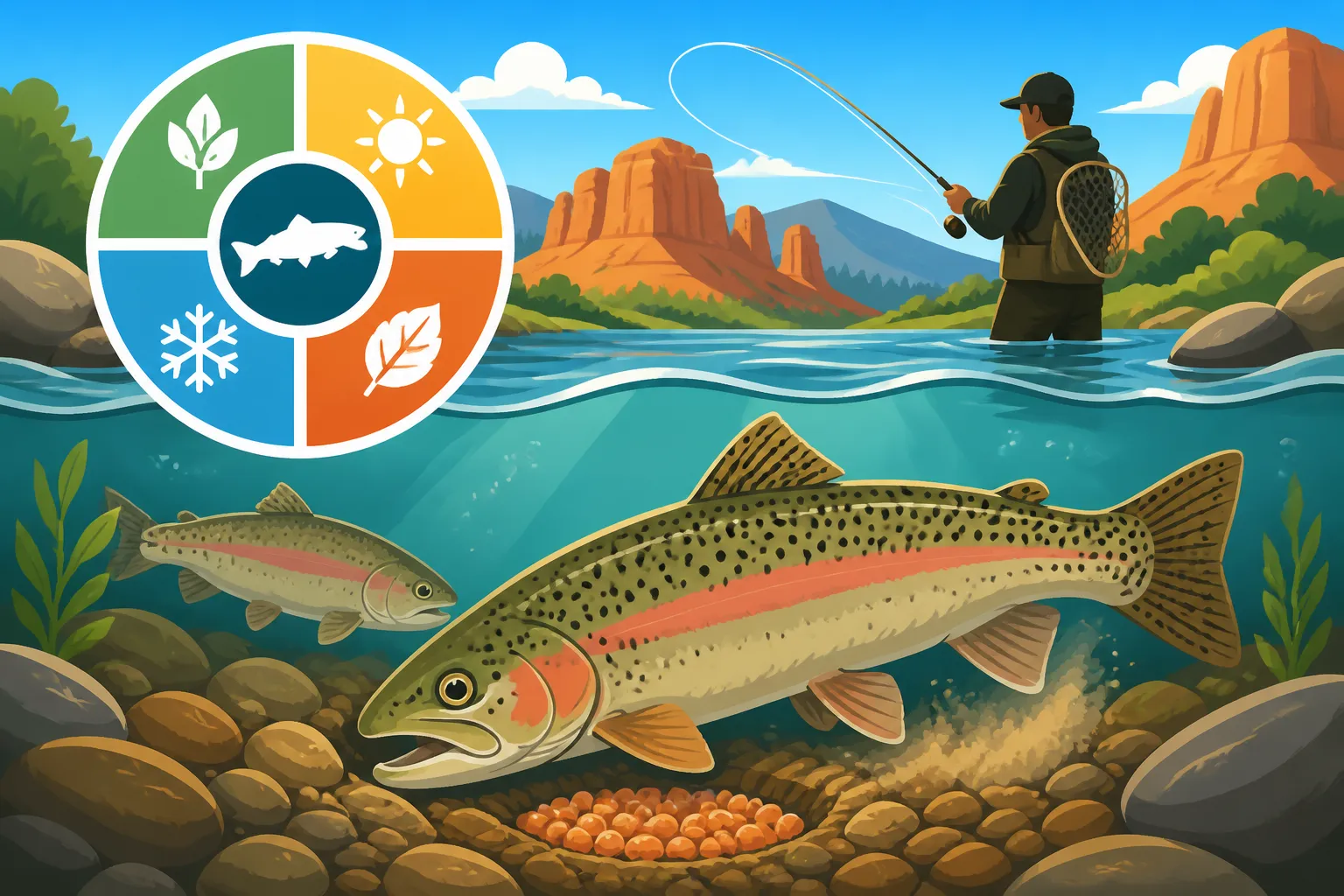
Ah, the ubiquitous rainbow trout! These guys are generally considered spring spawners in Utah. You'll typically see them preparing for and engaging in spawning activities from late March through May, though this can extend into early June, particularly in higher elevation waters or during a prolonged cold spring. As the days get longer and water temperatures start to tick up into the 40s and 50s Fahrenheit, rainbows get the urge.
They prefer to spawn in the gravelly bottoms of moving water, often migrating from larger lakes and reservoirs into feeder streams and river inlets. If a lake doesn't have suitable stream access, they might seek out shallow, oxygenated areas of the lake with clean gravel. You'll often see them paired up, with the female digging a "redd" (a shallow depression) in the gravel with her tail, laying eggs, and then the male fertilizing them. It's a beautiful, if somewhat clumsy, dance. For the most part, the rainbow trout you'll encounter in Utah are stocked, and while they still follow this natural instinct, their reproductive success in many reservoirs isn't as robust as wild populations in pristine rivers. This means while you might see them trying to spawn, their direct impact on the overall population might be less significant than truly wild, self-sustaining populations.
Brown Trout Spawning
Brown trout are the exact opposite of rainbows when it comes to timing; they are classic fall spawners. Their spawning season typically runs from late September through November, sometimes even pushing into early December in milder years. As the crisp autumn air arrives, water temperatures begin to drop, and daylight hours shorten, brown trout become incredibly active.
They also migrate from lakes into rivers and streams, seeking out clean gravel and rocky bottoms. Unlike rainbows who often stick around shallow lake areas if streams aren't available, browns are strongly driven to find moving water. This is when some of the biggest, most elusive brown trout in waters like the Provo River or Green River become more visible and vulnerable as they move upstream. They become highly territorial and aggressive, both toward other browns and sometimes even toward lures or flies that intrude on their redds. Anglers often find this to be a fantastic time to target large browns, but it's also a period where extra caution and ethical practices, like avoiding redds, are paramount.
Cutthroat Trout Spawning
Utah's native cutthroat trout species, including the Bonneville Cutthroat Trout and Bear Lake Cutthroat Trout, are primarily spring to early summer spawners. Their timing can be a bit more varied than rainbows or browns, largely depending on the specific subspecies, elevation, and water body. Generally, you can expect them to spawn from April through July.
Lower elevation populations, or those in lakes, might start earlier in the spring, much like rainbow trout. However, the high mountain cutthroats, especially those in the Uinta Mountains, might not begin spawning until June or even early July, once the ice has melted and stream flows have stabilized after spring runoff. They, too, seek out clear, gravel-bottomed streams and river inlets. Protecting these native fish during their spawning runs is incredibly important for their conservation. If you're fishing waters known for native cutthroat, like those containing the Bonneville Cutthroat Trout Identification, it's vital to be extra mindful during these months. Similarly, the unique Bear Lake Cutthroat Trout Facts highlight their distinct spawning behaviors. Their survival is crucial to Utah's angling heritage.
Lake Trout Mackinaw Spawning
Lake trout, often called Mackinaw in Utah, are a bit of an anomaly compared to their smaller trout cousins. These magnificent, deep-dwelling fish are also fall spawners, much like brown trout, but their methods are very different. Their spawning season typically occurs from October through December, often peaking in late October and November.
What sets them apart is where they spawn. Instead of migrating up streams, lake trout prefer to spawn in deep water over rocky shoals, reefs, and submerged structure within the lake itself. They don't build elaborate redds in gravel but rather scatter their eggs over rocky bottoms, where the eggs can fall into crevices for protection. This makes their spawning less visible to the casual observer, but it's a significant event nonetheless. During this period, these typically solitary fish will congregate, and while they might still strike a lure out of aggression, they are primarily focused on reproduction. Understanding What Lake Trout Eat at Flaming Gorge can help you discern their feeding behaviors from their spawning movements.
Tiger Trout and Splake Spawning
Tiger trout and Splake are interesting cases because they are sterile hybrids, meaning they cannot successfully reproduce. Tiger trout are a cross between a brown trout and a brook trout, while Splake are a cross between a lake trout and a brook trout. Despite their inability to produce offspring, nature's programming runs deep.
These hybrids will still exhibit spawning behaviors. Tiger trout, being part brown trout, will often mimic fall spawning runs, moving into river inlets or shallow areas of reservoirs in the fall (October-November). Splake, with their lake trout lineage, might also move to rocky shoals in the fall (October-November), even though their efforts won't result in viable eggs. As they are generally stocked as a put-and-take fishery or for specific management goals, catching them during these periods doesn't carry the same reproductive impact as catching a wild brown or cutthroat on a redd. However, recognizing their "attempted" spawning behavior can still help you locate them, as their movements will be concentrated.
Ethical Angling During Spawning Periods
Being a responsible angler means more than just following the regulations; it means respecting the fish and their environment, especially during critical times like spawning season. When trout are focused on continuing their species, they are at their most vulnerable.
Avoiding Spawning Beds
The first and arguably most important ethical consideration is to avoid disturbing spawning beds, often called "redds." A redd is a distinct, often lighter-colored patch of gravel on the bottom of a river, stream, or shallow lake area where a female trout has fanned away algae and silt to deposit her eggs. They look like clean, oval-shaped depressions, usually a foot or two in diameter, often with a mound of displaced gravel just downstream.
Walking on redds can crush delicate eggs or disrupt the incubating process, severely impacting the next generation of fish. Even casting directly onto a redd or repeatedly snagging fish from it can cause undue stress and physical harm. If you spot a redd, give it a wide berth. Wading around or even far upstream or downstream is a much better choice than wading through it. Many experienced anglers simply choose to avoid areas where they see active spawning altogether, opting to fish other stretches of water to let nature take its course undisturbed. It's a small sacrifice for the long-term health of the fishery.
Catch-and-Release Best Practices
If you do happen to hook a fish that appears to be spawning or is near a spawning area, proper catch-and-release techniques become even more critical. Spawning fish are already under significant physiological stress; adding the stress of a long fight, excessive handling, or being out of water for too long can be deadly for them and their eggs.
The goal is to minimize stress and maximize their chances of survival and successful reproduction. This means using appropriate gear that can land the fish quickly, avoiding playing them to exhaustion. Keep the fish in the water as much as possible, using a rubberized net to cradle them. If you absolutely must take a photo, do it quickly, keeping the fish submerged as much as you can, and support its body horizontally. Unhook the fish gently, preferably with forceps or pliers, while it's still in the water, and allow it to recover naturally before swimming away. Resources like How to Release a Fish Without Hurting It in Utah can offer more detailed guidance. Remember, a fish that successfully spawns contributes far more to the fishery than one you might briefly admire on the bank.
How Spawning Seasons Impact Fishing Strategies
Understanding trout spawning cycles doesn't just make you a more ethical angler; it also makes you a smarter, more successful one. Fish behavior shifts dramatically during these periods, and knowing what to expect can help you adapt your tactics for better results.
Pre-Spawn Feeding Frenzy
Before the arduous task of spawning, many trout species enter a "pre-spawn feeding frenzy." They need to pack on calories and build up energy reserves for the strenuous act of reproduction and the period of recovery that follows. This can be one of the absolute best times to target large, aggressive fish!
During the pre-spawn, trout are often gorging themselves, moving into shallower areas or congregating near abundant food sources. This is when they might be particularly susceptible to larger, more calorie-dense offerings. Think about beefing up your lure size or offering bigger fly patterns. For brown trout in the fall, this might mean throwing larger streamers or Rapalas as they move into river mouths. For rainbows in the spring, it could mean drifting worms or larger PowerBait presentations near stream inlets. Anglers often hit online retailers like Amazon to stock up on larger, more aggressive lures or choose their favorite patterns from a well-stocked fly shop for these hungry fish. It's a brief window of opportunity where trout are highly motivated to eat, and if you're prepared, you can have some incredible days on the water.
Post-Spawn Recovery
After the spawn, trout are often depleted and exhausted. Their bodies have been through a significant ordeal, and they need time to recover. This "post-spawn recovery" period can be a challenging time for anglers, as fish are typically lethargic, less active, and less inclined to chase down a meal. Their primary focus shifts from reproduction back to survival and regaining strength.
During this phase, trout might retreat to deeper, cooler, or more sheltered areas. Their metabolism slows down, and they're less likely to exert energy chasing fast-moving lures. This is when subtle presentations, smaller baits, or slow-moving flies can be more effective. Think about drifting nymphs gently in a river or still-fishing with a small piece of worm or PowerBait in a lake. You might also find them congregated in pools or deeper runs where they can rest. Patience is key during post-spawn. Don't expect aggressive strikes; often, it's just a subtle peck or a slight hesitation. This is a time to scale down your gear and presentations. You can find excellent resources and gear for proper catch and release techniques on Amazon, which is crucial during these delicate times for fish recovery.
Regulatory Considerations and Closures
It's absolutely critical to remember that state wildlife agencies, like the Utah Division of Wildlife Resources (DWR), implement specific regulations to protect spawning fish. These can include seasonal closures, gear restrictions, or even mandatory catch-and-release rules in certain areas during spawning periods. These rules are put in place for a good reason: to ensure the long-term health and sustainability of Utah's fisheries.
For example, some specific sections of rivers known for productive spawning might be temporarily closed to all fishing during the peak spawn. Other waters might have reduced bag limits or mandate single, barbless hooks only. It's always your responsibility as an angler to check the current Utah Fishing Regulations Explained before heading out. Don't rely on old information or hearsay. The DWR publishes detailed guides annually, which are readily available online and at license vendors. Ignoring these regulations not only risks fines and penalties, but it directly undermines conservation efforts. You might even find specific waters where a link like Why Do Some Utah Waters Close During Trout Spawning Season? provides a clear explanation of such protective measures.
Utah Trout Spawning Times at a Glance
To give you a quick reference, here's a general overview of when you can expect different trout species in Utah to spawn. Remember, these are general guidelines, and local conditions can cause slight variations.
| Trout Species | General Spawning Season | Typical Spawning Location | Notes |
|---|---|---|---|
| Rainbow Trout | Late March – May | Stream inlets, river gravels, shallow lake areas | Primarily spring spawners; stocked fish follow instincts but wild reproduction varies. |
| Brown Trout | Late September – November | Rivers, stream mouths, gravelly lake shallows (less common) | Strong fall spawners; often aggressive and territorial during this time. |
| Cutthroat Trout | April – July | Headwater streams, river tributaries, lake inlets (higher alt.) | Spring/early summer spawners; timing varies by subspecies and elevation; protect native stocks. |
| Lake Trout | October – December | Deep rocky shoals, submerged reefs, main lake points | Fall spawners; deep-water event, less visible to shore anglers. |
| Tiger Trout | Fall (October – November) | Stream inlets, river gravels, shallow lake areas | Sterile hybrid; exhibits "attempted" spawning behavior, often mimicking brown trout. |
| Splake | Fall (October – November) | Rocky shoals, deeper lake structure | Sterile hybrid; exhibits "attempted" spawning behavior, often mimicking lake trout. |
Disclaimer
This article is for general informational purposes only and does not constitute professional advice. Laws, prices and regulations vary by location and change over time. Consult a qualified professional for guidance on your specific situation.