How to Tell a Brown Trout From a Rainbow Trout
It can be incredibly frustrating to be out on a beautiful Utah stream, hook into a gorgeous trout, and then wonder, "Is this a brown or a rainbow?" The subtle differences can be tricky, especially for newer anglers or when you're caught up in the excitement of a catch. This guide is here to help you confidently distinguish between these two popular and often coexisting trout species, making your fishing experience more informed and compliant with local regulations.
The Distinctive Appearance of a Brown Trout
Brown trout, with their rich, earthy tones and somewhat elusive nature, are truly magnificent fish. When you pull one out of a deep run on a river, you'll immediately notice their robust build and unique patterning that sets them apart. They’re often considered a prize catch due to their intelligence and the fight they put up.
Body Shape and Coloration
When you first see a brown trout, you'll often be struck by its substantial, almost chunky appearance. They tend to be a bit stockier and more robust than the generally sleeker rainbow trout of a similar size. Their backs are usually a rich golden-brown, sometimes leaning towards an olive or even dark grey, fading into lighter, often yellowish or bronze sides. Their bellies are typically a creamy white or pale yellow. This camouflaged coloration helps them blend seamlessly with the rocky, silty bottoms and undercut banks they frequently inhabit, making them masters of stealth in their environment.
The overall impression is one of rugged beauty, perfectly adapted to their riverine and deep reservoir homes. Unlike some other trout species that might show more vibrant, almost neon hues, the brown trout's colors are more subdued, blending with the natural world. This can make them harder to spot in clear water, which is part of their allure for many anglers who appreciate a challenge. They're built for power and survival in often-turbulent waters.
Spotting Patterns
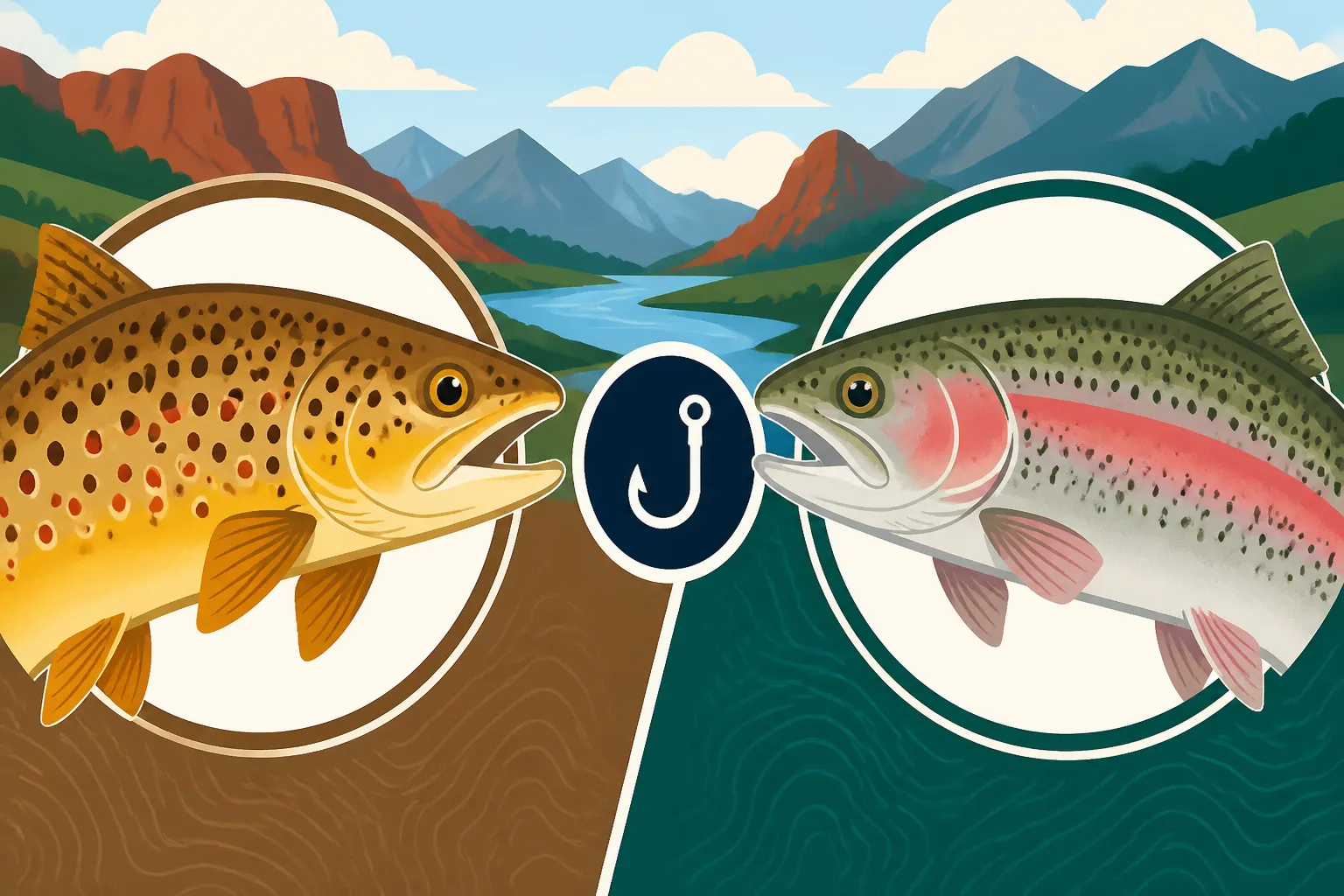
One of the most defining characteristics of a brown trout lies in its distinctive spotting pattern. They possess dark, often black or deep brown, spots scattered across their back and sides. What makes these spots particularly unique is that they are frequently encircled by a lighter "halo," giving them a target-like appearance. This halo effect is a key visual cue. In addition to these dark spots, brown trout also have scattered red or orange spots, primarily along their sides, which may or may not also have a lighter halo. These red spots are often quite vibrant, especially on healthy, mature fish.
These spots typically extend onto the dorsal fin (the fin on their back) and the adipose fin (the small, fleshy fin near the tail), but significantly, their caudal fin, or tail, usually has very few, if any, spots at all. This lack of spotting on the tail is a crucial differentiator from rainbow trout. Examining the tail fin is often the quickest way to confirm you've got a brown. Keeping a good field guide handy, perhaps one you ordered from Amazon, can really help when you're still learning these nuances.
Jawline and Mouth
Pay close attention to the mouth and jaw of a brown trout, especially a larger, mature one. They tend to have a relatively large mouth that extends noticeably beyond the back of the eye. This larger gape is indicative of their predatory nature, as they are known to consume larger prey items like smaller fish, crayfish, and even small rodents or amphibians in addition to insects. This makes them a formidable hunter in their aquatic domain.
Furthermore, mature male brown trout, particularly during spawning season, develop a pronounced "kype" – a distinct, hooked jaw. This hook is a secondary sexual characteristic and can become quite dramatic, giving them a very formidable and ancient appearance. While not every brown trout will display a prominent kype, the general shape of their mouth, extending past the eye, is a consistent indicator. This feature also points to their aggressive feeding habits, making them a thrilling catch for anglers targeting larger, more elusive fish.
The Classic Look of a Rainbow Trout
Rainbow trout are arguably the most iconic and widely recognized trout species, especially here in Utah where they are extensively stocked. They bring a vibrant flash of color to our waters and are a favorite target for anglers of all skill levels. Their appearance is generally more uniform, but still strikingly beautiful.
Body Shape and Coloration
Rainbow trout generally exhibit a more streamlined and torpedo-shaped body compared to the bulkier brown trout. Their overall coloration can vary significantly depending on their habitat and diet, but they typically have a silvery-white belly that fades into lighter, often silvery-green or blue-grey sides and a darker, olive-green or blue-grey back. It’s this metallic sheen that often gives them their "rainbow" appearance, reflecting light beautifully as they move through the water.
This sleeker build makes them incredibly agile and fast swimmers, adept at navigating both the currents of rivers and the open waters of reservoirs. The vibrancy of their colors can sometimes intensify right after they are stocked, before they have a chance to adapt to their new environment and diet. They often look robust and healthy, a testament to the success of stocking programs throughout the state.
Spotting Patterns
One of the most reliable visual cues for identifying a rainbow trout is its characteristic spotting pattern. Rainbows are typically covered in numerous small, dark spots. These spots are usually uniform in size and densely distributed across their entire back and sides. Crucially, these spots extend prominently onto their dorsal fin and, unlike brown trout, are also heavily present on their caudal fin (tail). If you see a trout with a tail covered in small black spots, you're almost certainly looking at a rainbow.
There's usually a noticeable lack of red or orange spots on a rainbow trout, which is another significant difference from the brown trout. The dark spots on a rainbow typically do not have the lighter "halo" effect seen on brown trout. This consistent, dense peppering of dark spots, especially on the tail, is a tell-tale sign that helps differentiate them from other trout species you might encounter in Utah's diverse fisheries. Having a laminated fish identification card, easily found on Amazon, can be a great addition to your tackle box for quick reference on the water.
Gill Plate and Stripe
The most famous feature of a rainbow trout, and the one that gives them their common name, is the prominent pink or reddish stripe that runs horizontally along their lateral line. This iridescent stripe typically starts from behind the gill plate and extends all the way to the caudal fin, often becoming more vibrant during spawning season or when the fish is excited. This "rainbow" band is usually quite distinct and provides an immediate visual identifier.
In some specimens, particularly those in clearer waters or during specific times of the year, this stripe can be a vivid, almost neon pink or red, sometimes even extending onto the gill plates themselves. While the intensity of this stripe can vary, its presence is almost always a strong indicator of a rainbow trout. Compare this to the brown trout, which lacks this distinct lateral stripe entirely. This vibrant streak is what makes them such a colorful and easily recognizable species, adding a splash of brilliance to any angler's day.
Key Differences at a Glance
Sometimes, when you're out on the water, you need a quick cheat sheet to tell these two trout apart. Here’s a table summarizing the main visual distinctions between brown and rainbow trout, which can be super helpful, especially when you're trying to quickly identify a fish for regulation purposes. Remember that while these are general rules, individual fish can sometimes show variations.
| Feature | Brown Trout | Rainbow Trout |
|---|---|---|
| Body Shape | Stockier, more robust, deeper body | Sleeker, more torpedo-shaped, more slender |
| Primary Color | Golden-brown, olive, brassy sides | Silvery-green, blue-grey back, bright sides |
| Lateral Stripe | Absent | Distinct pink or red stripe (often iridescent) |
| Dark Spots | Scattered, larger, often with pale "halos" | Numerous, smaller, uniform, no halos |
| Red/Orange Spots | Present on sides, often with halos | Generally absent |
| Tail Fin (Caudal) | Few to no spots | Heavily spotted with small dark spots |
| Mouth Size | Large, jaw extends past back of eye | Smaller, jaw typically ends at or before eye |
| Male Kype | Often prominent, especially in mature males | Less common, smaller, or absent |
Where You're Likely to Find Each in Utah
Knowing where each species typically prefers to hang out can also give you a big clue about what you've just hooked. While there's overlap, brown and rainbow trout do have some distinct habitat preferences within Utah's diverse waters. Understanding these tendencies can even help you target specific species on your next outing.
Brown Trout Habitats
Brown trout are often considered the wily veterans of Utah's waterways. They have a reputation for being tougher to catch, and part of that stems from their preference for more challenging, often less accessible, habitats. You'll frequently find brown trout in the slower, deeper sections of rivers, where they can seek cover under undercut banks, submerged logs, or large boulders. Rivers like the Provo River and the Green River below Flaming Gorge Dam are renowned for their healthy brown trout populations. They thrive in waters with good structure that offers plenty of hiding spots and ambush points for their predatory feeding style. Brown Trout in Utah Rivers is a fantastic resource if you're looking to target these fish.
They also inhabit larger reservoirs, especially those with good deep-water structure, where they can grow to impressive sizes. These fish are masters of survival, often preferring slightly warmer water temperatures than some other trout and tolerating a wider range of conditions. Their ability to adapt makes them resilient, but their wariness makes them a rewarding catch. If you're fishing a section of water that feels a bit more rugged or offers extensive cover, there's a good chance a clever brown trout is lurking nearby, waiting for a meal to drift by.
Rainbow Trout Habitats
Rainbow trout, on the other hand, are the workhorses of Utah's fisheries, primarily due to extensive stocking efforts by the Utah Division of Wildlife Resources. This means you can find them in a vast array of waters across the state, from high-mountain lakes and large reservoirs to smaller community ponds right in urban areas. They tend to prefer cooler, clearer, well-oxygenated water, but they are also quite tolerant and adapt well to many environments. Reservoirs like Strawberry Reservoir and Deer Creek Reservoir are popular spots where you'll find abundant rainbows. For more specific locations, check out Rainbow Trout in Utah Reservoirs.
They are often more gregarious and less reclusive than brown trout, making them a popular target for family outings and beginner anglers. You’ll find them cruising open water, near inlets and outlets, and along shorelines where food sources are plentiful. Because they are regularly stocked, especially in community ponds, they are often the first trout species that new anglers encounter. Their willingness to bite a variety of baits and lures also contributes to their popularity, making them an accessible and exciting catch for almost anyone venturing out to fish in Utah.
Why Identification Matters for Utah Anglers
Beyond simply knowing what you caught, correctly identifying your fish in Utah is incredibly important for several practical and ethical reasons. It's not just about bragging rights; it's about being a responsible angler and ensuring the health of our fisheries for generations to come.
Regulation Adherence
The most immediate and critical reason to accurately identify brown and rainbow trout is to comply with Utah's fishing regulations. Bag limits, size restrictions, and even specific angling methods can vary significantly between species, and sometimes even between different bodies of water for the same species. For example, some waters might have a generous daily limit for rainbow trout, but a much stricter limit or even a catch-and-release-only rule for brown trout, especially for larger specimens. Misidentifying a fish could lead to accidental violations, which can result in fines or penalties.
Imagine you're fishing a river and catch what you think is a rainbow, but it's actually a protected brown trout with a different regulation. Without proper identification, you could inadvertently keep a fish you're supposed to release, or exceed a specific bag limit. It's truly vital to check the current Utah Fishing Guidebook before heading out. Sometimes the rules are very specific, and being able to tell the difference between these two trout is foundational to following the law. This is where resources like Utah Fishing Regulations Explained and Utah Trout Daily Limit Explained become invaluable tools for every angler.
Conservation and Management
Beyond individual compliance, accurate fish identification plays a huge role in the broader conservation and management efforts carried out by the Utah Division of Wildlife Resources (UDWR). Knowing the specific species being caught helps biologists monitor population health, assess the success of stocking programs, and understand ecosystem dynamics. Brown trout are an introduced species to Utah, but they have established wild, self-sustaining populations in many rivers, valued for their sportfishing qualities. Rainbow trout, while also introduced, are primarily managed through stocking to provide diverse angling opportunities.
When anglers can correctly identify and report their catches (or simply adhere to species-specific regulations), it provides valuable data that informs management decisions. This ensures that stocking levels are appropriate, that native species are protected where necessary (such as avoiding confusion with our native cutthroat trout – see How to Tell a Cutthroat Trout From a Rainbow Trout), and that sustainable fishing opportunities are maintained. Your ability to tell a brown from a rainbow contributes directly to keeping Utah's fisheries healthy and thriving for everyone who enjoys them. It's a fundamental aspect of being a good steward of our natural resources, ensuring that the thrill of catching these beautiful fish endures. If you’re ever unsure, consider getting a waterproof fish ID card or a book from Amazon to carry with you.
Disclaimer
This article is for general informational purposes only and does not constitute professional advice. Laws, prices and regulations vary by location and change over time. Consult a qualified professional for guidance on your specific situation.