Utah Trout Daily Limit Explained
One of the most common head-scratchers for any angler hitting the water in Utah is figuring out exactly how many fish they can keep. It seems straightforward until you realize that not all trout are created equal, and not all lakes or rivers follow the same simple rule. This can lead to genuine frustration and, worse, accidental violations if you’re not absolutely clear on the details. This guide is here to untangle the complexities of Utah's trout daily limits, helping you fish confidently and legally.
Decoding Utah's General Trout Daily Limit
When you first glance at the Utah Division of Wildlife Resources (DWR) fishing guide, you'll see a general statewide daily limit for trout, and it often feels like that's all you need to know. But oh, how misleading that can be! The truth is, that "general" limit is just the starting point, a default that applies unless a specific water body has its own, often more restrictive, rules. Many anglers, especially those new to the state or trying a new spot, get caught off guard by these exceptions.
Let's break down the typical statewide standard, which is usually a combined limit of four trout and salmon. This means that whether you catch rainbow trout, brown trout, brook trout, cutthroat trout, or even kokanee salmon, they all count towards that total. It's not four of each species, but a combined total of four. So, if you catch two rainbow trout and two brown trout, you've hit your limit. This combined approach is designed to manage overall fish populations, but it’s just the baseline. Remember this number – four fish – as your default, but always be prepared for it to change.
The "Four Trout and Salmon Combined" Rule
This rule is the bedrock of Utah’s fishing regulations for many general waters. Imagine you're out on a beautiful, lesser-known reservoir in the Uinta Mountains, far from any special regulations signs. You’ve caught a couple of nice rainbow trout and a beautiful brook trout. Under the general rule, you’re now at three fish, meaning you can keep one more trout or salmon of any species before you've reached your daily creel limit. This simple approach helps manage harvest on waters that aren’t under intensive management or don’t have unique species concerns.
It's also important to understand that "daily limit" refers to the number of fish you can possess in one day, regardless of how many times you go out or where you fish. You can't catch a limit at one lake in the morning, go home, then drive to another lake in the afternoon and catch another limit. The daily limit is a 24-hour rule. This becomes particularly important if you're traveling across different areas with varied regulations, as the most restrictive limit for the waters you fished will apply to your possession.
Understanding Possession Limits
Beyond the daily limit, there's also a "possession limit." This is the maximum number of fish you can have in your possession at any given time, including those at home, in your cooler, or in your freezer from previous fishing trips. Typically, the possession limit is twice the daily limit. So, if the daily limit is four trout, your possession limit would be eight trout. This prevents anglers from stockpiling large quantities of fish over time.
However, just like daily limits, possession limits can also vary by water and species. It's crucial to check the specific regulations for the water you're fishing to understand both the daily and possession limits that apply. For instance, if you fish a special regulation water with a daily limit of two trout, your possession limit would generally be four from that water. This is another layer of regulation designed to protect fish populations and ensure sustainable angling for everyone. Keeping track of your catch from different trips can get tricky, so many experienced anglers use a simple log or clearly label their freezer bags with the date and location of the catch.
Specific Water Regulations That Impact Trout Limits
Here's where things get really interesting – and sometimes a little confusing. Utah is a state of incredible diversity, not just in its landscapes but also in its aquatic ecosystems. Because of this, the DWR has implemented specific, often highly localized, regulations to protect vulnerable fish populations, manage trophy fisheries, or control invasive species. You simply cannot rely on the general statewide limit when visiting many of Utah's most popular or sensitive fishing destinations. This is why always checking the current Utah Fishing Guidebook is paramount before casting your line.
Special Regulations at Blue Ribbon Fisheries and Trophy Waters
Utah is home to several "Blue Ribbon Fisheries," which are waters managed for exceptional fishing opportunities, often focusing on larger, healthier fish. These waters, such as portions of the Green River below Flaming Gorge Dam or Strawberry Reservoir, frequently have stricter limits to encourage catch-and-release practices and allow fish to grow to trophy sizes. You might find a limit of one or two trout, often with specific size restrictions (e.g., only one fish over 18 inches).
For example, on the renowned Green River below Flaming Gorge Dam, a premier fly-fishing destination, the regulations are typically very stringent to preserve its incredible wild brown and rainbow trout populations. Similarly, if you're exploring the famous waters of Strawberry Reservoir, you'll discover specific harvest rules for its trophy cutthroat and rainbow trout. Anglers often must abide by a two-trout limit, with only one fish over a certain length. This focus on quality over quantity ensures that these prized fisheries remain productive for generations of anglers. These special regulations also extend to species like kokanee salmon, which might have their own distinct limits. It's a delicate balance the DWR tries to maintain, ensuring the long-term health of these valuable ecosystems.
Invasive Species and Mandatory Kill Rules
On the flip side, some waters in Utah are battling invasive fish species that threaten native populations or overall ecosystem health. In these cases, the DWR often implements "mandatory kill" rules, especially for species like northern pike in Utah Lake. While northern pike aren't trout, understanding this concept is vital, as these rules exist to protect native fish and the ecosystem. For other invasive species, the daily limit might be exceptionally high, or even unlimited, to encourage anglers to remove as many as possible. Always double-check the current regulations, especially if you're fishing waters known to harbor invasive species, as failing to comply with a mandatory kill rule can lead to significant penalties.
Unique Species Limits: Cutthroat, Kokanee, and More
Utah is home to several native trout species, most notably the Bonneville cutthroat trout, which is the state fish. To protect and restore these populations, certain waters or specific strains of cutthroat may have very specific limits, sometimes even catch-and-release only. For instance, some sections of the Provo River, known for its healthy brown and rainbow trout, might have specific rules for any cutthroat caught, often encouraging immediate release.
Then there are species like kokanee salmon. While technically salmon, they are often grouped with trout in Utah's regulations due to their similar habitat and angling methods. Waters like Strawberry Reservoir and Flaming Gorge Reservoir have vibrant kokanee populations, and their limits can be separate from, or in addition to, the general trout limit, especially during specific runs or seasons. For example, if the general trout limit is four, the kokanee limit might be an additional four, but only if specified for that particular water. The specific rules regarding how many cutthroat trout you can keep at Strawberry Reservoir are a prime example of how these species-specific regulations come into play, differing from the general trout rules. It’s a good idea to research Utah Trout Species Guide and Utah Kokanee Salmon Guide to better understand the fish you might encounter.
Here's a simplified table illustrating how daily limits can vary:
Water Type / Location General Trout & Salmon Combined Limit Specific Trout Regulations Notes There are some changes to Utah Fishing License Guide and Utah Fishing Regulations Explained every year, so don't just rely on last year's knowledge!
Identifying Your Catch and Avoiding Common Mistakes
Knowing your daily limit is only half the battle. You also need to be able to accurately identify the species of trout you've caught, especially if you're fishing waters with species-specific regulations or size limits. Mistaking a protected native cutthroat for a common rainbow could lead to a fine, even if it was unintentional. This is a common concern, especially for those who are just starting out, and it's a valid one! The DWR provides resources, but a little self-education goes a long way.
Knowing Your Trout Species
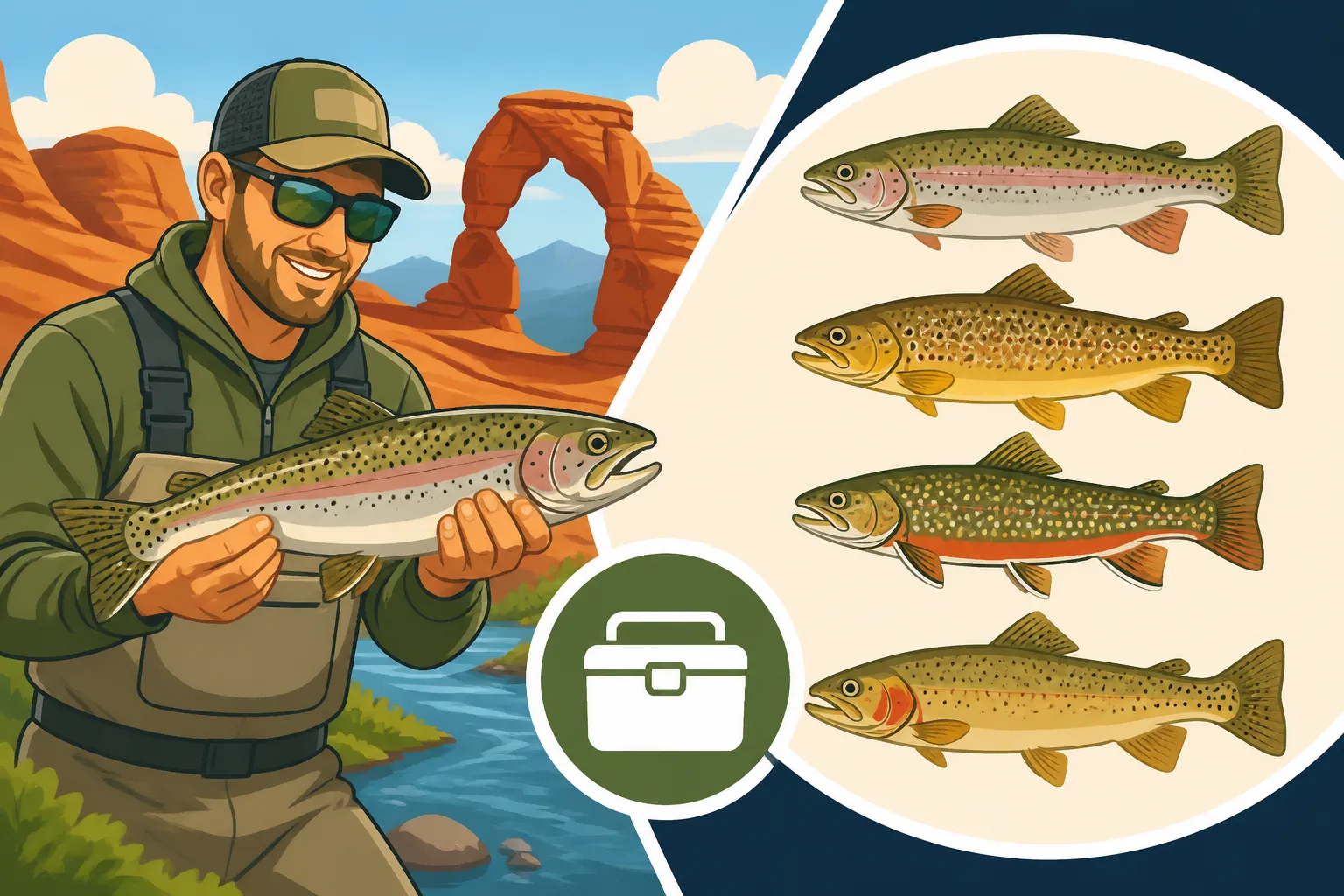
Utah is home to several trout species, each with unique markings.
- Rainbow Trout: Often recognized by a pink or red stripe along their side and small black spots throughout their body and tail.
- Brown Trout: Typically have larger, darker spots surrounded by a lighter halo, often with some red spots, especially on their sides. Their tails are usually unforked or only slightly forked.
- Cutthroat Trout: Distinguished by a reddish-orange slash mark under their jaw (the "cutthroat"). Their spots are usually concentrated towards the tail. The native Bonneville cutthroat trout can be particularly important to identify.
- Brook Trout: Have distinctive worm-like markings (vermiculations) on their backs and upper fins, and bright white leading edges on their lower fins, often with a red or orange belly.
- Tiger Trout: A sterile hybrid of brown and brook trout, they have a striking "tiger stripe" pattern across their body. Their unique appearance makes them fairly easy to identify.
- Lake Trout (Mackinaw): These are big, predatory fish with light spots on a darker body and a deeply forked tail. They inhabit deeper, colder waters like Flaming Gorge.
Carry a small, laminated fish identification card or use a reliable fishing app on your phone. Many anglers even find it helpful to snap a quick photo of a fish they're unsure about for later identification or to show to a local expert at a tackle shop. This might sound like overkill, but it saves a lot of worry and potential trouble. You can get waterproof fishing guides on Amazon that make this easy.
Understanding Size Restrictions
Beyond the number of fish you can keep, many specific waters also impose size restrictions. This could mean a "minimum size" (e.g., all trout must be at least 15 inches long to be kept), a "maximum size" (e.g., no trout over 22 inches can be kept), or a "slot limit" (e.g., only fish between 15 and 22 inches can be kept, or only one fish over 22 inches). These rules are usually designed to protect juvenile fish, allow fish to spawn at least once, or create a trophy fishery.
For example, a common slot limit might specify that all trout between 15 and 22 inches must be released, but you can keep one fish under 15 inches and one fish over 22 inches. This protects the prime breeding-size fish. Always carry a measuring tape or have one marked on your landing net. A small, retractable measuring tape you can clip to your vest or tackle box (available from retailers like Amazon) is an inexpensive but invaluable tool. Misjudging a fish's length can be just as problematic as misidentifying its species when it comes to staying within the law.
Catch-and-Release Practices
When specific regulations require you to release fish, or if you simply choose to for conservation purposes, it's crucial to practice proper catch-and-release techniques to ensure the fish's survival. Use barbless hooks, handle fish minimally with wet hands, avoid touching gills, and release them quickly. This becomes particularly important on waters designated as Utah Catch-and-Release Waters or those with special restrictions. The goal is to let that fish swim away healthy, ready to fight another day and contribute to the fishery.
How to Stay Informed About Regulation Changes
Utah's fishing regulations are not static. They are reviewed and updated annually by the DWR, and sometimes even in-season if an urgent situation arises (like a disease outbreak or a sudden water level change). Relying on old information or hearsay is a surefire way to run afoul of the law. Staying current is your responsibility as an angler, and fortunately, the DWR makes it relatively easy.
The Official Utah Fishing Guidebook
Your absolute best friend in understanding Utah fishing regulations is the official Utah Fishing Guidebook. This comprehensive document is updated every year and is available in multiple formats:
- Online PDF: The DWR website is the primary source. You can download the entire guidebook as a PDF, which is easy to store on your phone or tablet for quick reference on the water.
- Printed Copies: Physical copies are usually available for free at DWR offices, many sporting goods stores (like Sportsman's Warehouse or Cabela's), and local tackle shops. Having a printed copy in your vehicle can be a lifesaver if you're in an area with no cell service.
The guidebook details all statewide rules, general limits, and then dives into specific regulations for individual water bodies, listed alphabetically by county or region. Make it a habit to review the guidebook before each fishing season, and definitely before you try a new fishing spot. You'll find all the details on Utah Fishing Regulations Explained and Utah Daily Bag and Possession Limits within its pages.
DWR Website and Social Media Updates
The DWR website (wildlife.utah.gov) is a treasure trove of information. Beyond the guidebook, they publish news releases, fishing reports, and urgent updates. If there's a significant change to a trout limit on a specific water, you can often find it highlighted there. Following the DWR on social media channels can also provide timely alerts and reminders, especially during peak seasons or for special events like Utah Free Fishing Day.
For detailed information on particular waters, check out pages like Strawberry Reservoir Trout and Kokanee Limit or How Many Cutthroat Trout Can You Keep at Strawberry Reservoir?. These resources often provide the most up-to-date and nuanced information.
Local Tackle Shops and Fishing Guides
Don't underestimate the value of local knowledge! Your neighborhood tackle shop employees or a licensed Utah fishing guide are often intimately familiar with the local regulations and any recent changes. They can offer insights that you might miss in the guidebook's fine print, or even clarify how a new rule is being interpreted on the ground. A quick chat can save you a lot of grief. Plus, they're often happy to share tips on what's biting!
Staying informed about your fishing license is also crucial. For those who need to renew or purchase a license, articles like Utah Fishing License Online Purchase Process can be very helpful. Remember, fishing without a valid license can lead to Utah Fishing License Penalties for Violations, which is definitely something you want to avoid! And if you're ever curious about the wider scope of fishing in Utah, a great starting point is the comprehensive Utah Fishing License Guide.
Disclaimer
The information provided in this guide is for general informational purposes only and is subject to change. While we strive to offer accurate and up-to-date content, fishing regulations, limits, and seasons are determined by the Utah Division of Wildlife Resources (DWR) and can be modified at any time. It is the angler's sole responsibility to consult the most current official Utah Fishing Guidebook or the DWR website (wildlife.utah.gov) before engaging in any fishing activities to ensure compliance with all applicable laws and regulations. We are not responsible for any violations or consequences resulting from reliance on the information presented here.