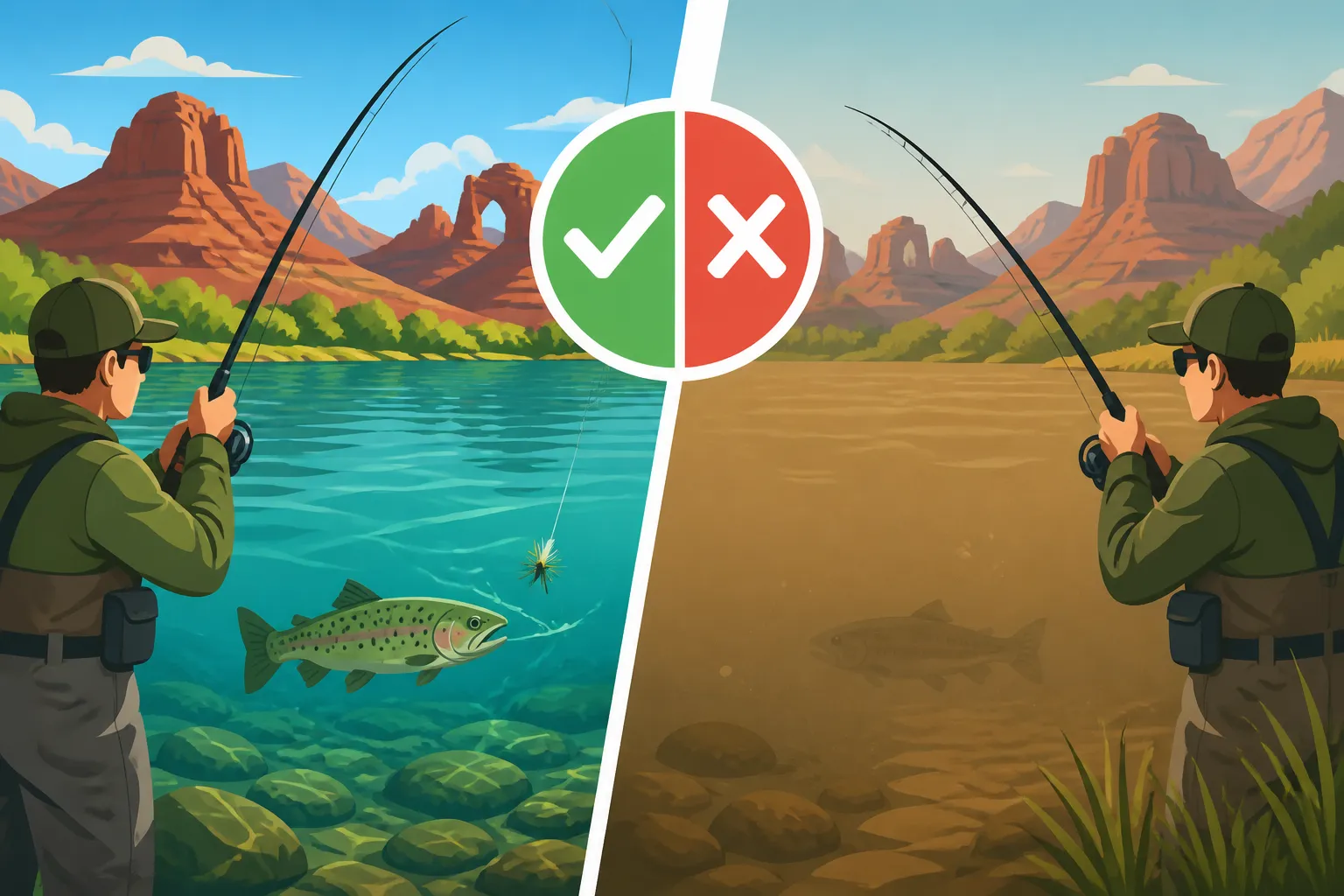
What Water Clarity Is Too Muddy to Fish in Utah?
There’s nothing quite as frustrating as waking up early, packing the car, driving out to your favorite Utah fishing spot, only to find the water looks more like chocolate milk than a pristine trout stream. You’ve probably asked yourself, "Is it even worth casting a line in this mess?" It’s a common dilemma, and understanding what water clarity is too muddy to fish in Utah, and why, can save you a lot of wasted time and help you make the most of less-than-ideal conditions. This guide will walk you through how to assess murky waters and offer strategies to still find success when the clarity isn't perfect.
Understanding Water Clarity in Utah Fishing
Water clarity isn't just about aesthetics; it's a critical factor that directly impacts fish behavior, feeding patterns, and ultimately, your chances of success. Fish rely on their senses, and when one of those senses, like sight, is compromised by murky water, it changes everything.
Why Water Clarity Matters for Anglers
Think about it from a fish's perspective. Most predatory fish, especially species like trout, bass, and walleye that are popular targets in Utah, are sight feeders to a significant degree. They use their eyes to spot prey, identify movement, and gauge distance before striking. When the water turns muddy, their visibility drops dramatically. This doesn't mean they stop eating entirely, but it forces them to rely more on their other senses, like their lateral line (to detect vibrations) and smell.
For you, the angler, this means your presentation needs to adapt. A subtle, natural-colored lure that works wonders in clear water might be completely invisible in murky conditions. Similarly, fish might be more hesitant to chase a fast-moving bait if they can't clearly identify it. The entire underwater ecosystem becomes a low-visibility environment, making it harder for fish to locate food and, by extension, harder for you to present an appealing meal. Understanding how water clarity affects Utah trout fishing is particularly important, as many of our prime trout waters are susceptible to runoff and storms.
Common Causes of Muddy Water in Utah
Utah's diverse landscapes and weather patterns mean we see muddy water conditions for a variety of reasons throughout the year. Knowing the cause can sometimes help you predict how long the murkiness will last or where to find clearer pockets.
One of the most frequent culprits, especially in spring, is snowmelt and runoff. As the high country snowpack melts, streams and rivers swell, carrying with them sediment, silt, and debris from the banks. This is why you often see rivers like the Provo River or the Green River turn a cloudy brown during peak runoff season. If you're wondering how runoff affects Utah river fishing, the answer is often "dramatically." Heavy rainstorms can have a similar effect, washing soil from disturbed areas into waterways, even small community ponds can become completely opaque after a good downpour.
Another significant factor, particularly on larger reservoirs and lakes, is wind. Strong winds can churn up shallow areas, stirring sediment from the bottom and reducing clarity across vast stretches of water. This is a common occurrence on expansive waters like Utah Lake or Willard Bay, where shallow depths and wide-open fetches allow wind to have a major impact.
Finally, seasonal turnover in lakes and reservoirs can also cause temporary murkiness. This natural process occurs when the surface water cools (in fall) or warms (in spring), reaching a temperature and density similar to the deeper water. This causes the entire water column to mix, bringing nutrient-rich, often darker or murkier water from the bottom to the surface. It’s a necessary process for the lake's health but can definitely put a damper on fishing for a few days. You might find it useful to learn more about what is fall turnover and how does it affect fishing?
Recognizing "Too Muddy" Conditions
So, how do you know when the water has crossed the line from "a little off-color" to "too muddy to fish"? It often comes down to visual cues, but also understanding the fish's natural limitations.
The Visual Test: How Murky is Too Murky?
The simplest way to gauge water clarity is by visual inspection. If you can see your lure or bait a foot or two under the surface, you're usually in decent shape, even if the water has a slight tint. However, there are different degrees of murkiness, and each requires a different approach.
- Slightly Stained (2-4 feet of visibility): The water might have a light tea color or a greenish tint. You can still see your lure a few feet down. Fish are usually still active and feeding by sight, but might appreciate brighter or more contrasting colors. This is often an excellent fishing condition, as the slight stain can provide a sense of security for fish, making them less wary.
- Off-Color (1-2 feet of visibility): The water is noticeably cloudy, often with a brownish or greenish hue. Your lure disappears quickly below the surface. In these conditions, fish start to rely more on their lateral line and sense of smell. You'll need to use more vibrant colors, introduce scent, and create more vibration to get their attention.
- Muddy (less than 1 foot of visibility): This is where it gets tough. The water is opaque, resembling coffee or chocolate milk. You can barely see your hand a few inches below the surface. This is generally considered "too muddy" for most conventional fishing methods, especially for sight-feeding predators. While fish are still there, their ability to locate your offering by sight is severely hampered.
A simple rule of thumb for many Utah anglers: if you can't see the prop of your trolling motor a foot or two below the surface, or if you can't see a white jig head dropped a few inches into the water, you're likely dealing with conditions that make fishing incredibly challenging for most species.
The Impact of Sediment on Fish
Beyond visual impairment, high levels of suspended sediment can actually have detrimental physiological effects on fish, further reducing their willingness to feed. Imagine trying to eat dinner in a dust storm. That's essentially what fish are experiencing.
- Gill Clogging: Fine sediment particles can irritate and even damage fish gills, making it harder for them to extract oxygen from the water. This can lead to stress, reduced activity, and even mortality in extreme, prolonged cases.
- Reduced Feeding Opportunities: With impaired vision, fish have to expend more energy to find food, or they might simply become less active and hunkered down, waiting for conditions to improve. This is especially true for species that hunt by actively pursuing prey.
- Habitat Alteration: Heavy sediment deposition can smother spawning beds, fill in important holding structure, and cover up natural food sources, forcing fish to move or become lethargic.
- Temperature and Oxygen Levels: Muddy water can also absorb more sunlight, leading to higher water temperatures. While this might sound good, excessive warmth, combined with reduced oxygen levels (as suspended particles can lower dissolved oxygen), can further stress fish. Understanding how water temperature affects Utah trout fishing is key, and muddy water often exacerbates any temperature issues.
For these reasons, fishing in extremely muddy water often yields poor results, not just because fish can't see your lure, but because they are physically and physiologically stressed and less inclined to feed aggressively.
Strategies for Fishing in Less-Than-Clear Water
Just because the water isn't crystal clear doesn't mean you have to pack up and go home. Often, slightly stained or off-color water can even improve fishing, giving fish a sense of security. The trick is knowing how to adapt.
Adjusting Your Approach in Off-Color Water
When faced with less-than-perfect clarity, a good angler knows how to change tactics. This is where a well-stocked tackle box and a willingness to experiment really pay off.
- Increase Contrast and Vibration: Since sight is reduced, you need to appeal to a fish's other senses. Use lures with vibrant, high-contrast colors like chartreuse, orange, bright greens, or even pure black. These colors stand out more in murky conditions. Additionally, choose lures that create a lot of vibration, such as spinnerbaits, crankbaits with rattles, ChatterBaits, or even a simple spoon with a strong wobble. These vibrations travel through the water and are detected by the fish's lateral line. A classic example is a bright Rapala or a Heddon Zara Spook in a visible color. Many anglers have great success with a variety of such baits available on Amazon.
- Add Scent: This is where the sense of smell comes in. Apply scent attractants to your lures or baits. Products like Pro-Cure or Smelly Jelly can make a huge difference, giving fish an olfactory target when visual cues are limited. Natural baits, like nightcrawlers, mealworms, or PowerBait, naturally have scent, which is why they often perform well in murkier water. If you're wondering what bait works best for Utah Lake catfish, for example, strong-smelling options are usually preferred, especially in the often turbid waters of the lake.
- Slow Down Your Presentation: Fish aren't going to chase a fast-moving lure they can barely see. Work your baits slower. Give them more time to detect the scent and vibration, and more time to react. A slow, steady retrieve with pauses can often be more effective than a fast one. Bottom-bouncing jigs or slowly dragged soft plastics become more effective.
- Fish Closer to Structure: Fish in murky water often hold tighter to cover or structure, such as submerged timber, rock piles, or weed lines. This provides them with ambush points where they can surprise unsuspecting prey that gets too close. Focus your casts on these areas, ensuring your lure or bait comes right past their nose.
Finding Clearer Water Pockets
Sometimes, instead of fighting the mud, you can find pockets of clearer water, especially on larger systems. This involves a bit of detective work and understanding water dynamics.
- Inlets and Outlets: Check areas where clearer tributaries flow into a main river or lake. The mixing of water can create distinct clarity lines, with fish often congregating in the slightly clearer water, or at the seam where the clear meets the murky. Similarly, dam outflows can sometimes have clearer water, as the water released from the bottom of a reservoir might be less affected by surface runoff.
- Wind-Blown Banks: On lakes and reservoirs, strong winds can push muddy water to one side, leaving the opposite, leeward side with comparatively clearer water. Conversely, wind can also create muddy conditions by churning up shallow banks. Pay attention to wind direction and look for areas where the wind is pushing away from the shore you want to fish, or where a point or bay offers some protection.
- Depth and Thermoclines: Deeper water is often less affected by surface runoff and wind. Fish that prefer deeper habitats might not be as impacted by surface turbidity. During summer, colder, deeper water below the thermocline can also offer refuge from warm, muddy surface layers. Learning how to find cold-water pockets in a Utah reservoir in summer can be a game-changer.
- Headwaters of Rivers/Streams: If a river or stream is blown out and muddy in its lower sections, consider driving upstream to its headwaters. The further you get from agricultural fields or areas prone to erosion, the clearer the water is likely to be. Just be sure to check local regulations, as some headwater areas may have different rules or require hiking.
For those situations where the water is truly unfishable, remember there are always other options. Sometimes it's best to consult a guide on the best time of year to fish in Utah or explore different fishing spots open year-round in Utah that might be less affected by current conditions.
When to Call It Quits (or Change Locations)
While it's great to be adaptable, there comes a point where fishing in muddy water is no longer productive or enjoyable. Recognizing this threshold is part of becoming a seasoned angler.
Prioritizing Safety and Enjoyment
Let's be honest, fishing should be fun. If you're constantly snagging, can't see your line, and aren't getting any bites, the frustration can quickly outweigh the enjoyment. It's okay to admit defeat and try another time or place.
Furthermore, extremely muddy water can sometimes pose safety concerns, especially on rivers. High, fast-moving, turbid water can conceal submerged obstacles, create dangerous currents, and make wading incredibly risky. Boat navigation also becomes more challenging when visibility is poor and debris is floating in the water. Always prioritize your safety over catching a fish. If the conditions feel dangerous or simply too difficult, don't push it.
Alternative Fishing Options During Muddy Conditions
Instead of staring at a chocolate-milk-colored lake, consider these alternatives:
- Urban and Community Ponds: Often, smaller, self-contained community ponds are less susceptible to widespread runoff or extreme wind-driven turbidity, especially if they are fed by wells or springs rather than directly by larger, muddy rivers. These ponds are frequently stocked, offering a good chance at success even if the visibility isn't perfect.
- Tailwaters Below Dams: The water released from the bottom of large reservoirs, known as tailwaters, can often be surprisingly clear, even when the river upstream or downstream is muddy. This is because the water is drawn from deep within the reservoir, away from surface runoff. The Green River below Flaming Gorge Dam is a prime example of a world-class fishery that often maintains good clarity even when other rivers are blown out.
- Target Different Species: Some fish species are less affected by murky water than others. Catfish, for example, rely heavily on their sense of smell and barbels (whiskers) to locate food and can be very active in turbid conditions. Similarly, carp are excellent bottom feeders that don't depend on clear water. Changing your target species can open up opportunities when your usual go-to fish are hunkered down.
- Go Hiking or Scouting: If fishing isn't an option, use the time to scout new access points, look for structure you hadn't noticed before, or simply enjoy the scenery. Sometimes a break from fishing can reignite your passion for it.
Water Clarity Levels and Fishing Implications
Here's a quick summary to help you assess the water next time you're out.
| Water Clarity Level | Visibility (approx.) | Impact on Fish | Recommended Fishing Strategy |
|---|---|---|---|
| Crystal Clear | 6+ feet | Fish are wary, rely heavily on sight. | Subtle presentations, light line, natural colors, long casts, stealth. |
| Slightly Stained/Green | 2-5 feet | Fish still rely on sight, but feel more secure. | Natural colors, slightly brighter lures, some scent, moderate retrieves. Often excellent conditions. |
| Off-Color/Murky | 1-2 feet | Reduced sight, increased reliance on lateral line/smell. | Bright, high-contrast colors, strong vibrations, heavy scent, slower retrieves, target structure. |
| Muddy (Chocolate Milk) | Less than 1 foot | Severely impaired sight, fish stressed, lethargic. | Extremely challenging. Heavy scent, powerful vibrations, very slow retrieves, consider changing locations or species. |
| Completely Opaque | 0-few inches | Nearly impossible to fish effectively. | Avoid, find alternative waters/species, prioritize safety. |
Ultimately, knowing what water clarity is too muddy to fish in Utah comes down to experience and personal preference. There’s no hard and fast rule, but armed with this knowledge, you can make more informed decisions, increase your chances of success, and ensure your time on the water is always enjoyable, no matter what Mother Nature throws your way. Remember, even a challenging day on the water is better than a day at work!
Disclaimer
The information provided in this guide is for general informational purposes only and does not constitute legal advice. Fishing regulations and conditions in Utah can change frequently. Always consult the latest Utah Division of Wildlife Resources (UDWR) regulations, local advisories, and weather forecasts before heading out. Anglers are responsible for understanding and adhering to all applicable laws and regulations.