How to Rig Cut Bait for Striped Bass at Lake Powell
If you've ever stood on the shores of Lake Powell, gazing out at its vast, intricate canyons and deep blue waters, you know it's an angler's paradise, but also a formidable challenge. Striped bass are notorious for being elusive one moment and in a feeding frenzy the next, and getting your cut bait down to where they're actively feeding can feel like trying to hit a moving target in a maze. This guide is all about cutting through that confusion, giving you the practical, real-world rigging techniques for cut bait that will help you entice those hungry stripers and make your Lake Powell fishing trips far more productive.
Understanding Why Cut Bait Excels for Lake Powell Striped Bass
Striped bass, often called "stripers," are opportunistic predators. While they'll chase down live baitfish, they're also keenly attuned to scent and the presence of injured or dead prey. This is where cut bait really shines, especially in a vast water body like Lake Powell where finding active schools can be like finding a needle in a haystack. The scent trail from a properly rigged piece of cut bait can draw stripers from a distance, appealing to their strong olfactory senses and triggering a bite even when they're not in full-on chase mode.
The Appeal of Scent and Natural Presentation
Imagine a school of shad, the primary forage for stripers in Lake Powell, moving through the water. A wounded or dead shad emits a powerful scent, signaling an easy meal. Cut bait mimics this perfectly. When you slice up a fresh piece of shad or anchovy, you expose its internal juices and oils, creating a potent aroma that disperses in the water. This scent plume acts as a beacon, guiding hungry stripers directly to your offering. Unlike artificial lures that rely solely on visual attraction and vibration, cut bait adds that crucial olfactory component, which can be a game-changer, especially on slower days or when fish are holding deeper. This natural scent also means that if a striper is a bit hesitant, it's more likely to hold onto the bait longer, giving you a better chance to set the hook. This is particularly true when fish are a bit lethargic or spooky.
Choosing the Right Bait for Cutting
When it comes to cut bait for Lake Powell stripers, fresh is always best. The fresher your bait, the stronger its natural scent and the more appealing it will be. The king of cut bait for stripers here is often fresh gizzard shad or threadfin shad, as these are their natural prey. If you can catch your own, that's ideal. However, good quality frozen bait can also be effective if properly thawed and handled. Sardines and anchovies are excellent alternatives, offering a rich, oily scent that stripers find irresistible. When purchasing frozen bait, look for those that are firm and intact, not mushy or discolored. Store your bait properly in a cooler with plenty of ice, like those robust YETI or RTIC coolers, to maintain its freshness throughout the day. For longer trips, consider how to Store Fish on a Hot Day in Utah, as this applies to your bait as well. Don't be afraid to experiment with different baits and cuts; sometimes stripers will show a preference for one over another based on water conditions or what they've been feeding on.
Essential Cut Bait Rigs for Lake Powell Stripers
Once you have your bait, the way you rig it is paramount. A poorly presented bait will often go untouched. The goal is to make it look as natural and easy to eat as possible, while also ensuring your hook-up ratio is high. Different scenarios at Lake Powell call for different rigging approaches, but a few stand out as highly effective for cut bait.
The Classic Carolina Rig for Bottom Fishing
The Carolina rig is a staple for bottom fishing, and it’s incredibly effective for presenting cut bait to stripers holding near the bottom or around submerged structure. This rig allows your bait to move freely and naturally with the current, while the weight keeps it in the strike zone. To tie a Carolina rig, you'll start by sliding an egg sinker (1/2 oz to 1 oz or more, depending on depth and current) onto your main line. Below the sinker, tie a barrel swivel. This swivel serves two purposes: it stops the sinker from sliding down to your hook, and it helps prevent line twist, especially important when fishing current. From the other end of the swivel, tie a fluorocarbon leader of about 18 to 36 inches. Fluorocarbon is less visible underwater than monofilament and more abrasion-resistant, which is key when fishing around rocks or other structure. Finally, tie a strong, sharp circle hook (sizes 3/0 to 6/0) to the end of your leader.
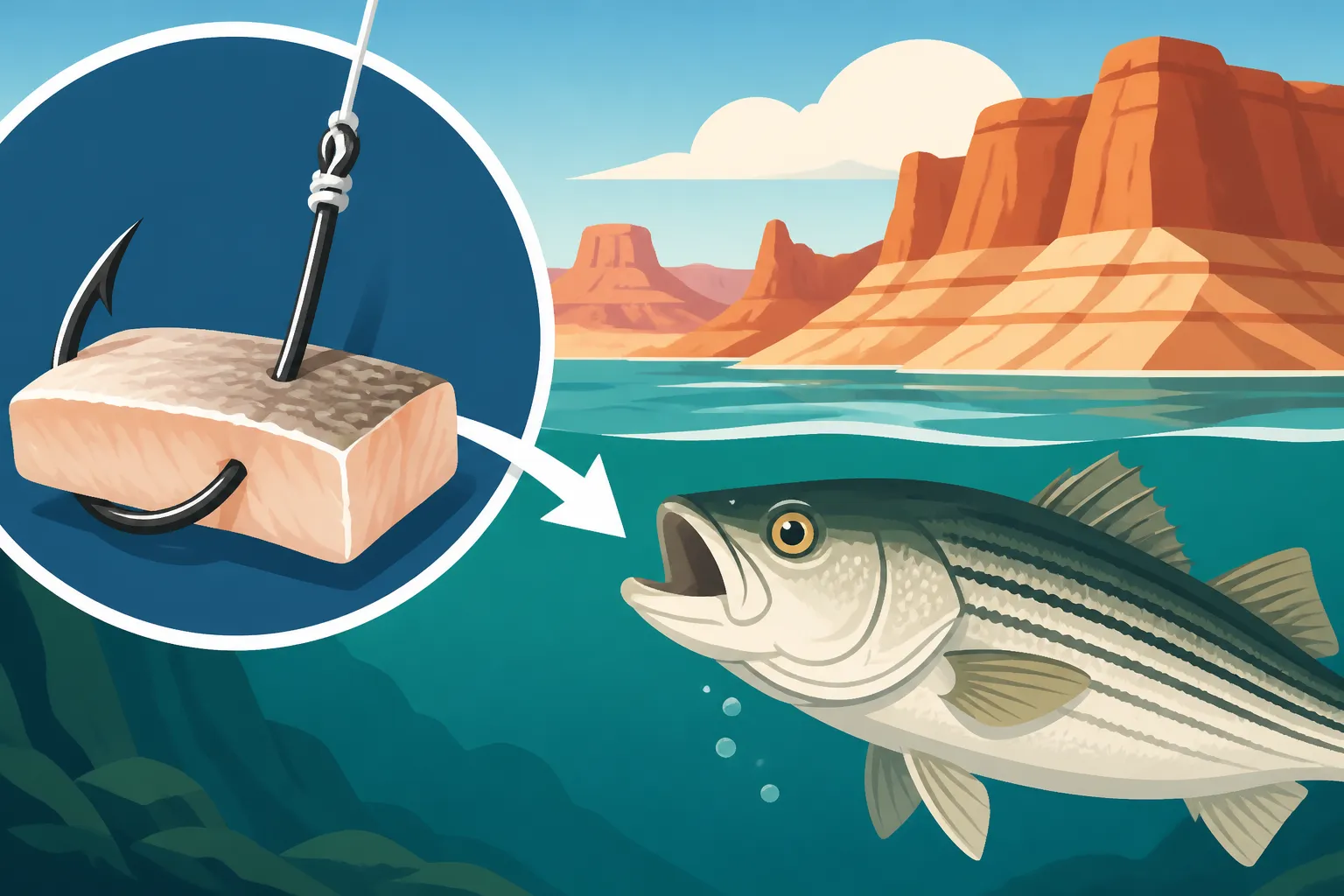
When rigging your cut bait, slice a piece of shad or anchovy about 1-2 inches long. You want enough meat to be enticing but not so much that it's difficult for a striper to engulf. Thread the hook through the toughest part of the bait, usually near the skin or backbone, making sure the hook point is fully exposed. The beauty of a circle hook is that it sets itself in the corner of the fish's mouth as the fish swims away, reducing gut-hooking and making for easier releases if you're not keeping your catch. This rig is fantastic for anchoring up in productive Lake Powell Striped Bass Spots or drifting slowly over structure.
Slip Sinker Rig for Versatile Depth Control
The slip sinker rig, sometimes called a "sliding sinker rig," offers incredible versatility, especially when you need to adjust your depth quickly or when fish are suspended rather than glued to the bottom. This rig is similar to the Carolina rig but allows for more direct contact with the bait and a more sensitive feel for bites. You'll start by threading a slip sinker (bullet, egg, or even a specialized no-roll sinker) onto your main line. The key difference here is that there's no swivel stopping the sinker from sliding all the way down to the hook. Instead, you'll either let it slide freely, or use a small stop bead and knot above your hook if you want to limit its travel while allowing the fish to take the bait without feeling the weight immediately.
Typically, for cut bait, anglers will simply let the slip sinker slide directly down to the hook. This rig is simpler to tie: main line, then slip sinker, then hook. For hooks, a sturdy J-hook (sizes 3/0 to 6/0) works well, or a wide-gap circle hook. The size of your cut bait should again be around 1-2 inches. Hook it firmly, ensuring the point is exposed for a solid hookset. The advantage of this rig is that when a striper takes the bait, the line slides freely through the sinker, allowing the fish to move off without immediately feeling the weight. This can lead to more confident bites, especially from wary fish. This rig is excellent for casting from shore or boat into varying depths, or when you’re targeting fish that are actively feeding but moving around. You can find all the necessary components, from slip sinkers to circle hooks, on platforms like Amazon, making it easy to stock up before your trip.
| Rig Type | Pros | Cons | Best Use Case | Hook Recommendation |
|---|---|---|---|---|
| Carolina Rig | Natural bait presentation, less line twist | Can be slower to tie, less direct feel | Bottom fishing, drifting over structure, deeper water | Circle Hook (3/0-6/0) |
| Slip Sinker Rig | Versatile depth, more sensitive bite detection | Potential for line twist, sinker can tangle | Casting from shore/boat, varying depths, suspended fish | J-Hook or Circle Hook (3/0-6/0) |
Presenting Your Cut Bait Effectively
Rigging your bait is just one piece of the puzzle. How you present it, where you cast it, and how you react to a bite are equally crucial for success with Lake Powell stripers. These fish are powerful and cunning, and a thoughtful approach to presentation can drastically improve your catch rate.
Strategic Casting and Depth Targeting
Lake Powell is immense, so knowing where to cast your cut bait is almost as important as the rigging itself. Striped bass are often found in areas with structure, drop-offs, or where baitfish congregate. Look for submerged humps, canyon walls, points, or the mouths of side canyons. Pay attention to your fish finder; if you see schools of baitfish, stripers are likely nearby. When fishing from a boat, position yourself upwind or upcurrent from the desired structure and cast your rig so it drifts naturally into the target zone. If you're shore fishing, focus on accessible drop-offs or points.
For deeper water, allow your rig to sink all the way to the bottom. Once it settles, retrieve it slowly with short hops or drags, mimicking an injured baitfish. If fish are suspended, you'll need to pay attention to your line as it sinks. Counting down can give you a rough idea of depth, or if you have a sensitive feel, you might detect bites on the fall. Sometimes, stripers will hit a piece of cut bait as it's sinking, so be ready! Understanding the lake's hydrography and where the fish tend to hold during different seasons can be extremely beneficial; reading guides on Lake Powell Fishing Guide can help you pinpoint these areas. Also, check for "boils"—when stripers push schools of shad to the surface—if you witness one, cast cut bait into the frenzy for immediate action. You can learn more about how to Find Shad Boils at Lake Powell for these exciting moments.
The Art of Waiting and Setting the Hook
One of the biggest mistakes anglers make with cut bait, especially when using circle hooks, is trying to set the hook too soon or with too much force. With a circle hook, the fish essentially hooks itself. When you feel a bite, resist the urge to violently yank the rod. Instead, gently pick up the rod, reel in any slack until you feel the weight of the fish, and then slowly pull the rod back in a smooth, sweeping motion. The fish will then move away, and the circle hook will naturally rotate and embed itself in the corner of its jaw.
With J-hooks, a more traditional hookset is required. Wait until the fish has clearly taken the bait and is moving away with it. You'll often feel a solid thump or a steady pull. Then, a firm, upward sweep of the rod should secure the hook. The key with both is patience. Stripers will often "mouth" the bait first, swimming off a short distance before fully committing. Giving them a moment to confidently take the bait often results in a better hookup. The Best Fishing Rods for Utah Anglers will have enough backbone to handle these powerful fish and their initial runs. The time of day can also play a role in how aggressive these fish are, so understanding the Best Time of Day to Catch Striped Bass at Lake Powell can give you an edge. Keep your rod tip slightly lowered, allowing the fish to take the bait without resistance, and maintain a watchful eye on your line for any subtle twitches or movements that indicate a bite.
Advanced Tips and Troubleshooting for Cut Bait Success
Even with the best rigs and freshest bait, fishing can present its challenges. Lake Powell is a dynamic environment, and adapting your approach is key. These advanced tips will help you fine-tune your cut bait strategy and overcome common hurdles.
Enhancing Scent and Visibility
While cut bait is naturally odorous, sometimes you need an extra boost, especially in murky water or when fish are lethargic. Scent additives, often available from fishing tackle shops or online retailers like Amazon, can be applied directly to your cut bait. These come in gel or spray forms and can significantly amplify the scent trail. Look for shad, anise, or garlic scents, which are popular for stripers.
You can also enhance the visual appeal of your cut bait, especially if fishing in clear water. Adding a small, brightly colored bead or a spinner blade just above your hook can provide some flash and attraction, drawing attention to your offering. Some anglers will even dye their cut bait with food coloring for a vibrant, eye-catching presentation. However, always prioritize natural movement over excessive adornment; an injured-looking bait is often more effective than a garish one. Consider the overall presentation and how it might look to a discerning striper.
Dealing with Currents and Snags
Lake Powell, despite being a reservoir, can have significant currents, especially near inlets, outlets, or narrow canyon sections. These currents can make presenting cut bait challenging, as lighter rigs will drift too quickly or tangle. When faced with strong current, you'll need to increase the weight of your sinker. This is where having a variety of sinker sizes in your Best Lures for a Utah Tackle Box comes in handy. Heavier weights will keep your bait anchored in the desired strike zone. Alternatively, consider a three-way swivel rig, which allows your weight to hang directly below the swivel while your leader with the bait extends out to the side, keeping it off the bottom and less prone to snags.
Snags are an inevitable part of fishing, particularly around Lake Powell's abundant submerged trees, rocks, and canyon debris. To minimize snags, especially when bottom fishing, use an appropriately weighted sinker that allows you to feel the bottom without constantly getting hung up. If you're consistently snagging, try a lighter weight or switch to a float rig (if fishing shallower) to suspend your bait above the snag-prone areas. Using a fluorocarbon leader with a slightly lighter breaking strength than your main line can also act as a sacrificial leader; if you snag, you might only lose your hook and leader, not your entire rig. Knowing the depths and topography of a spot will inform your choice between the Carolina or Slip Sinker Rig and help you avoid the nastiest snags.
Disclaimer
Fishing regulations, including license requirements, bag limits, and specific rules for certain waters, can change. Always consult the official Utah Division of Wildlife Resources (DWR) regulations before heading out on your fishing trip. This guide is for informational purposes only and should not be considered a substitute for official DWR publications.