How Reservoir Drawdown Affects Where Fish Hold
There's nothing quite as frustrating as showing up to your favorite Utah fishing spot, full of anticipation, only to find the water level has dropped dramatically, completely changing the landscape you knew. Suddenly, those familiar submerged humps are exposed, and your go-to brush piles are high and dry. This guide will walk you through exactly how reservoir drawdown impacts where fish hold, helping you adapt your strategies to find success even when the water pulls back.
Understanding Reservoir Drawdown: What It Is and Why It Happens
Reservoir drawdown, at its core, is simply the lowering of a water body's level. It's a natural and often necessary process in reservoirs, which are, after all, man-made lakes designed to store and manage water. But for us anglers, it can feel like a curveball, forcing us to rethink everything we thought we knew about a particular lake. It's not just about less water; it's about a complete shift in the underwater environment that fish call home.
Imagine a large bathtub filling and emptying – but on an epic scale, with living creatures depending on its stability. When that "bathtub" starts to drain, the consequences for fish and their habitat are significant. The changes aren't always immediately obvious from the surface, but beneath the waves, a complex ecological dance is happening, and understanding it is key to staying ahead of the game.
The Mechanics of Drawdown
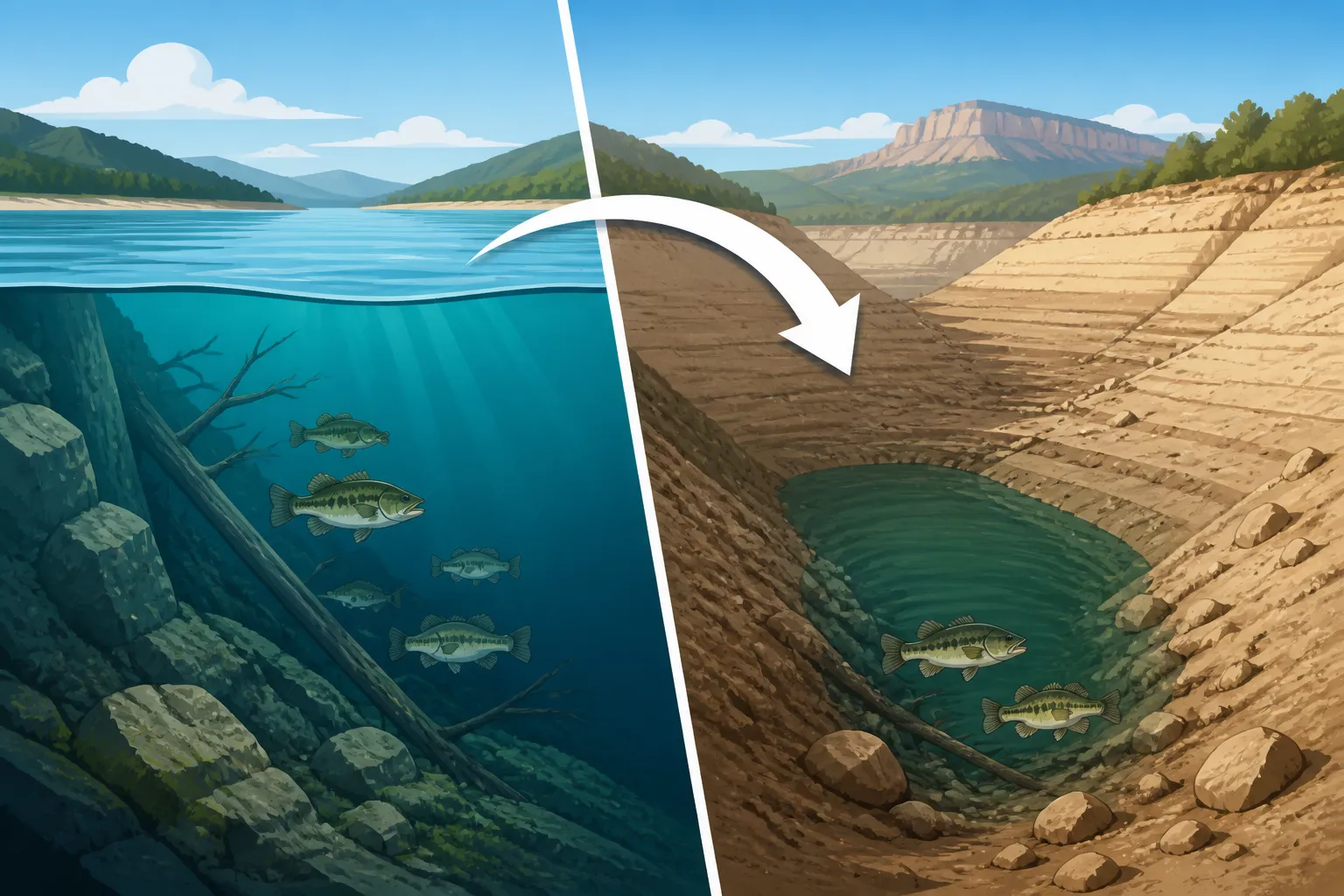
The mechanics of reservoir drawdown are pretty straightforward: water leaves the reservoir faster than it enters. This can happen gradually over weeks or months, or sometimes quite rapidly depending on the circumstances. As the water recedes, the shoreline expands, exposing areas that were once underwater. This exposes bottom structure, vegetation, and even entire land formations that were previously hidden beneath the surface.
From an angler's perspective, this means the fish's world is shrinking and changing shape. Imagine a fish that relies on a specific rock pile for ambush cover; if that rock pile becomes a dry mound, that fish has to find new shelter. The contours of the lakebed become more pronounced, revealing old creek channels, humps, and ledges that might have been too deep to notice before. This exposure can be both a challenge and an opportunity. While it takes away familiar holding spots, it can also concentrate fish in remaining deeper areas or reveal new structures that become prime targets once the fish adapt.
Common Reasons for Water Level Fluctuations
The reasons behind water level fluctuations in Utah's reservoirs are as varied as the landscapes themselves. Often, it's tied to our fundamental need for water. The most common culprit is irrigation for agriculture. During hot summer months, farmers divert massive amounts of water from reservoirs to nourish their crops, causing levels to drop significantly. This is a crucial part of managing Utah's precious water resources, even if it does change our fishing dynamics.
Another major factor is municipal water supply. Cities and towns rely on these reservoirs for drinking water and other daily needs, and releases are scheduled to meet these demands. Hydropower generation also plays a role, as water is released through dams to generate electricity, which can lead to fluctuating levels, especially in larger systems like Flaming Gorge Fishing Guide. Beyond human usage, natural factors like drought years, where less snowmelt flows into the reservoirs, can also contribute to persistent low water levels. Conversely, exceptionally wet years can lead to high water, which presents its own unique set of fishing challenges, but for now, we're focusing on the opposite scenario.
How Drawdown Impacts Fish Behavior and Habitat
When reservoir levels drop, it's not just the scenery that changes; it's the entire ecosystem. Fish are highly sensitive to their environment, and even subtle changes in water depth, cover, or food availability can trigger significant shifts in their behavior. They are constantly seeking comfort, safety, and food, and when their familiar surroundings are altered, they have to adapt or perish. Understanding these impacts is crucial for successful fishing.
Think about it from a fish's perspective: their world is literally shrinking around them. What was once a vast, feature-rich habitat becomes smaller and potentially less hospitable. This can lead to increased competition for resources, altered feeding patterns, and a general stress on the fish population. It's not just about where they can go, but also where they feel safe and can find sustenance.
Changes in Cover and Structure
One of the most immediate and noticeable effects of drawdown is the loss of cover and structure. That submerged timber line you loved to cast to? Now it's a tangled mess of branches on dry land. The dense weed beds that once provided sanctuary and ambush points for bass and panfish? They might be shriveled up along the new shoreline. This removal of vital habitat forces fish to relocate, often seeking out whatever remaining cover they can find.
For species like Smallmouth Bass Identification in Utah or even various Utah Trout Species Guide, structure is everything. Rock piles, ledges, old creek channels, and submerged bridges become even more critical when other forms of cover disappear. These remaining pieces of structure act as magnets, concentrating fish that have been displaced from shallower areas. Anglers need to adjust their focus from broad, shallow searches to more precise targeting of these deeper, more prominent features. Sometimes, the previously unnoticeable contours of the lakebed, like an old road or building foundation, become prime holding spots.
Food Source Availability
Drawdown can also have a profound impact on a fish's pantry. Many invertebrate species, like crawfish and aquatic insects, rely on stable water levels and specific types of substrate. When water recedes, these food sources can be stranded, perish, or become less abundant in certain areas. This forces game fish to adapt their diets or move to areas where food is still plentiful. Baitfish, which are a primary food source for larger predators, might also be impacted, becoming more concentrated or more exposed depending on the situation.
This change in food availability means that what might have been an effective lure or bait in high water might become less appealing during drawdown. If the primary forage has shifted, so too must the angler's presentation. Sometimes, the exposed mudflats or dying vegetation can churn up organic matter, attracting smaller species and indirectly drawing in predators. Understanding these subtle shifts in the food chain is a huge advantage, allowing you to "match the hatch" or, in this case, "match the available forage" even when the water is low.
Water Temperature and Oxygen Levels
Shallow water heats up and cools down much faster than deep water. During drawdown, the overall average depth of a reservoir decreases, leading to wider and more rapid fluctuations in water temperature. For cold-water species like trout, this can be incredibly stressful, forcing them to seek refuge in deeper, cooler pockets. Conversely, some warm-water species might find an expanded zone of comfortable temperatures, but even they can suffer if temperatures become too extreme or if oxygen levels drop.
Oxygen levels are another critical factor. As water levels drop and temperatures rise, the water's capacity to hold dissolved oxygen decreases. Decomposing organic matter, like exposed and dying vegetation, can also consume oxygen, creating "dead zones" where fish cannot survive. This means that even if there's sufficient depth, fish will avoid areas with low oxygen. This phenomenon is closely related to How Water Temperature Affects Utah Trout Fishing and can heavily influence where fish choose to congregate, often pushing them towards areas with fresh inflows, springs, or deeper, more stable thermal refuges. You'll often find these spots using a good fish finder, which you can find a wide selection of on Amazon.
Strategies for Locating Fish During Drawdown
Fishing during reservoir drawdown isn't about giving up; it's about adaptation and observation. The fish are still there, they've just moved. Your job as an angler is to become a detective, piecing together clues to figure out their new patterns and preferred holding spots. This often means abandoning old habits and embracing new approaches. Don't be afraid to experiment and think outside the box; the fish certainly are!
The key is to understand that low water concentrates fish, making them potentially easier to find if you know where to look. It removes much of the "dead water" and consolidates fish around fewer, more critical resources. This can lead to some incredible fishing once you crack the code. It just requires a bit more effort in scouting and understanding the underwater topography.
Focusing on Remaining Structure and Depths
When the water drops, any remaining structure becomes a hot commodity for fish seeking cover, ambush points, or temperature breaks. This means paying extra attention to submerged rock piles, ledges, old roadbeds, bridge abutments, and even drowned timber that might still be deep enough. These features act as natural congregating points. Instead of casting haphazardly, focus your efforts on methodically working these high-percentage areas.
Using electronics, like a good fish finder from brands like Humminbird or Lowrance, becomes even more crucial during drawdown. These tools can reveal subtle depth changes, submerged cover, and even schools of baitfish or game fish that you'd never see otherwise. If you're wondering about specific electronics, a quick search on Amazon for "Best Fish Finders for Utah Reservoirs" can give you some excellent options. Don't overlook the old creek channels that fed the river before the reservoir was built; these often become superhighways for fish moving between deeper basins and shallower feeding flats that might still hold water. Learn How to Fish Deep Water for Summer Lake Trout, as many species will seek these deeper, cooler haunts.
Exploiting Inlets and Outlets
Areas where water enters or exits the reservoir become particularly important during drawdown. Inlets, such as inflowing rivers or streams, bring in cooler, more oxygenated water and often carry fresh food sources. This makes them highly attractive to fish seeking refuge from warmer, less oxygenated main lake areas. Fish will often stack up at the mouths of these inflows, waiting for an easy meal or enjoying the more favorable conditions.
Outlets, especially near the dam where water is being released, can also concentrate fish. The current created by the outflow can disorient baitfish, making them easy prey, and the deeper water near the dam often remains stable in terms of temperature and oxygen. Be mindful of safety around dams and follow all regulations. Fishing these areas requires understanding how current affects fish positioning, but they can be incredibly productive spots, particularly for species like trout and walleye. Always check specific regulations, as some areas immediately below dams may have restrictions.
Adjusting Your Fishing Techniques and Gear
With fish concentrated in deeper, often more structured areas, your fishing techniques and gear need to adapt. Light line might be necessary to get wary fish to bite, and you might need heavier jigs or weights to reach fish holding tight to the bottom in deeper water. Slower presentations often work best, allowing fish more time to react to your bait or lure, especially if they are less active due to stress.
Consider using baits that mimic displaced forage, or go with higher-visibility lures that can attract attention in potentially darker, deeper waters. If you typically troll, you might need to adjust your downrigger depths. If you're a bank angler, longer casts and exploring new access points become vital. For a beginner, it's a good idea to check out Utah Fishing Techniques for Beginners and then apply those principles to the deeper or more structured areas revealed by the drawdown. Many anglers find themselves needing new tackle or specialized gear; browsing the wide selection of Best Lures for a Utah Tackle Box on Amazon can give you ideas for adapting your approach.
Key Utah Reservoirs and Their Drawdown Patterns
Utah is home to a diverse array of reservoirs, each with its own unique characteristics and drawdown patterns. While the general principles of how fish react to falling water levels remain consistent, the specific challenges and opportunities can vary greatly from one lake to another. Understanding these localized trends can give you a significant advantage.
No two reservoirs are exactly alike in how they "draw down." Some, like the massive Lake Powell, can see huge changes over time, revealing vast canyons and structures that haven't been seen in decades. Others, like smaller, irrigation-focused reservoirs, might fluctuate wildly within a single season. Knowing which category your target water falls into helps you anticipate changes and plan your trips more effectively.
High-Volume Reservoirs (e.g., Lake Powell, Flaming Gorge)
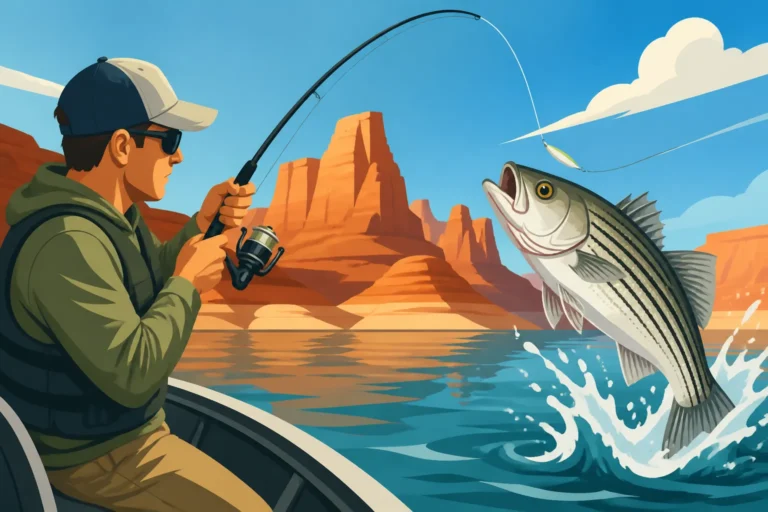
Massive reservoirs like Lake Powell Fishing Guide and Flaming Gorge Fishing Guide are subject to significant, often long-term, drawdown cycles. These bodies of water are critical for regional water storage, and their levels can be influenced by multi-year drought cycles and major water allocation decisions. When these reservoirs experience drawdown, the scale of change is immense. At Lake Powell, famous canyons can emerge, drastically altering fishing access and requiring a whole new understanding of the lake's topography. Striped bass, smallmouth bass, and walleye will often follow the receding water, concentrating in the main channel or deeper coves as their shallower foraging grounds disappear.
At Flaming Gorge, which is known for its deep, cold waters, a drawdown might expose more of its famous rock ledges and steep drop-offs. Lake trout, kokanee salmon, and smallmouth bass will typically retreat to the comfort of deeper water, often suspending over structure. Anglers often need to use deep-trolling techniques or vertical jigging to target these fish. Access points and boat ramps can become challenging, so always check current conditions before heading out. The key here is to think vertically and to locate the remaining deep-water structure that fish will gravitate towards.
Mid-Sized Reservoirs (e.g., Deer Creek, Jordanelle)
Mid-sized reservoirs, such as Deer Creek Reservoir Fishing Spots or Jordanelle Reservoir Fishing Access, often experience more seasonal and predictable drawdown patterns, primarily driven by irrigation demands during the growing season. Their smaller size means that changes can be more rapid and dramatic on a percentage basis compared to the giants. For trout, bass, and perch in these waters, the impact is immediate. Fish are forced to consolidate in the remaining deeper basins, near old creek channels, or around any permanent structure like submerged timber or rock outcroppings.
Bank anglers might find new stretches of shoreline accessible, but also a long walk to reach fishable depths. Boat anglers will need to be extra cautious about submerged hazards that weren't an issue in higher water. The areas near the dam and any significant inflows become even more crucial as fish seek stable conditions and food. These reservoirs are often easier to read than the massive ones; observing exposed points and old shorelines can give you a clear map of what's still underwater, guiding your search for those key fish-holding areas. You can also monitor state stocking reports to see if new fish have been introduced, as these often stay close to stocking points until they disperse.
| Drawdown Level | Typical Fish Behavior | Effective Angling Strategy | Key Gear Adjustments |
|---|---|---|---|
| Mild Drawdown | Fish may stay near original structure, slightly deeper. | Focus on slightly deeper edges of familiar spots. | Deeper diving crankbaits, heavier jigs. |
| Moderate Drawdown | Fish congregate around remaining major structure, follow old creek channels. | Target main lake points, submerged humps, channel edges. | Fish finder essential, switch to bottom-oriented baits. |
| Severe Drawdown | Fish are highly concentrated in the deepest basins, near dam, or strong inflows. | Vertical jigging, deep trolling, targeting visible current breaks. | Heavier weights, sensitive rods for light bites, long casts from shore. |
| Overall Trend | Increased competition, potential stress, seek stable temps/oxygen. | Slower presentations, focus on low-light periods, precise targeting. | Downriggers, specialized electronics, varied lure depths. |
Remember, fishing during drawdown is an evolving puzzle, but with these insights, you're better equipped to solve it and continue enjoying the incredible Utah fishing opportunities.
Disclaimer
This article is for general informational purposes only and does not constitute professional advice. Laws, prices and regulations vary by location and change over time. Consult a qualified professional for guidance on your specific situation.