Best Jig Weight for Ice Fishing Utah Trout
There’s nothing quite like the crisp air and serene silence of a Utah ice fishing morning. You’ve drilled your holes, set up your shelter, and the anticipation is building. But then, as you drop your line, the question hits you: "Am I using the right jig weight?" It's a common frustration, isn't it? That feeling of uncertainty, wondering if a subtle change in your presentation could be the difference between a slow day and a bucket full of trout. This guide is here to cut through that confusion, helping you confidently choose the best jig weight for ice fishing Utah trout, no matter the conditions or the fish you're chasing.
Understanding the Importance of Jig Weight in Ice Fishing
Many anglers focus intently on jig color, shape, or even the type of bait they're using, and while those are certainly crucial elements, the weight of your jig often gets overlooked. Yet, it plays a starring role in how your presentation appears to a fish and how effectively you can feel those sometimes incredibly subtle bites. Getting this right can dramatically improve your catch rate, especially when the trout are finicky or holding deep.
Why Weight Matters More Than You Think
Think about it this way: the weight of your jig dictates its entire journey through the water column. A heavier jig will plummet quickly, which can be fantastic if you're trying to get down to active fish in deep water before they move on. It also helps cut through any subsurface currents that might be present, keeping your presentation more vertical and easier to control. On the flip side, a lighter jig takes its sweet time, fluttering and swimming its way down, mimicking a more natural, injured baitfish or insect. This slower, more enticing fall can be absolutely irresistible to trout that are in a neutral or negative mood.
Beyond the fall rate, jig weight also profoundly impacts sensitivity. A heavier jig maintains better tension on your line, making it easier to feel those light "taps" or "stops" that indicate a fish has inhaled your offering. However, too heavy, and it might overpower your rod tip, making a subtle flutter impossible. It's a delicate dance, finding the weight that allows for both optimal presentation and maximum feel.
The Delicate Balance: Speed vs. Action
This is where the real art comes in. When you're picking a jig, you're constantly weighing the need for speed against the desire for a lively, enticing action. If you're ice fishing in 60 feet of water at Flaming Gorge, trying to reach suspended lake trout that show up as quick marks on your sonar, you need a jig that gets down now. A heavier jig lets you drop quickly, allowing you to react to those fleeting opportunities. You might sacrifice a bit of a natural flutter, but the speed of deployment is key.
Conversely, if you're working a shallow flat in 10 feet of water at a community pond, trying to coax a stocked rainbow trout into biting, a slow, enticing fall and a subtle jigging action are probably more important. A lightweight jig will dance and suspend in a way a heavy one simply can't, giving the trout more time to inspect it and commit to a strike. The objective here is to make the jig appear as natural and easy to catch as possible. It’s about understanding what the fish want at that moment and having the right weight to deliver it.
Factors Influencing Your Jig Weight Choice for Utah Trout
Choosing the perfect jig weight isn't a one-size-fits-all situation. Several variables come into play, and experienced anglers constantly adjust their approach based on these factors. Being mindful of the type of trout you're after, the depth of the water, and even how active the fish are will steer you toward the most effective jig weight.
Target Species and Size
The species and typical size of the trout you're targeting should be a primary consideration. You wouldn't use the same tackle for a bluegill as you would for a muskie, and the same principle applies to trout species.
- Stocked Rainbows and Smaller Cutthroats: In many of Utah's community ponds or reservoirs like Little Dell or Mantua Reservoir, the Utah Division of Wildlife Resources (UDWR) regularly stocks smaller rainbow and cutthroat trout. These fish are often eager biters, but they can also be cautious, especially in clear, shallow water. For these, a lighter jig in the 1/32 oz to 1/16 oz range is typically ideal. It allows for a slower, more natural descent and a subtle jigging action that these smaller fish find appealing. They often cruise in the upper water column or along the bottom in relatively shallow areas, so a super-heavy jig isn't usually necessary for depth. To learn more about the different fish you might encounter, check out our guide on the Utah Trout Species Guide.
- Larger Trout in Reservoirs: When you're after larger rainbows, browns, or tiger trout in waters like Strawberry Reservoir, Scofield Reservoir, or Fish Lake, you might need to go a bit heavier. These fish can be found at varying depths and are often more aggressive feeders. A 1/16 oz to 1/8 oz jig offers a good balance. It gets down efficiently but still allows for a respectable action. The slightly heavier weight can also help punch through smaller, more numerous perch or smaller trout to reach those trophy-sized fish hiding below. When targeting specific lakes, understanding their unique characteristics, like the Strawberry Reservoir Ice Fishing Spots, can really help.
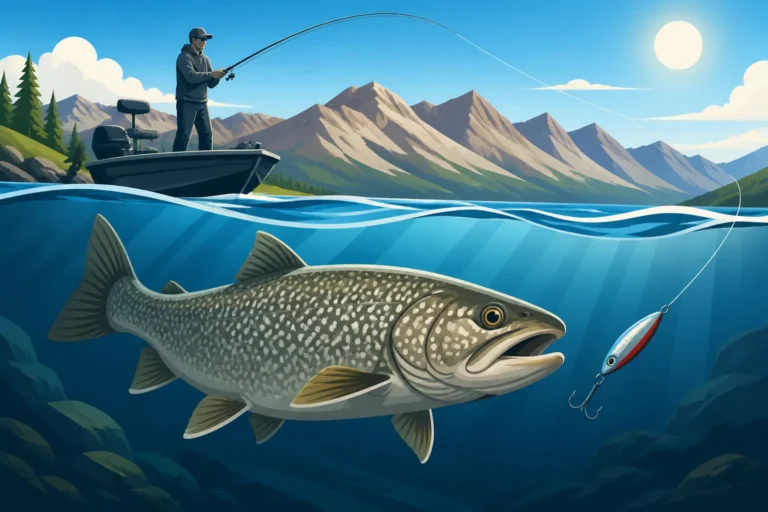
- Trophy Lake Trout (Mackinaw) and Splake: If your sights are set on the giants of Flaming Gorge Reservoir or the deepwater inhabitants of Bear Lake, we're talking about a completely different ballgame. Lake trout and splake often hold in very deep water, sometimes over 100 feet. For these beasts, you need substantial weight. Jigs ranging from 1/8 oz up to 1/4 oz, 1/2 oz, or even heavier are common. The sheer depth requires a jig that can get down quickly and stay down. Large tube jigs, heavy spoons, or specialized vertical jigs are often the go-to choices here. If you're serious about pursuing these giants, our Utah Lake Trout Mackinaw Guide and tips on How to Vertical Jig for Lake Trout Through the Ice will be invaluable.
Water Depth and Current
The environment beneath the ice, particularly the water depth and any subtle currents, is paramount to your jig weight decision.
- Shallow Water (Under 15 feet): In these scenarios, often found in smaller ponds or near reservoir shorelines, there’s no need for excessive weight. A 1/32 oz or 1/16 oz jig is usually perfect. It allows for maximum flutter and a slow, tempting fall, which is crucial when fish have ample time to inspect your lure. Too heavy, and your jig will just plummet and lay on the bottom, lacking any appealing action.
- Moderate Depth (15-40 feet): This is the sweet spot for many Utah ice fishing locations, including popular areas at Deer Creek or Jordanelle. A 1/16 oz to 1/8 oz jig provides a versatile option. It’s heavy enough to get down relatively quickly and maintains good line tension for bite detection, but still light enough to impart a decent amount of action with your rod tip. This range is excellent for actively searching different depths in the middle of the water column.
- Deep Water (40+ feet): As mentioned with lake trout, when you’re fishing depths of 40 feet, 60 feet, or even over 100 feet, gravity is your friend, but also your foe if your jig is too light. Heavy jigs from 1/8 oz to 1/2 oz or more are essential here. The primary goal is to reach the fish zone quickly and efficiently. Consider the time it takes for a light jig to sink that far – you’d spend more time waiting than fishing.
- Subsurface Current: While ice fishing often feels static, subtle currents can exist, especially near inlets, outlets, or within larger, deeper reservoirs like Bear Lake. A heavier jig helps to counteract these currents, keeping your line more vertical and preventing your jig from drifting too far from your hole. If your lightweight jig is constantly being swept away, upgrading to a slightly heavier option can make a world of difference in maintaining control and knowing exactly where your lure is.
Fish Activity and Presentation Style
Fish aren't always in the same mood, are they? Sometimes they're aggressive hunters, other times they're barely interested. Your jig weight, combined with your jigging style, needs to match their activity level.
- Aggressive Fish: When trout are actively feeding, perhaps during a morning bite or after a fresh stocking, they're often willing to chase. In these scenarios, a slightly heavier jig, dropped quickly and jigged with more pronounced movements, can trigger reaction strikes. The faster fall mimics an escaping baitfish, and the added weight can create more vibration, drawing fish in from a distance.
- Finicky or Neutral Fish: This is where many anglers struggle. If fish are showing up on your electronics but refusing to bite, or if they're just "looking" at your lure, it's time for a more subtle approach. Lighter jigs are often the answer. Their slower fall and natural flutter can entice even the most reluctant trout. Experiment with tiny quivers, slow lifts, and extended pauses. The goal is to make the offering appear effortless to catch, almost like an injured insect drifting by.
- Vertical vs. Horizontal Presentations: Your jig weight also dictates how well you can achieve certain presentations. A heavier jig excels in vertical presentations, where you want a direct up-and-down motion. Lighter jigs, especially those with wings or specific shapes, can be worked more horizontally, darting and gliding, which can be incredibly effective when fish are suspended and you want to keep the lure in their strike zone for longer. Understanding these nuances is part of becoming a truly skilled ice angler.
Recommended Jig Weights for Different Utah Trout Species and Scenarios
Let's get down to some specific recommendations based on common Utah ice fishing situations. Remember, these are guidelines, and flexibility is key! Always be willing to experiment until you find what the fish want on any given day.
For Stocked Rainbows and Small Cutthroats
When you're hitting up one of Utah's many community ponds or the shallower areas of larger reservoirs, where the focus is often on recently stocked rainbow trout or smaller cutthroats, finesse is your friend. These fish tend to be less aggressive than their wilder counterparts and often respond best to a subtle presentation.
You'll typically want to stick with 1/32 oz to 1/16 oz jigs. This weight range allows for a slow, enticing fall that mimics small insects or zooplankton, which are a common food source for these fish. Waters like Spring Run Pond in Farmington, Decker Lake in West Valley City, or even the upper water column of more popular spots like Jordanelle Reservoir, are prime locations for this approach. Small tungsten jigs, often available in multi-packs on Amazon, are excellent choices here because tungsten is denser than lead, giving you a smaller profile for the same weight, which can be crucial for enticing wary fish. Many anglers find success using a small jig tipped with a wax worm or a piece of Berkley PowerBait. For a deeper dive into how to effectively fish for these, check out our How to Ice Fish for Trout in Utah guide.
For Larger Rainbows, Browns, and Tiger Trout
Now, if you're venturing out to pursue the more robust trout species that inhabit reservoirs like Strawberry Reservoir, Scofield Reservoir, Fish Lake, or even some of the deeper sections of Bear Lake, you'll need a bit more heft. These fish are generally larger, reside in deeper water, and can be more active predators.
A good starting point here is the 1/16 oz to 1/8 oz range. This offers a fantastic balance between getting your lure down to the fish efficiently and still providing enough action to trigger a bite. At a place like Strawberry Reservoir Ice Fishing Spots, you might be targeting larger cutthroat and rainbow trout, sometimes suspending in 20-40 feet of water. An 1/8 oz jig can help you quickly drop through smaller fish to reach these larger targets. When chasing the elusive tiger trout at Scofield, which can grow quite large, a slightly heavier jig allows for a more aggressive jigging motion that can imitate a fleeing baitfish. Our guide on How to Catch Tiger Trout at Scofield Reservoir has some great tips for these unique fighters. Pairing these jigs with natural bait or small minnow-imitating soft plastics can be particularly effective.
For Deepwater Lake Trout and Splake
This is where the heavy artillery comes out! When you're fishing for trophy lake trout (often called Mackinaw in Utah) at places like Flaming Gorge Reservoir or large splake at Fish Lake, you're dealing with immense depths. These fish are often found in 40, 60, 80, or even over 100 feet of water.
For these deepwater behemoths, you'll need jigs ranging from 1/8 oz all the way up to 1/2 oz or more. The exact weight will depend on the precise depth, any subsurface current, and the size of the forage you're trying to imitate. The primary objective is getting your lure down quickly and efficiently to the fish, which might appear as fleeting marks on your fish finder. Heavy vertical jigs, large tube jigs, or heavy spoons are common choices. When you're exploring the Flaming Gorge Trophy Lake Trout Spots, for instance, you'll find anglers relying on these heavier presentations to reach the depths where these giants lurk. Mastering the technique of vertical jigging with these heavier lures is crucial, as detailed in our article How to Vertical Jig for Lake Trout Through the Ice. Remember that even though you're using heavy jigs, a subtle twitch can often be what seals the deal after you've reached the desired depth.
Here’s a quick overview to help you visualize the choices:
| Trout Species/Scenario | Water Depth (Feet) | Recommended Jig Weight (oz) | Key Consideration |
|---|---|---|---|
| Stocked Rainbows/Cutthroats | 5-20 | 1/32 – 1/16 | Subtle action, light bites, natural fall |
| Larger Rainbows/Browns/Tiger | 15-40 | 1/16 – 1/8 | Versatile, good balance of speed/action, deeper search |
| Deepwater Lake Trout/Splake | 40+ | 1/8 – 1/2+ | Rapid descent, heavy presentation, large forage imitation |
| Finicky Fish, Clear Water | Any | Lighter end of range | Maximize natural flutter, extended hang time |
| Aggressive Fish, Dark Water | Any | Heavier end of range | Faster fall, more vibration, reaction strike |
Tips for Maximizing Your Success with the Right Jig Weight
Choosing the initial jig weight is a great start, but becoming truly proficient at ice fishing for trout involves continuous adjustment and attention to detail. The best anglers are those who are always observing, learning, and adapting. Here are some pro tips to help you make the most of your jig weight selection.
Start Light, Go Heavy (or Vice Versa)
One of the most effective strategies is to approach each new fishing scenario with an open mind and a willingness to experiment. Don't be afraid to change things up if the fish aren't biting. A good starting point is often a medium-light jig, say 1/16 oz. This weight is versatile enough to give you a decent feel for the depth and any activity.
From there, observe the fish. If you're seeing fish on your sonar but they're not committing, or if you're only getting very subtle bites, consider going lighter. A 1/32 oz jig, or even smaller, might be what it takes to present a more natural, irresistible offering. Sometimes, that extra flutter or slower fall is the key. On the other hand, if fish are active but you're struggling to get your jig down to them quickly enough, or if you're not feeling those deeper bites, don't hesitate to bump up to an 1/8 oz or even 1/4 oz jig. Having a variety of weights is crucial, and you can find excellent multi-packs of various jig weights on Amazon that ensure you're prepared for any scenario Utah's waters throw at you.
Observe Your Electronics and Fish Behavior
Your fish finder is your window into the underwater world. Pay close attention to what it's telling you about fish behavior. Are trout rising quickly to meet your jig, or are they staying put on the bottom, only occasionally moving toward your presentation?
If fish are actively moving up to intercept your lure, a faster fall rate with a heavier jig might be exactly what they're looking for. It can trigger that instinctual chase. If, however, fish are just swimming past or slowly rising to your jig before turning away, they're telling you they want something more enticing. This is often a sign to downsize your jig weight, allowing for a slower, more deliberate action. Learning to interpret these subtle cues on your screen is a skill that comes with practice, but it's invaluable. Our guides on Best Fish Finders for Ice Fishing in Utah and How to Read a Fish Finder for Utah Reservoirs can help you get the most out of your electronics.
Pairing Jig Weight with Line and Rod
The entire system – rod, reel, line, and jig – works in concert. An improperly balanced setup can negate all your efforts in choosing the perfect jig weight.
- Lighter Jigs (1/32 – 1/16 oz): These tiny jigs require delicate tackle. Pair them with ultralight spinning rods that have very sensitive tips. Your line choice is also critical; 2-4 lb test monofilament or fluorocarbon is ideal. The lighter line offers minimal resistance in the water, allowing the jig to perform its natural dance and enhancing your ability to feel subtle bites. Trying to fish a 1/32 oz jig on 8 lb test line with a heavy rod is like trying to swat a fly with a baseball bat – it just won't work well. You might want to refer to our guide on the Best Rod Length for Ice Fishing in Utah for more detailed rod choices.
- Heavier Jigs (1/8 oz and up): As your jig weight increases, so can your line and rod power. A medium-light to medium power rod with a fast action tip is usually appropriate for 1/8 oz to 1/4 oz jigs. For the really heavy lake trout jigs, you might even step up to a medium-heavy rod. Line-wise, 4-8 lb test fluorocarbon or braided line with a fluorocarbon leader is suitable. The heavier line handles the increased weight and gives you more backbone for fighting larger fish. It's still important to match the line diameter to the jig weight to ensure a natural presentation. For specific line recommendations, check out Best Pound Test Line for Utah Stocked Trout.
Bait and Attractants
While the jig itself is paramount, what you tip it with can also subtly influence its effective weight and action. A small wax worm, mealworm, or even a piece of Gulp! bait (which you can conveniently find on Amazon) will add a tiny bit of mass to your jig. This small addition can slightly alter the fall rate and might require you to adjust to a slightly lighter base jig to achieve the desired subtle action.
Furthermore, these added attractants often provide scent and visual appeal that can seal the deal. Remember that while live bait is excellent, many effective soft plastics like the aforementioned Gulp! or even specific fly patterns designed for ice fishing (often resembling insects) can be incredibly productive. If you're curious about other bait options, our article on What Bait Works Best During the Bear Lake Cisco Run provides some interesting insights that can be adapted to other trout species. Experimentation, as always, is key to discovering what works best on any given day.
Disclaimer
Fishing conditions and regulations in Utah can change. Always consult the latest Utah Division of Wildlife Resources (UDWR) regulations before heading out. This guide provides general advice and recommendations.