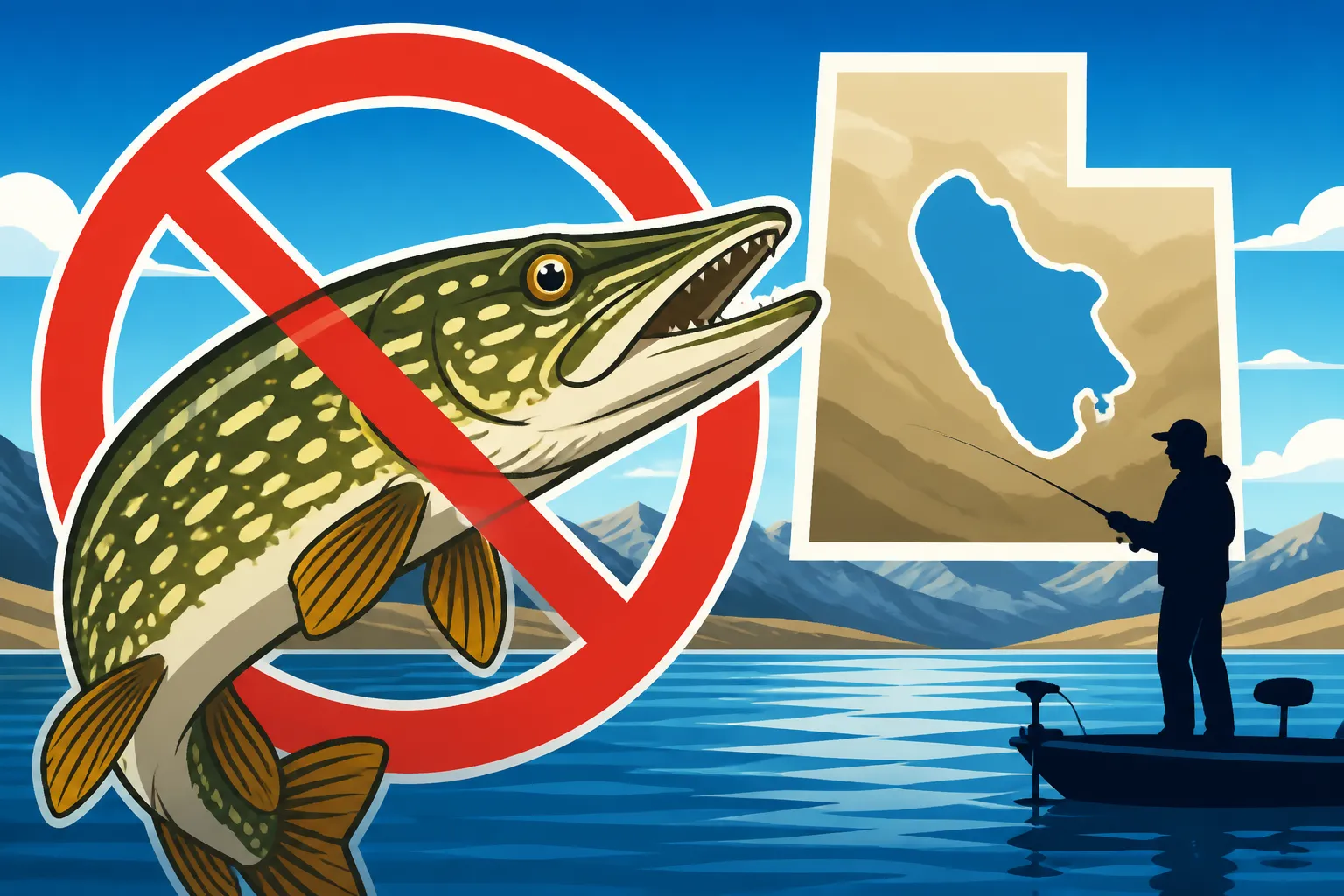
Utah Northern Pike Kill Rules at Utah Lake
It's incredibly frustrating when you're out on the water, enjoying a peaceful day of fishing, only to hook into a species that you're required to kill. It feels counterintuitive to many of us who are passionate about conservation and catch-and-release. But when it comes to Northern Pike in Utah Lake, the rules are very clear, and they exist for extremely important reasons. This guide will walk you through exactly why these mandatory kill rules are in place, how to identify Northern Pike, and what your responsibilities are as an angler to help protect Utah's precious fisheries, especially at Utah Lake.
Understanding the Northern Pike Threat in Utah Lake
Northern Pike are a formidable fish, known for their aggressive predatory nature and their ability to thrive in a variety of environments. While they are a popular sport fish in some parts of the world, in Utah Lake, they represent a serious and immediate threat to the delicate ecosystem and the survival of native and sport fish populations. It's a classic case of an introduced species turning into a major problem, and understanding why they are so dangerous is the first step in appreciating the "kill rule."
Why Northern Pike Are a Problematic Invasive Species
Northern Pike are, without a doubt, one of the most concerning invasive fish species found in Utah's waters. Their presence at Utah Lake is particularly alarming because of their insatiable appetites and their highly efficient predatory tactics. These fish are ambush predators with powerful jaws, rows of razor-sharp teeth, and an elongated, torpedo-shaped body designed for explosive bursts of speed. They lie in wait among weeds or submerged structures, then dart out to engulf unsuspecting prey whole. This makes them incredibly effective hunters, capable of consuming vast quantities of other fish.
The real issue, however, goes beyond just their predatory prowess. Northern Pike reproduce at an astonishing rate, laying thousands of eggs in shallow, vegetated areas. This rapid reproduction means that once a population is established, it can explode quickly, outcompeting native fish for food and habitat, and preying heavily on their young. Unlike some fish that might only feed on specific types of prey, pike are opportunistic, eating whatever they can catch, from smaller baitfish to juvenile sport fish like Walleye, Largemouth Bass, and even young Catfish. This direct competition and predation severely impact the food web, leading to declines in other species that are crucial to the lake's ecological balance and to the enjoyment of local anglers. The Utah Division of Wildlife Resources (DWR) actively monitors and manages these populations, and the mandatory kill rule is a direct response to this ecological threat. If you're curious about their initial appearance, you might want to read more about How Northern Pike Got Into Utah Lake.
The Specific Dangers to Utah Lake's Ecosystem
Utah Lake, in particular, is an ecosystem already facing significant challenges, and the introduction of Northern Pike adds another layer of complexity and danger. The most critical concern revolves around the June Sucker, an endangered species found only in Utah Lake. These unique native fish are a cornerstone of the lake's history and biodiversity, and their populations have struggled for decades due to habitat loss, water quality issues, and the impact of non-native species. Northern Pike, with their aggressive feeding habits, pose a direct and severe threat to the recovery efforts of the June Sucker. They will readily prey on juvenile June Sucker, making it incredibly difficult for the endangered species to rebuild its numbers.
Beyond the June Sucker, the pike's presence also jeopardizes popular sport fisheries in Utah Lake. Imagine investing time and effort into catching a trophy Walleye or a healthy Channel Catfish, only to find that their food sources are depleted or their young are being systematically consumed by an invasive predator. The DWR has invested considerable resources into developing robust populations of these sport fish, and the pike undermine these efforts. The long-term presence of Northern Pike could lead to a drastic reduction in catch rates for anglers targeting other species, fundamentally changing the fishing experience at Utah Lake. It's a delicate balance, and the pike tilt that balance dangerously, forcing the DWR and anglers to take drastic measures to protect the lake's future.
The Mandatory Kill Rule Explained
The concept of a "mandatory kill" or "mandatory harvest" rule can be jarring for many anglers, especially those who practice catch-and-release to promote healthy fish populations. However, when it comes to invasive species like Northern Pike, this rule is a vital tool in wildlife management. It's not about being wasteful or cruel; it's about actively participating in the removal of a destructive force from an ecosystem that cannot sustain it.
What "Mandatory Harvest" Truly Means for Anglers
When the Utah Division of Wildlife Resources (DWR) implements a "mandatory harvest" rule for a species, it means exactly what it sounds like: if you catch that fish, you are legally required to remove it from the water and not release it. For Northern Pike at Utah Lake, this isn't a suggestion or a recommendation; it's a non-negotiable regulation. This can definitely feel like a moral conundrum for anglers who have been taught the principles of catch-and-release, especially for healthy-looking fish. You might think, "But it's a good-sized fish, surely it's a shame to just kill it?" And that feeling is completely valid! Many of us were raised with the ethos of respecting every fish we catch.
However, in this specific context, releasing a Northern Pike back into Utah Lake, even if it appears healthy, directly contributes to the ongoing ecological destruction. Each pike removed is one less predator eating native fish and sport fish, and one less individual contributing to the invasive population's rapid growth. The DWR has made it abundantly clear: Why Does Utah Lake Require You to Kill Every Northern Pike? – it's a desperate measure to protect the lake's future. Understanding that your participation in this rule is a crucial act of conservation, rather than wanton destruction, can help shift that perspective. It's an active step in safeguarding the fishing opportunities for future generations.
Identifying Northern Pike to Avoid Mistakes
Proper identification is absolutely critical when dealing with mandatory kill rules. You don't want to accidentally harvest a protected or desirable species, and conversely, you don't want to release an invasive Northern Pike by mistake. While pike are fairly distinctive, they can sometimes be confused with other fish, most notably the Tiger Muskie, which are a sterile hybrid often stocked in other Utah waters like Pineview Reservoir.
Here's how to positively identify a Northern Pike:
- Snout: The most prominent feature is their long, flattened, duck-bill-shaped snout. It's a very distinctive profile.
- Body Shape: They have an elongated, cylindrical body, perfect for explosive speed.
- Coloration: Typically, Northern Pike have a dark green to olive-green back, fading to a lighter, yellowish belly. Their flanks are marked with distinctive light, bean-shaped or bar-shaped spots on a darker background. Think light spots on dark.
- Fins: The dorsal and anal fins are set very far back on the body, close to the tail, which again aids in their burst-predator hunting style. Their tail fin is typically forked.
- Cheeks and Gill Covers: A key differentiating factor from muskie is that Northern Pike have scales completely covering their cheek and only the upper half of their gill cover is scaled.
In contrast, a Tiger Muskie (which you might find in other areas, but typically not Utah Lake as a management priority due to pike presence) will have a more blotchy or tiger-striped pattern – dark bars on a lighter background, the opposite of a pike. Muskie also have scales on only the upper half of both their cheek and gill cover. If you're ever in doubt, it's always best to take a photo and contact the DWR for clarification before releasing a fish you suspect might be a pike. Erring on the side of caution and positive identification is key to adhering to the Fish Species You Must Keep and Not Release in Utah rules.
Practicalities of Pike Harvest at Utah Lake
Once you've positively identified a Northern Pike on your line, the next step is to handle the mandatory harvest responsibly and safely. These fish are predators for a reason, and they come equipped with features that require careful handling to protect both you and to ensure a humane dispatch for the fish. Having the right gear and knowing the proper techniques will make the process much smoother and less stressful for everyone involved.
Equipment and Best Practices for Landing and Handling Pike
Landing and handling a Northern Pike requires a bit more preparation than your average trout or panfish. Their sharp teeth are no joke, and a thrashing pike can cause significant injury if you're not careful. This is why having specific tools readily available is highly recommended for anyone fishing Utah Lake.
First and foremost, a sturdy landing net with a wide hoop is essential. A net helps to control the fish quickly once it's alongside the boat or shore, preventing it from flopping around and potentially injuring you or breaking your line. Avoid flimsy nets; a pike's weight and power can easily tear through them. Next, invest in a good pair of long-nosed pliers or, even better, jaw spreaders and de-hooking tools. These are critical for safely removing hooks from a pike's mouth without putting your fingers in harm's way. Their teeth are designed to hold prey, and they won't hesitate to clamp down on anything else. You can find excellent options for these on Amazon, often in sets that cater specifically to predatory fish.
For the humane dispatch of the fish, a fish club (often called a priest) or a sharp, robust knife is necessary. The goal is a quick, decisive blow to the head or a swift cut behind the head to sever the spinal cord. This ensures the fish doesn't suffer unnecessarily. Once dispatched, if you plan to keep the fish for consumption (pike can be quite good eating, especially if handled properly), have a cooler with ice ready. Proper storage immediately after harvest is vital for maintaining the quality of the meat. Remember, the rule isn't just to kill the fish, but to remove it from the water, and preparing it for transport or consumption is part of that process.
Transporting and Disposing of Northern Pike
Once you've harvested a Northern Pike, the rules around its transport are just as important as the harvest itself. In Utah, it is generally illegal to transport live fish, especially invasive species, from one water body to another. This regulation exists to prevent the accidental or intentional spread of invasive species to new waters. Therefore, any Northern Pike you catch at Utah Lake must be dead before you transport it. It is not permissible to take a live pike from Utah Lake and move it to another pond or lake, even if you believe you're "saving" it. Such actions could lead to severe penalties and would undermine all the conservation efforts.
If you choose to keep the pike for consumption, ensure it is properly cleaned and on ice. Many anglers find pike meat to be quite tasty, often compared to Walleye, though it does have a distinct "Y-bone" structure that requires a specific filleting technique. If you're interested in preparing your catch, you might find guides like How to Fillet a Trout After Keeping Your Limit helpful for general fish cleaning practices, which can be adapted for pike. For those who do not wish to consume the fish, proper disposal is still paramount. The DWR encourages anglers to dispose of harvested invasive fish in a manner that ensures they cannot re-enter any waterway. This means taking them home for disposal in household waste or, if at a public facility, ensuring they go into designated waste receptacles, never back into the lake or an adjacent stream. The key is preventing any scenario where the fish could reproduce or contaminate another body of water.
Broader Context of Invasive Species Management
The mandatory kill rule for Northern Pike at Utah Lake is not an isolated policy. It's part of a much larger, ongoing effort by the Utah Division of Wildlife Resources to combat invasive species across the state. These rules reflect a deep understanding of ecological science and the severe threat that non-native species pose to our local environments. By understanding this broader context, anglers can better appreciate the necessity of these seemingly harsh regulations and their critical role in protecting Utah's natural heritage.
How Mandatory Kill Rules Deter the Spread of Invasives
Mandatory kill rules, or mandatory harvest regulations, are one of the most direct and effective tools in the battle against invasive species. The fundamental biology behind these rules is simple: every invasive fish removed from the ecosystem is one less individual that can consume native species, compete for resources, or reproduce and further expand the invasive population. Invasive species often thrive because they lack natural predators in their new environment, allowing their numbers to explode unchecked. This is precisely the case with Northern Pike in Utah Lake. Their rapid growth and prolific breeding cycles mean that even a small founding population can quickly establish a dominant presence, rapidly altering the local food web.
Consider the compounding effect: if just a few dozen pike are released back into the lake by well-meaning but misinformed anglers, those few fish can produce thousands upon thousands of offspring in a short period. Each of those offspring then grows to become a predator themselves. Without aggressive management, including mandatory harvest, the population curve for an invasive species like the pike can quickly become exponential, reaching a point where eradication or even significant control becomes virtually impossible. These rules aren't about eliminating every single pike; they are about suppressing their numbers to a point where the native and sport fish populations have a fighting chance to recover and thrive. This same principle applies to other invasive threats; for example, Utah has stringent Utah Aquatic Invasive Species Rules for Anglers related to things like Quagga Mussels, recognizing that immediate and decisive action is required to prevent widespread damage.
Angler's Role in Protecting Utah's Fisheries
As anglers, we have a unique and powerful role to play in protecting Utah's fisheries. We are often the first line of defense and the most frequent observers of what's happening on the water. Following the mandatory kill rule for Northern Pike at Utah Lake isn't just about compliance; it's a direct act of conservation. Each pike you remove is a contribution to the health and future of Utah Lake. It means you're actively helping to preserve the endangered June Sucker and supporting the sustainability of popular sport fish like Walleye, Catfish, and Bass.
Beyond the immediate act of harvesting pike, anglers can contribute in other significant ways. Educating yourself and other anglers about these rules, and explaining why they exist, can foster a stronger community commitment to conservation. If you see something suspicious, like someone illegally releasing fish, or you encounter a species you don't recognize in a particular water, reporting it to the DWR is crucial. They rely on public input and vigilance to monitor and manage these complex situations. Adhering to all Utah Fishing Regulations Explained, from license requirements to bag limits and invasive species protocols, is part of being a responsible steward of Utah's natural resources. Your active participation and awareness are truly invaluable in the ongoing effort to maintain healthy, diverse, and productive fisheries across the state.
Beyond the Rule – The Future of Utah Lake and Pike
The mandatory kill rule for Northern Pike at Utah Lake is not a standalone solution, but rather one critical component of a multi-faceted approach to fisheries management. The Utah Division of Wildlife Resources (DWR) is constantly working behind the scenes, employing various strategies, conducting research, and adapting its plans to address the complex challenges posed by invasive species and to protect the long-term health of Utah Lake. Understanding these broader efforts can help anglers appreciate the bigger picture and maintain perspective on their own crucial role.
Ongoing DWR Efforts and Research
The Utah Division of Wildlife Resources is deeply committed to the restoration and preservation of Utah Lake, and that includes comprehensive efforts to manage the Northern Pike population. The mandatory kill rule for anglers is just one piece of a much larger puzzle. The DWR actively conducts its own surveys and removal efforts, often employing specialized techniques like electrofishing or targeted netting to remove large numbers of pike. These efforts are often strategic, focusing on areas where pike are known to congregate or during spawning periods when they are more vulnerable. You might see DWR crews out on the lake with specialized boats and equipment, which are all part of this ongoing battle.
Furthermore, the DWR is constantly engaged in research to better understand the dynamics of the pike population in Utah Lake. This includes studying their growth rates, reproductive success, dietary habits, and movements within the lake. This scientific data is crucial for refining management strategies and ensuring that efforts are as effective and efficient as possible. They might investigate new removal methods or collaborate with academic institutions to explore the broader ecological impacts. The goal isn't just reactive management, but proactive understanding to prevent future incursions and to enhance the overall resilience of the lake's ecosystem. These dedicated professionals are always working to learn more about the challenges, like How Northern Pike Got Into Utah Lake, to prevent history from repeating itself elsewhere.
What to Expect When Fishing Utah Lake
Despite the ongoing challenges posed by Northern Pike, Utah Lake remains a fantastic place to fish, offering diverse opportunities for anglers. You can still expect to encounter healthy populations of Walleye, Channel Catfish, and White Bass, which are popular sport fish that thrive in the lake's warm, fertile waters. However, it's also realistic to expect that you will catch Northern Pike from time to time. They are established in the lake, and while suppression efforts are ongoing, complete eradication is an incredibly difficult, if not impossible, task for a body of water of Utah Lake's size.
When you do hook into a pike, remember your role: safely and humanely harvest the fish, removing it from the ecosystem. Don't be discouraged by catching them; instead, view each pike you remove as a victory for the lake and its native species. The DWR continues to stock various sport fish, including Walleye, to bolster populations, and anglers' adherence to the pike kill rule directly supports the success of these stocking programs. For example, maintaining a healthy Utah Lake Walleye Population is a high priority, and every pike removed helps protect those juvenile walleye. So, gear up with the appropriate tools—maybe some new heavy-duty pliers or a sturdy net from Amazon—and head out to Utah Lake with the confidence that you're not just fishing, you're actively contributing to the health of one of Utah's most important and unique fisheries.
| Feature | Northern Pike | Tiger Muskie (for comparison) |
|---|---|---|
| Snout Shape | Long, flattened, "duck-bill" | Slightly shorter, more rounded, less pronounced |
| Body Markings | Light, bean-shaped or bar-shaped spots on a dark background | Dark, vertical bars or blotches on a lighter background (tiger stripes) |
| Scales on Cheek | Fully scaled | Scaled only on the upper half |
| Scales on Gill Cover | Scaled only on the upper half | Scaled only on the upper half |
| Tail Fin | Forked, often with rounded lobes | More deeply forked, often with pointed lobes |
| Dorsal/Anal Fins | Set very far back on the body | Set very far back on the body, similar to pike |
| Typical Size (Utah Lake) | Varies, can reach large sizes | Can reach very large sizes, often larger than pike |
| Mandatory Harvest at Utah Lake | YES | No (if caught, usually release, but rare at Utah Lake) |
Disclaimer
Please remember that fishing regulations, including those for invasive species and mandatory harvest rules, can change. Always consult the most current Utah Fishing Guidebook published by the Utah Division of Wildlife Resources (DWR) before heading out on the water. This guide provides general information, and it is every angler's responsibility to know and follow all applicable laws and regulations.