How to Land a Tiger Muskie Without Losing It
There's nothing quite like the heart-stopping strike of a tiger muskie. These incredible hybrid fish, with their predatory instincts and explosive power, can challenge even the most experienced angler. But the real challenge often isn't just getting one to bite; it's landing that beast without it snapping your line, throwing the hook, or thrashing its way to freedom right at the boat. Losing a trophy muskie boat-side is a gut-wrenching experience, and this guide is here to walk you through the essential steps and techniques to ensure your next tiger muskie encounter ends with a successful catch and a safe release.
Understanding the Tiger Muskie Battle
When a tiger muskie decides to hit, it's rarely subtle. These fish are apex predators in the waters they inhabit, like Pineview Reservoir, and they strike with an aggression that can take you by surprise. Knowing what to expect and how to react in those critical first few seconds, and throughout the ensuing battle, is paramount to landing them successfully.
The Initial Strike and Hook Set
Picture this: you're casting your favorite big bucktail or crankbait across a weedy flat at Pineview, grinding it back to the boat, when suddenly, your rod nearly gets ripped from your hands. That's a muskie. Your first instinct might be to just hang on, but a proper hook set is absolutely crucial. Because of their hard, bony mouths, simply reeling in won't often drive the hooks in deep enough. You need to deliver two, strong, sweeping hook sets. I'm talking about leaning into it, pulling the rod firmly back and to the side, then quickly reeling down and doing it again. Think of it like trying to pull a nail out of a tough piece of wood – one tug might not do it, but two quick, powerful jerks often will. Many anglers get so excited or overwhelmed by the initial impact that they forget this vital step, leading to shallow hook sets that inevitably pull free during the fight.
After the initial hook set, be prepared for an immediate, powerful run. These fish are sprinters, and they will often try to bolt for deeper water or dense cover to try and dislodge the lure. Your drag should be set firm, but not locked down. You need to let the fish take line when it wants to, otherwise, you risk snapping your line or ripping the hooks right out of its mouth. It’s a delicate balance, allowing the fish to run without giving it too much slack that could lead to a lost fish.
Managing the Fight: Runs and Head Shakes
Once hooked, a tiger muskie will employ a variety of tactics to escape. Long, powerful runs are common, where your reel will scream as line peels off. The key here is to maintain constant, heavy pressure without overpowering the fish. Keep your rod tip high to act as a shock absorber, bending into the fish and using the rod's backbone to tire it out. If you drop your rod tip, you lose leverage, and the fish gains the upper hand, making it easier for it to throw the hook.
Beyond the runs, muskie are infamous for their violent head shakes. They'll often turn their head sideways and thrash violently, trying to dislodge the lure. This is where a strong leader is absolutely non-negotiable. You can read more about "What Lures Work Best for Tiger Muskie in Utah?" for some ideas on lure choice, but regardless of your lure, a robust leader is essential. These head shakes can put immense stress on your line and knots, and if you have too much slack, those sharp head movements can create enough centrifugal force to eject the hooks. Keep your line taut, and try to turn the fish's head if possible to disrupt its thrashing efforts. Think of it like dancing with a very angry, muscular partner – you want to lead the dance, not let them drag you around.
Essential Gear for Landing a Muskie
Having the right equipment isn't just about catching the fish; it's about successfully landing it and ensuring its safety, especially if you plan on releasing it, which is common for "Tiger Muskie in Utah Reservoirs" like Pineview. Cutting corners on gear when targeting these formidable predators is a recipe for disappointment.
Rod, Reel, Line, and Leader Considerations
For tiger muskie, you're going to need heavy-duty tackle. Forget your trout setup; this is a whole different ballgame. A stout baitcasting rod, typically 7 to 9 feet long with a heavy or extra-heavy action, is ideal. This length provides the leverage you need for casting large lures and fighting powerful fish, while the heavy action ensures you have the backbone to control a thrashing muskie. A quality baitcasting reel, capable of holding a substantial amount of heavy line and delivering consistent drag, is also essential.
Your fishing line needs to be equally robust. Braided line in the 65 to 100-pound test range is standard. It offers incredible strength, minimal stretch for solid hook sets, and good abrasion resistance. However, braid alone isn't enough due to the muskie's razor-sharp teeth. This is where a heavy-duty leader comes into play. You need a bite-proof leader, typically made from heavy fluorocarbon (80-150 lb test) or, more commonly, a multi-strand wire leader. The length of this leader is important too; it should be long enough to prevent the muskie's body from rubbing against your main line during the fight and certainly long enough to protect against those toothy jaws near the lure. Neglecting this crucial piece of gear is a sure way to donate a lure and lose a fish, so do yourself a favor and invest in quality leaders.
The Critical Role of a Large Net
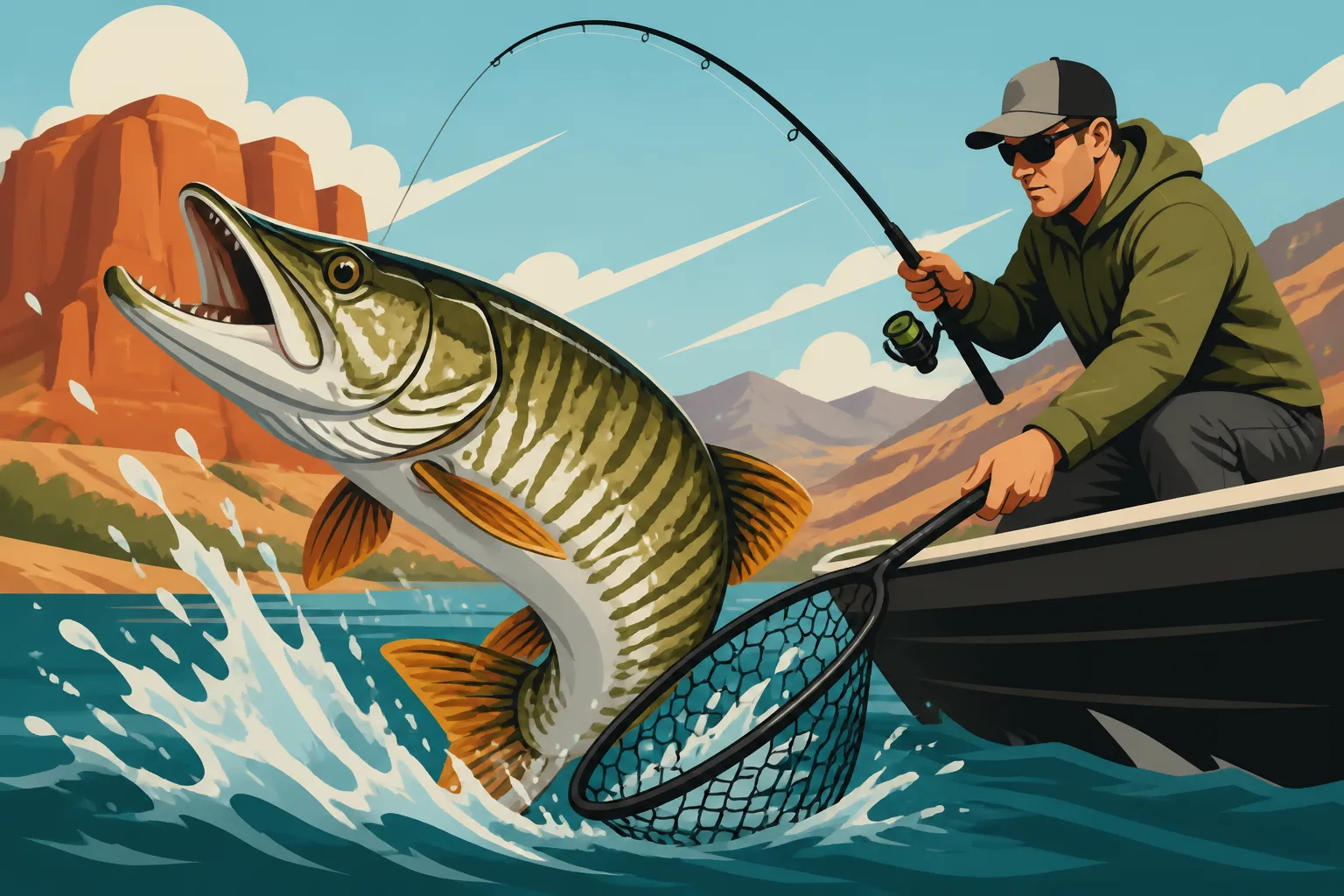
This cannot be stressed enough: if you are serious about landing and safely releasing tiger muskie, you must have a large, muskie-specific landing net. There's a reason these nets are designed the way they are – they are built for these big fish. A standard bass or trout net simply won't cut it. A proper muskie net has a deep, wide hoop, a long handle for reaching out, and most importantly, a rubberized or knotless mesh. The rubberized mesh protects the fish's delicate slime coat, fins, and eyes, and it also prevents the hooks from getting tangled, which is a common frustration with knotted nylon nets.
Trying to hoist a muskie into the boat by hand, or gaffing it if you intend to release it, is incredibly dangerous for both you and the fish. A muskie's teeth are formidable, and a thrashing fish can easily injure an angler. Furthermore, pulling a heavy fish directly out of the water can cause internal damage, especially if it's not supported properly. Bringing the fish to the net, letting it swim into the large hoop headfirst, and then lifting the net to secure it is the safest and most effective method. Some anglers even mention Best Landing Net for a Trophy Lake Trout which can often be adapted for muskie due to their similar size and fight, but always prioritize a net specifically designed for large, toothy predators. You can find excellent options on platforms like Amazon.
Safe Landing and Handling Techniques
The moment the muskie is boat-side is often the most exhilarating and chaotic part of the entire encounter. This is where most fish are lost, either by the angler rushing, losing control, or simply not knowing the proper handling protocols for "What a Tiger Muskie Is" and how formidable they are.
The Figure-Eight and Boat-Side Control
One of the most effective techniques to seal the deal with a muskie is the figure-eight maneuver at the boat. As you reel the fish close, it will often follow your lure right up to the boat. Instead of pulling the lure out of the water, plunge your rod tip into the water and trace a large figure-eight pattern with your lure boat-side. This keeps the lure in the water, mimicking an injured baitfish, and often entices the muskie to strike again or keeps it engaged. Many times, a muskie that seemed hesitant will commit to the strike during this maneuver.
Once the fish is at the boat, whether it strikes again during the figure-eight or you've fought it to exhaustion, keep it in the water as much as possible. Use the rod to guide its head towards the waiting net. Don't chase the fish with the net; lead the fish into the net. Once its head and a good portion of its body are in the net, lift it quickly and cleanly into the boat. Some anglers attempt to use a lip-gripper, but with muskie, this is generally not recommended as it can damage their jaw structure and puts your hands perilously close to their teeth. The large net is your best friend here.
Proper Gripping and Hook Removal
Now that you have the muskie safely in the net, it’s time for hook removal and photos. Resist the urge to immediately grab the fish. Keep it submerged in the net if possible, or at least keep its head and gills in the water while you prepare. You'll need long-nose pliers, bolt cutters (for cutting hooks if necessary), and potentially a jaw spreader. It's not uncommon for these fish to swallow a lure or have hooks deeply set.
To safely handle a muskie, cradle its body with one hand under its belly and the other hand firmly gripping the gill plate (the bony plate covering the gills, not inside the actual gills, which would injure the fish). The gill plate provides a secure, non-damaging grip point. Once you have a firm grip, you can lift the fish for a quick photo.
Never stick your fingers into their gills or attempt to lip-grip them like a bass. Their teeth are incredibly sharp, and their gill rakers are like sandpaper, designed to hold prey. If the hooks are hard to remove, don't hesitate to use bolt cutters to snip the hooks from the lure. It's much better to sacrifice a few hooks than to severely injure the fish or yourself. This is particularly important for species like "Tiger Muskie Size in Utah", which can be quite large and powerful.
Here's a quick reference table for muskie handling gear:
| Item | Purpose | Key Features | Why It's Crucial |
|---|---|---|---|
| Large Net | Landing fish safely | Deep, wide hoop; long handle; rubberized/knotless mesh | Protects fish, prevents hook tangles, ensures angler safety |
| Long-nose Pliers | Hook removal | 11-16 inches long, strong jaws | Safely reach deep-set hooks, keep hands away from teeth |
| Bolt Cutters | Cutting hooks (if necessary) | Small, powerful cutters | Quickly remove deeply embedded hooks without tearing fish's mouth |
| Jaw Spreader | Holding mouth open for hook removal | Blunt ends, strong spring | Keeps teeth away from hands, allows better access for pliers |
| Measuring Board | Quick, accurate length measurement | Non-abrasive, easy-to-read markings | Minimal handling time for measurement, ensures fish health before release |
| Heavy Gloves | Optional hand protection | Leather or puncture-resistant | Added safety against teeth and gill plates, especially for inexperienced handlers |
Releasing Your Trophy: Ensuring Survival
Most anglers targeting tiger muskie in Utah are doing so for the sport, with the intention of releasing these magnificent fish to grow bigger and fight another day. Proper release techniques are just as critical as the fight itself.
Minimizing Air Exposure
The absolute golden rule for catch-and-release fishing, especially with large predators like muskie, is to minimize their time out of the water. Fish breathe through their gills, which are designed to extract oxygen from water. When exposed to air, their gills can collapse, making it hard for them to "breathe" once returned to the water. This can lead to delayed mortality, where the fish swims away seemingly fine, but dies hours or days later.
Aim for less than 30 seconds of air exposure. This means having your camera ready, your measuring board nearby, and your release tools prepped before you even lift the fish from the net. Get your photo quickly, measure it if you wish, and then get it back into the water without delay. Avoid holding the fish vertically by its jaw or tail alone, as this can damage its internal organs. Always support the fish horizontally with two hands or cradled in the net. The health of our fisheries depends on these practices, and understanding "Why Tiger Muskie Were Introduced to Pineview Reservoir" helps us appreciate their role and the importance of healthy populations.
Revival and Release Protocols
Once you've removed the hooks and snapped your quick photo, it's time to revive the muskie. Place the fish gently back into the water, ideally in an upright position. Support its body gently, particularly around its midsection, and allow it to orient itself. If the fish seems lethargic or struggles to stay upright, gently hold it by the tail and move it back and forth to force water through its gills. This "pumping" action helps oxygenate its blood. Do this slowly and deliberately, paying close attention to the fish's responses.
You'll know the muskie is ready for release when it starts to kick its tail vigorously and tries to swim away from your grasp. Once it gives a strong kick and pulls away, let it go. Watch it swim off strongly into the depths. This process can sometimes take a few minutes, especially with larger fish or those that fought particularly hard. Be patient; the extra time invested in a proper revival vastly increases the fish's chances of survival. Knowing "How to Catch Tiger Muskie at Pineview Reservoir" is only half the battle; knowing how to ensure their future is the other, more important half.
Disclaimer
This article is for general informational purposes only and does not constitute professional advice. Laws, prices and regulations vary by location and change over time. Consult a qualified professional for guidance on your specific situation.