How to Fish Deep Water for Summer Lake Trout
Ah, the dog days of summer in Utah. While many anglers are enjoying the sun-drenched shores or chasing panfish in shallower waters, a unique challenge (and incredible reward) awaits those willing to venture deeper: the elusive summer lake trout. There's nothing quite like the frustration of knowing these massive, hard-fighting fish are down there, but not being able to reach them or figure out their patterns. This comprehensive guide is here to unravel the mysteries of how to effectively fish for lake trout in Utah's deep, cool waters when the temperatures soar, equipping you with the knowledge and techniques to make those deep-water dreams a reality.
Understanding Lake Trout Behavior in Summer
Summer drastically changes how lake trout behave. Unlike their springtime counterparts that might cruise shallower points, once the sun really starts beating down, these fish become creatures of the deep. If you're not adjusting your approach, you'll be left wondering where all the fish went.
The Deep Water Migration
As Utah's glorious summer truly sets in, the surface waters of our larger reservoirs, like the renowned Flaming Gorge Reservoir, warm up considerably. For cold-blooded fish like lake trout, also affectionately known as Mackinaw in many circles, this means a rapid descent to find their preferred temperatures. They're not just looking for cooler water; they're also following the oxygen-rich layers and, crucially, their primary food sources. This migration isn't just a slight shift; we're talking about them moving from depths of 20-40 feet to well over 100 feet, sometimes even touching 200 feet or more, depending on the specific lake and conditions.
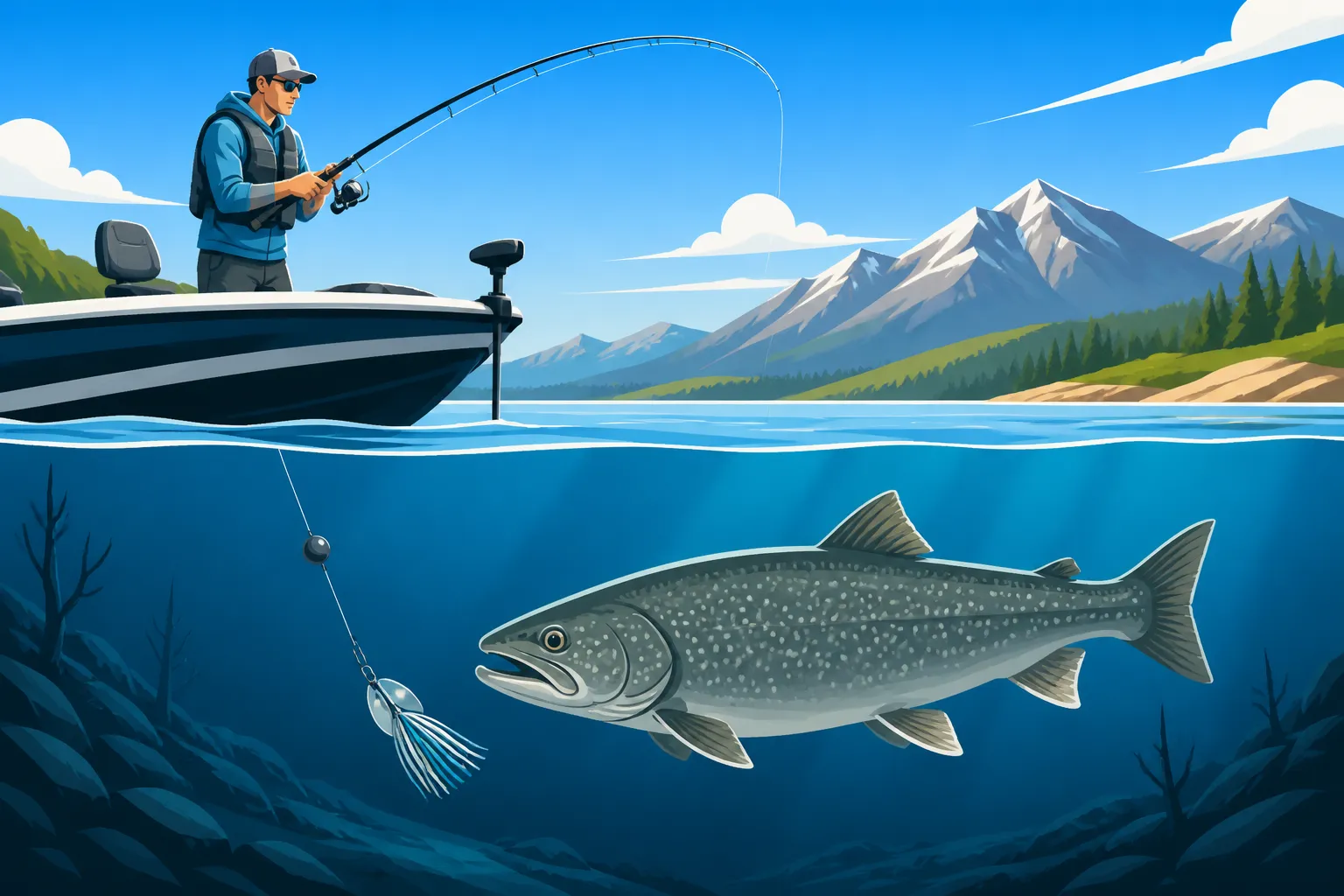
The key to understanding this deep-water migration is often the thermocline. Imagine a hidden layer in the water column where the temperature drops significantly. This thermocline acts like a natural barrier or a "floor" for warmer water and a "ceiling" for colder water. Baitfish, like kokanee salmon or ciscoes, often congregate just above or within this thermocline because it provides a comfortable temperature and a good oxygen level. Naturally, where the baitfish go, the lake trout follow, setting up shop below this critical temperature band to ambush their meals. For anglers, finding this thermocline with your electronics is the first major step in locating summer lake trout.
Prime Depths and Structures
So, we know they go deep, but "deep" can still be a vast and daunting area. When targeting summer lake trout in Utah, especially in big waters like Flaming Gorge, you're generally looking at depths ranging from 50 to 150 feet. However, don't be surprised if you find them even deeper, sometimes pushing down to 200 feet, particularly during heatwaves or in lakes with incredibly clear water. These fish aren't just suspended randomly in the middle of nowhere; they're almost always associated with some kind of structure.
Think about submerged humps, steep ledges, the edges of old river channels, and long tapering points that extend far out into the main lake basin. These are prime real estate for deep-water lake trout. Why? Because these structures provide ambush points, areas to rest out of the main current (if any), and pathways for baitfish to travel. A lake trout sitting on a deep ledge can easily dart out to grab a passing school of kokanee. Focusing on these underwater topographical features is absolutely critical. Use your mapping software and sonar to identify these "sweet spots" and then concentrate your efforts there. If you're finding baitfish balled up near one of these structures, you can bet there are lake trout nearby, patiently waiting for their next meal.
Essential Gear for Deep Water Lake Trout Fishing
Trying to fish for deep-water lake trout with your typical trout spinning setup is like bringing a butter knife to a sword fight – it’s just not going to cut it. These fish are big, powerful, and they live in an environment that requires specialized tools to effectively reach and fight them. Investing in the right gear isn't just about catching more fish; it's about making the entire experience more efficient and enjoyable.
Rods, Reels, and Line Selection
For deep-water lake trout, you need gear that can handle the heavy weights required to get your lures down and the sheer brute strength of a big Mackinaw. Forget ultralight setups; we're talking serious tackle here.
When it comes to rods, look for something with heavy power and a fast action. A rod in the 7 to 9-foot range is ideal. The heavy power allows you to effectively set hooks at extreme depths and battle a large fish, while the fast action provides the sensitivity needed to detect subtle bites transmitted through a long line. Many anglers prefer specialized trolling rods that have a softer tip to absorb strikes but significant backbone. Brands like Ugly Stik or St. Croix offer durable options that can stand up to the challenge. If you're primarily jigging, a shorter, stiffer rod might be preferred for better control.
For reels, capacity is king. You need a reel that can hold a lot of line, because you'll be letting out a significant amount, especially if you're trolling with downriggers or fishing in super deep water. Level-wind baitcasting reels are a popular choice for trolling because of their robust construction and line-management capabilities. Look for models in the 30-50 size range. Large spinning reels (4000-6000 series) can also work, especially for vertical jigging, but ensure they have a strong drag system and enough spool capacity for braided line.
Your line selection is paramount. A braided main line is almost a non-negotiable for deep-water lake trout. Why? Because braid has virtually no stretch, which is crucial for feeling bites and setting hooks when you have 150+ feet of line out. A good 30 to 50-pound test braided line will give you the strength and sensitivity you need. However, braid is highly visible in clear water. This is where a fluorocarbon leader comes into play. Attach a 10 to 20-foot section of 20 to 30-pound test fluorocarbon leader to your braided main line using a strong knot like a FG knot or an Albright knot. Fluorocarbon is nearly invisible underwater, making your presentation much more natural to wary lake trout. Choosing the right fishing line for Utah trout fishing often involves this kind of braid-to-fluoro setup, ensuring both strength and stealth. You can find a fantastic selection of these specific lines and other necessary components by exploring a general Utah Fishing Gear Guide.
The Importance of Electronics
In the realm of deep-water lake trout fishing, your boat's electronics aren't just helpful; they are absolutely indispensable. Without them, you're essentially fishing blind in a vast ocean. These tools are your eyes underwater, guiding you to structure, baitfish, and the lake trout themselves.
A high-quality fish finder is your best friend. Look for units that offer multiple sonar technologies, including 2D sonar, Down Imaging (or DownVu), and Side Imaging (or SideVu).
- 2D sonar is your bread and butter, showing you traditional arches for fish and the bottom contour. Learning to interpret these fish arches and distinguish them from bait balls or structure is a skill that comes with practice.
- Down Imaging gives you a picture-like view directly beneath your boat, helping you identify structure like ledges, rocks, and even individual fish with incredible clarity.
- Side Imaging is a game-changer for covering vast areas quickly. It "looks" out to the sides of your boat, scanning large swaths of water to reveal submerged humps, points, and schools of baitfish that you might have otherwise missed. This is particularly useful in massive reservoirs like Flaming Gorge, where fish can be spread out. Many of the best fish finders for Utah reservoirs will offer these advanced features, giving you a huge advantage.
Beyond just finding fish, your electronics are crucial for understanding the underwater environment. Use them to identify the thermocline, which, as we discussed, is often where lake trout will suspend. You can also spot baitfish schools, which appear as dense clouds or balls on your screen. Where there's bait, there are usually predators.
A reliable GPS unit (often integrated into your fish finder) is equally vital. Before you even leave the dock, study detailed contour maps of the lake to identify promising deep-water structures. Mark potential hotspots as waypoints. Once you're on the water and you locate a school of fish or a productive piece of structure on your sonar, mark it immediately with a waypoint. This allows you to return to that exact spot with precision, which is critical for repeat success. GPS also helps you navigate safely, especially on large, complex reservoirs, and allows you to track your trolling paths, making it easier to replicate successful patterns. Investing in quality marine electronics is easily one of the most impactful gear upgrades you can make for targeting deep-water lake trout.
Trolling Techniques for Deep Water Lake Trout
Trolling is arguably the most effective and popular method for covering vast amounts of water and consistently catching deep-dwelling lake trout in Utah during the summer months. It allows you to present your lures at precise depths for extended periods, enticing bites from cruising fish.
Downriggers and Dipsy Divers
To effectively troll for deep-water lake trout, you need to get your lures down to where the fish are holding, and keep them there. This is where specialized equipment like downriggers and Dipsy Divers become indispensable.
Downriggers are the ultimate tool for depth control. Imagine a heavy lead cannonball (typically 6-12 pounds) that you lower into the water on a steel cable. Your fishing line, with its lure attached, is then clipped into a release mechanism on that cable. The downrigger pulls the cannonball and your line clip down to your desired depth, allowing your lure to swim freely just behind it. When a fish strikes, the line pops out of the release clip, and you're fighting the fish directly on your rod, without the weight of the cannonball. This setup allows for incredibly precise depth control, which is critical when lake trout are holding within a narrow depth band, say, right above the thermocline. For a deep dive into using this gear, check out our guide on How to Downrig for Lake Trout. You can often find downriggers and related accessories on popular online retail sites like Amazon, making it convenient to gear up.
When operating downriggers, pay close attention to the depth where you're seeing baitfish and lake trout on your sonar. Adjust your downrigger accordingly, sometimes running multiple lines at slightly different depths to "pattern" the fish. Experiment with the distance your lure runs behind the cannonball; sometimes a longer lead is better for spooky fish.
Dipsy Divers offer a fantastic alternative or complement to downriggers, especially if you don't have a multi-downrigger setup or want to run more lines. These disc-shaped devices, often brightly colored, are attached directly to your main fishing line. They have a directional fin that, when set at various angles, "dives" the lure down and out to the side of the boat as you troll. By adjusting the weight and the angle setting, you can achieve different depths and lateral spreads, allowing you to cover more water without tangling lines. While not as precise as downriggers, Dipsy Divers are excellent for getting lures down to 30-70 feet, and sometimes deeper with larger models. They're particularly useful for targeting lake trout that might be slightly shallower or suspended higher in the water column than those you're aiming for with downriggers. Many anglers use a combination of downriggers and Dipsy Divers to cover a broader range of depths and horizontal areas when trolling, maximizing their chances on a given day. You can learn more comprehensive strategies in our Utah Trolling Techniques for Lake Trout guide.
Lure Selection and Presentation for Trolling
Once you've got your depth control dialed in, the next crucial step is choosing the right lures and presenting them effectively to trigger those strikes. Lake trout, especially large ones, can be quite particular, but they also have a strong predatory instinct for substantial meals.
For lure selection, big, flashy, and vibrant are often the keys. Large spoons are perennial favorites, especially those that mimic baitfish like kokanee or ciscoes. Think about spoons in the 4-7 inch range. Popular styles include Dodgers or Sling Blades paired with a squiddy, which creates a mesmerizing, erratic action that big lake trout can't resist. Large crankbaits, particularly those designed for deep diving, are also effective. Look for models that can dive to 20-30 feet on their own and then get them even deeper with your downrigger or Dipsy Diver. Swimbaits, especially soft plastics rigged on heavy jig heads, also work wonders, providing a realistic baitfish profile. Don't shy away from using larger baits; lake trout are opportunistic predators looking for a substantial meal, so a bigger profile often gets noticed.
When it comes to colors, variety is key, but some standouts include natural baitfish patterns (silver, blue, white), chartreuse, glow-in-the-dark options for deeper, darker water, and even bright oranges or pinks, especially when fish are aggressive or water clarity is low. It's always a good idea to have a spread of colors and styles until you figure out what the fish are keying in on that day. You can easily find a huge variety of these lures and colors on platforms like Amazon, making it simple to experiment.
Presentation is just as important as the lure itself. Trolling speed is critical and often ranges from a slow and steady 1.5 to 2.5 miles per hour. However, it's wise to experiment. Sometimes a slightly faster or slower speed can make all the difference. Don't be afraid to introduce S-turns into your trolling path. As your boat turns, the lures on the inside of the turn will slow down and drop slightly, while the lures on the outside will speed up and rise. This change in action can often trigger strikes from following fish that were hesitant to commit. Varying your speed subtly and intermittently can also achieve a similar effect. Always be watching your electronics for signs of fish or bait, and make adjustments to your depth or presentation based on what you're seeing. Remember, deep-water trolling for lake trout is less about speed and more about consistent, enticing action at the right depth.
Jigging and Vertical Presentation Strategies
While trolling covers water efficiently, sometimes lake trout are concentrated in specific areas, suspended over structure, or simply prefer a more aggressive, vertical presentation. This is when jigging really shines, allowing you to put a bait directly in front of their faces.
Heavy Jigs and Spoons
Vertical jigging for deep-water lake trout requires heavy lures that can quickly descend to the desired depth and be worked effectively. You're not just dropping a lure; you're actively trying to imitate a wounded baitfish or an easy meal, right in their strike zone.
Large jigging spoons are a cornerstone of this technique. Look for spoons in the 1 to 4-ounce range, sometimes even heavier if you're battling significant current or extreme depths. Classic examples include the Luhr-Jensen Crippled Herring, Northland Buck-Shot Rattle Spoon, or the Swedish Pimple. These spoons are designed to flutter and flash enticingly on the fall, mimicking a dying baitfish. When jigging them, lift your rod tip sharply, then allow the spoon to fall back on a semi-slack line. The flutter on the drop is what often triggers the strike.
Heavy tube jigs are another exceptionally effective lure. These are typically large plastic tubes, often 4-6 inches long, rigged on a heavy lead head that is inserted inside the tube. Weights can range from 1 to 6 ounces, again, depending on depth and current. Tube jigs offer a softer, more subtle action than spoons but still provide a significant profile. White and glow-in-the-dark are highly popular colors for tube jigs, especially in low light or very deep water. When jigging tubes, a series of short, sharp lifts followed by a pause can be incredibly effective, making the tube "swim" and then glide.
When selecting colors for both spoons and tubes, consider silver, white, glow, blue, and perch patterns. On clear, sunny days, metallic silver or blue can imitate natural baitfish beautifully. In deeper, darker conditions or during cloudy weather, glow-in-the-dark or bright chartreuse can be irresistible.
Your jigging cadence is crucial. Don't just drop and retrieve. Experiment with sharp lifts followed by long pauses, short hops, or even "dead sticking" where you just let the lure sit motionless near the bottom or at the fish's depth for several seconds. Often, the strike comes on the fall or during the pause. The key is to watch your fish finder intently. If you see fish on your screen, try to present your jig directly above them. Sometimes an aggressive snap followed by a rapid fall will entice a chasing fish, while other times a slow, methodical lift-and-drop is what they prefer. Remember, you're trying to provoke a reaction, and varying your presentation is key to figuring out what they want on any given day. Many of these techniques have similarities to ice fishing, so you might even find useful insights in guides like How to Vertical Jig for Lake Trout Through the Ice, adapted for open water.
Using Scent and Live Bait
When lake trout are acting finicky or you want to give your presentation an extra edge, incorporating scent or, where legal, certain baits, can make a significant difference in triggering strikes.
Scent additives are an excellent way to boost the appeal of your artificial lures. Products like ProCure or Berkley Gulp! Alive sprays and pastes can be applied directly to spoons, tube jigs, or soft plastics. These scents release pheromones and natural fish attractants into the water, essentially leaving a "scent trail" that can draw fish in and encourage them to hold onto the lure longer after a strike, giving you more time to set the hook. This is particularly effective in deep, dark water where visual cues might be limited, and the fish rely more on their sense of smell. Reapply scent frequently, especially after catching a fish or if you haven't had a bite in a while, as it can wash off over time.
Regarding live bait, Utah has strict regulations, and it's absolutely vital to be aware of and adhere to them. Generally, the use of live bait fish is highly restricted to prevent the spread of aquatic invasive species. In some specific waters, like Bear Lake, anglers might use Bonneville cisco for shallow-water angling or as cut bait, but for deep-water lake trout in places like Flaming Gorge, live bait use is severely limited, if not outright prohibited for certain species. Always check the current Utah Fishing Regulations Explained booklet before using any live bait.
However, dead bait can sometimes be used where legal and offers a potent attractant. Large shiners or strips of cut bait from legal species, rigged on a slow-trolling rig or a dropper setup, can be incredibly effective. The natural oils and scent released by dead bait can be a powerful draw for large predatory fish like lake trout. If you are allowed to use dead bait, consider integrating it into your vertical jigging presentation by tipping your jig with a small piece of bait. This combination of visual appeal, action, and natural scent can be irresistible to a hesitant lake trout. Always ensure any bait used is legal for the specific water body you are fishing, as regulations can vary significantly.
Strategic Approaches to Locating Lake Trout
Finding lake trout in deep water isn't about luck; it's about strategy, knowing how to interpret your tools, and understanding the environment. The vastness of Utah's large reservoirs can be intimidating, but with a systematic approach, you can narrow down the search and significantly increase your chances of success.
Interpreting Sonar Readings
Your sonar unit is your most important scouting tool, but it's only as good as your ability to understand what it's telling you. Learning to interpret those readings can feel like deciphering a secret language at first, but with practice, it becomes second nature.
The primary visual you'll be looking for is fish arches. On traditional 2D sonar, fish typically show up as arches. A strong, thick, well-defined arch usually indicates a larger fish, while smaller arches or "streaks" might be smaller fish or bait. The curve of the arch tells you how long the fish was under the transducer beam; a full, symmetrical arch means it swam directly under, while a partial arch means it was on the edge. Crucially, pay attention to where these arches appear in the water column – are they near the bottom, suspended in open water, or near bait balls?
Speaking of bait balls, these will appear as dense, often irregular clouds or blobs on your sonar screen. They can range from small clusters to massive schools that fill a significant portion of the water column. Finding these bait balls is a huge indicator, as predatory lake trout will almost always be lurking nearby, either directly below, on the edges, or slightly above, waiting to ambush. If you see bait, slow down and work that area thoroughly.
Another critical element to identify is the thermocline. On many sonars, the thermocline will appear as a distinct, often fuzzy or darker horizontal line across your screen. Below this line, the water is significantly colder. Lake trout will often hold just below or within this layer, as it represents their ideal temperature range and where their food source often congregates.
Finally, learn to distinguish fish from structure. Sometimes, a dense rock pile or a submerged tree can look a bit like a fish school. However, with practice, and especially by using Down Imaging and Side Imaging, you'll be able to clearly see the difference. Structure will typically be static and show a consistent pattern, while fish will often move or appear as distinct arches. Experiment with different color palettes on your sonar. Some palettes might highlight fish returns more vividly against the background noise or structure, making them easier to spot in varying conditions. Regularly using your electronics and actively looking for these signs will dramatically improve your ability to locate and stay on top of deep-water lake trout.
Mapping and Seasonal Patterns
Beyond real-time sonar, a thorough understanding of bathymetric maps and the lake's seasonal patterns is vital for consistently finding deep-water lake trout in Utah. This foundational knowledge allows you to predict where fish should be, even before you turn on your sonar.
Utilizing contour maps is your pre-fishing homework. Whether you use paper maps, a GPS unit with detailed lake mapping (like those from Lowrance or Humminbird), or even online satellite imagery, these maps reveal the underwater topography that your eyes can't see. Look for features like:
- Deep points and ledges: These are classic lake trout haunts, as they offer abrupt changes in depth and ambush points.
- Submerged humps and islands: Often baitfish will hold over these, attracting trout.
- Old river channels: In reservoirs formed by damming rivers, the old riverbed acts as a natural highway and holding area for fish.
- Deep coves with steep drop-offs: These can be transition areas.
Mark these promising structures as waypoints on your GPS and plan your trolling or jigging passes accordingly. Understanding where these features are before you even launch the boat gives you a massive head start.
Understanding seasonal patterns goes hand-in-hand with mapping. We've already discussed the summer deep-water migration. In the spring and fall, lake trout might move shallower, but in summer, the deep structure is king. Different Utah lakes, even those known for lake trout, can have unique characteristics. For instance, the Flaming Gorge Fishing Guide emphasizes trophy lake trout in its deep, vast waters, whereas Bear Lake also has lake trout but often shallower depending on the time of year and target species (like the cisco). Knowing the specific dynamics of the lake you're fishing is crucial.
Furthermore, factors like wind and current (even subtle ones in reservoirs) can influence where fish position themselves. Strong winds can create current lines and push baitfish, which in turn can concentrate lake trout. Always consider how these environmental factors might be affecting the fish's location relative to the structure you've identified on your map. By combining detailed map study with an understanding of lake trout seasonal behaviors and environmental influences, you transform your fishing from a random search into a calculated hunt, significantly improving your success rate on the water. For broader insights into when specific fish species are most active, check out our Best Time of Year to Fish in Utah guide.
Safety and Best Practices
Fishing deep water for large fish presents its own set of challenges, not just in catching them, but in ensuring their welfare if you plan to release them, and ensuring your own safety on the water. Taking a few proactive steps can make all the difference.
Handling and Releasing Deep Water Fish
While some lake trout may be destined for the dinner table, many anglers practice catch and release, especially for the larger, older fish that are vital to maintaining a healthy population. However, bringing fish up from extreme depths can pose a risk due to barotrauma.
Barotrauma occurs when a fish is rapidly brought to the surface from deep water. The sudden change in pressure causes gases in the fish's swim bladder to expand, leading to symptoms like bulging eyes, a distended belly, and the swim bladder protruding from the mouth. While lake trout are generally more resilient to barotrauma than some other species due to their robust bodies and thicker swim bladders, it can still be a concern, especially from very deep water.
To minimize the risk, try to fight the fish efficiently and bring it to the surface as quickly as possible without "horsing" it. Once at the surface, minimize air exposure. Have your camera ready if you want a quick photo, but the fish should be handled gently and released immediately. Cradle the fish horizontally, supporting its weight, especially its belly. Avoid vertical lifts by the jaw or tail alone, as this can damage internal organs.
In some cases, if a fish is severely bloated and can't swim down on its own, anglers might consider "fizzing" or puncturing the swim bladder with a hypodermic needle to release the gas. However, this is a highly debated technique that requires significant skill and knowledge to do correctly without causing more harm than good. For lake trout, it's often not recommended unless you are expertly trained, as improper fizzing can be fatal. The best approach is often to ensure rapid, gentle handling and release, allowing the fish to swim back down on its own. For more general guidelines, our How to Release a Fish Without Hurting It in Utah article offers valuable advice that can be adapted to deep-water species.
Boat Safety and Weather Considerations
Operating a boat on Utah's large, deep reservoirs, especially when far from shore, demands a serious commitment to safety. The weather can change rapidly, and being prepared is not just smart, it's essential.
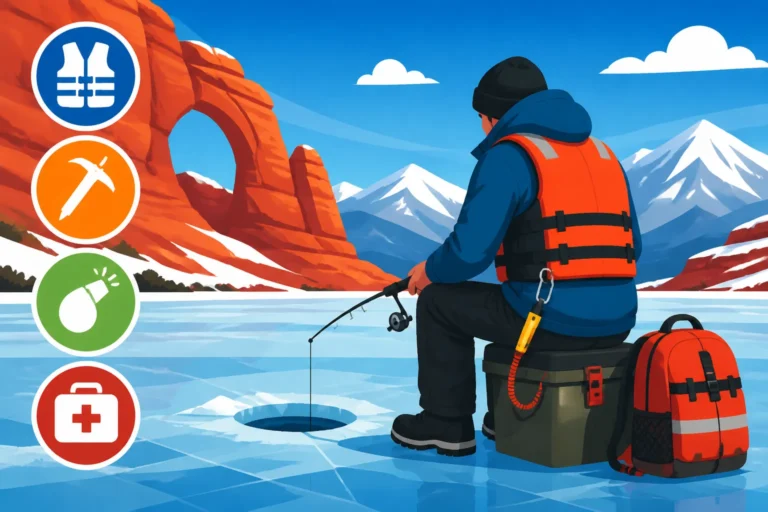
First and foremost, life jackets are non-negotiable. Every person on board must have an easily accessible, Coast Guard-approved life jacket, and children under 13 must wear one at all times while the boat is underway. It's also wise for everyone, especially those operating the boat, to wear one at all times in deep, cold water. Beyond life jackets, ensure you have other required boat safety equipment, including a throwable flotation device, a sound-producing device (horn or whistle), navigation lights (if operating at dawn, dusk, or night), and a fire extinguisher. These are not just recommendations; they are often legal requirements as detailed in the Utah Boat Registration and Safety Gear guide.
Weather can turn on a dime in Utah, especially in mountainous regions where many of our large reservoirs are located. A sunny, calm morning can quickly give way to strong winds, white caps, and even afternoon thunderstorms. Before heading out, always check the marine weather forecast for your specific lake. While on the water, keep an eye on the sky. Darkening clouds, sudden shifts in wind direction, or a drop in temperature are all signs that you should consider heading back to shore or seeking a safe harbor. Heavy winds can make navigating and fighting large fish extremely difficult, and lightning is an obvious severe hazard.
It's also crucial to have a reliable means of communication. A marine VHF radio is ideal for communicating with other boats and emergency services, especially on large bodies of water where cell phone service might be spotty or nonexistent. A fully charged cell phone in a waterproof bag is a good backup, but don't rely on it as your sole means of communication. Always let someone on shore know your float plan – where you're going, when you expect to return, and who is with you. Taking these precautions ensures that your deep-water lake trout adventure is not only productive but also safe for everyone on board.
Here's a comparison of the two primary deep-water fishing techniques:
| Feature | Trolling for Deep Water Lake Trout | Jigging for Deep Water Lake Trout |
|---|---|---|
| Primary Goal | Cover large areas, find scattered fish, entice cruising predators. | Target concentrated fish, suspended schools, or specific structures. |
| Typical Speed | Slow, consistent movement (1.5-2.5 mph) with occasional S-turns. | Stationary boat, vertical presentation. Drift can be used to cover ground. |
| Depth Control | Highly precise with downriggers; moderate with Dipsy Divers. | Achieved by lure weight and careful monitoring of electronics. |
| Best For | Searching new areas, large lakes, active fish covering ground. | Known hotspots, fish suspended over structure, less active fish. |
| Gear Required | Downriggers/Dipsy Divers, heavy trolling rods, high-capacity reels. | Heavy jigging rods, high-capacity reels, heavy jigs/spoons. |
| Lure Action | Consistent swimming/wobbling action from boat movement. | Erratic, lift-and-fall action controlled by angler. |
| Angler Effort | Can be more relaxed, waiting for strikes, monitoring electronics. | More active, requiring constant rod work and focus on sonar. |
| Line Out | Significantly more line out, especially with downriggers. | More direct line to fish, less line out overall. |
Disclaimer
The information provided in this guide is for general informational purposes only. Fishing regulations in Utah, including those related to licensing, specific waters, tackle, and bag limits, can change frequently. Always consult the most current Utah Fishing Guidebook published by the Utah Division of Wildlife Resources (DWR) or visit their official website before heading out to fish. Adherence to all local, state, and federal regulations is the responsibility of the angler. We are not responsible for any incidents, accidents, or regulatory violations that may occur.