Utah Fishing Season Dates and Limits
It's incredibly frustrating when you're planning a fishing trip in Utah, you've got your gear ready, but then you start wading through all the regulations and realize the season dates and limits aren't always straightforward. Every waterbody seems to have its own set of rules, making it a real headache to ensure you're compliant. This guide is here to untangle that complexity, providing you with a thorough breakdown of Utah's fishing season dates and limits so you can hit the water with confidence.
Understanding Utah's General Fishing Season Structure
Navigating the fishing regulations in Utah can sometimes feel like trying to land a trophy fish on ultralight tackle – challenging, but definitely doable with the right approach. One of the first things anglers often grapple with is the concept of a "fishing season." Many assume it's a simple, universal start and end date, but Utah's diverse ecosystems and conservation goals mean it's a bit more nuanced than that.
The Standard Statewide Season
Generally speaking, Utah's fishing season for most species in most waters is year-round. That's right, 365 days a year! This is fantastic news for dedicated anglers who love to fish through all four seasons, from casting flies on open rivers in spring to ice fishing on frozen reservoirs in winter. This continuous season applies to a vast majority of the state's lakes, reservoirs, and rivers, allowing for incredible flexibility in when you plan your outings.
However, even with a generally open season, it's crucial to remember that this broad rule is often superseded by specific, water-dependent regulations. The Utah Division of Wildlife Resources (DWR) carefully manages individual fisheries, and these specific rules are what truly dictate when and how you can fish. So, while the idea of a year-round season is a great starting point, always be prepared to dig a little deeper into the specific water you intend to fish.
Why Seasons Vary by Waterbody
The reason for these variations isn't to make your life harder, I promise! It's all about responsible wildlife management and ensuring the sustainability of Utah's incredible fish populations. Different fish species have different spawning cycles, habitat needs, and vulnerabilities throughout the year. For instance, some waters might implement closures or special regulations during trout spawning seasons to protect fragile eggs and fry, giving the next generation a fighting chance.
Factors like elevation, water temperature, fish migration patterns, and even the presence of invasive species all play a role in how the DWR crafts its regulations for specific lakes and rivers. A high-mountain lake, for example, might be ice-bound for half the year and have a relatively short window of open-water fishing, whereas a lower-elevation reservoir might offer consistent angling opportunities. Always check the current Utah Fishing Regulations Explained before heading out, as these documents are updated annually and contain all the nitty-gritty details for every significant waterbody.
Statewide Bag and Possession Limits for Common Species
Once you've wrapped your head around the general season dates, the next big hurdle is understanding bag and possession limits. This is where many anglers can inadvertently run afoul of the rules, not because they're trying to cheat, but simply because the numbers can get a bit confusing, especially when you're targeting multiple species or visiting different waters. These limits are in place to prevent overfishing and maintain healthy fish populations for everyone to enjoy.
Trout Species Limits
Trout are arguably the most popular game fish in Utah, and as such, their limits are some of the most detailed. For most general waters, the aggregate limit for trout (Rainbow, Brown, Cutthroat, Brook, Tiger, Lake Trout, and Splake combined) is typically four fish. This means you can keep any combination of these species, as long as the total doesn't exceed four in your daily catch. The "possession limit" is usually the same as the daily bag limit unless otherwise specified, meaning you can't have more than the daily limit in your possession at any time, whether on the water or at home.
However, it gets more specific. Certain waters, especially some of Utah's Blue Ribbon Fisheries, will have very different rules. For instance, Strawberry Reservoir might have a specific limit on Cutthroat Trout or Rainbow Trout, sometimes even with slot limits (where you can only keep fish within a certain size range, or outside of it). Always consult the specific regulations for that body of water. For a deeper dive into these nuances, check out our guide on Utah Trout Limits by Water.
Warmwater Species Limits
Moving onto warmwater species, the limits tend to be a bit more generous in many cases, often due to the faster reproductive cycles of these fish. For species like Largemouth Bass and Smallmouth Bass, the aggregate limit is usually six fish. However, this is another area where specific waters often have their own rules. Flaming Gorge Reservoir, for example, might encourage higher harvest of Smallmouth Bass to manage their population, while other waters could have slot limits or lower bag limits to protect larger, trophy-sized fish.
Walleye, another popular warmwater species, also falls under specific regulations. While a general limit might be in place, waters like Utah Lake will have very particular rules, often concerning minimum size. It's not uncommon for anglers to need to release smaller Walleye to give them a chance to grow. For a comprehensive overview, our Utah Walleye Harvest Rules article can be incredibly helpful. Always verify the rules for your chosen fishing spot before you even tie on your first lure.
Specific Limits for Unique Species (e.g., Kokanee Salmon, Wiper, Tiger Muskie)
Utah is home to some truly unique and exciting fishing opportunities, and with those come very specific regulations. Kokanee Salmon, for instance, are popular at reservoirs like Strawberry, Flaming Gorge, and Jordanelle. Their limits often change seasonally, particularly as they approach their spawning run, and there might be specific gear restrictions during those times. The daily bag limit for Kokanee is often four fish, but these can vary.
Then there are the predatory giants like Wiper (a hybrid striped bass) and Tiger Muskie. Wiper, found predominantly at Willard Bay, usually have a limit of six fish. Tiger Muskie, especially at Pineview Reservoir, are often managed as trophy fisheries, meaning catch-and-release is strongly encouraged or even mandated for certain sizes, with very limited harvest opportunities for larger fish. These species often require a completely different approach, and knowing their specific limits is paramount. You might even want to pick up some specialized tackle on Amazon to target these unique fish!
It's also worth noting that some species, like Yellow Perch and Bluegill in many community ponds, often have extremely generous or even no bag limits, as they can quickly overpopulate. However, never assume – always verify.
Regional and Water-Specific Regulations: A Closer Look
As we’ve hinted, the general statewide rules are just a starting point. Utah’s vast and varied landscape means that fishing regulations can change dramatically from one reservoir to the next, or even from one section of a river to another. These hyper-local rules are vital for maintaining the health and balance of each unique ecosystem. Ignoring them, even accidentally, can lead to serious penalties and, more importantly, can harm the fish populations we all cherish.
Bear Lake Regulations and Unique Species
Bear Lake, famously split between Utah and Idaho, is a prime example of a waterbody with its own distinct character and, consequently, unique regulations. This deep, clear lake is home to several endemic species, meaning they are found nowhere else in the world. The most notable for anglers is the Bonneville Cisco, which has a fascinating and brief spawning run each January, attracting hundreds of anglers who use dip nets. During this specific window, the limits and methods are entirely different from standard rod-and-reel fishing.
For the more conventional angler, Bear Lake is renowned for its trophy Cutthroat Trout, Lake Trout (often called Mackinaw here), and Bonneville Whitefish. The bag limits for these species can be quite specific, sometimes differentiating between subspecies or imposing minimum size requirements to protect the spawning stock. For instance, the limit for Cutthroat Trout may specify that only one can be over a certain length. It’s imperative to consult the Utah Fishing Proclamation specifically for Bear Lake before planning any trip there to ensure you’re adhering to the unique rules that protect its special fish.
Strawberry Reservoir's Special Rules
Strawberry Reservoir, often lauded as one of Utah's premier fisheries, is another location where special rules are the norm rather than the exception. This high-elevation reservoir is intensely managed for its Cutthroat and Rainbow Trout populations, which thrive there. The DWR frequently adjusts regulations at Strawberry to optimize fish growth and health. For example, specific slot limits are often in place for Cutthroat Trout, meaning you can only keep fish within a certain size range, while fish outside that range must be released. These slots are designed to protect the most productive breeding fish and allow smaller ones to grow.
In addition to trout, Strawberry also holds a significant population of Kokanee Salmon, particularly popular in the fall as they stage for their spawn. During the Kokanee run, there may be specific restrictions on tackle, limits, or even seasonal closures in certain areas to protect the spawning fish. Anglers must also be aware of the reservoir’s annual closure dates, typically from November through mid-April, which are in place to protect the vulnerable spawning fish and their habitat. For detailed current information, referring to the section on Strawberry Reservoir Seasonal Closure Dates is a must.
Flaming Gorge Reservoir Considerations
Straddling the Utah-Wyoming border, Flaming Gorge Reservoir is a massive body of water famous for its trophy Lake Trout (Mackinaw) and robust populations of Kokanee Salmon and Smallmouth Bass. Given its size and interstate nature, regulations can sometimes involve cooperation between Utah and Wyoming DWRs. While Utah's general fishing license covers the Utah portion of the reservoir, if you cross into Wyoming waters, you'll need a Wyoming license.
Specific rules at Flaming Gorge often target the management of Lake Trout, with sometimes liberal or even mandatory harvest limits for smaller fish to control their population and promote the growth of trophy individuals. Kokanee Salmon also have specific limits, particularly during their prime season. Smallmouth Bass, while often plentiful, may also have varying limits depending on population assessments. Due to the deep, clear waters, many anglers use specialized gear like downriggers for trolling, and while not a "season date," knowing the best times for specific techniques, such as when How Deep to Fish for Lake Trout at Flaming Gorge in Summer, is crucial for success within the regulatory framework.
Utah Lake's Invasive Species Rules
Utah Lake presents a particularly unique situation concerning regulations, primarily due to the presence of invasive species. This large, shallow, and often turbid lake is a key focus for invasive species management. Specifically, Northern Pike are considered a highly destructive invasive predator that threatens native species, including the endangered June Sucker. Because of this, the DWR has implemented a mandatory kill regulation for Northern Pike caught in Utah Lake. This means that if you catch a Northern Pike, you are legally obligated to kill it and not return it to the water. Our article, Why Utah Lake Requires You to Kill Every Northern Pike?, delves into the critical reasons behind this rule.
Beyond Northern Pike, Utah Lake is also home to abundant Walleye, Channel Catfish, and White Bass. While these species have their own bag limits, the emphasis on controlling invasive populations means anglers need to be extra vigilant and informed. The regulations for Utah Lake are not just about what you can keep, but actively about what you must do with certain catches to help preserve the lake's ecosystem.
Seasonal Fishing Dynamics and Their Impact on Regulations
Fishing isn't just about what's biting; it's about understanding the rhythm of the waters throughout the year. Utah's diverse climate, from arid valleys to snow-capped peaks, creates distinct seasonal changes that dramatically influence fish behavior and, in turn, the regulations designed to protect them. Being aware of these dynamics will not only make you a more successful angler but also ensure you're fishing responsibly and legally.
Spring Runoff and Early Season Fishing
Spring in Utah brings the annual snowmelt, leading to what anglers call "runoff." This period, typically from late April through June, sees rivers swell with cold, turbid water, often making river fishing challenging due to high flows and reduced visibility. Fish tend to seek out slower, clearer pockets of water, and their feeding habits can change drastically. While many rivers remain open, some smaller streams or specific sections might have delayed openers or special restrictions to protect spawning trout. For instance, some popular sections of the Provo River might experience high flows, but fish can still be found in slower eddies.
For lakes and reservoirs, early spring, just after ice-off, can be an incredibly productive time. The fish are often hungry after a long winter under the ice, and as the water warms, they become more active. However, this is also when many species begin their spawning rituals. While statewide seasons are generally open, some specific reservoirs might have temporary closures or specific catch-and-release rules during certain windows to protect vulnerable fish. It's always best to consult the DWR proclamation for your specific destination to avoid any surprises.
Summer Heat and Deep-Water Strategies
As Utah transitions into the intense heat of summer, particularly in July and August, fishing strategies and fish locations shift considerably. In many lower-elevation rivers and lakes, water temperatures can rise to stressful levels for cold-water species like trout. This often drives them to deeper, cooler waters or into shaded areas and thermal refuges. While fishing remains open, ethical anglers often practice catch-and-release with extra care during these times, or choose to fish earlier in the morning or later in the evening when temperatures are cooler. Some areas might even impose voluntary or mandatory closures on specific stretches of river if water temperatures become critically high.
Reservoirs like Flaming Gorge and Strawberry Reservoir become havens for anglers targeting deep-dwelling Lake Trout or Kokanee Salmon. This is the prime time for trolling with downriggers or jigging deep structure. While the seasons remain open, understanding that fish are less active in warm surface waters and targeting them deeper becomes key. The general limits for these species typically remain consistent through summer, but responsible angling means being aware of the fish's stress levels.
Fall Spawning and Closures
Autumn is a stunning time to fish in Utah, with cooler temperatures and vibrant foliage, but it's also a critical period for many fish species as they prepare to spawn. Brown Trout, for example, typically spawn in the fall, moving into shallow river sections and stream inlets. While not all areas close, some specific stretches of rivers or certain reservoir inlets might have temporary closures or special regulations to protect these spawning fish. It's considered unethical, and sometimes illegal, to target actively spawning fish on their redds (spawning beds).
Kokanee Salmon also undertake spectacular spawning runs in fall, transforming into brilliant red hues as they move into rivers or shallow areas of reservoirs. While the season is often still open, limits might be adjusted, and the fish themselves are no longer palatable for eating once they begin to change color. Being aware of these spawning periods and respecting the fish's natural cycles is a hallmark of a responsible angler. Our guide on Utah Fishing Season Dates and Limits details more about these seasonal changes.
Winter Ice Fishing Season
When winter truly sets in and Utah's lakes and reservoirs freeze over, a whole new fishing season begins: ice fishing. This popular activity offers unique challenges and rewards. Generally, the ice fishing season is simply a continuation of the open water season, meaning most regulations for bag limits and species remain the same as the open water months. However, there are specific regulations unique to ice fishing itself, such as rules regarding the number of lines you can fish (typically two, but check the proclamation), the size and placement of ice shanties, and safety guidelines.
Popular ice fishing destinations include Strawberry Reservoir, Bear Lake, Fish Lake, and Rockport Reservoir, among many others. While the general season is year-round, ice fishing is, of course, entirely dependent on safe ice conditions. There's no official "start date" for ice fishing, as it varies each year based on weather. Anglers must always prioritize safety and check ice thickness before venturing out. For more in-depth information, you can explore our comprehensive Utah Ice Fishing Regulations guide.
Special Regulation Waters: Fly-Fishing-Only and Catch-and-Release
Utah is home to a variety of unique and specially managed waters that cater to different angling preferences and conservation goals. These special regulation waters are designed to enhance the fishing experience, protect fragile ecosystems, or foster trophy fish populations. It's absolutely crucial to understand these distinctions, as the rules here are often very different from general statewide regulations. Accidentally using the wrong bait or keeping a fish in a catch-and-release zone can lead to significant penalties.
Designated Fly-Fishing-Only Waters
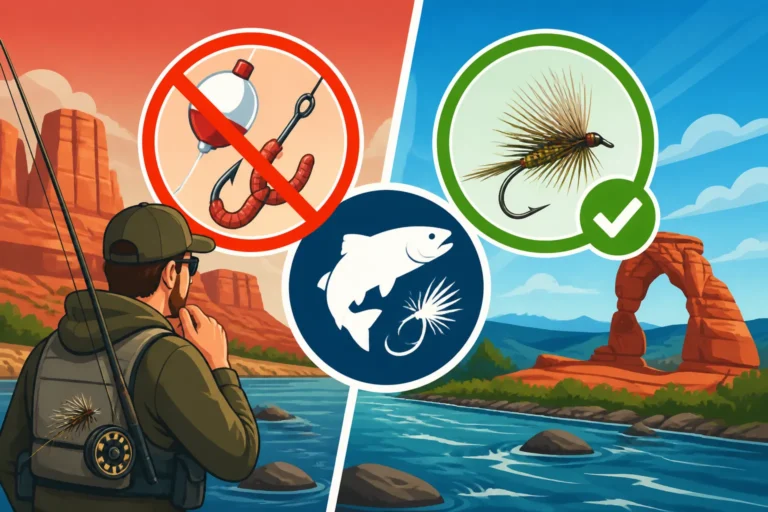
For many purists, there's nothing quite like the art of fly-fishing. In recognition of this, and often as a conservation strategy, Utah has designated several "fly-fishing-only" waters. These are typically pristine river sections or specific smaller lakes where only artificial flies can be used. This means no bait, no lures, and certainly no PowerBait or worms. The intent behind these rules is often to reduce fishing pressure, minimize impact on the fish, and provide a unique angling challenge that relies more on skill and presentation.
Some notable fly-fishing-only stretches include sections of the Provo River, particularly the Middle and Lower Provo, and parts of the Green River below Flaming Gorge Dam. On these waters, not only are gear restrictions in place, but often, catch-and-release is also mandatory or highly encouraged. For example, the world-renowned Green River below Flaming Gorge Dam is famous for its abundant trout, and much of it operates under strict fly-fishing-only and catch-and-release rules to maintain its incredible fishery. Always double-check the DWR proclamation for specific boundaries of these areas. Our article, Utah Fly-Fishing-Only Water Rules, offers a detailed breakdown.
Catch-and-Release Zones Explained
Beyond fly-fishing-only, many waters, or specific sections of them, are designated as "catch-and-release" only. This means that every single fish you catch, regardless of species or size, must be immediately and carefully released back into the water unharmed. The primary goal of catch-and-release regulations is to create and sustain trophy fisheries, where fish have the opportunity to grow large and reproduce multiple times, ensuring a robust population for future generations of anglers.
These zones are often found on high-quality trout streams, Blue Ribbon Fisheries, or lakes where specific species are being managed for size. For instance, certain stretches of the Weber River or specific high-mountain lakes might have these rules. When fishing these waters, it's not just about releasing the fish, but about doing so in a way that maximizes its survival. This means using barbless hooks, minimizing handling time, keeping the fish in the water as much as possible, and reviving it carefully before release. It’s important to familiarize yourself with proper handling techniques before venturing into these sensitive areas. You can find a list of these areas in Utah Catch-and-Release Waters.
Mandatory Harvest and Invasive Species Rules
While most regulations focus on limiting catch to conserve fish, a unique and critically important set of rules in Utah mandates the harvest of certain species. This might seem counterintuitive to a conservationist mindset, but it's a vital tool in the ongoing battle against invasive species that threaten Utah's native fish and aquatic ecosystems. Understanding these rules is not just about compliance; it's about actively participating in the health and future of our waters.
Why Some Fish Must Be Kept
The mandate to kill certain fish species is a direct response to their classification as invasive. Invasive species are non-native organisms that cause harm to the environment, economy, or human health. In the context of Utah fishing, these are typically predatory fish introduced either accidentally or illegally, which then outcompete, prey upon, or spread diseases to native species, disrupting the delicate ecological balance. By requiring anglers to harvest these fish, the DWR enlists the angling public as a crucial line of defense in managing and controlling these destructive populations.
A prime example, as discussed earlier, is the Northern Pike in Utah Lake. These voracious predators consume large numbers of native fish, including the critically endangered June Sucker. Therefore, catching a Northern Pike in Utah Lake means you are legally required to kill it immediately and cannot return it to the water, regardless of its size. Similarly, common Carp are often considered an invasive species in many Utah waters, contributing to habitat degradation, and while not always mandated, their harvest is often strongly encouraged. These aren't just suggestions; they are enforceable regulations designed to protect our precious natural resources.
Identifying and Reporting Invasive Species
The responsibility of identifying invasive species often falls to the angler, as you are the first line of interaction with these fish on the water. It’s essential to be able to distinguish between native and non-native species, especially those with mandatory harvest rules. The DWR provides resources, often through their annual proclamation or online guides, that feature identification photos and descriptions. Knowing your fish is not just for bragging rights; it’s a critical part of being a responsible angler in Utah. For a comprehensive guide, check out our resource on Invasive Fish Species in Utah.
If you catch a fish that you suspect is an invasive species, particularly one with a mandatory kill order, it’s imperative to follow the regulations. Beyond that, if you encounter invasive species in waters where they are not commonly found, or observe any suspicious activities (like illegal stocking), reporting it to the DWR is crucial. You can often do this through their regional offices or via an online reporting system. Our collective vigilance is the best defense against the further spread of these harmful organisms. Remember, protecting our fisheries goes beyond just following catch limits; it involves actively safeguarding their ecological integrity.
Navigating the Official Utah Fishing Proclamation
The official Utah Fishing Proclamation is your bible for fishing in the state. Think of it as the ultimate rulebook, packed with all the legal requirements, season dates, and limits you need to know. While it might seem daunting at first glance, learning how to navigate this document is arguably the most important skill any Utah angler can master. Trying to fish without consulting it is like trying to drive blindfolded – you're almost guaranteed to run into trouble.
How to Access and Understand the Proclamation
The good news is that accessing the Utah Fishing Proclamation is easier than ever. The Utah Division of Wildlife Resources (DWR) publishes a new proclamation annually, usually around late fall, which takes effect on December 1st. You can pick up a physical copy for free at most DWR offices, many sporting goods stores, and even some county clerks' offices. However, the most convenient way to get it is usually online, directly from the DWR website. A digital copy allows you to search for specific terms, zoom in on maps, and always have the most current version.
When you first open it, don't get overwhelmed by the sheer volume of information. The proclamation is structured logically, starting with general statewide rules, then moving into regional breakdowns, and finally detailing specific waterbody regulations. It's a legal document, so the language can be precise, but it's designed to be understood by the public. Take your time, read it carefully, and don't hesitate to refer back to it often. You might even find some useful maps that detail specific regulation boundaries for rivers and lakes.
Key Sections to Pay Attention To
While every part of the proclamation is important, there are a few key sections that deserve your immediate attention. First, always review the "Statewide General Rules." This section covers universal regulations, such as legal fishing hours, definitions of artificial flies and lures, general bag and possession limits for common species, and rules regarding bait. This is your foundation.
Next, turn to the "Special Regulations by Waterbody" section. This is where you'll find the specific, often unique, rules for the lake or river you plan to visit. These are the rules that override the general statewide regulations. Look up your chosen waterbody by name; here you'll find details on unique bag limits, slot limits, bait restrictions, seasonal closures, and any mandatory harvest requirements. This section will tell you if you're allowed to use bait at a certain spot or if it's a Utah Catch-and-Release-Only Waters List area. You might even want to highlight specific rules for your favorite spots. And remember, sometimes these detailed regulations include helpful maps that show where specific rules begin and end, especially on rivers. You can often find a digital copy available on sites like Amazon if you prefer to have it saved on your tablet or e-reader for quick reference.
Consequences of Violating Fishing Regulations
Nobody ever sets out to break the law, especially when it comes to something as enjoyable as fishing. Yet, violations of Utah's fishing regulations happen, often due to a lack of awareness rather than malicious intent. However, ignorance of the law is not a valid defense, and the consequences of violating these rules can range from inconvenient to severely impactful. Understanding what's at stake reinforces the importance of knowing and following the regulations.
Common Penalties for Infractions
The penalties for fishing violations in Utah can vary significantly depending on the severity of the offense and whether it's a first-time or repeat infraction. Minor violations, such as fishing with an expired license (even if you bought a new one the next day), or using an illegal bait in a specific water, might result in a citation and a fine. These fines can range from a few dozen to several hundred dollars, quickly making your fishing trip a costly endeavor. For instance, being caught without a valid fishing license can result in a hefty fine, often in the range of $100-$300, plus court costs. To avoid this, always make sure you have your Utah Fishing License Online Purchase Process completed and visible.
More serious offenses, such as exceeding bag limits, fishing during a closed season, or fishing in a protected spawning area, can lead to much steeper fines, potentially thousands of dollars. In some cases, you might also face confiscation of your fishing gear, including rods, reels, and even your boat. Repeat offenders or those committing egregious violations could even face misdemeanor charges, leading to potential jail time, community service, and suspension of hunting and fishing privileges for a period of years. The DWR takes violations seriously because these rules are vital for conservation.
Importance of Checking Regulations Regularly
Given the potential consequences, it should be clear why regularly checking the official Utah Fishing Proclamation is not just recommended, but absolutely essential. Regulations are not static; they can change annually based on fish population assessments, environmental conditions, and management goals. A rule that was in place last year might be different this year. Relying on outdated information, or worse, hearsay from other anglers, is a risky gamble.
Before every fishing trip, especially if you're visiting a new waterbody or haven't fished in a while, take a few minutes to consult the current DWR proclamation. Look up the specific regulations for that body of water. Pay attention to season dates, bag limits, gear restrictions, and any special rules for invasive species or catch-and-release areas. This proactive approach will save you stress, money, and potential legal headaches, allowing you to focus on the joy of fishing while contributing to the sustainable management of Utah's incredible fisheries. Being a responsible angler means being an informed angler.
| Species Group | Statewide General Daily Bag Limit (Most Waters) | Common Special Water Rules/Notes |
|---|---|---|
| Trout | 4 (Aggregate of all trout species) | Varies significantly by water; often includes slot limits, specific species limits (e.g., Cutthroat), or C&R. |
| Bass | 6 (Aggregate of Largemouth & Smallmouth) | Some waters encourage higher harvest of Smallmouth; others have size restrictions to protect trophy fish. |
| Walleye | 6 | Often includes minimum size requirements (e.g., 15 inches at Utah Lake) to protect juvenile fish. |
| Catfish | 6 | General limit, but can be more liberal or even unlimited in certain waters for Channel Catfish. |
| Kokanee Salmon | 4 | Can have seasonal adjustments, gear restrictions during spawning, or specific waterbody limits. |
| Wiper | 6 | Primarily found at Willard Bay; generally consistent limit. |
| Tiger Muskie | 1 | Often trophy managed; strict size limits (e.g., 40 inches) with mandatory release for smaller fish. |
| Northern Pike | Unlimited (Mandatory Kill at Utah Lake) | Designated invasive; must be killed if caught in Utah Lake. Check other waters for specific rules. |
| Panfish | 50 (Perch, Bluegill, Crappie, etc.) | Very liberal limits due to high reproductive rates; some waters may have even higher or unlimited harvest. |
Disclaimer
The information provided in this guide is intended for general informational purposes only and does not constitute legal advice. Fishing regulations in Utah are complex and subject to change. While every effort has been made to ensure accuracy, it is the sole responsibility of the angler to consult the official Utah Fishing Guidebook (Proclamation) published by the Utah Division of Wildlife Resources (DWR) for the most current and specific regulations before engaging in any fishing activity. Always verify rules for your specific chosen waterbody and species.