Best Boat Setup for Trolling at Flaming Gorge
Getting out on the vast, beautiful waters of Flaming Gorge with a boat rigged for trolling can be one of the most rewarding fishing experiences in Utah. However, if you've ever felt overwhelmed by the sheer scale of the reservoir, the depths where trophy lake trout lurk, or the specific techniques needed to entice kokanee salmon, you're not alone. Many anglers arrive eager, only to find their standard lake setup isn't quite cutting it against the unique demands of this incredible fishery. This guide is here to walk you through how to properly outfit your boat for successful trolling at Flaming Gorge, ensuring you're prepared to tackle its depths and target its most sought-after species effectively.
Understanding the Unique Demands of Flaming Gorge for Trolling
Flaming Gorge Reservoir isn't your average fishing hole; it's a massive, deep body of water spanning Utah and Wyoming, famous for its trophy lake trout (mackinaw) and thriving kokanee salmon population. Trolling here isn't just about putting a lure in the water and driving around; it requires a specialized approach due to the immense depths, the vast open water, and the specific behaviors of its target species.
The Challenge of Depth and Water Column
One of the primary challenges at Flaming Gorge is its incredible depth, often exceeding 300 feet in many areas. Both lake trout and kokanee can suspend at various depths throughout the water column, from relatively shallow in cooler months to well over 100 feet deep in summer. Your boat setup needs to be capable of consistently presenting lures at these precise depths, even when dealing with currents or changing boat speeds. Without the right equipment, you're essentially fishing blind in the top layer of a colossal three-dimensional environment, missing out on the majority of the productive water.
This depth also means temperature stratification plays a huge role. Fish will seek out their preferred temperature zones, which change with the seasons. A proper trolling setup allows you to identify these thermoclines using a good fish finder and then target them with your lures. Ignoring this aspect often leads to frustrating days with few bites, as your baits might be in water that's either too warm or too cold for the fish you're after.
Targeting Specific Species: Lake Trout vs. Kokanee
While you might catch both, rigging for a 30-pound lake trout is very different from rigging for a 3-pound kokanee salmon. Lake trout at Flaming Gorge often require larger baits, heavier lines, and the ability to get those baits down to significant depths, sometimes 80-150 feet or more, depending on the time of year. They are powerful fighters, demanding stout rods and reels that can handle their brute strength.
Kokanee, on the other hand, are typically found in schools higher in the water column, often between 30 and 80 feet. They respond best to smaller, flashier lures, often trolled behind dodgers or flashers. Their mouths are soft, so a more forgiving rod action is preferred to avoid tearing the hook out. Your boat setup needs the flexibility to switch between these two distinct fishing styles, or at least be optimized for the species you intend to target most frequently. How to Troll for Kokanee in Utah is a great resource if you're focused on those delicious salmon.
Navigating Vast Open Waters and Weather
Flaming Gorge is known for its wide-open expanses, which means longer runs between spots and a greater susceptibility to wind and waves. A comfortable and stable boat is paramount for an enjoyable and safe trolling experience. Choppy water can make precise depth control difficult and quickly lead to angler fatigue. Furthermore, the sheer size of the reservoir means you'll want reliable navigation and communication tools. Losing your way or experiencing mechanical issues far from a ramp can turn a great day into a challenging one. A robust boat setup considers not just the fishing tackle but also the platform from which you're fishing.
The Foundation: Your Boat, Motors, and Electronics
Before you even think about rods and lures, a successful trolling setup at Flaming Gorge starts with the right boat, propulsion, and essential electronics. These are the core components that dictate your ability to navigate, stay on course, and locate fish in such a vast environment.
Choosing the Right Hull and Main Motor
For serious trolling at Flaming Gorge, a V-hull boat in the 18-24 foot range is often ideal. This size offers a good balance of stability in choppy water, ample space for multiple anglers and gear, and enough power to cover long distances efficiently. While smaller boats can certainly fish the Gorge, a larger, more stable platform greatly enhances safety and comfort, especially when the afternoon winds pick up. Aluminum boats are popular for their durability and lighter weight, but fiberglass boats offer a smoother ride in rougher conditions. Your main outboard motor should be reliable and adequately powered for the size of your boat. Speed isn't the primary concern for trolling, but having enough horsepower to get to your spots quickly and handle heavy loads is important.
Think about the structure of the boat itself. You'll want plenty of open deck space to move around, especially when netting large fish or handling multiple lines. Storage is also key for keeping tackle, safety gear, and personal items organized and out of the way. Consider a boat with a deep cockpit to provide a sense of security, particularly when fishing with children or in rougher conditions.
The Crucial Role of a Kicker Motor
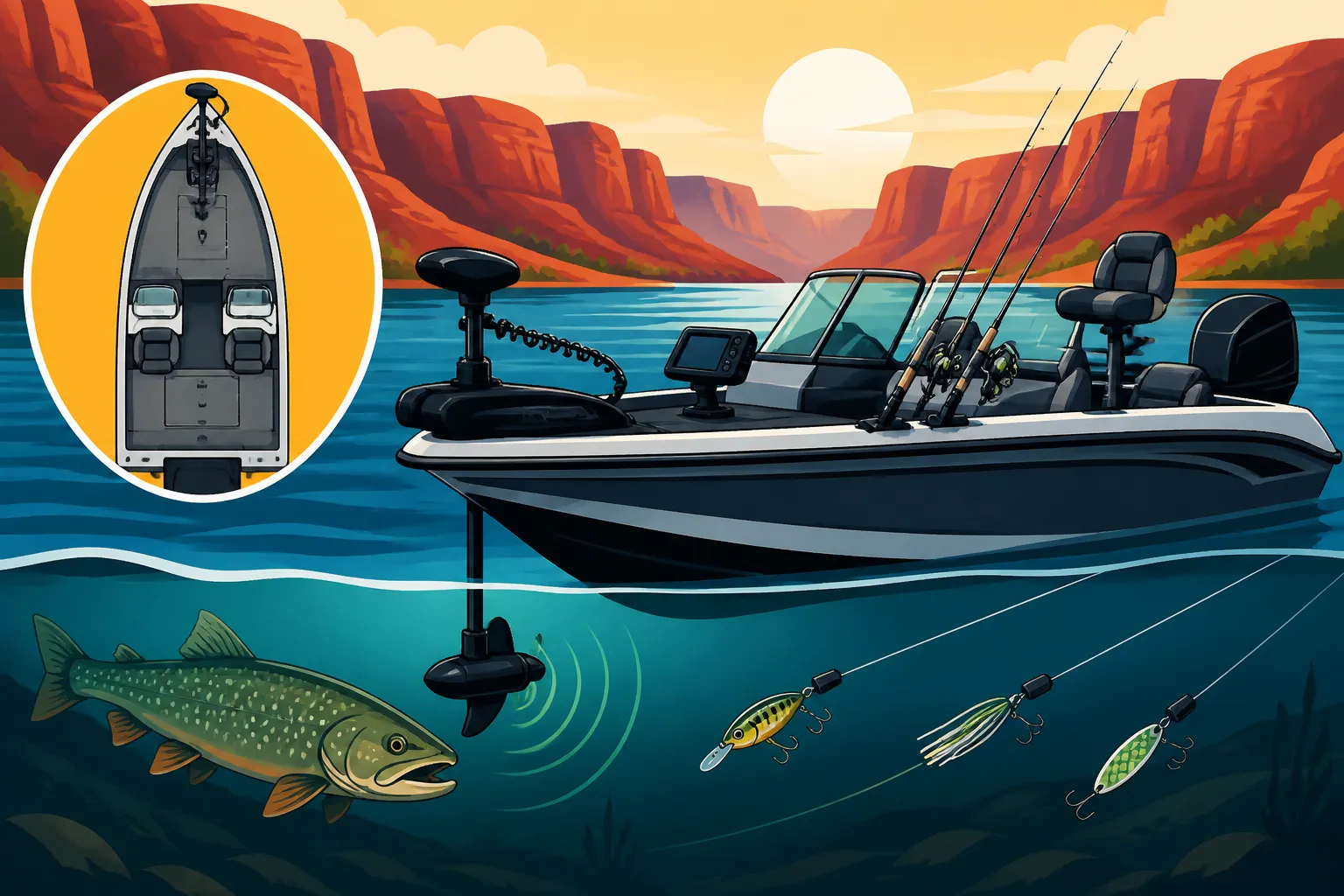
A dedicated kicker motor is arguably the most important piece of propulsion for trolling at Flaming Gorge. These smaller, auxiliary outboards (typically 9.9 to 15 horsepower) are designed for slow, consistent speeds, making them perfect for trolling. Your main motor isn't efficient or quiet enough for extended slow trolling, and it racks up hours quickly. A kicker allows you to maintain precise speeds (often 1.5-3.0 mph for lake trout and kokanee) without overheating or excessive fuel consumption.
When choosing a kicker, look for one with an electric start, power trim, and often a remote throttle control that can be linked to your main steering. This makes it incredibly easy to operate from the helm, allowing you to focus on the fishing. The ability to fine-tune your speed in small increments is critical for matching what the fish are keying into on any given day. Many anglers opt for a Mercury or Yamaha kicker due to their reliability and integration options.
Essential Electronics: Fish Finders and GPS
Navigating Flaming Gorge and finding fish without a top-tier fish finder and GPS unit is like trying to drive across the state blindfolded. Your fish finder should have excellent down-imaging and side-imaging capabilities to help you locate structure, baitfish schools, and individual fish holding at various depths. A high-resolution screen is vital for interpreting the sonar returns clearly. Many modern units integrate GPS mapping, allowing you to mark productive waypoints, create trolling paths, and navigate safely.
Features like CHIRP sonar offer superior target separation, which is incredibly useful for distinguishing fish from bait balls or bottom structure. Look for units from reputable brands like Humminbird or Garmin that offer detailed mapping of the Gorge. The ability to monitor water temperature at depth is also a huge advantage, as fish are highly temperature-sensitive. Ensure your boat has a reliable power source for these electronics, with appropriately sized batteries and clean wiring to avoid interference.
Trolling Gear: Getting Baits to the Right Depth
Once your boat is rigged to move efficiently and you can see the fish, the next step is to ensure you have the means to present your lures at the correct depth. This is where downriggers and lead core line come into play, along with the right rods and reels to handle the unique stresses of deep-water trolling.
Downriggers: Precision Depth Control
Downriggers are indispensable for consistently getting lures to precise depths at Flaming Gorge, especially when targeting suspended fish like kokanee or deep-holding lake trout. They use a heavy lead ball (typically 8-12 pounds) attached to a cable, which is lowered to a set depth. Your fishing line, with its lure, is then attached to a release clip on the downrigger cable. When a fish strikes, the line releases from the clip, allowing you to fight the fish directly without the weight of the downrigger ball.
Most serious Flaming Gorge anglers run at least two downriggers, and often four, allowing for multiple lines at different depths or spreads. Electric downriggers are a game-changer, making it easy to raise and lower the weights with the push of a button, which is particularly helpful when checking lines or after landing a fish. Brands like Scotty and Cannon offer reliable downriggers. Ensure they are securely mounted to your boat, capable of handling the forces of heavy weights and strong currents. Best Downriggers for Flaming Gorge Lake Trout delves deeper into specific models and considerations.
Lead Core and Copper Line for Deeper Presentation
While downriggers offer pinpoint accuracy, lead core and copper line setups provide another effective method for getting lures deep, especially when you need to cover a wider area or present a different action. Lead core line is braided nylon with a lead wire running through its core, causing it to sink. It's color-coded in 10-yard sections, and each "color" generally sinks a certain amount at a given trolling speed. For example, you might get a lure down 5-7 feet per color at 2 mph.
Copper line is a solid copper wire that sinks even faster than lead core, allowing baits to reach greater depths with less line out. Both require specialized trolling reels with high line capacity due to the thickness and length of line needed. When fishing lead core or copper, you often use longer rods with a softer tip to absorb the shock of a strike and prevent the heavy line from tearing the hook out of the fish's mouth. These setups are great for targeting slightly different depths than your downriggers, giving you a more comprehensive spread.
Rods, Reels, and Line for Trolling
Your rod and reel choices should align with the species you're targeting and the depth-getting method you're using.
- Rods for Downriggers: Look for rods specifically designed for downrigging, often with a moderate action and a soft tip that flexes to indicate a bite (a "release" from the clip) but has enough backbone to handle large fish. A length of 7'6" to 9' is common.
- Rods for Lead Core/Copper: These rods tend to be longer (9' to 10'6") with a more parabolic action to handle the heavy line and provide shock absorption.
- Reels: High-capacity baitcasting or level-wind reels are essential for all trolling applications. They need strong drags and durable gears. For lake trout, look for reels capable of holding 300+ yards of 20-30 lb monofilament or braided line. For kokanee, slightly smaller reels are fine, but capacity is still key for lead core or copper.
- Line: For downrigger main lines, 20-30 lb monofilament or braided line is standard, often with a fluorocarbon leader for stealth. For lead core, you'll have specific lead core line, often with a short mono or fluoro leader. Best Fishing Line for Utah Trout offers good insights into various line types.
A table comparing different depth presentation methods could be useful here:
| Method | Primary Use | Pros | Cons | Typical Depths Achieved |
|---|---|---|---|---|
| Downrigger | Precise depth control, suspended fish | Pinpoint accuracy, easy to adjust depth | Requires boat power, can be costly, multiple lines need spacing | 10-200+ feet |
| Lead Core | Wider spread, covering multiple depths | Good for covering water, no additional boat equipment | Less precise depth, heavy line, specific retrieve | 15-80 feet (depending on colors out) |
| Copper Line | Very deep, consistent sink rate | Sinks faster than lead core, stealthy | Very heavy, requires specialized reels, harder to tie knots | 50-150+ feet |
| Diving Planers | Spread lines horizontally, add depth | Simple, no electronics needed, can get deep | Less precise depth, can be clunky to retrieve | 10-50 feet |
Essential Trolling Accessories and Rigging Strategies
With the core boat and depth-getting gear in place, it's time to consider the critical accessories that enhance your trolling efficiency and success, along with strategies for rigging your lines.
Rod Holders and Planer Boards
A sufficient number of high-quality rod holders is paramount. You'll want sturdy, adjustable rod holders mounted securely to your boat to hold your trolling rods. Many anglers prefer flush-mount or rail-mount holders that can be angled to spread lines, preventing tangles. For downrigger rods, holders that position the rod tip close to the water are often favored. Having more rod holders than you plan to use allows for flexibility and quick changes. When purchasing, consider durability; a strong lake trout strike or a snag can put immense pressure on these mounts. You can find a huge selection of trolling rods and holders at places like Bass Pro Shops.
Planer boards are another fantastic accessory, especially when you want to spread your lines horizontally away from the boat. This is particularly effective for kokanee, as it allows you to cover a wider swath of water and present lures to fish that might be spooked by the boat's presence. Inline planer boards are popular, clipping directly to your fishing line and running out to the side. They release or fall back when a fish hits. Mast systems with large boards are used by some, but for most recreational anglers, inline boards are simpler and highly effective.
Lure Selection and Rigging for Flaming Gorge
Flaming Gorge is unique, and so are the lures that consistently produce. For lake trout, large spoons, crankbaits, tube jigs, and even live bait (where permitted and sourced correctly) are popular. Colors can vary, but silver, blue, white, and chartreuse are often good starting points. Rigging often involves a dodger or flasher ahead of a shorter leader (18-36 inches) to impart action to the lure. When targeting trophy fish, don't be afraid to go big with your baits; the largest lake trout are often enticed by a substantial meal. Flaming Gorge Trophy Lake Trout Spots will give you ideas on where to deploy these setups.
For kokanee, smaller spoons (like Kokanee Killer or Arnies), wedding rings, and squirts (small plastic hoochies) are favorites. These are almost always run behind a dodger or flasher (like a Paulina Peak or Sling Blade) with a very short leader (6-14 inches). Tipping your lure with a kernel of shoepeg corn soaked in an attractant (like Anise or Krill scent) can dramatically increase your bites. Color choice often depends on light conditions, with brighter colors on overcast days and natural hues on sunny days. For smaller, specialized items or hard-to-find components, online retailers like Amazon can be a treasure trove.
Optimizing Your Spread and Speed
A successful trolling spread at Flaming Gorge involves careful arrangement of your lines to cover different depths and widths without tangling. Typically, you'll run downriggers at various depths, perhaps one deeper for lake trout and one shallower for kokanee. Planer boards can then be deployed to run lines out to the sides with lead core or diving planers for additional depth.
Your trolling speed is absolutely critical and often overlooked. Fish at Flaming Gorge are very sensitive to lure action, and that action is directly influenced by speed. A fish finder with a GPS speed readout is invaluable for maintaining consistent speeds. For lake trout, speeds of 1.5-2.5 mph are common. For kokanee, a slightly faster pace of 1.8-3.0 mph often triggers strikes. Don't be afraid to experiment with slight speed changes; sometimes a subtle acceleration or deceleration can be the trigger. Keep an eye on your rod tips for changes in lure action to ensure your baits are swimming correctly.
Safety and Comfort on Flaming Gorge
Beyond just catching fish, ensuring your safety and comfort while spending long hours on the water at Flaming Gorge is paramount. The reservoir is vast and can turn rough quickly, and you're often far from assistance.
Mandatory Safety Gear and Beyond
Utah law mandates certain safety equipment on all vessels, and for a body of water the size of Flaming Gorge, it's crucial to exceed the minimums. This includes Coast Guard-approved life jackets for every person on board, a throwable flotation device, a sound-producing device (horn or whistle), navigation lights (if operating before sunrise or after sunset), and a fire extinguisher. Utah Boating and Fishing Rules provides a detailed list of requirements.
Beyond the legal minimums, consider carrying:
- First-aid kit: Comprehensive enough for minor injuries and medical emergencies.
- VHF marine radio: Essential for communicating with other boats or emergency services, especially where cell service is spotty.
- Emergency flares or signal mirror: For signaling distress.
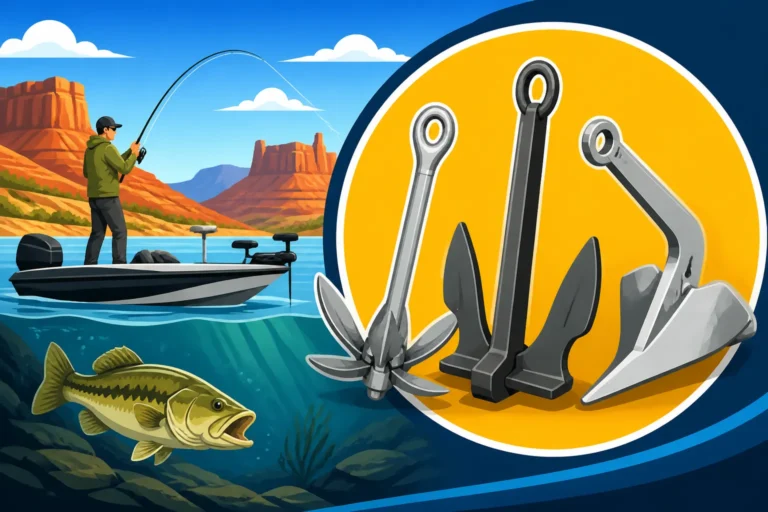
- Anchor and sufficient anchor line: For holding position in wind or emergencies.
- Basic tool kit and spare parts: For minor engine issues or repairs.
- Extra fuel: Don't underestimate the distances you'll cover.
- Warm, waterproof clothing: Even in summer, evenings can be chilly, and weather can change rapidly.
- Plenty of water and snacks: Hydration is key for long days on the water.
Comfort Features for Long Days
Trolling can involve many hours on the water, so comfort features significantly enhance the experience. Comfortable, swiveling boat seats can reduce fatigue. A good bimini top provides essential shade during hot Utah summers. If you plan to fish during colder months, consider a boat with a heated cabin or portable heaters for your ice shelter if you're venturing into Utah Ice Fishing Guide.
Adequate storage for gear, food, and personal items helps keep the deck clear and safe. Many anglers appreciate a well-organized tackle management system, perhaps using modular boxes that fit neatly into dedicated compartments. A built-in cooler or a high-quality portable cooler is also essential for keeping drinks cold and, crucially, for properly storing your catch on the way back to shore. How to Store Fish on a Hot Day in Utah gives practical tips for preserving your hard-earned fillets.
Understanding Weather and Water Conditions
Before every trip to Flaming Gorge, check the detailed weather forecast. Pay close attention to wind predictions, as strong winds can quickly create dangerous waves on such a large reservoir. Watch for sudden changes in barometric pressure, which can affect fish behavior and signal approaching storms. Many modern fish finders can also give you updated weather information.
Understanding the current water conditions, such as surface temperature and clarity, can also influence your trolling strategy and lure choices. Online resources and local bait shops are often excellent sources for the most up-to-date fishing reports. Being prepared for varying conditions ensures a more successful and, most importantly, safer day on the water.
Maintaining Your Trolling Setup
A finely tuned trolling setup isn't a "set it and forget it" kind of deal. Regular maintenance is crucial to ensure everything performs optimally, especially given the heavy use and sometimes harsh conditions at Flaming Gorge.
Regular Gear Checks and Service
After every trip, take the time to inspect all your equipment. Check your downrigger cables for fraying or kinks, and ensure the release clips are functioning correctly. Inspect all your rod guides for damage and check your reels for smooth operation and any signs of corrosion. This is also a good time to re-tie any knots that might have seen a lot of stress during the day. For bigger reels, consider a yearly professional service, especially if you're putting in a lot of hours. Many anglers consult online reviews, often found on platforms like Amazon, before making a significant purchase for maintenance parts or tools.
Your boat's motor and kicker motor also require regular maintenance according to the manufacturer's recommendations. This includes oil changes, fuel filter replacements, and checking propellors for damage. A well-maintained motor is a reliable motor, and reliability is key when you're miles out on Flaming Gorge. Don't forget to check your trailer lights, tires, and bearings before each trip, too.
Cleaning and Storage
Proper cleaning and storage will extend the life of your equipment. After use, rinse all your rods, reels, downriggers, and other tackle with fresh water to remove any salt, dirt, or fish slime. Allow everything to dry thoroughly before storing it. Store rods and reels in a way that prevents damage, perhaps in rod socks or cases. Remove lures from lines to prevent corrosion.
For your boat, a thorough wash-down is important, and for Flaming Gorge specifically, strict aquatic invasive species (AIS) rules are in effect to prevent the spread of quagga and zebra mussels. This means you must "Clean, Drain, and Dry" your boat after every use. Utah Aquatic Invasive Species Rules for Anglers outlines these regulations in detail. Ensuring your boat is completely dry, including all compartments and bilge areas, is not just a recommendation, it's a legal requirement.
By setting up your boat thoughtfully, focusing on robust equipment, and committing to regular maintenance, you'll be well-prepared to experience the incredible trolling opportunities that Flaming Gorge offers. Tight lines!
Disclaimer
This article is for general informational purposes only and does not constitute professional advice. Laws, prices and regulations vary by location and change over time. Consult a qualified professional for guidance on your specific situation.