Do You Need a Deep-V Hull for Bear Lake?
One of the most common worries for anyone planning a serious fishing trip to Bear Lake is whether their boat can handle its notoriously unpredictable waters. You’re staring at boat specs, wondering if your trusty fishing rig is up to the task or if you absolutely need that specialized deep-V hull to stay safe and comfortable. This guide will help you navigate the unique challenges of Bear Lake and determine if a deep-V hull is truly a necessity for your angling adventures there.
Understanding Bear Lake's Unique Challenges for Anglers
Bear Lake isn't just any large body of water; it's a high-altitude, naturally occurring lake that spans across the Utah-Idaho border, known for its stunning turquoise waters and formidable temperament. Anglers often underestimate its potential for rough conditions, leading to uncomfortable—or even dangerous—situations.
The Weather's Unpredictability on Bear Lake
If you've spent any time on large Western lakes, you know that the weather can turn on a dime, but Bear Lake seems to have a special knack for it. You can launch your boat on a glass-smooth morning, the kind that whispers promises of an epic day of fishing. You might be out there, peacefully trolling for a trophy cutthroat or jigging for a mackinaw, completely absorbed in the moment. Then, seemingly out of nowhere, the wind decides to pick up. And when it does, it often comes with a vengeance.
Within minutes, those serene waters can transform into a choppy, white-capped mess that makes navigating a real chore. These aren't just gentle rollers; the waves on Bear Lake can stack up quickly, becoming steep and powerful enough to challenge even experienced boaters. This rapid change is due to a combination of its large surface area and the surrounding mountainous terrain, which can funnel winds and create turbulent conditions. The frustration of having to cut a promising fishing trip short because your boat can't comfortably handle the chop is something many anglers know all too well. It’s not just about comfort; it’s about safely getting back to the ramp when conditions deteriorate. You need to consider How Wind Affects Fishing on Utah Reservoirs to truly appreciate this.
Fishing Techniques and Target Species on Bear Lake
The primary draw for anglers to Bear Lake often revolves around its unique and prized fish species, especially the Bear Lake Cutthroat Trout and the large Lake Trout (often called Mackinaw), as well as the Bonneville Cisco. Each of these species and the methods used to catch them have implications for the type of boat you'll want to be in.
Trolling is a hugely popular and effective technique for covering vast expanses of water and targeting those cruising cutthroat and lake trout. This involves moving at a consistent, slow speed, often using downriggers to get lures to specific depths. If you're trying to maintain a precise trolling speed and direction in choppy water, a boat that’s constantly pitching and rolling can make it incredibly difficult. You’re fighting the waves instead of focusing on your electronics and rod tips. For anglers specifically targeting Bear Lake Cutthroat Trout Facts, a stable platform makes a world of difference.
Jigging for lake trout, especially in deeper water, also benefits from a stable boat. You're often trying to feel subtle bites, and if your boat is bouncing all over the place, it’s much harder to detect those light takes. Even during the famous Cisco run in January, while many brave the elements for dipping net action from shore, those who are out on the open water seeking other species need a vessel that can handle the cold, often unpredictable winter conditions of the lake. The fishing itself demands stability, and the lake's character demands resilience.
What Exactly is a Deep-V Hull and Why Does It Matter?
When we talk about boat hulls, there's a spectrum of designs, each with its own advantages and disadvantages. The deep-V hull is specifically engineered for certain conditions, and understanding its characteristics is key to determining if it’s right for your Bear Lake adventures.
Anatomy of a Deep-V Hull
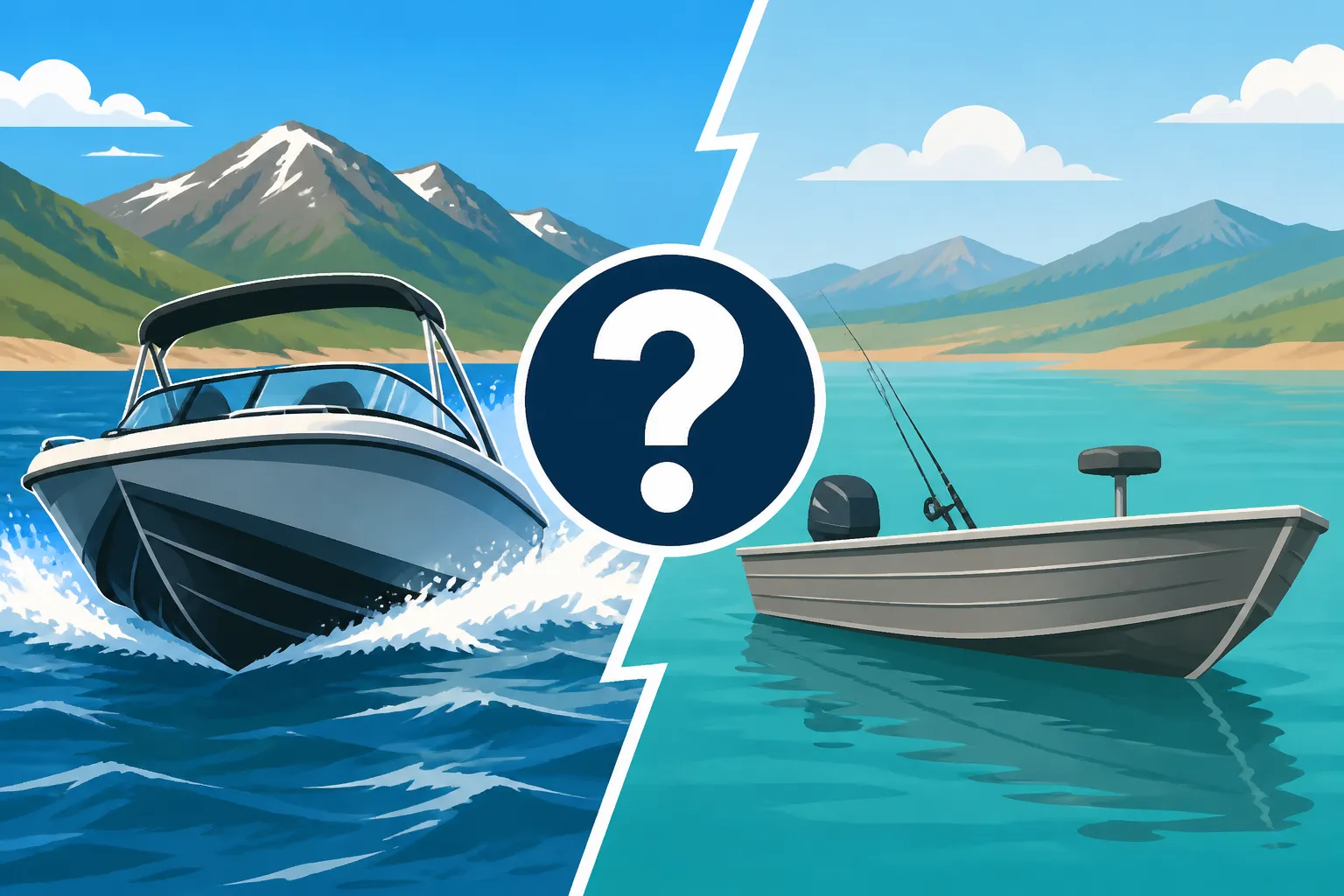
At its core, a deep-V hull is defined by its sharp, V-shaped bottom that extends from the bow all the way to the transom (the back of the boat). This "V" is measured by something called "deadrise," which is the angle of the hull bottom relative to a horizontal plane. Boats with a deep-V typically have a higher deadrise angle, especially at the stern, often 20 degrees or more. This sharp angle is designed to cut through waves rather than slap over them, which is a common characteristic of flatter-bottomed boats.
Imagine a knife slicing through water compared to a flat paddle hitting it. The knife cuts smoothly, displacing water to the sides, while the paddle creates a jarring impact. That’s essentially the difference in how a deep-V hull and a flatter hull interact with waves. Deep-V boats also tend to have higher freeboard (the height of the side of the boat from the waterline to the deck), which helps keep spray out of the boat when you’re pushing through chop. This design provides a much smoother, more comfortable ride in rough water, reducing the pounding sensation you often get in other hull types. However, this design isn't without its trade-offs.
Advantages and Disadvantages on Big Water
The advantages of a deep-V hull on big, unpredictable waters like Bear Lake are significant and often directly address the challenges we discussed earlier.
Advantages:
- Smoother Ride in Rough Water: This is the most celebrated benefit. The deep-V hull truly excels at cutting through waves, providing a much softer and more comfortable ride, even when the lake gets nasty. This means less fatigue for you and your passengers, and less wear and tear on your gear. You can often maintain higher speeds in chop where other boats would have to slow down considerably.
- Better Handling in Chop: With a deep-V, your boat tracks better and is less prone to being pushed around by strong winds and waves. This improved control makes navigation safer and less stressful, especially when heading back to the ramp against a stiff headwind. You can confidently keep your boat pointed in the right direction. How to Anchor a Boat in Wind on a Utah Reservoir becomes much easier.
- Keeps You Drier: The higher freeboard and way the hull displaces water help to reduce spray coming over the bow and sides, keeping you and your gear drier, which is a major comfort factor on cold days or long runs.
Disadvantages:
- Less Stable at Rest: Here’s the trade-off. While a deep-V is great when moving, its sharp V-shape means it has less hull surface in contact with the water when it’s sitting still. This translates to more rock and roll when you're anchored, drift fishing, or pulling in a big fish. If you primarily still-fish or frequently have people moving around the boat, this can be noticeable.
- Requires More Power and Fuel: The design that allows a deep-V to cut through water also means it has more wetted surface area, creating more drag. This generally requires a larger engine to achieve comparable speeds to flatter-bottomed boats, which in turn can lead to higher fuel consumption.
- Can Be Heavier and More Costly: Deep-V hulls often involve more material and complex construction, making them heavier and typically more expensive to purchase. This also means you might need a more capable tow vehicle.
- Shallower Draft Concerns: While generally not an issue on Bear Lake, some very specific shallow launching areas or extremely low water conditions could potentially be more challenging due to the deeper draft of a deep-V keel. However, on Bear Lake, depths are typically not an issue for launching from established ramps like at Bear Lake Marina Fishing Access.
Is a Deep-V Hull Necessary for Bear Lake?
Now for the million-dollar question: do you absolutely need one? The answer, as with many things in fishing, isn’t a simple yes or no. It really depends on your personal fishing style, frequency of visits, and tolerance for discomfort.
Situations Where a Deep-V is Highly Recommended
If your idea of a perfect fishing day on Bear Lake involves any of the following, then a deep-V hull moves from a "nice-to-have" to a "highly recommended" feature:
- Frequent Visitor: If Bear Lake is your go-to destination and you plan to fish it often throughout the season, you’ll inevitably encounter rough days. A deep-V will significantly extend your comfortable fishing days, allowing you to get out when others are confined to shore. It’s an investment in maximizing your time on the water.
- Fishing in Unpredictable Weather: Do you hate canceling a trip just because the forecast calls for a little wind? A deep-V allows you to tackle moderate chop with much greater confidence and comfort. You’re less likely to be surprised by a sudden change and better equipped to handle it safely.
- Venturing Far from Shore: Bear Lake is huge. Trolling long distances or reaching distant fishing grounds means you’ll be exposed to open water for extended periods. A deep-V will make those long runs significantly more bearable, especially if you have to cross large expanses of water that are prone to building big waves.
- Prioritizing Comfort and Safety: If you fish with family, young children, or simply value a smoother ride, a deep-V is hard to beat. Less pounding means less seasickness, less fatigue, and a generally more enjoyable experience for everyone on board. Safety is paramount, and a boat designed for rough water intrinsically offers a higher degree of security when conditions turn ugly. For serious gear, you can find a lot of options that are specifically designed for the rigors of big water at retailers like Bass Pro Shops.
When Other Hull Types Might Be Sufficient
Conversely, there are scenarios where you might be able to get by without a dedicated deep-V hull, perhaps with a modified-V or even a flatter-bottomed aluminum boat. But it comes with important caveats:
- Occasional, Fair-Weather Angler: If you only visit Bear Lake once or twice a year and are a stickler for picking only the calmest weather windows, then a less specialized hull might suffice. This means religiously checking the forecast, and being prepared to cancel or postpone if wind is predicted.
- Staying Close to Shore: If your fishing strategy involves hugging the shoreline, staying in protected coves, or not venturing far from the launch ramp, you might avoid the worst of the open-water chop. This greatly limits your access to some of the best fishing grounds, but for a casual outing, it's an option.
- High Tolerance for Discomfort: Some anglers are simply tougher or less prone to seasickness. If you don't mind a bit of a bumpy ride, or if you prefer to take it slow when it gets rough, you might find other hull types acceptable.
- Budgetary Constraints: Let's be real, deep-V boats can be a significant investment. If your budget simply doesn't allow for a true deep-V, a modified-V hull (which offers a compromise between stability at rest and wave-cutting ability) might be a more realistic option. Just be aware of the limitations and prioritize safety. Remember, even with a smaller boat, you still need to adhere to Utah Boating and Fishing Rules.
Balancing Safety, Comfort, and Budget
Ultimately, deciding on the right hull for Bear Lake is about personal priorities and finding that sweet spot between safety, comfort, and what you’re willing and able to spend. It’s not about finding the "best" boat in a vacuum, but the "right" boat for you and your specific angling habits.
If your primary goal is to target trophy fish year-round on Bear Lake, a deep-V will be a major asset. It provides the confidence to fish through more varied conditions and the comfort to make long days enjoyable. You can spend more time focusing on your Best Boats for Utah Reservoir Fishing strategies and less time worrying about getting soaked or pounded by waves.
However, if your trips are infrequent, largely confined to calm days, or centered around specific shore-accessible fishing, then a less aggressive hull might work, as long as you exercise extreme caution and always prioritize safety. No matter what, make sure you're equipped with all the necessary Boat Safety Equipment Required in Utah. Think about how much discomfort you’re willing to endure versus the peace of mind a more capable boat brings. You can always check out reviews and specs on Amazon for different boat accessories and safety gear to complement your chosen vessel.
Other Important Considerations for Bear Lake Boating
Beyond the hull design, there are several other critical factors to keep in mind when boating on Bear Lake to ensure a safe and enjoyable experience.
Essential Safety Gear and Preparedness
Even with the most robust deep-V hull, no boat is truly invincible. The unforgiving nature of large, cold lakes like Bear Lake means that preparedness is not just a good idea, it's a necessity. Every single person on board, regardless of age or swimming ability, should have a properly fitting life jacket. In fact, Life Jacket Requirements on a Utah Boat dictate this for certain ages and situations, but for Bear Lake, universal wear is highly advised.
Beyond life jackets, your boat should be equipped with a comprehensive safety kit. This includes a reliable VHF radio or satellite messenger for communication (cell service can be spotty), flares or an air horn, a throwable flotation device, a first-aid kit, and a strong anchor appropriate for the lake's bottom. Knowing how to use all of this gear before an emergency strikes is crucial. An extra paddle or a fully charged spare battery for your trolling motor can also be a lifesaver if your main engine fails far from shore. Don't leave home without these essentials; you can find many of these items readily available at Bass Pro Shops or even with quick shipping from Amazon.
Local Knowledge and Weather Monitoring
Understanding Bear Lake's specific weather patterns is just as important as the boat you choose. Local forecasts are often more accurate than broader regional predictions, so always seek out specific Bear Lake weather reports. Pay close attention to wind advisories, as the lake can become dangerous very quickly. Many experienced anglers observe the water conditions from the ramp for a while before launching, looking for signs of changing weather or patterns in the waves.
It's wise to have a "plan B" or even a "plan C" for your fishing day. If the main body of the lake becomes too rough, are there more protected areas you can retreat to? Knowing when to call it a day, even if the fish are biting, is a mark of a responsible and seasoned angler. No fish is worth risking your life or the lives of your passengers.
Boat Maintenance and Launching
Owning a boat suitable for Bear Lake also means committing to proper maintenance and understanding the logistical aspects of launching and retrieving. A heavier deep-V hull might require a more powerful tow vehicle and a sturdier trailer. Regularly inspect your engine, battery, and trailer bearings, especially if you're traveling long distances.
Crucially, Bear Lake is home to invasive quagga mussels, which means strict Utah Aquatic Invasive Species Inspection Stations and decontamination rules apply. Every time you pull your boat out of Bear Lake, you'll need to follow the "clean, drain, dry" protocol. For those planning to use their boat on other water bodies in Utah, a professional decontamination might be required. These rules are in place to protect Utah's other precious fisheries from harmful invasive species, so adhering to them is not just a legal requirement but an ethical responsibility for every angler. Learn more about Utah Quagga Mussel Decontamination Rules to ensure you're always compliant.
| Hull Type | Ride in Chop | Stability at Rest | Speed/Efficiency | Best For | Considerations |
|---|---|---|---|---|---|
| Deep-V | Excellent | Fair | Moderate | Frequent Bear Lake trips, rough conditions, long runs, comfort, safety. | Can be less stable at anchor/drift, often more expensive, requires more power. |
| Modified-V | Good | Good | Good | Mix of still-fishing and moving, moderate chop, budget-conscious. | Compromise on ride in extreme chop, better stability at rest than deep-V. |
| Flat-Bottom | Poor | Excellent | Excellent | Calm waters, shallow draft, shore access, small ponds. | Very bumpy in chop, wet ride, unsafe for open, rough water like Bear Lake; not recommended unless very close to shore on calm days. |
Disclaimer
This article is for general informational purposes only and does not constitute professional advice. Laws, prices and regulations vary by location and change over time. Consult a qualified professional for guidance on your specific situation.