Best Fishing Line for Utah Trout
It’s a tale as old as time for any angler casting a line in Utah: you’ve got your favorite rod, the perfect lure, and you're standing by some gorgeous water like the Provo River or Strawberry Reservoir, but those wily trout just aren't biting. Many times, the culprit isn't your technique or your bait, but something as fundamental as your fishing line. This comprehensive guide will unravel the mysteries of choosing the best fishing line specifically for Utah trout, helping you understand the nuances so you can make the most informed decision for every fishing scenario.
Understanding Fishing Line Types for Trout
When you walk into a tackle shop or browse online, the sheer variety of fishing line can be overwhelming. There's monofilament, fluorocarbon, braided, and a dozen variations within each category. For trout fishing in Utah, understanding the core characteristics of these three main types is absolutely essential. Each has its own strengths and weaknesses, making it ideal for certain situations and less so for others.
Monofilament: The All-Around Workhorse
Ah, good old monofilament! This is probably the first type of line most of us ever learned to tie a knot with, and for good reason. Monofilament, or "mono," is made from a single strand of nylon, making it relatively inexpensive, easy to handle, and widely available. Its affordability means you can spool up multiple reels without breaking the bank, which is a huge plus for anglers who like to have a few different setups ready to go. You can find a vast selection of monofilament lines at any well-stocked Bass Pro Shops, or browse countless options with customer reviews on Amazon.
One of mono's defining characteristics is its stretch. This might sound like a disadvantage, but it actually provides a fantastic cushion against sudden surges from a hooked fish, reducing the chances of a hook pulling out or the line snapping, especially with lighter setups. That stretch also makes it more forgiving for beginners who might have a less consistent retrieve or struggle with setting the hook too hard. It also tends to float, which is a big advantage for topwater presentations like dry fly fishing (though less common for spin fishing trout) or suspending bait under a bobber in a calm community pond. However, that stretch also translates to less sensitivity, meaning it can be harder to feel subtle bites, especially in deeper water or strong currents. It's also more visible in clear water, which can be a deal-breaker for particularly skittish trout in pristine mountain streams.
Fluorocarbon: The Stealthy Choice
If monofilament is the workhorse, then fluorocarbon is the ninja of fishing lines. While it looks similar to mono, it's a completely different beast, chemically speaking. The biggest advantage of fluorocarbon is its refractive index, which is very close to that of water. In simple terms, this means light passes through it almost unimpeded, making it nearly invisible underwater. For clear, pristine Utah waters – think the gin-clear sections of the Green River below Flaming Gorge Dam or the high-altitude Uinta Lakes – this invisibility can be a game-changer when targeting wary trout.
Fluorocarbon is also much more dense than monofilament, causing it to sink rather than float. This is incredibly useful for getting your bait or lure down to where the fish are holding quickly, especially when you're fishing nymphs or small jigs in current, or trying to present a deep-diving crankbait. It offers significantly less stretch than monofilament, which translates to increased sensitivity. You'll feel those subtle "ticks" and light bites much more clearly, allowing for quicker and more precise hook sets. The downside? Fluorocarbon is typically more expensive than mono, and it can be a bit stiffer and have more memory, making it a little harder to manage on spinning reels, especially in lighter tests. Learning specific knots designed for fluorocarbon is also crucial, as improper knots can drastically reduce its breaking strength.
Braided Line: Power and Sensitivity
Braided line, often just called "braid," is a powerhouse. It's constructed from multiple strands of synthetic fibers woven together, giving it incredible strength for its diameter. This means you can use a much lighter pound test braid to achieve the same or even greater breaking strength than a much thicker monofilament or fluorocarbon line. For example, 10-pound test braid might have the diameter of 4-pound mono, allowing for longer casts and less water resistance.
The most striking feature of braided line is its almost complete lack of stretch. This zero-stretch characteristic provides unparalleled sensitivity, transmitting even the lightest tap directly to your rod tip. You’ll feel every weed, every rock, and every tentative bite. This sensitivity is a massive advantage when fishing deep water, heavy cover, or for species that are known for extremely light bites. Because of its strength and thin diameter, braid is also excellent for casting long distances and cutting through wind. However, braid is highly visible in the water, which can spook trout in clear conditions. For this reason, it's almost always used with a fluorocarbon or monofilament leader when targeting trout. It also doesn't absorb shock as well as mono, meaning you need to be more careful with your drag settings and hook sets to avoid pulling hooks or snapping off a fish. Finally, braid can be tough on rod guides if you're using older, cheaper equipment, and it can be a pain to cut without sharp scissors.
| Line Type | Key Characteristic | Pros for Utah Trout | Cons for Utah Trout | Ideal Application |
|---|---|---|---|---|
| Monofilament | Stretchy, Floats | Affordable, easy to knot, shock absorption, good for topwater | Visible, less sensitive, prone to memory, UV degradation | Bait fishing, bobber rigs, larger lures in stained water |
| Fluorocarbon | Low stretch, Sinks, Invisible | Nearly invisible, high sensitivity, abrasion resistance, sinks | Stiffer, more expensive, knot-sensitive, some memory | Clear water, subtle presentations, nymphing, deep jigging |
| Braided | Zero stretch, Strong | Extreme sensitivity, incredible strength, thin diameter, long casts | Highly visible, no shock absorption, expensive, can fray | Main line with fluoro leader, heavy cover, long-distance casting |
Key Factors When Choosing Trout Line in Utah
Choosing the right fishing line isn't a one-size-fits-all decision, especially with the diverse fishing environments Utah offers. From tiny mountain creeks to vast reservoirs, each situation calls for careful consideration of several factors. Ignoring these can lead to frustration, lost fish, and a less enjoyable day on the water.
Water Clarity and Conditions
Utah boasts an incredible range of water clarity. You'll find crystal-clear alpine lakes in the Uintas where you can see fish swimming 20 feet down, gentle rivers like the Provo that can run clear or slightly off-color depending on recent weather, and larger reservoirs like Utah Lake that are often turbid. The clarity of the water is perhaps the single most important factor when selecting your line.
In gin-clear waters, trout become incredibly wary. They're often able to see your line, especially if it's thick or brightly colored, which can cause them to shy away from your presentation. This is where fluorocarbon truly shines. Its near-invisibility gives you a significant edge. Using a long fluorocarbon leader of 4 to 6 feet, even if your main line is braided, is absolutely crucial in these conditions. On the flip side, if you're fishing in stained or slightly murky water, like after a rainstorm on a lower elevation river or in some of the shallower bays of a reservoir, visibility becomes less of an issue. Here, the subtle stretch of monofilament can be an advantage, offering more forgiving hook sets and handling some of the debris that might be floating in the water without constant snagging.
Target Trout Species and Size
Are you chasing small, eager brook trout in a high-mountain stream, or are you hoping to tangle with a monstrous lake trout at Flaming Gorge? The species and expected size of the trout you're targeting heavily influence your line choice. Smaller trout, like those stocked in community ponds or wild brookies, typically don't require heavy line. A light 2 to 4-pound test monofilament or fluorocarbon is often more than enough and allows for a more natural presentation of small baits or flies. Using too heavy a line for these smaller fish can reduce your casting distance, make your lure look unnatural, and prevent you from getting bites.
For larger trout, such as trophy brown trout in the Green River or big rainbows and cutthroat in Strawberry Reservoir, you’ll want to step up your line strength. Here, 6 to 8-pound test fluorocarbon is a popular choice for leaders, providing the necessary strength while maintaining stealth. When targeting truly large fish like the formidable lake trout (mackinaw) in Flaming Gorge, anglers often use heavier braided main lines, sometimes 20-30 pounds, combined with a strong fluorocarbon leader. This combination provides the power to haul in a big fish from deep water and withstand the abrasion of rocky bottom structures. Thinking about the potential fight and the obstacles in the water will help you pick a line that can stand up to the challenge.
Fishing Technique Spinning, Fly, Ice
Your chosen fishing technique plays a monumental role in line selection. What works for fly fishing won't necessarily work for ice fishing, and what's great for spinning reels in a reservoir might be a nightmare on a tiny stream. Each technique demands specific line characteristics to be effective.
For spinning gear, which is incredibly popular across Utah for trout, anglers often use monofilament or a braided main line with a fluorocarbon leader. Monofilament is very user-friendly on spinning reels, offering good castability and knot strength. However, if you're looking for increased sensitivity and less line twist, a thin braided main line (like 6-10 lb test) paired with a 4-8 lb fluorocarbon leader is a fantastic setup. This allows for long casts and incredible feel, while the leader provides the stealth necessary for clear water. Best Spinning Reels for Utah Trout Fishing covers more about optimizing your spinning setup.
Fly fishing is a whole different ballgame where the fly line itself is weighted to cast the virtually weightless fly. The "fishing line" in this context refers to the leader and tippet. These are almost always made of monofilament or fluorocarbon. Fluorocarbon is favored for nymphing and streamer fishing due to its sinking properties and invisibility, while specialized monofilament leaders are often used for dry fly presentations where flotation is key. The length and taper of your leader and tippet are critical for presenting your fly naturally, especially on renowned fly-fishing waters like the Provo River Fly Fishing Sections.
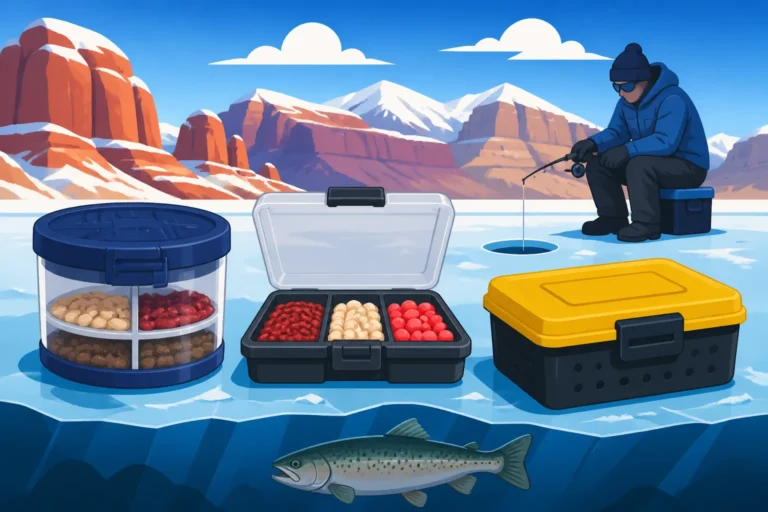
Ice fishing in Utah demands lines that perform well in freezing temperatures and can withstand abrasion from ice holes. Monofilament and fluorocarbon are both excellent choices for ice fishing. Fluorocarbon's low stretch is a huge advantage for detecting subtle bites in deep water, and its abrasion resistance helps against the sharp edges of the ice. Monofilament, especially a low-memory variety, also works well and is more forgiving if you're fishing with younger anglers. Heavy braided line can sometimes absorb water and freeze, creating problems, but many anglers use it with a short fluorocarbon leader for sensitivity. You want a line that doesn't coil excessively off the spool in the cold, and one that has good knot strength when your fingers are numb. How to Ice Fish for Trout in Utah delves deeper into ice fishing specifics.
Recommended Line Strengths Pound Test for Utah Trout
The "pound test" of a fishing line refers to its breaking strength – how much force it can withstand before snapping. Choosing the correct pound test is a delicate balance. Too heavy, and you risk spooking fish, reducing casting distance, and making presentations look unnatural. Too light, and you risk losing that trophy fish you've been dreaming about. For Utah trout, there's a practical range that covers most scenarios.
Light Tackle for Smaller Streams and Ponds
When you're exploring the smaller mountain streams in the Uintas or casting into one of Utah's well-stocked community ponds, light tackle is often the most effective and enjoyable. These waters typically hold smaller to medium-sized trout, and their clear, often shallow nature means that heavy line will stand out like a sore thumb.
For these situations, a monofilament or fluorocarbon line in the 2 to 4-pound test range is usually ideal. This light line allows for incredibly natural presentations of small baits like worms or PowerBait, tiny spinners, or delicate flies. The thin diameter ensures maximum casting distance, even with ultralight lures, and minimizes drag in the water, which can make your bait drift more naturally with the current. While it might seem intimidating to use such light line, especially for beginners, the thrill of fighting a feisty trout on ultralight gear is unmatched. Just remember to set your drag properly – lightly enough to allow the fish to take line when it runs, but tight enough to maintain control. When fishing for kids, 4lb mono is a great forgiving choice for learning the ropes.
Medium Tackle for Rivers and Reservoirs
This is probably the most common category for Utah trout anglers, covering a vast array of fishing experiences from the renowned Provo River to the expansive waters of Strawberry Reservoir or Deer Creek. Here, you're often dealing with larger, stronger trout and more varied conditions, including deeper water, moderate currents, and occasional submerged structure.
For general-purpose trout fishing in these environments, a line in the 6 to 8-pound test range is a fantastic all-rounder. Many anglers opt for a braided main line of 8 to 10-pound test, followed by a 6 to 8-pound test fluorocarbon leader. This setup gives you the sensitivity and casting distance of braid, combined with the invisibility and abrasion resistance of fluorocarbon where it matters most – near your lure or bait. If you prefer a single line, a good quality 6-pound test fluorocarbon will serve you well, offering a great balance of strength, sensitivity, and stealth. It's robust enough to handle most trout you'll encounter, including some surprisingly large ones, while still being subtle enough not to spook them. It also provides enough backbone for managing your catch before release, which is important for conservation in many Utah Catch-and-Release Waters.
Specialty Applications: Big Trout and Tough Cover
Sometimes, you're not just fishing for trout; you're hunting for a monster. This is where specialty line setups come into play, particularly when targeting enormous lake trout at Flaming Gorge or aggressive brown trout hiding in heavy cover on larger rivers. You also might need heavier line if you're dealing with exceptionally swift currents or very abrasive bottom structures.
For these specific situations, you'll want to move into the 10 to 20-pound test range, or even higher for your main line. For example, when trolling for huge lake trout (Mackinaw) at Flaming Gorge, anglers often use 20 to 30-pound test braided main line, sometimes even heavier, paired with a 10 to 15-pound test fluorocarbon leader. The heavy braid provides the power needed to deploy large downriggers and withstand the incredible fight of a trophy fish from significant depths, while the fluorocarbon leader maintains stealth and offers abrasion resistance against sharp rock edges. If you're fishing rivers with heavy woody debris or thick weed beds, bumping up to a 10-pound test fluorocarbon or even a tough monofilament can give you the extra confidence to pull fish out of snags without snapping off. The key is to match your line's strength not just to the fish, but also to the environment you're fishing in and the gear you're using.
Line Maintenance and Storage for Longevity
Fishing line isn't indestructible. It takes a beating from UV rays, water, fish, and various obstacles. Neglecting proper line maintenance and storage can drastically reduce its lifespan and, more importantly, lead to unexpected break-offs and lost fish. Taking a few extra minutes to care for your line can save you a lot of heartache on the water.
Checking for Damage and Weak Spots
Before every fishing trip, and even periodically throughout a long day of fishing, it's a good habit to inspect your line. Run the first several feet of your line through your fingers, feeling for any nicks, abrasions, or rough spots. These can occur from rubbing against rocks, logs, or even a fish's teeth during a fight. Even a tiny imperfection can compromise the line's integrity, turning a 6-pound test into a 2-pound test at that weak point.
If you find any damaged sections, the best course of action is to cut them off. It might mean losing a few feet of line, but it’s far better than losing a trophy fish because of a preventable break. Pay particular attention to the last few feet of line, especially if you're using a fluorocarbon leader, as this is the section that sees the most action and is most susceptible to wear and tear. How to Tie a Basic Fishing Knot for Trout Fishing discusses the importance of fresh line for knot strength. After tying on a new lure or bait, always give a gentle tug to ensure your knot is solid and hasn't weakened the line.
Proper Spooling and Storage
How you spool and store your line can have a significant impact on its performance and lifespan. When spooling new line onto a reel, ensure it's done under proper tension. Too loose, and the line can dig into itself on the spool, causing tangles and snags when casting. Too tight, and it can stretch the line unnecessarily. Most line manufacturers provide recommendations for proper spooling tension. When loading line from a bulk spool, having a friend help by holding the spool with a pencil through the center, allowing it to spin freely while you reel, is ideal. Or, you can set the spool on the floor with the label facing up to prevent line twist.
When storing reels or extra spools of line, keep them out of direct sunlight and extreme temperatures. UV rays are a notorious enemy of monofilament, causing it to degrade and weaken over time. High heat can also damage all types of line, leading to brittleness and increased memory. Store your spooled reels in a tackle box or a cool, dark cupboard. For bulk spools of line, use the original packaging, which often offers some UV protection, and store them similarly. This simple step can prolong the life and performance of your line significantly.
When to Replace Your Line
Even with the best care, fishing line doesn't last forever. Knowing when to replace it is crucial. For actively used reels, especially those spooled with monofilament, it’s generally a good idea to replace the line at least once a year, if not more frequently depending on how often you fish. Monofilament naturally degrades over time due to UV exposure and water absorption, losing its strength and developing "memory" (it retains the shape of the spool, leading to coils and tangles).
Fluorocarbon and braided lines tend to have a longer lifespan. Fluorocarbon is more resistant to UV degradation, but its stiffness can increase with age, and it can still develop nicks and abrasions. Braid is very durable, but it can fray, and its colors can fade. For these lines, replace them when you notice significant fraying, excessive fading (for braid), or if you find frequent nicks that require cutting back substantial amounts of line. If you're constantly finding yourself re-tying due to break-offs at the knot or in the middle of a cast, it's a strong indicator that your line has simply worn out and it's time for a fresh spool. Investing in fresh line is a small price to pay for confidence on the water. Many anglers buy larger bulk spools from stores like Bass Pro Shops or Amazon to ensure they always have fresh line for respooling.
Advanced Line Setups and Leaders
While a simple main line is perfectly adequate for many fishing situations, serious trout anglers in Utah often employ more advanced line setups, particularly incorporating leaders and backing. These sophisticated combinations are designed to maximize stealth, strength, and casting performance, giving you an edge over the most finicky fish.
The Art of the Leader for Trout
A leader is a section of line tied to the end of your main line, typically used to provide specific advantages that your main line might lack. For trout fishing in Utah, leaders are almost universally employed when using braided main line, but they are also common with monofilament main lines, especially when you need extra stealth or abrasion resistance. The primary reason to use a leader with braid is visibility; braided line is often brightly colored and highly visible underwater, which can easily spook wary trout. A fluorocarbon leader, being nearly invisible, mitigates this issue perfectly.
Leaders also serve to provide abrasion resistance. If your main line is a thinner, less durable braid, a tougher fluorocarbon leader can protect your setup from sharp rocks, logs, or even the rough mouths of larger fish. The length of your leader can vary significantly, from a few feet for general spinning applications to 9-12 feet or more for fly fishing. For spin fishing with braid, a 3 to 6-foot fluorocarbon leader in 4 to 8-pound test is a great starting point for most Utah trout scenarios, attached to your main line with a strong, low-profile knot like an FG knot or an Albright knot. The key is to select a leader that matches the conditions – lighter and longer for clear water, shorter and heavier for rougher conditions or when targeting aggressive fish.
Backing and Main Line Combinations
While not always necessary for standard trout fishing, the concept of backing is important for certain applications, particularly fly fishing and targeting very large fish in expansive waters like Flaming Gorge or Lake Powell. Backing is a durable, usually braided, line that is spooled onto the reel before your main fishing line. Its primary purpose is to fill the arbor of your reel, providing a larger diameter spool that reduces line memory and increases retrieve rate. It also provides extra capacity for those rare instances when a truly massive fish decides to make a blistering run, stripping off all your main line.
In fly fishing, backing is almost always used because fly lines are typically short (80-100 feet) and quite thick. A few hundred feet of thin braided backing (usually 20-30 pound test) is attached to the fly reel arbor, and then the fly line is attached to the backing. This allows anglers to fight large fish like massive brown trout on the Green River or strong kokanee salmon in Strawberry Reservoir without running out of line. For conventional spinning or baitcasting reels, backing (often a cheaper monofilament or braid) might be used if you're putting a relatively short amount of expensive fluorocarbon or super-thin braid on your reel, just to fill the spool. This is a cost-effective way to ensure your reel performs optimally without having to buy a full spool of premium line for the entire reel capacity.
Knot Tying for Maximum Strength
No matter how expensive or advanced your fishing line is, it's only as strong as its weakest link – and that's usually the knot. Poorly tied knots are a primary cause of lost fish and can be incredibly frustrating. For trout fishing in Utah, mastering a few essential knots for different line types and connections is absolutely critical.
For tying your line directly to a lure, hook, or swivel, the Improved Clinch knot or the Palomar knot are excellent choices. The Palomar knot is particularly strong and reliable for both monofilament and fluorocarbon, and many anglers even use it for braided line. The Uni knot is another versatile option that works well for a variety of connections. When it comes to connecting your main line to a leader (the line-to-line knot), things get a bit more technical. For braid-to-fluorocarbon connections, the FG knot is considered by many to be the strongest and most streamlined, passing through rod guides smoothly with minimal hang-ups. However, it can be challenging to learn. Simpler alternatives include the Albright knot or the Double Uni knot, which are easier to tie and still offer good strength. Practice tying these knots at home, perhaps watching some tutorials online or checking a resource like How to Tie a Basic Fishing Knot for Trout Fishing. A strong, properly tied knot ensures that all the careful consideration you put into choosing your line doesn't go to waste when that trophy trout finally bites.
Disclaimer
This article is for general informational purposes only and does not constitute professional advice. Laws, prices and regulations vary by location and change over time. Consult a qualified professional for guidance on your specific situation.