Best Anchors for Utah Reservoir Fishing
There’s nothing quite like the feeling of finding that perfect fishing spot on a Utah reservoir – the calm water, the promise of a bite, the scenic beauty all around. But that perfect moment can quickly turn into a frustrating drift if your anchor isn't up to the task. Many of us have experienced the annoyance of setting anchor only to slide across the bottom, or worse, getting snagged and losing it entirely. This guide is all about helping you understand the best anchors for Utah reservoir fishing, so you can stay put, fish effectively, and enjoy your time on the water.
The Crucial Role of a Reliable Anchor in Utah Reservoir Fishing
When you're out on the vast expanse of a Utah reservoir, whether it's the sprawling waters of Flaming Gorge or the bustling shores of Jordanelle, having an anchor that you can trust isn't just a convenience – it's a fundamental part of a successful and safe fishing trip. It allows you to precisely position your boat over structure, a drop-off, or a known fish-holding area, and actually stay there. Without a solid anchor, you’re constantly fighting the elements, which means less time fishing and more time repositioning.
Why a Good Anchor is More Than Just a Weight
Think of your anchor as your boat's personal pause button. It's what gives you control in an otherwise fluid environment. A good anchor provides stability, keeping your boat from swinging wildly with every gust of wind or passing wake. This stability is critical when you're trying to make accurate casts, manage multiple lines, or even just enjoy a peaceful lunch on the water. Beyond convenience, a reliable anchor is a key safety device. If your engine dies or you face sudden, strong winds, being able to drop anchor and hold your position can prevent you from drifting into dangerous waters, rocks, or other boat traffic. It’s peace of mind wrapped up in a bit of metal.
Common Frustrations with Inadequate Anchoring
We've all been there: you drop what you think is a perfectly good anchor, only to look up a few minutes later and realize you've drifted a hundred yards from your intended spot. This constant repositioning is not only a drain on your time and fuel, but it can also spook fish, especially in shallower waters. Or maybe you've tried to retrieve a stubbornly stuck anchor, pulling and yanking until your back aches, only to finally give up and cut the line, leaving a piece of expensive gear at the bottom of the lake. Losing an anchor isn't just about the cost of replacement; it’s the disruption, the wasted effort, and the knowledge that you're leaving something behind in the water. These frustrations are a clear signal that it's time to re-evaluate your anchoring setup.
Understanding the Main Types of Anchors for Utah Waters
Utah's reservoirs present a wide array of bottom conditions, from soft, silty mud to hard-packed rock and gravel. There's no single "best" anchor for every situation, which is why understanding the different types and their strengths is so important. Knowing your anchor options empowers you to choose the right tool for the job, ensuring you stay put no matter where you cast your line.
The Versatile Fluke Anchor (Danforth Style)
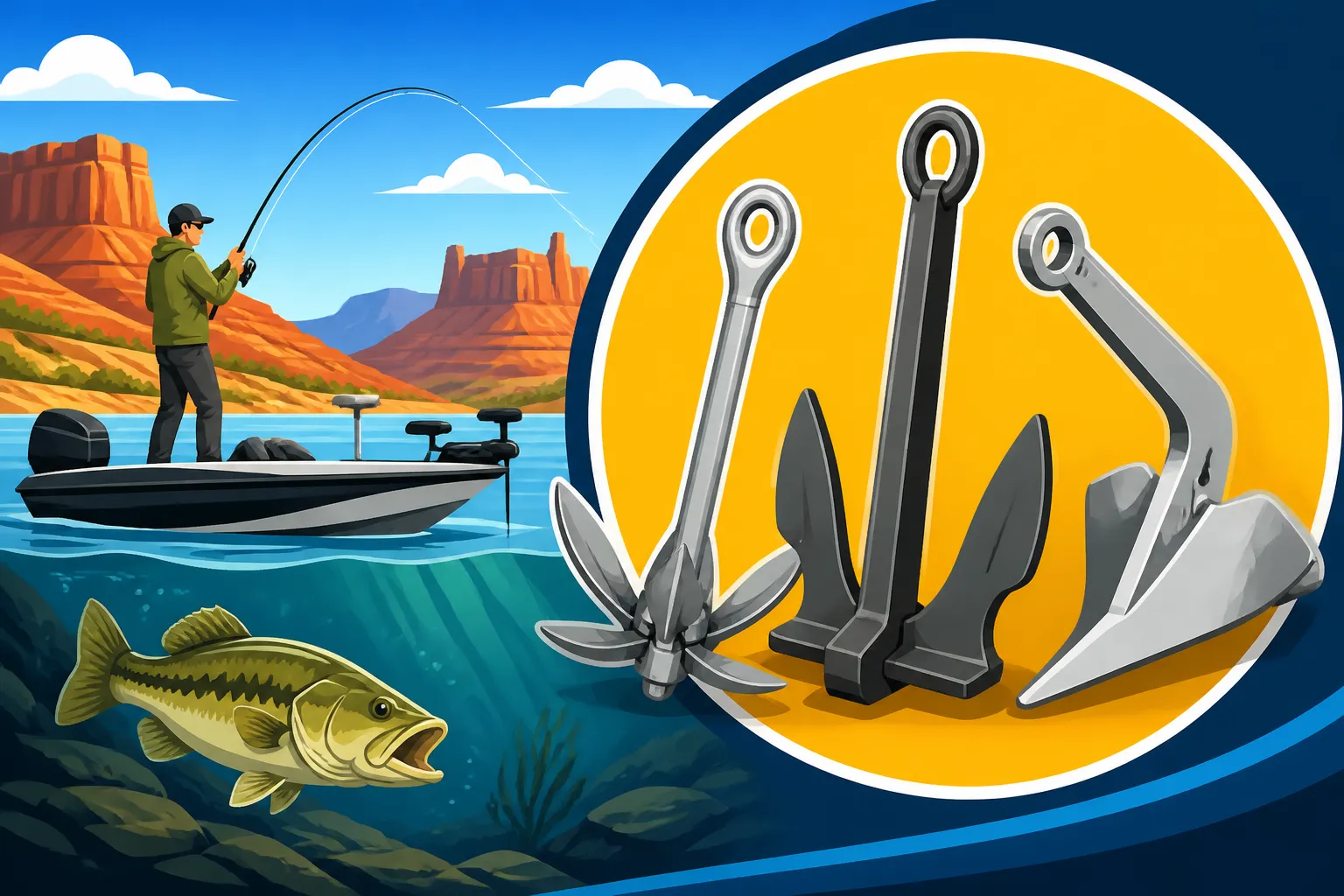
The fluke anchor, often referred to as a Danforth-style anchor, is one of the most popular choices for recreational boats, and for good reason. Its design features two large, flat flukes that pivot on a stock, allowing them to dig deep into soft or sandy bottoms. When pulled horizontally, these flukes create significant resistance, providing excellent holding power.
In Utah, you'll find these anchors perform exceptionally well on many reservoir bottoms that consist of mud, sand, or a mix of gravel and silt. Think of vast stretches of Utah Lake or the shallower areas of Willard Bay where the bottom is often soft. They're relatively lightweight for their holding power and fold flat, making them easy to store. However, they can struggle on very hard or rocky bottoms where the flukes can't penetrate, leading to them dragging or getting snagged. For general-purpose reservoir fishing on softer bottoms, a good quality fluke anchor is often an angler's go-to choice.
Claw Anchors (Bruce Style) for Varied Bottoms
The claw anchor, or Bruce-style anchor, is another excellent option known for its remarkable holding power and ability to set quickly in a variety of bottom conditions. Its unique scoop-like design, resembling a grappling hook or a cat's claw, allows it to dig in and hold firmly in mud, sand, and even some rocky or gravely areas. The three-pronged design helps it orient itself quickly for a strong set.
Many anglers who frequent reservoirs with mixed bottom types, like Strawberry Reservoir or Deer Creek, appreciate the claw's versatility. It's less prone to rolling out of a soft bottom than some other designs and can often find a purchase where a fluke might slip. While generally heavier than a fluke anchor of comparable holding power, its reliable performance on challenging bottoms makes it a favorite among serious anglers. Just be mindful of extremely snag-prone areas, as its multiple points can get wedged in tight rock crevices. You'll often find these available at outdoor retailers like Bass Pro Shops.
River Anchors and Grapnel Anchors for Specific Needs
While fluke and claw anchors cover a lot of ground, sometimes you need something a bit more specialized. River anchors, characterized by their mushroom-like shape or a series of pointed tines, are designed primarily for flowing water where they can dig in and resist current. Their weight and shape help them hold in river bottoms, but their holding power on open reservoir bottoms can be less reliable than flukes or claws. However, a small mushroom anchor is often perfect for lighter craft like kayaks or float tubes in calm reservoir conditions. For more ideas on outfitting smaller boats, check out our Utah Kayak Fishing Gear Guide.
Grapnel anchors, with their four or more folding tines, are fantastic for smaller boats or temporary holds. They excel in very rocky terrain where their tines can hook onto submerged rocks or ledges. They are incredibly compact when folded, making them easy to store. The downside is that while they grab well, they can also get notoriously snagged. Often, they're rigged with a trip line or a break-away system to aid retrieval when they do get stuck. For fishing the Green River below Flaming Gorge Dam, for example, a river anchor might be appropriate, while a small grapnel could be handy for a quick stop on a shallow, rocky point in a reservoir.
Matching Your Anchor to Utah's Diverse Fishing Conditions
One of the biggest mistakes anglers make is using a "one-size-fits-all" approach to anchoring. Utah's reservoirs are incredibly diverse, from the wide, shallow, and often muddy expanses of Utah Lake to the deep, rocky canyons of Flaming Gorge. Understanding the typical bottom composition and prevailing weather patterns of your chosen fishing spot is key to selecting an anchor that will actually hold.
Navigating Muddy and Soft Bottoms
For reservoirs characterized by soft, silty, or muddy bottoms, like the majority of Utah Lake or certain bays in Willard Bay, your anchor needs to be able to penetrate deeply and displace a significant amount of material to create a strong hold. Lighter anchors simply won't cut it, as they'll drag through the soft sediment without ever truly setting.
This is where fluke-style anchors truly shine. Their broad, flat flukes are designed to dig in and create an immense amount of resistance once buried in the mud or sand. When deploying in these conditions, it’s crucial to use sufficient anchor rode (rope or chain) to allow the anchor to lie flat and dig in effectively. A common rule of thumb is a 7:1 scope – meaning for every 10 feet of depth, you want at least 70 feet of rode out. This low angle of pull helps the anchor to really burrow down. Without enough scope, the anchor will pull upward, causing it to skip across the soft bottom rather than set firmly. Some anglers even prefer a claw anchor for particularly sticky mud, as its design can "scoop" into the bottom, providing a very tenacious hold. Check out our Utah Lake Fishing Guide for more insights on fishing this unique body of water.
Conquering Rocky and Hard Bottoms
On the flip side, many of Utah's most popular fishing destinations, such as Flaming Gorge Reservoir or parts of Bear Lake, feature predominantly rocky, gravely, or even solid rock bottoms. Here, a fluke anchor will often just skip and slide, unable to dig into anything substantial. This is where you need an anchor designed to grab onto irregularities rather than penetrate.
Claw anchors are often a top pick for rocky bottoms because their unique shape can wedge into crevices and hold firm. Another excellent option is a folding grapnel anchor, especially for smaller boats. The multiple tines of a grapnel are perfect for hooking onto rocks. The challenge with rocky bottoms, however, is retrieval. Anchors can get hopelessly wedged. Many savvy anglers rig their anchors with a "break-away" system for rocky areas. This involves attaching the anchor chain to the crown (the top) of the anchor and then running the chain back along the shank to the normal attachment point, secured with a zip tie or light line. If the anchor gets stuck, you pull hard enough to break the zip tie, and then you're pulling the anchor out from the crown, allowing it to "trip" free of the snag. This ingenious trick saves countless anchors from being abandoned. For adventures on the state's deepest waters, read our Flaming Gorge Fishing Guide.
Anchoring in Windy Conditions
Utah is known for its sudden, powerful winds, especially on larger, open reservoirs like Willard Bay, Bear Lake, or even Deer Creek. These winds can quickly turn a calm fishing day into a battle against drifting. When the wind picks up, the force exerted on your boat dramatically increases, requiring significantly more holding power from your anchor.
The key to successful anchoring in wind, regardless of anchor type, is scope – the ratio of anchor rode length to water depth. In windy conditions, you need even more scope, perhaps 10:1 or even higher if space allows. This ensures the anchor is pulling at a very low angle, maximizing its ability to dig in and resist the horizontal force. Additionally, choose an anchor that is rated for a larger boat than yours or go up a size from the manufacturer's recommendation. A slightly heavier or larger anchor will give you more security when the gusts hit. Consider investing in a good quality chain segment (often 10-15 feet) between your anchor and your rope rode, as this adds weight to the critical part of the anchor system, helping it lie flat and dig in more effectively. You can learn more about managing your boat in adverse conditions in our guide, How to Anchor a Boat in Wind on a Utah Reservoir.
Essential Components of an Effective Anchor System
An anchor isn't just the piece of metal that hits the bottom; it's an entire system working in harmony. From the type of line you use to the accessories that make deployment and retrieval easier, every component plays a vital role in keeping your boat securely in place. Overlooking these details can lead to frustration, lost gear, or even dangerous situations on the water.
The Importance of Your Anchor Rode and Chain
Your anchor rode is the lifeline between your boat and the anchor. It typically consists of a combination of chain and rope. The chain is perhaps the most critical component after the anchor itself. A good length of chain (at least 6-10 feet for smaller boats, more for larger vessels) serves several purposes:
- Weight: It adds weight to the anchor system, ensuring the anchor pulls horizontally along the bottom, which is essential for proper setting and maximum holding power. Without chain, the anchor often pulls upwards, causing it to skip or drag.
- Abrasion Resistance: Chain protects the rope rode from chafing against sharp rocks or debris on the bottom, which can quickly wear through rope and lead to a lost anchor.
- Shock Absorption: While rope provides most of the stretch, the weight of the chain helps absorb some of the shock from waves and boat movement, preventing the anchor from being pulled out of the bottom.
When choosing rope, nylon is generally preferred for its strength and elasticity, which helps absorb shock loads. Polyester also works well but has less stretch. Avoid polypropylene rope for anchoring, as it floats and is not as strong or durable. Ensure your rode is long enough to provide adequate scope in the deepest water you typically fish, plus extra for strong winds – a good starting point is 100 feet for smaller boats, and more for larger craft. Investing in a solid anchor rode system, often available from reputable brands like Bass Pro Shops or on Amazon, is just as important as the anchor itself.
Anchor Retrieval Aids and Accessories
Retrieving an anchor can sometimes be more challenging than deploying it, especially in deep water or when it's dug in firmly. Fortunately, several accessories can make this task easier and safer.
- Anchor Buoys and Retrieval Rings: These are incredibly helpful, especially when fishing alone or in deep water. You attach the retrieval ring to the anchor rode, then float a buoy on the surface. When it's time to retrieve, you motor past the buoy, pick up the line, and the buoy floats the rode to the surface, allowing you to pull the anchor horizontally, often freeing it from snags.
- Anchor Trolleys for Kayaks: For kayak anglers, an anchor trolley is a game-changer. It's a system of lines and pulleys that allows you to move your anchor attachment point from the bow to the stern (or anywhere in between) without having to paddle. This lets you orient your kayak perfectly into the wind or current for ideal casting angles. If you're into kayak fishing, you'll want to read our Best Anchor Style for a Kayak on Utah Lake.
- Anchor Winches (Electric): For larger boats, an electric anchor winch (windlass) can take all the physical effort out of anchor deployment and retrieval. These are significant investments but offer unmatched convenience and safety, especially when single-handing a boat or fishing in adverse conditions.
- Chafing Gear and Snubbers: A simple piece of chafing gear, like a heavy-duty rubber tube or a specialized chafe guard, can protect your rope rode where it passes over the bow or through a chocks. An anchor snubber, typically a short length of stretchy line, can be used to connect your anchor rode to a cleat, further absorbing shock and reducing strain on your boat's hardware.
Best Practices for Anchor Use and Maintenance in Utah
Even the best anchor system can fail if not used correctly or maintained properly. Good habits not only extend the life of your gear but also ensure your safety and effectiveness on the water. Developing a routine for deploying, retrieving, and caring for your anchor will make your Utah fishing trips much more enjoyable and productive.
Safe Deployment and Retrieval Techniques
Proper technique begins with knowing your target spot. Motor slowly into the wind or current past your desired fishing location. When you're ready, slowly lower (don't throw!) the anchor from the bow (never the stern, as this can cause your boat to swamp in rough conditions). As the boat drifts backward with the wind/current, pay out enough rode to achieve your desired scope. Once enough rode is out, cleat it off and allow the anchor to dig in. You should feel a firm tug once it’s set. If you keep drifting, retrieve it and try again.
For retrieval, motor slowly forward, taking up the slack on the rode. Drive slowly over your anchor, letting the boat's momentum pull the anchor straight up from the bottom. This vertical pull helps dislodge it from snags. Once it's free, slowly pull it in. Never try to retrieve a deeply set anchor by motoring away at high speed – this puts immense strain on your boat's cleats and hull and can be dangerous. Always clear the anchor of any mud or debris before bringing it fully onboard to keep your deck clean. Having good safety equipment on board is always a good idea; check out Boat Safety Equipment Required in Utah for more information.
Regular Maintenance and Inspection for Longevity
Like all fishing gear, your anchor system benefits from regular care. After each trip, especially if you've been in muddy or silty waters, rinse your anchor and chain thoroughly with fresh water to remove salt, mud, and grit. This prevents corrosion and keeps dirt from hardening onto the anchor. Allow the anchor and rode to dry completely before stowing them. Mold and mildew can quickly develop on wet rope, weakening it over time.
Periodically, inspect your entire anchor system. Check the anchor itself for any bent flukes, cracks, or excessive wear. Pay close attention to the shackles and connecting points – they should be secure and free of corrosion. Examine your rope rode for any fraying, cuts, or weak spots. Look for areas that show signs of chafe, especially near the anchor end and where it routinely rubs against your boat. If you find significant damage, it's safer to replace that section of rope or the entire rode. Proper maintenance not only ensures your anchor will perform when you need it most but also extends its lifespan, saving you money in the long run. If you're looking for broader care tips, our guide on How to Store Fishing Gear Over a Utah Winter has some useful advice that can be applied to anchor care as well.
Here's a quick comparison of common anchor types:
| Anchor Type | Pros | Cons | Best for Utah Bottoms | Holding Power (Relative) | Retrieval Ease (Relative) |
|---|---|---|---|---|---|
| Fluke (Danforth) | Excellent in mud/sand; lightweight for power | Poor in hard/rocky bottoms; can drag in current | Mud, sand, silty bottoms (Utah Lake, Willard Bay) | High | Easy |
| Claw (Bruce) | Versatile; sets quickly in varied bottoms | Heavier than fluke for similar power; can snag | Mixed mud, sand, rock (Strawberry, Deer Creek, Flaming Gorge) | High | Moderate |
| River (Navy/Mushroom) | Good for slow currents; compact | Low holding power in open water/wind; can drag | Very small craft in calm water, specific river sections | Low | Easy |
| Grapnel | Great for hooking onto rocks; compact/folding | Prone to severe snags; lower holding power on flat bottoms | Rocky points, temporary stops (small craft) | Medium | Difficult (snags) |
Disclaimer
This article is for general informational purposes only and does not constitute professional advice. Laws, prices and regulations vary by location and change over time. Consult a qualified professional for guidance on your specific situation.