Best Jig Colors for Murky Utah Reservoirs
Fishing in murky water can feel like you're casting into a mystery, right? It's a common frustration for anglers across Utah, especially after spring runoff or a good summer thunderstorm turns our favorite reservoirs into chocolate milk. Knowing what jig colors will actually get noticed in those low-visibility conditions can be the difference between a frustrating day and a successful outing. This guide is all about helping you cut through that murk and choose the jig colors that practically scream "eat me!" to fish.
Understanding Murky Water Conditions in Utah
Before we dive into color specifics, let's chat for a moment about murky water itself. It's not just "dirty" water; it's water with reduced visibility due to suspended particles. These particles could be anything from fine silt and clay stirred up by heavy winds or runoff, to microscopic algae blooms that thrive in warmer temperatures, or even decomposing organic matter. In Utah, we see a lot of this, especially in the larger, shallower reservoirs like Utah Lake, or in rivers during the peak of spring runoff.
What Makes Water Murky in Utah's Reservoirs
Our beautiful Utah reservoirs can get murky for a few key reasons, and understanding the cause can sometimes give you a hint about the type of murk you're dealing with. For instance, after a huge snowmelt or a torrential rainstorm, rivers swell and carry tons of sediment into lakes and reservoirs. This creates a very silty, often brownish murk. Think about how the Provo River looks during peak runoff before it settles downstream – that’s the kind of input many reservoirs receive. How Runoff Affects Utah River Fishing is a great resource if you're curious about river-specific challenges.
Another common culprit, especially in warmer months, is algal bloom. This gives the water a greenish or sometimes brownish tint, and it can significantly reduce visibility. Lakes with higher nutrient levels are more prone to this. Then there's wind. Our strong Utah winds can stir up the bottom in shallower areas, especially if the lakebed is silty or sandy, leading to localized murky conditions that can shift rapidly. Knowing if it’s a silt-based murk or an algae-based murk can sometimes subtly inform your color choice, though the general principles remain.
How Murky Water Affects Fish Behavior and Vision
Here’s the thing about murky water from a fish’s perspective: it makes their primary sense for hunting – sight – much less effective. Fish are incredibly adaptable, but even they struggle when they can't see their next meal. This often causes them to rely more heavily on their lateral line system, which detects vibrations in the water, and their sense of smell. They'll also often move shallower or closer to cover where light penetration might be slightly better, or where they can ambush prey more easily.
Because their visual range is severely limited, a jig needs to do one of two things: either stand out like a neon sign, or create a distinct, easy-to-detect silhouette. Subtle, natural colors that work wonders in clear water often become invisible in the murk. The goal isn't necessarily to perfectly imitate a baitfish (though that's always a bonus), but to present something that the fish can actually perceive and target.
Top Jig Colors for Murky Water Fishing
When the water clarity is low, you need your jig to do more than just swim pretty; it needs to be seen. That means opting for colors that either offer high contrast or emit a strong visual presence. Over the years, anglers have found a few reliable color categories that consistently produce in these challenging conditions.
Bright, Fluorescent, and High-Visibility Colors
These are your attention-grabbers. Think of these colors as the flashing lights in a dimly lit room – they just pop! Fluorescent colors, in particular, absorb ultraviolet light and re-emit it as visible light, making them appear brighter than non-fluorescent colors, even in low-light conditions. This is a huge advantage when fishing murky waters where natural light struggles to penetrate.
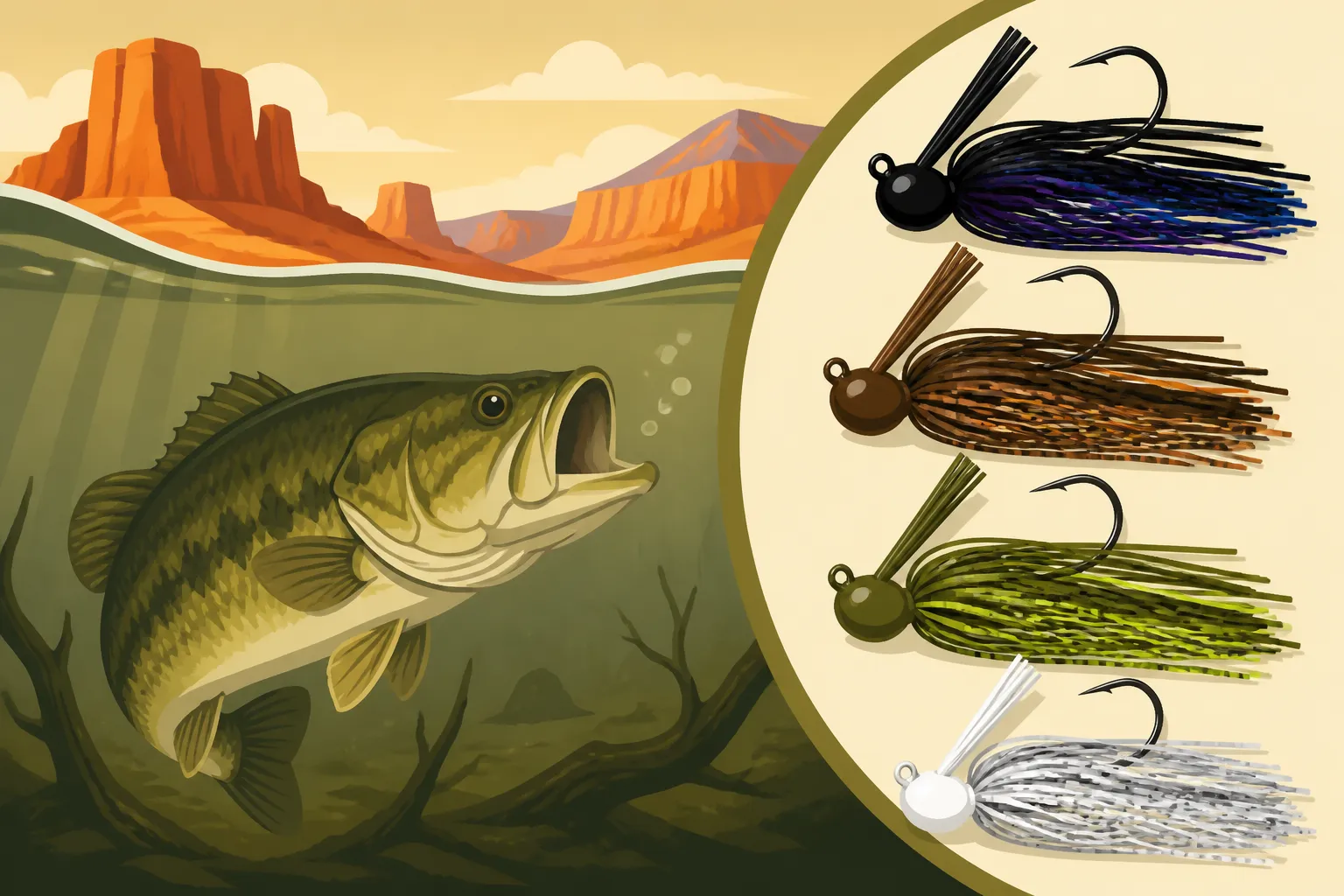
- Chartreuse: This is arguably the king of murky water colors. Its vibrant yellow-green hue is incredibly visible, especially in stained or greenish water. It provides excellent contrast against a dark or silty background and is often a go-to for species like walleye, bass, and even trout in turbid reservoirs. If you're ever in doubt, start with chartreuse.
- Orange: Another fantastic option, especially in browner, silty water. Orange mimics crayfish and other natural prey items, but its high visibility makes it stand out. It’s particularly effective for bass and walleye, but trout will hit it too.
- Hot Pink/Bubblegum: Sometimes, a surprising color is exactly what's needed. Hot pink offers extreme contrast and is often deadly for panfish, crappie, and even aggressive trout in off-color water. It’s not a natural color for most forage, but its sheer visibility can trigger a reaction strike.
- Fire Tiger (combo of chartreuse, orange, and black stripes): This pattern leverages the power of multiple high-visibility colors, often with a darker stripe to create added contrast and a more defined profile. It’s a perennial favorite for many predatory fish in a wide range of water conditions, including murky ones.
When you're browsing for new tackle at your local Bass Pro Shops or looking for deals on Amazon, definitely keep an eye out for jigs in these vibrant hues. Best Lures for a Utah Tackle Box might also give you some more general ideas.
Darker, Silhouetted Colors for Strong Contrast
While bright colors work by being highly visible, darker colors work by creating a strong silhouette against the lighter sky or surface water, especially when viewed from below by a fish. Imagine holding a dark object up against a cloudy sky – it stands out clearly. This effect is powerful in very dark, stained, or deep murky waters where light penetration is minimal.
- Black: Simple, yet incredibly effective. Black creates the strongest possible silhouette, making your jig easier to detect as a distinct shape moving through the water. It’s a fantastic choice for bass, crappie, and even walleye, particularly on dark, overcast days or in very deep, turbid sections of a reservoir.
- Junebug (dark purple with green or blue flakes): This color is a staple for bass anglers in muddy water. The dark purple provides that strong silhouette, while the subtle flakes can add just enough flash to catch what little light might penetrate. It has a natural, crawfish-like appeal but with added visibility.
- Dark Blue/Purple: Similar to black and junebug, these darker shades create excellent contrast. Dark blue can often mimic forage like bluegill or shad, but in murky water, its primary benefit is its ability to stand out as a defined shape.
Don't underestimate the power of a dark jig. Sometimes, the fish don't want a flashing beacon; they want a clear, unambiguous outline of something to eat.
Metallic and Flashy Accents
While not primary colors, metallic accents or jigs with integrated flash can add another layer of attraction in murky water, particularly if there's some ambient light. The key here is reflection.
- Gold/Brass: In stained or slightly turbid water, gold can emit a warm, natural flash that can be very appealing. It often mimics the flash of baitfish scales.
- Silver/Nickel: In slightly clearer but still stained conditions, silver can work well. However, in truly muddy water, silver can sometimes get "lost" more easily than gold.
Often, these metallic finishes are best used as an accent on a jig, perhaps on the blade of a bladed jig, or in the flakes of a soft plastic jig trailer. They can provide that extra flicker of light that draws a fish in when the primary color has already caught its attention.
Why These Colors Work: The Science Behind It
It's not just guesswork; there's some real science (and a lot of angler experience) behind why certain colors excel in murky water. It mostly comes down to how light behaves in water and how fish eyes perceive their environment.
Visibility in Low Light and Contrast
Water itself filters light, and adding suspended particles only intensifies this effect. Red light is absorbed first, then orange, yellow, green, and finally blue. In murky water, this absorption happens even faster, meaning that only a limited spectrum of light penetrates very far. This is why bright, fluorescent colors are so effective. They often contain pigments that reflect specific wavelengths of light, including UV light that humans can't see but some fish can. This makes them appear super vibrant, almost glowing, even when the overall light level is low.
The other factor is contrast. In murky water, fish aren't seeing fine details; they're reacting to shapes and sudden movements. A bright chartreuse jig provides strong color contrast against a brown or green background. A black jig provides strong silhouette contrast against a lighter sky. Both methods aim to make the jig as discernible as possible in a visually challenging environment. It’s less about perfect imitation and more about presenting a clear, easy target.
Mimicking Prey Through Perception
While perfect imitation is tough in murky water, these colors still play into a fish's perception of prey. For instance, chartreuse and orange can sometimes mimic the vibrant patterns on some crayfish or aquatic insects. Darker colors like black or junebug create a solid, substantial profile that can resemble a baitfish or a crawfish scuttling along the bottom.
Fish don't just see in terms of specific colors; they also perceive variations in brightness and shading. A jig's color, even if it's perceived differently by the fish's eye than by ours, contributes to its overall "presence" in the water. The goal is to make that presence strong enough to trigger a strike. It's about triggering an instinctual "eat that!" response, rather than convincing them it's an exact replica of their dinner.
Angler Confidence and Experimentation
Let's be real, part of fishing success is angler confidence. When you put on a chartreuse jig in muddy water, and you know that color has a reputation for working, you're going to fish it more confidently, perhaps with better focus on your presentation. This isn't just psychological; confidence often leads to better technique.
However, never stop experimenting. While chartreuse is a go-to, some days the fish just want something different. Maybe a hot pink will get their attention, or perhaps a black jig is what's needed. Keep a variety of these high-visibility and high-contrast colors in your tackle box. What works well on Utah Lake might be different from what works at Scofield Reservoir, even in similar conditions. Don't be afraid to switch it up until you find what the fish are keying in on that day. For ideas on different jigging presentations, check out How to Rig a Jig for Utah Trout.
Putting It All Together: Tips for Success in Murky Reservoirs
Knowing your jig colors is a massive step, but combining that knowledge with good technique and an understanding of the conditions will truly elevate your success. Murky water requires a slightly different approach than crystal-clear conditions.
Combining Color with Action: Slow and Steady Wins the Race
In clear water, a subtle jig can work wonders, darting and flickering with natural movements. In murky water, however, fish have less time to react to fast movements because they literally can't see it coming until it's right on top of them. This means you generally want to slow down your presentation.
A slower retrieve or jigging motion allows the fish more time to locate your lure by its visual presence (color/silhouette) and by the vibrations it creates. Think about imparting a more deliberate jigging action – a gentle lift and fall, or a slow retrieve with intermittent pauses. This gives the fish time to hone in on your offering using their lateral line, before making a visual identification. Remember, in murky conditions, the fish might "feel" your jig before they "see" it. Consider how this might impact your presentation on different species; for instance, Utah Walleye Fishing Guide often emphasizes slower presentations.
Considering Depth and Light Conditions
The murkiness isn't uniform. Near the surface, there might be more light penetration than at greater depths. Similarly, a very overcast day will reduce light penetration even further compared to a bright, sunny day.
- Shallower Water/Overcast Days: These are prime times for your brightest, most fluorescent colors like chartreuse, orange, and hot pink. The goal is to maximize their visual pop.
- Deeper Water/Very Turbid Conditions: As you go deeper, or if the water is extremely muddy, the benefits of bright colors can diminish slightly as light becomes almost non-existent. This is where darker colors like black and dark purple can shine, providing that critical silhouette. Experiment with both bright and dark options as you explore different depths.
- Using a Fish Finder: A good fish finder can be invaluable for pinpointing where fish are holding, especially if they've moved to specific depths or structures to escape the murk or find ambush points. How to Read a Fish Finder for Utah Reservoirs can help you get the most out of your electronics.
It's all about adaptability. Start with a tried-and-true color, but be ready to switch if the fish aren't responding.
Where to Find These Jigs and Stocking Your Tackle Box
You'll find a fantastic selection of jigs in these recommended colors at most dedicated fishing retailers. Places like Bass Pro Shops are excellent for browsing a wide variety of brands and styles, allowing you to see the colors in person and gauge their vibrancy. They often have knowledgeable staff who can offer local advice on what's working in nearby reservoirs.
For sheer convenience, online retailers like Amazon also offer an immense selection, sometimes with competitive pricing, and you can often find multi-packs of popular colors. Just be sure to read reviews to ensure you're getting quality jigs. Remember, it's not just about the color; the jig head weight, hook size, and skirt material all play a role in your presentation. Build a tackle box that gives you options, so you're always prepared for Utah's changing water conditions. Utah Fishing Gear Guide offers broader advice on what to include in your kit.
Here’s a quick overview of how these colors typically perform:
| Color Group | Primary Benefit in Murky Water | Best Conditions/Species Often Targeted | Examples (Specific Colors) |
|---|---|---|---|
| High-Visibility | Strong visual pop, high contrast | Stained to moderately murky, sunny or cloudy | Chartreuse, Orange, Hot Pink, Fire Tiger |
| Silhouetted | Clear, distinct profile | Very murky, deep water, overcast days | Black, Junebug, Dark Blue, Dark Purple |
| Flash Accents | Intermittent light reflection | Slightly stained, some ambient light | Gold (flakes/blades), Silver (flakes) |
Ultimately, the best jig color for murky water in Utah isn't a single, magical answer. It's about understanding how light and fish perception work in low-visibility conditions, and then confidently deploying colors that demand attention. So next time you're facing those turbid waters, don't despair – grab one of these high-contrast jigs, slow down your presentation, and get ready to catch some fish!
Disclaimer
This article is for general informational purposes only and does not constitute professional advice. Laws, prices and regulations vary by location and change over time. Consult a qualified professional for guidance on your specific situation.