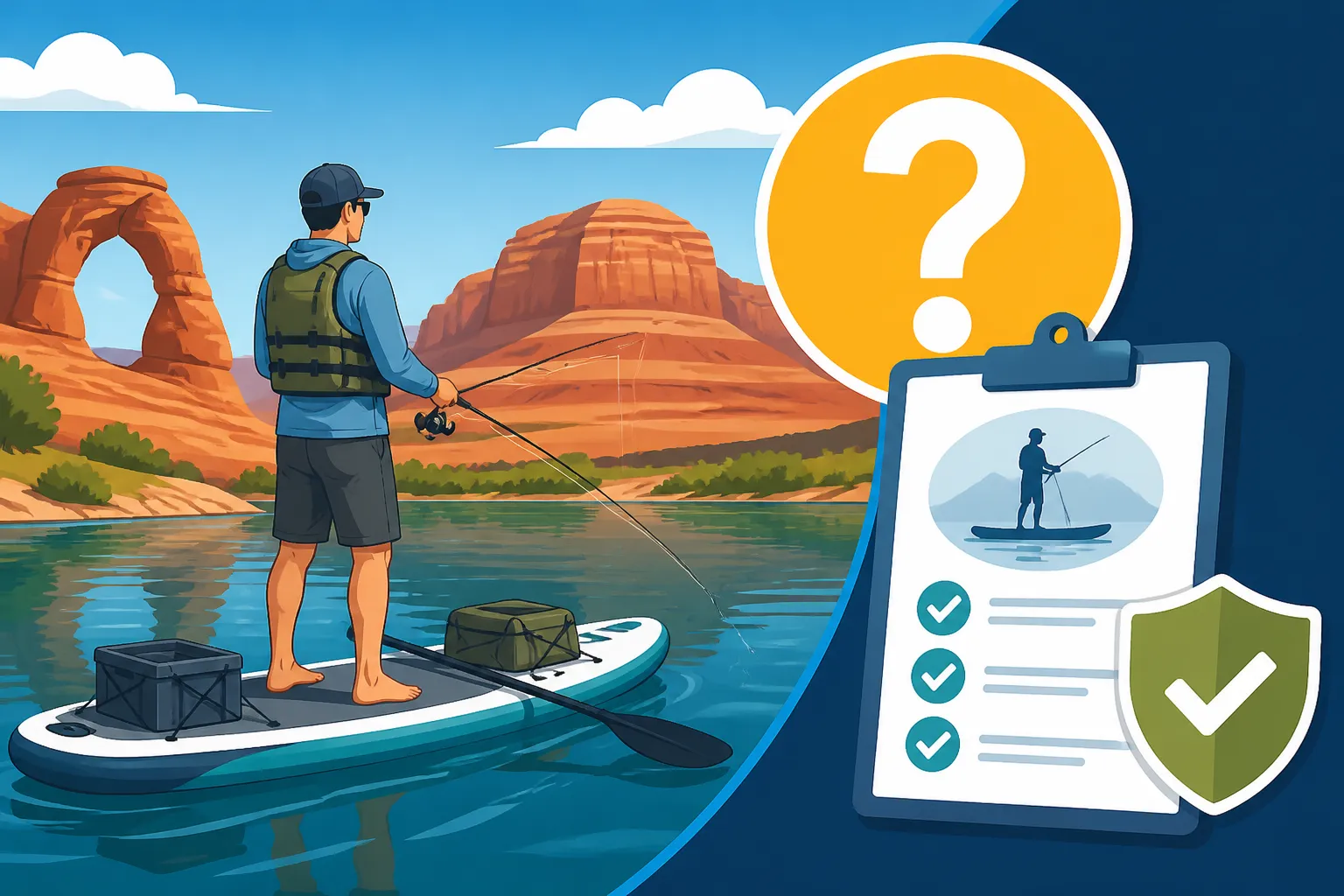
Do Paddleboards Need to Be Registered in Utah?
It’s a common scenario: you’ve got your paddleboard strapped to the roof, the sun’s shining, and you’re ready to hit one of Utah’s stunning lakes or reservoirs for a peaceful day on the water. But as you pull into the boat ramp, a nagging question creeps into your mind: "Do I need to register this thing?" It’s a frustrating moment when you’re just trying to enjoy the outdoors, and this guide is here to clear up the confusion about paddleboard registration rules in Utah.
Understanding Utah's Boating Registration Basics
Navigating the rules and regulations for boating in Utah can feel a bit like wading through thick mud sometimes. The Utah Division of Wildlife Resources (DWR) and State Parks have regulations in place to ensure safety, manage aquatic invasive species, and fund conservation efforts. When we talk about registration, we're really discussing whether your watercraft, whatever its size or propulsion, fits the state's definition of a "vessel" that needs to be registered.
What Qualifies as a Registerable Vessel?
The simplest way to think about it is this: if it's motorized, it almost certainly needs to be registered. This applies to your typical powerboats, jet skis, and even electric trolling motors on canoes or small fishing boats. But what about non-motorized craft? That's where it gets a little more nuanced, and where paddleboards often cause confusion. Most states define a vessel by its propulsion and sometimes its length. Utah follows a similar path, generally focusing on mechanical propulsion.
For instance, your friend's fancy bass boat, capable of zipping across Willard Bay, absolutely needs to be registered. Same goes for those speedy personal watercraft tearing up Lake Powell. The fees collected from these registrations help maintain boat ramps, conduct patrols, and support various state park operations. It's an important system, but one that sometimes feels a bit heavy-handed for smaller, human-powered craft.
The Exemption for Human-Powered Vessels
Here’s the good news that many paddleboarders, kayakers, and canoeists breathe a sigh of relief over: in Utah, human-powered vessels typically do NOT require registration. This means your stand-up paddleboard, your trusty kayak, your sleek canoe, or even a rowboat that you propel solely with your own muscle power, usually gets a pass on the registration fees and paperwork. This policy is a huge relief for those who love the quiet simplicity of human-powered water sports and don't want to get bogged down in bureaucratic hurdles just to enjoy the water.
This exemption exists because these types of vessels generally have a lower impact on the waterways and don't use fuel, which avoids some of the environmental concerns associated with motorized craft. It also acknowledges the different user experience; paddleboarders aren't typically navigating busy boat channels or needing the same level of enforcement as larger, faster vessels. You can just grab your board, your paddle, and head out for a peaceful session on Jordanelle Reservoir Fishing Access without worrying about a registration sticker.
Aquatic Invasive Species (AIS) Requirements for Paddleboards
While you might be exempt from registration for your paddleboard, there's another crucial set of rules that absolutely applies to everyone hitting Utah's waters: the Aquatic Invasive Species (AIS) program. This is probably the most important thing for paddleboarders to understand, and it's where many people accidentally get it wrong. The state is incredibly serious about preventing the spread of invaders like quagga and zebra mussels, and for good reason—these tiny creatures can wreak havoc on ecosystems, infrastructure, and fishing opportunities.
Mandatory AIS Education and Fees
Even though your paddleboard doesn't need to be registered, you, as the owner or operator of a non-motorized vessel, are still required to complete an annual Aquatic Invasive Species (AIS) education course. This isn't just a suggestion; it's mandatory. The course teaches you about the threats posed by these invasive species, how to identify them, and the crucial "Clean, Drain, Dry" protocol that is the cornerstone of prevention. Once you complete the course, you'll pay a small fee. This fee directly supports the efforts to inspect boats, decontaminate vessels, and manage existing invasive populations. It’s a small price to pay to protect our beautiful lakes and rivers for future generations.
It's tempting to think your small paddleboard couldn't possibly transport mussels, but trust me, they cling to anything—straps, crevices, even residual water. That’s why everyone needs to be on board with the program. Think of it as your yearly civic duty to protect Utah's fisheries. You can often find information about the course and pay the fee online through the DWR website or partner sites.
The "Clean, Drain, Dry" Protocol
This isn't just a catchy phrase; it's a vital set of steps that every single water user, from the largest yacht to the smallest paddleboard, must adhere to. The "Clean, Drain, Dry" method is designed to prevent the spread of aquatic invasive species from one water body to another.
- Clean: Before leaving the boat ramp or shoreline, thoroughly inspect your paddleboard, paddle, PFD, and any gear for mud, plants, or any living organisms. Remove anything you find. Pay special attention to fin boxes, footpads, and any textured surfaces where tiny larvae could hide.
- Drain: Ensure all water is drained from your paddleboard (if it's an inflatable with drain plugs) or any accessory, like a cooler or live well. It's about getting rid of even the smallest puddles that might harbor microscopic invaders.
- Dry: This is often the most overlooked but arguably most critical step. Allow your paddleboard and all gear to completely dry out before entering another water body. A good rule of thumb is to let it dry for at least seven days in warm, dry weather. If you're coming from a known infested water like Lake Powell, the dry time requirements might be even more stringent, so always check the latest guidelines for Utah Dry Time Rules After Leaving Lake Powell. Even if it "looks dry," some species can survive in damp conditions.
I've seen firsthand the impact these mussels can have. They clog pipes, attach to boats, and outcompete native species for food, completely altering the ecosystem. That's why every time I get off the water, whether it's my fishing kayak or just a paddleboard for a relaxing float, I meticulously follow this protocol. It’s not just about compliance; it's about being a responsible steward of our natural resources.
Special Cases and Considerations
While the general rule is "no registration for human-powered vessels," there are always a few edge cases and common questions that pop up. It's better to be informed than to accidentally find yourself in a sticky situation with a park ranger or conservation officer.
Adding a Motor to Your Paddleboard
This is probably the most common scenario where a paddleboard could require registration. If you decide to attach any form of mechanical propulsion to your paddleboard—even a small electric trolling motor—it instantly transforms from an unregistered human-powered vessel into a motorized vessel. And guess what? Motorized vessels, regardless of size or type, MUST be registered in Utah.
Let’s say you pick up one of those neat little clamp-on trolling motors from Bass Pro Shops to help you cover more water on a calm day. The moment that motor touches your board, you've crossed the line. You'll need to go through the full boat registration process, which includes title, registration fees, and potentially other requirements like proper lighting if operating after dark. This is a critical distinction that many new paddleboarders overlook, often to their detriment. Always think: "If it has an engine, even an electric one, it needs paperwork."
Rental Paddleboards and Guided Tours
What if you're just renting a paddleboard for an hour at a state park or taking a guided tour? Good news here! Typically, if you rent a paddleboard from a commercial outfitter or join a guided tour, you are not responsible for the registration or AIS fees. The rental company or tour operator is generally responsible for ensuring their fleet complies with all state regulations, including any necessary commercial permits, registrations for their motorized vessels (like shuttle boats), and AIS compliance for their rental equipment.
However, you should always double-check with the rental company. A reputable outfitter will be transparent about their compliance and should be able to answer any questions you have. They'll also typically provide you with information about safe paddling and local regulations, and often include PFDs (personal flotation devices) as part of the rental, which are required for all vessels in Utah, regardless of registration status. Safety first, always!
Interstate Travel with a Paddleboard
If you're an avid paddleboarder who loves to explore different states, you'll need to be mindful of Utah's AIS rules when bringing your board across state lines. Even if your paddleboard isn't registered in your home state (because it's human-powered), Utah's AIS regulations still apply universally. This means you must still adhere to the "Clean, Drain, Dry" protocol, and if you're passing through a mandatory inspection station, you must stop.
I once saw an out-of-state angler get a hefty fine because they ignored a sign for an AIS inspection station, thinking it only applied to big boats. Nope! If you’re towing or transporting any watercraft, including a paddleboard, through designated areas, you might be required to stop for an inspection. It's all about preventing the introduction of those pesky mussels, and states take it very seriously. It’s always a good idea to check the Utah DWR website before your trip to understand the latest requirements, especially if you're coming from an area with known invasive species.
The Importance of Personal Flotation Devices (PFDs)
While registration might not be a concern for your paddleboard, safety certainly is, and that means PFDs. In Utah, just like with all other vessels, there are strict requirements regarding life jackets on paddleboards. This isn't just a recommendation; it's the law, and it could save your life.
What PFDs Are Required?
Every person on board a paddleboard (or any vessel, for that matter) must have a readily accessible, U.S. Coast Guard-approved Personal Flotation Device (PFD). This means it can't be buried under a pile of gear; it needs to be easy to grab in an emergency. For adults, you don't necessarily have to wear the PFD, but it must be on the board. However, wearing it is always the safest option, especially if you're not a strong swimmer, if conditions are choppy, or if you're in cold water.
For children 12 years of age and younger, the rules are even stricter: they must wear a properly fitted, U.S. Coast Guard-approved PFD at all times while on a paddleboard. There are no exceptions for age or swimming ability when it comes to kids. It's a non-negotiable safety measure designed to protect our youngest adventurers. Always make sure the PFD fits snugly and isn't too big or too small, as an ill-fitting life jacket can be just as dangerous as not having one. You can find excellent PFDs for all ages at retailers like Amazon or your local Bass Pro Shops.
The Dangers of Cold Water and Unexpected Falls
Even on a beautiful, sunny day, Utah's lakes and reservoirs can be surprisingly cold, especially in spring and fall. An unexpected fall into cold water can quickly lead to hypothermia, impairing your ability to swim or even call for help. A PFD provides crucial buoyancy, keeping your head above water and conserving body heat, giving you precious time to recover or be rescued.
Beyond the cold, unexpected gusts of wind, boat wakes, or even just losing your balance can send you into the water. Having your PFD on, or at least immediately accessible, can make all the difference. Remember, even strong swimmers can be disoriented or injured during a fall, making a PFD a critical piece of safety equipment. Always err on the side of caution when it comes to water safety; it’s not just about following the rules, it’s about protecting yourself and your loved ones.
Other Important Paddleboarding Rules and Etiquette
Beyond registration, AIS, and PFDs, there are a few other considerations to keep in mind to ensure a safe and enjoyable experience for everyone on Utah's waterways. Being a responsible paddleboarder means understanding these rules and respecting other users.
Navigation Rules
While paddleboards are small, they are still considered vessels and must follow basic navigation rules. This means understanding right-of-way, especially with larger boats. Generally, human-powered vessels should yield to motorized vessels, and smaller vessels should yield to larger vessels. Always keep a lookout for other boats, swimmers, and obstacles. Staying visible is also key; consider wearing bright colors or adding a flag to your board, especially in busy areas. Don't be "that person" paddling aimlessly in a busy boat channel, causing havoc for everyone else.
| Vessel Type | Registration Required? | AIS Permit/Education Required? | PFD Required? (Adults) | PFD Required? (Kids 12 & under) |
|---|---|---|---|---|
| Paddleboard (human-powered) | No | Yes | Yes (readily accessible) | Yes (worn) |
| Kayak (human-powered) | No | Yes | Yes (readily accessible) | Yes (worn) |
| Canoe (human-powered) | No | Yes | Yes (readily accessible) | Yes (worn) |
| Paddleboard with motor | Yes | Yes | Yes (readily accessible) | Yes (worn) |
| Powerboat | Yes | Yes | Yes (readily accessible) | Yes (worn) |
| Jet Ski | Yes | Yes | Yes (worn at all times) | Yes (worn at all times) |
Respecting Wildlife and the Environment
Utah is home to incredible wildlife, and part of being an outdoor enthusiast is respecting their habitat. When paddleboarding, keep a respectful distance from nesting birds, shorelines with wildlife, and any areas designated as sensitive. Avoid disturbing fish spawning beds or trampling delicate vegetation near the water's edge. This includes being mindful of your noise level and not leaving any trash behind. Utah Aquatic Invasive Species Rules for Anglers are not just about mussels; they’re about a broader respect for the aquatic environment. Pack out everything you pack in, and perhaps even a little extra.
It’s also crucial to avoid entering areas closed for wildlife management, such as during waterfowl nesting season or fish spawning periods. These closures are in place for a reason, and ignoring them can harm vulnerable populations. Many of Utah's best fishing spots are also prime wildlife viewing areas, so sharing the space responsibly is essential.
Local Ordinances and Restricted Areas
While statewide rules give a general framework, always remember that individual lakes, reservoirs, or even specific sections of rivers can have their own local ordinances or special restrictions. For example, certain areas might have speed limits for all vessels, or "no-wake" zones that apply even to paddleboards creating excessive wakes. Some smaller community ponds might have specific hours or rules about what types of craft are allowed.
Always look for posted signs at boat ramps and access points, and if you're unsure, a quick call to the local park office or DWR regional office can clarify any unique rules for that specific body of water. For instance, Do You Need a Fishing License at Antelope Island? might lead you to discover specific rules for that unique Great Salt Lake area. Being aware of these local nuances ensures a smooth day on the water and helps you avoid unintentional violations.
Conclusion
So, to definitively answer the question: No, you typically do not need to register your human-powered paddleboard in Utah. This is excellent news for anyone looking to enjoy the tranquility and physical benefits of paddling without the added bureaucracy. However, the requirement to complete the annual Aquatic Invasive Species (AIS) education and pay the associated fee, along with adhering to the "Clean, Drain, Dry" protocol, is absolutely mandatory for all non-motorized vessels. And, of course, always have a U.S. Coast Guard-approved PFD readily accessible (or worn by children 12 and under).
Understanding these simple rules means you can confidently launch your paddleboard onto Utah's beautiful waters, knowing you're compliant with state regulations and doing your part to protect our precious aquatic ecosystems. Now get out there and enjoy the peace and quiet that only a paddleboard can offer!
Disclaimer
This article is for general informational purposes only and does not constitute professional advice. Laws, prices and regulations vary by location and change over time. Consult a qualified professional for guidance on your specific situation.