Best Swimbait for Striped Bass at Lake Powell
Few things are more frustrating than heading out to Lake Powell, seeing those tell-tale boils of striped bass on the surface, and realizing you don't have the right lure to get in on the action. Or maybe you're marking huge schools on your fish finder, but nothing you throw seems to entice a bite. It’s a common scenario at a lake as vast and dynamic as Powell! This comprehensive guide is going to dive deep into the world of swimbaits, breaking down exactly what makes them so effective for striped bass and helping you choose the best options to fill your cooler.
Understanding Striped Bass Behavior at Lake Powell
To truly understand why a swimbait is often your best friend when chasing stripers at Lake Powell, you first need to get inside the head of these incredible fish. Striped bass are apex predators, always on the hunt, and they thrive in the immense, nutrient-rich waters of Powell. Their primary food source? Shad. Lots and lots of shad.
The Role of Shad in the Striper Diet
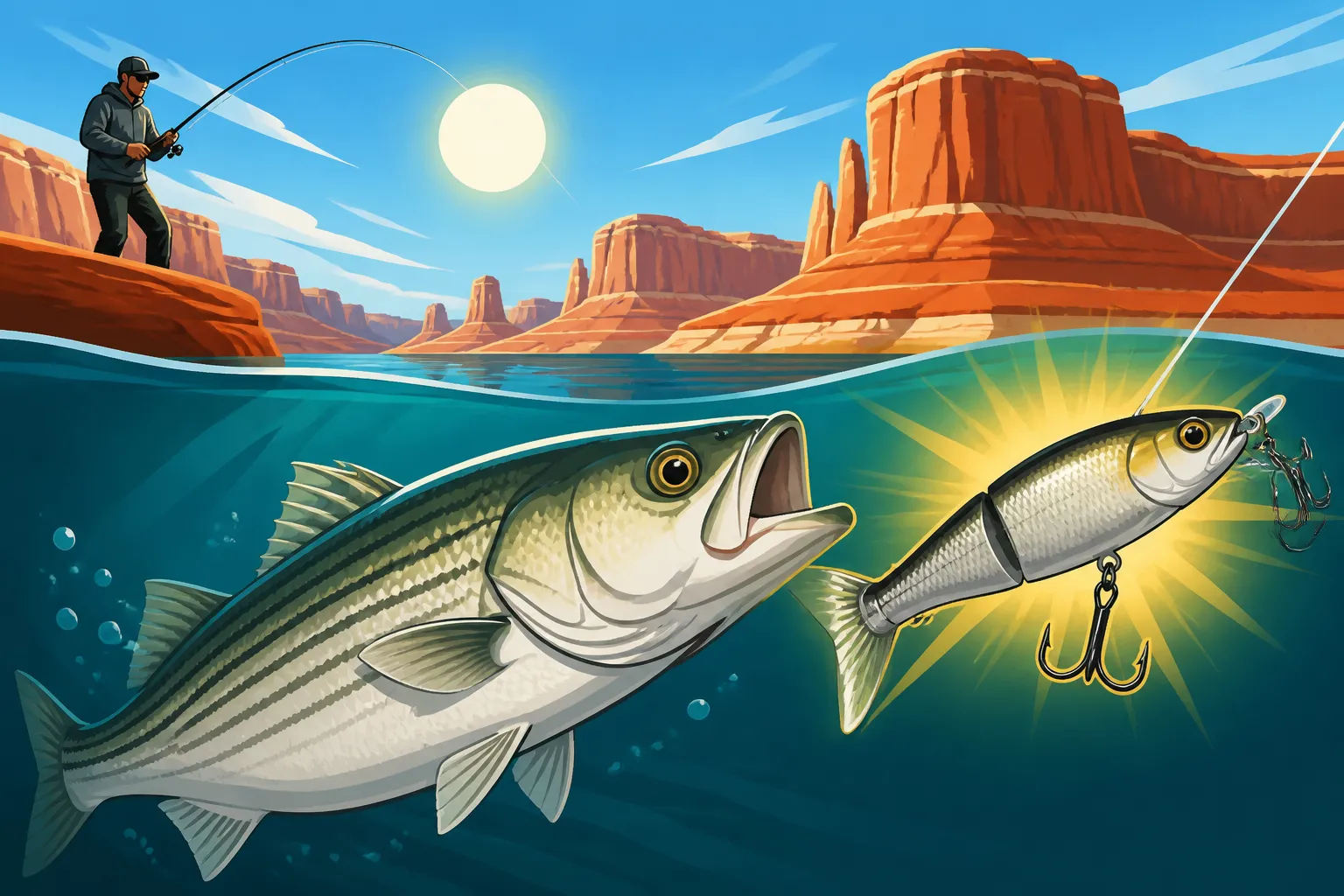
Lake Powell's striped bass population largely depends on the immense schools of threadfin and gizzard shad that inhabit the lake. These baitfish are abundant, providing a continuous food supply that allows stripers to grow to impressive sizes and form massive schools. When you see those famous "striper boils" on the surface, what you're witnessing is a coordinated attack by a school of stripers driving a school of shad to the surface, creating a feeding frenzy. This is where a well-chosen swimbait truly shines because it mimics exactly what the stripers are already looking for. Understanding this dynamic is key to figuring out How to Fish for Striped Bass at Lake Powell effectively.
When shad populations are high, stripers can be picky, preferring lures that closely resemble their natural forage. Conversely, if shad numbers dip, stripers might be more opportunistic, hitting a wider variety of baits. The consistent behavior, however, is their predatory instinct to chase and engulf anything that looks like a struggling or fleeing shad. This is why having a collection of swimbaits that can imitate different sizes and actions of shad is so crucial for consistent success.
How Stripers Hunt and Why Swimbaits Work
Striped bass are sight feeders, relying heavily on their vision to detect prey. They're also incredibly aggressive, especially when competing within a large school. They'll ambush baitfish from below, chase them down in open water, or pin them against the surface or structure. This aggressive nature means a swimbait, with its realistic profile and enticing swimming action, can trigger a strike even when the fish aren't actively boiling.
Swimbaits mimic the natural swimming motion of baitfish better than almost any other lure. They typically have a soft, pliable body that allows for realistic movement through the water, often with a paddle tail that kicks and vibrates, sending irresistible thumps through the water that stripers can feel with their lateral line. When you combine visual realism with subtle vibrations, you're presenting a meal that's hard for a hungry striper to pass up. Many anglers spend years trying to master Striped Bass at Lake Powell fishing, and swimbaits are consistently part of their successful arsenal.
Key Characteristics of Effective Swimbaits for Lake Powell Stripers
Not all swimbaits are created equal, especially when targeting the specific behaviors and environments of Lake Powell striped bass. The best swimbaits for these powerful fish share a few common traits that make them irresistible.
Realistic Profile and Color Patterns
The first thing a swimbait needs to get right is its appearance. Stripers at Lake Powell are accustomed to seeing shad, so a swimbait that closely matches the size, shape, and color of the local shad population is going to be a top performer. Look for lures that have a slender body, subtle fins, and a paddle tail that mimics a shad's caudal fin.
Color patterns are equally vital. Natural shad colors—silvers, grays, light blues, and whites with dark backs—are almost always a safe bet. Sometimes, a touch of chartreuse or pearl can add an extra flash that grabs attention, especially in murky water or during low-light conditions. Bass Pro Shops, for example, offers a wide array of swimbait colors, often categorized by baitfish imitation, making it easier to select shad-like options. It's often helpful to carry a variety, as water clarity can change drastically in different parts of Lake Powell, and fish preferences can shift throughout the day.
Action and Vibration
Beyond looks, the action of the swimbait in the water is paramount. A good swimbait should have a natural, subtle roll and a tail kick that generates a strong, rhythmic vibration. This isn't just about attracting the fish visually; it's about appealing to their lateral line, which detects pressure changes and vibrations in the water. This is especially important when stripers are holding deeper or if the water is cloudy, limiting their visibility.
Soft plastic swimbaits with a well-designed paddle tail usually excel in this regard. The tail should move freely, even on a slow retrieve, creating a tempting wiggle. Some swimbaits incorporate internal weights or jointed bodies to enhance this action, allowing them to swim more seductively at different depths and retrieve speeds. Experimenting with different retrieve speeds can unlock what the fish are looking for on a particular day, mimicking a wounded or fleeing baitfish.
Durability and Hooking Power
Lake Powell stripers are strong, aggressive fish, and they can be tough on gear. A swimbait needs to be durable enough to withstand multiple strikes without falling apart. Soft plastics that are too flimsy might tear after just one fish, costing you valuable time re-rigging. Look for materials that offer a good balance of softness for action and toughness for longevity.
The hooking power of your swimbait setup is also crucial. Many swimbaits come unrigged, requiring you to pair them with a jig head. Choosing a jig head with a strong, sharp hook is non-negotiable. Stripers have tough mouths, and a dull or weak hook will result in missed strikes and lost fish. For larger swimbaits, some anglers opt for stinger hooks or internal rigging systems that provide multiple hook points to improve hook-up ratios. Remember, when a boil breaks out, every second counts, and you want to ensure your gear is up to the task. Knowing When Do Striped Bass Boil on the Surface at Lake Powell? is one thing, but being ready for it is another.
Top Swimbait Styles and How to Fish Them
With a better understanding of what makes a great swimbait, let's look at some of the top styles you'll want in your tackle box for Lake Powell stripers. Each style has its strengths and ideal applications.
Paddle Tail Swimbaits
The paddle tail swimbait is arguably the most popular and versatile style for striped bass. Its iconic paddle-shaped tail creates a distinct thumping action and wagging body roll that perfectly imitates a swimming baitfish. These come in a huge range of sizes, from small 3-inch options for subtle presentations to robust 7-inch models for targeting bigger fish or fishing deeper water.
How to Fish Them:
- Boil Fishing: When stripers are actively boiling, cast a paddle tail swimbait directly into the frenzy. A fast retrieve just under the surface often triggers immediate strikes. The frantic action perfectly mimics a panicking shad. This is particularly effective if you can quickly get to the boil. Learning How to Find Shad Boils at Lake Powell will make these moments even more exciting.
- Subsurface Schooling: If you're marking schools of stripers deeper on your fish finder, use a heavier jig head to get your paddle tail down to their level. A steady retrieve, perhaps with an occasional twitch or pause, can be deadly. Vary your retrieve speed until you find what the fish prefer.
- Shore Fishing/Structure: For shore anglers or those fishing around submerged brush or rock formations, a medium-weight jig head allows for casting and retrieving over structure. The paddle tail's action is maintained even at slower speeds, making it ideal for tempting lurking stripers. You can find excellent selections of paddle tails on sites like Amazon, with various brands offering their take on this classic design.
Boot Tail Swimbaits
Similar to paddle tails, boot tail swimbaits feature a broader, flatter tail that often produces a more exaggerated "kick" or wobble. These can be particularly effective when stripers are highly aggressive or when you need to generate more vibration to attract fish from a distance. The wider tail often moves more water, sending out stronger signals.
How to Fish Them:
- Aggressive Retrieves: Boot tails excel when fished with a slightly faster, more aggressive retrieve. The pronounced action can mimic a fleeing baitfish, triggering a chase instinct in active stripers.
- Murky Water: The increased vibration of a boot tail can be an advantage in stained or murky water where visual cues are limited. Stripers can locate the lure through their lateral line even if they can't see it clearly.
- Windy Conditions: In choppy water caused by wind, the boot tail's robust action helps the lure maintain its enticing movement, cutting through the turbulence where other swimbaits might struggle to perform. Consider using a slightly heavier jig head to maintain control in windy conditions.
Soft Plastic Jerkbaits (Swimbait Style)
While traditional jerkbaits are hard plastic, there are soft plastic versions that act very much like swimbaits, especially when rigged weightless or lightly weighted. These typically have a more slender profile and a forked or split tail, offering a subtle, gliding action rather than a strong tail kick. They are fantastic for imitating dying or injured baitfish.
How to Fish Them:
- Finesse Presentation: When stripers are finicky or surface boils are intermittent, a soft plastic jerkbait can be the ticket. Rigged weightless or with a light weighted hook, they sink slowly and can be twitched and paused to create an erratic, vulnerable action.
- Topwater/Subsurface: They can be fished just under the surface with a "walk-the-dog" retrieve, or allowed to sink slowly through a school. The subtle darting motion is excellent for imitating a struggling shad near the surface.
- Sight Fishing: In clearer water, if you spot individual stripers or small pods, a soft plastic jerkbait allows for precise casts and a more controlled, natural presentation. This can be especially useful in some of the clearer arms or coves of Lake Powell Fishing Guide.
Rigging and Presentation Tips for Success
Having the best swimbait is only half the battle. How you rig it and present it can make all the difference between a frustrating day and a memorable one.
Choosing the Right Jig Head
The jig head is the anchor and brain of your swimbait setup. It dictates the depth, sink rate, and often the action of your lure.
- Weight: For shallow boils or topwater action, lighter jig heads (1/8 to 1/4 ounce) are ideal. For deeper water or faster retrieves, step up to heavier weights (1/2 to 1 ounce or more). If you're marking stripers at 50 feet, a 1/8 ounce jig head just isn't going to get you there effectively.
- Hook Size: Match the hook size to your swimbait's body. The hook point should exit cleanly near the back of the bait, allowing for good hook sets without impeding the tail action. A general rule of thumb is that the hook shank should run about one-third to one-half the length of the swimbait.
- Head Style: Ball heads are common and versatile. Stand-up jig heads can be good for fishing along the bottom. Consider heads with barbed collars to keep your soft plastic securely in place, as stripers can be notorious for ripping baits off the hook.
Many anglers prefer to purchase unrigged swimbaits and pair them with quality jig heads from brands like Gamakatsu or Mustad, often available through retailers like Bass Pro Shops or online at Amazon. This allows for customization based on fishing conditions.
Retrieve Techniques
Varying your retrieve is crucial because stripers can be finicky.
- Steady Retrieve: The most basic and often effective. Cast out, let the bait sink to the desired depth, and reel it in at a consistent speed. The swimbait's natural action should do the work. This is great for covering water and when fish are actively chasing.
- Stop-and-Go: Retrieve for a few seconds, then pause, letting the swimbait flutter or sink slightly. This mimics a wounded baitfish and can trigger strikes from less aggressive fish.
- Lift-and-Drop: Similar to jigging, this involves lifting your rod tip to pull the swimbait up, then letting it fall on a semi-slack line. This can be effective when stripers are hugging the bottom or suspended in deeper water. This technique often shines when you're targeting schools you've found using your fish finder.
- Rip-and-Pause: A more aggressive version of stop-and-go, where you violently rip the rod to make the swimbait dart, then pause for several seconds. This can draw reaction strikes from dormant fish.
You might find that on any given day, Best Time of Day to Catch Striped Bass at Lake Powell will influence what retrieve works best, with early mornings or late evenings often favoring slower, more subtle presentations.
Line and Leader Considerations
For striped bass, you need a strong, abrasion-resistant line.
- Main Line: Braided line (20-30 lb test) is popular due to its strength, thin diameter, and lack of stretch, which provides excellent sensitivity for detecting subtle bites and strong hook sets.
- Leader: A fluorocarbon leader (15-25 lb test) is highly recommended. Fluorocarbon is nearly invisible underwater, which can be critical in clear Lake Powell waters, and it's also quite abrasion-resistant, protecting your main line from sharp rocks and toothy fish. The length of your leader can vary, from a few feet to ten feet or more, depending on water clarity and fish spookiness.
Always check your leader for nicks and abrasions, especially after landing a fish or fishing around rocky areas. A compromised leader is an invitation for a lost trophy.
Table: Swimbait Selection Guide for Lake Powell Stripers
Here's a quick guide to help you choose the right swimbait and rigging based on common Lake Powell scenarios:
| Scenario | Swimbait Style | Jig Head Weight (oz) | Retrieve Recommendation | Key Advantage |
|---|---|---|---|---|
| Surface Boils | Paddle Tail, Boot Tail | 1/8 – 1/4 | Fast, steady; Rip-and-Pause | Mimics frantic, fleeing shad. |
| Deep Schools (Fish Finder) | Paddle Tail, Boot Tail | 1/2 – 1+ | Slow, steady; Lift-and-Drop | Gets to depth quickly, good vibration. |
| Fussy Fish/Clear Water | Soft Plastic Jerkbait | Weightless – 1/8 | Slow, stop-and-go; Twitch-and-Pause | Subtle, natural, injured baitfish imitation. |
| Murky Water/Low Light | Boot Tail | 3/8 – 3/4 | Steady, strong vibration | Increased vibration helps fish locate. |
| Shore Fishing/Structure | Paddle Tail | 1/4 – 1/2 | Slow, steady; Stop-and-Go | Versatile, maintains action at slow speeds. |
Locating Stripers with Technology and Observation
While swimbaits are effective, you still need to find the fish. Investing in a quality fish finder can dramatically increase your success, especially when stripers are not actively boiling. Learning How to Read a Fish Finder for Utah Reservoirs can show you schools of baitfish and the larger arches of predatory stripers holding beneath them. Pay attention to main channel ledges, submerged canyon walls, and points where current might concentrate bait.
Also, don't underestimate the power of observation. Watch for diving birds, which often indicate a surface boil. Look for nervous baitfish skipping on the surface. These are all signs that stripers are actively feeding nearby. Getting your boat into Best Spots for Striped Bass at Lake Powell also makes a huge difference. For those looking to enjoy a longer trip on the lake, understanding Best Boat Size for Fishing Lake Powell is also important for comfortable and safe travel across its vast expanses. Don't forget to have Best Coolers for Keeping Utah Fish Fresh on board to preserve your catch throughout the day!
Ultimately, the "best" swimbait for striped bass at Lake Powell is often the one you have tied on when the fish are biting, and you're confident in its presentation. By understanding striper behavior, selecting the right swimbait characteristics, and mastering various rigging and retrieve techniques, you'll be well on your way to consistent success on this incredible fishery.
Disclaimer
This article is for general informational purposes only and does not constitute professional advice. Laws, prices and regulations vary by location and change over time. Consult a qualified professional for guidance on your specific situation.