Best Boat Size for Fishing Lake Powell
Choosing the right boat size for fishing Lake Powell can feel like trying to pick a needle out of a haystack, especially when you consider just how massive and unpredictable that reservoir can be. It's not like your typical local pond or small lake; Lake Powell demands a lot from your vessel. This comprehensive guide will walk you through the various boat sizes and types, helping you understand the unique challenges of Lake Powell and ultimately make an informed decision so you can enjoy countless successful fishing trips.
Understanding Lake Powell's Unique Demands
Lake Powell isn't just a big body of water; it's a vast, intricate network of canyons, open expanses, and ever-changing conditions. What works for a smaller Utah reservoir might leave you feeling underpowered or unsafe here. Many anglers arrive with boats suitable for a quick trip across Deer Creek Reservoir, only to find themselves intimidated by Powell's sheer scale. It's a humbling experience for many, realizing quickly that preparation is key, and that starts with your boat.
Vastness and Accessibility Challenges
The sheer size of Lake Powell means covering long distances is often necessary to reach prime fishing spots, especially if you're targeting specific species or avoiding crowds. Imagine spending hours driving to a remote canyon only to realize your boat isn't equipped for the journey. Distances between marinas can be immense, and the nearest help might be miles away. This isn't just about fuel capacity, but also the ability of your boat to comfortably and safely handle extended runs across potentially rough water. Accessibility can also be an issue; lower water levels often mean certain ramps are closed or much steeper, requiring a robust towing setup and a boat that can handle tricky launches and recoveries. Navigating the hundreds of miles of shoreline and countless coves demands a vessel that offers both reliable performance and confidence.
Weather and Water Conditions
One moment Lake Powell can be glass-smooth, inviting you to run wide open to your favorite striper boil. The next, a sudden wind storm can whip up, turning that placid surface into a washing machine of whitecaps and chop. These rapid weather changes are a common frustration for anglers. A boat that might feel stable on a small lake can become a bone-jarring, unsafe ride on Powell when the wind picks up. Larger boats with deeper V-hulls are designed to cut through these conditions, offering a much more comfortable and safer experience. You also need to consider the depth and clarity of the water, which can vary wildly. While some areas are crystal clear, others can be muddy, especially in the backs of canyons after a rain. Good electronics, often found on larger boats, become crucial for navigating these diverse conditions and finding fish.
Multi-Day Trips and Gear Storage
Many of the best Lake Powell Fishing Guide experiences involve multi-day adventures, often camping on beaches in remote canyons or staying on a houseboat. This means you’re not just carrying your fishing rods and tackle box; you're bringing coolers, camping gear, food, water, extra fuel, and possibly even a portable grill. The boat needs adequate storage space and load-carrying capacity. A small bass boat might be perfect for a single day of targeting smallmouth, but it won't cut it for a weekend expedition with a few friends. Even if you're utilizing Lake Powell Houseboat Fishing Access, your smaller fishing boat still needs to carry enough gear for day trips away from the main vessel. This need for self-sufficiency is paramount, as you'll often be far from any amenities.
Analyzing Boat Types and Sizes for Lake Powell
When it comes to boats for Lake Powell, it's not a one-size-fits-all scenario. Different sizes and styles cater to different needs and fishing approaches. Understanding the nuances of each category will help you align your fishing dreams with practical realities.
Smaller Boats Under 18 Feet
For many, a boat under 18 feet is a common entry point into boating. These typically include smaller aluminum fishing boats, jon boats, or smaller fiberglass runabouts.
Pros:
- Maneuverability: These boats are generally easier to launch, retrieve, and navigate in tight coves.
- Fuel Efficiency: Smaller engines mean less fuel consumption, which can be a relief on your wallet during long days.
- Lower Initial Cost: Often more affordable to purchase and maintain.
Cons:
- Rough Water Performance: This is the biggest drawback. On Lake Powell, a small boat can quickly become uncomfortable or even dangerous in anything more than a light chop. You'll be limited to early mornings, calm evenings, or sticking to protected coves.
- Limited Capacity: Less space for gear, people, and provisions for multi-day trips.
- Speed & Range: Slower speeds mean longer travel times, and smaller fuel tanks limit your range, making those distant fishing spots less accessible.
- Safety: In a large, remote body of water like Powell, the ability to get back to shore quickly and safely if conditions change is critical. A smaller boat offers less of a safety margin.
For example, if you're primarily fishing the protected areas close to marinas like Wahweap or Bullfrog, and only on calm days, a 16-foot V-hull might suffice for casting for bass. But don't expect to cross Padre Bay when the afternoon winds are blowing at 20 knots. You might find yourself searching on Amazon for more robust boat accessories to compensate for the limitations of your smaller vessel, like better anchors or a more powerful bilge pump, but these can only do so much.
Mid-Size Boats 18-24 Feet
This category represents the "sweet spot" for many Lake Powell anglers, offering a versatile balance between capability and manageability. These boats include larger fiberglass bass boats, deck boats, walkarounds, and substantial multi-species fishing boats.
Pros:
- Improved Rough Water Handling: A longer hull and typically deeper V-design significantly improve ride comfort and safety in chop and waves. You'll feel much more confident if a squall rolls in.
- Increased Capacity: More room for multiple anglers, gear, coolers, and the provisions needed for extended day trips or even overnight stays. You can comfortably bring all your tackle for Lake Powell Striped Bass Spots and still have room for camping gear.
- Better Range and Speed: Larger engines and fuel tanks allow you to cover greater distances more quickly, opening up many more fishing opportunities across the vast reservoir.
- Versatility: These boats can easily transition from serious fishing to family recreation like tubing or exploring slot canyons.
Cons:
- Higher Cost: Purchase price, fuel, maintenance, and insurance will naturally be higher than smaller boats.
- Trailer and Tow Vehicle: You'll need a more capable tow vehicle and a sturdy trailer. Launching and retrieving can be a bit more challenging than with a small boat, especially on steep or rough ramps that you might encounter at fluctuating water levels.
- Storage: Requires more space for storage when not in use.
Many anglers find that a 20-22 foot deep-V multi-species boat or a sturdy center console provides the ideal platform for Lake Powell. These vessels offer enough stability for trolling open water for big stripers, ample deck space for casting, and storage for all your necessities. When comparing options, consider visiting a reputable outdoor retailer like Bass Pro Shops to physically see and feel the difference in size and construction between various models.
Larger Boats Over 24 Feet
Boats in this range, including larger cabin cruisers, sport fishing boats, and even smaller houseboats, offer the ultimate in comfort and capability for Lake Powell.
Pros:
- Superior Rough Water Performance: These boats are built to handle serious open water, providing a smooth, dry ride even in significant waves. If you plan to be out in all conditions or frequently cross the widest parts of the lake, this is where you'll find the most comfort and safety.
- Maximum Capacity and Comfort: Plenty of space for large groups, extensive gear, multiple coolers, and often amenities like heads (toilets), galleys, or sleeping quarters. This makes multi-day adventures incredibly comfortable.
- Extended Range: Large fuel tanks mean you can explore the most remote corners of Lake Powell without worrying about running dry.
Cons:
- Significant Cost: These boats come with a premium price tag, not just for purchase but also for fuel, maintenance, storage, and insurance.
- Difficult to Launch/Retrieve: Requires a very capable tow vehicle, a substantial trailer, and often assistance at the ramp. Some of the steeper or less-maintained ramps may be challenging or impossible. Many choose to moor these boats rather than trailer them frequently.
- Less Maneuverable: Navigating tight canyons or shallow coves can be more cumbersome, and finding suitable beach camping spots might require more careful planning.
While a large cruiser offers unparalleled comfort, think about your primary use. If your main goal is dedicated fishing day trips, a 26-foot sport fisher might be overkill and harder to manage than a 22-foot center console. However, if you plan to live on the lake for days or weeks at a time, exploring extensively and bringing the whole family, a larger vessel might be exactly what you need. These boats are less about quick fishing excursions and more about extended wilderness adventures.
Key Factors Influencing Your Boat Size Decision
Beyond the general pros and cons of different sizes, your personal fishing style, group size, budget, and logistical capabilities will heavily influence your ultimate decision. There's no single "best" boat size, only the best one for you and your unique Lake Powell adventures.
Your Fishing Style and Target Species
Are you a fly angler who loves to stalk smallmouth bass in quiet coves, or are you an avid troller looking for trophy striped bass in the main channels? Your preferred fishing style directly impacts the ideal boat size.
- Shoreline and Cove Fishing (Bass, Panfish): If you mainly cast towards shorelines, fish for bass in rocky coves, or target panfish in sheltered areas, a mid-size boat (18-22 feet) offers enough stability for casting and moving between spots, while still being maneuverable in tighter areas. You might even find a well-equipped 17-footer can get you into some prime spots. The ability to run a reliable trolling motor for precise positioning is often more important than sheer speed.
- Open Water Trolling (Stripers, Walleye): For chasing vast schools of Lake Powell Striped Bass Spots or targeting walleye, you'll likely spend a lot of time in open water, which can get rough. A larger, more stable platform (20-24+ feet) becomes crucial for comfort, safety, and effectively running multiple trolling lines with equipment like downriggers. The greater freeboard also helps keep spray out of the boat.
- Multi-Species Angling: If you like to do a bit of everything, from casting for bass to trolling for stripers, a versatile 20-22 foot deep-V or center console boat is often the ideal compromise. It allows you to adapt to different techniques and conditions across the lake.
Consider how much space you need to actually fish. Do you need room to cast freely? To net a large fish without bumping into a cooler? To have multiple rods set up for trolling? All these elements dictate your practical space requirements.
Group Size and Comfort Needs
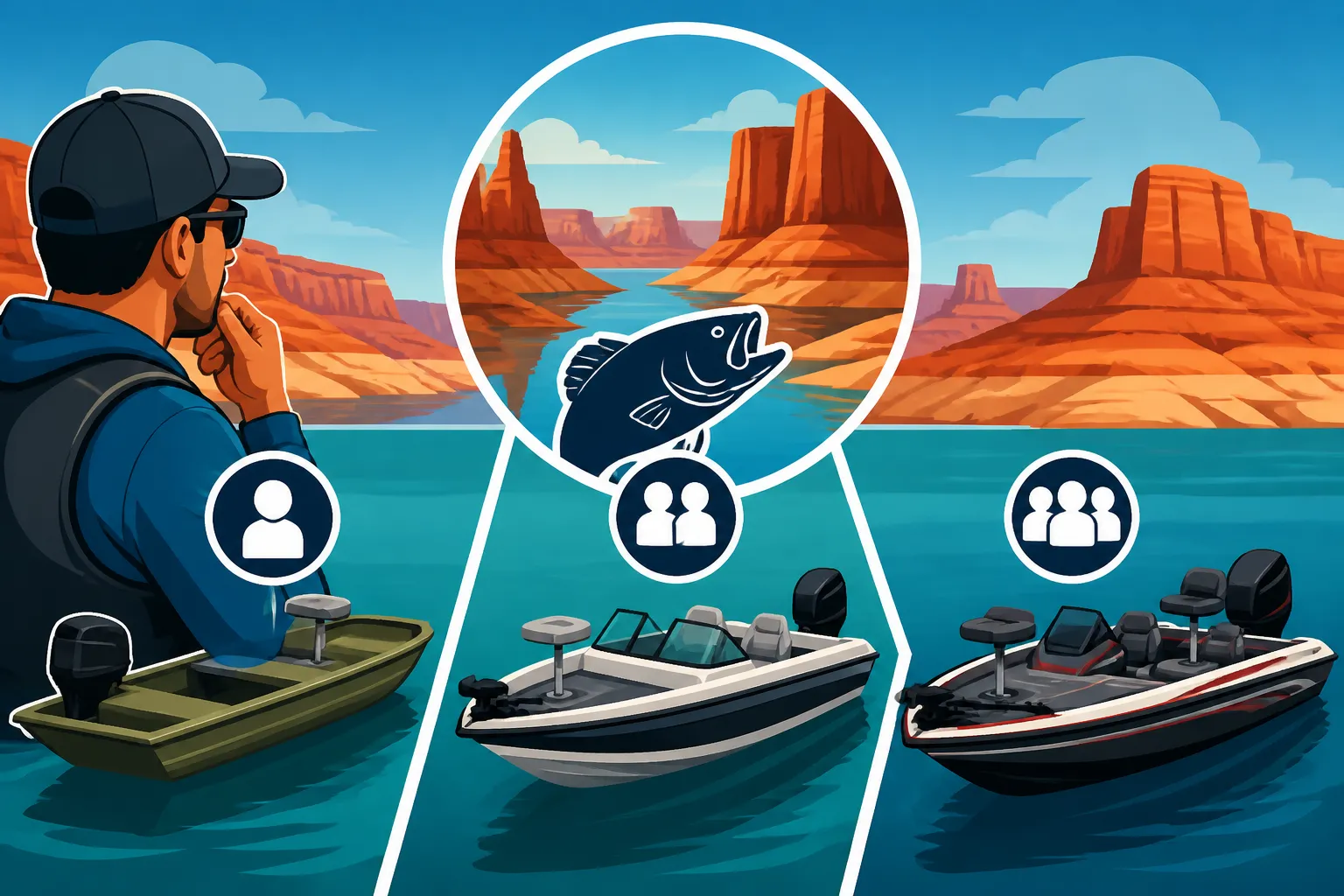
Think about who you'll typically be fishing with. Are you a solo angler, a duo, or do you always bring the entire family and friends?
- Solo or Duo: A smaller boat (16-18 feet) might feel adequate for one or two people, offering enough space for gear without feeling cramped. However, for Lake Powell, even a solo angler often appreciates the added safety and capability of a slightly larger vessel.
- Small Group (3-4 people): This is where mid-size boats (18-24 feet) really shine. They provide enough room for everyone to fish comfortably, move around, and store their personal items and fishing gear without feeling on top of each other. If you're going for a multi-day trip with camping gear, a larger boat in this range will be essential.
- Large Group (5+ people) or Extended Stays: If you regularly bring a crowd or plan to spend multiple nights camping off the boat, you'll want to lean towards the larger end of the mid-size category or even a larger vessel (24+ feet). More deck space, seating, and storage are critical for comfort and safety when numerous people are on board, especially when factoring in the Boat Safety Equipment Required in Utah for all passengers.
Consider not just the legal capacity, but the comfortable capacity. A boat might be rated for 6 people, but fishing with 6 people on a 19-foot boat is often an exercise in patience and tangled lines.
Budget and Maintenance Considerations
Let's be real: boats are an investment, and the larger they are, the more they generally cost to buy, operate, and maintain.
- Initial Purchase Price: This is often the first hurdle. A larger boat means a larger upfront cost.
- Fuel Consumption: Bigger boats generally mean bigger engines, and bigger engines drink more fuel. On Lake Powell, where gas is pricey and distances are long, this can add up quickly. Factor in how often you plan to use it and how far you'll be traveling.
- Storage and Mooring: Do you have space to store a large boat at home, or will you need to pay for off-site storage or a slip at a marina? These costs increase significantly with boat size.
- Maintenance and Repairs: Larger, more complex boats often have more systems (electrical, plumbing, larger engines) that require maintenance. Parts and labor costs tend to rise with boat size and complexity.
- Insurance: Expect higher insurance premiums for larger, more expensive vessels.
It's easy to get caught up in the dream boat, but taking a realistic look at your budget for the entire boating lifestyle will help you make a sustainable choice. Sometimes, a slightly smaller, well-maintained boat that you can afford to fuel and maintain regularly will get you on the water more often than a larger boat that breaks the bank.
Tow Vehicle and Launch Capabilities
This is a frequently overlooked but critical factor for Lake Powell, especially with its fluctuating water levels. Getting your boat to and from the water needs to be safe and manageable.
- Tow Vehicle Capacity: Do you have a truck or SUV capable of safely towing the combined weight of your boat, trailer, and all your gear? A 22-foot boat on a tandem-axle trailer with a full tank of gas and gear can weigh several thousand pounds. Exceeding your vehicle's tow capacity is dangerous and illegal.
- Trailer Size and Maintenance: Larger boats require heavier-duty trailers. Ensure your trailer is well-maintained, with good tires, brakes, and lights, especially for long hauls to Lake Powell.
- Launching and Retrieving: Lake Powell's water levels can fluctuate significantly, leading to steep, sometimes slick, or rough boat ramps. A larger, heavier boat is more challenging to launch and retrieve in these conditions. Consider a 4×4 tow vehicle for peace of mind, and practice your trailering skills. If you're struggling, check out guides on Best Boat Ramps on Flaming Gorge Reservoir for tips that apply to other large Utah reservoirs, as well as general Utah Aquatic Invasive Species Inspection Stations protocols you'll encounter at every launch. Remember also that after leaving the water, proper How to Dry a Boat Properly to Meet Utah's AIS Rules is essential before your next outing.
| Boat Size Category | Typical Length Range | Key Advantages for Lake Powell | Key Disadvantages for Lake Powell | Ideal Angler Profile |
|---|---|---|---|---|
| Smaller Boats | Under 18 feet | Easy to launch, fuel-efficient for short runs, maneuverable | Poor rough water performance, limited range, low capacity | Calm-water anglers, short trips, protected coves |
| Mid-Size Boats | 18-24 feet | Versatile, good rough water handling, decent capacity, range | Higher cost, needs capable tow vehicle, can be challenging to launch | All-around anglers, small groups, day trips, some multi-day camping |
| Larger Boats | Over 24 feet | Superior rough water comfort, maximum capacity, extended range | Very expensive, difficult to launch/trailer, high fuel use | Large groups, extended live-aboard trips, serious offshore anglers |
Ultimately, the best boat size for fishing Lake Powell is the one that allows you to safely and comfortably pursue your passion, fits your budget, and aligns with your practical capabilities. It’s a huge body of water with incredible opportunities, but it also demands respect and the right tools for the job. Do your research, consider your needs honestly, and you'll be well on your way to creating unforgettable memories on this magnificent reservoir.
Disclaimer
This article is for general informational purposes only and does not constitute professional advice. Laws, prices and regulations vary by location and change over time. Consult a qualified professional for guidance on your specific situation.