How Long a Professional Boat Decontamination Takes in Utah
The moment you hook that last fish, whether it’s a big striper from Lake Powell or a chunky rainbow from Strawberry, a small part of your brain probably jumps straight to "how fast can I get this boat cleaned up and back home?" But for us Utah anglers, that simple task is often complicated by the crucial and sometimes time-consuming process of aquatic invasive species (AIS) decontamination. It can feel like a real bottleneck, a mandatory stop that holds you up from your well-deserved relaxation. Trust me, I get it. Nobody wants to spend extra hours at an inspection station after a long day on the water, but knowing what to expect and how to prepare can make all the difference. This guide is all about demystifying the professional boat decontamination process in Utah, especially focusing on how long it really takes, so you can plan your trips with more confidence and less frustration.
The Critical Need for Boat Decontamination in Utah
Let's face it, nobody enjoys a mandatory stop on their way home, especially when it involves pulling your boat out of line for an inspection. But the reason these decontamination efforts exist is incredibly serious. Utah's pristine waters are under constant threat from tiny, tenacious invaders that can devastate ecosystems, clog infrastructure, and ultimately ruin our fishing experiences for generations.
Protecting Utah's Waters from Aquatic Invasive Species
The biggest culprits we're talking about here are quagga and zebra mussels. These fingernail-sized mollusks might seem harmless, but their impact is anything but. They attach to literally anything submerged, from boat hulls and engines to docks and even native shells. They filter huge amounts of water, stripping it of plankton, which is the base of the food chain. This means less food for native fish, like our beloved trout and bass, and a cascade effect that disrupts the entire aquatic environment. Once established, they're virtually impossible to eradicate, leading to permanent damage to fisheries and costly maintenance for water systems. Think about the impact on places like Lake Powell – the effort to contain quagga mussels there is immense, and it’s a battle we can’t afford to lose in other major fishing destinations.
The Legal Obligation for Anglers
It's not just a good idea; it's the law. In Utah, if you operate any watercraft, including motorized boats, kayaks, paddleboards, or even float tubes, you have a legal and ethical responsibility to prevent the spread of AIS. This means adhering to the "Clean, Drain, Dry" principles every single time you leave a body of water. Failure to do so, or refusing an inspection when required, isn't just a minor inconvenience; it can lead to significant fines and penalties. The Utah Division of Wildlife Resources (DWR) takes this very seriously, and rightly so. These regulations are in place to protect the very resources we all cherish. You can find more specific information on these critical guidelines in our detailed guide on Utah Aquatic Invasive Species Rules for Anglers. Remember, compliance is key to keeping our fishing spots healthy and accessible for everyone.
Deconstructing the Decontamination Process
When you roll up to an AIS inspection station in Utah, you're entering a multi-step process designed to catch and neutralize any hitchhiking invasive species. It’s not just a quick glance and a wave-through, especially if your boat has been in a high-risk waterbody or hasn't been properly prepared.
Initial Inspection: The First Step
Your journey through decontamination begins with an initial inspection. This is typically a visual check by a certified inspector. They'll ask you a series of questions: "Where did you last launch your boat?", "How long has it been out of the water?", and "Did you clean, drain, and dry your vessel?" Be honest and cooperative; they're there to help, not just to bust you. The inspector will meticulously check common hiding spots for mussels and aquatic weeds – your hull, propeller, trim tabs, anchor lines, and especially critical areas like the lower unit, live wells, bilge, and engine cooling systems. They are looking for any signs of standing water or organic material. If your boat is visibly clean, drained, and dry, and hasn't been in a suspected infested waterbody, this step might be very quick, perhaps 5-10 minutes.
The Hot Water Wash: When It's Needed
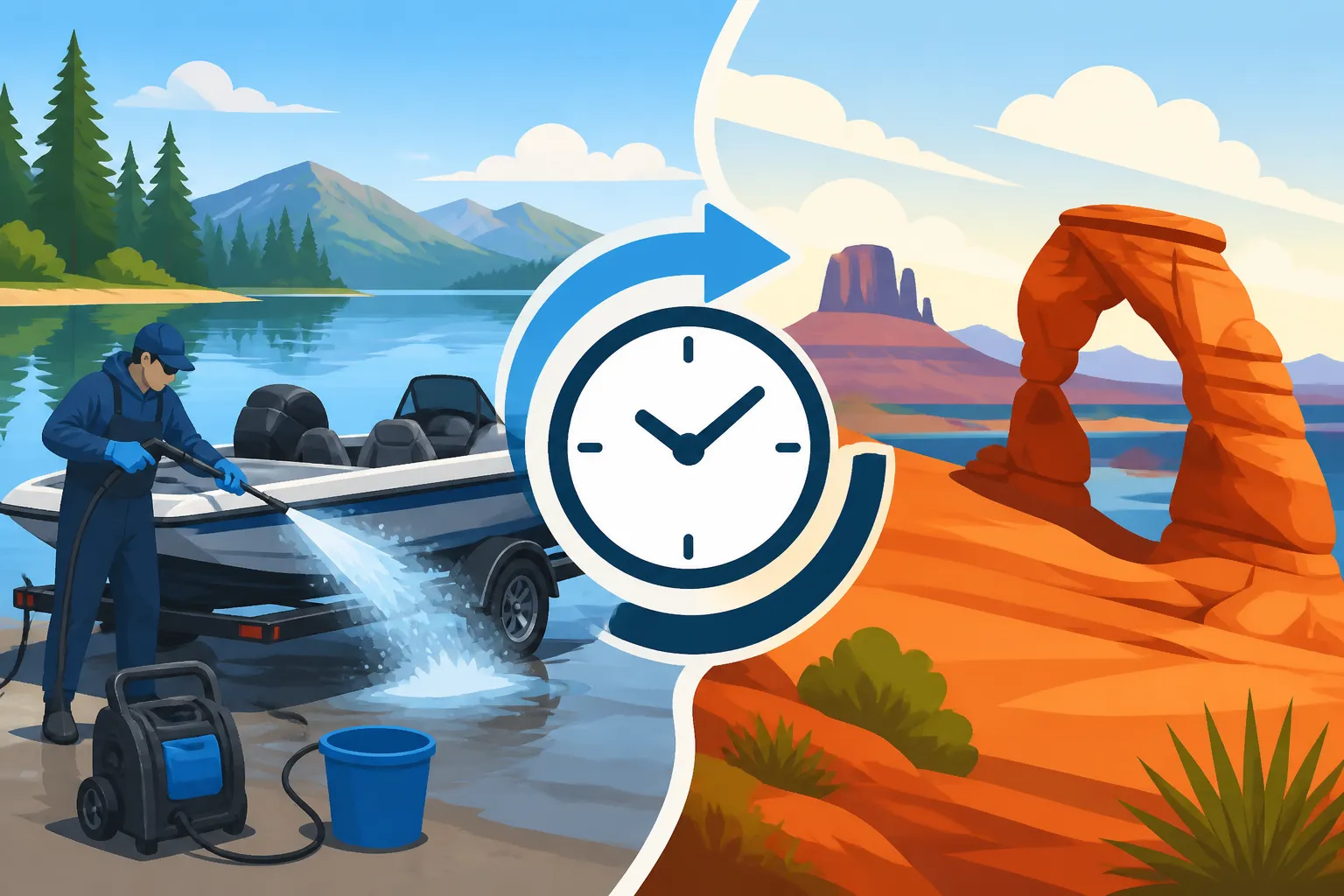
Now, here's where the time commitment can really start to climb. If an inspector finds standing water that can't be immediately drained, or detects any mussels, weeds, or suspected AIS, or if your boat has recently been in a known infested water like Lake Powell, a full hot water decontamination is usually mandatory. This isn't just a glorified car wash. Certified DWR technicians use specialized high-pressure, hot water units (often exceeding 140 degrees Fahrenheit) to flush out and kill any potential invaders. The intense heat and pressure are designed to reach every nook and cranny, including engine cooling systems, ballast tanks, and intricate plumbing that you simply can't reach with a garden hose. This process is thorough, and it has to be. The actual wash portion can take anywhere from 20 minutes for a smaller boat with minor issues to well over an hour for a large, complex vessel, especially if it's heavily fouled. While the service is invaluable, there are typically fees associated with these intensive procedures, which you can learn more about in our article on Utah Quagga Mussel Decontamination Cost.
The "Dry Time" Imperative
Even after a thorough hot water wash, the decontamination process might not be over. For boats coming out of particularly high-risk waters, or if there's any lingering concern, an official "dry time" may be mandated. This isn't just about surface moisture; it's about ensuring that any microscopic organisms or larvae that might have survived the hot water wash, especially deep within engine systems or enclosed compartments, are completely desiccated and dead. The required dry time varies significantly based on factors like the waterbody visited, current air temperature, humidity, and the time of year. For instance, boats coming off Lake Powell often have more stringent dry time requirements due to the high presence of quagga mussels there. You might have to leave your boat sealed and unlaunched for several days, or even weeks, depending on the conditions. The DWR will provide you with a tag and specific instructions detailing your required dry time, which is legally binding. Understanding these rules is crucial, and you can delve deeper into them with our guide on Utah Dry Time Rules After Leaving Lake Powell.
Factors Influencing Decontamination Duration
It's not a one-size-fits-all situation. The time you spend at a decontamination station can swing wildly based on a few key variables. Knowing these can help you anticipate the wait and, perhaps, even reduce it.
Boat Size, Type, and Complexity
Think about it: a small fishing kayak or a simple jon boat has far fewer places for mussels to hide than a 25-foot wake boat with multiple ballast tanks, an inboard engine, and complex plumbing systems. Larger vessels with intricate designs, multiple compartments, or closed systems naturally require more time for inspectors to thoroughly check and, if necessary, decontaminate. Inboard engines, in particular, present challenges because their cooling systems can hold water and provide perfect hiding spots for invaders. Similarly, sailboats with internal keels or large pontoons on a pontoon boat can add significant time to the inspection and wash process because there's simply more surface area and more potential nooks and crannies to meticulously examine. A simple drift boat might get a quick once-over, but a fully rigged bass boat demands a much deeper dive.
Level of Contamination and Inspection Station Traffic
This might seem obvious, but if your boat arrives with visible weeds clinging to the trailer or hull, or worse, if an inspector finds actual mussels, the process will take considerably longer. A contaminated boat shifts from a quick inspection to a full-blown decontamination protocol, which, as we discussed, involves hot water washes and potentially extended dry times. Beyond your boat's condition, the sheer volume of other boats also plays a huge role. AIS inspection stations, especially those near popular launch sites or major highways during peak fishing seasons (think summer weekends or holidays), can get incredibly backed up. Waiting in a queue for an hour or more before your inspection even begins is not uncommon. Planning your travel for off-peak hours or weekdays can dramatically cut down on this waiting game.
Angler Preparation: Making a Difference
This is perhaps the single most impactful factor you control. A boat that arrives at the inspection station already "Clean, Drained, and Dry" (or as close as possible) will almost always move through the process much faster. This means:
- Cleaning: Remove all visible mud, plants, and debris from your hull, trailer, anchor, and fishing gear before you leave the launch ramp.
- Draining: Pull your drain plugs and allow all water to empty from the bilge, livewells, ballast tanks, and any other water-holding compartments. Operate your engine for a few seconds to flush water out of the cooling system.
- Drying: Whenever possible, let your boat fully air dry. Even if it's not completely dry, having done your best to eliminate standing water makes the inspector's job much easier and less likely to trigger a full decontamination.
An inspector's job is made infinitely harder if you pull up with a muddy boat, leaves stuck in your propeller, and water sloshing around in your livewell. Do your part, and you’ll be doing yourself a huge favor in terms of time saved. For a detailed guide on proper drying techniques, check out How to Dry a Boat Properly to Meet Utah's AIS Rules.
Realistic Timelines for a Professional Decontamination
So, after all that, you're probably asking, "Just tell me, how long will this actually take?" The truth is, it varies. But we can break it down into a few scenarios to give you a clearer picture.
Best-Case Scenarios: Quick Turnarounds
If you're an experienced angler who consistently practices "Clean, Drain, Dry," and your boat is relatively simple (like a small aluminum fishing boat, a clean kayak, or a float tube), and you're visiting an inspection station during a slow period, you might be looking at a surprisingly quick exit. In these ideal circumstances, where no standing water or visible AIS is found, the initial inspection could be as short as 5 to 15 minutes. This typically involves the inspector performing their visual check, asking a few questions, and then giving you the all-clear with a quick tag or stamp. This is the goal for every angler, and it’s entirely achievable with diligent preparation. Even for some larger boats, if they are meticulously prepared and coming from low-risk waters, the initial inspection might only take 15-20 minutes.
Average Expectations: What Most Anglers Face
For the majority of anglers, especially those with larger boats, or if you're coming from a waterbody that might pose a moderate risk (even if not highly infested), you should budget more time. A common scenario might involve the initial inspection taking 10-20 minutes, followed by a mandatory hot water wash.
- Small to Mid-Sized Boats (16-20 ft): If a wash is needed, expect the hands-on decontamination process to take another 20-45 minutes. This means your total time at the station could easily be 45 minutes to 1.5 hours. This accounts for the inspector preparing the equipment, thoroughly spraying all critical areas, and then the final check.
- Larger Boats (20+ ft) or Complex Vessels: For these, a hot water wash can extend to 45 minutes to 1 hour or more of active washing. Total time at the station, including inspection and potential waiting, could be 1.5 to 2.5 hours.
These estimates don't include any potential wait times in line, which, as mentioned, can add significantly to the overall duration. It's truly a variable dance between your preparation, your boat, and the station's traffic.
Worst-Case Scenarios: The Long Haul
This is where things can get frustratingly extended. If your boat is heavily fouled with invasive mussels or aquatic vegetation, or if an inspector finds standing water in an inaccessible area (like a boat that hasn't been properly drained), you could be looking at a very long day.
- Heavy Contamination: A thorough hot water wash for a heavily infested large boat could stretch to 2 hours or more as technicians meticulously clean every crevice.
- Mandatory Dry Time: If, after the wash, the DWR still deems a dry time necessary, you won't be able to launch your boat until that time has elapsed. This isn't part of the "time at the station" but is a crucial part of the overall decontamination process that impacts your immediate ability to fish. For instance, specific rules apply when leaving a major AIS-infested lake, such as Are Boat Inspections Mandatory Before Leaving Lake Powell?. These dry times can range from a few days to even weeks, especially during colder, more humid months when drying takes longer.
- Wait Times: Compounding these issues, if you're stuck behind several other boats needing extensive decontamination during peak season, your total time waiting and undergoing the process could easily exceed 3-4 hours.
| Scenario | Boat Type | Preparation Level | Estimated Active Decontamination Time (at station) | Potential Total Time (including wait, if any) |
|---|---|---|---|---|
| Best-Case (Clean, Drain, Dry) | Kayak, Jon Boat | Excellent | 5-15 minutes (Inspection Only) | 5-30 minutes |
| Average (Basic Wash) | Mid-Size Fishing Boat | Good (some residual water) | 20-45 minutes (Wash + Inspection) | 45 minutes – 1.5 hours |
| Moderate (Complex Wash) | Wake Boat, Large Pontoon | Moderate (needs thorough flushing) | 45-90 minutes (Wash + Inspection) | 1.5 – 2.5 hours |
| Worst-Case (Heavy Contamination/Full Dry) | Any | Poor (visible AIS, deep water) | 1-2+ hours (Extensive Wash) | 3+ hours (plus mandated dry time off-site) |
Note: "Active Decontamination Time" refers to the time the boat is actively being inspected or washed by DWR personnel. "Total Time" includes potential waiting in line.
Actionable Tips to Streamline Your Decontamination
The good news is, a lot of the power to speed things up is in your hands! A little proactive effort on your part can save you a ton of time and hassle at the inspection station.
Perform Your Own "Clean, Drain, Dry" Diligently
This is the golden rule, and it cannot be stressed enough. Make "Clean, Drain, Dry" a routine as soon as you pull your boat out of the water at the ramp, even before you start driving.
- Clean: Visually inspect your boat, trailer, and all gear (anchors, ropes, fishing poles, nets) for any attached vegetation or mud. Remove it immediately. Keep a stiff brush or a designated cleaning cloth in your boat, perhaps from Bass Pro Shops, just for this purpose. Pay special attention to the propeller, trim tabs, and any areas where water might collect or plants might cling.
- Drain: Pull all drain plugs from your bilge, livewells, ballast tanks, and any other water-holding compartments. Open all compartments where water might be trapped. For your engine, lower the motor to allow all water to drain from the lower unit. You can even run your bilge pump for a few extra seconds to ensure it’s fully clear.
- Dry: If possible, allow your boat to air dry completely for several days before your next launch, especially if you were on an infested waterway. This natural drying process is highly effective at killing AIS. Even if you can't get it completely dry, having it mostly dry will significantly reduce inspection time. Consider using a small shop vac or even just sponges to absorb residual water from hard-to-reach spots.
Schedule Smart: Avoiding Peak Times
Just like avoiding rush hour traffic, you can often sidestep the longest waits at AIS inspection stations by being strategic about your travel times.
- Weekdays vs. Weekends: Whenever possible, plan your fishing trips or your return travel for weekdays. Weekends, especially during popular summer months and holidays (like Memorial Day, Fourth of July, Labor Day), see a massive surge in boat traffic, leading to long lines at inspection stations.
- Early Morning/Late Evening: If a weekday isn't an option, try to arrive at the station either very early in the morning or later in the evening, closer to closing time, when traffic tends to dwindle. Be aware of the operating hours for specific Utah Aquatic Invasive Species Inspection Station Locations as they vary.
- Off-Season Travel: While you might not be fishing as much, if you're moving your boat for storage or maintenance in the off-season, you'll generally find inspection stations much less busy.
Equipping Yourself for Efficiency
Having the right gear on hand can also help you with your personal Clean, Drain, Dry efforts, which in turn speeds up the professional process if it’s needed.
- Long-handled brush and scraper: Great for dislodging weeds and mud from your hull and trailer.
- Bucket and sponges/towels: For soaking up residual water from bilge and compartments. You can find robust options for these kinds of cleaning supplies on Amazon.
- Headlamp or flashlight: Essential for thorough cleaning and inspection in dimly lit areas of your boat, especially if you're pulling out after sunset.
- Basic tool kit: Sometimes a simple screwdriver is all you need to remove a panel to access a hidden drain point.
- Drain Plug Wrench: If your drain plug is stiff or hard to reach, a specialized wrench can make quick work of it.
By taking these steps, you demonstrate to the inspectors that you are a responsible boater who understands the importance of AIS prevention. This professionalism can lead to a quicker, smoother experience for everyone involved.
Disclaimer
This article is for general informational purposes only and does not constitute professional advice. Laws, prices and regulations vary by location and change over time. Consult a qualified professional for guidance on your specific situation.