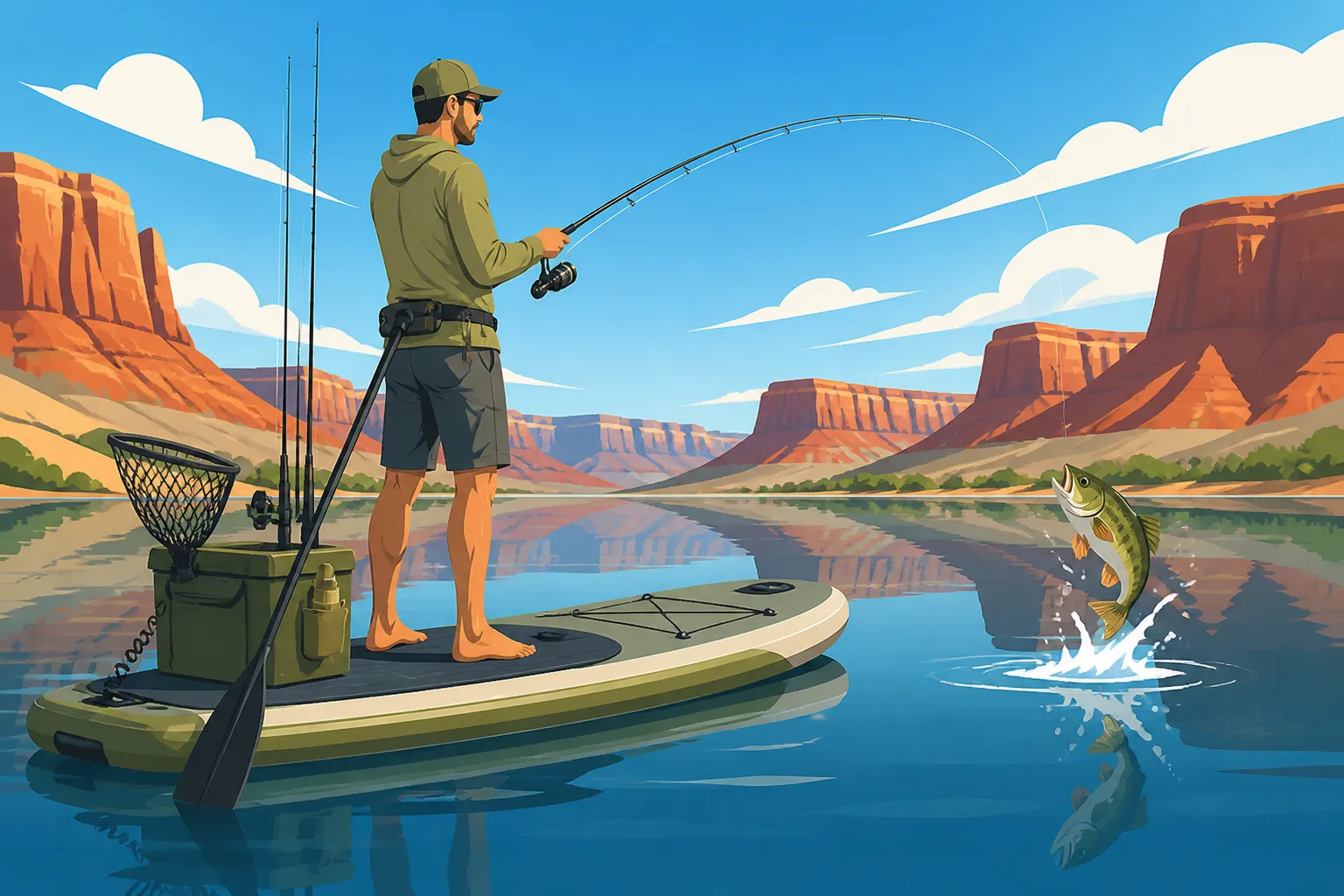
Best Stand-Up Paddleboard for Flatwater Fishing
There’s nothing quite like the freedom of fishing Utah’s incredible flatwater lakes and reservoirs, but lugging a heavy boat or constantly repositioning a float tube can really cut into your precious fishing time. If you’re yearning for a nimble, stealthy, and elevation-boosting way to chase trout, bass, and wipers on our beautiful waters, a stand-up paddleboard (SUP) designed for fishing might just be your new best friend. This guide will dive deep into everything you need to know to pick the perfect fishing SUP for your Utah angling adventures, ensuring you spend more time casting and less time struggling.
Why Paddleboards Are Great for Flatwater Fishing in Utah
When you think of fishing, a big boat or a quiet float tube often comes to mind. But paddleboards have rapidly grown in popularity among anglers, and for very good reason, especially on Utah’s many serene lakes and vast reservoirs. They offer a unique blend of advantages that other vessels simply can't match, transforming your fishing experience.
Accessibility and Stealth
One of the biggest frustrations with traditional boats is the effort involved in launching them. Crowded boat ramps, needing to back a trailer, or dealing with expensive slips can be a real headache. With a fishing SUP, many of those frustrations simply disappear. You can often carry your board right to the water's edge and launch from nearly anywhere – a quiet beach, a grassy bank, or even some of the more secluded coves that larger boats can't reach. This unparalleled accessibility means you can explore more remote sections of Best Places to Fish in Utah like Fish Lake or even the quieter arms of Lake Powell without the hassle.
Beyond ease of access, the stealth factor is a huge benefit. A paddleboard moves almost silently through the water. There's no noisy motor to spook fish, no slapping hull to send vibrations through the water column. You can glide into shallow bays, approach wary trout in crystal-clear high-mountain lakes, or sneak up on bass hiding in submerged structure with minimal disturbance. This stealth allows for closer approaches to fish, which often translates to more accurate casts and, ultimately, more bites. Imagine drifting silently along a reedy shoreline on Utah Lake, targeting unsuspecting walleye or bass – that's the paddleboard advantage.
Enhanced Visibility and Perspective
Fishing from a paddleboard offers a completely different perspective than sitting in a boat or float tube. When you’re standing, you’re elevated above the water, which provides an incredible advantage for sight fishing. On clear Utah waters, this means you can spot submerged structure, weed lines, drop-offs, and even the fish themselves that you’d never see from a lower vantage point. This is particularly useful in places like Deer Creek Reservoir or Pineview Reservoir where trout and bass often hold near visible features. You can actually "hunt" for fish, observing their movements and planning your cast with precision.
This elevated viewpoint also helps with understanding the water. You can better discern changes in depth, current patterns, and the contours of the bottom. It helps you anticipate where fish might be holding and allows you to present your lure or fly more effectively. For fly anglers, the standing position makes casting much easier and more natural, allowing for longer, more accurate casts without obstructions. It truly feels like you’re walking on water, giving you an immersive connection to the aquatic environment that enhances the entire fishing experience.
Portability and Ease of Transport
Let's face it, hauling a boat around Utah can be a chore. From needing a truck with towing capacity to dealing with boat registration and storage, it adds layers of complexity. Fishing SUPs, especially inflatable models, are champions of portability. Many inflatable SUPs (iSUPs) pack down into a large backpack or rolling bag, making them incredibly easy to transport in almost any vehicle – even a small sedan. You can throw it in the trunk, take it to the top of a remote mountain pass to access high-altitude lakes, or simply walk it down to a local community pond.
This ease of transport opens up a world of fishing opportunities that would be impossible with a traditional boat. No roof rack? No problem. No trailer? Not an issue. This makes fishing more spontaneous and less of a logistical headache. You can store an iSUP in a closet or garage corner without needing dedicated boat storage. This convenience means you're more likely to grab your board and go, transforming those quick afternoon trips to your local reservoir or an impromptu weekend getaway into a seamless angling adventure. For tips on other gear to pair with this, check out our Utah Kayak Fishing Gear Guide.
Key Features to Look for in a Fishing Paddleboard
Choosing the right stand-up paddleboard for fishing isn't just about grabbing the first one you see. It's about understanding which features will truly enhance your angling experience on Utah's diverse waters. Just like you wouldn't use a fly rod for catching catfish, you need a SUP tailored to the demands of fishing.
Stability is King
This is arguably the most critical factor for a fishing paddleboard. You're not just paddling; you're casting, reeling, setting the hook, and potentially fighting a feisty fish. All of these activities require a stable platform. Nobody wants to take an unplanned swim with their rod and tackle box!
Look for boards that are wider than typical recreational SUPs, generally 32 inches or more. Many dedicated fishing SUPs are even wider, reaching 35 to 40 inches, providing a truly rock-solid base. The shape of the hull also plays a significant role. A flatter, wider hull (often called a "planning hull") will offer more initial stability, feeling very secure even when you shift your weight. Boards with a pointed nose (displacement hull) are great for tracking and speed but can feel less stable side-to-side. For fishing, especially when you plan to stand and cast, prioritize width and a stable hull design. Some boards even feature a catamaran-style hull or pontoon-like side chambers for maximum stability, making it easier to fight a big striper at Lake Powell or a trophy trout at Flaming Gorge.
Deck Space and Gear Storage
A fishing trip requires gear: rods, tackle boxes, bait, a cooler, maybe a net, and of course, your personal safety items. A good fishing SUP needs ample space and convenient ways to secure all this equipment.
Check for a generous, flat deck area, especially towards the front and rear. This provides room for your feet and for placing gear. Crucially, look for integrated bungee systems, D-rings, and multiple attachment points. These are essential for strapping down dry bags, a small cooler, or even a tackle crate. Many fishing-specific boards come with universal mounting points (often called accessory tracks or universal inserts) that allow you to easily attach rod holders, GPS units, fish finders, or camera mounts without drilling into the board. The more customizable storage options, the better, as it allows you to configure your setup precisely for your angling style and the specific species you’re targeting. Think about how you’ll organize your Best Tackle for Utah Trout or Best Lures for a Utah Tackle Box so they are always within easy reach.
Durability and Construction Material
Utah's waters can be rugged, from rocky shorelines to unexpected snags. Your fishing SUP needs to be tough enough to handle these challenges. The two primary construction types are inflatable (iSUPs) and rigid (hard-shell) boards.
Inflatable SUPs are made from layers of PVC, often with drop-stitch technology that creates an incredibly rigid platform when inflated to high pressures. Modern iSUPs are surprisingly durable and can withstand impacts with rocks or bumps against docks better than some hard boards. They're also less prone to dings and scratches. If portability and ease of storage are paramount, an iSUP is a fantastic choice. However, always be mindful of sharp hooks or knives, as punctures are still a risk.
Hard-shell SUPs are typically made from fiberglass, epoxy, carbon fiber, or rotomolded plastic. These offer superior rigidity and often better on-water performance (tracking and glide). While very durable, especially rotomolded plastic boards, they can be more susceptible to chips, cracks, or dings from impacts. The choice often comes down to a trade-off between ultimate portability (iSUP) and rigid performance (hard-shell).
Tracking and Maneuverability
While stability and storage are key, you also need a board that paddles efficiently to get you to your fishing spots without exhausting yourself. Tracking refers to how well a board holds a straight line with each paddle stroke. Better tracking means less zigzagging and more efficient travel. Maneuverability refers to how easily the board turns.
For fishing, you generally want a good balance. A longer board (11 to 14 feet) with a more pointed nose and multiple fins will typically track better, which is great for covering long distances on large reservoirs like Strawberry Reservoir or Willard Bay. Shorter, wider boards are more maneuverable, perfect for navigating tight coves or fishing around submerged obstacles. Many fishing SUPs incorporate design elements like multiple fixed fins (often three, a larger center fin and two smaller side fins) or a removable center fin to enhance tracking without sacrificing too much maneuverability. Look for designs that offer a good glide-to-stability ratio, allowing you to paddle efficiently to your chosen location and then confidently stand and fish once you arrive.
Types of Fishing Paddleboards Suited for Utah's Flatwater
Just like there are different types of fishing boats, there are various styles of stand-up paddleboards, each with their own strengths when it comes to angling in Utah. Understanding these differences will help you narrow down the best choice for your personal fishing adventures, whether you’re targeting trout in a mountain lake or bass in a warmer reservoir.
Inflatable SUPs for Portability
Inflatable stand-up paddleboards, or iSUPs, have revolutionized the paddle sports world, and fishing is no exception. They are incredibly popular among Utah anglers, particularly those who value convenience and versatility. An iSUP is constructed using multiple layers of durable PVC plastic, often reinforced with "drop-stitch" technology that creates thousands of internal threads connecting the top and bottom layers. When inflated to a high PSI (pounds per square inch), these boards become surprisingly rigid and stable – sometimes feeling as solid as a hardboard.
The primary advantage of an iSUP is its unparalleled portability. When deflated, it rolls up into a compact package that can fit into a backpack or rolling bag. This means you can easily store it in your apartment, transport it in the trunk of a small car, or even hike it into a remote Uinta Mountain lake. For anglers dealing with limited storage space or those who want to explore hard-to-reach waters, an iSUP is a game-changer. They are also generally more durable against impacts with rocks or rough handling compared to rigid boards, as they flex rather than crack. However, they do require inflation before use (usually with a hand pump, but electric pumps are available), and you need to be cautious about sharp hooks and knives that could potentially puncture the material, though repairs are often straightforward. Many anglers looking for a good deal on these might check out a wide selection on Amazon.
Hard-Shell SUPs for Performance
Hard-shell (or rigid) stand-up paddleboards are the traditional style, offering a solid, unyielding platform that many seasoned paddlers and anglers prefer for their performance characteristics. These boards are typically constructed from materials like fiberglass, epoxy, carbon fiber, or rotomolded plastic, often around a foam core.
The main benefits of a hard-shell SUP include superior glide and tracking on the water. Because they are completely rigid, they cut through the water more efficiently, making them faster and easier to paddle over long distances. This can be a significant advantage when covering expansive bodies of water like Flaming Gorge Reservoir or Utah Lake, where you might need to paddle a considerable distance to reach specific fishing grounds. They also tend to have a more direct feel and responsiveness, which some experienced paddlers appreciate. For serious anglers who prioritize on-water performance and don't mind the larger storage and transport requirements, a hard-shell board can be an excellent choice. However, they are less forgiving if dropped or bumped against hard surfaces, prone to dings and scratches, and require a roof rack or trailer for transport, along with dedicated storage space. For those who want to see these boards in person, stores like Bass Pro Shops often have models on display.
Hybrid SUPs for Versatility
The world of fishing SUPs has also seen the rise of "hybrid" designs, which aim to blend the best features of paddleboards and fishing kayaks. These boards often have a wider, more stable platform than traditional SUPs, sometimes incorporating features like a recessed deck for a lower center of gravity, or even a pontoon-style hull for ultimate stability.
Hybrid SUPs might also come with built-in seats or the option to easily attach a kayak-style seat, allowing you to paddle or fish comfortably while sitting down for extended periods. This can be a huge benefit when you want a break from standing or when conditions like strong winds make standing less feasible. They often boast an abundance of attachment points, gear tracks, and dedicated storage compartments, making them true fishing machines. If you're looking for a board that offers the standing advantage of a SUP but with enhanced stability, comfort, and gear capacity, a hybrid model could be the perfect fit for your Utah fishing excursions. They are designed for maximum utility on the water, providing a versatile platform that adapts to various fishing scenarios, from fly fishing small rivers to trolling large lakes.
Essential Accessories for Utah Paddleboard Fishing
Getting the right paddleboard is just the first step; outfitting it with the right accessories is what truly transforms it into a functional fishing platform. When you're heading out onto Utah's waters, having the right gear not only enhances your fishing success but also ensures your safety and comfort.
PFDs and Safety Gear
First and foremost, safety on the water is paramount, especially when fishing from a stand-up paddleboard. Even on seemingly calm flatwater lakes, conditions can change quickly in Utah. A sudden gust of wind or an unexpected wake from a passing boat can send you into the water.
A properly fitted Personal Flotation Device (PFD) is not just a recommendation; it's often a legal requirement, and it could save your life. Many states, including Utah, require a PFD for each person on board, and children must wear them. While you might not always wear it, it must be readily accessible. Beyond a PFD, consider carrying a whistle or other sound-producing device to alert others in an emergency. A leash that connects your ankle to the board is also a wise investment; if you fall off, your board won't drift away faster than you can swim. A small dry bag with your phone (in a waterproof case), a first-aid kit, and an extra layer of clothing is also highly recommended. Remember to review Utah Boating and Fishing Rules before you head out.
Rod Holders and Tackle Management
Trying to fish with a rod in one hand and a paddle in the other is a recipe for frustration. Rod holders are an absolute must-have for paddleboard fishing. Look for boards with integrated gear tracks or D-rings that allow you to easily attach adjustable rod holders.
There are various types: flush-mount holders that sit parallel to the deck, upright holders for trolling or holding a spare rod, and even adjustable models that allow you to change the angle. Consider where you'll want your rods while paddling, while casting, and when you're actively fighting a fish. For tackle management, a small, waterproof tackle box or a tackle crate that can be secured with bungees is ideal. Some anglers even use modified milk crates that fit perfectly into the bungee areas, providing a stable platform for tackle and other gear. Keeping your lures, lines, and tools organized and easily accessible but securely fastened is key to a smooth fishing experience on the water.
Anchoring Systems for Stillness
While drifting can be productive, there will be times when you need to stay put – perhaps over a specific structure, near a drop-off, or when the wind is just too strong. An anchoring system for your SUP is essential for these situations.
Traditional anchors can be heavy and cumbersome, so many paddleboard anglers opt for lighter, more compact options. A small grapple anchor (often 1.5 to 3 lbs) with a few feet of chain and 50-75 feet of thin rope works well for most flatwater conditions. Another popular option is a stake-out pole or push pole, which can be jabbed into soft bottoms in shallow water to temporarily secure your board. For hands-free anchoring, especially in windy conditions, a mini-power pole or a drift sock (which slows your drift rather than stopping it completely) can also be invaluable. Remember to always use an anchor trolley system, which is a rope and pulley system that allows you to deploy and retrieve your anchor from either the bow or stern of your board, preventing it from pulling your board sideways and causing instability.
Coolers and Storage
Keeping your catch fresh, your snacks cool, and your essential gear dry are all important considerations for a successful fishing trip. A small, purpose-built cooler is a fantastic accessory. Look for coolers designed to fit on a SUP deck, often with tie-down points or non-slip feet.
These coolers can serve dual purposes: keeping your drinks and lunch chilled, and safely storing any fish you decide to keep. For example, a reliable small cooler is perfect for keeping trout from a trip to Strawberry Reservoir Fishing Guide fresh until you get home. Many anglers also use dry bags of various sizes to protect their electronics, extra clothing, and valuables from splashes or accidental dunkings. These can be clipped to D-rings or stowed under bungee cords. Consider a waterproof fanny pack or waist bag for quick access to frequently used items like pliers, nippers, or a camera. Ensuring your gear is secured and protected means you can focus on fishing without worrying about losing or damaging your essentials.
Considerations for Utah's Unique Waters
Fishing on a paddleboard in Utah comes with its own set of unique challenges and regulations, thanks to our diverse landscapes and dedicated conservation efforts. Being prepared for these specific conditions will make your experience much more enjoyable and hassle-free.
Wind and Currents on Large Reservoirs
Utah is known for its beautiful, sprawling reservoirs, but these open expanses can also be prone to significant wind, especially in the afternoons. A strong headwind on a large body of water like Utah Lake or Willard Bay can make paddling incredibly difficult, quickly turning a leisurely trip into an exhausting battle against the elements. Crosswinds can also make standing and casting very challenging, pushing your board sideways and making it hard to maintain your position.
Always check the weather forecast before heading out, paying close attention to wind speed and direction. If strong winds are predicted, consider postponing your trip, choosing a more sheltered cove, or opting for a day when conditions are calmer. When paddling into the wind, stay low to reduce your profile, and paddle with strong, consistent strokes. Using an anchor or a stake-out pole can help you hold your position in a specific spot, even in moderate breezes. Remember that larger reservoirs can also have subtle currents, especially near inlets, outlets, or within deeper channels, which can also affect your drift. Being aware of these forces and how to mitigate their effects is crucial for a safe and effective paddleboard fishing trip in Utah.
Aquatic Invasive Species (AIS) Compliance
This is a critical consideration for any boater or paddleboarder in Utah, and it's something every angler needs to take seriously. Utah is on the front lines of the battle against Aquatic Invasive Species (AIS) like quagga and zebra mussels, which can devastate ecosystems and infrastructure. To protect our precious waters, strict "Clean, Drain, Dry" regulations are in place.
Every time you move your paddleboard from one waterbody to another in Utah, you are required to stop at mandatory AIS inspection stations if they are open and on your route. Even if no station is open, you are responsible for ensuring your board is clean, drained, and dry. This means meticulously removing all visible plants, animals, or mud from your board, paddle, and all gear. Then, you must drain all water from your board (especially if it's an inflatable that might trap water in crevices), and allow it to thoroughly dry. For iSUPs, this means unrolling and wiping down the entire board. For hardboards, pay attention to any recesses. Failing to comply can result in significant fines and even impoundment of your equipment. It's a small effort that makes a huge difference in protecting Utah's fisheries. Always be prepared for Utah Aquatic Invasive Species Inspection Stations and understand Utah Aquatic Invasive Species Rules for Anglers.
High-Altitude Lake Fishing
Utah boasts an incredible network of high-altitude lakes, especially in the Uinta Mountains. These pristine, often remote waters offer incredible fishing opportunities for various trout species, but they come with their own set of considerations for paddleboard anglers.
The thinner air at higher elevations means you might tire more quickly, so factor this into your paddling distances. Weather can also change rapidly in the mountains, with afternoon thunderstorms, sudden drops in temperature, and even hail not uncommon, even in summer. Always pack layers of clothing, including waterproof outerwear, even if the morning starts sunny. The water in these lakes can also be incredibly cold, so accidental falls can be dangerous; this makes a PFD even more vital. Getting to these lakes often involves hiking, which makes an inflatable SUP the only practical choice due to its portability. You'll need a durable, lightweight backpack that can comfortably carry your rolled-up iSUP, pump, paddle, and fishing gear. The serene beauty and excellent fishing in these high-altitude environments are incredibly rewarding, but proper planning and equipment are essential to ensure a safe and enjoyable trip. For ideas on what to pack, check out our Best Backpacks for Hiking to Uinta Lakes.
Here's a quick comparison of inflatable vs. hard-shell SUPs for fishing:
| Feature | Inflatable SUP (iSUP) | Hard-Shell SUP (Rigid) |
|---|---|---|
| Portability | Excellent (rolls into a backpack) | Low (requires roof rack/trailer) |
| Storage | Excellent (fits in closet/trunk) | Low (needs dedicated space) |
| Durability | High (flexes on impact, less prone to dings) | Moderate (can chip/crack on impact) |
| Performance | Good (modern iSUPs are rigid and track well) | Excellent (superior glide, speed, responsiveness) |
| Stability | Excellent (often wide, flat deck) | Excellent (solid, unyielding platform) |
| Setup Time | 10-15 min (inflation with pump) | Immediate (ready to launch) |
| Weight | Lighter (easier to carry to water) | Heavier (can be cumbersome to move) |
| Cost | Generally more affordable | Can be more expensive |
When you're looking for the ideal stand-up paddleboard for flatwater fishing in Utah, it's really about aligning the board's features with your personal fishing style, the type of waters you plan to frequent, and your logistical needs. Whether you prioritize the go-anywhere convenience of an inflatable or the pure on-water performance of a rigid board, there's a perfect fishing SUP out there waiting to elevate your next angling adventure. Remember to choose wisely, gear up safely, and enjoy the incredible fishing opportunities that Utah has to offer from your new, elevated perspective!
Disclaimer
This article is for general informational purposes only and does not constitute professional advice. Laws, prices and regulations vary by location and change over time. Consult a qualified professional for guidance on your specific situation.