Best Trailer Tires for Utah Mountain Roads
There's nothing quite like the feeling of anticipation as you hitch up your boat, ready to head to your favorite Utah fishing spot. But that excitement can quickly turn to anxiety when you hit those winding, steep mountain roads, worrying if your trailer tires are truly up to the task. This guide is here to walk you through everything you need to know about choosing, understanding, and maintaining the best trailer tires to handle the unique challenges of Utah's beautiful, yet demanding, mountain terrain, ensuring your journey is as smooth and safe as possible.
The Unique Demands of Utah Mountain Roads on Trailer Tires
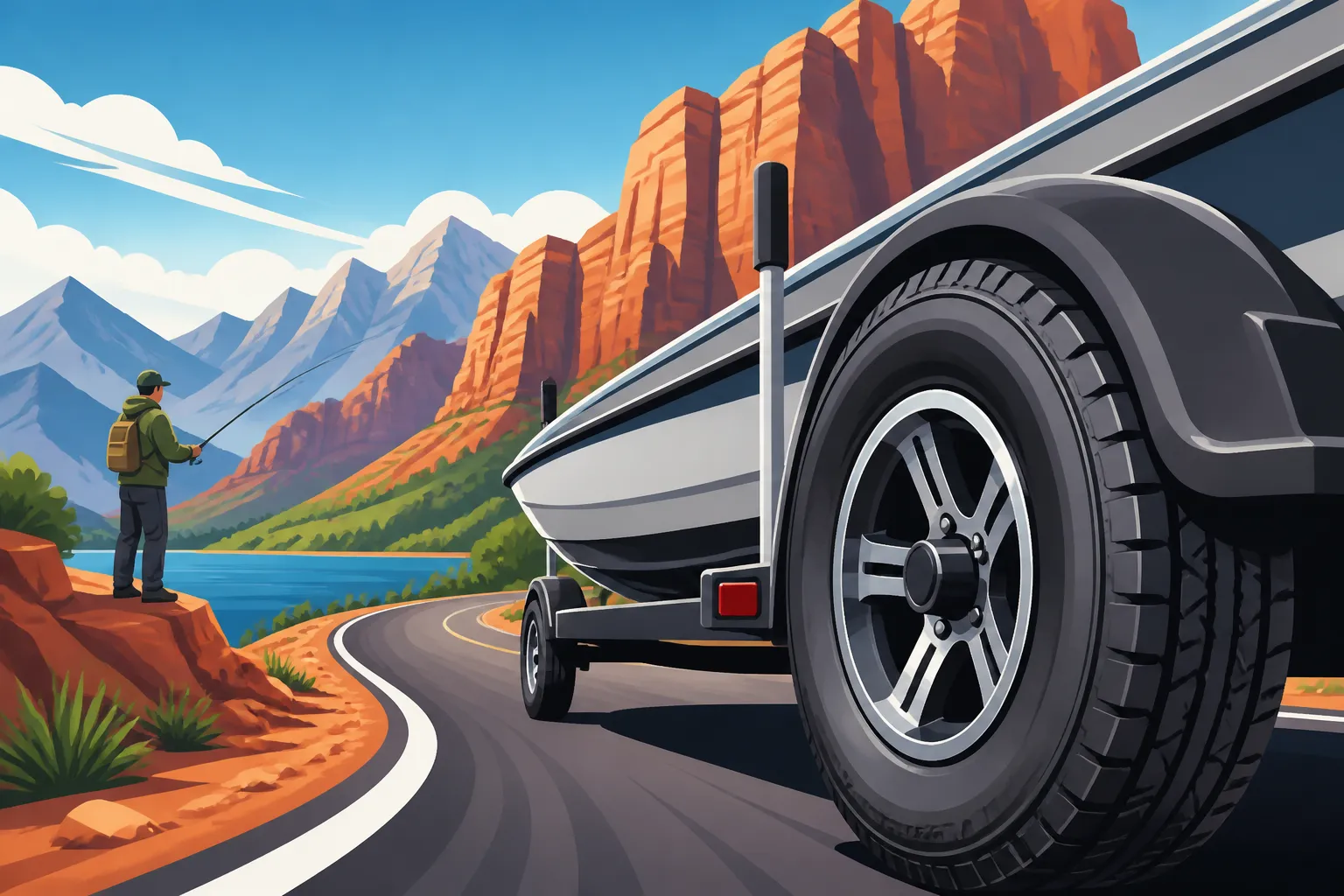
Anyone who's towed a boat through the Wasatch Front canyons or up to a high-altitude reservoir like Fish Lake or Strawberry knows that these aren't your average flat highways. Utah's mountain roads present a unique set of challenges that can push standard trailer tires beyond their limits, leading to dangerous blowouts or excessive wear. Understanding these demands is the first step to making an informed decision about your trailer tires.
Sustained Climbs and Descents
Imagine hauling your fully loaded bass boat up the long, steady incline to Strawberry Reservoir Fishing Guide. That sustained climb means your truck's engine is working hard, and so are your trailer tires. They're carrying the full weight of your boat, engine, fuel, and gear, often at a lower speed for an extended period. This creates a lot of heat, especially in the tire's sidewall, which isn't always designed for such continuous stress. Then, on the way down, the physics flip. Gravity is working against you, and your tow vehicle's brakes are doing overtime. Your trailer tires are still supporting the load, but now they're also subjected to lateral forces on those sweeping mountain curves, and the heat from braking radiates into the wheel assembly, further stressing the rubber.
Elevation and Temperature Swings
Utah's mountains are famous for their dramatic elevation changes, and these directly impact your tires. As you gain altitude, the air pressure drops, which can cause your tire pressure to increase slightly. More critically, mountain weather can be incredibly unpredictable. You might start your day in the Salt Lake Valley with warm, sunny conditions, only to encounter significantly cooler temperatures, or even rain and snow, as you ascend just a few thousand feet. This wide swing in ambient temperature affects the rubber's flexibility and overall performance. A tire that performs well in hot desert conditions might become stiff and less pliable in colder mountain air, impacting traction and handling, especially on damp or slick roads.
Winding Roads and Tight Turns
Driving a boat trailer on a straight highway is one thing; navigating the switchbacks and sharp turns of a canyon road is quite another. These roads constantly force your trailer tires into scrubbing motions, particularly on tandem-axle trailers, where the tires are dragged sideways slightly during tight turns. This scrubbing creates friction, generating heat and accelerating tread wear. If your tires aren't built with durable compounds and reinforced sidewalls, they can quickly show signs of stress, leading to premature failure. Furthermore, the constant maneuvering requires tires with good stability to prevent sway, a terrifying scenario when you're driving on the edge of a mountain pass.
Key Characteristics of Ideal Trailer Tires for Mountain Travel
When you're outfitting your boat trailer for Utah's peaks and valleys, you can't just grab any old tire. The right trailer tire for mountain roads will have specific characteristics that address the harsh conditions we just discussed. Focusing on these features will give you confidence on every climb and descent.
Ply Rating and Load Capacity
The ply rating, often indicated by "Load Range" (e.g., C, D, E), is paramount. It tells you about the tire's internal construction strength and its ability to carry weight. For mountain roads, a higher ply rating is almost always better. Trailer tires, designated "ST" (Special Trailer), are specifically engineered for vertical load, not traction, so their sidewalls are stiffer and less prone to flexing under heavy loads. A Load Range D or E tire will offer much more resilience against heat buildup and sidewall flex than a Load Range C, which is typically found on lighter utility trailers. Always check your trailer's Gross Vehicle Weight Rating (GVWR) and ensure your chosen tires, when combined, exceed this rating comfortably, ideally with a 10-15% buffer. This extra capacity is a safety net when you're tackling steep grades or unexpected potholes. For instance, if your trailer has a GVWR of 5,000 pounds and has two axles (four tires), each tire should ideally be rated for at least 1,400 pounds (5000/4 * 1.15).
Speed Rating and Heat Dissipation
You might not be rocketing up the mountain at interstate speeds, but your trailer tires still need a suitable speed rating. Most ST tires have a speed rating of L (75 mph) or M (81 mph). While it's tempting to think you won't exceed these speeds, remember that sustained lower-speed towing on a hot incline can still generate immense heat. Good trailer tires designed for mountain use incorporate compounds and construction that are better at dissipating this heat. Look for tires with a robust internal structure and high-quality rubber that resists degradation from prolonged heat exposure. Overheating is a primary cause of trailer tire failure, especially when tires are underinflated or overloaded. Maintaining proper inflation, as discussed in Utah Boat Registration Requirements, is crucial for managing heat buildup.
Tread Design and Sidewall Durability
Unlike car tires, trailer tire tread patterns are generally simpler, designed for stability and minimal rolling resistance rather than aggressive traction. However, a slightly more robust tread can be beneficial on less-maintained mountain access roads. More importantly, the sidewall is where many failures occur under mountain stress. Look for tires with strong, multi-layered sidewall construction. These reinforced sidewalls resist flexing and punctures from sharp rocks or debris that can be common on mountain shoulders or gravel pull-offs. A durable sidewall also contributes to better sway control, giving you more confidence when encountering crosswinds or passing semi-trucks on a descent. Brands like Goodyear Endurance or Carlisle Radial Trail HD are often lauded for their robust construction, making them good choices to research. You can often find a good selection of these at a large retailer like Bass Pro Shops or online at Amazon.
Types of Trailer Tires for Utah Mountain Roads
Navigating the world of trailer tires can feel like learning a new language. You'll encounter terms like "radial," "bias-ply," "ST," and "LT." Understanding these distinctions is key to selecting tires that will confidently carry your Best Boats for Utah Reservoir Fishing through Utah's stunning, yet challenging, high country.
Radial vs. Bias-Ply Trailer Tires
This is one of the most significant choices you'll make. Historically, bias-ply tires (where the plies run diagonally from bead to bead) were the standard for trailers. They have very stiff sidewalls, which can be good for resisting punctures and handling heavy loads at lower speeds. However, they tend to build up more heat, especially on long, sustained drives, and their stiffer sidewalls can lead to a harsher ride and less consistent contact with the road.
Radial tires, on the other hand, have plies that run perpendicular to the direction of travel, with a separate belt package under the tread. This construction allows the sidewall and tread to work more independently. For Utah mountain roads, radial ST (Special Trailer) tires are generally the superior choice.
Here's why:
- Heat Dissipation: Radials flex more efficiently, generating less heat than bias-ply tires on long hauls, which is critical for those extended climbs and descents.
- Improved Ride and Tracking: The more flexible sidewalls allow the tread to conform better to the road surface, leading to a smoother ride for your trailer and better tracking, reducing sway.
- Longer Tread Life: Reduced heat and more consistent road contact typically translate to longer tread life.
While bias-ply might be a cheaper upfront option, the safety, performance, and longevity benefits of radial tires easily justify the investment for mountain towing.
| Feature | Radial ST Tire | Bias-Ply ST Tire |
|---|---|---|
| Ply Construction | Plies run perpendicular (radial) with separate belts | Plies run diagonally (bias) |
| Heat Buildup | Lower, better for long distances/mountain passes | Higher, can be an issue on sustained drives |
| Ride Quality | Smoother, better shock absorption | Harsher, transmits more road shock |
| Tread Life | Generally longer, more even wear | Shorter, more prone to uneven wear |
| Sidewall Strength | Flexible, but strong, good for impact | Stiffer, good for puncture resistance at low speed |
| Sway Control | Superior tracking, better stability | More prone to sway, especially at higher speeds |
| Cost | Typically higher | Generally lower |
| Recommendation | Highly recommended for Utah mountain roads | Suitable for shorter, lower-speed, light-duty use |
ST (Special Trailer) vs. LT (Light Truck) Tires
You might see folks debating whether to use light truck (LT) tires instead of special trailer (ST) tires on their boat trailers. This is a common point of confusion, and it's important to clarify.
- ST (Special Trailer) Tires: These are specifically designed for trailers. Their construction prioritizes heavy load-carrying capacity, stiff sidewalls to prevent trailer sway, and durability against scrubbing on turns. They are built for vertical load, not for driving traction, acceleration, or braking (which is handled by your tow vehicle). The rubber compounds are often formulated to resist "ozone cracking" from sitting for long periods.
- LT (Light Truck) Tires: These are designed for light trucks and SUVs. While they also carry heavy loads, their primary design goal is to provide traction for driving, braking, and steering, along with a comfortable ride for passengers. Their sidewalls are more flexible than ST tires to absorb bumps and improve handling.
For boat trailers, ST tires are almost always the correct choice, even for mountain roads. While an LT tire might seem appealing for its perceived robustness, its more flexible sidewall can actually increase trailer sway, especially with a heavy boat swaying behind you. ST tires are built to resist that lateral flex, giving you a more stable and safer towing experience. Many of the high-quality radial ST tires available today are perfectly capable of handling the heat and stress of Utah's mountain passes. When you're looking for Best Boat Trailers for Utah Reservoirs, remember that the tires are just as important as the frame itself.
Maintenance and Pre-Trip Checks for Mountain Road Readiness
Even the best trailer tires won't perform optimally or safely if they're not properly maintained. Before you even think about hitting those mountain roads for a weekend of Flaming Gorge Fishing Guide or high-altitude trout fishing in the Uinta Mountains High Lakes Fishing, a thorough pre-trip check and ongoing maintenance are absolutely non-negotiable.
Proper Tire Inflation
This cannot be stressed enough: always inflate your ST trailer tires to the maximum PSI indicated on the tire's sidewall. Unlike passenger car tires, which have recommended pressures for ride comfort and handling, ST tires are designed to perform best at their maximum cold inflation pressure. Underinflation is the number one cause of trailer tire failure, especially when dealing with the heavy loads and heat generated on mountain roads. Underinflated tires flex excessively, building up dangerous amounts of heat that can lead to tread separation and blowouts.
Before every trip, especially one involving significant mountain driving, check your tire pressure with a reliable gauge when the tires are cold (before driving). Don't forget to check the spare tire pressure too – you never know when you'll need it on a remote mountain pass. This simple step can literally save your trip, and potentially your life. A digital tire gauge is a small but invaluable piece of Utah Fishing Gear Guide.
Visual Inspections and Rotation
Before each trip, walk around your trailer and give each tire a good visual inspection. Look for:
- Uneven Wear: Scalloping, excessive wear on one side, or bald spots can indicate alignment issues, worn suspension components, or improper inflation.
- Cracks or Dry Rot: Pay close attention to the sidewalls for any signs of cracking or "dry rot," which indicates the rubber is deteriorating, especially common on trailers that sit exposed to sun for long periods.
- Bulges or Lumps: These are serious red flags, indicating internal damage or separation within the tire's construction. Do not use a tire with bulges.
- Punctures or Embedded Debris: Look for nails, screws, glass, or sharp rocks embedded in the tread. Small items can often be removed if they haven't punctured deeply, but anything significant needs professional attention.
While trailer tires don't typically need regular rotation in the same way car tires do, it can be beneficial for evening out wear if you notice one tire consistently wearing faster than others, particularly on multi-axle trailers. Consult with a tire professional if you have concerns about uneven wear patterns.
Spare Tire Readiness and Tools
It's a mistake many anglers make: assuming their spare is good to go. Before heading into the mountains, treat your spare tire with the same scrutiny as your active tires.
- Inflate the Spare: Ensure your spare tire is also inflated to its maximum PSI. A flat spare is useless.
- Check Condition: Inspect the spare for dry rot, cracks, and general condition. If it's old and deteriorated, it's not a reliable backup.
- Tools: Confirm you have all the necessary tools for a roadside tire change. This includes a properly sized lug wrench, a jack capable of lifting your loaded trailer, and wheel chocks to prevent the trailer from rolling. Consider a small piece of plywood to place under the jack if you need to change a tire on soft ground. Don't forget about having a Best Coolers for Keeping Utah Fish Fresh in your truck, but make sure your emergency gear is accessible too! Being stranded in a remote area without a working spare or the tools to change it is a frustrating and potentially dangerous situation. You can find essential tools and spare tire mounts at retailers like Bass Pro Shops or online through Amazon.
Handling Unexpected Tire Issues on Mountain Roads
Even with the best preparation, unforeseen circumstances can arise. A flat tire on a winding mountain road is a headache nobody wants, but knowing how to react and what to do can turn a potential disaster into a manageable inconvenience.
Safely Pulling Over and Assessing the Situation
The moment you suspect a tire issue – maybe you hear a new sound, feel a pull, or see something in your mirror – activate your hazard lights immediately. Scan ahead for a safe, flat, and wide spot to pull over. This is critical on mountain roads where shoulders can be narrow, nonexistent, or steeply graded. Look for turn-outs, small parking areas, or even just a wider section of road. Avoid stopping on blind curves or at the crest of a hill where visibility is limited for other drivers.
Once stopped, apply your tow vehicle's parking brake and chock the wheels on the opposite side of the trailer from the flat tire. If you have a tandem axle trailer and one tire goes flat, sometimes you can limp to a safer spot at very low speed, but exercise extreme caution. Visually inspect the damage. Is it a slow leak, or a catastrophic blowout? This will inform your next steps. Remember, safety first – your life and the lives of others depend on your cautiousness.
Changing a Flat Tire on Uneven Terrain
Changing a tire on a slight incline or shoulder can be tricky. Here are some tips:
- Level Ground is Key: If possible, maneuver your trailer to the most level spot available. This makes jacking safer and prevents the trailer from rolling.
- Chock Everything: Beyond chocking the tires opposite the flat, ensure your tow vehicle is in park with the parking brake engaged. If on an incline, angle your tow vehicle slightly into the slope.
- Jack Placement: Refer to your trailer's owner manual for proper jack points. Generally, you want to place the jack under the trailer's frame, as close to the axle with the flat tire as possible, or directly under the axle if it's rated for it. Never jack under the axle itself if it's not a reinforced jack point, as you could damage it.
- Loosen Lug Nuts First: Before fully jacking the tire off the ground, use your lug wrench to break loose the lug nuts while the tire is still firmly on the ground. This prevents the wheel from spinning as you apply force.
- Take Your Time: Rushing leads to mistakes. Work slowly and methodically. Once the new tire is on, tighten the lug nuts in a star pattern. Lower the trailer, remove the jack, and then give the lug nuts a final, firm tightening.
Remember, if you're uncomfortable or unsure, it's always better to call for roadside assistance. Having a plan for emergencies is as important as having the right Best Fish Finders for Utah Reservoirs for your trips.
Post-Flat Tire Procedures and Inspection
After you've successfully changed the tire, don't just speed off.
- Check Lug Nuts: Drive a short distance (a mile or two) and then pull over safely to re-check the lug nuts for tightness. They can sometimes loosen slightly after the initial drive.
- Inspect Remaining Tires: Give the other tires another quick visual inspection. The stress that caused one tire to fail might have impacted others, especially if it was due to a severe road hazard.
- Address the Damaged Tire: Don't just toss the flat tire in the bed of your truck and forget about it. Get it inspected by a professional as soon as possible. Sometimes a tire can be repaired, saving you from buying a new one. Even if it's irreparable, responsibly disposing of it is important. Think of it like taking care of your Utah Combination Hunting and Fishing License – it's a responsibility!
By being prepared and knowing these steps, you can confidently tackle any unexpected tire challenges that Utah's beautiful, rugged mountain roads throw your way.
Disclaimer
This article is for general informational purposes only and does not constitute professional advice. Laws, prices and regulations vary by location and change over time. Consult a qualified professional for guidance on your specific situation.