How Deep to Fish for Lake Trout at Flaming Gorge in Summer
Ah, summer fishing at Flaming Gorge! It sounds idyllic, doesn't it? Warm sun, blue water, maybe even a cooling breeze. But for those of us chasing the elusive, massive lake trout in those conditions, it can quickly turn into a frustrating guessing game. They aren't just lounging around the shallows in July and August! This guide is going to dive deep—literally—into understanding where these magnificent fish hide when the water warms up, and how you can actually get your lure in front of them.
Understanding Lake Trout Behavior in Summer
When the Utah sun beats down and the surface waters of Flaming Gorge begin to warm significantly, a major shift happens in the behavior of its trophy lake trout, also known as Mackinaw. Unlike some other species that might tolerate or even thrive in warmer shallows, lake trout are cold-water creatures at heart. Their physiology is simply not designed for prolonged exposure to higher temperatures. This fundamental biological need drives their summer migration into the depths, making them a challenge to locate for the unprepared angler.
The Thermal Stratification Effect
Imagine Flaming Gorge in summer like a layered cake, but with water temperatures instead of frosting. As the sun heats the surface, a distinct thermal stratification occurs. You'll have a warm upper layer (the epilimnion), a middle layer where temperature changes rapidly (the thermocline), and a deep, cold layer (the hypolimnion). Lake trout absolutely thrive in that bottom, cold layer, typically preferring water temperatures somewhere between 40 and 55 degrees Fahrenheit. This cool water is crucial for their metabolic processes, oxygen uptake, and overall well-being. Trying to find them above this preferred temperature range during the peak of summer is often a futile effort.
Forage Fish Migration
It's not just the water temperature that dictates where these big lakers will be found; it's also where their food source congregates. The primary forage fish for lake trout in Flaming Gorge are kokanee salmon and various species of chub, like Utah chubs. Guess what? These smaller baitfish also prefer cooler water and will follow the thermocline and cold water into the depths during summer. So, not only are the lake trout seeking comfortable temperatures, but they're also shadowing their food supply. Finding dense schools of baitfish on your sonar is often the first, best clue that larger predators like lake trout are lurking nearby, ready to ambush. It's an ecological chain reaction that pushes everything deeper.
Factors Influencing Lake Trout Depth
Figuring out the exact depth for lake trout at Flaming Gorge isn't a simple "set it and forget it" situation. It changes based on a variety of subtle environmental cues. What might work perfectly one day could be completely ineffective the next, leaving you scratching your head wondering what went wrong. Understanding these variables is key to adapting your strategy and increasing your chances of success.
Water Temperature and Thermocline Depth
The most critical factor is undoubtedly water temperature, specifically the depth of the thermocline. In early summer, say June, the thermocline might be relatively shallow, perhaps 40-60 feet deep. As July and August progress, the warm surface layer thickens, pushing the thermocline—and the cold water below it—deeper. This means lake trout will also descend to stay within their preferred thermal comfort zone. You might start your day fishing at 80 feet, only to realize by midday they've dropped to 100 or even 120 feet if the surface heat has intensified or they've moved to a colder pocket. Regularly checking your fish finder for temperature readings and the thermocline's location is non-negotiable.
Time of Day and Light Penetration
Just like us, fish tend to be more active at certain times. In summer, low light conditions often encourage lake trout to be more aggressive and potentially move slightly shallower than their midday holding patterns. Early morning, just after sunrise, and late evening, right before sunset, are prime windows. During these times, the sun's intensity is reduced, and the water at slightly shallower depths might be just cool enough for them to cruise for food. However, as the sun climbs higher and penetrates the water deeper, those big lakers will quickly retreat to the darker, colder, deeper sanctuaries. The light acts like a trigger, sending them into the abyss during the brightest parts of the day.
Baitfish Location and Structure
Lake trout are ambush predators, and they'll always be in close proximity to their food sources and advantageous structures. If kokanee salmon or chubs are schooling at 90 feet over a deep main channel, that's where the lake trout will be. If those baitfish move into an adjacent cove with a deep drop-off, the lakers will follow. Always keep an eye on your sonar for bait balls. Furthermore, submerged structures like old river channels, humps, ledges, and deep points offer excellent ambush points and cover for lake trout. These features can hold pockets of colder water and provide strategic advantages for feeding. Sometimes, the fish aren't just suspended over open water; they're hugging a particular contour or a specific structure. Knowing where these " Flaming Gorge Trophy Lake Trout Spots " are is a huge advantage. Many anglers find success by using mapping features on their fish finders to pinpoint these underwater features.
Here's a quick overview of how these factors typically influence summer lake trout depth:
| Factor | Early Summer (June) | Mid-Summer (July-Early Aug) | Late Summer (Mid-Aug-Sept) |
|---|---|---|---|
| Water Temp (Surface) | Warming (60s-70s) | Warmest (70s-80s) | Cooling (60s-70s) |
| Thermocline Depth | Relatively Shallow (40-70 ft) | Deepest (80-120+ ft) | Moderate (60-100 ft) |
| Typical Trout Depth | 50-90 feet | 90-150+ feet | 70-120 feet |
| Time of Day | Deeper midday | Deeper all day | Shallower at low light |
| Baitfish Location | Follow thermocline closely | Follow thermocline/deep | Can be more dispersed |
| Strategy Focus | Find thermocline | Go deeper, target structure | Still deep, but watch for shifts |
Key Depths and Techniques for Summer Lake Trout at Flaming Gorge
Alright, let's get down to the nitty-gritty. Now that we understand why they go deep, what are the actionable strategies for how to catch them? Targeting summer lake trout at Flaming Gorge is primarily a deep-water trolling game, and it requires specialized gear and a patient approach. Don't expect to cast a spoon from shore and hook a monster Mackinaw in August! This is where the right tools and techniques really make the difference between a successful day and a frustrating one.
Trolling with Downriggers or Dipsy Divers
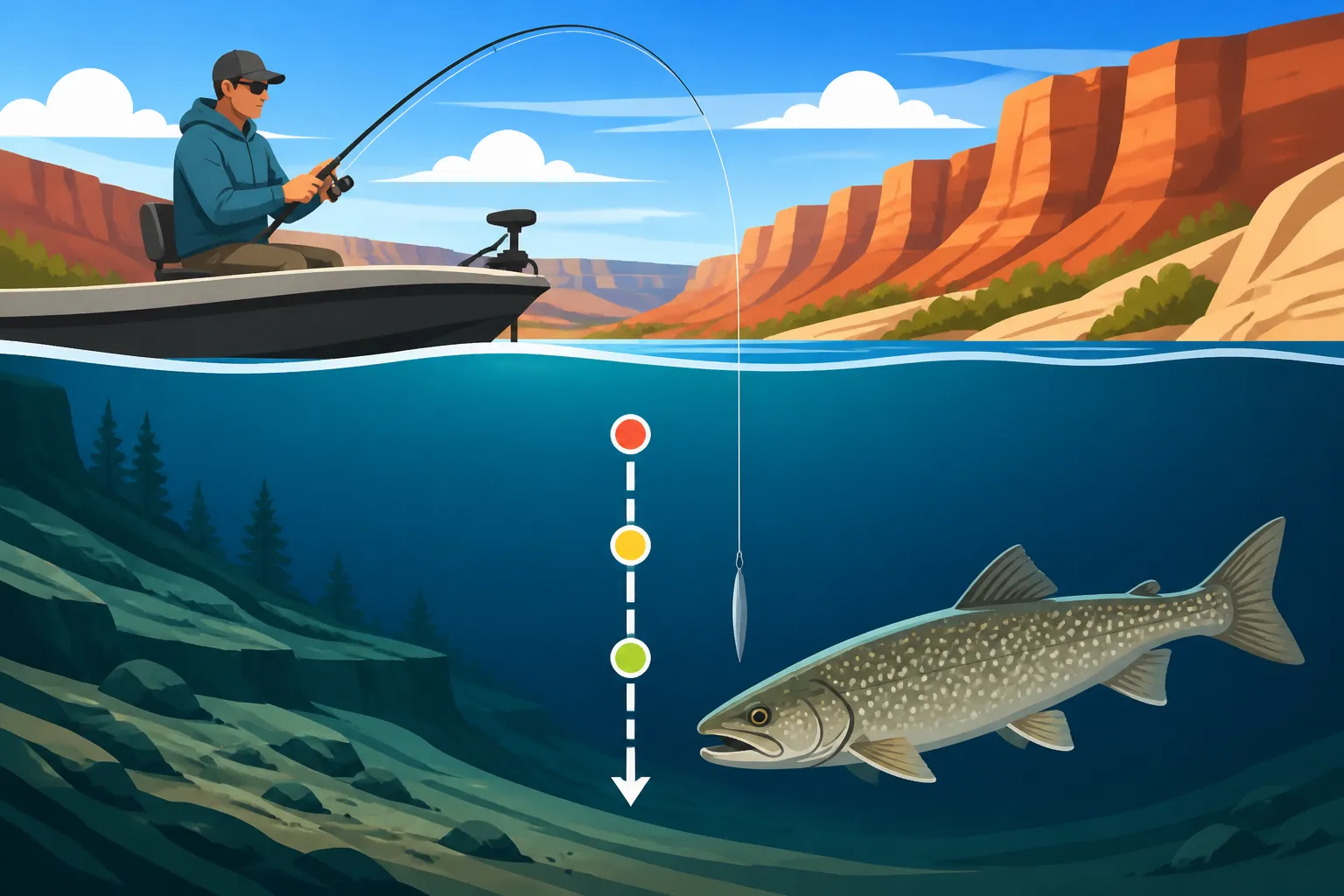
For summer lake trout at Flaming Gorge, downriggers are your absolute best friends. These devices allow you to precisely control the depth of your lure, dropping it down to exactly where you're marking fish or bait. You'll typically be running large spoons, stickbaits, or bait rigs (like squidding flies with a chunk of sucker meat) at depths ranging from 80 feet all the way down to 180 feet, or even deeper, depending on conditions. The key is to match your depth to where you're seeing activity on your fish finder. Don't be afraid to experiment with different depths until you start getting bites. A good rule of thumb is to start slightly above where you're marking fish and slowly drop down. If you're wondering how to properly set up your gear, there's a fantastic guide on How Deep Should You Set a Downrigger for Flaming Gorge Lake Trout that delves into the specifics.
Dipsy divers can also be effective, especially if you don't have downriggers or want to run more lines. These disc-shaped devices use water resistance to dive, taking your lure down with them. While not as precise as downriggers, they can reach significant depths and add a different action to your presentation. They're excellent for covering a broader water column, especially when the fish are scattered. Remember, the deeper you go, the heavier the dipsy diver you'll need, and the more line you'll have out, which can affect sensitivity.
Vertical Jigging Over Deep Structure
While trolling covers vast expanses, vertical jigging is an excellent technique for targeting lake trout once you've located a school of fish or a specific piece of deep structure. Imagine you're marking a cluster of fish on your sonar at 120 feet, hugging a submerged hump. Instead of trolling past them, you can position your boat directly over them and drop a heavy jig. Popular choices include large bucktail jigs, tube jigs, or heavy spoons. The idea is to mimic a struggling baitfish. Drop the jig to the desired depth, then use a rhythmic lift-and-drop motion, pausing occasionally.
The strike often comes on the fall or during the pause, so pay close attention to your line. This technique requires patience and a good feel for what's happening hundreds of feet below the surface. Using braided line is almost essential for jigging at these depths, as its lack of stretch provides much better sensitivity. For those looking for a guided trip to learn these techniques firsthand, exploring options through a platform like FishingBooker can connect you with experienced guides who specialize in deepwater jigging at Flaming Gorge.
Gear and Tactics for Deepwater Lake Trout
Successfully battling a large lake trout from the depths of Flaming Gorge in summer is a true test of an angler's skill and equipment. It's not the kind of fishing where you can show up with just any old rod and reel and expect to land a trophy. The immense pressure, the fight of a powerful fish, and the need for precise depth control all demand specific gear and thoughtful tactics. Don't underestimate the challenge; come prepared!
The Right Rod, Reel, and Line Setup
When you're fishing at depths of 100 feet or more, your gear needs to be robust. For trolling with downriggers, you'll want a medium-heavy to heavy action trolling rod, typically 7-9 feet in length, with a flexible tip to absorb the shock of the downrigger release and a strong backbone to fight big fish. Pair this with a sturdy level-wind conventional reel, like a Penn Squall or Daiwa Sealine, spooled with 20-30 lb test monofilament or fluorocarbon. Some anglers prefer braided line as their main line for its zero stretch and sensitivity, often adding a 20-50 foot fluorocarbon leader. When you’re down deep, every ounce of sensitivity helps you detect a bite!
For vertical jigging, a sensitive but powerful spinning or baitcasting setup is ideal. Look for a medium-heavy to heavy fast-action rod, around 6'6" to 7'6", again, with a strong backbone. Spool your reel with 30-50 lb braided line, then add a 10-20 foot fluorocarbon leader in the 20-30 lb range. The braid's sensitivity will let you feel subtle bites, while the fluorocarbon leader provides invisibility in clear water and abrasion resistance against the trout's sharp teeth. Understanding How to Fish Deep Water for Summer Lake Trout often means upgrading your core equipment.
Lure Choices and Presentation
Lake trout in Flaming Gorge are opportunistic predators, but they do have preferences. In summer, their diet primarily consists of kokanee salmon, chubs, and sometimes even smaller lake trout. Your lures should mimic these forage species in size, shape, and action.
- Spoons: Large trolling spoons are staples. Popular colors often include silver, chartreuse, blue, or combinations of these. Brands like Luhr Jensen, Northern King, and Michigan Stinger are very effective. Experiment with different sizes and color patterns to see what the fish are keying in on that day.
- Stickbaits/Plugs: Long, slender stickbaits, both jointed and unjointed, that dive to various depths can be deadly. These replicate the profile of kokanee salmon. Rapala Deep Tail Dancers or Berkley Flicker Shads in natural baitfish patterns are good starting points.
- Squid/Tube Jigs & Bait Rigs: For slower trolling or when bait is allowed, a herring or anchovy in a helmet rig, or a specialized squidding fly often tipped with a piece of sucker meat, can be irresistible. This imitates injured baitfish.
- Jigs: For vertical jigging, heavy bucktail jigs, tube jigs, or large metal flutter spoons (like a Crippled Herring) in white, chartreuse, or natural baitfish colors, are excellent. Tip them with a small piece of bait for added scent and attraction if regulations allow.
Remember, presentation is key. Maintain a consistent trolling speed, typically between 1.5 and 2.5 mph, and vary your speeds occasionally to trigger strikes. When jigging, practice different lift-and-fall cadences to entice hesitant fish.
Using Electronics to Your Advantage
Your fish finder is perhaps your most important piece of gear for deepwater lake trout fishing at Flaming Gorge. It’s not just for seeing fish; it's for understanding the entire underwater environment. You need to be able to identify:
- The Thermocline: Most modern units can show you distinct temperature breaks, indicating where the cold water begins.
- Baitfish Schools: Look for dense clouds of smaller marks; these are your primary targets. If bait is present, larger predators are likely nearby.
- Individual Fish Marks: Large, distinct arches below the bait schools, often hugging the bottom or suspended just above it, are your lake trout.
- Structure: Identify humps, drop-offs, channels, and submerged timber. These are all potential holding areas.
GPS is also invaluable for marking productive spots, trolling paths, and keeping track of your boat's speed and direction. Many seasoned anglers use their GPS to re-run successful trolling passes over and over again, effectively "drilling down" on productive areas. If you're new to the area, considering a guided trip found on a service like FishingBooker can be an invaluable way to learn how to effectively use your electronics in the unique terrain of Flaming Gorge.
Environmental Considerations and Regulations
Finally, always be mindful of the specific Utah Fishing Regulations Explained for Flaming Gorge. Regulations regarding bait, bag limits, and slot limits can vary and are subject to change. For example, some species of baitfish are prohibited to prevent the spread of disease or invasive species. Always check the current Utah Fishing Guidebook before you head out. Additionally, practice responsible catch-and-release, especially for smaller lake trout you don't intend to keep. While many anglers target larger trophy fish, understanding how to properly handle fish at depth to prevent barotrauma is crucial for their survival. Remember, these fish have come from very deep water, and a slow, controlled release can help ensure they survive to fight another day.
Disclaimer
Please note that fishing conditions, regulations, and fish behavior can change rapidly. Always consult the most current Utah Division of Wildlife Resources (UDWR) fishing guide before heading out. The information provided in this article is for general guidance and educational purposes only.