Where to Fish for Kokanee at Rockport Reservoir
Trying to dial in those elusive Kokanee salmon at Rockport Reservoir can feel like you're searching for a needle in a haystack, especially when they move around so much with the seasons. It’s a stunning place to fish, but knowing where these finicky fish are holding at any given time can make all the difference between a triumphant day and a frustrating blank. This guide is here to cut through the guesswork, sharing hyper-local insights into Rockport's Kokanee hotspots and helping you pinpoint exactly where to cast your line for success.
Understanding Rockport Reservoir's Kokanee Habitat
Before we dive into specific coordinates, it's crucial to grasp what makes a particular spot attractive to Kokanee at Rockport. These aren't your typical bottom-dwelling fish; they're pelagic, meaning they roam the open water column, constantly searching for ideal conditions and their primary food source: zooplankton. Knowing this helps us predict their movements and concentrate our efforts where they're most likely to be found.
Key Water Characteristics for Kokanee
Kokanee salmon are quite particular about their environment. They thrive in cold, clear, and well-oxygenated water, often preferring temperatures between 45 and 55 degrees Fahrenheit. This preference is what largely dictates their depth and location throughout the year at Rockport.
During the warmer months, as the surface waters of Rockport Reservoir heat up, a distinct thermocline forms. This is a layer where the water temperature rapidly changes, and it's a critical factor for Kokanee. They'll often be found just above, within, or just below this thermocline, as it offers the perfect balance of cool temperatures and sufficient oxygen. In Rockport, this thermocline typically sets up somewhere between 20 and 40 feet deep in summer, but it can fluctuate depending on the year's weather patterns and water levels. Anglers with good fish finders will be actively looking for this temperature break. As the seasons change, and the water body undergoes "turnover" in the spring and fall, these temperature gradients shift, causing the Kokanee to redistribute throughout the water column. The clearer the water, generally, the deeper they'll hold to avoid predators and bright sunlight.
Identifying Prime Kokanee Holding Structures
While Kokanee are open-water dwellers, they aren't entirely structure-agnostic. They use subtle underwater features as highways, ambush points, or areas where zooplankton might concentrate. At Rockport, you'll want to pay close attention to areas that offer these advantages.
One of the most consistent features for Kokanee at Rockport is the old Weber River channel. This submerged channel, which meanders through the reservoir basin, creates distinct drop-offs and depth changes that Kokanee use for travel and feeding. They'll often cruise along the edges of these channels, especially where the channel meets a flatter shelf. Points that extend into deeper water are also critical, as they act like underwater funnel systems, concentrating both baitfish (if present) and zooplankton, and providing current breaks. Large, open mid-lake basins with consistent depth are also prime hunting grounds once you've located a school, as these offer ample space for the pelagic fish to roam and feed. Don't overlook submerged humps or rocky reefs, either, as these can also aggregate food and offer temporary holding spots. Using detailed bathymetric maps or your fish finder to locate these subtle bottom contours is absolutely essential for consistently finding Kokanee at Rockport.
Top Fishing Zones for Kokanee at Rockport Reservoir
Rockport Reservoir has a few distinct areas that tend to produce Kokanee consistently, though their productivity can certainly shift with the seasons and even day-to-day conditions. Knowing these general zones will give you a significant head start.
Main Channel and Dam Area
The deepest water in Rockport Reservoir is generally found near the dam and along the old main river channel. This area is often a fantastic starting point for Kokanee, especially during the warmer months when they retreat to cooler, deeper water. The water around the dam face itself can hold schools, particularly on the deeper side. You’ll often find fish suspended over the deepest parts, sometimes even in 60-80 feet of water, but actively feeding anywhere from 20-50 feet down, depending on the thermocline and their current preference.
Anglers often target the stretch of water running from the main dam structure north and west, following the path of the submerged Weber River channel. This area typically maintains consistent depth and temperature, which Kokanee appreciate. Trolling is the name of the game here, running your gear at varying depths until you mark schools on your electronics. It's not uncommon to see multiple boats working this main basin, all employing downriggers or weighted lines to present lures at specific depths. Be mindful of others and practice good boat etiquette. Early mornings and late evenings are often the most productive, as light levels are lower and Kokanee tend to be more active feeders. For more details on what to expect, consider checking out this guide on Rockport Reservoir Fishing Access.
Northern Arm and Shallow Bays
As you move north and west into the reservoir, especially towards the Wanship boat ramp and the upper reaches where the Weber River feeds in, the water generally becomes shallower. While this isn't traditionally prime Kokanee habitat for most of the year, these areas become important during specific seasons.
In the early spring, after ice-off, Kokanee might be found cruising these shallower bays as the water slowly begins to warm, making zooplankton more active. They'll still stick to the deeper sections of these bays, but they might be higher in the water column than in summer. Similarly, as the Kokanee approach their spawning run in the late fall, they'll begin to move into these shallower, river-influenced areas. However, it's critical to note that Rockport Reservoir typically has a seasonal closure or specific regulations around the spawning season to protect the fish. Always consult the current Utah Fishing Regulations Explained or Utah Fishing Season Dates and Limits to ensure you're fishing legally and ethically during this time. Generally, during the peak of summer, these shallower areas are less productive for Kokanee, which prefer the cooler, deeper main basin.
Mid-Lake Basins and Open Water
Beyond the immediate dam area, Rockport boasts expansive mid-lake basins that provide excellent open-water trolling opportunities. These are the "highways" and "feeding grounds" for pelagic Kokanee. Once you've established a depth at which the fish are holding, these open areas allow you to cover a lot of water efficiently.
When trolling these open basins, watch your fish finder constantly. You're looking for arches that indicate individual fish or, even better, dense clouds that represent schools of Kokanee or their primary food source, zooplankton. Often, you'll find them suspended seemingly in the middle of nowhere, nowhere near traditional bottom structure. This is where a good fish finder and understanding How to Read a Fish Finder for Utah Reservoirs really pays off. If you start marking fish, make turns and repeat your pass through that area. Sometimes a specific trolling pass, depth, or lure color will trigger strikes, so pay close attention to what's working. Many anglers find success by experimenting with different depths using downriggers, especially when trying to locate dispersed schools. Services like FishingBooker can sometimes help connect you with local guides who are out on these waters daily and have real-time reports on where the schools are congregating, which can be invaluable for pinpointing active fish.
Seasonal Kokanee Movements and Best Times to Fish
Kokanee are highly migratory within the reservoir, their location and behavior dictated by water temperature, light levels, and their spawning cycle. Understanding these seasonal shifts is key to consistent success at Rockport.
Spring and Early Summer Strategies
As the ice comes off Rockport Reservoir, typically in April or early May, the entire water column is roughly the same temperature. Kokanee will be more widely dispersed but still prefer the cooler parts of the lake. They might be found shallower than in summer, often cruising around 10-25 feet deep, especially in areas with good sun exposure that warm up slightly faster, stimulating zooplankton activity.
During this post-ice-off period, trolling can be productive along shorelines and over points that drop into deeper water. They're actively feeding and trying to put on weight after the lean winter months. As spring progresses into early summer, and the water begins to stratify and form a thermocline, the Kokanee will gradually descend, following their preferred temperature band. This is a transitional period, and patience and experimentation with depth are crucial. For specific strategies on How to Troll for Kokanee in Utah, you'll find that these early season approaches often involve slower speeds and smaller presentations.
Peak Summer Tactics
Summer at Rockport Reservoir brings consistent warm weather, and with it, the Kokanee retreat to the deeper, cooler waters of the main basin. This is when the thermocline is most pronounced, and Kokanee will typically be found suspended in or just above it, often in the 25-50 foot range, sometimes even deeper during the hottest parts of the day.
The early morning and late evening hours are by far the most productive during summer. The reduced light penetration encourages Kokanee to be more active feeders, and they might even rise slightly in the water column. Midday sun usually pushes them deeper and makes them less aggressive. Look for them in the mid-lake basins and near the dam, as discussed earlier. This is when downriggers become almost indispensable for precisely presenting your lures at the exact depth where the fish are holding. Using your fish finder to mark schools and then dropping your gear right into their zone is the most effective approach. Remember that these fish are quite sensitive to boat traffic and noise, so a stealthy approach, perhaps with an electric trolling motor, can make a difference. Many anglers find the Best Time of Year to Fish in Utah for Kokanee often coincides with late spring and early summer before the full heat of July and August sets in, though summer can still be great with the right tactics.
Fall Spawning Season
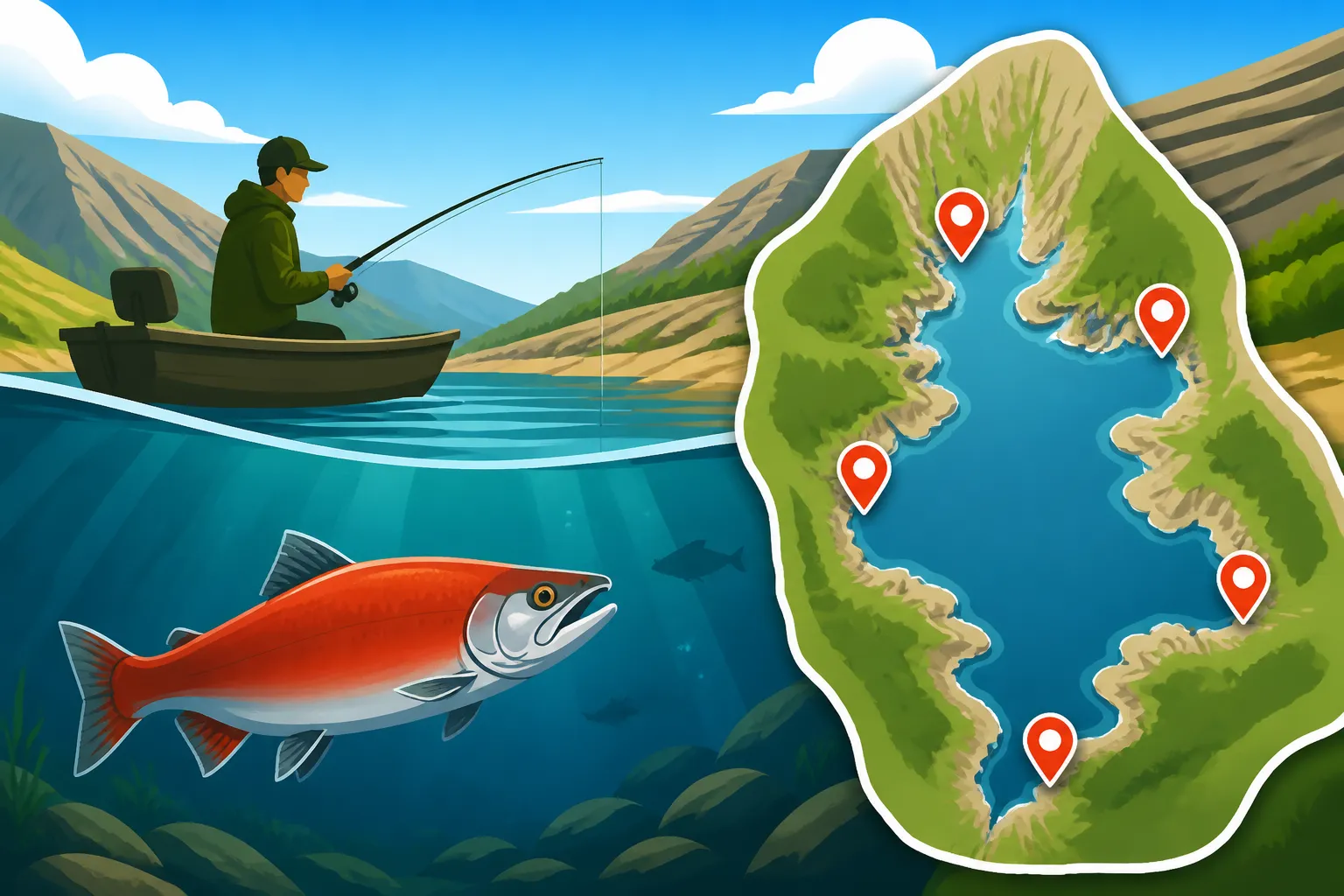
As the days shorten and water temperatures begin to cool in late summer and early fall, Kokanee salmon undergo a dramatic transformation as they prepare for their spawning run. Their bodies turn a brilliant crimson red, and males develop a hooked jaw (kype). They will migrate towards the river inlets, particularly the Weber River arm, and shallower areas to seek out suitable spawning grounds.
Important Note: During the Kokanee spawning season, generally late September through October, specific regulations or closures are often in place at Rockport and other Utah reservoirs to protect the fragile spawning population. Anglers must consult the current Utah fishing proclamation before fishing during this time. Attempting to catch spawning Kokanee can be detrimental to future populations. While the sight of red Kokanee is incredible, it’s best to appreciate them from a distance and focus on other species or areas outside the spawning zones during this sensitive period. Once the spawn is complete, the adult Kokanee die, having completed their life cycle, and fishing typically resumes its normal patterns for other species.
Essential Gear and Techniques for Rockport Kokanee
Catching Kokanee at Rockport Reservoir demands specialized gear and a methodical approach. These aren't just any trout; their feeding habits and preferences necessitate precise presentations.
Trolling Setups and Lures
Trolling is unequivocally the most effective method for Kokanee at Rockport. Because they are typically suspended in the water column, covering expansive areas at specific depths is crucial.
Your primary tools for depth control will be downriggers or weighted lines (like lead core or braided line with heavy weights). Downriggers allow for the most precise depth control, dropping your lure to exactly where the fish are marked on your finder. Many successful Kokanee anglers run two to four lines at different depths to quickly determine the most productive zone. When it comes to terminal tackle, dodgers or flashers are practically mandatory. These metallic attractors spin and wobble in the water, mimicking the flash of schooling baitfish and drawing Kokanee from a distance. They are typically rigged 8-18 inches in front of your actual lure.
For lures, small squid skirts (hoochies), wedding rings, or tiny spoon lures (like those from the Kokanee Kid or Triple Teazer brands) in vibrant colors are highly effective. Pink, orange, chartreuse, and sometimes even natural silver are popular choices. Don't forget scent! Applying a good kokanee-specific scent (like Pro-Cure or Pautzke's Krill) to your lure is critical, as Kokanee have an excellent sense of smell. Tip your lure with a kernel or two of shoepeg corn – often dyed and scented – as it provides extra attraction and scent trail. The corn can also mimic zooplankton that Kokanee feed on. When you find a school, make sure your offerings are at their level. For a comprehensive look, see our guide on What Lures Work Best for Kokanee Salmon?.
Here's a quick reference table for common Kokanee trolling setups at Rockport:
| Component | Recommendation for Rockport Kokanee | Purpose |
|---|---|---|
| Rod | 7-9 foot light to medium-light action trolling rod | Sensitive tip for subtle bites, good backbone for fighting. |
| Reel | Level wind trolling reel with line counter (e.g., Okuma Convector, Shimano Tekota) | Precise depth monitoring, smooth drag for light lines. |
| Main Line | 10-15 lb monofilament or fluorocarbon (for downriggers) / Lead core or braided for weighted lines | Stealth and strength, specific to depth control method. |
| Leader | 6-8 lb fluorocarbon, 12-24 inches long | Low visibility, ties dodger to lure. |
| Dodger/Flasher | Small 4-6 inch dodgers (e.g., Vance's Tackle, Sling Blade) in silver, pink, chartreuse, or orange | Attracts Kokanee from a distance with flash and vibration. |
| Lure | Small hoochies, wedding rings, Kokanee spoons (e.g., Kokanee Kid, Triple Teazer) in pink, orange, chartreuse. | Mimics zooplankton or baitfish, entices strikes. |
| Scent/Bait Tip | Kokanee-specific scent (Pro-Cure, Pautzke's), a kernel or two of shoepeg corn (often dyed/scented) | Adds olfactory attraction and visual trigger. |
| Downrigger | Essential for precise depth control, especially in summer. | Gets lures to exact depths where fish are holding. |
| Trolling Speed | Typically 1.0 – 1.8 mph, but experiment | Varies based on lure action and fish activity. |
Interpreting Your Fish Finder
Your fish finder is your best friend when chasing Kokanee at Rockport. These electronic eyes in the water will tell you where the fish are, how deep they are, and often even what the water temperature is at different depths.
When you're scanning Rockport's waters, look for distinct arches or groups of arches that indicate individual fish or schools. Kokanee often appear as tighter, smaller arches, sometimes in dense clouds. Pay close attention to their depth relative to the bottom, and especially relative to the thermocline if it's visible on your screen. If you see a dense cloud of smaller marks, that's likely a school of zooplankton, and you can bet Kokanee will be feeding nearby. Many modern fish finders, like those from Humminbird or Lowrance, offer advanced features such as CHIRP sonar, side imaging (less critical for pelagic Kokanee but still useful for understanding structure), and water temperature graphs that can pinpoint the thermocline. Don't just motor around; actively analyze what your fish finder is showing you. If you're not seeing fish, change your depth, speed, or location until you do. This proactive use of your electronics, especially when fishing vast open water, is what truly separates successful Kokanee anglers from the rest.
Disclaimer
The information provided in this guide is for general informational purposes only and is subject to change. Fishing regulations, water conditions, and fish behavior can vary. Always consult the latest Utah Division of Wildlife Resources (UDWR) fishing proclamation for current rules, limits, and closures before heading out. Fishing involves inherent risks, and users assume all responsibility for their safety and actions.