How to Catch Walleye at Night
It's easy to get frustrated when the sun is blazing, and those elusive walleye seem to have vanished into the depths of Utah's reservoirs. Many anglers spend countless hours during the day, scratching their heads and wondering why these fish are so hard to pin down. The secret, my friends, often lies in embracing the darkness. This comprehensive guide will walk you through everything you need to know about how to catch walleye at night, transforming your frustration into triumph and helping you consistently land these finicky but rewarding fish.
Why Walleye Love the Night and Why You Should Too!
Walleye are fascinating creatures, and understanding their behavior is the first step to consistently putting them in your boat or on your stringer. During the day, especially in clear waters, walleye become incredibly wary. They have large, sensitive eyes that are highly adapted to low light conditions, giving them a significant advantage over their prey when the sun goes down.
The Walleye's Nocturnal Advantage
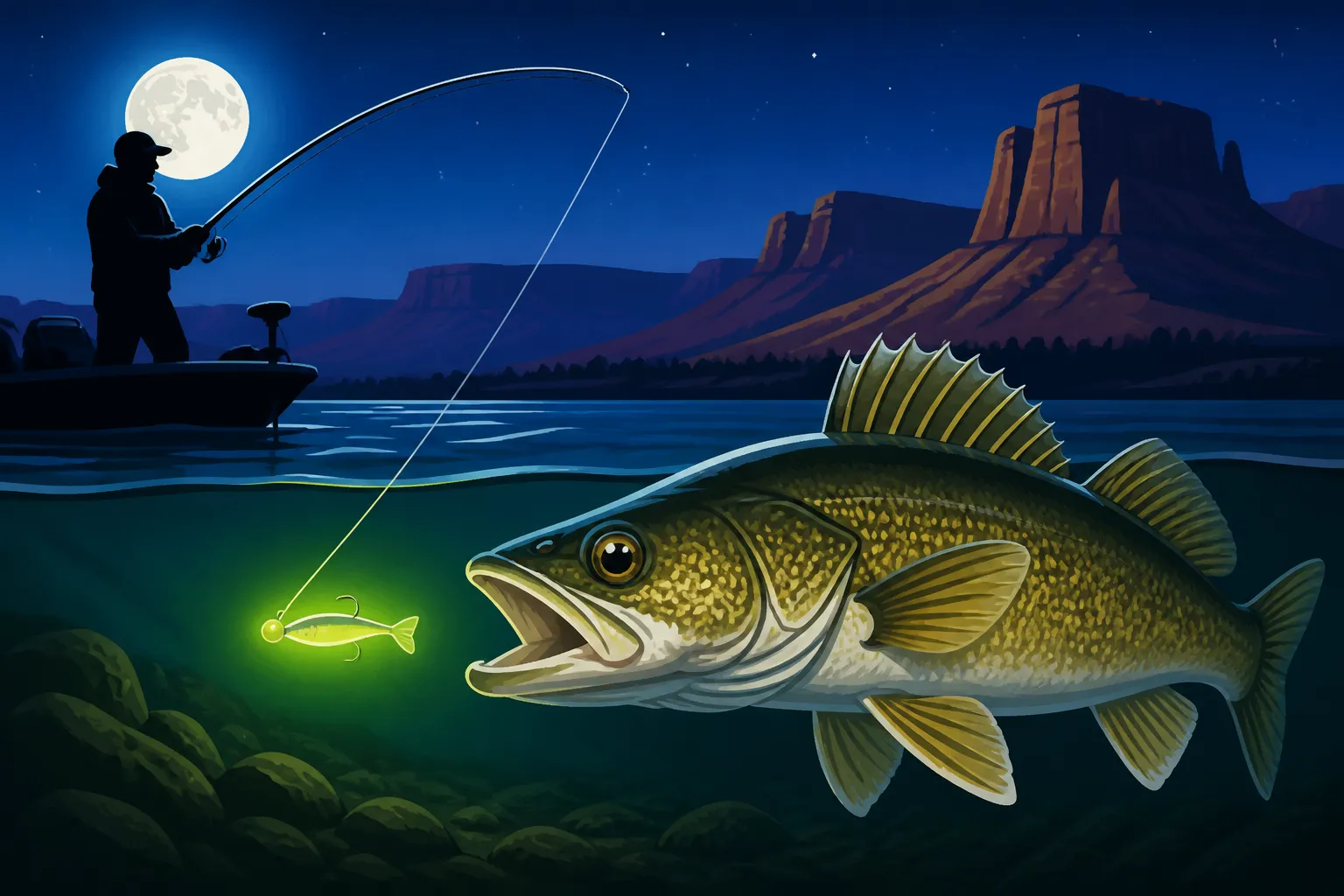
Think about it from a walleye's perspective. Their eyes have a special layer called a tapetum lucidum, which reflects light back through the retina, effectively giving them "night vision." This means that when the sun is high and bright, they're often uncomfortable and will retreat to deeper, darker water or hide in heavy cover. They're not actively hunting; they're just trying to escape the glare. As dusk settles and true darkness descends, this natural adaptation becomes their superpower. They can see baitfish silhouetted against the dim moonlight or even the faint glow of city lights reflecting off the water, while those same baitfish struggle to detect the lurking predator. This is why you'll often find them moving into shallower feeding grounds at night, areas they wouldn't dare visit during peak daylight hours.
This shift in behavior makes them more aggressive and less cautious. They're out to feed, and they're less likely to spook from your boat or your lure presentation. It's not just about comfort; it's about pure predatory efficiency. If you've ever struggled to get a bite during a bright, sunny afternoon, chances are the walleye were simply biding their time, waiting for their advantage to kick in. Understanding this fundamental aspect of their biology is key to unlocking successful night fishing.
Why Anglers Embrace Night Fishing for Walleye
For dedicated walleye anglers, chasing these fish after dark isn't just a strategy; it's a rite of passage and often the most productive time to target them. The solitude of the night, the cool air, and the thrill of a hard strike in the darkness create an entirely different fishing experience. But beyond the ambiance, the results speak for themselves. You'll often find that the walleye you catch at night are larger, more active, and come in greater numbers than their daytime counterparts.
Another huge benefit, especially in popular Utah waters like Utah Lake or Willard Bay, is the reduced pressure. During the day, you might be competing with dozens of other boats, jet skis, and recreational users. At night, the lakes are much quieter, allowing you to focus on your fishing without interruption. This lack of disturbance means the fish are less pressured and more willing to bite. Plus, there's a certain magic to being out on the water under a blanket of stars, feeling connected to nature in a way that daytime fishing often doesn't allow. It becomes a deeply immersive experience where your senses are heightened, and every little tap on the line sends a jolt of excitement through you.
Essential Gear for Your Night Walleye Mission
Stepping out onto the water after dark requires a bit more preparation than your typical daytime outing. It's not just about having the right lures; it's about safety, visibility, and making sure your gear is optimized for low-light conditions. Don't let a lack of proper equipment turn a promising night into a frustrating or even dangerous one.
Rods, Reels, and Line for Low-Light Conditions
When fishing for walleye at night, you're going to want gear that provides sensitivity without being overly fragile. A medium-light to medium power spinning rod, around 6'6" to 7' long, with a fast action tip is often ideal. This allows you to feel those subtle walleye bites, which can sometimes be incredibly light, even when they're aggressive. A fast action tip also ensures a quick, solid hookset. For reels, a good quality spinning reel in the 2500-3000 series will balance nicely with your rod and offer smooth drag performance, which is crucial when fighting a good-sized walleye in the dark.
Regarding fishing line, this is where night fishing truly differs. Visibility is paramount, and standard clear monofilament can be nearly impossible to see. Consider using a low-visibility fluorocarbon leader (around 10-12 lb test) tied to a bright, high-visibility monofilament or braided mainline. The bright main line (think neon green or yellow) is much easier to track with a headlamp, helping you detect bites or see where your line is going, especially if you're trolling or casting. However, it's the fluorocarbon leader that the walleye will see, and its low visibility underwater makes it less likely to spook them. You can find excellent options for all these lines on platforms like Amazon. For more detailed information on line choices, check out our guide on Best Fishing Line for Utah Trout.
Lighting Up Your Setup: Headlamps and Boat Lights
Safety and functionality depend heavily on proper lighting when you're out after dark. A reliable headlamp is your absolute best friend. Look for one with multiple settings, including a red light option. The red light preserves your night vision much better than white light, allowing your eyes to adjust to the darkness when you switch it off. Use white light sparingly, mainly for tying knots, unhooking fish, or navigating short distances. Many anglers carry two headlamps, just in case one fails.
If you're fishing from a boat, navigation lights are not just recommended, they are legally required in Utah. Ensure your boat's red and green bow lights and white stern light are all in working order before you leave the dock. Beyond the legal requirements, having a good quality spotlight or floodlight on board can be incredibly useful for spotting hazards, navigating into unfamiliar coves, or helping locate buoys or markers. Some anglers even use glow sticks or small LED lights clipped to their rods to help detect bites, especially when still fishing with multiple rods. This can make the difference between a missed strike and a landed fish.
Tackle Box Essentials: Lures and Baits for Night Bites
The choice of lures and baits for night fishing walleye often leans towards those that create vibration, sound, or a distinct silhouette. Walleye rely heavily on their lateral line system in low light, so baits that displace water or rattle are highly effective.
| Lure Type | Best Use Case | Key Features for Night Fishing |
|---|---|---|
| Crankbaits | Trolling, casting shallow to medium depths | Rattles, vibrant colors (dark silhouettes), wide wobble |
| Jigs | Vertical jigging, casting, working structure | Scented plastics, glow-in-the-dark, rattles |
| Swim Baits | Casting, slow retrieval, mimicking baitfish | Soft plastic, good tail action, sometimes scented |
| Live Bait Rigs | Still fishing, slow trolling | Walleye, minnows, nightcrawlers (good scent & action) |
| Blade Baits | Vertical jigging, casting | Strong vibration, flash, good for aggressive bites |
For crankbaits, choose models with internal rattles and a good thumping action. Darker colors or those with a stark silhouette (like black, dark blue, or purple) can often be more effective than bright, natural colors because they stand out against the ambient light. Remember, walleye are seeing a silhouette against the water's surface or the dimmer light from above. Some popular brands like Rapala, Berkley, and Bomber offer excellent crankbait options.
Jigs dressed with scented soft plastics are incredibly versatile. Look for plastics that are either dark-colored or glow-in-the-dark. The scent factor becomes even more important at night, as fish may not fully see the bait. Berkley Gulp! Alive! minnows or worms are fantastic choices because they combine scent, action, and can be rigged on a variety of jig heads. For more specific lure recommendations, you might find our article on What Lures Work Best for Utah Lake Walleye After Dark? particularly helpful. When it comes to live bait, things like shiners, fathead minnows, or juicy nightcrawlers fished on a Lindy Rig or a simple slip bobber setup are always reliable, as their natural scent and movement are irresistible.
Finding Those Elusive Walleye After Dark
You can have all the best gear, but if you're not fishing where the walleye are, you won't catch them. Night fishing for walleye often means rethinking your daytime strategies and focusing on key areas where these fish feel comfortable and have a feeding advantage.
Targeting Structure: Where Walleye Ambush Prey
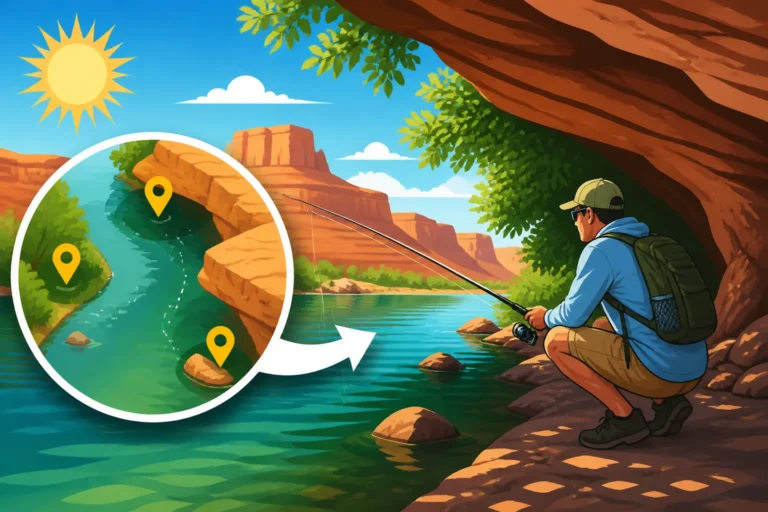
Walleye are ambush predators, and at night, they will move onto specific types of structure to hunt. Unlike the daytime where they might be suspended in open water or deep, during the night, they often move shallower. Look for structural elements that provide a transition from deep water to shallow feeding flats. This could be a rocky point that extends out into the lake, a submerged hump, a rock pile, or the edge of a weed line. These locations offer them cover to hide in and an excellent vantage point to ambush unsuspecting baitfish moving up from deeper water.
Pay close attention to main lake points and saddles between islands, especially if there's rock or gravel present. Walleye will often cruise these areas, using the structure to herd baitfish. Another prime location is the breakline where a shallow flat drops off into deeper water. They'll patrol along this edge, darting up into the shallows to grab a meal. Think about where baitfish would feel safe during the day, and then imagine where they might be vulnerable at night. Often, walleye will move to the shallower side of these structures as they hunt. You can also explore our guide on Utah Lake Walleye Fishing Spots for specific locations.
Reading the Water: Depths and Features
Knowing what depths to target at night is crucial, and it's often shallower than you'd expect during the day. While daytime walleye might hold in 20-40 feet of water, at night, they might be found in as little as 5-15 feet, especially if there's good cover or baitfish present. Their night vision allows them to hunt effectively in these shallower zones without feeling exposed.
Your fish finder is still an invaluable tool, even at night. While you might not be marking dense schools of fish, you can use it to identify those critical depth transitions, submerged humps, and rock formations. Pay attention to changes in bottom composition – a hard, rocky bottom is often preferred by walleye over soft mud. When you find these features, work your lures or bait slowly and methodically over and around them. Mark potential spots with your GPS during the day so you can easily return to them after dark. Look for areas with current, if applicable, as current often concentrates baitfish and, consequently, walleye.
Popular Utah Walleye Waters for Night Angling
Utah offers some fantastic opportunities for night walleye fishing, with a few key waters standing out.
- Utah Lake: This massive, shallow lake is a prime walleye fishery, and night fishing here can be incredibly productive. The lake's naturally turbid water and vast shallow flats make it perfect for nocturnal walleye. Target rocky points, the edges of the dredged channels, and the areas around Provo Boat Harbor. The Utah Lake Walleye Population is robust, providing ample opportunities.
- Willard Bay: Located north of Ogden, Willard Bay is another excellent walleye destination. Known for its strong wiper and walleye populations, the shallow, somewhat turbid waters of Willard Bay become a walleye paradise after dark. Focus on the main dikes and points, especially those with rip-rap.
- Deer Creek Reservoir: While perhaps not as renowned as Utah Lake or Willard for sheer numbers, Deer Creek offers quality walleye and can be good for night fishing, particularly during the warmer months. Look for walleye on rocky main lake points and submerged humps, especially where there's a good transition to deeper water.
- Panguitch Lake: This high-elevation lake is better known for its trout, but it does hold a respectable walleye population. Night fishing here can be a unique experience, with walleye often moving into shallower rocky areas.
Remember that regulations for each water body can vary, so always double-check the current Utah Fishing Regulations Explained before heading out.
Top Night Fishing Techniques for Walleye
Now that you know why and where to fish, let's dive into the how. Different techniques excel at night, each with its own nuances to maximize your chances of success.
Trolling Under the Stars
Trolling is perhaps one of the most effective ways to cover water and find active walleye at night, especially when they're scattered along breaklines or across large flats. The key here is a slow, methodical approach. You're not trying to outrun the fish; you're trying to entice them with a consistent, appealing presentation.
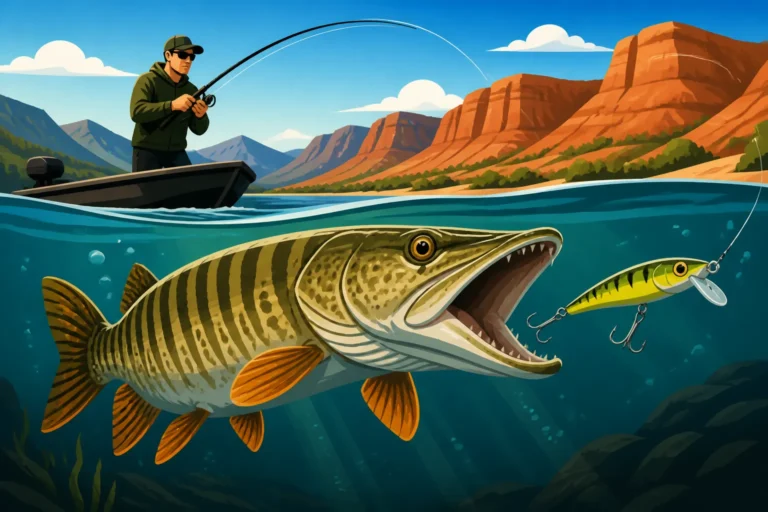
Most anglers prefer to troll crankbaits at night. As mentioned earlier, choose crankbaits with rattles and a good thumping action. Darker colors or those with UV finishes can be particularly effective. Experiment with different diving depths to match the fish's location. If you're marking baitfish or structure at a certain depth on your fish finder, try to get your crankbait running just above that. Speed is crucial: a slow troll, often between 0.8 and 1.5 mph, is generally best. This allows the fish plenty of time to react and strike. Using planer boards can help spread out your lines and cover a wider swath of water, but in the dark, they require a bit more attention to avoid tangles. Many anglers simply use multiple rod holders with different diving baits off the stern. Don't be afraid to experiment with slight speed changes or S-turns; these variations can trigger strikes.
Jigging and Casting After Sundown
When walleye are concentrated on specific structures like humps, rock piles, or steep breaks, jigging and casting can be incredibly productive. This is a more active approach that allows you to present your lure directly to where you believe the fish are holding.
For jigging, consider vertical jigging over those identified structural elements. Use a jig head (1/8 to 3/8 ounce, depending on depth and current) tipped with a scented soft plastic minnow, grub, or a live minnow. Glow-in-the-dark jigs can be very effective, giving walleye a visual target in the darkness. Work your jig with short, sharp lifts, allowing it to fall back on a semi-slack line. Many walleye strikes happen on the fall, so pay close attention. When casting, target rocky shorelines, points, or the edges of weed beds. Cast crankbaits, swimbaits, or even weedless jigs with plastics, retrieving them slowly. The slow retrieve allows the fish to track the lure and commit to a strike. Make sure your casting setup allows you to feel those subtle bumps and taps; a good quality rod and sensitive line are essential. The article on How to Rig a Jig for Utah Trout can offer some transferable tips for jigging techniques.
Still Fishing with Bait: A Classic Nighttime Strategy
Sometimes, the simplest approach is the best, and still fishing with live bait remains a highly effective method for night walleye. This technique is particularly good when the fish are less active, or you want to fish multiple spots simultaneously.
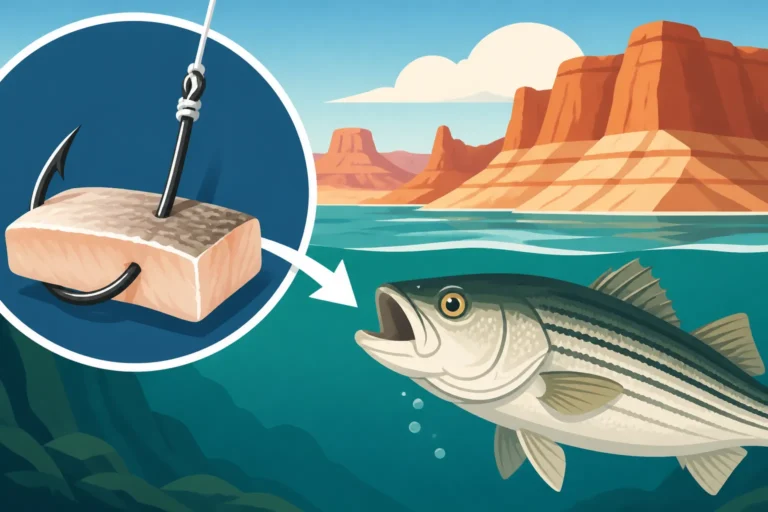
A classic setup involves a slip bobber rig. This allows you to set your bait at a precise depth, which is fantastic for targeting walleye suspended over a specific depth contour or just off the bottom. Use a live minnow or a juicy nightcrawler on a small hook (size 4 to 2, depending on bait size). The natural movement and scent of live bait are often irresistible to walleye. You can also fish a simple bottom rig with a weight and a snelled hook, especially if you know the walleye are hugging the bottom around structure. Position your boat quietly and deploy several rods, each at a slightly different depth or location, to find the fish. Keep your rod tips pointing towards the water, and use glow sticks or small clip-on lights to easily see when a walleye takes your bait. This passive method can be surprisingly effective, giving the fish ample time to find and eat your offering. Just be sure to always monitor your lines and be ready for that gentle "tick" that signals a bite.
Safety First: Important Considerations for Night Fishing
Fishing at night in Utah's lakes and reservoirs can be incredibly rewarding, but it also comes with increased risks. Prioritizing safety is paramount, not just for you but for anyone else on the water. A successful trip is always a safe trip.
Navigation and Visibility
Operating a boat or even wading in the dark demands extra caution. If you're in a boat, ensure all your navigation lights (red/green bow, white stern) are fully functional before you even leave the launch. It's not just a legal requirement; it's vital for preventing collisions. Carry extra batteries for all your lights, including your headlamp and any auxiliary lights. A powerful handheld spotlight is an excellent addition for identifying buoys, shorelines, or potential hazards that might otherwise go unnoticed. Always travel at a slower speed than you would during the day, especially in unfamiliar waters or areas with known obstacles.
If you're fishing from shore or wading, wear reflective clothing or carry a small light to make yourself visible to any passing boaters or other anglers. Even on foot, a good headlamp is non-negotiable for navigating rocky terrain or uneven ground. Remember, your eyes take time to adjust to the dark, and depth perception is significantly reduced, so take every step carefully.
Weather and Emergency Preparedness
Utah weather can be unpredictable, and conditions can change rapidly, especially on larger bodies of water. Always check the forecast thoroughly before planning a night trip, and be prepared for sudden shifts. A calm evening can quickly turn windy, creating choppy conditions that are far more challenging and dangerous to navigate in the dark. Carry appropriate layers of clothing, even in summer, as temperatures can drop significantly after sundown.
Beyond weather, it's crucial to have a fully charged cell phone (in a waterproof bag!), a marine radio (VHF) if you're on a larger boat, and a first-aid kit. Let someone know where you're going and when you expect to return. This "float plan" is a simple but critical safety measure. Ensure your boat has all the legally required safety equipment, such as life jackets for everyone on board, a throwable flotation device, a whistle or horn, and a fire extinguisher. You can review all the essentials in our guide to Utah Boat Registration and Safety Gear. An emergency beacon or satellite messenger is also a wise investment for remote locations.
Bug Control and Comfort
Nothing ruins a peaceful night of fishing faster than being swarmed by mosquitoes or other biting insects. Bug spray is an absolute must. Look for products with DEET or picaridin for effective protection. Consider wearing long sleeves and pants, even if it's warm, to minimize exposed skin. Some anglers even bring mosquito coils or battery-powered insect repellents for their boat or fishing area.
Comfort is key to enjoying your time on the water. Bring a comfortable seat cushion if you'll be sitting for extended periods. A thermos with hot coffee or tea can be a lifesaver on cooler nights, and plenty of water is essential regardless of the temperature. Pack snacks, and consider bringing a small, soft-sided cooler to keep them fresh. Remember, you'll be out there for several hours, possibly into the early morning, so being comfortable will allow you to focus on the fishing rather than external distractions.
Post-Catch Care and Regulations
Successfully landing a walleye at night is a thrill, but the job isn't done until you've properly handled your catch and ensured you're complying with all of Utah's fishing regulations. Responsible angling includes knowing the rules and practicing good fish care.
Handling Walleye in the Dark
Walleye have sharp dorsal fins and often gill plates, so handling them, especially in the dark, requires extra caution. Always have a good pair of fishing pliers (long-nosed are best) readily accessible for hook removal. A headlamp is indispensable for seeing what you're doing. If you plan to release fish, handle them as little as possible. Wet your hands before touching the fish to protect its slime coat, and cradle it gently. Use the pliers to quickly remove the hook, and support the fish horizontally in the water until it swims away under its own power.
If you intend to keep your catch, a sturdy landing net is invaluable for safely bringing the fish into the boat. Once landed, dispatch the fish quickly and humanely. A fish bonker can do the job effectively. Immediately place the fish on ice in a cooler. This is crucial for maintaining the quality and freshness of the meat. Leaving fish in a livewell without proper chilling, or simply laying them on the deck of the boat, will quickly degrade their quality, especially on warmer nights. Proper icing is key to delicious walleye fillets.
Understanding Utah Walleye Harvest Rules
Before you even cast your first line, it is absolutely vital to know and understand the specific fishing regulations for the waterbody you are fishing. Utah's walleye regulations, including daily bag limits and size restrictions, can vary significantly from one lake to another. For example, the Utah Walleye Daily Limit at Utah Lake might be different from that at Deer Creek or Willard Bay. There might also be specific slot limits, where you can only keep fish within a certain size range, or specific harvest quotas for certain species.
Always consult the current Utah Fishing Guidebook, available online from the Utah Division of Wildlife Resources (UDWR) or at most sporting goods stores. Pay close attention to any changes for the current year. Ignorance of the law is not an excuse, and violations can result in hefty fines and even loss of fishing privileges. It's also a good idea to refresh your knowledge on Utah Fishing Regulations Explained periodically. Being a responsible angler means not only knowing how to catch fish but also knowing how to protect the resource for future generations.
Disclaimer
The information provided in this guide is for general informational purposes only and is subject to change. Always consult the most current Utah Fishing Guidebook and local regulations published by the Utah Division of Wildlife Resources (UDWR) before engaging in any fishing activities. Fishing conditions and regulations can vary significantly by location and time of year. Safety should always be your top priority when fishing, especially at night.