Utah Boat Registration and Safety Gear
There’s nothing quite like the feeling of hitting the open water in Utah, whether you're chasing trophy trout at Flaming Gorge, exploring the vastness of Lake Powell, or simply enjoying a peaceful afternoon on a local reservoir. But before you cast off, the reality of boat registration and safety gear can feel like navigating a complex maze. It’s easy to get frustrated with all the rules and requirements, wondering if you’ve got everything just right. This comprehensive guide is here to cut through the confusion, offering a clear, step-by-step breakdown of what you need to know to register your boat and ensure you’re properly equipped for a safe and legal outing on Utah's beautiful waters.
Understanding Utah Boat Registration – It's More Than Just a Sticker
Many folks think boat registration is just a formality, a quick sticker and you’re good to go. But in Utah, it's an important part of ensuring accountability on our waterways and contributing to the conservation efforts we all benefit from. Ignoring it can lead to some real headaches and even fines. Let’s demystify the process so you can focus on the fishing, not the paperwork.
Who Needs to Register a Boat in Utah?
This is where many people get tripped up. The general rule of thumb in Utah is that any vessel propelled by machinery, regardless of size, must be registered. That means if your canoe has a small trolling motor, or your kayak is equipped with a battery-powered propeller, you're going to need to register it. It’s not just for those big bass boats or cabin cruisers. This includes personal watercraft (PWCs) like jet skis, too. The good news is that purely wind-powered sailboats, rowboats, kayaks, canoes, and stand-up paddleboards that rely solely on human power typically don't need to be registered. However, even if your vessel doesn't require registration, it's still absolutely essential to be aware of and comply with all safety regulations, especially regarding personal flotation devices. Don't assume that because your paddleboard doesn't need a sticker, it doesn't need a life jacket for everyone on board! It's a common oversight that can lead to dangerous situations.
The Registration Process: Step-by-Step
Navigating the bureaucracy can feel a bit like trying to land a lunker on ultralight tackle – a challenge! But once you know the steps, it's manageable. First off, you'll need proof of ownership. This typically means a title or a bill of sale. If you bought your boat new from a dealership, they'll usually help you with the initial paperwork. For a used boat, make sure you get a clean title, properly signed over. Then, you'll head to a local Division of Motor Vehicles (DMV) office. You'll fill out an application, provide your proof of ownership, and pay the applicable fees. These fees can vary depending on the length and type of your vessel, and they're crucial for supporting Utah's boating programs and facilities. It's always a good idea to check the Utah State Parks and Recreation website before you go to make sure you have all the most current forms and know what documents to bring. They'll issue you a registration card, and importantly, the decals you need to display on your boat. Remember, these decals aren't just decorative; they're your proof of legal operation on the water. Many anglers find the whole process a bit cumbersome, but it's a necessary step to protect our shared resources. For more on this, check out Cost to Register a Boat in Utah.
Keeping Your Registration Current: Renewals and Transfers
Just like your car, your boat registration isn't a one-and-done deal. It needs to be renewed annually. You'll typically receive a renewal notice in the mail, but it's ultimately your responsibility to ensure it's renewed on time. Missing the renewal deadline can lead to penalties and interrupt your fishing plans. You can usually renew online, by mail, or in person at a DMV office. If you're planning to sell your boat, transferring the registration properly is crucial for both the seller and the buyer. Make sure the title is signed off correctly and the new owner understands their responsibility to re-register the vessel in their name. If you lose your registration card or decals, don't panic! You can typically request replacements through the DMV, but it's better to avoid that extra hassle by keeping your documents in a safe, waterproof place on your boat or stored securely at home. A lot of seasoned anglers will tell you they keep a digital copy on their phone too, just in case, which is a smart move.
Essential Safety Gear: Non-Negotiables for Every Utah Boater
Okay, now let's talk safety – and this isn't just about avoiding a ticket, it's about making sure you, your family, and your friends come home safe after a great day on the water. Utah's waters can be unpredictable, especially those vast reservoirs like Lake Powell or Flaming Gorge, where weather can change rapidly. Having the right safety gear isn't optional; it's absolutely critical.
Personal Flotation Devices (PFDs)
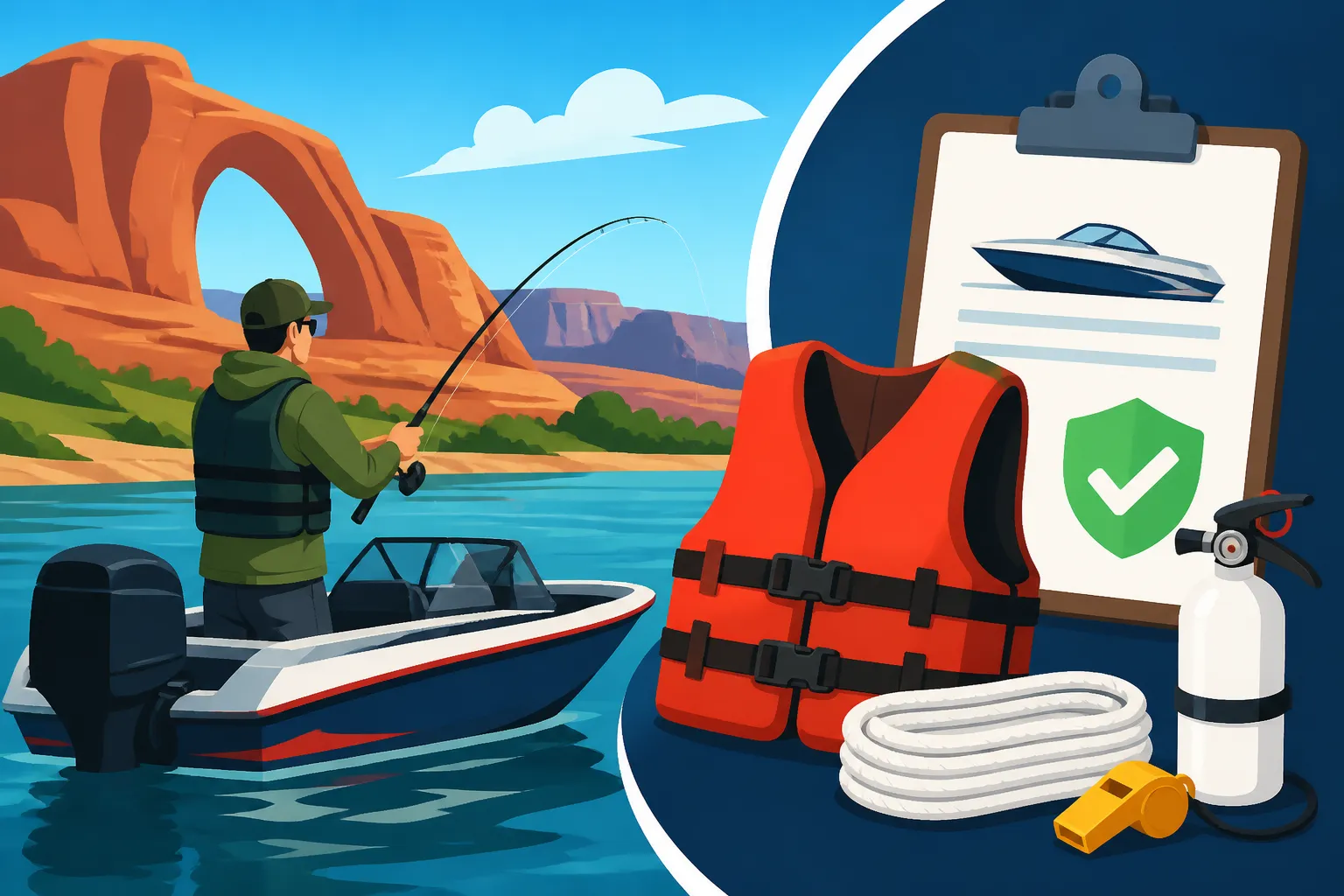
This is perhaps the most important piece of safety gear you'll ever own, and it's a common point of contention and confusion for many boaters. In Utah, you must have a U.S. Coast Guard-approved PFD for every person on board your vessel. And here's the kicker that often gets overlooked: kids 12 years old and younger must wear a PFD at all times when a vessel is underway. It’s not enough to just have it on board for them; it has to be on them. For adults, it's recommended to wear them, especially in rough water or if you're not a strong swimmer, but the legal requirement is just to have them readily accessible.
Choosing the right PFD is also important. There are different types, each suited for various activities. A Type I is for offshore, providing maximum buoyancy and designed to turn an unconscious person face-up. Type II is near-shore, still good but less buoyant. Type III is a flotation aid, comfortable for continuous wear, popular for fishing and watersports, but might not turn an unconscious person over. Type IV is a throwable device, like a cushion or ring buoy, and while you usually need at least one of these on boats 16 feet or longer, it's not a substitute for wearable PFDs. Finally, Type V are special-use devices, like those inflatable vests, but they often have conditions for use. Make sure your PFDs fit properly – not too loose, not too tight – and are in good, serviceable condition. Rips, tears, or broken straps render them useless. You can find a huge selection at places like Bass Pro Shops or even on Amazon, but always double-check they're Coast Guard approved. For a deep dive into PFD requirements, look up Life Jacket Requirements on a Utah Boat and How Many Life Jackets You Need on a Utah Boat.
Visual and Audible Distress Signals
Imagine you're out on Strawberry Reservoir, the sun is setting, and suddenly your engine sputters and dies. Or you're caught in an unexpected squall on Bear Lake. How do you signal for help? That's where distress signals come in. Every vessel needs to carry an audible signaling device like a whistle, horn, or bell. For boats 16 feet or longer, visual distress signals are also required. These can include flares (which have expiration dates, so check them!), orange distress flags, or an electronic visual distress signal (EVDs).
Flares come in various forms – handheld, aerial, or smoke signals – and each has its specific use. Aerial flares are great for nighttime and signaling over long distances, while smoke flares are highly visible during the day. It's crucial to know how to deploy them safely and effectively. Keep them in a waterproof container, easily accessible, and make sure everyone on board knows where they are and how to use them. An often-forgotten item is a simple mirror, which can be surprisingly effective for signaling over long distances on a sunny day. The key is to be prepared for the unexpected, because out on the water, help can sometimes be a long way off.
Fire Extinguishers and Ventilation
Fires on boats are rare, but when they happen, they can be devastating. That's why fire extinguishers are a mandatory piece of safety equipment for most motorized vessels in Utah. The size and number of extinguishers required depend on the length of your boat and whether it has an enclosed engine compartment. Generally, you'll need a marine-rated, B-I type extinguisher.
Placement is critical: they need to be easily accessible, not buried under a pile of gear. Check your extinguisher's gauge regularly to ensure it's still charged, and know how to use it. Beyond the extinguisher, proper ventilation is essential for preventing fires and explosions, especially in boats with enclosed engine spaces or fuel tanks. Fumes from gasoline are heavier than air and can accumulate in low spots, creating a highly volatile environment. Many boats have blowers to vent these fumes before starting the engine. Always run your blower for several minutes before starting your engine and after fueling to clear out any dangerous vapors. It’s a small step that can prevent a catastrophic event.
Navigational and Operational Safety – Beyond the Basics
Being a safe boater goes beyond just having the right gear; it's also about knowing how to operate your vessel responsibly and how to navigate the waters you're on. This is where experience and good habits really shine, and frankly, it's what makes for a much more enjoyable and stress-free day on the lake.
Lights for Night Operations
If you plan to be on the water between sunset and sunrise, or during periods of restricted visibility (like fog or heavy rain), proper navigation lights are an absolute must. Without them, you're practically invisible to other boaters, which is a recipe for disaster. Different types of boats have slightly different requirements, but the general principle is the same: you need to display a masthead light (white, shining 360 degrees), sidelights (red for port/left, green for starboard/right), and a stern light (white, shining 135 degrees astern).
The purpose of these lights is twofold: to make your boat visible to others and to help other boaters understand your direction of travel. Knowing what a red light, a green light, or a combination of lights means on another vessel is fundamental to avoiding collisions. Always check your lights before heading out in low light conditions, and carry spare bulbs if possible. A lot of seasoned anglers will tell you they’ve seen too many close calls because someone didn’t have their lights on or they weren’t working. Don’t be that person.
Anchors and Docking Lines
An anchor might seem simple, but it’s a critical tool for everything from holding your position over a prime fishing spot to preventing your boat from drifting into danger if you lose power. Having the right size and type of anchor for your boat and the bottom conditions (mud, sand, rock) is important. A Danforth-style anchor is popular for soft bottoms, while a grappling anchor is good for rocky areas.
Equally important is having enough anchor rode (the line connected to the anchor). A general rule of thumb is to have at least 7:1 scope – meaning seven feet of rode for every one foot of water depth. This ensures the anchor sets properly and holds firm. Beyond anchoring, good quality docking lines are essential for securing your boat to a dock, buoy, or even another vessel. Have at least two lines, one for the bow and one for the stern, and make sure they are long enough and strong enough for your boat's size. Knowing basic knots like a cleat hitch or bowline can save you a lot of grief.
Fuel System Safety and Spill Prevention
Handling fuel on a boat is not like filling up your car. The confined spaces and potential for fumes mean extra precautions are necessary. Always turn off your engine and any electrical accessories before fueling. Don't smoke, and ensure there's good ventilation. Overfilling can lead to spills, which are not only an environmental hazard but also a slip hazard on your deck.
If you do have a spill, even a small one, clean it up immediately with absorbent pads. Never discharge bilge water that contains oil or fuel into the lake. Many boats come equipped with fuel/water separators to prevent water from contaminating your fuel, and regularly checking and draining these is a good practice. Maintaining your fuel lines, connections, and fuel tanks can prevent leaks, which are both dangerous and costly. Being responsible with fuel means protecting our precious Utah waterways from pollution.
Specialized Gear for Utah's Unique Waters and Challenges
Utah’s diverse fishing environments, from high-mountain lakes to vast desert reservoirs, present their own specific challenges. Having some specialized gear and knowledge can make all the difference between a frustrating trip and a fantastic one.
Aquatic Invasive Species (AIS) Protocols
This is a huge one in Utah, and it's not just a suggestion – it's law. Aquatic Invasive Species, like quagga mussels, pose an enormous threat to our waterways, ecosystems, and infrastructure. They can hitch a ride on your boat, trailer, or even your fishing gear. Because of this, Utah has strict "Drain, Clean, Dry" protocols for all vessels leaving certain waters, and mandatory inspection stations, especially when leaving places like Lake Powell.
When you pull your boat out of the water, you must drain all water from the ballast tanks, live wells, and engine. Then, clean your boat by removing any visible plants, mud, or debris. Finally, and crucially, you must dry your boat completely. This often means specific dry times, which can be considerable, especially after leaving an infested water body. You might be directed to an inspection station or even require a professional decontamination. Ignoring these rules isn't just irresponsible; it carries stiff penalties. We all have a part to play in protecting our beautiful lakes and rivers from these damaging invaders. For more specific details, check out Utah Aquatic Invasive Species Inspection Stations and Utah Quagga Mussel Decontamination Cost.
Cold Water and Weather Preparedness
Even on a sunny summer day, Utah's mountain lakes and reservoirs can turn dangerously cold in a hurry, especially at higher elevations or with sudden weather shifts. Hypothermia is a real risk. Always dress in layers, even in warmer months, and bring extra clothing stored in dry bags. Non-cotton materials like wool or synthetics are much better at insulating when wet.
It's also wise to have emergency blankets or bivvy sacks on board, particularly if you're venturing far from shore or into remote areas. Keep an eye on the weather forecast, but also be prepared for sudden changes. A clear morning can quickly turn into an afternoon thunderstorm with high winds and choppy water. Having a marine radio or satellite communication device can be a lifesaver if you find yourself in trouble without cell service. Think about what would happen if your boat broke down in the middle of a big lake in a sudden storm – that extra warm jacket or emergency kit suddenly becomes priceless.
Navigation Aids and Charts for Reservoirs
While many of us rely on our phones for navigation in daily life, relying solely on a cell signal on large reservoirs or in canyons can be a mistake. Dedicated GPS units, especially those with marine charting capabilities, are incredibly valuable. They allow you to mark waypoints for fishing spots, track your route, and most importantly, identify hazards like submerged rocks, shallow areas, or rapid depth changes.
Paper charts are also a fantastic backup, especially if your electronics fail or your battery dies. Familiarize yourself with the specific features of the water body you'll be fishing. Know where the boat ramps are, where fuel might be available, and any restricted areas. Many reservoirs, especially those with fluctuating water levels, can hide dangerous obstacles. A good fish finder can also serve as an invaluable navigation aid, showing you not just fish, but also bottom contours and potential hazards. Knowing your way around the water adds a huge layer of safety and confidence to your boating experience. If you’re considering a new unit, take a look at Best GPS Units for Marking Utah Fishing Spots.
Common Violations and How to Avoid Them
Nobody wants their fishing trip ruined by a run-in with law enforcement, and ignorance of the rules is never a valid excuse. Understanding common boating violations in Utah can help you steer clear of trouble and ensure your day on the water is safe and enjoyable for everyone.
Missing or Expired Registration
This is one of the easiest violations to commit and one of the most frustrating to get a ticket for. It simply means you haven't registered your boat at all, or your annual registration has expired. As we discussed, every motorized vessel needs current registration and visible decals. Law enforcement on the water, whether it's the Utah Division of Wildlife Resources (DWR) or local sheriff's patrols, will check for this.
The consequences for a missing or expired registration can range from a significant fine to having your boat impounded. It’s a completely avoidable problem! Mark your renewal date on your calendar, sign up for email reminders if available, and perform a quick check of your boat's decals before every season. Keep your physical registration card in a waterproof pouch on your boat or on your person, and consider having a digital copy on your phone as backup. Don't let a simple administrative oversight ruin your day.
Insufficient or Improper Safety Gear
This is another big one, and it's less about avoiding a fine and more about saving lives. Common violations include not having enough PFDs for everyone on board, PFDs that are not Coast Guard-approved, or PFDs that are in poor condition (torn, waterlogged, etc.). As a reminder, children 12 and under must be wearing a PFD when the boat is underway.
Other frequently overlooked items include expired flares, missing audible signaling devices (a simple whistle is often enough for smaller boats!), or an uncharged/missing fire extinguisher. Law enforcement often performs safety checks, and they will meticulously go through your required gear. Not only can you receive a citation, but more importantly, these deficiencies could put you and your passengers at serious risk in an emergency. Make it a habit to check your safety gear before every trip, not just once a year. Think of it as your pre-flight check, because once you're out there, you're responsible. For details on all requirements, see Boat Safety Equipment Required in Utah.
Boating Under the Influence (BUI)
Just like driving a car, operating a boat under the influence of alcohol or drugs is illegal and incredibly dangerous. Utah has a zero-tolerance policy for BUI, meaning strict penalties apply. Alcohol impairs judgment, slows reaction time, and can exacerbate the effects of sun, wind, and waves – often called "boater's fatigue." This significantly increases the risk of accidents, injury, or even death.
If you're caught operating a boat while impaired, you can face severe fines, loss of boating privileges, and even jail time. Your fishing trip isn't worth putting yourself or others at risk. Designate a sober operator, or simply save the alcoholic beverages for after you've safely returned to shore. It's not just about obeying the law; it's about making a responsible choice to ensure everyone has a safe and enjoyable time on Utah’s beautiful waters.
Where to Acquire Your Gear and Stay Informed
So, you know what you need – now, where do you get it? And how do you stay updated on all the ever-changing rules and best practices? It's easier than you might think to arm yourself with the right knowledge and equipment.
Retailers for Boat and Safety Equipment
When it comes to outfitting your boat with the necessary gear, you've got several excellent options. For a comprehensive selection of marine electronics, safety gear, and general boating accessories, larger outdoor retailers are often your best bet. Places like Bass Pro Shops, with their extensive marine departments, usually have everything from PFDs and anchors to fire extinguishers and first-aid kits. They often have knowledgeable staff who can help you ensure you’re getting U.S. Coast Guard-approved equipment.
Don't overlook online retailers either. Amazon offers a vast selection of boating gear, often with competitive pricing and the convenience of home delivery. However, when purchasing online, always double-check that safety equipment, especially PFDs and flares, meets the necessary certifications and hasn't expired. For more specialized items or local advice, smaller, independent marine supply stores can be invaluable. They often cater to local needs and can provide tailored recommendations based on the specific waters you fish in Utah. Regardless of where you buy, prioritize quality and ensure compliance with all state and federal regulations.
Boating Education and Resources
Getting on the water isn't just about having a boat; it's about knowing how to operate it safely and courteously. Boating education courses are an invaluable resource, especially for new boaters or those looking to brush up on their skills. Many states, including Utah, require boaters of a certain age to complete a boating education course. These courses cover everything from navigation rules and hazard avoidance to emergency procedures and legal requirements.
You can often find approved courses offered through organizations like the U.S. Coast Guard Auxiliary, the U.S. Power Squadrons, or through online providers. The Utah State Parks website is also a fantastic hub for information, offering official boating handbooks, regulations, and links to approved education providers. Remember, knowledge is power, and in boating, it's also safety. Taking a course not only makes you a safer boater but can also sometimes qualify you for discounts on boat insurance. For details, check out Utah Boater Education Course Requirement.
Pre-Trip Checklists for Peace of Mind
Even the most experienced boaters can forget something from time to time, and that's why pre-trip checklists are so incredibly valuable. Before every single outing, take a few minutes to run through a mental (or even physical) checklist of essential items and checks. This isn't just about avoiding a ticket for missing gear; it's about preventing frustrating breakdowns, ensuring you have enough fuel, and confirming all safety equipment is in place and functioning.
Your checklist should include things like: checking the weather forecast, ensuring all PFDs are on board and in good condition, verifying navigation lights work, checking fuel levels, testing the bilge pump, making sure registration is current, and confirming you have your fishing license. For longer trips, you might add checks for engine fluid levels, prop condition, and battery charge. Making this a routine habit reduces stress and ensures you can fully enjoy your time on the water, knowing you've done everything you can to be prepared.
Understanding Different Vessel Types and Their Specific Needs
Utah's waterways are a mosaic of fishing opportunities, from the vast expanses of Lake Powell to intimate mountain streams and community ponds. Anglers use everything from fully equipped bass boats to simple kayaks. While core safety principles apply to all, different vessel types have unique operational characteristics and specific requirements you need to be aware of.
Powerboats and PWC (Personal Watercraft)
Powerboats, whether they're a fishing machine or a family runabout, generally have the most stringent registration and safety requirements due to their speed and potential for impact. This means ensuring your registration is up-to-date and your vessel displays the proper numbers and decals. Speed limits are crucial, especially in no-wake zones near shore, marinas, or congested areas. For larger boats, understanding rules of navigation like right-of-way is paramount to avoiding collisions.
Personal Watercraft (PWCs), often called jet skis, have additional specific regulations in Utah. Operators are often required to wear a PFD at all times, regardless of age. There are typically age restrictions for operating PWCs, and often specific times of day or areas where they can and cannot be operated. PWCs are highly maneuverable, and while incredibly fun, they require extra vigilance to prevent accidents, especially with swimmers or other slower-moving vessels. Always be aware of your surroundings and give plenty of space to other water users.
Kayaks, Canoes, and Paddleboards
These human-powered vessels are increasingly popular in Utah, offering a quiet, intimate way to experience our waters and access hard-to-reach fishing spots. The good news is that if they are solely propelled by human power (paddles, pedals), they typically do not require registration in Utah. This is a common point of confusion; Do Kayaks Need to Be Registered in Utah? and Do Paddleboards Need to Be Registered in Utah? confirm this.
However, "no registration" absolutely does not mean "no safety rules." You still need to have a U.S. Coast Guard-approved PFD on board for every person. For youth 12 and under, that PFD must be worn. Additionally, if you're out between sunset and sunrise, you need to display a white light (like a headlamp or handheld lantern) visible from all directions to warn other boaters of your presence. While smaller vessels are generally safer from high-speed collisions, they are more susceptible to wind, waves, and tipping. Always consider the conditions and your skill level before venturing out, especially on large, open waters.
Sailboats and Other Non-Motorized Vessels
Sailboats, whether small dinghies or larger cruisers, operate under a different set of principles, primarily relying on wind power. Like kayaks and canoes, purely wind-powered sailboats typically don't require registration in Utah. However, if a sailboat has an auxiliary motor (even a small electric trolling motor), it will likely need to be registered, similar to other powerboats.
Safety gear requirements for sailboats are largely the same as for other vessels: PFDs for everyone, audible signaling devices, and navigation lights if operating at night. Understanding the "rules of the road" for sailboats, including right-of-way when encountering powerboats or other sailboats, is crucial. Their movements are often dictated by wind direction, which can be less predictable than a motor. For any non-motorized vessel, whether it's a drift boat on the Green River or a rowboat on a small pond, the emphasis remains on personal safety, awareness of conditions, and carrying the essential gear to call for help if needed.
| Item Category | Specific Item | Requirement (Utah) | Key Safety Tip | Where to Find It (Examples) |
|---|---|---|---|---|
| Registration & Admin | Boat Registration | Required for all motorized vessels | Keep current; display decals clearly; carry registration card. | DMV, Utah State Parks Online |
| Fishing License | Required for anglers 12 and older | Have it on you or on your phone; check endorsements. | Utah Fishing License Guide | |
| Personal Safety | PFD (Life Jackets) | 1 per person on board; kids 12 and under MUST wear. | Ensure proper fit & condition; choose type appropriate for activity. | Bass Pro Shops, Amazon, Local Outfitters |
| Distress Signals | Audible Device | Whistle, horn, bell required for all vessels. | Easily accessible; teach everyone how to use it. | Marine supply stores, Amazon |
| Visual Distress Signals | Required for boats 16ft+ (flares, flag, EVD). | Check expiration dates (flares); keep dry & accessible. | Bass Pro Shops, Outdoor Retailers | |
| Fire Safety | Fire Extinguisher | Required for most motorized vessels. | Check charge gauge; know how to operate; accessible. | Marine supply stores, Hardware stores |
| Navigation & Operations | Navigation Lights | Required sunset-sunrise or in restricted visibility. | Check functionality before each low-light trip; carry spares. | Marine supply stores, Online |
| Anchor & Rode | Recommended for all boats; appropriate size/type. | Use proper scope (7:1); inspect line for wear. | Bass Pro Shops, Marine supply stores | |
| Dock Lines | Recommended for all boats; at least 2 lines. | Learn basic knots; ensure adequate length and strength. | Bass Pro Shops, Outdoor Retailers | |
| Environmental | AIS Compliance | Drain, Clean, Dry boat/gear; mandatory inspections. | Know the rules for specific waters; dry thoroughly. | Utah DWR website, Inspection Stations |
| Emergency Prep | First-Aid Kit | Highly recommended for all vessels. | Keep stocked; waterproof container; know basic first aid. | Pharmacies, Outdoor stores, Amazon |
| Toolkit | Recommended for minor repairs. | Basic tools (pliers, screwdriver, tape, spare parts). | Hardware stores, Auto parts stores |
Disclaimer
This article is for general informational purposes only and does not constitute professional advice. Laws, prices and regulations vary by location and change over time. Consult a qualified professional for guidance on your specific situation.