Best Month for Smallmouth Bass Fishing in Utah
It’s a common dilemma for us anglers in Utah: you’ve heard the whispers about incredible smallmouth bass fishing, but trying to pinpoint the absolute "best" time can feel like a guessing game with a thousand variables. Well, friend, you're not alone in feeling that frustration! This comprehensive guide will break down the seasonal behaviors of smallmouth bass across Utah’s diverse waters, helping you understand precisely when and where to cast your line for a truly memorable catch.
Understanding the Smallmouth Bass Annual Cycle in Utah
Smallmouth bass, often referred to as "bronzebacks" or "brown bass," are exhilarating to catch. They're aggressive fighters, known for their powerful runs and aerial acrobatics. However, their behavior is intimately tied to water temperature and their reproductive cycle. Knowing these key phases is your secret weapon to timing your trips perfectly, rather than just hoping for the best.
Water Temperature is Key to Smallmouth Activity
Think of water temperature as the smallmouth bass's internal clock. It dictates everything from their metabolism to their hunger levels and where they prefer to hang out. Unlike some other species that might tolerate wider swings, smallmouth are particularly sensitive to temperature changes, especially when it comes to feeding and spawning.
In early spring, when the ice just comes off the reservoirs, the water is frigid, often in the low 40s Fahrenheit. At these temperatures, smallmouth are lethargic, holding tight to deep structure and barely moving. They're still there, but they're not actively feeding much. As the sun gets higher and the days lengthen, the water gradually warms, creeping into the high 40s and 50s. This is when their metabolism starts to pick up, and they begin to move shallower, seeking out warmer pockets of water where they can forage for an easy meal. During the peak of summer, when water temperatures can soar into the 70s and even low 80s, smallmouth will often seek deeper, cooler water during the hottest parts of the day, moving shallower during dawn and dusk. Understanding these thermal preferences is paramount to finding them.
Pre-Spawn, Spawn, and Post-Spawn Behavior
The smallmouth bass's year can largely be divided into three crucial periods related to their spawning cycle. Each phase presents unique opportunities and challenges for anglers.
The pre-spawn period is often considered one of the best times to target big smallmouth. This usually occurs from late April through May, as water temperatures rise from the low 50s into the low 60s Fahrenheit. During this time, smallmouth are migrating from their deeper wintering grounds to shallower rocky areas. They are hungry, actively feeding to build up energy reserves for spawning, making them very aggressive. They'll readily hit a variety of baits and lures, often found patrolling points, rocky humps, and submerged timber in 10-25 feet of water, though sometimes shallower if the sun has warmed the flats.
The spawn itself typically happens when water temperatures consistently hold between 60 and 68 degrees Fahrenheit, which in Utah is usually late May through mid-June, depending on the elevation and specific water body. During this intense period, males move to even shallower water, often less than 10 feet deep, to fan out nests on gravel or rocky bottoms. They guard these nests fiercely. While it's possible to catch them during the spawn, many anglers, myself included, practice catch-and-release with extreme care during this sensitive time to allow the fish to successfully reproduce. Repeatedly pulling males off their nests can lead to predators eating the eggs or fry, severely impacting future populations. This is also a time when you might encounter specific Utah Bass Fishing Regulations that limit harvest.
Immediately following the spawn is the post-spawn phase, usually mid-June through early July. This can be a tricky time. Female smallmouth are exhausted from laying eggs and often move to slightly deeper water to recover, becoming less aggressive. Males remain on the beds for a while, guarding the fry, but once the fry disperse, they too will retreat to recover. Fish can be scattered and less willing to bite. However, as they regain their energy, they quickly transition back into feeding mode, starting the summer patterns of chasing baitfish.
Prime Months for Smallmouth Bass in Utah
While smallmouth can be caught year-round in Utah's open waters, there are definitely peak times when your chances of success skyrocket. Let’s break down the best months and why.
Spring Awakening: April and May
For many seasoned smallmouth anglers in Utah, May is arguably the pinnacle month. It’s when the water temperatures are consistently climbing, hitting that sweet spot for the aggressive pre-spawn bite. By late April, some of the lower elevation reservoirs like Deer Creek and Jordanelle might start seeing early pre-spawn activity. But as May rolls in, the action truly explodes across most major smallmouth fisheries, including the famed Flaming Gorge Reservoir.
During April, as ice-off progresses, smallmouth are still a bit sluggish but moving. You'll want to focus on areas that warm up fastest: north-facing banks, shallow flats adjacent to deep water, and dark rocky bottoms that absorb the sun's heat. Subtle presentations with jigs, Ned rigs, or suspending jerkbaits can entice a bite. As we move into May, the water warms further into the low to mid-60s. This is when the pre-spawn feeding frenzy is in full swing. Smallmouth are actively gorging themselves, making them highly susceptible to crankbaits, spinnerbaits, tubes, and even topwater lures on warmer days. They'll be found patrolling rocky points, submerged humps, and channel swings. You’ll often find these fish in 10-20 feet of water, sometimes shallower in sunny bays.
The challenge in May can be the unpredictability of spring weather. A sudden cold front can drop water temperatures and push fish deeper, temporarily shutting down the bite. However, the days between fronts can offer some of the most phenomenal fishing of the entire year, with strong, healthy smallmouth ready to fight.
Summer Heat: June to Early August
June remains an excellent month, particularly for the tail end of the pre-spawn and the beginning of the post-spawn recovery. In higher elevation lakes like Flaming Gorge, the spawn might still be in full swing in early to mid-June. As post-spawn recovery occurs, usually by late June, smallmouth begin to transition into their summer patterns.
By July and early August, water temperatures are at their warmest, often pushing into the 70s. This doesn't mean the fishing is bad; it just means you need to adjust your approach. Smallmouth will typically move deeper during the day, seeking cooler, oxygenated water. They’ll often hold on main lake points, ledges, submerged islands, and deep rock piles. Fishing these deeper structures with drop shots, football jigs, or Carolina rigs can be incredibly effective. However, don't overlook early morning and late evening opportunities when smallmouth will often push into shallower water to feed on baitfish. Watching for surface activity – like "boiling" baitfish – can indicate feeding smallmouth in low light conditions. The summer months offer consistent action once you locate their deeper haunts and understand their daily movements. For some thrilling action, consider fishing at night for certain species, though specific rules apply for Utah Night Fishing Regulations.
Fall Frenzy: Late August to October
As the scorching summer heat gives way to cooler autumn air, September and October offer another fantastic window for smallmouth bass fishing, often rivaling the spring bite. This is the fall turnover period when the lake water mixes, and smallmouth, like many other species, go on a feeding binge to fatten up for the coming winter.
From late August through September, as water temperatures begin to drop from the 70s into the 60s, smallmouth become incredibly aggressive. They'll be found chasing schools of baitfish in shallower to mid-depth ranges, often near rocky points, humps, and shorelines. Crankbaits, jerkbaits, and topwater lures can be deadly during this time, especially on sunny afternoons when the fish are actively feeding. The fish are healthy, strong, and putting on weight, making for powerful battles. This is often when you can catch some of the biggest smallmouth of the year.
By October, and even into early November in lower elevation lakes, the water continues to cool into the 50s. Smallmouth will start to retreat to deeper staging areas, but they remain active feeders. Vertical jigging spoons, blade baits, and deep-diving crankbaits can be very effective as they congregate before winter. The beautiful fall foliage reflecting on the water only adds to the experience, making these months a truly rewarding time to be on the water.
Top Utah Waters for Smallmouth and Monthly Breakdown
Utah is blessed with several excellent smallmouth bass fisheries, each with its own nuances and peak times. Knowing which waters excel at what time of year can make all the difference.
Flaming Gorge Reservoir: A Smallmouth Powerhouse
Flaming Gorge Reservoir, straddling the Utah-Wyoming border, is arguably Utah's most famous smallmouth bass destination. It's known for producing large, hard-fighting smallmouth and boasts impressive numbers. Due to its higher elevation and deeper, colder waters, the smallmouth season here often starts a little later and extends a bit longer than other Utah lakes.
- May-June: This is prime pre-spawn and spawn time at Flaming Gorge. Fish will be moving into the shallows, particularly around rocky points, coves, and submerged ledges. Jerkbaits, tubes, and Ned rigs are excellent. The water temperatures might still be in the 50s in early May, but by June, they're typically in the 60s, activating the spawn. Target areas like the Buckboard Crossing, Lucerne Valley, and the many rocky arms and inlets in the lower reservoir. You can find many of the Best Coves for Smallmouth Bass at Flaming Gorge on the main body of the lake.
- July-August: Smallmouth will move deeper, often 20-40 feet, holding on main lake structure. Drop shots, football jigs, and deep crankbaits become the go-to. Early mornings and late evenings might see them push shallower for topwater action.
- September-October: The fall bite here is phenomenal. Smallmouth will once again be aggressive and chasing baitfish. Look for them around rocky points and ledges in mid-depths. Crankbaits, spinnerbaits, and swimbaits are highly effective. The reservoir holds many Utah State Fishing Records, making it a dream destination.
Deer Creek and Jordanelle Reservoirs: Wasatch Front Gems
Closer to the Wasatch Front, Deer Creek Reservoir and Jordanelle Reservoir offer fantastic smallmouth opportunities, especially for those looking for a quick day trip from Salt Lake City or Provo. These reservoirs generally warm up faster than Flaming Gorge.
- April-May: These are prime months here. Pre-spawn smallmouth will be very active. In April, suspending jerkbaits and jigs work well as the water warms. By May, crankbaits, tubes, and topwater lures can be deadly, particularly around rocky shorelines, points, and old river channels. For Deer Creek, focus on the rocky areas near the dam and the many points jutting into the lake. For Jordanelle, the Rock Cliff area and various coves provide excellent habitat. You can also explore the Best Fishing Spots at Deer Creek Reservoir.
- June-July: Post-spawn fish will be recovering and then transitioning to summer patterns. Early mornings are best for shallow action, while deeper structure fishing with drop shots and jigs dominates midday.
- August-September: The fall bite is strong, with fish schooling up and actively feeding. Spinnerbaits and crankbaits can be very effective as they chase baitfish in preparation for winter.
Utah Lake and Willard Bay: Unique Opportunities
While not traditionally known as smallmouth strongholds compared to other species they hold, Utah Lake and Willard Bay do offer unique, albeit perhaps less abundant, smallmouth bass fishing, especially for those targeting specific locations.
- Utah Lake: Primarily known for its walleye and catfish populations, Utah Lake also has some smallmouth bass, though they tend to be smaller and less numerous. The lake warms up quickly. May and June would be your best bet, targeting rocky structures or breakwalls where they might seek cooler water or ambush prey. You'll find the smallmouth here often near the mouth of the Provo River or specific rocky areas. If you're looking for other species, check out where to Catch Walleye at Utah Lake.
- Willard Bay: This shallow, warm-water reservoir is primarily known for its wiper and channel catfish. Smallmouth are less common here, but they do exist, particularly around the few rocky areas and rip-rap. Your best bet would be late spring (May-June) when they are most active. Light tackle with small jigs or crankbaits might tempt them.
| Month/Season | Average Water Temp (F) | Smallmouth Behavior | Recommended Lures/Baits | Key Locations to Target |
|---|---|---|---|---|
| April (Early Spring) | 45-55 | Lethargic, moving shallower, pre-spawn staging. | Ned Rigs, Suspending Jerkbaits, Tubes, Jigs with Soft Plastics | North-facing banks, shallow flats, dark rocky areas |
| May (Mid-Spring) | 55-65 | Aggressive pre-spawn feeding, some early spawn in lower lakes. Peak Month. | Crankbaits, Spinnerbaits, Jerkbaits, Tubes, Jigs, Topwater (late May) | Rocky points, humps, ledges, coves adjacent to deep water |
| June (Late Spring/Early Summer) | 60-70 | Spawn in full swing (higher elevation), post-spawn recovery in lower lakes. | Tubes, Jigs, Drop Shots, Crankbaits (post-spawn) | Spawning beds (release carefully), recovering on mid-depth structure |
| July (Mid-Summer) | 70-80+ | Deeper during day, shallower early/late. Focused on baitfish. | Drop Shots, Football Jigs, Carolina Rigs, Deep Crankbaits | Deep main lake points, ledges, submerged islands |
| August (Late Summer) | 70-75 | Similar to July, but starting to feel the fall transition. | Drop Shots, Jigs, Heavy Swimbaits | Deep structure, schooling baitfish areas |
| September (Early Fall) | 60-70 | Fall feeding frenzy, very aggressive, chasing bait. Second Peak. | Crankbaits, Jerkbaits, Spinnerbaits, Topwater | Rocky points, humps, shorelines with baitfish |
| October (Mid-Fall) | 50-60 | Still active, moving to deeper staging areas, preparing for winter. | Vertical Jigs, Blade Baits, Deep Crankbaits, Tubes | Deep rock piles, channel swings, main lake structure |
Gear, Techniques, and Strategies for Each Season
Having the right gear and understanding the appropriate techniques for each season is just as important as knowing when to go. A well-prepared angler is a successful angler.
Lures and Baits by Month
The smallmouth's diet and aggression change with the seasons, and so should your lure selection.
- Early Spring (April): Start with finesse. Ned rigs, often in subtle colors like green pumpkin or brown, are excellent for coaxing lethargic fish. Suspending jerkbaits, like a Lucky Craft Pointer or a Megabass Vision 110, paused for extended periods, can trigger reaction strikes. Tubes, fished slowly along the bottom, also imitate crawfish, a primary smallmouth food source. You might find a great selection of these on Amazon.
- Mid-Spring (May): This is when you can really broaden your arsenal. Crankbaits, especially those that mimic baitfish or crawfish in natural colors (e.g., Rapala DT series), are fantastic for covering water. Spinnerbaits with tandem willow blades provide flash and vibration. For something a bit more subtle, continue with tubes and jigs. Don't forget topwater lures, like poppers or walking baits, particularly on calm, overcast days as the water warms. For specific recommendations, check out the Best Lures for Utah Smallmouth Bass.
- Summer (June-August): As smallmouth go deep, your baits need to follow. Drop shots with small worms or creature baits are incredibly effective for targeting suspended fish or those clinging to vertical structure. Football jigs (3/8 oz to 3/4 oz) with craw trailers, fished slowly on the bottom, mimic crawfish in their deep-water sanctuaries. Carolina rigs can also present a soft plastic bait effectively in deeper water. Look for soft plastics on Amazon.
- Fall (September-October): It's time for another round of aggressive presentations. Crankbaits and spinnerbaits are back in action, especially lipless crankbaits that can be ripped through schooling bait. Jerkbaits are again excellent, as are large swimbaits that imitate struggling shad or kokanee. Don't be afraid to experiment with brighter, more aggressive colors as the fish are actively feeding.
Locating Smallmouth Throughout the Year
Finding smallmouth requires understanding their seasonal movements and preferred habitats.
- Spring: In April, focus on the warmest, shallowest parts of rocky coves, protected bays, and north-facing shorelines. These areas warm up first. As May progresses, expand your search to main lake points, rocky humps, and submerged ledges that offer deeper water access for spawning. Smallmouth are often found in 10-25 feet of water, moving shallower to feed. Consider learning How to Catch Smallmouth Bass in Rocky Coves, a common habitat.
- Summer: Smallmouth will relate to deeper main lake structure during the heat of the day. Think offshore humps, ledges, deep points, and channel swings. They'll often school up around these features. A good fish finder is invaluable for identifying these structures and locating schools of baitfish or bass. Early morning and late evening, they might move shallower to ambush bait.
- Fall: Similar to spring, smallmouth will be on the move, but this time, they are gorging themselves for winter. They'll be found around rocky points, shelves, and areas where baitfish are abundant. Look for them in a wide range of depths, from just a few feet down to 30 feet, often schooling tightly as they chase bait. Current areas or points where baitfish funnel can be highly productive.
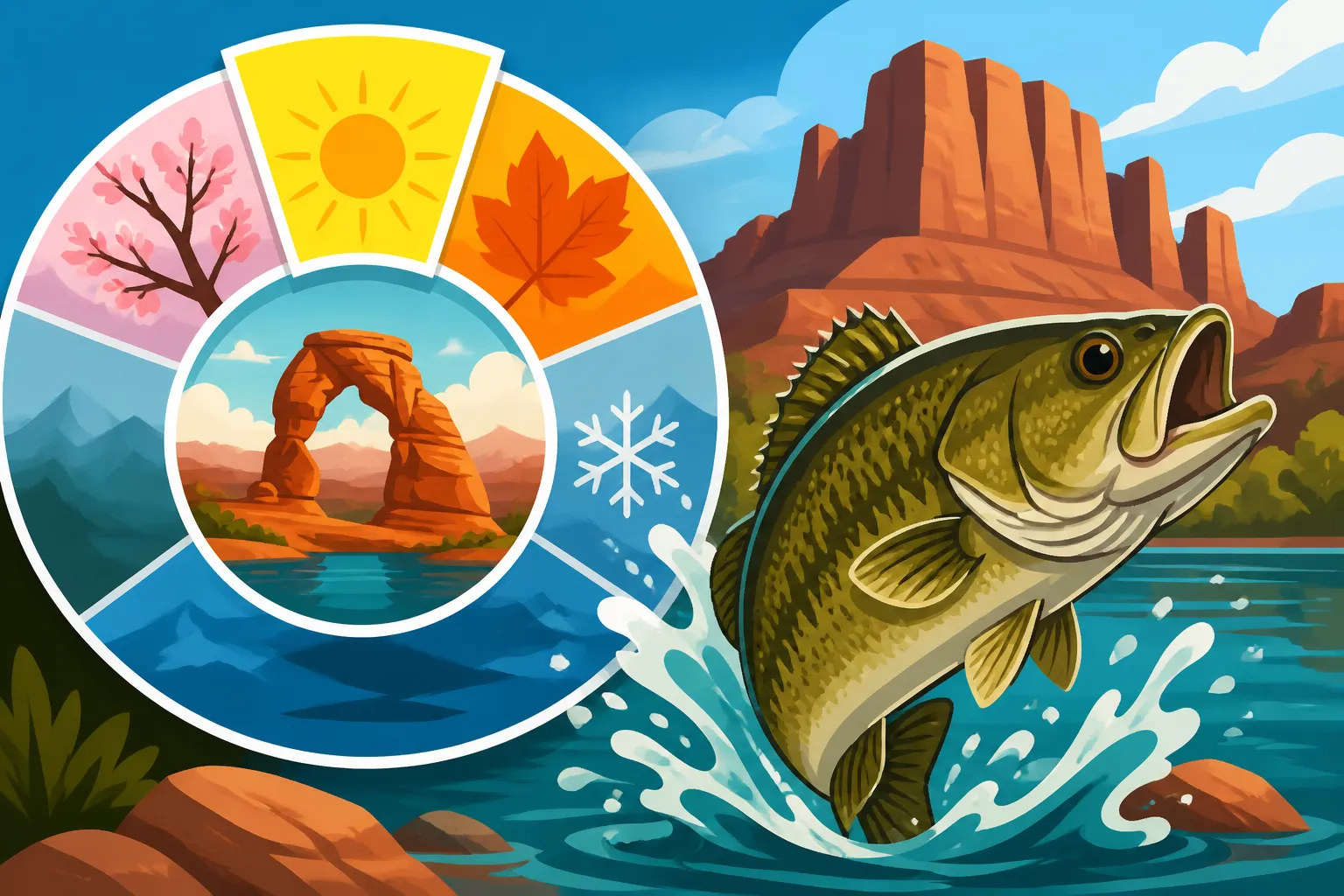
The "best month" for smallmouth bass fishing in Utah isn't a single, static answer. It's a dynamic period influenced by water temperatures and the fish's reproductive cycle. While May stands out for its aggressive pre-spawn bite and September for its intense fall feeding, consistent success comes from adapting your techniques and understanding the bass's behavior throughout the year. With this knowledge, you're well-equipped to enjoy fantastic smallmouth fishing across Utah's beautiful reservoirs.
Disclaimer
Fishing conditions and regulations in Utah can change. Always check the current Utah Fishing Regulations Explained provided by the Utah Division of Wildlife Resources before heading out. This guide is for informational purposes only and should not be considered legal advice. Stay safe and respectful of the environment and fellow anglers.