Best Rod Holders for a Fishing Kayak
There's nothing quite like the freedom of paddling out on a glassy Utah lake in your fishing kayak, but that feeling can quickly turn to frustration when you're trying to manage a fishing rod, paddle, and keep your balance all at once. It’s a common dilemma: where do you put your rod when you need both hands to paddle, tie a new lure, or even just land a fish? This guide is going to walk you through everything you need to know about choosing and using the best rod holders for your fishing kayak, ensuring your time on the water is more about catching fish and less about juggling gear.
Why Rod Holders Are Essential for Kayak Anglers
For many new kayak anglers, the idea of adding "more gear" might seem counterintuitive to the minimalist spirit of kayak fishing. But trust me, rod holders aren't just an accessory; they're a game-changer that significantly enhances safety, comfort, and ultimately, your success rate on the water. Anyone who's tried to paddle across Strawberry Reservoir or navigate the currents of the Green River with a rod precariously balanced between their legs knows the struggle.
Hands-Free Fishing and Trolling
Imagine paddling toward a promising stretch of water, your rod tip dipping with the rhythmic pull of a trolled lure, all while your hands are free to steer, adjust your course, or even grab a snack. That's the power of a good rod holder. They securely cradle your rod, allowing you to cover more water and present your bait or lure effectively without constantly holding onto your rod. This is especially crucial for techniques like slow trolling for kokanee salmon at Jordanelle Reservoir or covering large areas of Flaming Gorge for lake trout. Without a rod holder, trolling would be nearly impossible, limiting your fishing options considerably.
Furthermore, these holders provide a safe spot for your rod when you need to switch gears. Perhaps you've hooked into a nice brown trout on the Provo River while fly fishing from your kayak and now need to set your fly rod down to grab your net. A sturdy rod holder ensures your precious gear isn't going for an unexpected swim. It’s about making every action on the water smoother and more efficient, reducing the chances of a fumbled rod or a lost fish because your hands were otherwise occupied.
Rod Protection and Organization
One of the most heartbreaking moments for any angler is hearing that dreaded snap as their favorite rod takes a tumble, or worse, watching it drift away after an unexpected capsize. Kayaks, by their nature, are relatively small and exposed, making expensive rods vulnerable. Rod holders act as a protective sheath, keeping your rods elevated, secure, and out of the way of paddles, tackle boxes, and even your own feet.
Beyond protection, rod holders are brilliant for organization. A cluttered kayak deck is not only annoying but can also be dangerous. Hooks can snag on clothing or skin, and loose gear can shift, affecting your balance. By stowing your rods neatly in holders, you free up valuable deck space, making it easier to move around, access your tackle, or land a fish. This organized approach can be particularly beneficial when you're trying to keep things tidy for an overnight trip to one of the Uinta Mountains high lakes where every inch of space counts. It creates a dedicated spot for each rod, so you always know exactly where to reach for the one you need.
Increased Efficiency and Success
Let's face it, more lines in the water often means more fish. Rod holders allow you to run multiple rods simultaneously, increasing your chances, whether you're targeting walleye at Utah Lake with one rod and catfish with another, or simply want to try different lures and depths for trout. This multi-rod approach can be a significant advantage, especially when you're trying to dial in what the fish are biting on that particular day.
Moreover, quick access to your rods is vital. When a school of striped bass erupts in a "boil" at Lake Powell, you don't want to be fumbling around trying to untangle a rod from beneath your legs. With rods securely held in holders, they're always ready for action. You can grab, cast, and react to opportunities faster, which can make all the difference in a hot bite. This efficiency translates directly into more successful fishing trips, turning those "almost" moments into memorable catches. They empower you to experiment with Utah Fishing Techniques for Beginners and advanced strategies alike, knowing your gear is always ready.
Types of Rod Holders for Fishing Kayaks
The world of kayak rod holders is surprisingly diverse, offering a solution for almost every type of kayak, fishing style, and angler preference. Understanding the different types available is the first step to equipping your paddlecraft effectively. Each design has its own advantages and ideal applications, so it's not a one-size-fits-all situation.
Flush Mount Rod Holders
These are perhaps the most common type you'll see on many dedicated fishing kayaks. Flush mount rod holders are typically installed permanently into the kayak's hull, providing a low-profile, sleek look. They consist of a tube that sits flush with the deck, angled backward, usually around 30 degrees. This angle is great for rod storage while paddling or for a secondary rod that's not actively being fished. They're excellent for transporting rods safely, preventing them from catching on overhead obstacles or getting in the way while you're paddling hard.
Installation usually involves drilling a hole into the kayak and securing the holder with marine sealant and screws or rivets. This permanent nature means careful planning is essential before you start drilling, as repositioning them isn't easy. Because they offer a fixed angle, they aren't ideal for active trolling where you might need to adjust the rod's position or angle. However, for sheer simplicity, reliability, and keeping your deck clear, they are a fantastic option. You can find these at most major outdoor retailers like Bass Pro Shops or online platforms like Amazon, but remember to choose a quality marine-grade material to withstand Utah's elements.
Surface Mount Rod Holders
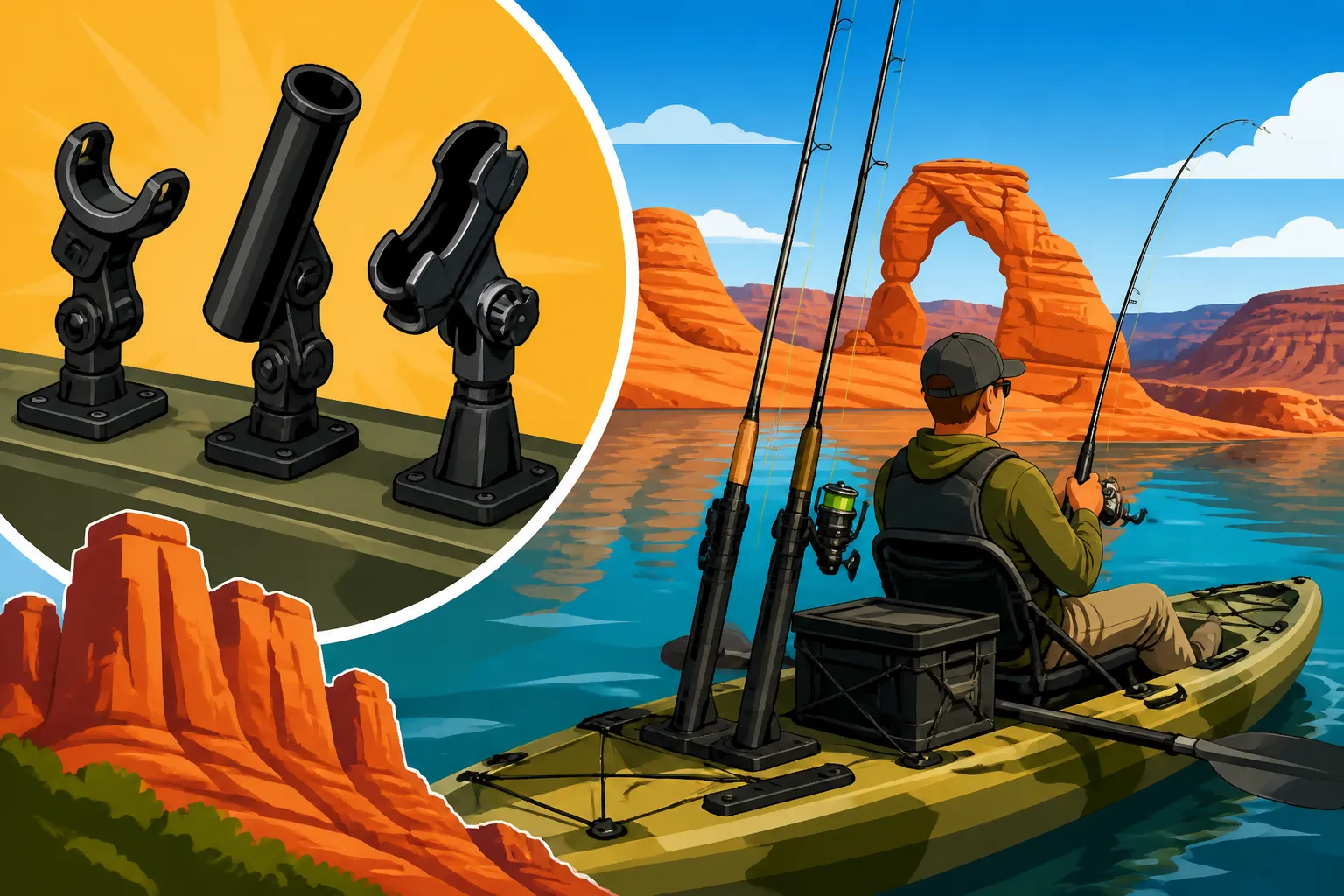
Surface mount rod holders are the workhorses of kayak fishing, offering much more versatility and adjustability than their flush-mount cousins. They attach to the surface of your kayak, rather than into it, and come in several sub-types:
- Track Mount Rod Holders: These are incredibly popular for their adjustability. Many modern fishing kayaks come equipped with gear tracks (often called "accessory rails" or "slide tracks"). Track mount holders simply slide into these tracks and can be positioned anywhere along the track. They often feature adjustable angles and rotations, allowing you to fine-tune your rod's position for trolling, still fishing, or even just holding it while you re-tie. If your kayak has tracks, these are often the go-to choice, offering flexibility without permanent drilling.
- Clamp or Rail Mount Rod Holders: If your kayak has existing rails (like those found on some larger sit-on-top kayaks), these holders can clamp directly onto them. They're often adjustable and removable, making them a great non-permanent option for adding rod capacity.
- Scupper Hole Rod Holders: Some kayaks utilize their scupper holes (drainage holes) for mounting accessories. These holders typically have a post that inserts into a scupper hole. While convenient and requiring no drilling, they often place the rod in a less accessible position and aren't always ideal for active fishing, more for storage.
- Suction Cup Mount Rod Holders: These offer the ultimate in non-permanent installation, adhering to any smooth, flat surface on your kayak. While convenient for quick setup and removal, their holding power can vary based on surface cleanliness and water conditions. They're generally best suited for lighter rods or as temporary holders rather than for heavy trolling or fighting large fish.
The beauty of surface mount holders is their adaptability. You can often reposition them based on your fishing situation, making them perfect for anglers who engage in diverse techniques.
Specialty Holders
Beyond the general-purpose holders, there are specialized designs for specific fishing needs:
- Spinning Rod Holders: Many universal rod holders work fine for spinning rods, but some are designed with a wider opening or a specific cradle to better accommodate the reel and prevent it from getting jammed. These are great if you do a lot of traditional lure fishing for bass or trout.
- Fly Rod Holders: Fly rods require delicate handling, and a dedicated fly rod holder protects the often fragile tip and allows the reel to sit securely. These often have a slot for the reel foot and a soft cradle for the rod blank. If you're planning on How to Fly Fish the Provo River from your kayak, a specialized holder can be invaluable. They prevent your delicate fly rod from being crushed or tangled, especially when you're navigating tighter waters or trying to land a fish.
- Trolling Rod Holders: While many adjustable surface mounts can be used for trolling, some are specifically engineered for the stresses of trolling heavy lures or fighting powerful fish. These are often more robust, with stronger locking mechanisms and pivot points to withstand the force. They allow for precise angle adjustments to control lure depth and action. When you're trying to land a monster lake trout at Flaming Gorge, having a rod holder that can withstand the fight without snapping or letting go of your rod is critical.
When considering specialty holders, think about your primary fishing focus. If you mainly fly fish, investing in a good fly rod holder makes sense. If you're a multi-species angler, a versatile adjustable surface mount might be more practical for most situations.
Choosing the Right Rod Holder for Your Kayak and Fishing Style
Selecting the perfect rod holder isn't just about picking one off the shelf; it's about matching the holder to your specific kayak, your preferred fishing techniques, and even the types of fish you'll be pursuing. There are a few key considerations that will guide you to the best choice.
Kayak Compatibility and Mounting Options
First and foremost, you need to assess your kayak's design and existing features. Is it a sit-on-top or a sit-in? Sit-on-top kayaks generally offer more accessible surface area for mounting, while sit-ins can be more challenging, often requiring track systems or creative placements. Look for built-in features that can facilitate installation:
- Gear Tracks: If your kayak already has tracks, track-mounted rod holders are often the easiest and most versatile option. Brands like Wilderness Systems, Hobie, and Perception often integrate these.
- Scupper Holes: Some kayaks have scupper holes that are designed to accommodate rod holder inserts. While less ideal for active fishing, they can be great for storage.
- Flat Surfaces: For flush mounts or other surface-mounted holders, identify flat, structurally sound areas on your deck or gunwales where drilling won't compromise buoyancy or interfere with internal components.
- Rails/Bars: If your kayak has existing rails, clamp-on options become viable.
Think about the available space. You want your rod holders to be accessible, but not impede your paddling, casting, or movement around the kayak. Consider whether you prefer a permanent solution (flush mount) or something you can easily remove and adjust (track mount, clamp mount). If you're unsure about drilling, start with non-invasive options like track mounts or even suction cup mounts for lighter use. If you're planning on modifying your kayak, checking out resources like Kayak Accessories Worth Adding for Utah Fishing can give you more ideas on how to approach customization safely.
Fishing Style Considerations
Your fishing methods heavily influence the type and number of rod holders you'll need.
- Trolling: If you love to troll for trout at Deer Creek Reservoir or kokanee at Rockport Reservoir, you'll want sturdy, adjustable rod holders that allow you to position your rods at precise angles away from the kayak. The ability to easily adjust the rod tip up or down, and left or right, is crucial for controlling lure depth and spread. You'll likely want at least two, if not more, for effective trolling, perhaps one on each side. These need to be robust enough to handle the constant pressure of trolling and the sudden strike of a fish.
- Still Fishing/Bait Fishing: For those leisurely days soaking PowerBait for stocked trout or dropping a worm for catfish at Utah Lake, less adjustable, more upright holders might suffice. Flush mounts can work for this, as can basic vertical surface mounts. The key here is secure storage while you wait for a bite.
- Casting/Active Fishing: If you spend most of your time actively casting lures for smallmouth bass at Flaming Gorge, you might only need one or two rod holders primarily for temporary storage while you paddle, land a fish, or re-tie. You'll want them in a position that offers quick access but doesn't interfere with your casting arm.
- Fly Fishing: As mentioned, fly fishing requires special consideration. A horizontal fly rod holder that cradles the rod and reel without pinching the line or damaging the blank is ideal. You want quick access for when a fish rises, but also secure storage while you navigate. Best Fly Rods for the Provo River often come with specific needs that a good rod holder can address.
Consider how many rods you typically bring. If you only ever fish with one, a single well-placed holder might be enough. If you carry several, you'll need multiple holders or a system that can accommodate them all efficiently.
Material and Durability
Utah's diverse fishing environments, from the scorching sun of Lake Powell to the freezing temperatures of winter ice fishing, demand durable gear. The material of your rod holder is crucial for its longevity.
- Plastics/Polymers: Many rod holders are made from high-strength, UV-resistant plastics. These are lightweight, corrosion-resistant, and typically more affordable. Ensure they are specifically rated for marine use and UV exposure, especially if you fish in sunny Southern Utah frequently. Cheaper plastics can become brittle and crack over time.
- Metals: Some high-end or heavy-duty rod holders feature stainless steel or aluminum components. These offer superior strength and durability, making them excellent for battling larger fish or heavy trolling setups. However, they can be heavier and are generally more expensive. If you fish in saltwater (though less common in Utah, it's worth noting for future reference if you travel), stainless steel is paramount to prevent corrosion.
Always check reviews and product specifications. A robust mounting system is just as important as the holder itself. Ensure all screws, bolts, and mounting hardware are marine-grade stainless steel to prevent rust and ensure a secure attachment to your kayak. Spending a little more on quality now will save you from replacement costs and potential heartbreak down the line. When buying accessories, places like Amazon and Bass Pro Shops often clearly label materials and customer reviews can offer insights into real-world durability.
Installation and Maintenance Tips for Rod Holders
Once you've chosen your ideal rod holders, proper installation and ongoing maintenance are key to ensuring they serve you well for years of Utah fishing adventures. Rushing the installation or neglecting basic care can lead to problems, from leaky kayaks to lost rods.
Step-by-Step Installation Basics
While specific instructions will vary by rod holder type and kayak model, here's a general guide for installing permanent (flush or surface mount) rod holders:
- Plan Your Placement: This is the most critical step. Sit in your kayak (on land!) with your paddle and fishing rods. Mark potential locations for your holders. Consider:
- Accessibility: Can you easily reach the holder from your seated position?
- Clearance: Will it interfere with your paddle stroke, casting motion, or access to other gear?
- Rod Angles: For trolling, imagine where the rod tip will be when deployed. For storage, ensure the rod doesn't extend too far out or interfere with transport.
- Structural Integrity: Choose a flat, strong area of the hull. Avoid thin or flexible spots that won't hold up to pressure.
- Gather Tools: You'll typically need a drill, appropriate drill bits (matching the bolt size), a marine sealant (like silicone or 3M 4200/5200), a screwdriver or wrench, and a measuring tape.
- Mark and Pilot Drill: Once you're confident in your placement, mark the exact spots for drilling. Use a small pilot bit first, then enlarge the holes to the required size. For flush mounts, you'll likely need a hole saw. Take your time and measure twice, drill once!
- Seal and Secure: Apply a generous amount of marine sealant around and into each drilled hole. This is crucial for preventing water intrusion, which could slowly sink your kayak or damage internal components. Push the rod holder's hardware through the sealed holes, and then tighten the nuts or screws from the inside of the kayak. Don't overtighten, as this can crack the kayak's plastic. Wipe away excess sealant for a clean finish.
- Test It Out: Before hitting the water, give your newly installed holders a good tug. Put a rod in and apply some pressure to ensure it feels secure. If you're installing track mounts, simply slide them into place and test their locking mechanisms. If you ever need help with Utah Boat Registration Requirements or general safety, proper installation of all your gear contributes to that.
For track mount systems, installation is usually much simpler, often just requiring a twist or slide into the track. Still, ensure the locking mechanisms are fully engaged.
| Rod Holder Type | Pros | Cons | Ideal Use |
|---|---|---|---|
| Flush Mount | Low profile, secure, out of the way, stealthy | Fixed angle, permanent install, less versatile | Rod storage, light trolling, transport |
| Track Mount | Highly adjustable, removable, no permanent drilling on kayak (if tracks exist) | Can be bulky, requires tracks on kayak | Active fishing, diverse techniques, trolling |
| Clamp/Rail Mount | Removable, no drilling (if rails exist) | Limited to kayaks with rails, can shift | Temporary use, extra rod capacity |
| Scupper Hole | No drilling, quick install | Limited placement, often less secure, not ideal for active fishing | Rod storage, very light fishing |
| Suction Cup | No drilling, easily transferable | Limited strength, can detach, temporary only | Light rods, temporary storage |
Regular Care for Longevity
Kayak fishing exposes your gear to harsh conditions – sun, water, dirt, and fish slime. A little post-trip maintenance goes a long way in extending the life of your rod holders and preventing problems.
- Rinse After Every Trip: Especially if you've been fishing in Bear Lake's alkaline water or any other mineral-rich Utah water, always rinse your rod holders (and the rest of your kayak and gear) with fresh water. This removes salt, dirt, and any corrosive elements. Pay extra attention to moving parts on adjustable holders.
- Inspect Fasteners and Seals: Periodically check all screws, bolts, and rivets. Vibrations from paddling and transport can loosen them over time. Tighten anything that feels wobbly. Also, inspect the marine sealant around drilled holes for any cracks or deterioration. Reapply sealant if needed to maintain a watertight seal. This is part of the broader routine for How to Store Fishing Gear Over a Utah Winter to prevent damage.
- Lubricate Moving Parts: For adjustable rod holders, a little marine-grade lubricant on pivot points and locking mechanisms can prevent seizing and keep them operating smoothly. This is especially true after prolonged exposure to sun and water.
- UV Protection: Plastic rod holders can degrade under Utah's intense sun. Consider applying a UV protectant spray to plastic components to help prevent brittleness and fading over time. When not in use, storing your kayak and its accessories out of direct sunlight will significantly prolong their life.
- Clean Out Debris: Fish scales, sand, and other debris can accumulate inside rod holders, potentially scratching your rods or hindering their function. Use a brush or hose to clear out any buildup.
By following these simple installation and maintenance tips, your kayak rod holders will remain reliable companions on countless fishing trips across Utah, from the calm waters of Fish Lake to the mighty expanse of Lake Powell. They are a small investment that pays huge dividends in comfort, safety, and ultimately, your enjoyment of the sport.
Disclaimer
This article is for general informational purposes only and does not constitute professional advice. Laws, prices and regulations vary by location and change over time. Consult a qualified professional for guidance on your specific situation.