Best Gloves for Ice Fishing in Utah
A common problem when ice fishing in Utah is numb, painful hands, often because anglers don't realize just how cold and wet their hands will get. This guide is dedicated to helping you find the absolute best gloves for ice fishing, ensuring your hands stay warm, dry, and functional, allowing you to enjoy every minute on the hard water without constant discomfort.
The Chilling Reality of Ice Fishing in Utah: Why Your Hands Need the Best Protection
Ice fishing in Utah isn't just a leisurely winter pastime; it's an adventure that demands respect for the elements. The picturesque frozen landscapes often mask brutally cold conditions that can quickly turn a fun day into a miserable ordeal if you're not properly equipped, especially when it comes to your hands. Many seasoned anglers will tell you that cold hands are the quickest way to end an otherwise perfect day on the ice.
Understanding Utah's Winter Fishing Conditions
Utah winters, especially at our prime ice fishing spots like Strawberry Reservoir Ice Fishing Spots, Fish Lake, or Scofield Reservoir, are no joke. Temperatures can plummet well below freezing, and while the air might feel crisp, it's the constant exposure to icy water when handling fish, re-baiting hooks, or drilling holes that really gets to your hands. Think about pulling a freshly caught trout from an augered hole – that water, even for a second, can deliver a thermal shock that ordinary winter gloves simply aren't designed to withstand. It's not just about the ambient temperature; it's about the continuous, unavoidable contact with sub-zero moisture.
The wind can be another silent killer on the ice. Picture a blustery day on Willard Bay Fishing Access; even if the thermometer reads 20 degrees, a stiff breeze can make it feel like zero or colder, driving cold deep into exposed skin. Wind strips away body heat incredibly fast, and exposed skin, like your fingertips when you briefly pull off a glove to adjust your tackle, can become painfully cold in mere moments. Good gloves aren't just for submersion; they're your primary defense against that relentless Utah winter wind that seems to cut right through less-than-adequate gear. This is where many anglers make the mistake of wearing everyday winter gloves, which simply aren't designed for the unique demands of fishing in freezing, windy conditions.
Then there's the variable nature of Utah's snow and slush. Some days it's dry and powdery, coating everything in a beautiful, light layer. Other days, especially with warmer spells or melting ice, it's wet and slushy. If your gloves aren't truly waterproof, that slush or melting snow quickly soaks through, turning your handwear into a cold, damp sponge. And once your hands are wet and cold, it's an uphill battle to get them warm again, potentially ending your fishing day early. It’s a common frustration to have to retreat to the truck just to warm up because your hands are screaming in protest, all because of inadequate hand protection.
The Cost of Compromising on Handwear
Let's be honest, we've all been there. You grab whatever winter gloves you have lying around, thinking they'll be "good enough" for a few hours on the ice. But "good enough" quickly turns into "miserable" when you're fumbling with frozen lines or trying to unhook a fish with numb fingers that just won't cooperate. The immediate cost is profound personal discomfort, shivering uncontrollably, and losing the simple joy and focus of the outing. You might spend all that time and effort getting out to your chosen lake for a day of Utah Ice Fishing Guide, only to pack up early because your hands are too cold to continue, effectively wasting a precious winter fishing opportunity.
Beyond personal discomfort, there's a very real impact on your fishing success. Imagine feeling a subtle bite on your Best Jig Weight for Ice Fishing Utah Trout setup. If your hands are so cold they're clumsy, or you can't feel your rod properly, you might easily miss that delicate strike, or worse, fumble your rod and lose your catch. Dexterity is absolutely crucial for tying knots, changing baits, operating electronics, and managing your catch quickly and efficiently. Cheap, bulky gloves often mean severely compromised feel and more frustrating fumbling, turning simple tasks into monumental challenges. This isn't just about being comfortable; it's about being effective and successful on the ice.
Safety is another critical, often overlooked, cost of compromising on handwear. Extreme cold can lead to frostbite, a serious condition that can have lasting effects and, in severe cases, require medical attention. When your hands are constantly wet and cold, the risk of frostbite increases dramatically. Moreover, impaired dexterity due to freezing fingers can lead to accidents, like fumbling with sharp tools such as an ice auger, cutting yourself with a fillet knife, or slipping on slick ice because you can't properly grip your balance-aids. Investing in proper ice fishing gloves isn't a luxury; it's a necessary piece of safety equipment to ensure your well-being and enjoyment on the ice. Don't let a bad pair of gloves ruin an otherwise perfect day or, worse, lead to a dangerous situation.
Key Features to Look For in Top-Tier Ice Fishing Gloves
Choosing the right ice fishing gloves isn't as simple as grabbing the thickest pair you can find. It requires understanding the specific demands of the environment and the tasks you'll be performing. The best gloves strike a delicate balance between warmth, protection, and functionality.
Material Matters: Insulation and Waterproofing
When you're standing out on the ice, the materials in your gloves are your frontline defense against the bitter cold and relentless moisture. For insulation, look for high-performance synthetic materials like Thinsulate, Primaloft, or similar proprietary insulations. These are fantastic because they are engineered to trap heat effectively even when they get wet, unlike traditional down which loses its insulating properties as soon as it becomes damp. The higher the gram rating (e.g., 200g, 300g, 400g), the warmer they'll generally be, though this also adds bulk. For Utah's colder days and deep winter ice, you'll want something substantial in terms of insulation.
Waterproofing is non-negotiable for ice fishing gloves. Seriously, your hands are going to get wet, whether it's from handling freshly caught fish, scooping slush out of your ice hole, or dealing with wet lines and baits. Look for gloves with a robust waterproof membrane, such as Gore-Tex or similar reputable waterproof-breathable technologies. This internal barrier prevents external moisture from penetrating to your skin, while ideally still allowing some internal moisture (sweat) to escape, keeping your hands drier from the inside out. Remember, even the warmest insulation is rendered nearly useless if it's soaking wet. Many brands incorporate durable water repellent (DWR) coatings on the outer fabric, but a full internal membrane is absolutely key for true, reliable waterproof performance. You can often find a great selection of waterproof ice fishing gloves at Bass Pro Shops or explore a wider range of options online at Amazon.
Beyond the core insulation and waterproofing, consider the durability of the outer shell material. It should be tough, resistant to tears, and able to withstand abrasions from ice, hooks, and other gear. Reinforced palms and fingers are a huge plus for longevity, especially if you're frequently handling rough surfaces or tools. Many quality gloves also feature a soft, comfortable inner lining, often made of fleece or brushed tricot, which adds to overall comfort, wicks away any residual sweat, and feels good against your skin even when your hands are cold.
Dexterity vs. Warmth: Finding the Right Balance
This is the age-old dilemma for ice anglers: how do you keep your hands warm without feeling like you're wearing cumbersome oven mitts that make every task a struggle? The truth is, there's no single perfect solution for every task. Super warm, heavily insulated gloves often sacrifice a significant amount of dexterity, making delicate tasks like tying a tiny jig, rigging What Bait Works Best During the Bear Lake Cisco Run, or operating a fish finder a frustrating and time-consuming endeavor. Conversely, highly dexterous gloves usually offer less insulation, leaving your fingers vulnerable to the cold. The key is to find a glove that offers a good balance for most of your activities, or better yet, to layer your handwear strategically.
Look for gloves with design features that improve dexterity without completely sacrificing warmth, such as pre-curved fingers, ergonomic shaping, or less bulky insulation in the finger areas while maintaining warmth in the palm and back of the hand. Articulated designs that mimic the natural curve of your hand allow for more natural movement and less hand fatigue. Some gloves even feature touch-screen compatible fingertips, which can be a small but mighty convenience when checking your How to Find Current Fishing Conditions for Utah Reservoirs app, operating a headlamp, or snapping a quick photo without needing to remove your entire glove. The type of fishing you're doing also plays a significant role in this balance: if you're simply tending stationary tip-ups, maximum warmth might be your priority; if you're actively jigging with light tackle, dexterity will be paramount.
A common and highly effective strategy is to implement a layering system for your hands. Wear thin, moisture-wicking liner gloves (often made of merino wool or synthetic materials) directly underneath a warmer, waterproof outer glove or mitten. When you need to perform a fine motor skill, you can quickly shed the bulky outer layer, leaving your hands still partially protected from the biting cold by the liner. This approach can be a game-changer, allowing you to maintain core warmth most of the time while having quick access to crucial dexterity when needed. This is similar to how you layer clothing for How to Layer Clothing for a Utah Winter Fishing Trip, ensuring adaptability to changing conditions and activities.
Cuff Design and Retention: Sealing Out the Cold
The best gloves in the world won't keep your hands warm if cold air, melting snow, or icy water sneaks in through the cuff. Cuff design is a critical, often underestimated, factor for effectively sealing out the elements. Look for longer cuffs that can extend well past your wrist and are designed to either go comfortably over the sleeve of your heavy winter jacket or tuck neatly and securely underneath it. This creates a secure, overlapping barrier against wind and snow creeping in, preventing cold air from rushing up your arm and robbing you of precious body heat. A well-designed cuff acts as a crucial thermal bridge between your glove and your jacket sleeve, maintaining a continuous insulated zone.
Retention features are also vitally important for a custom, secure fit. Many high-quality ice fishing gloves come equipped with adjustable wrist straps, bungee drawstrings, or elastic closures. These allow you to cinch the cuff tightly around your wrist or sleeve, customizing the fit and further preventing heat loss and moisture ingress. Some even feature a wide gauntlet-style cuff with an easy-to-grab pull tab, making it simple to adjust the tightness even with a cold or gloved hand. This seemingly small detail can make a huge difference in sustained comfort throughout a long day of Utah Ice Fishing Guide.
Consider how easily you can put on and take off the gloves, especially if you anticipate needing to do so frequently throughout the day. Some designs feature a quick-release buckle, an extra-wide opening, or a large loop that makes pulling them on and off less of a struggle, particularly when your hands are already cold or wet. If you plan on wearing liner gloves underneath, ensure the outer glove's cuff is wide enough and flexible enough to accommodate the extra layer without feeling overly restrictive or bulky. A well-designed cuff ensures that once your hands are warm, they stay warm, letting you focus on catching tiger trout at Scofield Reservoir rather than constantly fighting with your gear or shivering.
Different Styles of Hand Protection for Every Angler's Need
Just as there are different ways to fish, there are different styles of hand protection tailored to specific preferences and conditions on the ice. Understanding these options will help you pick the perfect gear for your Utah ice fishing adventures.
Full-Fingered Gloves: Max Warmth, Less Dexterity
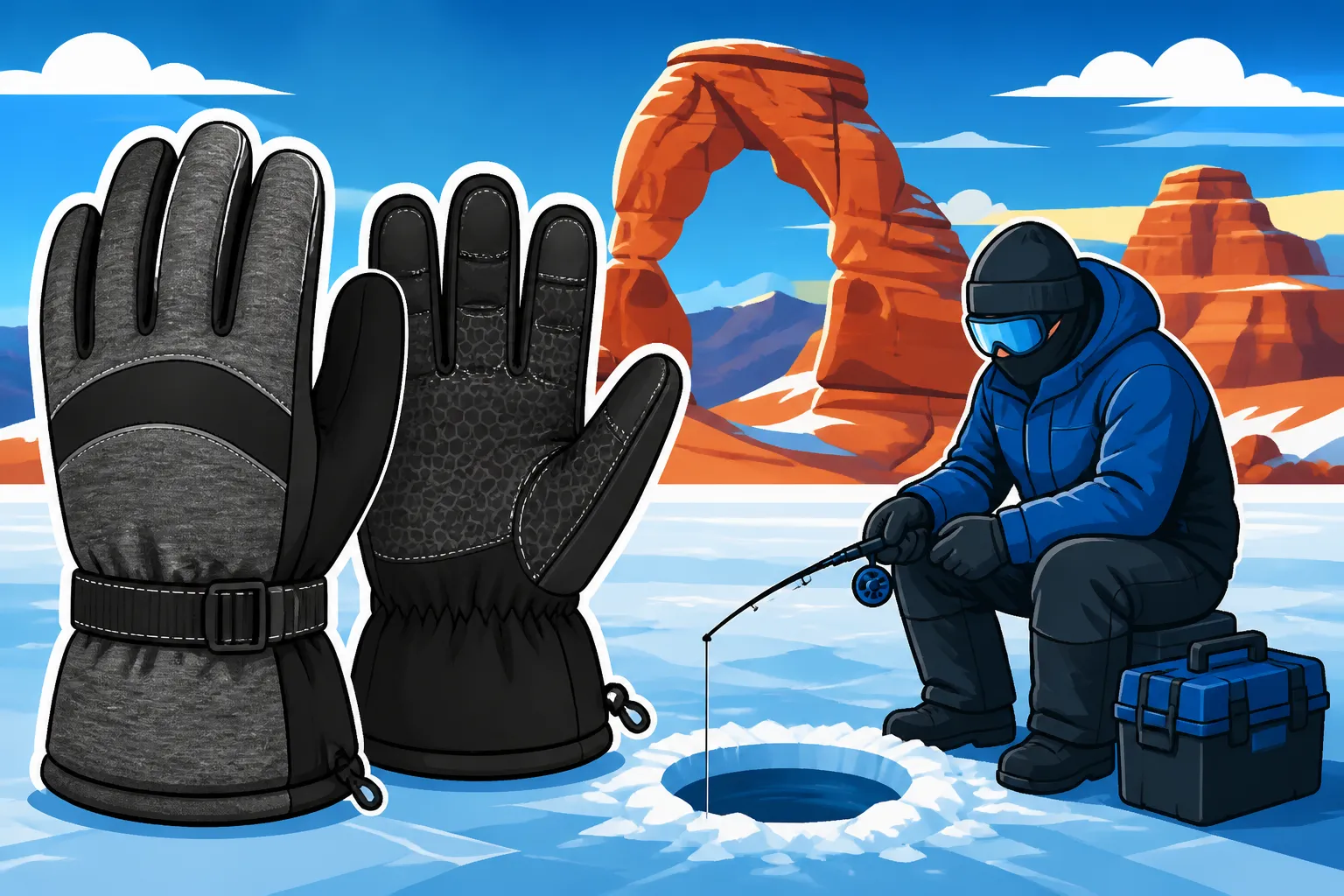
For many ice anglers, especially those whose top priority is unwavering warmth above all else, traditional full-fingered gloves are the undeniable go-to. These gloves fully encase each finger individually, offering excellent insulation and robust protection from the biting elements. They are particularly ideal for truly bitter cold days, extended periods of stationary fishing, or when you're mostly tending passive setups like tip-ups while fishing inside a heated Best Ice Fishing Shelters for Utah Winters. Generally, the bulkier the insulation, the warmer the glove will be, but always remember that inherent trade-off with dexterity – you might gain warmth but lose some fine motor control.
When choosing full-fingered gloves, pay close attention to the specific construction and materials, especially in the fingertips. Some designs incorporate reinforced or pre-curved fingers to improve grip and reduce hand fatigue, making tasks like gripping a rod or handling an auger less strenuous. While ultimate dexterity might be somewhat compromised compared to other styles, a high-quality full-fingered ice fishing glove will still allow for a reasonable amount of control for most general tasks. Always look for a good balance of waterproofness and breathability in these gloves to prevent excessive sweat buildup, which can quickly lead to cold, clammy hands that defeat the purpose of the insulation. These are typically the warmest option available for prolonged, direct exposure to Utah's harsh winter conditions.
These gloves are fantastic if your primary concern is preventing your hands from freezing solid, and you don't anticipate needing to tie many intricate knots or perform delicate operations frequently throughout the day. They're also excellent for those long walks out to your favorite spot, carrying heavy gear like an Best Ice Auger Size for Utah Ice Fishing or a bucket of bait, as they provide comprehensive protection. Just be prepared to occasionally pull them off or use a lighter liner glove underneath when precision tasks become absolutely necessary. Ultimately, they offer a cocoon of comforting warmth, and sometimes, that robust, uninterrupted warmth is exactly what you need to stay out longer and enjoy the experience.
Flip-Mittens and Glomitts: The Best of Both Worlds
Flip-mittens, often affectionately called "glomitts" by anglers, are a wildly popular choice among active ice fishermen because they expertly attempt to bridge the gap between maximum warmth and crucial dexterity. They essentially offer the superior warmth of a mitten, where your fingers are grouped together to generate and retain heat more effectively, but with the ingenious ability to quickly expose your fingertips when needed. A protective flap, usually secured by a small magnet or Velcro, peels back to reveal either bare fingertips or a thinner, fingerless glove underneath, allowing for immediate access to precision and tactile feedback.
This innovative design is incredibly practical for the dynamic nature of ice fishing. You can keep your hands toasty warm and protected while walking across the ice, waiting patiently for a bite, or simply staying warm between flurries of activity. Then, in an instant, you can flip back the mitt section for those critical precise tasks like tying tiny knots, baiting hooks with delicate larvae, handling a slippery fish for a quick photo, or jigging with sensitive tackle. The best versions of these glomitts feature a seamless transition and a comfortable fingerless glove portion underneath that still provides a valuable layer of warmth and improved grip when exposed. You'll often see these worn by dedicated anglers at places like Strawberry Reservoir Ice Fishing Spots or during the active Fish Lake Trophy Trout Fishing pursuits where hands-on fishing is constant.
When selecting flip-mittens, pay close attention to the quality and durability of the magnetic or Velcro closure system – you definitely don't want the flap constantly coming undone unexpectedly or being difficult to manage with already cold or gloved hands. Additionally, carefully assess the warmth and grip offered by the fingerless glove portion underneath the mitt. Some come with a surprisingly warm, built-in liner that provides significant protection even when exposed, while others are designed purely for dexterity and assume you'll be wearing your own thin liner glove underneath. These glomitts are an excellent choice for those who crave flexibility and adaptability on the ice without the constant frustration of having to fully remove and replace gloves repeatedly.
Liner Gloves and Layering: A Smart Strategy
As touched upon earlier, a multi-layer approach to handwear can be truly revolutionary for maximizing comfort and effectiveness during ice fishing. Liner gloves are thin, close-fitting gloves designed to be worn directly against your skin, forming your crucial base layer. Their primary role is to provide an initial layer of warmth and, most importantly, to wick away moisture from your skin. Materials like fine merino wool or specialized synthetic fabrics are excellent for this purpose, keeping your hands dry and, consequently, much warmer. They act as your first line of defense against the cold and maintain some level of protection and warmth even when your bulkier outer gloves are temporarily removed.
The inherent beauty and effectiveness of liner gloves lie in their excellent dexterity. When you need to perform a delicate task – perhaps tying a tiny knot, meticulously setting up your Best Tip-Up Setup for Utah Ice Fishing, or carefully unhooking a small, feisty fish – you can easily slip off your bulky outer gloves or flip back your mittens. This leaves your hands still protected from the biting wind and cold air by the thin liner. This method prevents your bare hands from directly contacting the freezing ambient air or icy water, making those quick, precision-required tasks much more bearable and efficient. It's a comprehensive system that significantly enhances both comfort and operational efficiency on the ice.
Pairing high-quality liner gloves with a robust, waterproof, and well-insulated outer glove or mitten (whether it's a full-fingered style or a versatile flip-mitten) provides you with the ultimate versatility in hand protection. This layering system allows you to adapt seamlessly to changing weather conditions and varying fishing tasks without ever sacrificing warmth for long periods. Think of it conceptually like wearing multiple layers for your body – you wouldn't typically wear just one extremely heavy coat; you'd layer. The same fundamental principle applies to your hands to achieve optimal thermal regulation. Many seasoned and experienced anglers swear by this methodical layering system, having discovered through trial and error that no single glove can perform all functions perfectly, but a well-thought-out, adaptable system certainly can. This approach significantly helps maintain core body temperature when out on the ice, which is especially critical on Utah's coldest winter days.
Maintaining Your Ice Fishing Gloves for Lasting Warmth and Performance
Investing in quality ice fishing gloves is only half the battle; proper maintenance is key to ensuring they continue to perform optimally and last for many seasons to come. Neglecting their care can quickly diminish their effectiveness and shorten their lifespan, leaving you with cold, wet hands sooner than you'd like.
Proper Drying and Storage Techniques
You've invested in great gloves to keep your hands warm; now make them last! The single most critical step in maintaining the performance and longevity of your ice fishing gloves is thorough and proper drying after every single trip. Never, ever, leave them balled up, wadded, or stuffed wet in your tackle box or bucket. After each outing, take the time to turn your gloves inside out if their construction allows, or at the very least, open them up wide and hang them in a well-ventilated area where air can circulate freely. Avoid applying direct high heat, such as placing them directly on a furnace vent, near a blazing campfire, or in a clothes dryer, as this can severely damage delicate waterproof membranes, melt synthetic insulation fibers, or degrade outer fabric coatings, potentially leading to cracking, shrinking, or a breakdown in waterproof integrity over time. A specialized boot dryer with glove attachments works wonders for gently and thoroughly drying gloves and boots, ensuring they are completely dry and fresh for your very next outing.
Storing your gloves correctly during the off-season or even between trips is just as important as drying them. Once they are absolutely, thoroughly dry, store them in a cool, dry place away from direct sunlight, which can degrade certain materials and colors over time. Avoid compressing them for extended periods, as this can permanently flatten the loft of the insulation material, significantly reducing its ability to trap air and provide warmth. If your gloves came with specific cleaning instructions (for example, if liners are removable and machine washable), follow those manufacturer guidelines carefully. Proper and consistent care not only extends the useful life of your gloves significantly but also ensures they retain their insulating and waterproof properties, guaranteeing they're ready to go for the entire Utah Ice Fishing Season Dates.
Neglecting to dry your gloves properly isn't just about preventing unpleasant odors (though that's certainly a factor!). Lingering moisture, especially in warm, damp conditions, can promote the insidious growth of mold and mildew, which not only looks and smells terrible but also actively degrades the fabric and can seriously compromise the integrity of any waterproof membranes. Furthermore, the experience of putting on cold, damp gloves at the start of a chilly morning is arguably worse and more demoralizing than having your hands get cold later in the day. Take the extra few minutes to properly care for them, and they will, in turn, diligently take care of your hands, allowing you to focus on the fishing.
When to Repair or Replace Your Handwear
Even the highest quality gloves have a finite lifespan, especially with the considerable wear and tear inherent in regular ice fishing. It's important to be vigilant and keep a keen eye out for clear signs of degradation that indicate your gloves might be losing their battle against the elements. Are the seams beginning to fray, creating potential weak points? Has the waterproof membrane developed noticeable leaks, leaving your hands damp and cold even when the outer shell still appears intact? Is the insulation feeling packed down and no longer providing adequate warmth and loft, even after thorough drying and attempts to fluff it? These are all strong indicators that your gloves might be nearing the end of their useful life and are no longer serving their primary function effectively. Trying to squeeze extra life out of a truly compromised glove is often a losing battle against the bitter cold, leading only to discomfort and frustration.
While minor repairs, such as carefully re-stitching a loose seam or patching a small, superficial tear in the outer fabric, can often be successfully done at home with the right tools and a waterproof sealant, there are limits. If the crucial waterproof membrane itself is compromised over a large area, or if the insulation has significantly thinned and lost its loft beyond reasonable recovery, it is usually time to seriously consider investing in a replacement pair. Trying to "make do" with leaky, ineffective, or poorly insulated gloves will quickly diminish the enjoyment and perhaps even the safety of your Utah Ice Fishing Guide adventures. It's almost always a better long-term strategy to invest in a new, fully functional pair than to suffer through multiple cold, miserable days on the ice.
It's also worth remembering that gear technology is constantly evolving. Newer gloves might offer significantly better materials, improved dexterity through innovative designs, more efficient insulation, or enhanced waterproof-breathable properties compared to an older pair you've been clinging to for years. While it's always commendable to get maximum life out of your existing gear, sometimes a strategic upgrade is genuinely worth the investment for the enhanced comfort, improved performance, and increased safety it provides. Keep an eye on new offerings from trusted brands available at places like Bass Pro Shops or by diligently reading reviews on reputable sites like Amazon, especially if your current pair is starting to show its age or simply isn't keeping up with the brutal demands of a deep Utah winter. Sometimes, treating yourself to new, advanced gear makes a significant difference in your enthusiasm and willingness to face those challenging cold mornings on the ice.
| Glove Type | Warmth Level | Dexterity Level | Best For Utah Ice Fishing Use Cases | Key Benefit |
|---|---|---|---|---|
| Full-Fingered Gloves | Very High | Low-Medium | Extreme cold, tending tip-ups, stationary fishing in heated shelters | Maximum warmth and protection from elements |
| Flip-Mittens/Glomitts | High | Medium-High | Active jigging, baiting hooks, handling fish, photography | Versatility: warmth with quick access to fingers |
| Liner Gloves (Alone) | Low | Very High | Quick, delicate tasks after removing outer glove (as a system) | Precision and a thin barrier against cold |
Disclaimer
This article is for general informational purposes only and does not constitute professional advice. Laws, prices and regulations vary by location and change over time. Consult a qualified professional for guidance on your specific situation.