Best Scale for Weighing a Trophy Utah Catch
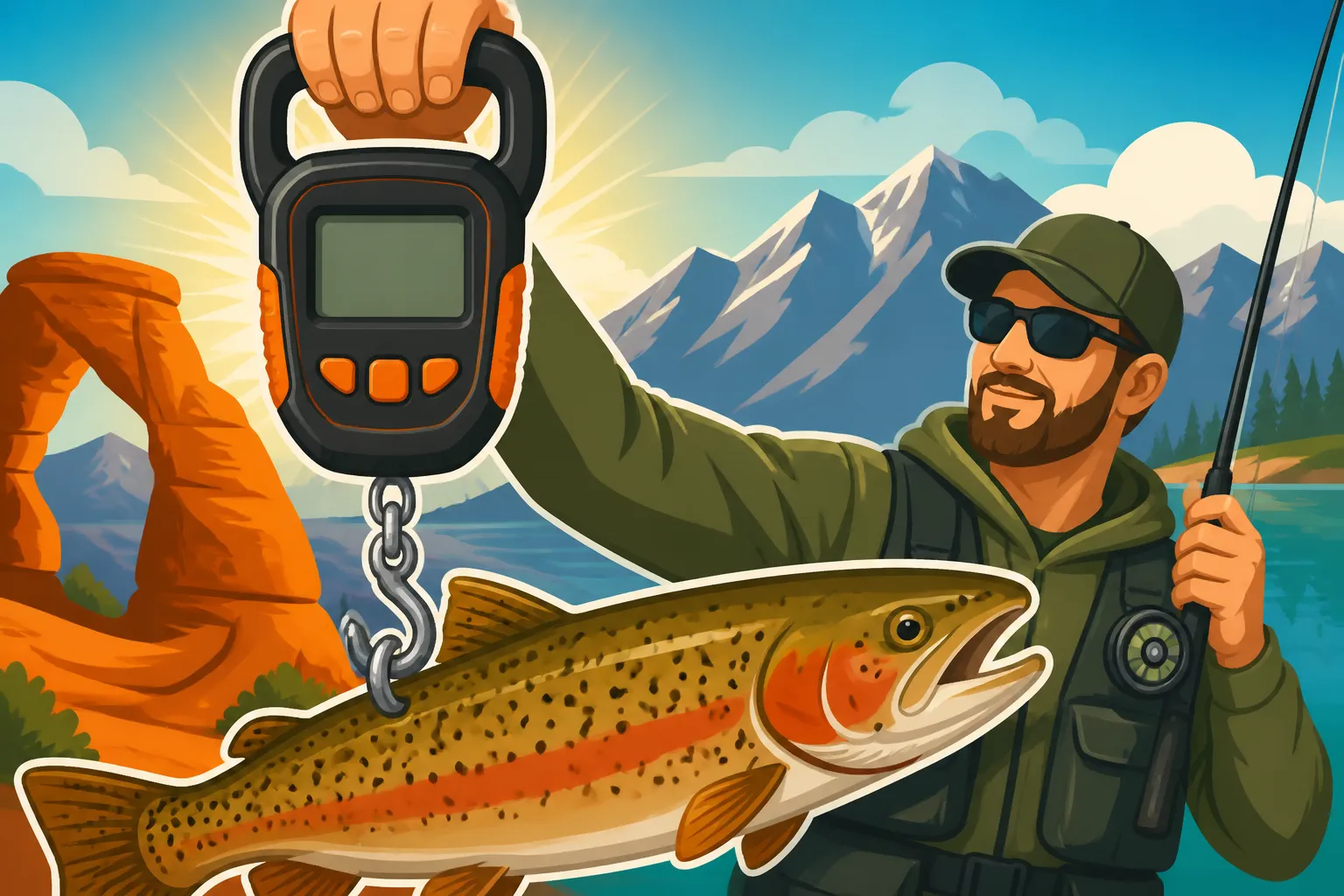
There's nothing quite like the rush of reeling in a truly spectacular fish in Utah – that moment when you know you've landed something special, a real trophy. But then comes the crucial question: how much does it weigh? You want to know the exact number, not just for bragging rights, but to truly appreciate the accomplishment. This guide will walk you through everything you need to know about choosing and using the best scale to accurately measure your trophy Utah catch, ensuring that legendary fish gets the accurate recognition it deserves.
Why a Reliable Scale Matters for Your Utah Trophy Catch
When you hook into that fish of a lifetime, whether it's a massive lake trout from Flaming Gorge or a giant brown trout from the Green River, the weight isn't just a number; it's a testament to your skill, patience, and a memorable day on the water. Having a dependable scale is about much more than simply satisfying curiosity.
Beyond Bragging Rights: The Importance of Accurate Weight
First off, let's be honest, bragging rights are a huge part of the fun! Every angler dreams of telling stories about the "one that didn't get away," and having an accurate weight to back up your claim solidifies that story. Imagine showing off a photo of a magnificent fish with an official weight to go with it – it adds immense credibility to your tale, especially when you're talking to fellow enthusiasts at the local tackle shop or sharing on social media.
Beyond the tales, accurate weight measurement is critical for personal record keeping. Many anglers set personal goals, striving to beat their best catch from the previous season or even their all-time personal best. A precise scale allows you to track progress, celebrate milestones, and even helps inform your fishing strategies for future trips. Did that new lure help you land a bigger fish? Your scale will tell you.
For the conservation-minded angler, especially those practicing catch-and-release, knowing the weight helps you estimate the fish's size and age, which can contribute to a deeper understanding of the fishery. If you're releasing a truly large fish, understanding its dimensions helps ensure you handle it with the utmost care to maximize its survival. This segues perfectly into responsible angling practices, as outlined in our guide on How to Release a Fish Without Hurting It in Utah.
The Pitfalls of "Eyeballing" or Inaccurate Scales
We've all been there: you catch a great fish, estimate its weight by lifting it, and proudly declare it to be "about ten pounds!" Then, later, you see someone else's documented catch that looks similar, but they weighed it at eight pounds, and suddenly your estimate feels… inflated. The truth is, "eyeballing" a fish's weight is notoriously unreliable. Our excitement often leads to overestimation, which, while fun in the moment, can lead to embarrassment or skepticism from other anglers who value accuracy.
Even worse than eyeballing is relying on a cheap, inaccurate scale. Imagine landing a potential state record, like a colossal striped bass from Lake Powell, only to find your scale is off by a pound or two. That could be the difference between a new record and just a really big fish. Inaccurate scales can stem from poor calibration, cheap components, or damage. They can literally deflate your fishing accomplishments, making a genuinely great catch seem smaller, or giving you a false sense of a record-breaker that won't hold up to scrutiny. It's a frustrating situation that can easily be avoided with a quality, reliable weighing device.
Types of Fishing Scales for Utah Anglers
Just like there are different fishing techniques for various species and waters across Utah, there are also different types of scales designed to meet various angling needs. Understanding the pros and cons of each will help you decide which one is best for your style of fishing and the kind of trophy you're chasing.
Digital Scales: Precision and Features
Digital scales are by far the most popular choice for serious anglers today, and for good reason. They offer unparalleled precision and come packed with features that make weighing fish easier and more accurate. When you're trying to determine if your Flaming Gorge lake trout outing resulted in a new personal best, that digital readout leaves no room for doubt.
The main advantage of digital scales is their accuracy. They typically display weight down to ounces or even tenths of an ounce, giving you a very precise measurement. This is crucial for trophy fish where every fraction of a pound counts. Many models, readily available at retailers like Bass Pro Shops or through online platforms like Amazon, feature backlit LCD screens, making them easy to read even in low light conditions – perfect for those early morning or late evening bites.
Beyond basic weighing, many digital scales include a "tare" function, allowing you to zero out the weight of a weigh bag or sling, so you're only measuring the fish. They often have a memory function to store multiple weights, automatically calculating total catch weight, and even average weight for a day's outing. Some advanced models can even measure air and water temperature, or connect to apps for logging catches. The primary downside is their reliance on batteries, which means you always need to carry spares, especially during extended trips into the Uinta Mountains or remote areas of Lake Powell. They can also be more susceptible to extreme temperatures or water damage if not rated appropriately, so look for water-resistant or waterproof models.
Analog (Spring) Scales: Simplicity and Durability
Before the digital revolution, spring scales were the standard, and they still hold a valuable place in many anglers' arsenals. These scales use a spring mechanism to measure weight, displaying it on a dial or a sliding indicator.
Their biggest draw is their simplicity and durability. There are no batteries to worry about, no circuits to short out if they get wet, and fewer delicate parts to break. This makes them an excellent choice for anglers who prefer a no-fuss, robust piece of gear that can withstand the rigors of frequent use in harsh conditions, like winter ice fishing. If you're looking for a secondary, backup scale or something incredibly reliable for a remote backpacking trip to a high mountain lake, a good quality analog scale can be fantastic.
However, analog scales generally aren't as precise as their digital counterparts. Readings can be harder to interpret, especially if the fish is squirming, and they might only offer measurements in half-pound or quarter-pound increments. This lack of fine-tuned accuracy can be a deal-breaker when you're chasing a true trophy where every ounce matters. Over time, the spring mechanism can also lose some calibration, leading to less accurate readings, though quality models tend to hold up well.
Specialty Scales: Lip Grips and Certified Models
For anglers targeting specific species or those involved in tournaments, specialty scales offer tailored solutions.
Lip Grip Scales: These scales integrate a lip-gripping device directly into the weighing mechanism. The major benefit here is fish safety, particularly for species like bass, walleye, or pike that can be easily weighed by their jaw without further handling. The grip securely holds the fish, allowing for a quick, stable weigh-in while keeping your hands away from hooks and fins. This minimizes stress on the fish, making it easier to measure and then How to Release a Fish Without Hurting It in Utah quickly. Many lip grip scales are digital and include the features mentioned above, combining fish-friendly design with modern accuracy. They are an excellent tool for bass anglers at Utah Lake or smallmouth enthusiasts at Flaming Gorge.
Certified Scales: For serious tournament anglers or those aiming to submit potential state record catches, a certified scale is a must. These scales are often calibrated to meet specific standards set by fishing organizations, ensuring the highest level of accuracy and verifiable readings. While typically more expensive and less portable than standard fishing scales, they remove any doubt about the official weight of a truly monumental catch. Unless you're competing or specifically targeting a record, a high-quality consumer digital scale will usually suffice, but it's good to know these exist for those ultimate angling achievements.
Key Features to Look for in a Trophy Catch Scale
Choosing the right scale for your trophy fish isn't just about picking digital over analog. There are several critical features to consider that will enhance your experience and ensure you get the most accurate measurement possible when that big one hits the net.
Weight Capacity and Accuracy
This is perhaps the most fundamental consideration. What kind of trophy fish are you realistically hoping to catch in Utah? If you're primarily targeting stocked rainbow trout in community ponds, a 20-pound scale will be more than adequate. However, if your sights are set on a monster lake trout from Flaming Gorge or a giant catfish from Utah Lake, you'll need a scale with a much higher capacity, perhaps 50, 75, or even 100 pounds. It's always better to have a scale with a capacity that exceeds your expected maximum catch, providing a buffer and preventing damage to the scale. Trying to weigh a 30-pound fish on a 20-pound scale is a recipe for disaster and inaccurate readings.
Equally important is accuracy. For a trophy catch, you want a scale that measures in small increments, ideally down to ounces or even a tenth of a pound. Cheaper scales might only measure in quarter or half-pound increments, which can be frustrating when you're trying to differentiate between a 15-pound, 4-ounce fish and a 15-pound, 8-ounce fish. Look for scales advertised with high precision, as this ensures that the weight you see is truly representative of your impressive catch. Imagine if you landed The Utah State Record Lake Trout Catch at Flaming Gorge – you'd want every single ounce accounted for!
Durability and Weather Resistance
Utah's fishing environments can be tough, from the scorching summer sun on Lake Powell to the biting cold of Utah Ice Fishing Guide on Strawberry Reservoir. Your scale needs to be able to handle these extremes.
Consider the materials: a robust plastic housing or stainless steel components will stand up to more abuse than flimsy, lightweight plastics. Is it water-resistant or, even better, fully waterproof? This is crucial for a fishing tool that will inevitably get wet. A scale that can handle splashes, rain, or even a brief dunking will last much longer and perform more reliably. I've personally seen scales short out after a quick drizzle, leaving an angler frustrated after landing a great fish. Look for ratings like IPX4 (splash-resistant) or IPX7 (waterproof) if available. The display should also be tough enough to resist scratches and impacts, as it's the most vulnerable part of a digital scale.
Ease of Use and Readability
When you've just landed a trophy fish, things can get a little chaotic. Your hands might be cold, wet, or shaking with excitement. This is not the time to wrestle with a complicated scale. Look for models with large, clear displays (backlit is a huge plus for dawn/dusk fishing). The buttons should be intuitive and easy to press, even with gloved hands. An ergonomic design that's comfortable to hold and provides a stable grip is also beneficial, preventing accidental drops.
Think about how you'll attach the fish. A strong, corrosion-resistant hook or a sturdy lip grip is essential. The process should be quick and smooth to minimize the fish's time out of the water, especially if you plan on releasing it. A scale that takes too long to get a stable reading or requires multiple button presses can add unnecessary stress to both you and the fish.
Tare Function, Memory, and Measurement Units
These features elevate a good scale to a great one.
- Tare Function: As mentioned, this allows you to zero out the weight of any container you use to hold the fish, such as a weigh bag or a Best Landing Net for a Trophy Lake Trout. This ensures you're getting the true weight of the fish itself, without subtracting guesswork later. It's invaluable for accurate measurements, especially when practicing catch and release.
- Memory Function: Many digital scales can store multiple weights. This is fantastic for tournaments where you might need to weigh several fish, or simply for tracking your catches throughout the day. Some even automatically calculate the total weight and average weight of all stored fish.
- Measurement Units: Most scales offer both pounds and kilograms. Some might also include ounces or even stones. While pounds and ounces are standard for most US anglers, having the option to switch units can be useful for international anglers or if you're comparing notes with someone using a different system.
Tips for Weighing Your Trophy Fish Safely and Accurately
You've landed the fish, you've got your reliable scale – now what? The process of weighing a trophy fish, especially if you intend to release it, needs to be done with care and precision to ensure both an accurate reading and the fish's well-being.
Best Practices for Handling Large Fish
Fish safety should always be your top priority. A trophy fish has taken years, sometimes decades, to grow to that size, and we want it to continue thriving after release. When handling a large fish:
- Wet Your Hands: Always wet your hands thoroughly before touching the fish. Dry hands can remove the protective slime coat, leaving the fish vulnerable to disease.
- Minimize Time Out of Water: The longer a fish is out of its aquatic environment, the more stressed it becomes. Work quickly and efficiently when taking measurements and photos.
- Support the Body: Especially for long or heavy fish, support the fish horizontally with one hand under the belly and the other gripping the lip (if using a lip-grip tool) or the base of the tail. Avoid holding a heavy fish vertically by the lip alone, as this can dislocate its jaw or damage internal organs. For truly massive fish, two people might be needed for a proper horizontal lift.
- Avoid Rough Surfaces: Never lay a fish on hot, dry ground, concrete, or the rough carpet of a boat. Use a wet mat or a weigh bag. Our guide on Utah Trout Fishing Tips emphasizes these principles for all trout species.
Using a Weigh Sling or Net
For maximum accuracy and fish safety, particularly with heavier or more delicate fish, a weigh sling or a specialized rubberized landing net is indispensable.
A weigh sling is essentially a soft, flexible bag made of fish-friendly material (often rubber-coated mesh) that you place the fish into. The sling has handles or loops that you attach to your scale. This allows the fish to remain supported horizontally and wet, reducing stress and injury, while providing a stable point for the scale to get an accurate reading. The tare function on your digital scale will then allow you to subtract the weight of the sling itself.
A rubberized landing net can also serve as an improvised weigh sling. Make sure it's a large enough net for the fish, with a rubber or knotless mesh that won't damage fins or remove slime. Once the fish is in the net, you can often hang the net from the scale (after taring its weight) for a quick and safe measurement. These nets also make it much easier to land a feisty fish, like a big wiper from Willard Bay, without injuring it or losing your grip.
Calibrating and Maintaining Your Scale
Even the best scales need a little love to stay accurate.
Calibration: Many digital scales come with instructions on how to calibrate them, often using a known weight (like a gallon of water, which weighs roughly 8.34 pounds). Check your scale's manual. While not always necessary before every trip, it's a good practice to calibrate periodically or if you suspect your scale isn't reading correctly. Analog scales typically can't be user-calibrated, which is another point in favor of quality digital models.
Maintenance:
- Cleaning: After each use, especially in saltwater (though most Utah fishing is freshwater, boat ramps can have briny residue from past trips, or you might hit a saline lake), wipe down your scale with a damp cloth and then dry it thoroughly. Avoid harsh chemicals.
- Battery Care: For digital scales, remove batteries during extended storage to prevent corrosion. Always carry spare batteries!
- Storage: Store your scale in a protective case or a dedicated pocket in your Utah Fishing Gear Guide bag to prevent impacts or damage to the screen and sensitive components. Keeping it in a Best Coolers for Keeping Utah Fish Fresh might keep it safe, but isn't the best long-term storage solution.
By investing in a quality scale and following these practices, you'll be well-equipped to document your trophy Utah catches accurately and responsibly for years to come.
| Scale Type | Key Features | Pros | Cons | Best For |
|---|---|---|---|---|
| Digital | LCD display, tare, memory, multiple units | High accuracy, easy to read, feature-rich | Requires batteries, can be sensitive to water | Serious anglers, record keepers, tournaments |
| Analog (Spring) | Dial or slide indicator, simple mechanism | No batteries, highly durable, reliable | Less precise, harder to read, no extra features | Backup, rugged use, casual anglers |
| Lip Grip | Integrated jaw gripper, often digital | Fish-safe, easy one-person operation | Not suitable for all fish types, can be heavier | Bass, walleye, pike, catch-and-release |
Disclaimer
This article is for general informational purposes only and does not constitute professional advice. Laws, prices and regulations vary by location and change over time. Consult a qualified professional for guidance on your specific situation.