Do You Need a Boat Registration on Utah’s Free Fishing Day?
It's incredibly frustrating when you're trying to enjoy a special day like Utah's Free Fishing Day, only to be left wondering about all the rules and regulations that still apply. Many anglers mistakenly assume that "free" means all bets are off, but that's simply not the case, especially when it comes to boating. This comprehensive guide will clear up the confusion about whether your boat still needs to be registered on Utah's Free Fishing Day, helping you enjoy the water without any unwelcome surprises.
Understanding Utah's Free Fishing Day
Utah's Free Fishing Day is a fantastic annual event, a real highlight for families and new anglers looking to dip their toes into the sport without the initial barrier of purchasing a license. However, the name itself can sometimes lead to misunderstandings about what is truly "free" and what rules still govern your time on the water. It’s a day designed to encourage participation and introduce more people to the joy of fishing, but it's not a complete suspension of all regulations.
What Free Fishing Day Really Means for Anglers
At its core, Utah's Free Fishing Day means that on this specific, designated day, you do not need a valid Utah fishing license to fish in most public waters across the state. This is a huge relief for many, especially those who only fish once or twice a year or who are introducing children and friends to the sport. It removes that cost barrier and simplifies the entry process, making it much more accessible. Imagine taking your grandkids out for their very first fishing trip without worrying about buying licenses for everyone – that's the spirit of the day!
However, it's crucial to understand that this exemption applies only to the fishing license itself. Every other regulation governing fishing in Utah remains firmly in place. This includes daily bag and possession limits for various fish species, size restrictions, legal fishing methods, and even species-specific rules, such as those that require you to harvest all Northern Pike caught at Utah Lake. For example, if you're out chasing trout at a popular spot like Strawberry Reservoir, you still need to abide by the specific trout limits for that water, even though you don't have a license in hand. It’s easy to get caught up in the excitement of a "free" day, but overlooking these details can lead to unexpected fines, which definitely takes the fun out of it. You can learn more about all the nuances in our detailed guide on the Utah Fishing Regulations Explained.
Key Dates and Participating Waters
Utah's Free Fishing Day typically falls on a Saturday in early to mid-June each year. The exact date is announced well in advance by the Utah Division of Wildlife Resources (DWR), giving everyone plenty of time to plan their outing. For instance, it's often the second Saturday in June, but it's always best to double-check the official DWR calendar as the date can sometimes shift. This day applies to the vast majority of public fishing waters throughout Utah, from high-mountain lakes in the Uintas to popular urban ponds and major reservoirs like Deer Creek.
While most public waters are fair game, there are a few exceptions that anglers should be aware of. Fishing on tribal lands, such as those of the Ute Indian Tribe, typically requires a separate tribal fishing permit, and the Free Fishing Day exemption does not apply there. Similarly, fishing on purely private ponds, unless specifically opened to the public for the event, would still require landowner permission. It’s always a good practice to quickly verify the rules for your chosen destination, especially if it's a less common fishing spot. Keeping an eye on the DWR website for the official announcement and any specific water restrictions is paramount to ensure a smooth and legal fishing experience. You can find more specific information on this topic in our article, When Is Utah's Free Fishing Day in 2026?.
Boat Registration Requirements on Free Fishing Day
Now, let's get to the heart of the matter: your boat. This is where a lot of anglers get tripped up, thinking that since they don't need a fishing license, perhaps other typical requirements are also waived. Unfortunately, that assumption can lead to significant headaches and unwanted interactions with law enforcement.
The Short Answer: Yes, Your Boat Still Needs to Be Registered
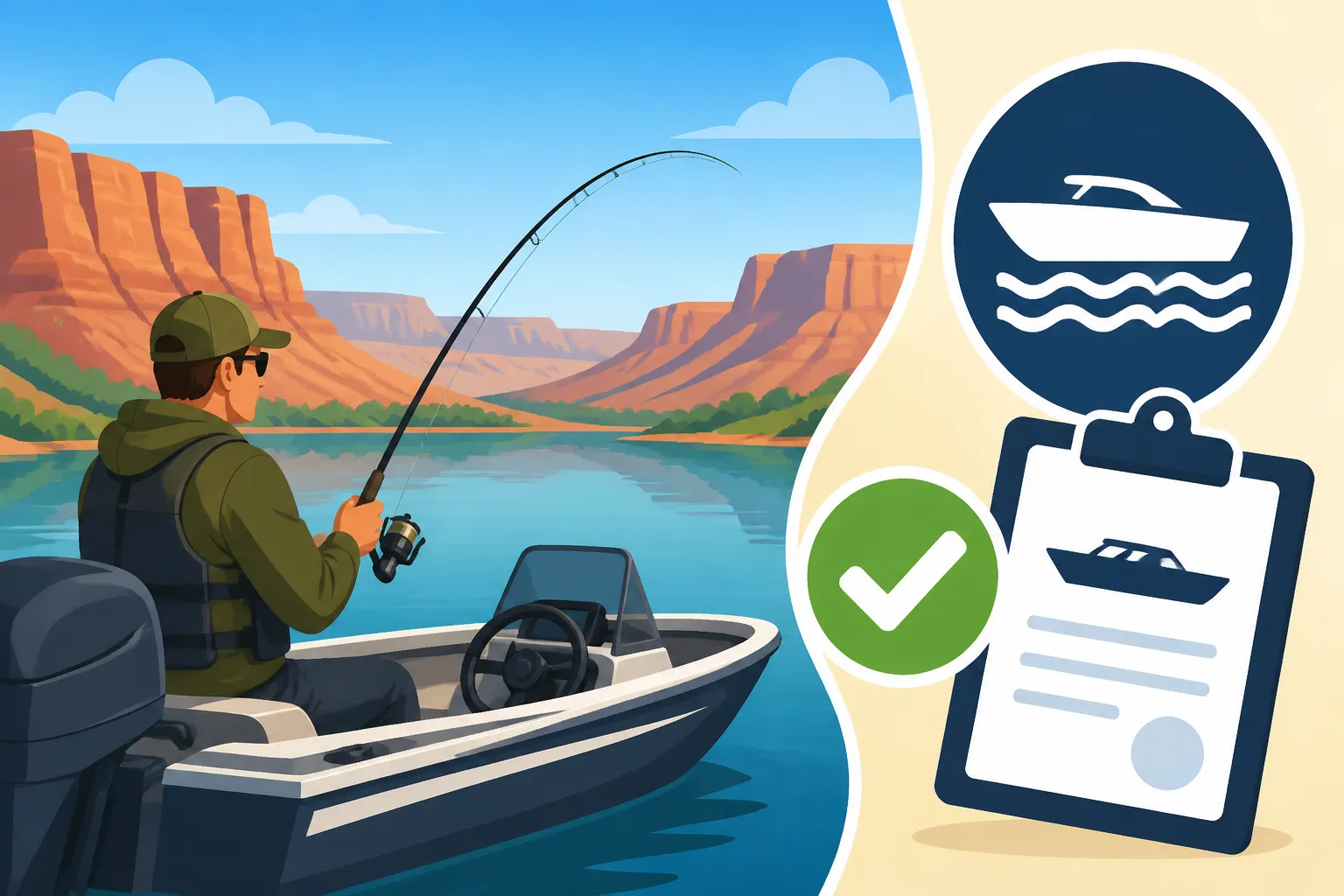
To put it plainly: Yes, your motorized boat or sailboat still absolutely needs to be properly registered with the State of Utah on Free Fishing Day, just like any other day of the year. The "free fishing" aspect of the day pertains solely to the requirement of possessing a fishing license; it has no bearing whatsoever on boat registration. It's easy to think that "free fishing" means "free-for-all" on all fronts, but that's just not the case. Your fishing license and your boat registration are two entirely separate legal requirements, enforced by different divisions and for different reasons.
The rationale behind this continued requirement is multifaceted. Boat registration fees contribute significantly to funding critical programs, including maintaining boat ramps, managing waterways, supporting search and rescue operations, and general boating safety education. Furthermore, registration ensures accountability and allows law enforcement, such as Utah State Park rangers and the DWR, to identify vessels and their owners in case of emergencies, accidents, or other incidents on the water. It’s all part of ensuring a safe and responsible environment for everyone enjoying Utah's beautiful lakes and reservoirs. So, while you're enjoying the no-license perk, remember that your vessel still needs its valid tags. For a comprehensive overview, see our guide on Utah Boat Registration Requirements.
What Constitutes a "Vessel" Needing Registration in Utah
Not every floating device needs to be registered. Utah law, like most states, defines specific types of vessels that require registration. Generally speaking, any motor-propelled vessel (this includes electric trolling motors!) and any sailboat 16 feet or longer, even if it doesn't have a motor, must be registered. This covers the vast majority of fishing boats you'll see on Utah's waters, from small Jon boats with electric motors to large fishing cruisers and bass boats with powerful outboards. Even if your primary propulsion is manual (paddling or rowing) but you attach a small electric motor, that vessel then typically falls under the registration requirement.
However, there's good news for those who prefer human-powered adventures. Manually propelled vessels such as canoes, kayaks, stand-up paddleboards (SUPs), float tubes, and belly boats are generally exempt from registration requirements. So, if you're planning to paddle out onto Jordanelle Reservoir in your kayak or float tube to cast for trout, you won't need boat registration, even on Free Fishing Day. This distinction is important for many anglers, as these smaller, un-motorized crafts offer a fantastic way to access fishing spots, and their exemption from registration makes them an even more appealing option for a quick outing. Just remember that even for these non-registered vessels, other rules, like Aquatic Invasive Species (AIS) inspections, still apply, which we’ll cover next. You can find more clarity on this in our article Do Kayaks and Paddleboards Need AIS Inspections in Utah?.
Essential Boat Safety Equipment and AIS Rules Still Apply
Beyond registration, another critical set of rules that remains absolutely in force on Free Fishing Day, and indeed every day you're on the water, pertains to boat safety equipment and Aquatic Invasive Species (AIS) protocols. These are non-negotiable for the safety of everyone and the health of Utah's waterways.
Every vessel, whether registered or not, must carry the legally required safety equipment. This typically includes a sufficient number of U.S. Coast Guard-approved life jackets for everyone on board, a throwable flotation device, a fire extinguisher if your boat has an enclosed fuel compartment or permanently installed fuel tank, and an audible signaling device like a whistle or horn. You can't just throw a couple of PFDs in the boat and call it good; they must be easily accessible and in good condition. Patrols on popular reservoirs like Lake Powell or Flaming Gorge are diligent about checking for these items, and ignorance of the law is not an excuse for non-compliance. You should review the full list in our guide to Boat Safety Equipment Required in Utah.
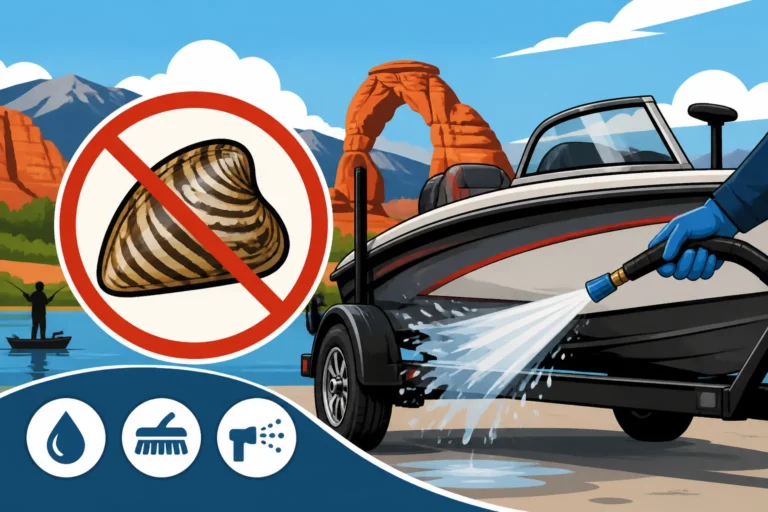
Perhaps even more critically for Utah, the rules surrounding Aquatic Invasive Species (AIS) are strictly enforced year-round, regardless of whether you're fishing for free or not. Utah takes the threat of invasive species like Quagga and Zebra Mussels very seriously, as they can devastate native ecosystems and water infrastructure. This means that if you're launching any vessel—motorized or not, including kayaks and paddleboards—at certain waters, especially those designated as high-risk, you are required to stop at an AIS inspection station. Vessels coming off waters known to have quagga mussels (like Lake Powell) have even stricter decontamination and dry time requirements. Failing to comply with these rules can result in significant fines and penalties. Always remember to Clean, Drain, and Dry your boat every time you leave the water. Our guide on Utah Aquatic Invasive Species Rules for Anglers provides exhaustive details, and you should also look into Utah Quagga Mussel Decontamination Rules to ensure you're fully prepared.
Consequences of Non-Compliance and How to Prepare
It's a beautiful sunny day, the fish are biting, and you're enjoying your time on the water, thinking you're all set because it's Free Fishing Day. Then, a patrol boat pulls up. That relaxing outing can quickly turn stressful and expensive if you haven't taken care of all the necessary details, especially boat registration and safety equipment.
Penalties for Unregistered Boats or Missing Safety Gear
Getting caught on the water with an unregistered boat, or without the required safety equipment, can lead to a series of undesirable outcomes. You might receive a citation, which is essentially a ticket, similar to a traffic ticket. These citations come with fines that can vary depending on the specific violation and whether it's a first offense. These fines can quickly add up, easily costing you more than a year's fishing license and boat registration combined. For example, a missing life jacket or an expired registration could result in a fine of several hundred dollars. It definitely takes the "free" out of Free Fishing Day when you're shelling out cash for a penalty!
Beyond the immediate financial impact, more severe violations could lead to further action. In some cases, especially for repeat offenders or serious safety infractions, law enforcement might even require you to remove your boat from the water immediately. Imagine having to cut your day short, load your boat onto the trailer, and head home, all while everyone else is still out enjoying the lake. This kind of disruption can be a major inconvenience and a damper on your entire trip. Officials, including Utah DWR and State Parks personnel, patrol all waters and are well within their rights to stop and inspect vessels to ensure compliance with all boating and fishing regulations. It’s always better to be safe than sorry and ensure you're squared away before launching. For more details on fines related to fishing and boating, consult our article on Utah Fishing License Penalties for Violations.
Ensuring Your Boat is Legally Ready for the Water
The good news is that avoiding these penalties is entirely within your control with a little preparation. Before you even think about hitting the water for Free Fishing Day, or any day, make sure your boat registration is current. In Utah, boat registrations are typically renewed annually or every two years, depending on the type of vessel. You can check the expiration date on your registration stickers, which are usually displayed on both sides of your boat's bow. If it's expired or nearing expiration, head to the Utah Division of Wildlife Resources website, a State Parks office, or a local DWR agent to get it renewed. You can also handle many of these processes online, which makes it incredibly convenient.
Next, conduct a thorough check of all your required safety equipment. Don't just assume everything is there and in working order. Go through your boat and verify that you have enough U.S. Coast Guard-approved life jackets for every person on board, that they are properly sized, and that they are easily accessible. Check your fire extinguisher to ensure it's charged and not expired. Test your audible signaling device. This is also a good opportunity to ensure your boat is generally well-maintained, from your engine to your lights. Many essential safety items, from spare life jackets to marine-grade fire extinguishers, can be purchased easily online through retailers like Amazon or at your local sporting goods store. Having a checklist can be incredibly helpful to ensure you don't miss anything.
Here's a handy checklist to get your boat ready:
| Item | Status Check | Action If Needed |
|---|---|---|
| Boat Registration | Valid and current stickers displayed? | Renew online at Utah DWR or State Parks, or in person. |
| Life Jackets | Enough for everyone? USCG approved? Good condition? | Purchase additional/replacement PFDs, ensure proper fit for all passengers. |
| Throwable Device | Present and easily accessible? | Replace if damaged or missing. |
| Fire Extinguisher | Charged? Not expired? | Replace or recharge, ensure it's marine-rated. |
| Audible Device | Whistle/horn in working order? | Replace if broken or missing. |
| Documentation | Registration card, proof of ownership. | Keep physical/digital copies in a waterproof bag. |
| AIS Decal | Current year's decal affixed? | Purchase and apply if expired. |
| AIS Inspection | Boat Clean, Drained, Dry? | Plan stop at inspection station, or self-decontaminate if required. |
| Visual Distress Signals | If boating after dark. | Ensure flares/lights are present and functional. |
Planning for a Stress-Free Free Fishing Day Experience
With your boat registration sorted and safety gear checked, you’re well on your way to a truly stress-free Free Fishing Day. The key is planning ahead and understanding that this special day, while freeing you from the license requirement, still demands responsible boating and adherence to all other regulations.
First, always conduct a pre-trip inspection of your vessel and gear. This isn't just about legality; it's about safety and ensuring your day isn't cut short by a preventable issue. Pack your fishing tackle, appropriate clothing for the weather, plenty of water, and snacks. Don't forget your fishing rods and a net! Remember, if you're buying any last-minute tackle or small gear items, platforms like Amazon offer a vast selection to get you what you need quickly.
Secondly, because Free Fishing Day is so popular, many boat ramps and fishing spots can get incredibly busy. Consider arriving early at your chosen destination to secure a good spot and avoid long lines at the launch ramp. Popular reservoirs like Utah Lake or Pineview Reservoir can see a significant increase in traffic, so patience is a virtue.
Finally, and this cannot be stressed enough, always comply with Aquatic Invasive Species (AIS) inspections. Even if you don't have a motor on your vessel, if you're launching on waters that require inspections, you must stop. This small step protects Utah's precious waterways from devastating invasive species. Having your boat "Clean, Drained, and Dry" before you even arrive at the inspection station will make the process much faster. By taking these proactive steps, you can fully embrace the spirit of Free Fishing Day, enjoying the fantastic angling opportunities Utah offers without any worries.
Disclaimer
The information provided in this guide is for general informational purposes only and does not constitute legal advice. While we strive to provide accurate and up-to-date information, fishing and boating regulations in Utah can change. Always consult the official Utah Division of Wildlife Resources (DWR) and Utah State Parks websites or contact their offices directly for the most current regulations and specific requirements before heading out on the water.