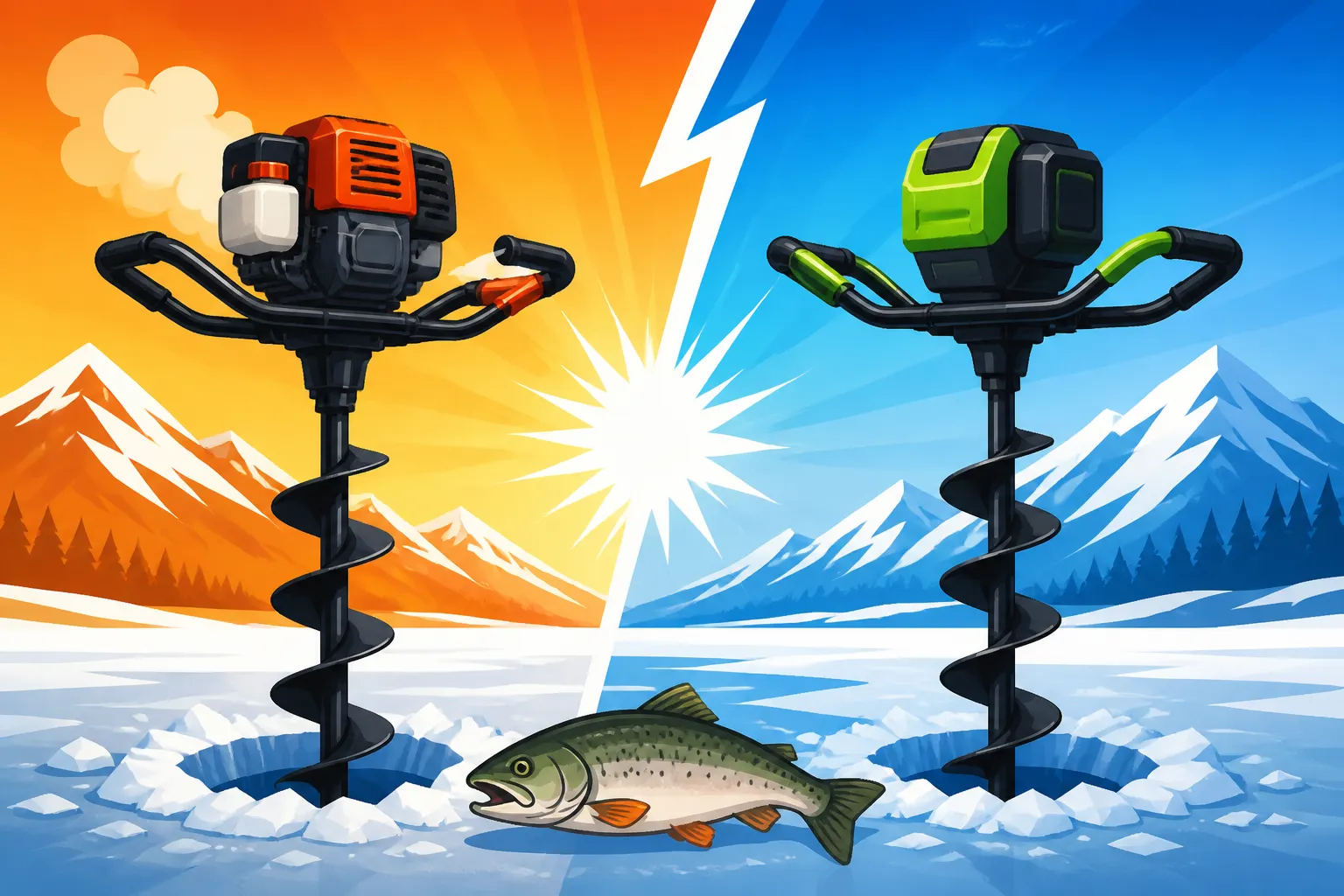
Gas vs Battery Ice Auger for Utah Winters
Ah, the crisp, quiet morning air out on a frozen Utah lake – there's nothing quite like it for ice fishing. But before you even cast a line, a crucial decision weighs on many anglers: what kind of auger are you going to use to break through that stubborn ice? It's a common struggle, standing in the aisle, comparing specs, or watching videos, wondering if you're making the right choice between the roaring power of a gas auger and the silent efficiency of a battery-powered one. This guide is here to cut through the confusion and help you decide which ice auger is your perfect companion for navigating Utah's diverse winter fishing scene.
Understanding the Core Choice: Gas vs. Battery Augers
For decades, the standard for punching holes through ice was a gas-powered auger. You'd pull the cord, it would sputter to life with a satisfying growl, and then it was all about raw power. But in recent years, battery-powered augers have stepped onto the ice, bringing with them a whole new set of considerations. It's not just about what drills a hole anymore; it's about convenience, noise, weight, and how it fits into your overall fishing strategy for those chilly Utah days.
The Enduring Power of Gas Ice Augers
When most of us think of an ice auger, the image of a gas-powered unit often comes to mind. These workhorses have been the backbone of ice fishing for generations, and for good reason. They operate on a small internal combustion engine, typically two-stroke, though some four-stroke models exist. You fuel them up, prime them, give a good pull on the starter cord (maybe a few good pulls on a particularly cold morning!), and they deliver consistent, brute force.
The primary appeal of a gas auger is its sheer drilling power, especially when faced with exceptionally thick ice or when you need to drill a multitude of holes in quick succession. Imagine being out on a massive expanse like Strawberry Reservoir in late season, when the ice can be well over two feet thick. A gas auger, properly maintained and fueled, will just keep chewing through it, hole after hole, without a significant drop in performance. This reliability under heavy load has cemented their place as a favorite among serious anglers who aren't afraid of a little muscle and noise to get the job done. You can usually find a wide variety of these robust units when you're browsing the aisles at a place like Bass Pro Shops.
The Rise of Battery-Powered Ice Augers
On the other side of the ice-drilling spectrum, we have the increasingly popular battery-powered augers. These modern marvels are a testament to advancements in battery technology, mirroring the shift we've seen in power tools everywhere. Instead of a gas engine, they use a high-capacity lithium-ion battery to power an electric motor. The result is a fundamentally different ice-fishing experience.
The most striking feature of a battery auger is its quiet operation. There's no sputtering, no roar – just a soft whir as the blades spin through the ice. This quietness isn't just a comfort; it can be a real game-changer for stealthy approaches to sensitive fish or for enjoying a peaceful morning without disturbing the tranquility of the frozen landscape. They also tend to be lighter and require less fuss to start, often just a push of a button. For many anglers who trek out to a remote Uinta Mountain high lake or spend their time exploring new spots on a smaller body of water, the ease of use and reduced weight of a battery auger are huge advantages.
Weighing the Pros and Cons for Utah's Unique Ice Conditions
Utah's ice fishing scene is incredibly varied, from the relatively thin early-season ice on urban ponds to the formidable late-season layers on vast reservoirs like Flaming Gorge. The choice between a gas and battery auger isn't just theoretical; it directly impacts your experience on these specific waters. Let's dig into how each type stacks up against the realities of a Utah winter.
Advantages of Gas Augers in Utah
One of the biggest boons of a gas auger in Utah is its ability to handle extremely thick ice, which is a very real possibility, especially on larger, deeper reservoirs that freeze solid for months. Think about late winter at Scofield Reservoir or even sections of Bear Lake. When you're looking at 2-3 feet of ice, or even more, a gas auger powers through with minimal effort. This gives you peace of mind that no matter how deep that ice gets, you'll be able to access the fish below.
Another huge plus is their endurance. If you're planning a full day of fishing, maybe even with a group, and you're constantly on the move, drilling dozens of holes to find the active bite, a gas auger with a full tank of fuel will typically outlast the average battery-powered unit on a single charge. You can easily carry extra fuel, allowing for virtually unlimited drilling capacity throughout a long weekend trip. This sustained power is particularly valuable when you're targeting roaming fish or exploring new patterns.
Advantages of Battery Augers in Utah
The immediate appeal of a battery auger for Utah's ice fishing is its remarkable portability and lighter weight. Many popular Utah ice fishing spots, particularly the high mountain lakes or even some designated sections of larger reservoirs, require a bit of a hike to get to. Lugging a heavy, fuel-filled gas auger over snow and uneven terrain can be exhausting. A lighter battery auger makes that trek significantly easier, allowing you to get further out and stay fresher for fishing.
Then there's the cleanliness and quietness. No more dealing with messy gas and oil mixes, the smell of exhaust, or the constant roar that can spook fish or simply detract from the natural serenity of ice fishing. If you're fishing a community pond close to home or a smaller, more intimate lake, the silent operation of a battery auger is a joy. It allows for more peaceful conversation, better listening for tip-up bells, and less disturbance to the environment. Plus, the instant-start feature means no frustrating pulls on a cold morning – just press a button and you're ready to drill. This can be a godsend when the temperatures really drop. If you're searching for specific lightweight models, looking at user reviews on platforms like Amazon can give you a good idea of what's working for other anglers.
Disadvantages of Gas Augers in Utah
While powerful, gas augers come with their own set of drawbacks that can be particularly noticeable in Utah's diverse winter conditions. The most obvious is the noise. That powerful engine roar, while reassuring to some, can be a real disturbance, especially on quiet mornings or when trying to fish more sensitive species. It can also be quite antisocial if you're fishing near others.
Maintenance is another factor. Gas engines require regular tuning, spark plug changes, oil mixes (for two-strokes), and winterization if you want them to start reliably season after season. Stale fuel can cause significant problems, leading to frustrating starts when you're eager to get on the ice. They also produce exhaust fumes, which can be an issue if you're drilling inside an ice fishing shelter to stay warm, requiring good ventilation. Finally, the weight can be a significant deterrent if you're someone who likes to move around a lot or has a long walk to your favorite Utah Ice Fishing Guide spot.
Disadvantages of Battery Augers in Utah
Despite their modern appeal, battery augers aren't without their own considerations. The biggest concern for many anglers is battery life, especially when facing thick ice or very cold temperatures. While modern lithium-ion batteries are impressive, their capacity is finite. On a day with 2+ feet of ice, or if you're drilling a ton of holes, a single battery might not be enough. Carrying spare batteries adds to the cost and weight, and charging them out on the ice isn't usually an option. This can leave you stranded without a way to drill new holes, a frustrating experience when the fish aren't biting in your initial spot.
Extreme cold can also impact battery performance, causing them to drain faster or deliver less power. This is a real consideration during those deep Utah winter freezes. While most modern batteries are designed to perform in cold, prolonged exposure can still be an issue. The initial cost for some high-end battery augers can also be higher than their gas counterparts, although this gap is closing. You'll want to check out models from brands like Eskimo or ION, which are popular choices among battery-powered auger enthusiasts.
Factors to Consider Before You Buy
Choosing an ice auger is an investment, both in money and in your enjoyment of the ice fishing season. Before you head to the store or click 'add to cart,' take a moment to consider how these factors align with your personal fishing style and the specific conditions you'll face on Utah's frozen waters.
Ice Thickness and Your Fishing Style
Utah's ice thickness can vary wildly. Early season, you might be dealing with just a few inches on a local community pond. Mid-winter, Strawberry Reservoir might boast a foot and a half, while Flaming Gorge could present two feet or more. If you primarily fish early in the season, or on waters known for shallower ice, a battery auger might handle the job perfectly. However, if you're planning on chasing monster lake trout through late winter at Flaming Gorge, where the ice can be truly immense, the consistent torque of a gas auger becomes a compelling argument.
Your fishing style also plays a huge role. Are you the type to set up a permanent shanty, drill a few holes, and sit tight all day? Or do you prefer to run and gun, drilling dozens of holes, constantly searching for active fish across a wide expanse of ice? For the former, battery life might not be a huge concern, but for the latter, the sheer number of holes you need to punch could favor a gas auger or require multiple backup batteries. For tips on how thick the ice needs to be, check out our guide on How Thick Does Utah Ice Need to Be Before You Can Fish On It?.
Portability and Weight for Trekking Out
Let's face it, getting to your chosen fishing spot often involves some effort. Whether it's a short walk from the truck to the shanty or a strenuous hike to a remote high-mountain lake, weight matters. Gas augers, with their engine and fuel tank, are inherently heavier. Battery augers, by comparison, are significantly lighter and often have more compact designs.
If you often fish spots that require a long walk, or if you're planning multi-day trips into the Uinta wilderness where every ounce counts, a battery auger will save your back and energy. This allows you to carry more essential gear like your Best Backpacks for Hiking to Uinta Lakes or extra layers to How to Stay Warm Ice Fishing in Utah. However, if you typically drive right up to your spot or use a snowmobile or ATV, the weight difference might be less critical.
Maintenance and Long-Term Ownership
No one wants to spend more time working on their gear than fishing. Gas augers require more hands-on maintenance. You'll need to deal with fuel mixing (for 2-strokes), oil changes (for 4-strokes), spark plug replacements, air filter cleaning, and crucially, proper fuel storage and winterization to prevent carburetors from gumming up. If you're not mechanically inclined or prefer a "grab and go" approach, this can be a significant drawback.
Battery augers, on the other hand, are much simpler. Charge the battery, keep the blades sharp, and you're pretty much good to go. There are no fluids to change, no pull cords to fray, and no engine issues to troubleshoot. This low maintenance aspect is a huge win for many anglers, especially those who might only hit the ice a few times a season and don't want to mess with engine upkeep.
Environmental Impact and Noise Considerations
The natural beauty of Utah's winter landscape is a major draw for ice anglers. The quiet solitude is part of the appeal. Gas augers, by their very nature, are noisy and produce exhaust fumes. While often tolerated, this can disturb wildlife, other anglers, and your own peace. If you're someone who values the quiet and wants to minimize your environmental footprint, a battery auger is a clear winner.
The silent operation of a battery auger not only allows for quieter conversation but can also be less disruptive to the fish themselves. While highly debated, some anglers believe excessive noise can put fish off. Regardless of its impact on fish, the impact on your own enjoyment and the enjoyment of those around you is undeniable. When selecting an auger, consider how its noise profile aligns with the atmosphere you seek on the ice. And remember, sometimes you need to get inside a good Best Ice Fishing Shelter for Utah Wind for warmth, where exhaust fumes from a gas auger would quickly become a problem.
Making Your Choice: When Each Auger Shines
Ultimately, the best auger for you isn't about which one is objectively "better," but which one aligns best with your individual needs, budget, and the specific kind of ice fishing you enjoy most in Utah.
| Feature | Gas-Powered Ice Auger | Battery-Powered Ice Auger |
|---|---|---|
| Power/Speed | Consistent high torque, ideal for very thick ice | Excellent initial torque, can slow on very thick ice |
| Drilling Capacity | Unlimited with extra fuel, ideal for many holes | Limited by battery charge, requires spares for high volume |
| Weight/Portability | Heavier, less convenient for long treks | Lighter, easier to carry for mobile anglers |
| Noise Level | Loud engine operation, can disturb peace | Quiet, almost silent operation, preserves tranquility |
| Maintenance | Requires fuel, oil, spark plugs, winterization | Minimal, just charge battery and sharpen blades |
| Environmental Impact | Exhaust fumes, fuel spills, louder | No fumes, cleaner, quieter |
| Cold Weather Performance | Can be hard to start in extreme cold, but runs | Battery life can be reduced in extreme cold |
| Typical Cost | Often lower initial cost, ongoing fuel expense | Higher initial cost for good models, no fuel cost |
| Ideal Use Case | Heavy-duty, deep ice, high-volume drilling, remote trips with fuel access | Mobile fishing, sensitive spots, easy transport, quick trips |
Who Should Opt for a Gas Auger?
If your ice fishing adventures frequently involve tackling exceptionally thick ice – say, well over two feet on a consistent basis – or if you're the kind of angler who drills a truly impressive number of holes throughout the day to find the bite, a gas auger might still be your best bet. Its raw, unyielding power and the ability to simply refill a fuel tank mean you'll rarely be left without a way to punch a new hole.
This is also a great choice if you typically fish from a permanent shanty, or drive an ATV or snowmobile right to your spot, minimizing the need to carry the auger long distances. For those long, multi-day excursions to remote spots where charging facilities are non-existent but you can easily bring extra fuel cans, the reliability of a gas auger remains unmatched. Think of it as the heavy-duty truck of ice augers – it gets the biggest jobs done without complaint. If you're exploring options, you might find a robust selection of them at your local Bass Pro Shops, where you can feel the weight and power for yourself.
Who Should Embrace the Battery Auger?
For the angler who prioritizes portability, quiet operation, and ease of use, the battery auger is a game-changer. If you find yourself hiking to those beautiful, secluded high mountain lakes, or frequently moving between spots on a smaller reservoir, the lighter weight and lack of fuel makes the experience much more enjoyable. It’s perfect for the "run and gun" style where you're quickly punching a few holes, checking for fish, and moving on.
Furthermore, if you value the peacefulness of the ice and want to minimize your disturbance to nature and fellow anglers, the silent drill of a battery auger is a huge plus. This is also the ideal choice for quick trips to community ponds or urban fishing spots where you don't need excessive power, or when you want to make a spontaneous decision to head out on the ice without the fuss of fuel mixing and engine starting. Just grab it, go, and enjoy the pristine silence. Many anglers rave about the convenience of battery augers, and a quick search on Amazon will show you a plethora of options and user experiences to help you find the right one.
Disclaimer
This article is for general informational purposes only and does not constitute professional advice. Laws, prices and regulations vary by location and change over time. Consult a qualified professional for guidance on your specific situation.