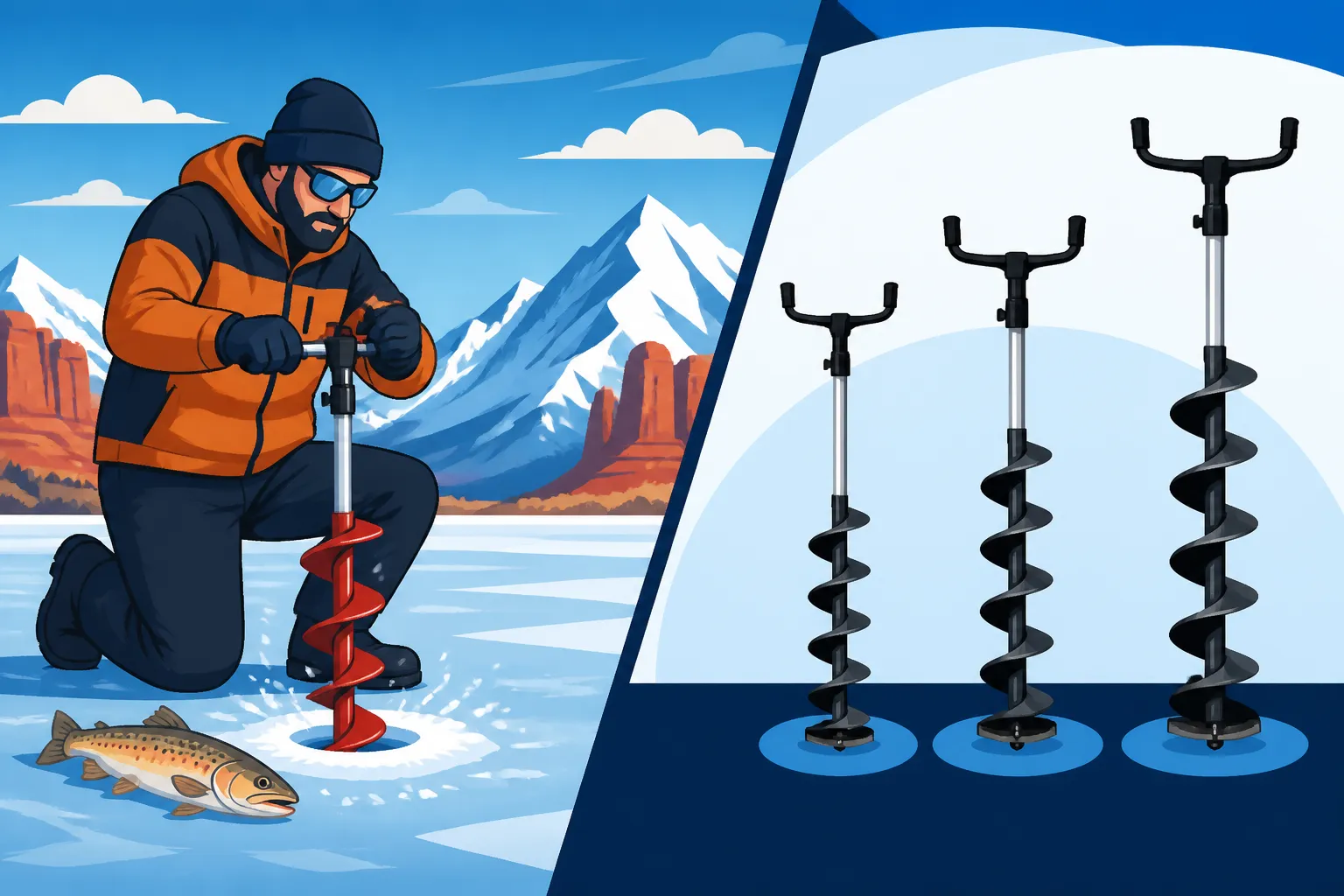
Best Ice Auger Size for Utah Ice Fishing
When you're gearing up for a Utah ice fishing adventure, it's easy to get bogged down in all the gear choices. One of the biggest head-scratchers, especially for those new to the hardwater scene, is figuring out the "best" ice auger size. It feels like a small detail, but trust me, the size of the hole you drill can make or break your day on the ice. This guide is all about helping you navigate those choices, so you can spend less time wondering and more time pulling fish through the ice.
The Core Dilemma: What Does Auger Size Even Mean for Ice Fishing?
Before we dive into specific recommendations, let's break down what "auger size" actually refers to. When someone talks about a 6-inch or 8-inch auger, they're talking about the diameter of the blades, which directly translates to the diameter of the hole it cuts in the ice. It's not just about how big a fish you think you might catch; it impacts everything from how easily you can get your gear down the hole to the effort it takes to drill through thick, stubborn Utah ice.
Think about it: a wider hole means more ice needs to be removed. More ice means more work, whether that's elbow grease with a manual auger or battery power with an electric model. This distinction becomes incredibly important when you're battling thick, multi-layered ice on a blustery day at places like Strawberry Reservoir or Flaming Gorge. The difference between drilling a few 6-inch holes and a dozen 10-inch holes with a manual auger is the difference between an enjoyable outing and an exhausting chore.
Another aspect often overlooked is ice thickness. In early winter, when the ice is just getting safe, even a larger auger might feel manageable. But come mid-season, when you're facing 18 inches or more of solid ice, that extra diameter really adds to the strain. This is where the type of auger also plays a huge role. A small, lightweight manual auger is fantastic for popping a few quick holes in thinner ice, but it quickly becomes inadequate for deep ice or when you need to drill many holes. This is often where anglers start looking at power options, which we'll get into, but even with power, the larger the hole, the more energy (battery or fuel) it consumes.
Navigating Utah's Waters: Matching Auger Size to Your Target Species
The primary driver for most ice anglers when choosing an auger size is, understandably, the size of the fish they're hoping to catch. Utah's ice fisheries offer a fantastic variety, from feisty panfish to massive lake trout, and each requires a different approach to getting them through the ice.
Smaller Holes (4-6 inches) for Panfish and Stocked Trout
If your ice fishing adventures lean towards chasing panfish like yellow perch or bluegill, or targeting the plentiful stocked rainbow and tiger trout in Utah's community ponds and smaller reservoirs, a smaller auger in the 4- to 6-inch range is often perfect. These smaller holes are a breeze to drill, even with a manual auger, making them ideal for covering a lot of ground quickly or for anglers who prioritize portability. Imagine hiking into a high-mountain lake for some early season ice fishing; a lightweight 4-inch auger is your best friend.
For kids, a smaller auger is fantastic. It's less intimidating, easier to handle, and they can often participate in the drilling process with less fatigue. While you might occasionally hook into a surprisingly large trout in a stocked pond, most of the fish you'll encounter will slide right through a 6-inch hole. These smaller holes also tend to freeze over a bit slower than larger ones, which can be a nice bonus on particularly cold days. If you're looking for How to Ice Fish for Trout in Utah, a 6-inch auger will generally serve you well for the majority of stocked trout.
The Versatile 7-8 Inch All-Arounder
For most serious Utah ice anglers, the 7- to 8-inch auger is the undisputed king of versatility. This size strikes a fantastic balance between ease of drilling and the ability to land a wider range of fish species. You'll have no problem bringing up even good-sized rainbow trout, brown trout, and cutthroat trout through an 8-inch hole. This is also the size that walleye anglers at Utah Lake or Scofield Reservoir often gravitate towards, as it provides enough clearance for these broad-shouldered fish without being overly strenuous to drill.
Many anglers who only want to own one auger will choose an 8-inch model because it handles the majority of situations effectively. It's still manageable enough to drill multiple holes, especially with a good electric or propane auger, and it gives you a comfortable margin for error when fighting a larger fish. You can easily fit a standard scoop for clearing slush, and it's wide enough for most fish finders and larger lures. If you're exploring diverse waters like Deer Creek, Jordanelle, or even the general trout areas of Strawberry Reservoir, an 8-inch auger is an excellent choice. It’s a workhorse that can handle most of what Utah’s ice offers.
Going Big (9-10+ inches) for Trophy Fish and Multi-Angler Holes
Now, if you're specifically chasing giants, like the legendary trophy lake trout at Flaming Gorge or the elusive tiger muskie at Pineview Reservoir, you're going to want a bigger hole. This is where 9- and 10-inch (or even larger) augers come into play. There's nothing more heartbreaking than hooking into the fish of a lifetime only to lose it at the hole because it won't fit. These larger holes provide ample clearance for massive fish, reducing the chances of them getting wedged or breaking off at the last second.
Beyond trophy fish, larger holes are also great when you're fishing with multiple lines in the same hole (where legal, of course), or if you're using larger transducers for advanced fish finders. They offer more room to maneuver when jigging aggressively with big baits for species like lake trout. The downside, as you can imagine, is the significant increase in effort required to drill. A 10-inch hole, for example, displaces substantially more ice than an 8-inch hole. This is where manual augers usually bow out, and powerful gas, propane, or robust electric augers become almost essential. Anglers serious about Flaming Gorge Trophy Lake Trout Spots will often bring one of these larger, more powerful augers to ensure they're ready for anything.
Practical Considerations Beyond Fish Size: Power, Portability, and Durability
While the target fish species is a huge factor, it’s far from the only one. Your choice of auger size is also heavily influenced by the type of power source you prefer, the typical ice conditions you'll encounter, and your personal fishing style.
Manual, Electric, Propane, or Gas: How Power Affects Your Size Choice
The power source of your auger directly correlates with the maximum hole size you can realistically and comfortably drill, especially in thick ice.
- Manual Augers: These are great for smaller holes (4-6 inches) and thinner ice. They are lightweight, inexpensive, and don't require fuel or batteries. However, anything above 6 inches, especially in thick Utah ice, becomes a significant workout. If you're fishing early season on a pond or going ultralight into the Uintas, a manual auger can be perfect, but don't expect to drill many 8-inch holes in 2 feet of ice without breaking a sweat.
- Electric Augers: These have become incredibly popular in recent years, offering quiet, fume-free drilling with impressive power. Modern electric augers, often available from retailers like Bass Pro Shops or online at Amazon, can easily handle 6- to 8-inch holes in thick ice and many can now tackle 10-inch holes, though battery life will be a consideration for the larger sizes. They are fantastic for mobility, especially if you're moving around a lot and don't want to deal with gas or propane. Just remember to bring spare batteries for long days or if you're drilling many holes.
- Propane Augers: These offer a good middle ground between electric and gas. They run cleaner than gas, start easily, and are powerful enough to handle 8- to 10-inch holes. They're often quieter than gas models and don't have the same cold-start issues. Fuel is readily available, and a small tank can last for many drilling sessions.
- Gas Augers: These are the traditional powerhouses, offering the most raw drilling power. If you need to cut dozens of 8- to 10-inch holes in brutally thick ice, a gas auger will do the job with consistent performance. The downsides include noise, fumes, weight, and the need to mix fuel, but for sheer brute force, they're hard to beat for those massive holes needed for trophy fish.
Ice Thickness and Ice Type in Utah's Diverse Lakes
Utah's diverse elevations and climates mean ice conditions can vary wildly. You might encounter a few inches of early season ice at a lower elevation pond in December, then find yourself battling three feet of ice at a high-elevation reservoir like Scofield in February. How Thick Does Utah Ice Need to Be Before You Can Fish On It? is a crucial piece of knowledge for any ice angler.
- Early Season Thin Ice: A smaller, manual auger is perfectly adequate here. You might even use it just to test the ice safety as you go.
- Mid-Season Thick Ice: This is where a powered auger really shines, especially if you're drilling 8 inches or more. Expecting a manual auger to effortlessly cut through two feet of solid ice for multiple holes is just asking too much.
- Slushy or Layered Ice: Some Utah lakes, especially after a warm spell followed by a refreeze, can develop layers of slush or "snow ice" interspersed with solid ice. This kind of ice can be particularly challenging to drill through, as slush can bind blades. Larger augers with more powerful engines tend to cut through these conditions more efficiently, preventing you from getting stuck.
Your Personal Angling Style and Gear
Your fishing habits also play a significant role. Are you a solo angler who likes to walk a mile out, drilling a new hole every 10 minutes to find fish? Or do you set up a comfortable ice fishing shelter with friends, planning to stay put for hours?
- Mobility: If you're constantly on the move, chasing schools of fish, a lighter, more portable auger (often 6-8 inches, electric or manual) is ideal. Drilling many holes quickly with minimal effort is key.
- Stationary Fishing: If you prefer to set up a larger ice fishing shelter for the day, drilling fewer, larger holes might make more sense. You'll have more room for multiple lines (check How Many Ice Fishing Rods Can You Use at Once in Utah? for regulations), easily deploy a large transducer for your fish finder, and have plenty of space to manage a big fish.
- Gear Compatibility: Do you use a large flasher or live-scope transducer? Some of these wider units might struggle to fit comfortably in a 6-inch hole. Consider your Best Fish Finders for Ice Fishing in Utah and their probe sizes. Also, if you’re trying to keep a big fish fresh, a bigger hole might allow you to fit a small cooler or bucket down to the water without issue, though a good Best Cooler Size to Keep a Trout Limit Fresh on the surface is usually sufficient.
Making the Call: Recommended Auger Sizes for Popular Utah Ice Fishing Destinations
Let's get down to some specific recommendations for Utah's favorite ice fishing spots. Remember, these are general guidelines, and personal preference always plays a part!
Bear Lake
Bear Lake is famous for its Bonneville Cisco run in January, which requires unique tactics. For this specific event, anglers often use very small holes, sometimes as small as 4 inches, to dip for cisco. However, for Bear Lake's trophy cutthroat and lake trout, you'll want something more substantial.
- Cisco: 4-6 inches (manual or small electric)
- Cutthroat & Lake Trout: 8-10 inches (electric, propane, or gas) – you never know when a giant mackinaw will bite!
Strawberry Reservoir
This is a premier trout fishery, boasting large rainbow, cutthroat, and tiger trout, plus kokanee salmon. The ice here can get very thick, and the fish can be impressive in size.
- General Trout & Kokanee: 7-8 inches (electric or propane) is the most popular choice for Strawberry Reservoir Ice Fishing Spots.
- Trophy Trout: 9-10 inches (powerful electric, propane, or gas) if you're specifically targeting the biggest fish.
Flaming Gorge
Home to Utah's state record lake trout, Flaming Gorge demands serious gear if you're chasing the giants. The ice can be immense, and the fish are colossal.
- Trophy Lake Trout: 9-10+ inches (gas or powerful electric/propane) is highly recommended for Flaming Gorge Trophy Lake Trout Spots. You want all the room you can get.
- Smaller Trout/Kokanee (if targeting these): 7-8 inches (electric or propane) for versatility.
Pineview Reservoir
Known for its tiger muskie, Pineview requires a wide hole if you're serious about landing one of these toothy predators.
- Tiger Muskie: 10 inches (gas or powerful electric/propane) is pretty much essential. A smaller hole greatly increases the chance of losing a muskie at the hole.
- Perch/Trout: 6-8 inches (manual, electric) for smaller species.
Community Ponds and Smaller Lakes
For the numerous community ponds and smaller, often stocked, lakes around Utah, a versatile medium size is typically perfect.
- General Stocked Trout & Panfish: 6-8 inches (manual or electric) for ease of use and portability.
Here’s a quick overview to help you visualize:
| Target Fish Species | Common Utah Waters | Recommended Auger Size | Preferred Auger Type (for size) |
|---|---|---|---|
| Yellow Perch, Bluegill | Community Ponds, Smaller Reservoirs | 4-6 inches | Manual, Electric |
| Stocked Rainbow/Tiger Trout | Community Ponds, Scofield, Deer Creek, Jordanelle | 6-8 inches | Manual, Electric |
| Walleye, Brown Trout | Utah Lake, Scofield, Strawberry | 7-8 inches | Electric, Propane |
| Cutthroat, Kokanee (large) | Strawberry, Bear Lake, Rockport | 8 inches | Electric, Propane |
| Trophy Lake Trout | Flaming Gorge, Bear Lake | 9-10 inches | Gas, Powerful Electric/Propane |
| Tiger Muskie | Pineview Reservoir | 10 inches | Gas, Powerful Electric/Propane |
| Bear Lake Cisco (dipping) | Bear Lake (specific January run) | 4-6 inches | Manual, Hand Auger |
Conclusion
Choosing the "best" ice auger size for Utah ice fishing isn't a one-size-fits-all answer. It's a personal decision that hinges on what you love to fish for, where you plan to go, how much effort you're willing to expend, and the kind of power source you prefer. For many, a good 8-inch electric auger will be the sweet spot, offering enough versatility for most of Utah's fantastic ice fishing opportunities. But if you're dreaming of a record-breaking lake trout or a muskie showdown, don't be afraid to go big with a 10-inch powerhouse. No matter your choice, ensure you're equipped to safely and effectively drill through Utah's ice and make those unforgettable memories.
Disclaimer
This article is for general informational purposes only and does not constitute professional advice. Laws, prices and regulations vary by location and change over time. Consult a qualified professional for guidance on your specific situation.